
Reports
The Global Cleanroom Sterile Gloves Market was valued at USD 146.0 Million in 2025 and is anticipated to reach a value of USD 278.3 Million by 2033 expanding at a CAGR of 8.4% between 2026 and 2033. Growth is driven by rising sterile manufacturing requirements in biopharmaceutical production, semiconductor fabrication, and contamination-controlled healthcare environments, with increasing adoption of powder-free nitrile and advanced polymer gloves.
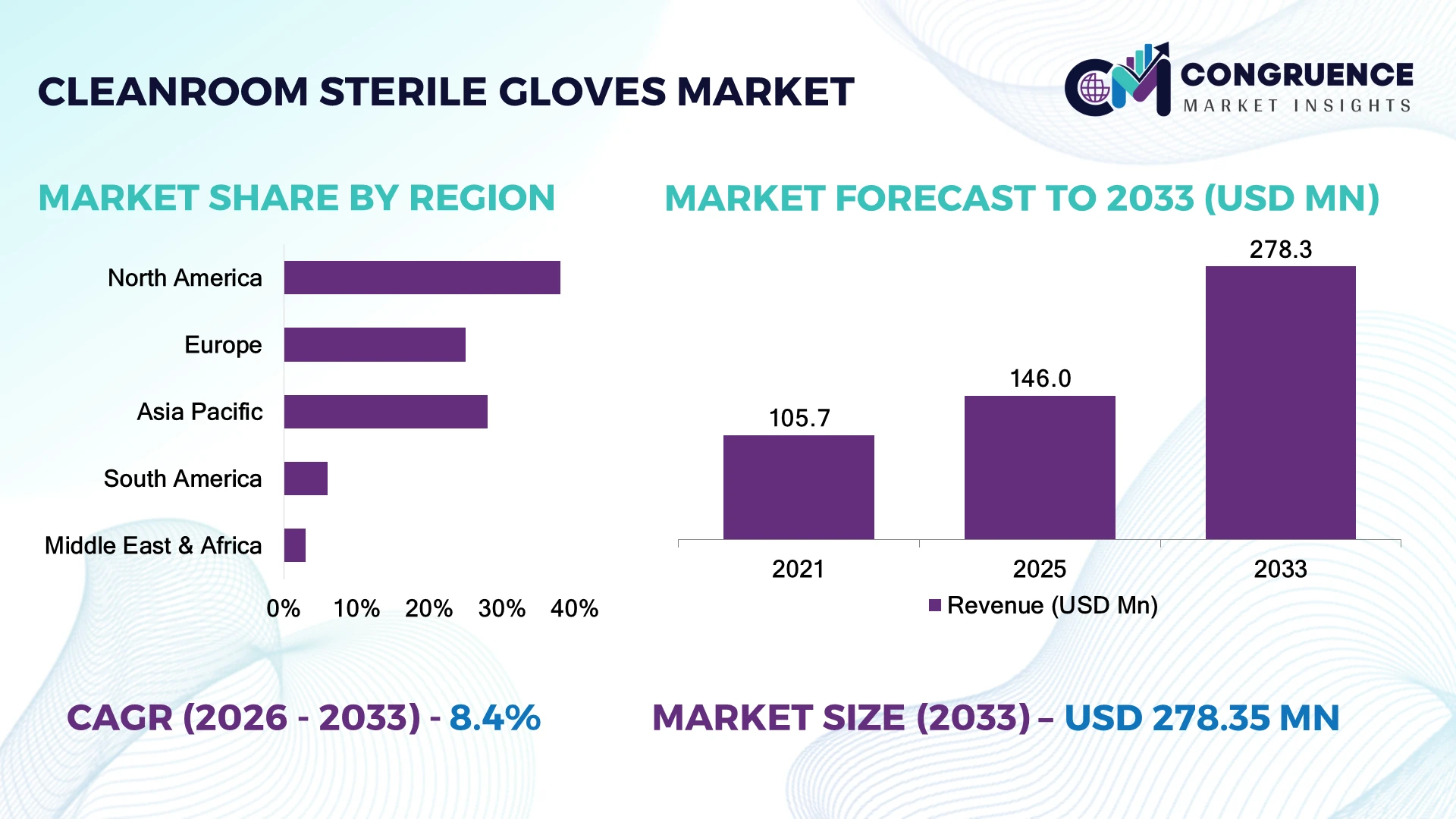
The United States dominates with approximately 38% market share, supported by FDA-regulated pharmaceutical manufacturing, semiconductor investments, and advanced cleanroom infrastructure exceeding 15,000 certified facilities. China follows with around 22% share, strengthened by semiconductor localization programs and biopharma expansion under national manufacturing initiatives. U.S. cleanroom adoption remains higher in life sciences, while China records faster capacity additions with over 20% annual growth in advanced manufacturing projects.
The strategic implication is that suppliers prioritizing regional production, compliance capabilities, and material innovation will secure long-term competitive advantage.
Market Size & Growth: Valued at USD 146.0 Million in 2025 and reaching USD 278.3 Million by 2033 at 8.4% CAGR, driven by sterile biopharma manufacturing expansion and contamination-control upgrades.
Top Growth Drivers: Pharmaceutical manufacturing +35%, semiconductor cleanroom expansion +28%, and healthcare sterilization adoption +22% are key demand contributors.
Short-Term Forecast: By 2028, automated glove inspection adoption increases 30%, reducing contamination risks and improving production efficiency.
Emerging Technologies: AI-based defect detection, automated packaging, and advanced nitrile formulations are reshaping sterile glove production.
Regional Leaders: North America reaches USD 105 Million, Europe USD 72 Million, and Asia-Pacific USD 88 Million, supported by biomanufacturing, compliance upgrades, and semiconductor investments.
Consumer/End-User Trends: Pharmaceutical companies account for nearly 55% usage, with increasing demand for validated sterile protection systems.
Pilot/Case Example: In 2024, automated cleanroom monitoring projects achieved 25% contamination reduction through integrated digital controls.
Competitive Landscape: Top manufacturers hold approximately 45% combined share, including Ansell, Kimberly-Clark, Hartalega, Top Glove, and Cardinal Health.
Regulatory & ESG Impact: Sustainable glove initiatives reduce material waste by nearly 20% through optimized manufacturing and recycling programs.
Investment & Funding: More than USD 500 Million is being directed toward cleanroom capacity expansion, automation, and regional supply-chain diversification.
Innovation & Future Outlook: Next-generation biodegradable polymers, smart monitoring systems, and localized production networks define future competitive positioning.
Cleanroom Sterile Gloves are becoming essential across pharmaceutical laboratories, semiconductor facilities, and medical device manufacturing due to stricter contamination controls and advanced production standards. Recent innovations include low-particle nitrile materials and automated quality inspection systems, improving defect detection rates by nearly 30%. Supply-chain restructuring after global disruptions has encouraged localized manufacturing investments, particularly in the United States, India, and China, creating new strategic opportunities for suppliers.
Cleanroom Sterile Gloves are gaining strategic importance as pharmaceutical companies, semiconductor producers, and medical device manufacturers increase investments in contamination prevention and controlled environments. Global supply-chain restructuring has accelerated regional manufacturing strategies, with companies shifting from single-source procurement toward diversified supplier networks.
Advanced automated inspection systems are replacing manual glove testing methods, improving quality verification efficiency by approximately 25% while reducing labor-intensive inspection requirements. Compared with conventional processes, AI-enabled visual inspection provides faster defect identification and stronger compliance control. The United States focuses on high-value pharmaceutical and semiconductor applications, while China and India are expanding production capacity through large-scale manufacturing infrastructure investments.
Over the next 2–3 years, adoption of automated cleanroom monitoring, digital quality management platforms, and sustainable glove materials will increase across regulated industries. Pharmaceutical manufacturers are partnering with glove producers to secure dedicated supply agreements and customized product specifications. Companies that combine localized manufacturing, regulatory expertise, and advanced material innovation will achieve stronger operational resilience and maintain competitive positioning in the evolving cleanroom ecosystem.
Rising investments in biopharmaceutical facilities and semiconductor cleanrooms are accelerating sterile glove adoption. The United States increased advanced manufacturing investments through semiconductor initiatives, while pharmaceutical production capacity expansion continues globally. Sterile glove demand is supported by contamination-control requirements, with pharmaceutical applications representing nearly 55% of consumption and cleanroom automation adoption increasing by more than 25%. Companies are responding by expanding regional manufacturing facilities, improving nitrile formulations, and forming long-term supply partnerships. The shift toward validated sterile environments is creating stronger demand for premium gloves with lower particle generation and improved chemical resistance, giving manufacturers opportunities to differentiate through compliance-focused innovation.
Sterile glove manufacturers face challenges from latex alternatives, nitrile price volatility, and strict regulatory validation requirements. Raw material fluctuations have affected production costs by approximately 10–15%, while compliance testing can extend product qualification timelines by several months. Malaysia and Thailand remain major glove production hubs, creating supply dependency risks during logistics disruptions. Companies are reducing exposure through supplier diversification, regional production expansion, and multi-year material contracts. The increasing requirement for sterile certification and low-particle performance also raises operational complexity, forcing manufacturers to balance cost efficiency with quality assurance across highly regulated pharmaceutical and semiconductor applications.
Automation-driven production and sustainable glove technologies present significant opportunities for market expansion. Smart manufacturing systems can improve production efficiency by nearly 20%, while advanced polymer research is reducing material consumption and waste generation. India and China are emerging as strategic manufacturing locations due to pharmaceutical investments and expanding export capabilities. Companies are increasing R&D spending on biodegradable materials, powder-free designs, and digitally monitored production lines. A major opportunity lies in integrating glove performance data with cleanroom management systems, enabling predictive contamination control and creating value-added solutions beyond traditional protective equipment supply.
Maintaining consistent sterile glove quality across expanding manufacturing networks remains a major execution challenge. Variations in production standards, workforce capabilities, and regulatory requirements can create compliance gaps, with manufacturers facing quality-control costs that may increase operational expenses by 10% or more. Semiconductor and pharmaceutical customers require uninterrupted supply and strict validation standards, increasing pressure on suppliers. Companies must invest in automated inspection, workforce training, and regional quality centers to maintain reliability. The long-term challenge is achieving scalable production without compromising sterility assurance, sustainability targets, or regulatory alignment across diverse international markets.
Automation-Led Quality Control Cleanroom glove producers are rapidly deploying automated inspection systems, with AI-based defect detection improving quality verification accuracy by around 25–30% and reducing manual inspection dependency by nearly 20%. Manufacturers in the United States and Japan are integrating machine vision, digital tracking, and real-time contamination monitoring into production workflows. Companies are restructuring operations through smart factories and automation partnerships to improve consistency, shorten validation cycles, and reduce batch rejection risks.
Sustainable Material Transition Sterile glove manufacturers are shifting toward advanced nitrile blends and lower-waste polymer formulations, with sustainable production initiatives targeting 15–25% material reduction. European pharmaceutical suppliers are increasing demand for environmentally optimized protective solutions due to stricter sustainability reporting requirements. Companies are investing in bio-based materials, recycling programs, and cleaner manufacturing processes to reduce environmental impact while maintaining sterile performance standards.
Regional Supply Chain Localization Global supply disruptions have accelerated local manufacturing strategies, with companies increasing regional production capacity by approximately 20% in North America and Asia. Semiconductor and pharmaceutical firms are diversifying suppliers to reduce dependency on concentrated manufacturing hubs. Enterprises are forming long-term partnerships with domestic glove producers, creating more resilient inventory systems and improving delivery reliability for critical cleanroom operations.
Digital Compliance Integration Cleanroom operators are adopting digital compliance platforms, increasing electronic quality documentation usage by more than 35% across regulated facilities. Pharmaceutical manufacturers are linking glove traceability, batch records, and contamination data with automated management systems. Companies are expanding software-enabled monitoring solutions to meet evolving regulatory expectations and strengthen operational transparency across global production networks.
Nitrile sterile gloves dominate the Cleanroom Sterile Gloves Market, accounting for approximately 65% share due to superior chemical resistance, low allergen risk, and compatibility with pharmaceutical and semiconductor environments. Their scalability and durability make them the preferred choice for high-volume cleanroom operations, while latex and neoprene gloves continue serving specialized applications requiring elasticity or specific chemical protection. Companies are expanding nitrile production capabilities and improving formulation technologies to address rising contamination-control requirements.
The fastest-growing segment is advanced synthetic polymer gloves, supported by demand for improved particle control and sustainability-focused manufacturing. Adoption of next-generation materials is increasing by nearly 20% as regulated industries seek alternatives with lower environmental impact. Vinyl and other specialty glove categories maintain niche relevance, particularly in cost-sensitive applications. Manufacturers are prioritizing R&D partnerships to develop thinner, stronger, and more sustainable glove solutions.
Pharmaceutical and biotechnology manufacturing represents the leading application segment with approximately 55% market share, driven by strict sterility requirements, biologics production, and increasing cleanroom utilization. Semiconductor manufacturing follows as a high-value application, with demand rising from advanced chip fabrication facilities requiring ultra-low contamination environments. Medical device production and research laboratories remain important users, supporting diversified demand patterns.
The fastest-growing application is semiconductor manufacturing, where cleanroom glove usage is expanding by nearly 25% due to advanced node production and fabrication investments. Companies are adapting through dedicated supply contracts, automated inventory systems, and application-specific glove designs. Pharmaceutical firms are focusing on validated sterile solutions, while electronics manufacturers prioritize particle reduction and precision handling performance. This shift is strengthening demand for specialized gloves rather than standard protective products.
Pharmaceutical companies lead end-user demand with approximately 60% market share due to extensive cleanroom dependency, regulatory compliance requirements, and large-scale sterile production activities. Biotechnology firms represent a rapidly expanding buyer group as biologics, cell therapies, and personalized medicines require advanced contamination prevention systems. Semiconductor manufacturers are also increasing procurement volumes as fabrication complexity rises.
Biotechnology and advanced healthcare companies are the fastest-growing end-user segment, with adoption increasing by nearly 22% as specialized manufacturing facilities expand. Established pharmaceutical buyers emphasize supplier validation and long-term contracts, while emerging biotechnology companies prioritize flexible sourcing and customized solutions. Glove manufacturers are responding through application-specific product development, regional partnerships, and enhanced technical support programs. Future demand is shifting toward customers requiring integrated contamination-control ecosystems rather than standalone protective equipment.
North America accounted for the largest market share at 38% in 2025 however, Asia-Pacific is expected to register the fastest growth, expanding at a CAGR of 9.1% between 2026 and 2033.
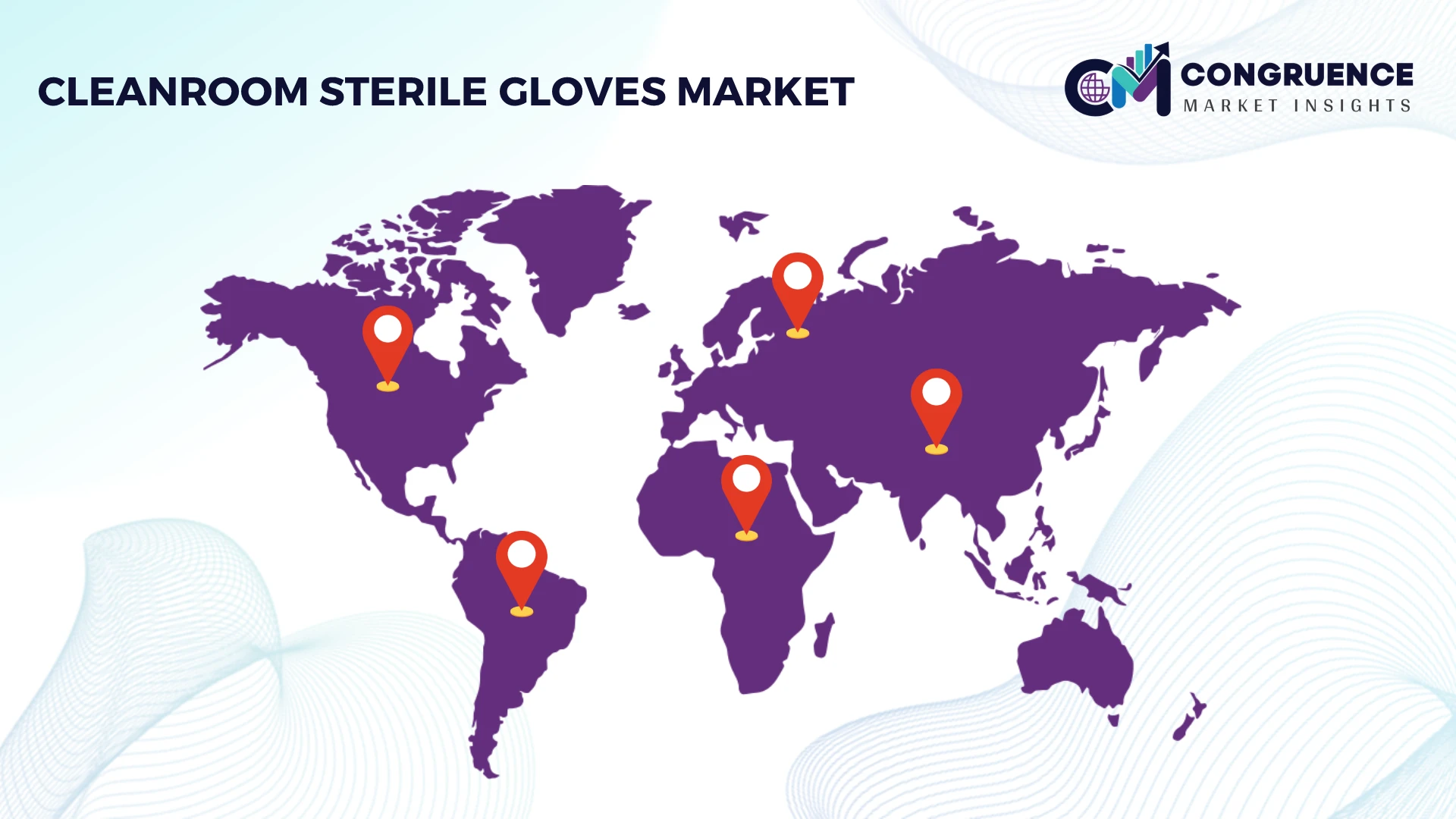
North America leads the Cleanroom Sterile Gloves Market with approximately 38% share, supported by advanced pharmaceutical manufacturing, semiconductor fabrication, and highly regulated healthcare production environments. The United States represents the largest demand center, with thousands of certified cleanroom facilities supporting biologics, vaccines, and precision electronics manufacturing. Increasing domestic production initiatives have encouraged companies to strengthen localized supply chains, with cleanroom consumable suppliers expanding regional manufacturing capabilities by nearly 20%. Pharmaceutical companies are also adopting automated contamination monitoring systems, improving operational consistency and compliance efficiency. Strategic partnerships between glove manufacturers and life science enterprises are increasing as buyers prioritize validated supply networks, material traceability, and faster delivery cycles.
United States Market Outlook: The United States remains the strategic hub due to its strong pharmaceutical and semiconductor ecosystem. The country accounts for nearly one-third of global semiconductor fabrication investments and continues expanding advanced manufacturing capacity. Increased FDA compliance requirements and biotechnology infrastructure development are driving demand for sterile gloves with improved particle control, chemical resistance, and documentation capabilities.
Europe holds a significant position in the Cleanroom Sterile Gloves Market, contributing approximately 25% share through strong pharmaceutical, biotechnology, and medical device manufacturing activities. Germany, Switzerland, and Ireland are major deployment centers due to high concentrations of regulated production facilities. Sustainability regulations and stricter environmental reporting standards are accelerating adoption of lower-waste glove materials, with manufacturers targeting 15–20% reductions in material consumption. European companies are investing in cleaner production processes, automated quality systems, and regional supplier networks to improve resilience. Pharmaceutical clusters are increasingly adopting digital traceability solutions to strengthen compliance and reduce contamination risks. Partnerships between glove producers and healthcare manufacturers are supporting customized solutions for advanced therapies and sterile production environments.
Germany Market Outlook: Germany represents Europe’s largest industrial cleanroom market, supported by advanced pharmaceutical engineering and medical technology manufacturing. The country’s extensive automation infrastructure enables high-efficiency sterile production, while more than 30% of European pharmaceutical manufacturing activity is concentrated across major industrial clusters. Demand is increasing for sustainable nitrile gloves and digitally validated contamination-control solutions.
Asia-Pacific is the fastest-expanding market, driven by pharmaceutical manufacturing growth, electronics production, and large-scale cleanroom infrastructure development. The region contributes approximately 28% market share, with China, Japan, South Korea, and India emerging as major demand centers. Semiconductor investments and pharmaceutical export growth are increasing cleanroom glove consumption, particularly in advanced manufacturing facilities. China has expanded domestic supply chains, while India is attracting healthcare manufacturing investments through production-focused industrial policies. Regional glove producers are increasing production capacity by nearly 20% to support rising domestic and export demand. Companies are focusing on automated manufacturing, quality certification, and supply-chain localization to compete in high-value applications.
China Market Outlook: China remains the largest Asia-Pacific contributor due to its semiconductor ecosystem and pharmaceutical manufacturing scale. The country operates thousands of advanced cleanroom facilities across electronics and healthcare industries. Government-backed semiconductor localization programs and biotechnology expansion are accelerating demand for sterile gloves, with manufacturers increasing investment in automated production and quality-control technologies.
South America represents an emerging market supported by pharmaceutical production expansion, healthcare modernization, and increasing adoption of contamination-controlled manufacturing. The region contributes approximately 6% of global demand, with Brazil and Argentina accounting for the majority of cleanroom applications. Pharmaceutical companies are upgrading production facilities to meet stricter quality standards, increasing demand for sterile gloves with improved barrier protection. Brazil’s healthcare manufacturing sector is encouraging local supplier development, while multinational companies are expanding distribution partnerships. However, dependence on imported cleanroom consumables remains a challenge, with supply disruptions affecting procurement timelines by nearly 10–15%. Companies are responding through regional partnerships, inventory optimization, and localized distribution strategies.
Brazil Market Outlook: Brazil is the leading South American market due to its pharmaceutical manufacturing base and healthcare infrastructure scale. The country accounts for more than 40% of regional pharmaceutical production capacity and is investing in modernization of manufacturing facilities. Growing biotechnology activity and regulatory improvements are supporting adoption of advanced sterile glove solutions.
Middle East & Africa is experiencing gradual market development through healthcare infrastructure expansion, pharmaceutical localization, and industrial diversification initiatives. The region represents approximately 3% of global demand, with the United Arab Emirates, Saudi Arabia, and South Africa leading adoption. Large healthcare modernization programs and new pharmaceutical facilities are increasing requirements for sterile manufacturing environments. Saudi Arabia’s healthcare investment initiatives and UAE biotechnology development projects are accelerating cleanroom deployment. Companies are forming regional partnerships and expanding distribution networks to address limited local production capacity. Increasing adoption of international quality standards is encouraging facilities to upgrade contamination-control systems and invest in certified sterile consumables.
Saudi Arabia Market Outlook: Saudi Arabia is emerging as the region’s most strategic market due to healthcare transformation programs and pharmaceutical manufacturing investments. The country is developing new medical production facilities and specialized healthcare zones, with cleanroom infrastructure expansion increasing demand for validated sterile gloves. Local manufacturing initiatives are encouraging partnerships between global suppliers and domestic healthcare enterprises.
The Cleanroom Sterile Gloves Market features competition between global protection leaders such as Ansell, Kimberly-Clark Professional, and 3M against regional manufacturing specialists including Top Glove, Hartalega, and Kossan. The top five players collectively control approximately 45% of market activity, creating a moderately consolidated structure. Global leaders compete through technology, compliance expertise, and customer integration, while Asian producers compete through manufacturing scale and cost efficiency. Price optimization influences nearly 20% of procurement decisions, while contamination-control performance and certification capabilities drive premium purchasing. Companies are expanding through acquisitions, localized production, sustainability programs, and automated manufacturing upgrades. Ansell’s integration of Kimtech and KleenGuard strengthens its cleanroom portfolio, intensifying competition around supply control and technical support. Entry barriers remain high due to validation requirements, regulatory approvals, and specialized production expertise. Winning requires combining reliable supply chains, advanced materials, customization, and strong regulatory execution.
Kimberly-Clark Professional
3M Company
Top Glove Corporation Bhd
Hartalega Holdings Berhad
Kossan Rubber Industries Berhad
Cardinal Health
Supermax Corporation Berhad
SHIELD Scientific
Unigloves
Rubberex Corporation
MCR Safety
Semperit AG Holding
Valutek
Advanced manufacturing technologies are reshaping sterile glove production through automation, AI-based inspection, and digital quality tracking. Automated inspection systems improve defect detection efficiency by approximately 25–30% compared with manual testing, while smart production lines reduce process variability by nearly 20%. Leading manufacturers are integrating machine vision, automated packaging, and real-time contamination monitoring to improve throughput and compliance.
Material innovation is becoming a competitive differentiator, with advanced nitrile formulations replacing conventional materials through improved chemical resistance, lower particle generation, and reduced waste. New-generation materials deliver approximately 15% better durability performance than older formulations while supporting sustainability targets. Companies benefiting most are those combining polymer research with large-scale manufacturing capabilities and regulatory expertise.
Between 2026 and 2028, digital cleanroom ecosystems will become increasingly important as pharmaceutical and semiconductor companies demand traceability and predictive quality control. Suppliers adopting connected manufacturing platforms, automated validation systems, and sustainable materials will gain operational advantages. The technology shift favors integrated solution providers rather than traditional glove suppliers focused only on volume production.
March 2025 Ansell Limited expanded its portfolio by integrating Kimtech, KleenGuard, and RightCycle brands after acquiring Kimberly-Clark’s PPE business. The move strengthened cleanroom solutions across North America and Europe, improving contamination-control capabilities and broadening customer support. Source: Ansell Press Release
January 2024 Kimberly-Clark Professional launched Kimtech Polaris nitrile gloves with enhanced barrier protection and an AQL pinhole rating of 0.65. The innovation improved laboratory safety performance and strengthened the company’s position in high-specification cleanroom applications.
March 2026 Ansell Limited advanced supply-chain localization through its India manufacturing facility, with the first production line designed to deliver approximately 60 million glove pairs annually. The expansion improves regional supply reliability and supports growing healthcare manufacturing demand. Source: Ansell India Facility Update
June 2025 Ansell Limited expanded the RightCycle sustainability program to include additional cleanroom PPE categories, targeting diversion of more than 1 million pounds of used PPE from landfills annually. The initiative strengthens circular economy positioning for industrial customers. Source: Ansell RightCycle Program Expansion
The Cleanroom Sterile Gloves Market Report covers comprehensive segmentation by type, application, and end-user, analyzing nitrile, latex, synthetic polymer, pharmaceutical manufacturing, semiconductor production, medical devices, and research applications. The study evaluates demand patterns across North America, Europe, Asia-Pacific, South America, and Middle East & Africa, highlighting manufacturing hubs, regulatory environments, and technology adoption trends.
The report assesses automation, advanced materials, contamination-control technologies, sustainability initiatives, and supply-chain strategies shaping market competitiveness. It profiles major industry participants and examines strategic positioning, product innovation, partnerships, and expansion activities. The analysis supports investment planning, market entry decisions, operational optimization, and competitive strategy development from 2026 to 2033 by identifying emerging opportunities and evolving customer requirements.
| Report Attribute / Metric | Details |
|---|---|
| Market Revenue (2025) | USD 146.0 Million |
| Market Revenue (2033) | USD 278.3 Million |
| CAGR (2026–2033) | 8.4% |
| Base Year | 2025 |
| Forecast Period | 2026–2033 |
| Historic Period | 2021–2025 |
| Segments Covered |
By Type
By Application
By End-User
|
| Key Deliverables | Revenue Forecast; Market Trends; Growth Drivers & Restraints; Technology Insights; Segmentation Analysis; Regional Insights; Competitive Landscape; Regulatory & ESG Overview; Recent Developments |
| Regions Covered | North America; Europe; Asia-Pacific; South America; Middle East & Africa |
| Companies Profiled | Ansell Limited; Kimberly-Clark Professional; 3M Company; Top Glove Corporation Bhd; Hartalega Holdings Berhad; Kossan Rubber Industries Berhad; Cardinal Health; Supermax Corporation Berhad; SHIELD Scientific; Unigloves; Rubberex Corporation; MCR Safety; Semperit AG Holding; Valutek |
| Customization & Pricing | Available on Request (10% Customization Free) |




