
Reports
The Global Chagas Disease Treatment Market was valued at USD 487.0 Million in 2025 and is anticipated to reach a value of USD 888.1 Million by 2033 expanding at a CAGR of 7.8% between 2026 and 2033. Growth is driven by expanded congenital screening programs, increased access to antiparasitic therapies, and rising public-health investments targeting neglected tropical diseases across Latin America and emerging endemic zones.
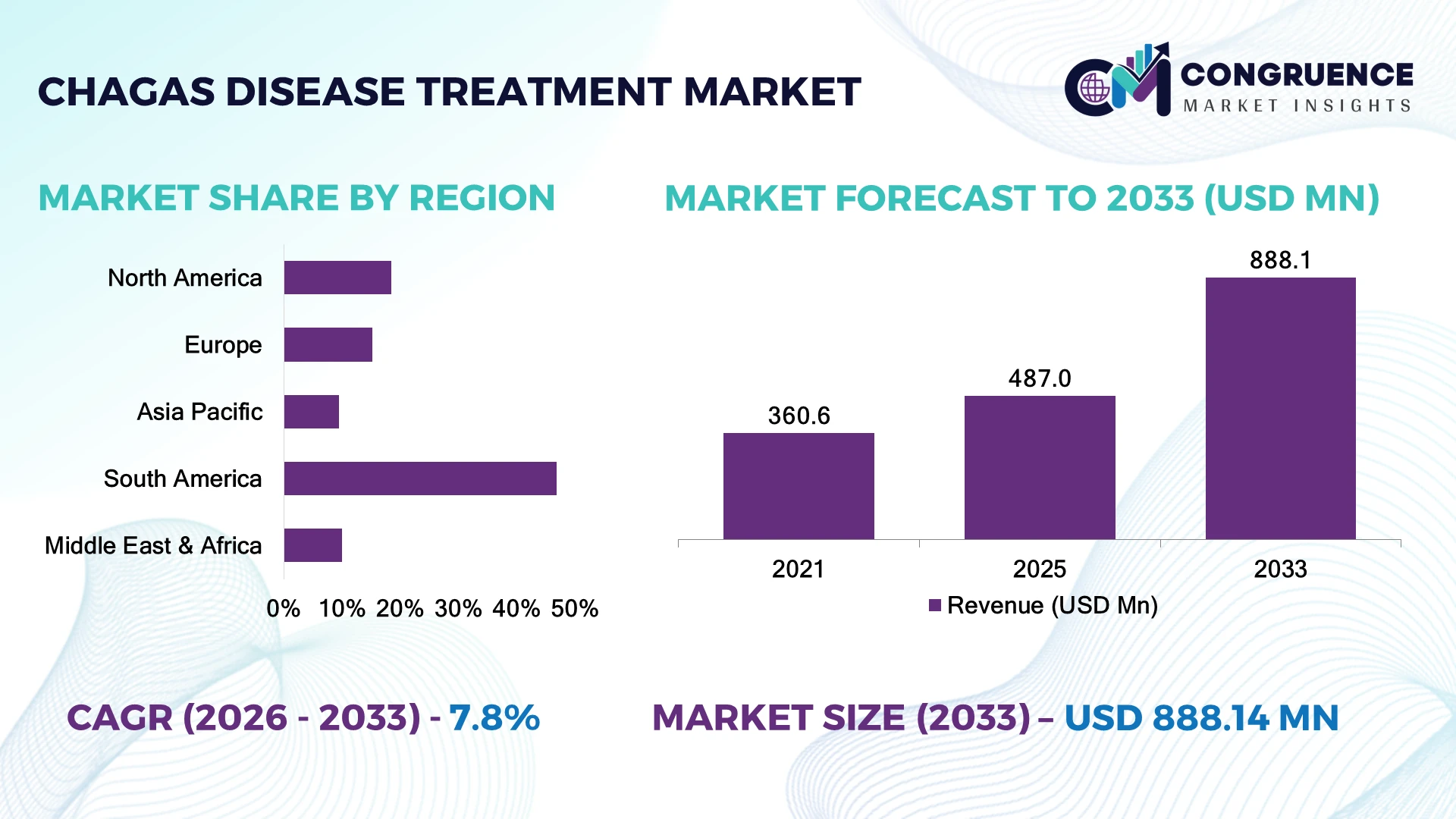
Brazil remains the dominant country, accounting for approximately 34% of global treatment demand, supported by nationwide surveillance programs, over USD 120 million in annual neglected-disease initiatives, and screening coverage exceeding 70% in high-risk states. Argentina follows with nearly 18% market participation and broader rural diagnostic deployment. The Pan American Health Organization’s elimination agenda has accelerated treatment access, while digital diagnostic platforms improved case identification by more than 25% in selected healthcare networks.
Strategic focus on early detection infrastructure and treatment accessibility continues to strengthen competitive positioning across endemic healthcare systems.
Market Size & Growth: USD 487.0 million in 2025, reaching USD 888.1 million by 2033, supported by expanded screening networks and improved antiparasitic drug access.
Top Growth Drivers: Congenital screening expansion (+28%), diagnostic coverage growth (+24%), and public-health funding increases (+19%).
Short-Term Forecast: By 2028, diagnostic turnaround times are projected to decline by 20% through digital testing integration.
Emerging Technologies: AI-assisted diagnostics, molecular PCR platforms, and cloud-connected disease surveillance systems are reshaping case detection.
Regional Leaders: Latin America (~USD 470 million), North America (~USD 145 million), and Europe (~USD 110 million) benefit from rising screening adoption and migrant-health initiatives.
Consumer/End-User Trends: More than 65% of newly identified cases originate from expanded maternal and community screening programs.
Pilot/Case Example: In 2024, integrated screening projects in Brazil improved early case identification rates by approximately 30%.
Competitive Landscape: Bayer holds an estimated 16% share alongside Insud Pharma, Laboratorio Elea, Pfizer, and Novartis.
Regulatory & ESG Impact: Public-health policies increased targeted screening coverage by nearly 22% across endemic communities.
Investment & Funding: Over USD 300 million has been directed toward neglected tropical disease programs, partnerships, and diagnostic expansion.
Innovation & Future Outlook: Next-generation molecular diagnostics and decentralized treatment pathways are accelerating global disease-management strategies.
Chagas disease treatment continues to gain importance across infectious disease management programs, particularly in maternal health, blood screening, and community-based healthcare services. Advanced molecular diagnostic technologies are improving detection accuracy by over 20%, while decentralized testing models expand access in underserved regions. Growing regulatory attention toward neglected tropical diseases and strengthened pharmaceutical supply networks are creating a more resilient ecosystem, setting the stage for broader strategic market development.
The Chagas disease treatment market is becoming strategically important as governments, healthcare organizations, and pharmaceutical companies intensify efforts to address neglected tropical diseases. Expanded screening mandates, cross-border disease surveillance, and stronger public-health infrastructure are transforming disease management from reactive treatment toward proactive identification and intervention. This shift is increasing competitive activity around diagnostics, treatment accessibility, and patient monitoring solutions.
Technology adoption is reshaping operational efficiency across endemic healthcare systems. Modern PCR-based diagnostic platforms deliver detection accuracy improvements of approximately 25% compared with conventional serological screening pathways while reducing confirmation timelines. Brazil and Argentina continue to lead large-scale deployment through established disease-control programs, whereas the United States and Spain are emphasizing migrant-population screening and specialized infectious disease services. Over the next two to three years, digital surveillance integration is expected to increase case-tracking efficiency by nearly 20%.
Healthcare providers are increasingly deploying integrated screening programs linking maternal health, blood-bank testing, and community outreach initiatives. Companies are responding through diagnostic partnerships, localized supply agreements, and expanded treatment distribution networks. Organizations that secure strong diagnostic ecosystems, regulatory alignment, and treatment accessibility are positioned to achieve lasting operational advantages and stronger long-term relevance within the evolving infectious disease management landscape.
The most influential growth driver is the rapid expansion of screening and early-detection initiatives across endemic countries. Maternal screening coverage has increased by approximately 28% in several high-burden healthcare systems, while blood-bank testing penetration exceeds 90% in many regulated markets. Enhanced disease surveillance programs have improved confirmed case identification rates by nearly 25%. The Pan American Health Organization's elimination framework has accelerated government action, encouraging broader diagnostic deployment and treatment access. As detection rates improve, healthcare providers are identifying larger treatment-eligible populations, directly increasing therapeutic demand. Companies are responding by strengthening distribution networks, investing in diagnostic partnerships, and supporting integrated disease-management programs. A key strategic insight is that diagnostic expansion is now creating treatment demand more effectively than traditional awareness campaigns alone.
Despite progress, treatment accessibility remains constrained by healthcare infrastructure gaps and uneven diagnostic coverage. Nearly 30% of at-risk populations in remote endemic areas still face delayed diagnosis, while specialist infectious disease services remain concentrated in urban centers. Treatment initiation rates can vary by more than 20% between metropolitan and rural healthcare networks. Supply-chain dependence on a limited number of treatment providers further complicates consistent drug availability. These limitations reduce scalability and delay intervention during early disease stages. To mitigate risk, pharmaceutical companies and healthcare agencies are pursuing localized procurement strategies, regional stockpiling initiatives, and expanded community-health partnerships. A critical operational insight is that healthcare accessibility, rather than treatment efficacy, remains the primary bottleneck affecting market penetration.
A significant opportunity is emerging through digital diagnostics, decentralized healthcare delivery, and integrated disease surveillance ecosystems. AI-supported screening workflows have demonstrated diagnostic productivity gains of nearly 18%, while mobile testing initiatives have expanded outreach coverage by more than 25% in selected programs. Brazil and Colombia are increasingly deploying connected diagnostic platforms that enable faster case identification and referral management. Growing policy support for neglected tropical disease elimination is encouraging investment in telehealth-enabled infectious disease services. Companies are positioning through R&D collaborations, digital-health partnerships, and diagnostic platform expansion. A non-obvious strategic advantage lies in combining community screening data with predictive surveillance tools, enabling earlier intervention and more efficient allocation of healthcare resources across high-risk populations.
The principal long-term challenge involves maintaining consistent diagnosis, treatment, and follow-up across fragmented healthcare environments. Patient loss-to-follow-up rates can exceed 15% in certain endemic areas, while healthcare workforce shortages affect disease-management continuity. Cross-border migration patterns have increased screening complexity, requiring coordination among multiple healthcare systems and regulatory frameworks. Digital health adoption remains uneven, creating operational inconsistencies in patient tracking and outcome monitoring. These challenges affect treatment continuity, long-term disease control, and healthcare efficiency. Companies and public-health agencies must invest in workforce development, interoperable health-information systems, and coordinated care pathways. A decisive strategic insight is that future competitiveness will depend not only on therapeutic availability but also on the ability to manage patients effectively throughout the entire care continuum.
Expansion of Congenital Screening Programs Maternal and neonatal screening has become a central operational focus, with testing coverage increasing by nearly 28% across high-burden healthcare systems and early diagnosis rates improving by over 22%. Updated public-health mandates are integrating Chagas testing into prenatal workflows, reducing missed cases and accelerating treatment initiation. Healthcare providers are standardizing screening pathways, while pharmaceutical and diagnostic companies are expanding partnerships to support larger testing volumes and improve patient referral efficiency.
Adoption of Molecular Diagnostic Platforms Healthcare networks are rapidly deploying PCR-based and automated molecular testing systems, improving diagnostic sensitivity by approximately 20–25% compared with conventional workflows. Laboratory processing times have declined by nearly 18%, enabling faster treatment decisions. Hospitals in Brazil and Argentina are investing in centralized diagnostic infrastructure and digital reporting systems. Companies are responding through technology integration, laboratory automation, and diagnostic portfolio expansion to strengthen clinical throughput and operational consistency.
Decentralized Community Healthcare Delivery Community-based care models are gaining traction, with mobile testing initiatives increasing outreach coverage by more than 30% in underserved populations. Telehealth-supported follow-up programs have reduced patient attrition rates by nearly 15%. Workforce shortages and geographic barriers continue to drive decentralized deployment strategies. Organizations are restructuring service delivery models, strengthening local partnerships, and expanding digital patient-management platforms to improve treatment continuity and resource utilization.
Localized Supply and Treatment Access Supply-chain resilience has become a strategic priority following periodic procurement disruptions and cross-border distribution challenges. Regional stock availability has improved by approximately 17%, while localized procurement initiatives have reduced delivery delays by nearly 12%. Governments and healthcare providers are increasing inventory visibility and supplier diversification. Companies are establishing regional distribution agreements, expanding manufacturing support networks, and enhancing forecasting capabilities to ensure consistent treatment availability and operational stability.
Benznidazole remains the leading treatment type, accounting for approximately 62% of total market demand due to its established clinical use, broad treatment eligibility, and integration into national disease-control programs. Its widespread adoption across Brazil, Argentina, and Bolivia supports consistent utilization in both acute and early chronic disease management. Treatment protocols using benznidazole achieve adoption rates exceeding 70% in several endemic healthcare systems, reinforcing its dominant position. Companies continue prioritizing manufacturing continuity, treatment accessibility programs, and expanded distribution agreements to support sustained demand. Nifurtimox represents the fastest-growing treatment segment, supported by increasing treatment diversification strategies and expanded regulatory acceptance. Utilization has increased by nearly 18% over recent years as healthcare providers seek alternative therapeutic options for specific patient populations. While benznidazole remains the standard of care, nifurtimox is gaining relevance through broader clinical deployment and improved supply availability. Pharmaceutical organizations are investing in treatment optimization, patient-support initiatives, and collaborative healthcare programs. The evolving balance between established and alternative therapies is influencing procurement strategies, treatment planning, and long-term portfolio development across endemic healthcare systems.
Chronic Chagas disease treatment remains the largest application segment, representing approximately 68% of overall treatment utilization. The concentration of diagnosed chronic cases, particularly among adult populations, drives sustained demand for long-term disease management and monitoring services. Expanded screening initiatives have increased identification of asymptomatic chronic infections by nearly 25%, strengthening treatment volumes. Healthcare systems are integrating disease surveillance, patient tracking, and treatment coordination platforms to improve management outcomes and optimize resource allocation. Acute Chagas disease treatment is the fastest-growing application segment, supported by improved early detection capabilities and expanded congenital screening programs. Early-stage diagnosis rates have increased by nearly 20%, enabling faster therapeutic intervention and improved clinical outcomes. Congenital and transfusion-related case management programs are also gaining strategic importance as healthcare organizations strengthen preventive care pathways. Companies are scaling diagnostic integration, expanding treatment accessibility, and supporting community-level screening initiatives. Demand is increasingly shifting toward earlier intervention models, creating operational advantages for providers capable of linking diagnosis and treatment through integrated healthcare delivery systems.
Hospitals constitute the dominant end-user segment, accounting for approximately 54% of treatment demand due to their role in diagnosis, specialist care, inpatient management, and treatment monitoring. Large healthcare facilities possess the infrastructure required for confirmatory testing, clinical assessment, and coordinated disease management. Diagnostic integration within hospital networks has improved patient identification rates by nearly 25%, further strengthening utilization. Pharmaceutical companies continue prioritizing hospital procurement channels, clinical education programs, and treatment-access partnerships to maintain market presence. Diagnostic laboratories represent the fastest-growing end-user group, supported by rising testing volumes and broader adoption of molecular diagnostic technologies. Laboratory-based screening activity has expanded by nearly 22%, driven by maternal screening programs, blood-bank testing, and community health initiatives. Public health agencies and specialized infectious disease centers also remain important purchasers, particularly in endemic countries. Companies are increasingly targeting these segments through customized service models, digital reporting integration, and collaborative healthcare ecosystems. Future demand is shifting toward decentralized testing networks and data-driven disease surveillance platforms that support earlier intervention and improved healthcare coordination.
South America accounted for the largest market share at 46.8% in 2025 however, Asia-Pacific is expected to register the fastest growth, expanding at a CAGR of 8.9% between 2026 and 2033.
North America accounted for approximately 18.5% of the global market in 2025, supported by expanding infectious disease surveillance programs and increasing diagnosis among migrant populations originating from endemic countries. Healthcare providers are integrating Chagas testing into blood-bank screening, maternal health programs, and specialized infectious disease clinics. The United States leads regional deployment, with more than 70% of specialized Chagas disease treatment capacity concentrated within major healthcare networks. Molecular diagnostic adoption has improved diagnostic accuracy by nearly 25%, while digital patient-monitoring systems are reducing treatment follow-up gaps. Strategic collaborations between hospitals, diagnostic laboratories, and public health organizations continue to strengthen early detection capabilities. Increased investment in laboratory infrastructure and disease awareness initiatives is improving treatment accessibility and supporting more structured disease-management pathways across the region.
United States Market Outlook: The United States represents the largest national market in North America due to its advanced healthcare infrastructure, strong diagnostic capabilities, and growing emphasis on neglected infectious diseases. More than 300 specialized healthcare centers and infectious disease programs actively support screening and treatment activities. Expanding integration of molecular diagnostics and electronic health-record systems is improving patient identification rates, while public health agencies continue strengthening blood donor and maternal screening initiatives to improve disease detection efficiency.
Europe held approximately 15.2% of the global market in 2025, driven by structured healthcare systems and increasing focus on imported infectious diseases. The region has strengthened screening protocols for at-risk populations, particularly within blood transfusion services and maternal healthcare networks. Advanced laboratory infrastructure supports widespread use of molecular diagnostic platforms, contributing to improved case confirmation and treatment planning. Several healthcare systems have expanded infectious disease monitoring programs, increasing testing volumes by nearly 20% over recent years. Healthcare providers are emphasizing integrated disease-management approaches that combine diagnostics, specialist consultation, and patient follow-up. Enhanced cross-border healthcare coordination and modernization of laboratory workflows are further improving operational efficiency and supporting more consistent treatment delivery across key European healthcare systems.
Spain Market Outlook: Spain remains the most strategically important market in Europe due to its large Latin American migrant population and established infectious disease expertise. Screening programs cover a significant proportion of at-risk maternal and blood donor populations, while specialized hospitals maintain extensive experience in Chagas disease management. Diagnostic adoption continues to expand, with advanced laboratory testing now supporting faster case confirmation and more effective patient referral pathways throughout the national healthcare network.
Asia-Pacific accounted for approximately 9.5% of the global market in 2025 and is emerging as the fastest-developing region due to increasing investment in infectious disease diagnostics and healthcare modernization. Although Chagas disease prevalence remains relatively limited, healthcare institutions are strengthening preparedness capabilities through advanced laboratory deployment and surveillance initiatives. Large urban healthcare centers are investing in molecular testing technologies, improving diagnostic processing efficiency by nearly 18%. Regional pharmaceutical organizations are also expanding participation in neglected disease research and specialty treatment programs. Growing international mobility and healthcare globalization are encouraging broader disease-monitoring capabilities. The region's operational advantage lies in its expanding laboratory infrastructure, scalable healthcare systems, and increasing adoption of digital disease surveillance platforms.
Japan Market Outlook: Japan is the leading market within Asia-Pacific due to its highly advanced healthcare infrastructure and strong emphasis on infectious disease preparedness. Specialized medical institutions continue expanding molecular diagnostic capabilities and international disease-monitoring programs. Laboratory automation adoption exceeds 60% in major healthcare facilities, improving testing efficiency and supporting rapid clinical decision-making. The country's regulatory focus on healthcare quality and surveillance excellence strengthens its role as a key regional center for advanced diagnostic deployment.
South America remains the core market for Chagas disease treatment, representing approximately 46.8% of global demand in 2025. The region benefits from established disease-control programs, extensive screening networks, and significant treatment deployment across endemic communities. Public health initiatives have expanded early diagnosis coverage by more than 25% in several high-burden areas, supporting increased treatment uptake. Large-scale maternal screening programs, blood-bank testing requirements, and community outreach activities continue to strengthen disease identification. While healthcare infrastructure disparities remain a challenge in remote locations, ongoing investment in diagnostic accessibility and treatment distribution is improving patient reach. Operational priorities increasingly focus on early intervention, surveillance integration, and healthcare workforce training to enhance long-term disease management outcomes.
Brazil Market Outlook: Brazil is the dominant country within South America, accounting for approximately 34% of global treatment demand. The country operates one of the most extensive Chagas disease surveillance and screening infrastructures worldwide. National healthcare programs support large-scale maternal and community screening efforts, while advanced laboratory networks improve diagnostic coverage. Digital health integration has increased confirmed case identification rates by more than 20%, reinforcing Brazil's position as the primary operational and strategic center for disease management activities.
Middle East & Africa accounted for approximately 10.0% of the global market in 2025, supported primarily by healthcare modernization initiatives and strengthening infectious disease preparedness frameworks. While disease prevalence remains relatively low, healthcare authorities are investing in laboratory infrastructure, disease surveillance systems, and advanced diagnostic technologies. Several healthcare networks have increased molecular testing capacity by nearly 15% through modernization programs and specialist laboratory development. Growing international migration and expanding healthcare connectivity are encouraging broader screening capabilities within tertiary healthcare institutions. Regional stakeholders are prioritizing diagnostic readiness and integrated disease-monitoring strategies to improve response capabilities for imported infectious diseases. These investments are gradually enhancing operational capacity and supporting more sophisticated disease-management frameworks.
Saudi Arabia Market Outlook: Saudi Arabia represents the most strategically significant market in the region due to its extensive healthcare investment programs and advanced medical infrastructure. Major healthcare institutions continue expanding molecular diagnostic laboratories and digital health platforms to strengthen infectious disease surveillance. Healthcare modernization initiatives have increased laboratory automation deployment by approximately 20% in key medical centers. Strong government-backed healthcare investment and technology adoption provide a solid foundation for future expansion of specialized diagnostic and disease-management capabilities.
Competition is centered between global pharmaceutical organizations such as Bayer AG, Pfizer Inc., Novartis AG, Laboratorio Elea, and Insud Pharma and specialized regional treatment suppliers serving endemic countries. The top five participants collectively account for approximately 58% of market activity, creating a moderately concentrated competitive structure. Global players compete through regulatory expertise, treatment accessibility programs, and established distribution networks, while regional manufacturers compete on procurement efficiency and local market penetration. Technology-enabled diagnostics influence treatment adoption, with integrated screening programs improving case identification by nearly 25% and reducing treatment initiation delays by approximately 18%. Supply reliability has become a major differentiator as healthcare systems prioritize uninterrupted access to benznidazole and nifurtimox therapies. Companies are expanding partnerships with public-health agencies, strengthening regional distribution capabilities, and increasing investment in patient-access initiatives. The competitive shift is moving toward integrated diagnosis-to-treatment ecosystems rather than standalone drug supply. Regulatory compliance, procurement relationships, and established healthcare networks remain significant entry barriers. Success increasingly depends on securing diagnostic integration, dependable supply chains, and strong public-health partnerships.
Pfizer Inc.
Novartis AG
Laboratorio Elea Phoenix S.A.
Insud Pharma S.L.
Abbott Laboratories
F. Hoffmann-La Roche Ltd.
Bio-Rad Laboratories, Inc.
QIAGEN N.V.
Thermo Fisher Scientific Inc.
Siemens Healthineers AG
bioMérieux SA
Danaher Corporation
Molecular diagnostics, automated PCR platforms, and digital surveillance systems currently represent the most influential technologies shaping Chagas disease management. Modern PCR-based workflows improve diagnostic sensitivity by approximately 20–25% compared with conventional serological confirmation pathways while reducing laboratory processing time by nearly 18%. More than 45% of specialized infectious disease centers in high-priority markets now utilize some form of molecular testing integration. Healthcare providers benefit through faster patient triage, improved treatment initiation, and stronger disease-monitoring capabilities.
Emerging technologies include AI-assisted screening algorithms, cloud-connected laboratory reporting systems, and decentralized testing platforms. These solutions improve case-detection productivity by nearly 15% and reduce administrative processing requirements by approximately 12%. Digital integration allows healthcare organizations to connect community screening programs with centralized treatment networks. Diagnostic companies and healthcare providers gain competitive advantages through improved workflow efficiency, greater screening coverage, and enhanced patient management continuity.
Between 2026 and 2028, predictive disease-surveillance platforms and integrated population-health analytics are expected to become increasingly important. Compared with legacy reporting systems, next-generation digital surveillance frameworks can improve case-tracking efficiency by approximately 30%. Organizations investing early in diagnostic connectivity, data interoperability, and automated disease-monitoring infrastructure will be positioned to strengthen operational performance and improve treatment delivery outcomes.
January 2024 Laboratorio Elea-supported MULTIBENZ clinical findings demonstrated that shorter benznidazole regimens maintained therapeutic effectiveness while reducing treatment discontinuation rates by approximately 35%. The outcome supports improved patient adherence strategies and strengthens treatment optimization efforts. Source: www.pubmed.ncbi.nlm.nih.gov
April 2025 Mundo Sano expanded implementation activities under the “Not a Single Baby with Chagas Disease” initiative across 8 participating countries, reinforcing congenital transmission prevention programs. The initiative broadened healthcare coordination and strengthened regional maternal screening pathways. Source: www.mundosano.org
November 2025 Bayer AG renewed its collaboration supporting neglected tropical disease treatment programs through 2030, including continued nifurtimox availability for Chagas disease management. The agreement extends long-term treatment access programs and strengthens healthcare system support in endemic countries. Source: www.who.int.com
June 2026 Mundo Sano advanced the SAFEStart+ implementation program across multiple countries, integrating Chagas disease into maternal and child health frameworks. The initiative expanded coordinated healthcare delivery models and strengthened congenital transmission prevention strategies across participating healthcare systems.
This report provides comprehensive analysis of the Chagas Disease Treatment Market across treatment types, applications, end-users, and major geographic regions. Coverage includes benznidazole and nifurtimox treatment categories, acute and chronic disease management applications, and key end-user groups such as hospitals, diagnostic laboratories, and public health institutions. Regional assessment spans North America, Europe, Asia-Pacific, South America, and the Middle East & Africa, highlighting deployment patterns, healthcare infrastructure development, and treatment accessibility trends.
The study evaluates diagnostic innovation, molecular testing adoption, digital disease-surveillance technologies, and evolving healthcare delivery models. More than 60% of market activity remains concentrated within integrated hospital and laboratory ecosystems, while community-based screening programs continue expanding treatment identification pathways. Strategic insights support investment planning, competitive benchmarking, partnership evaluation, expansion prioritization, and operational decision-making. The report also examines emerging disease-management approaches, healthcare modernization initiatives, and market positioning opportunities expected to influence industry direction between 2026 and 2033.
| Report Attribute / Metric | Details |
|---|---|
| Market Revenue (2025) | USD 487.0 Million |
| Market Revenue (2033) | USD 888.1 Million |
| CAGR (2026–2033) | 7.8% |
| Base Year | 2025 |
| Forecast Period | 2026–2033 |
| Historic Period | 2021–2025 |
| Segments Covered |
By Type
By Application
By End-User
|
| Key Deliverables | Revenue Forecast; Market Trends; Growth Drivers & Restraints; Technology Insights; Segmentation Analysis; Regional Insights; Competitive Landscape; Regulatory & ESG Overview; Recent Developments |
| Regions Covered | North America; Europe; Asia-Pacific; South America; Middle East & Africa |
| Companies Profiled | Bayer AG; Pfizer Inc.; Novartis AG; Laboratorio Elea Phoenix S.A.; Insud Pharma S.L.; Abbott Laboratories; F. Hoffmann-La Roche Ltd.; Bio-Rad Laboratories, Inc.; QIAGEN N.V.; Thermo Fisher Scientific Inc.; Siemens Healthineers AG; bioMérieux SA; Danaher Corporation |
| Customization & Pricing | Available on Request (10% Customization Free) |




