
Reports
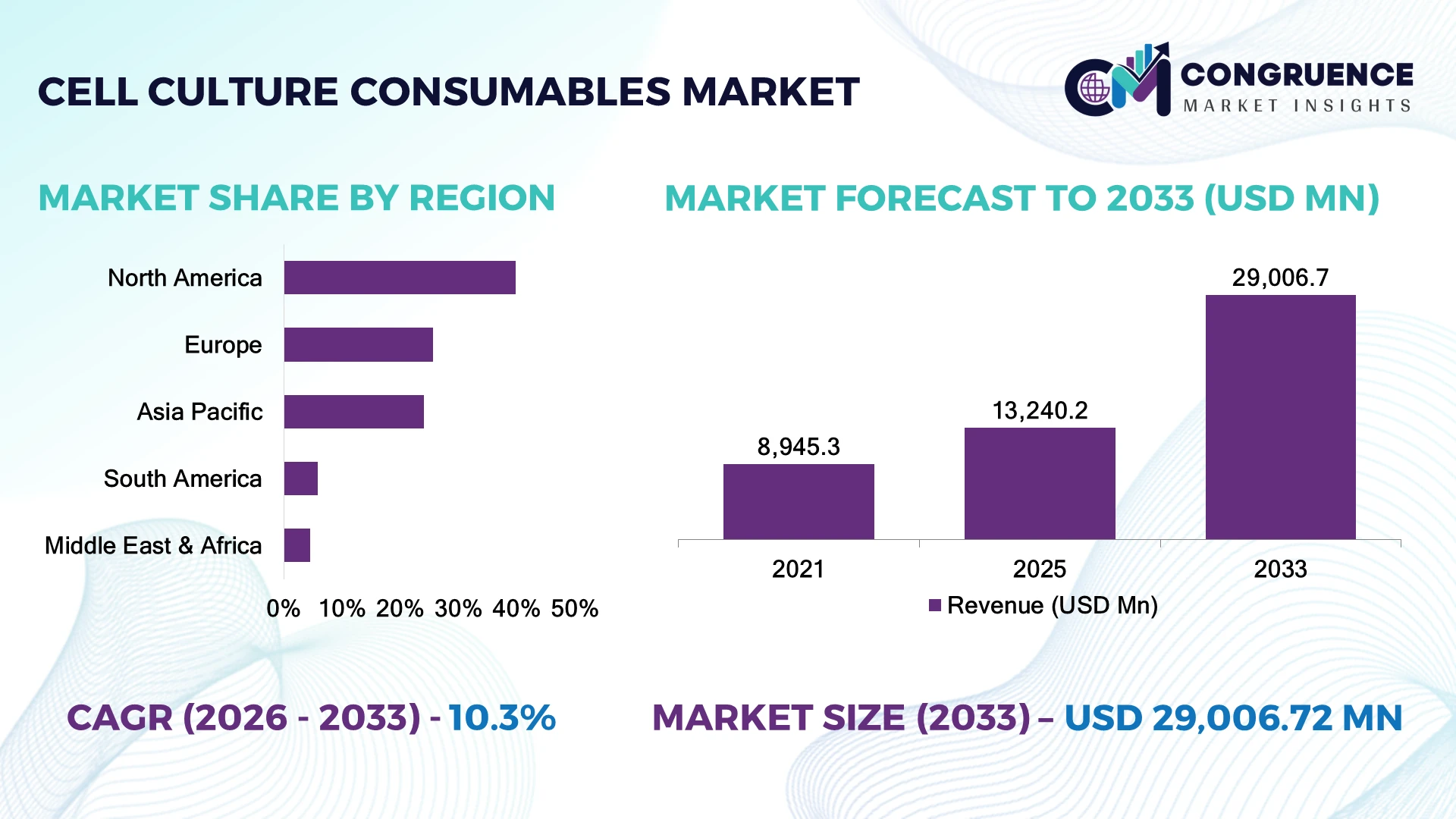
The Global Cell Culture Consumables Market was valued at USD 13,240.2 Million in 2025 and is anticipated to reach a value of USD 29,006.7 Million by 2033 expanding at a CAGR of 10.3% between 2026 and 2033. Growth is being driven by expanding biologics and cell-therapy manufacturing, higher single-use adoption, automated cell culture workflows, and stricter requirements for reproducibility and contamination control.
The United States remains the dominant country market, supported by advanced biopharmaceutical manufacturing, cell and gene therapy investment, and extensive research infrastructure. More than 90% of surveyed biomanufacturing facilities use single-use technologies in some capacity, while U.S. capacity expansion is accelerating. The February 2026 U.S. investment push, including major cell-therapy manufacturing projects, reinforces domestic sourcing priorities. Europe remains a strong established base, while China and India are scaling faster from a lower installed base.
Strategically, suppliers that secure validated consumables, localized production, and integrated automation capabilities are best positioned to capture high-value bioprocessing demand.
Market Size & Growth: USD 13.24 billion in 2025 to USD 29.01 billion by 2033 at 10.3% CAGR, driven by biologics, cell therapy, and single-use manufacturing.
Top Growth Drivers: Biologics 38%, cell therapy 31%, automation 24%, reflecting rising process complexity.
Short-Term Forecast: By 2028, automated consumable workflows are positioned to improve processing efficiency 10–15% and reduce manual handling 15–20%.
Emerging Technologies: AI-enabled monitoring, automated liquid handling, advanced media, and sensor-integrated consumables are reshaping high-throughput culture operations.
Regional Leaders: North America leads with approximately 40% share, Europe retains roughly 27%, while Asia-Pacific approaches 22% with faster facility expansion.
Consumer/End-User Trends: Biopharmaceutical manufacturers represent over 45% of high-value consumables usage, driven by recurring production requirements.
Pilot/Case Example: 2025 commercial-scale cell-culture expansion in North Carolina deployed 8 × 20,000-liter mammalian bioreactors, strengthening large-scale consumable demand.
Competitive Landscape: Thermo Fisher Scientific leads the organized market, competing with Merck, Danaher, Sartorius, and Corning across media, vessels, plates, bags, and single-use components.
Regulatory & ESG Impact: More than 90% of surveyed biomanufacturing facilities use single-use technologies, although recyclability and material-footprint requirements increasingly influence procurement.
Investment & Funding: U.S. cell-therapy and biomanufacturing investments exceeded USD 1 billion in major 2026 projects, reinforcing localized manufacturing and supply-chain resilience.
Innovation & Future Outlook: 2026–2028 adoption will center on closed systems, automation-ready consumables, process analytics, and modular manufacturing, shifting competition toward reliability and integration.
The Cell Culture Consumables Market is increasingly concentrated around biopharmaceutical production, cell and gene therapy, vaccine development, and advanced research laboratories. Single-use bags, culture vessels, media, filtration products, plates, and specialized reagents are becoming more integrated with automated workflows. More than 90% of surveyed manufacturing facilities already use single-use technologies in some capacity. U.S. manufacturing localization efforts in 2026 are also increasing attention on qualified domestic supply, inventory resilience, and validated alternatives, creating stronger commercial opportunities for suppliers with scalable and traceable product portfolios.
Cell culture consumables have become strategically important because they directly influence batch consistency, contamination control, production flexibility, and the scalability of biologics and cell-therapy manufacturing. Consumables are also recurring inputs, making supplier reliability as important as product performance. The current shift toward localized biomanufacturing is increasing demand for qualified suppliers capable of supporting both clinical and commercial production without compromising validation requirements.
Single-use workflows demonstrate the clearest technology advantage. Compared with traditional stainless-steel processing, single-use systems eliminate several cleaning and sterilization stages and can reduce changeover requirements by roughly 20–30%, while improving facility flexibility. More than 90% of surveyed manufacturing facilities now use single-use technologies in at least part of their operations. North America remains the strongest advanced-manufacturing base, whereas China and India are expanding capacity through newer facilities and localized supply networks.
Through 2026–2028, companies are prioritizing automation-ready consumables, closed-system processing, sensor integration, and standardized components. A major 2025 commercial-scale cell-culture facility in North Carolina began with eight 20,000-liter mammalian bioreactors, illustrating how large production footprints translate directly into recurring consumable requirements. Suppliers are responding by expanding manufacturing capacity, strengthening qualification programs, and developing partnerships with biopharmaceutical manufacturers and contract development organizations.
The competitive advantage is shifting toward suppliers that combine validated performance, reliable supply, automation compatibility, and rapid scale-up rather than competing solely on unit price.
Single-use workflows are expanding cell culture consumables demand as biopharmaceutical manufacturers prioritize contamination control, faster changeovers, and lower cleaning requirements. Adoption of disposable bioprocess components is approaching 40% across selected commercial biomanufacturing workflows, while demand for pre-sterilized bags, vessels, tubing, and filtration assemblies is rising alongside flexible production capacity. In the United States, continued expansion of biologics manufacturing is reinforcing procurement of application-specific consumables. Companies are responding by increasing localized manufacturing, qualifying dual suppliers, and developing higher-volume assemblies. The non-obvious shift is toward integrated consumable platforms rather than individual components, improving batch consistency while strengthening supplier retention and recurring revenue potential.
Polymer, resin, sterile-packaging, and specialty membrane costs continue to constrain consumables profitability, particularly for high-volume disposable assemblies. Raw-material exposure can represent 15–25% of manufacturing cost, while sterilization and validated packaging can add another 8–12% depending on configuration. European manufacturers face additional pressure from energy-intensive production and tighter chemical-management requirements. Supply interruptions involving specialized films or resin grades can extend qualification cycles because alternative materials require validation before commercial use. Companies are mitigating exposure through multi-year procurement contracts, regional sourcing, recycled-material development, and standardized component architectures. A critical strategic pressure point is qualification inertia: switching suppliers is technically feasible, but validation requirements can delay procurement diversification and preserve incumbent supplier positions.
High-growth opportunities are emerging around closed cell-processing systems, advanced 3D culture platforms, and automated media-handling consumables. Automated cell culture workflows can reduce manual interventions by roughly 30–50%, while closed systems increasingly support 60% or more of selected high-containment workflows. In Japan and South Korea, regenerative-medicine infrastructure is creating demand for sterile, application-specific cultureware rather than commodity plasticware. Manufacturers are investing in sensor-integrated vessels, low-binding surfaces, and modular fluidic assemblies that connect directly with automation platforms. The strongest opportunity lies in consumables engineered for reproducibility: companies that combine validated materials, automation compatibility, and digital batch traceability can capture higher-value procurement while reducing switching barriers for biopharmaceutical customers.
Scaling advanced cell culture consumables requires strict control of extractables, leachables, sterility, surface chemistry, and lot-to-lot consistency. Qualification programs can extend across multiple production cycles, while deviations affecting even 1–2% of batches can trigger costly investigations and supply reassessment. Skilled manufacturing and quality personnel remain another constraint as facilities expand faster than specialized validation expertise. In the United States and Germany, increasingly complex biologics workflows are raising expectations for documented material traceability and process consistency. Companies must therefore strengthen automated inspection, supplier qualification, digital quality systems, and manufacturing redundancy. The key execution challenge is balancing rapid capacity expansion with validation discipline; excessive acceleration can compromise consistency, while overqualification slows commercialization and customer onboarding.
Closed Workflow Adoption Accelerates Disposable closed-system components are gaining traction as manufacturers target contamination reduction and shorter changeovers. Adoption across selected advanced bioprocessing workflows is exceeding 40%, while automated handling can reduce manual interventions by 30–50%. Suppliers are integrating tubing, bags, connectors, and filtration into validated assemblies, shifting purchasing toward complete workflow solutions.
Low-Binding Materials Gain Ground Advanced polymer surfaces and low-binding treatments are increasingly replacing conventional culture materials where protein recovery and cell viability are critical. Performance improvements of 5–10% in selected workflows strengthen demand for specialized plates and vessels. Manufacturers are expanding surface-engineering capabilities as customers prioritize reproducibility over lowest-unit-cost procurement.
Regional Supply Chains Diversify Biopharma manufacturers are reducing dependence on concentrated consumables supply chains after disruptions exposed vulnerabilities in specialized polymers, films, and sterile packaging. Dual-sourcing strategies now target 20–30% greater supplier redundancy in selected procurement programs. Companies are adding regional production and qualification capacity to protect continuity and shorten replenishment cycles.
Automation Changes Procurement Models Automated cell culture platforms are increasing demand for standardized, machine-compatible consumables with tighter dimensional tolerances. Adoption in advanced laboratories and bioprocessing environments is expanding, while automated workflows deliver 30% or more reduction in repetitive handling. Suppliers are responding with modular consumables designed around robotic interfaces, barcode traceability, and integrated quality-control requirements.
Single-use consumables represent the leading type, estimated at approximately 58% of the global Cell Culture Consumables Market, supported by rapid changeovers, lower contamination exposure, and compatibility with flexible bioprocessing. Their adoption is particularly strong in biologics and cell-and-gene-therapy workflows, where disposable bags, vessels, tubing, and filtration assemblies reduce cleaning and validation burdens. Reusable consumables retain relevance in established laboratories because of lower recurring material requirements, while specialty formats serve higher-value applications requiring controlled surface characteristics. Companies are increasingly prioritizing integrated single-use platforms, with customized assemblies improving workflow standardization by roughly 15–20%.
Advanced single-use and application-specific formats are the fastest-growing type, with adoption expanding as manufacturers move toward closed and modular production. BioPhorum's 2025 industry work identifies single-use systems as pivotal to cell-and-gene-therapy manufacturing because they improve flexibility and reduce cross-contamination risk. Suppliers are therefore expanding qualified materials, regional capacity, and component partnerships, shifting investment from commodity consumables toward validated, higher-margin configurations.
BioPhorum's 2025 materials-and-components assessment highlights single-use systems as enabling flexible cell-and-gene-therapy manufacturing while emphasizing sterility, material-grade, and qualification requirements.
Biopharmaceutical production is the leading application, accounting for an estimated 63% of Cell Culture Consumables Market demand, reflecting intensive consumption of culture vessels, bags, media-handling components, filtration products, and sterile fluid-transfer assemblies. Demand concentration is reinforced by commercial biologics manufacturing, where process consistency and contamination control carry higher economic consequences than unit-price optimization. Research and diagnostic applications remain established but operate at lower consumption volumes. Cell-and-gene-therapy manufacturing is the fastest-growing application, supported by increasingly specialized closed processing and stringent material qualification requirements. Companies are expanding application-specific product portfolios, with integrated consumable assemblies reducing manual handling requirements by approximately 20–30%.
The shift from conventional stainless-steel workflows toward flexible single-use processing is reshaping procurement priorities. BioPhorum reported in 2025 that new plants, rather than existing facilities, were driving increases in purchase orders, while suppliers were already filling capacity and facing workforce constraints. This strengthens demand for scalable, preconfigured consumables and favors suppliers capable of supporting rapid facility commissioning.
BioPhorum's 2025 supply survey found that increased purchase orders were being driven by new plants and new product launches, reinforcing the importance of scalable consumable supply for expanding biomanufacturing capacity.
Biopharmaceutical companies are the dominant end-user, representing approximately 61% of market demand because commercial manufacturing requires continuous, validated consumption of sterile cultureware and fluid-management components. Their procurement is driven by batch throughput, contamination control, qualification history, and supply continuity rather than unit cost alone. Contract development and manufacturing organizations hold the fastest-growing position as outsourcing expands flexible production capacity and enables smaller developers to access specialized manufacturing infrastructure. Research institutes and academic laboratories remain important buyers, but their purchasing is more fragmented and price-sensitive, with approximately 20–25% greater emphasis on standardized laboratory formats.
Companies are increasingly targeting CDMOs through modular product configurations, supply agreements, technical qualification support, and regional inventory. The competitive advantage is shifting toward suppliers able to demonstrate interchangeability without compromising validated performance. BioPhorum's 2025 interchangeability guidance highlighted performance, compatibility, and safety concerns when substituting single-use components, making qualification support a strategic differentiator rather than an administrative service.
BioPhorum's 2025 industry guidance identified inconsistent interchangeability criteria for single-use components as a supply-chain challenge, reinforcing the value of qualified alternatives and standardized supplier documentation.
North America accounted for the largest market share at 39.8% in 2025 however, Asia-Pacific is expected to register the fastest growth, expanding at a CAGR of 11.2% between 2026 and 2033.
Commercial biomanufacturing expansion is shifting consumable procurement toward high-volume, qualified platforms
North America maintains the largest market position, supported by dense biologics manufacturing, advanced research infrastructure, and extensive CDMO capacity. The United States represents the principal demand center, with commercial-scale cell culture facilities increasingly driving recurring purchases of single-use bags, vessels, tubing, filtration assemblies, and specialized cultureware. In 2025, Fujifilm Biotechnologies opened its North Carolina commercial-scale cell culture manufacturing site with eight 20,000-liter mammalian bioreactors in the first phase, demonstrating the scale of new production infrastructure. This expansion strengthens demand for validated, high-volume consumables and favors suppliers with domestic manufacturing, rapid qualification, and integrated product portfolios.
United States Market Outlook: The United States remains the strategic anchor because biologics, cell therapy, and CDMO manufacturing are concentrated around established hubs in North Carolina, Pennsylvania, California, and Massachusetts. In 2026, Johnson & Johnson announced a $1 billion Pennsylvania cell-therapy facility, reinforcing domestic manufacturing localization and creating additional downstream demand for specialized cell-processing consumables.
Regulatory discipline and biomanufacturing modernization are favoring validated premium consumables
Europe represents a mature but technologically sophisticated market, with Germany, Switzerland, the United Kingdom, France, and Ireland supporting substantial pharmaceutical and biotechnology manufacturing. Procurement increasingly emphasizes material traceability, sterility assurance, extractables-and-leachables control, and supplier qualification. Germany remains a major industrial hub, although investment decisions are becoming more sensitive to pharmaceutical cost pressures and policy uncertainty. Companies are responding by prioritizing high-value consumables, localized inventory, and multi-site supply arrangements. The region's established biologics base supports stable demand for single-use systems, while advanced therapy manufacturing is increasing requirements for specialized cultureware and closed-processing components.
Germany Market Outlook: Germany combines pharmaceutical manufacturing depth with strong laboratory infrastructure and established biotechnology clusters around Munich, Berlin, Frankfurt, and the Rhine region. Its position supports demand for precision cultureware and validated single-use assemblies. However, manufacturers are increasingly balancing production investment against healthcare cost pressures, making productivity, automation compatibility, and procurement efficiency important differentiators.
Manufacturing localization is converting Asia-Pacific into a strategic bioprocessing supply hub
Asia-Pacific is gaining strategic importance as China, Japan, South Korea, Singapore, and India expand biologics manufacturing, clinical research, and biotechnology infrastructure. China is particularly important for localized production and supplier development. In Shanghai, Danaher's Cytiva expanded its cell-culture development capabilities in 2025, while Leica Microsystems committed RMB 200 million to expand a manufacturing and R&D base, with about 60% of its business expected to be localized after completion. These investments strengthen regional procurement ecosystems and encourage suppliers to establish manufacturing, technical-support, and qualification capabilities closer to customers.
China Market Outlook: China offers the strongest combination of manufacturing scale, pharmaceutical investment, research infrastructure, and localization momentum. Shanghai, Suzhou, Beijing, and Tianjin are becoming important biopharmaceutical production hubs. Novo Nordisk's Tianjin expansion included RMB 800 million for new quality-testing laboratories in 2025, while cumulative investment at the site exceeded RMB 10 billion, supporting increasingly sophisticated local biomanufacturing requirements.
Pharmaceutical capacity expansion is strengthening localized consumables demand
South America remains a developing market where Brazil accounts for the largest share of biotechnology and pharmaceutical manufacturing activity. Demand is concentrated around São Paulo, Minas Gerais, and other established pharmaceutical clusters, with imports still important for specialized cultureware, sterile assemblies, and advanced bioprocessing components. Brazil's manufacturing expansion is strengthening the underlying consumables opportunity. In April 2025, Novo Nordisk announced an 8 billion DKK investment in its Montes Claros facility, including additional aseptic production processes and quality-control infrastructure. The expansion supports greater demand for validated sterile consumables while encouraging suppliers to improve local distribution and technical support.
Brazil Market Outlook: Brazil is the region's strongest commercial opportunity because of its pharmaceutical manufacturing base, large healthcare system, and growing biologics production requirements. The Novo Nordisk Montes Claros expansion is expected to create 600 permanent positions and adds advanced aseptic and quality-control capabilities, strengthening the industrial ecosystem around high-specification consumables.
Biotechnology localization is creating a new demand center for advanced consumables
The Middle East & Africa market is transitioning from import-led procurement toward localized biotechnology and pharmaceutical production, with Saudi Arabia emerging as the principal investment hub. The Kingdom's 2025 health investment announcements included more than USD 625 million in life-sciences investments, including USD 266 million committed toward medical-technology localization. These initiatives are increasing requirements for sterile cultureware, closed processing components, and specialized cell-therapy consumables. Suppliers are responding through partnerships, local technical support, and manufacturing-localization strategies rather than relying exclusively on imported products.
Saudi Arabia Market Outlook: Saudi Arabia has the strongest strategic position in the region because its National Biotechnology Strategy links pharmaceutical localization with advanced therapy manufacturing. In 2025, the country launched its first gene and cell therapy manufacturing facility, covering more than 5,000 square meters and targeting 2,400 therapeutic doses annually by 2030. The facility is projected to address approximately 9% of domestic advanced-therapy demand, creating a specialized downstream market for cell culture and cell-processing consumables.
Thermo Fisher Scientific, Danaher, Merck KGaA, Sartorius, and Corning compete as global platform leaders, while Avantor, Lonza, BD, Eppendorf, and specialized regional suppliers challenge them through focused portfolios and pricing. The top five players collectively command an estimated 60–65% share, creating a concentrated structure where scale and qualification history matter. Technology differentiates roughly 30% of purchasing decisions in advanced workflows, while supply continuity influences approximately 25%; customization and validated interoperability increasingly determine premium contracts. Thermo Fisher competes through breadth and distribution, Danaher through integrated bioprocessing, Corning through specialized culture surfaces and vessels, and Sartorius through automation-oriented platforms. Players are expanding localized capacity, partnering with biotechnology manufacturers, and integrating consumables with closed processing systems. The competitive shift is moving from commodity plasticware toward application-specific, single-use, and cell-therapy-ready formats. Entry barriers remain high because material qualification and regulatory validation constrain supplier switching. Winning requires validated performance, reliable supply, rapid customization, and integrated workflow support.
Thermo Fisher Scientific Inc.
Danaher Corporation
Merck KGaA
Sartorius AG
Corning Incorporated
Avantor, Inc.
Lonza Group AG
Becton, Dickinson and Company
Eppendorf SE
Bio-Rad Laboratories, Inc.
Takara Bio Inc.
Bio-Techne Corporation
PromoCell GmbH
Greiner AG
Single-use culture platforms, low-binding surfaces, advanced microcarriers, and closed-system consumables are reshaping cell culture workflows in 2026. Single-use configurations increasingly replace conventional reusable setups in commercial bioprocessing, reducing cleaning and turnaround requirements by approximately 20–30%. Closed assemblies with presterilized tubing, connectors, and sensors also reduce manual interventions by roughly 15–25%, strengthening contamination control and batch consistency.
Advanced fixed-bed systems and automated adherent-cell platforms represent the disruptive layer. Corning's Ascent FBR, for example, supports scalable configurations and has demonstrated greater than 90% transfection efficiency with viable-cell recovery above 90%. Compared with conventional manual expansion workflows, automated closed platforms can improve operational productivity by approximately 20–30%. Suppliers combining consumables with automation controllers, sensors, and process analytics gain an advantage because customers increasingly purchase validated workflows rather than standalone components.
Between 2026 and 2028, AI-assisted process monitoring, digital batch records, xeno-free media, and sensor-integrated consumables will accelerate convergence between laboratory plastics and intelligent bioprocess infrastructure. Adoption of automation-compatible consumables is expected to move toward 35–40% across advanced cell-processing environments. Technology leaders benefit most, but regional manufacturers can compete by localizing qualified components and shortening replenishment cycles. The strategic priority is interoperability: consumables designed for automated, closed, data-rich workflows will capture higher-value procurement and create stronger switching barriers.
May 2026 Thermo Fisher Scientific launched the Gibco CTS DynaXS Single-Use Bioreactor for scalable cell-therapy manufacturing, extending its single-use portfolio into higher-throughput workflows and strengthening demand for integrated, validated consumables. The platform targets improved scalability across commercial cell-processing operations. Source: Thermo Fisher Scientific
September 2025 Corning introduced the Ascent Fixed Bed Reactor System 5 with 1 m², 2.5 m², and 5 m² configurations, supporting attachment-dependent cell processing with more than 90% viable-cell recovery and automated monitoring. The launch strengthens integrated single-use consumable adoption. Source: Corning
March 2026 Sartorius expanded its cell-therapy platform portfolio with integrated process technologies designed to improve scalability and reduce labor intensity in autologous manufacturing. The company emphasized closed processing, process control, and standardized consumables as critical elements for reproducible cell expansion. Source: Sartorius
2025 BioPhorum's industry work identified single-use systems, material qualification, and component interchangeability as increasingly important priorities for cell-and-gene-therapy manufacturing. The findings reinforce supplier qualification and supply continuity as competitive differentiators as advanced therapy production expands. Source: BioPhorum
The Cell Culture Consumables Market Report evaluates the industry across major product types, applications, end-users, technologies, and geographic markets. Coverage includes culture vessels, media, reagents, sera, supplements, single-use assemblies, filtration components, microcarriers, and specialized consumables supporting conventional, 3D, stem-cell, cell-therapy, and biopharmaceutical workflows. Application analysis covers research, drug discovery, diagnostics, tissue engineering, vaccine development, and commercial biomanufacturing.
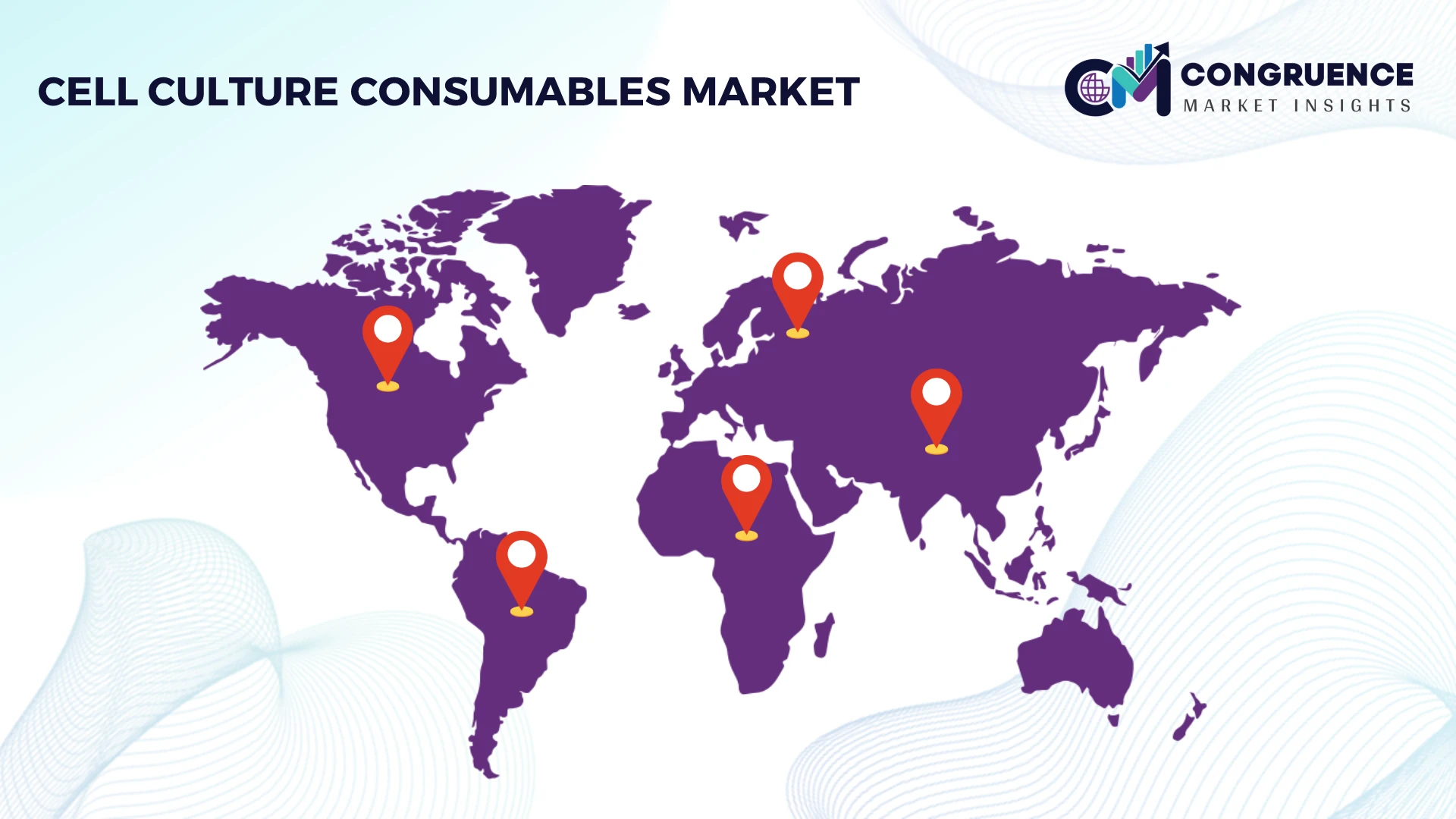
The report assesses North America, Europe, Asia-Pacific, South America, and Middle East & Africa, with country-level analysis focused on manufacturing capacity, biotechnology investment, procurement patterns, and infrastructure development. Competitive coverage evaluates leading suppliers, emerging specialists, technology positioning, localization strategies, and supply-chain resilience. Quantitative indicators include segment shares, adoption levels, deployment patterns, and supplier participation. The analysis supports investment planning, capacity expansion, sourcing decisions, competitive positioning, technology prioritization, and strategic planning through 2033.
| Report Attribute/Metric | Report Details |
|---|---|
|
Market Revenue in 2025 |
USD 13,240.2 Million |
|
Market Revenue in 2033 |
USD 29,006.7 Million |
|
CAGR (2026 - 2033) |
10.3% |
|
Base Year |
2025 |
|
Forecast Period |
2026 - 2033 |
|
Historic Period |
2021 - 2025 |
|
Segments Covered |
By Type
By Application
By End-User
|
|
Key Report Deliverable |
Revenue Forecast, Growth Trends, Market Dynamics, Segmental Overview, Regional and Country-wise Analysis, Competition Landscape |
|
Region Covered |
North America, Europe, Asia-Pacific, South America, Middle East, Africa |
|
Key Players Analyzed |
Thermo Fisher Scientific Inc., Danaher Corporation, Merck KGaA, Sartorius AG, Corning Incorporated, Avantor, Inc., Lonza Group AG, Becton, Dickinson and Company, Eppendorf SE, Bio-Rad Laboratories, Inc., Takara Bio Inc., Bio-Techne Corporation, PromoCell GmbH, Greiner AG |
|
Customization & Pricing |
Available on Request (10% Customization is Free) |




