
Reports
The Global Carcinoembryonic Antigen Market was valued at USD 2285.5 Million in 2025 and is anticipated to reach a value of USD 3897.6 Million by 2033 expanding at a CAGR of 6.9% between 2026 and 2033. Market growth is driven by increasing colorectal cancer monitoring requirements, automated immunoassay adoption, expanding oncology diagnostic infrastructure, and integration of CEA testing into personalized cancer surveillance.
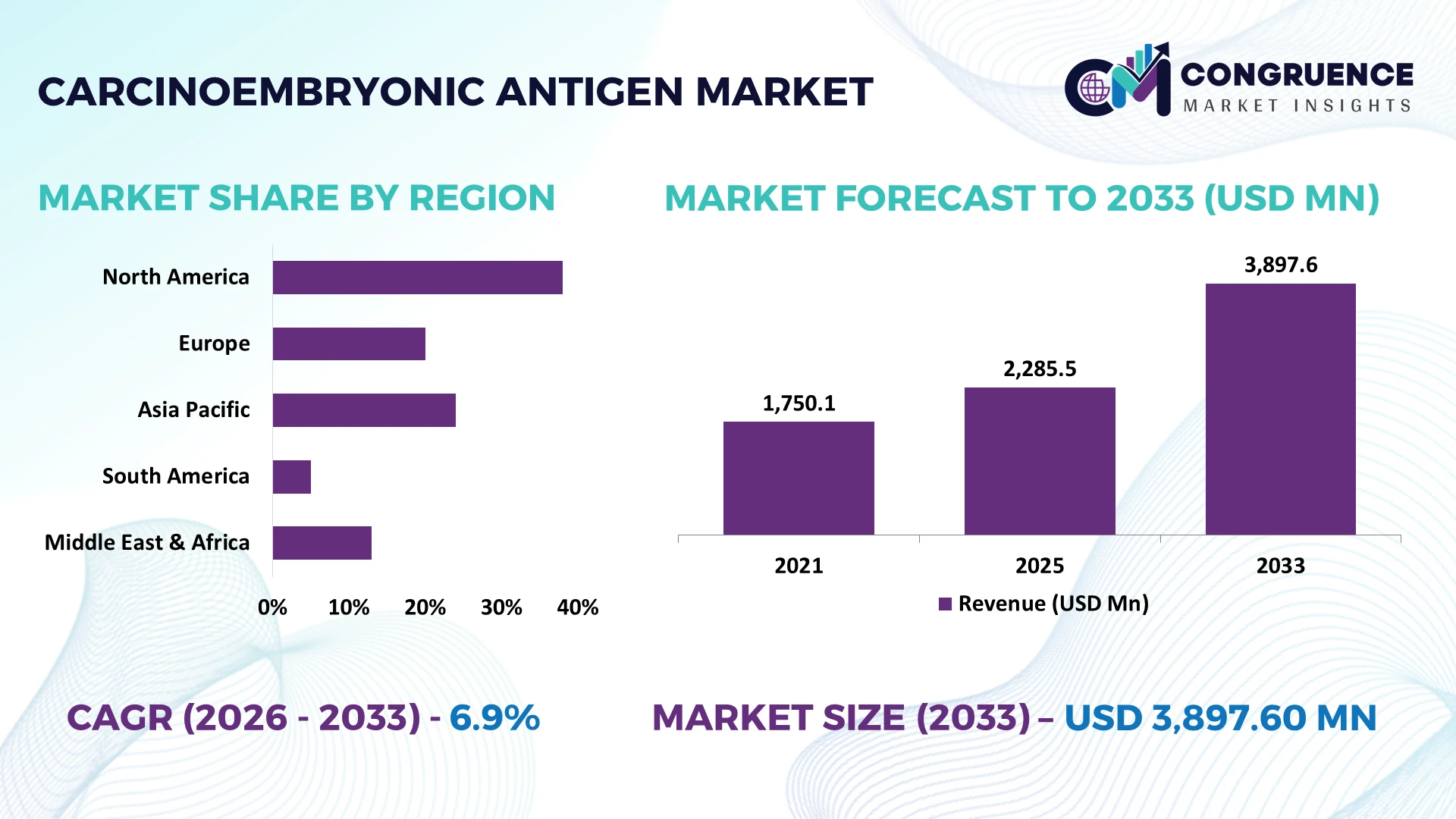
The United States maintains a dominant position in the Carcinoembryonic Antigen Market, supported by advanced clinical laboratories, established oncology treatment networks, and strong diagnostic technology investments. North America accounted for approximately 34% of global CEA market demand in 2025. The United States recorded an estimated 154,270 new colorectal cancer cases, creating substantial requirements for post-treatment monitoring. Roche's USD 50 billion US investment commitment strengthens pharmaceutical and diagnostic infrastructure. Compared with India's expanding laboratory networks, American healthcare facilities emphasize automated immunoassays, advanced biomarker analysis, and integrated oncology surveillance.
Diagnostic manufacturers prioritizing high-throughput CEA assays, standardized laboratory workflows, and reliable reagent supply are positioned to strengthen competitive advantages in precision oncology testing.
Market Size & Growth: Valued at USD 2285.5 Million in 2025, projected to USD 3897.6 Million by 2033 at 6.9% CAGR, driven by expanding post-treatment surveillance protocols and assay automation .
Top Growth Drivers: Colorectal cancer incidence growth (9.3% of global cancer deaths), Asia-Pacific screening program expansion (6.82% CAGR), and companion diagnostic integration into oncology workflows .
Short-Term Forecast: By 2027, point-of-care CEA platforms deliver results from whole blood in 10 minutes, reducing laboratory turnaround by 40–60% for outpatient monitoring .
Emerging Technologies: AI-driven CEA trajectory analysis, capillary-blood micro-collection matching venous-draw accuracy, and multiplex immunoassays combining CEA with ctDNA signatures .
Regional Leaders: North America at 38.4%–41.86% revenue share, Asia-Pacific expanding at 6.82% CAGR, and Europe maintaining reimbursement-driven surveillance demand .
Consumer/End-User Trends: Assay kits command 45.62% product share, while consumables and reagents grow at 7.21% CAGR as recurring test volumes scale .
Pilot/Case Example: Thailand’s two-step FIT-plus-CEA program feeds patients into colonoscopy pathways, demonstrating CEA’s operational role in national screening infrastructure .
Competitive Landscape: Roche Diagnostics and Abbott Laboratories lead; Siemens Healthineers, Danaher, bioMérieux, and Thermo Fisher compete across automated immunoassay platforms .
Regulatory & ESG Impact: FDA Breakthrough Device Designation for Haystack MRD (2025) signals regulatory shift toward blood-based monitoring; Medicare reimbursement sustains US CEA surveillance volumes .
Investment & Funding: NIH allocated over USD 6.5 billion to cancer research in 2022; bioMérieux acquired SpinChip Diagnostics in January 2025 for 10-minute immunoassay capability .
Innovation & Future Outlook: CEA-ctDNA combination algorithms, AI-augmented trajectory analysis, and decentralized capillary-blood collection reshape surveillance workflows .
The Carcinoembryonic Antigen Market encompasses diagnostic assays, immunoassay reagents, automated analyzers, and laboratory services supporting cancer treatment monitoring and recurrence assessment. Demand concentrates in hospitals, oncology centers, and clinical diagnostic laboratories, particularly for colorectal and gastrointestinal cancer management. Emerging innovations include ultrasensitive electrochemiluminescence assays, multiplex biomarker platforms, and digital laboratory integration. With approximately 1.54 million people living with a history of colorectal cancer in the United States, continuing surveillance represents an important clinical testing requirement. Increasing diagnostic localization and automated laboratory consolidation are reshaping procurement strategies, establishing a foundation for evaluating future competitive positioning and technology investment priorities.
The Carcinoembryonic Antigen Market is becoming strategically important as oncology diagnostics shift toward longitudinal biomarker surveillance, automated laboratory processing, and integrated cancer management. Increasing emphasis on monitoring treatment response and detecting colorectal cancer recurrence is strengthening demand for standardized CEA immunoassays. Healthcare institutions are modernizing diagnostic infrastructure through centralized laboratory networks, digital result interpretation, and automated reagent management. This transition creates opportunities for diagnostic manufacturers offering reliable assay performance, scalable instrumentation, and integrated laboratory information systems.
Advanced electrochemiluminescence platforms demonstrate substantial operational advantages over conventional low-throughput immunoassay workflows. Roche's cobas e 801 delivers up to 300 tests per hour, supports 48 reagent positions, and offers assay processing times beginning at 9 minutes. The United States emphasizes high-throughput oncology laboratories, while India is expanding automated diagnostic access through centralized testing networks and regional laboratory partnerships. These contrasting priorities influence equipment purchasing, reagent contracts, and service infrastructure investments.
Between 2026 and 2028, diagnostic modernization will prioritize integrated biomarker panels, automated quality control, and connected oncology surveillance platforms. Roche's deployment of modular immunochemistry systems demonstrates how scalable instrumentation supports consolidated testing operations. Manufacturers strengthening assay standardization, laboratory connectivity, and regional technical support will gain durable competitive advantages.
Increasing colorectal cancer incidence and structured post-treatment monitoring are strengthening demand for carcinoembryonic antigen assays. The United States recorded approximately 154,270 new colorectal cancer cases and 52,900 associated deaths in 2025, reinforcing the clinical importance of oncology surveillance. More than 33% of eligible American adults remain inadequately screened for colorectal cancer, highlighting gaps in the wider diagnostic pathway. Although CEA is not recommended for primary screening, appropriate postoperative surveillance creates recurring laboratory testing requirements. Healthcare providers are integrating serial biomarker measurement with imaging and specialist follow-up. Diagnostic manufacturers are responding through automated assay expansion, oncology laboratory partnerships, and reagent supply agreements. The strongest commercial advantage lies in predictable testing continuity rather than isolated diagnostic transactions.
Limited biomarker specificity and differences in laboratory interpretation constrain the clinical utility of standalone CEA measurements. In a colorectal cancer surveillance study, a CEA threshold of 5 ng/mL demonstrated 94.0% specificity but only 40.5% sensitivity for recurrence. Reducing the threshold to 2.5 ng/mL increased sensitivity to 71.4%, while specificity declined to 63.7%. These trade-offs complicate clinical decision thresholds and increase dependence on confirmatory assessment. Smoking, benign inflammatory conditions, and assay-specific analytical characteristics further influence interpretation. Laboratories must maintain consistent testing methods across serial measurements, particularly when patients transfer between healthcare providers. Diagnostic companies are strengthening calibration protocols, external quality assessment participation, and instrument-specific reference guidance to reduce interpretation variability and protect clinical confidence.
Integration of CEA testing with circulating tumor DNA analysis creates opportunities for more comprehensive colorectal cancer surveillance. In a published clinical evaluation, ctDNA demonstrated 70.7% sensitivity and 98.2% specificity for recurrence monitoring, illustrating its potential to complement established protein biomarker testing. Another surveillance study found that combining imaging with CEA achieved 73.3% sensitivity, compared with 20.0% for CEA measurement alone. These findings strengthen opportunities for diagnostic manufacturers to develop coordinated testing workflows rather than isolated assay products. China's expanding molecular diagnostic capabilities and centralized oncology laboratories provide a platform for integrated service development. Companies investing in multiplex testing, automated sample processing, and laboratory software integration can differentiate their portfolios through broader clinical utility and coordinated diagnostic reporting.
Implementing advanced CEA surveillance systems requires coordinated laboratory operations, reliable longitudinal records, and consistent interpretation across healthcare settings. Roche's cobas e 801 supports reaction times of 9, 18, or 27 minutes, depending on the assay, creating different processing requirements within consolidated immunochemistry workflows. Its 48 onboard reagent positions support broad testing menus but require coordinated inventory management and calibration scheduling. In the United States, fragmented oncology care networks complicate historical result accessibility when patients move between laboratories. Differences in analytical platforms and electronic reporting systems can interrupt reliable biomarker trend assessment. Diagnostic manufacturers must strengthen interoperability, automated quality management, and healthcare information system partnerships. Long-term competitive success depends on maintaining clinically meaningful result continuity across increasingly distributed diagnostic networks.
Capillary Home Sampling Gains Clinical Ground: Automated upper-arm capillary blood collection for CEA achieved 0.998 correlation with venous draws, with 86% of colorectal cancer patients preferring the TAP-II device over hospital phlebotomy. This shift enables frequent recurrence surveillance without clinic visits, reducing patient burden while sustaining serial monitoring adherence. IVD manufacturers are prioritizing capillary-compatible assay validation and at-home collection kit development to capture decentralized testing demand.
ctDNA Surveillance Complements CEA Monitoring: FDA granted Breakthrough Device Designation to Quest's Haystack MRD test in August 2025, with 94% of oncologists stating ctDNA MRD testing reduces recurrence diagnosis delays. Laboratories are adopting reflex testing algorithms that escalate to ctDNA when CEA rises sequentially, addressing CEA's 35.9% sensitivity limitation. Companies are partnering with molecular diagnostics developers to integrate CEA trajectory analytics with ctDNA workflows.
AI-Enhanced Biosensor Platforms Accelerate: AI-powered Raman and thermoplasmonic platforms now achieve CEA detection limits of 2 ng/mL in under 30 minutes, with multiplex capability reaching 14 samples simultaneously. This performance approaches commercial immunoassay sensitivity while enabling field-deployable point-of-care formats. Assay developers are investing in AI-driven signal analysis to reduce false positives from CEA's nonspecific elevation in smokers and diabetics.
Regulatory Coverage Expands for Non-Invasive Testing: CMS effective June 2026 covers blood-based biomarker screening once every three years with ≥90% sensitivity criteria, signaling payer shift toward molecular surveillance. Thailand's two-step FIT-plus-CEA program demonstrates operational integration into national screening pathways. Diagnostic companies are restructuring portfolios toward combined CEA-ctDNA algorithms that qualify for emerging reimbursement categories.
CEA Immunoassays represent the established core of the Carcinoembryonic Antigen Market, supported by automated laboratory compatibility, standardized antibody-based detection, and recurring oncology surveillance requirements. Assay kits accounted for approximately 45.62% of the broader CEA product market in 2025, demonstrating the commercial importance of established testing consumables. CEA Blood Tests remain central to routine clinical monitoring, while ELISA Kits support smaller laboratories and research environments requiring flexible batch testing. Manufacturers are strengthening immunoassay portfolios through reagent stability improvements, instrument compatibility, and streamlined sample preparation.
Chemiluminescence Assays represent an important technology-led expansion category because automated platforms support high-throughput testing and integrated clinical laboratory workflows. Point-of-Care Tests are advancing through portable electrochemical sensing technologies, although clinical deployment remains less established. CEA Test Reagents generate recurring procurement requirements associated with calibration, quality control, and routine testing. Diagnostic companies are investing in assay automation, instrument placement agreements, and reliable consumables distribution. These investments strengthen laboratory retention while shifting competitive differentiation toward analytical consistency and operational integration.
Colorectal Cancer Monitoring represents the leading application in the Carcinoembryonic Antigen Market, accounting for approximately 44.05% of global demand in 2025. Its dominance reflects established postoperative surveillance protocols, recurring biomarker measurement, and integration with specialist oncology follow-up. Cancer Recurrence Detection is gaining importance through increased emphasis on timely recognition of disease progression and coordinated diagnostic assessment. Clinical surveillance commonly incorporates CEA measurements every 3–6 months during the initial two years after eligible colorectal cancer treatment. Diagnostic manufacturers are strengthening automated testing availability, calibration consistency, and laboratory connectivity to support longitudinal patient monitoring.
Treatment Response Monitoring represents another important application as oncologists evaluate serial biomarker patterns alongside imaging and clinical findings. Lung Cancer Monitoring and Breast Cancer Monitoring involve selected clinical circumstances rather than routine standalone screening. Pancreatic Cancer Monitoring provides supplementary biomarker information within broader diagnostic evaluation. Manufacturers are adapting through oncology-specific assay portfolios, standardized reporting systems, and integrated laboratory partnerships. Competitive priorities increasingly emphasize clinically meaningful serial measurements, reliable turnaround times, and compatibility with established cancer management pathways.
Hospitals represent the leading end-user category in the Carcinoembryonic Antigen Market, with hospitals and surgical centers accounting for approximately 49.25% of global demand in 2025. Their dominance reflects established oncology departments, centralized laboratory infrastructure, and continuous requirements for treatment monitoring. Diagnostic Laboratories represent the fastest-expanding end-user category, supported by laboratory consolidation, outsourced testing arrangements, and increasing adoption of automated immunochemistry systems. Large diagnostic networks benefit from standardized reagent procurement, integrated analytical equipment, and centralized quality management. Manufacturers are strengthening analyzer placement agreements and long-term consumables contracts to maintain institutional relationships.
Oncology Centers contribute specialized demand through structured cancer management pathways, while Cancer Research Institutes utilize CEA testing for biomarker development and clinical investigations. Specialty Clinics require accessible diagnostic services for continuing patient assessment. Academic Medical Centers combine clinical testing with diagnostic technology evaluation and translational research. Companies are responding through differentiated analyzer capacities, laboratory software integration, and technical service partnerships. Future competitive positioning increasingly depends on supporting high-volume laboratories alongside specialist institutions requiring dependable analytical performance.
North America accounted for the largest market share at approximately 34% in 2025 however, Asia-Pacific is expected to register the fastest growth between 2026 and 2033, supported by laboratory automation, expanding oncology infrastructure, and increasing adoption of standardized cancer biomarker assays.

Automated Oncology Diagnostics and Advanced Laboratory Consolidation
North America maintains a leading position in the Carcinoembryonic Antigen Market through established oncology surveillance programs, advanced immunochemistry infrastructure, and extensive clinical laboratory networks. The United States drives regional demand through colorectal cancer follow-up, while Canada emphasizes coordinated cancer care and standardized testing pathways. Automated CEA assays are increasingly integrated into consolidated hospital laboratories, supporting consistent turnaround times and efficient reagent management. Roche's announced expansion of its American pharmaceutical and diagnostics operations includes 13 existing manufacturing sites and 15 research centers, strengthening domestic healthcare technology capabilities. Diagnostic manufacturers are emphasizing instrument connectivity, centralized quality assurance, and long-term reagent supply agreements. Increasing adoption of multidisciplinary oncology management also strengthens demand for dependable serial biomarker measurements. Suppliers combining analytical reliability with laboratory information system integration gain advantages in institutional procurement and clinical service continuity.
United States Market Outlook: The United States benefits from established cancer registries, advanced laboratory accreditation systems, and substantial investment in precision diagnostics. Approximately 154,270 new colorectal cancer cases were estimated for 2025, reinforcing the clinical importance of postoperative surveillance. Roche's planned creation of more than 12,000 direct and supporting jobs through its American investment program further strengthens the domestic life sciences ecosystem. Diagnostic manufacturers benefit from established oncology institutions, reimbursement infrastructure, and specialized laboratory service networks.
Harmonized Oncology Testing and Diagnostic Network Modernization
Europe represents a major market for carcinoembryonic antigen testing through extensive clinical laboratory infrastructure, coordinated cancer management pathways, and established diagnostic manufacturing capabilities. Germany, France, and the United Kingdom contribute substantial oncology laboratory demand, while Switzerland supports advanced immunoassay research and instrumentation development. The European Union recorded approximately 2.7 million new cancer diagnoses in 2024, reinforcing the importance of integrated diagnostic services. European healthcare systems increasingly emphasize standardized assay performance, reliable biomarker interpretation, and efficient laboratory referral networks. The In Vitro Diagnostic Regulation is reshaping manufacturer documentation, clinical performance evaluation, and product certification processes. Diagnostic companies are responding through regulatory investment, automated quality management, and coordinated laboratory service partnerships. Manufacturers maintaining consistent assay availability and efficient regulatory compliance strengthen their position across public healthcare procurement and specialist oncology diagnostic networks.
United Kingdom Market Outlook: The United Kingdom is advancing diagnostic service decentralization through NHS Community Diagnostic Centres and integrated cancer care pathways. England has approved 170 community diagnostic sites, expanding access to testing beyond conventional hospitals. Centralized pathology networks support specialist biomarker analysis alongside localized sample collection. This infrastructure creates opportunities for laboratory automation, standardized oncology reporting, and integrated sample logistics while reducing unnecessary patient travel for routine diagnostic appointments.
Diagnostic Localization and Expanding Oncology Testing Capacity
Asia-Pacific represents a strategically important expansion center for CEA diagnostics through large patient populations, developing laboratory infrastructure, and increasing domestic medical technology manufacturing. China maintains substantial demand for cancer biomarker monitoring, while Japan and South Korea contribute advanced immunoassay engineering and clinical laboratory automation. India is strengthening diagnostic accessibility through expanding hospital networks and organized pathology services. China's colorectal cancer burden reached approximately 517,106 new cases in 2022, illustrating the scale of the country's oncology management requirements. Domestic diagnostic manufacturers are developing automated chemiluminescence platforms, while international suppliers compete through analytical performance and hospital laboratory partnerships. Regional purchasing priorities increasingly emphasize instrument affordability, reliable reagent availability, and technical support. Manufacturers combining localized production with clinically validated assays gain stronger access to public hospital procurement and expanding diagnostic networks.
China Market Outlook: China represents a major manufacturing and commercialization center for automated CEA immunoassays. Domestic companies such as Mindray and Autobio Diagnostics develop chemiluminescence analyzers and associated testing reagents for hospital laboratories. China's colorectal cancer burden accounted for more than one-quarter of global new cases in the 2022 estimates, creating significant surveillance requirements. Domestic instrument production, established hospital procurement channels, and expanding oncology capabilities strengthen opportunities for localized diagnostic portfolios.
Public Oncology Programs and Diagnostic Accessibility Expansion
South America's Carcinoembryonic Antigen Market is shaped by public healthcare procurement, expanding cancer diagnostic networks, and demand for affordable laboratory testing. Brazil anchors regional activity through its hospital infrastructure, pharmaceutical industry, and established clinical pathology services. Argentina, Chile, and Colombia contribute specialized oncology laboratories and private diagnostic networks. Brazil's national cancer control strategy increasingly emphasizes organized screening, diagnostic referrals, and treatment continuity. Approximately 53,800 new colorectal cancer cases are projected annually during 2026–2028, creating substantial requirements for appropriate postoperative biomarker surveillance. However, uneven access to automated analyzers and specialist pathology services affects diagnostic turnaround times outside major cities. Manufacturers are strengthening local distributor partnerships, developing cost-efficient reagent portfolios, and supporting equipment maintenance programs. Dependable consumables availability and coordinated sample transportation are essential for improving laboratory productivity and expanding institutional contracts.
Brazil Market Outlook: Brazil represents the principal regional opportunity through its Unified Health System, established private pathology networks, and oncology institutions concentrated in São Paulo and other major cities. National cancer estimates project approximately 781,000 new cases annually across all cancer types during 2026–2028. Increasing attention to diagnostic pathways creates opportunities for CEA assay suppliers serving postoperative monitoring programs. Laboratory groups can strengthen competitiveness through automated sample processing, regional collection networks, and standardized clinical reporting.
Healthcare Modernization and Integrated Oncology Diagnostic Infrastructure
The Middle East and Africa Carcinoembryonic Antigen Market is increasingly influenced by hospital modernization, oncology service investment, and the integration of laboratory information systems. Saudi Arabia and the United Arab Emirates emphasize specialized healthcare development, while South Africa and Egypt support established pathology services and growing cancer treatment requirements. Saudi Arabia's Vision 2030 healthcare transformation is strengthening access to specialist services through integrated hospital networks and digital health infrastructure. The country's Seha Virtual Hospital expanded its connected network to 241 healthcare facilities during its recent development phase, demonstrating substantial healthcare integration capabilities. Regional laboratory procurement increasingly prioritizes automated immunochemistry platforms, efficient sample management, and manufacturer-supported maintenance. Diagnostic companies are strengthening local distribution arrangements, healthcare technology partnerships, and technical training programs. Reliable service infrastructure remains particularly important where specialist equipment support and laboratory connectivity are unevenly distributed.
Saudi Arabia Market Outlook: Saudi Arabia represents a leading regional healthcare investment center through hospital infrastructure development and national digital transformation initiatives. Primary healthcare services cover approximately 97.5% of population clusters, supporting broader access to clinical referral pathways. Seha Virtual Hospital delivered more than 16 million virtual appointments and consultations during 2025, demonstrating substantial digital healthcare capacity. Diagnostic manufacturers can capitalize on expanding specialist services through automated oncology testing platforms, laboratory integration partnerships, and coordinated biomarker surveillance programs.
Roche Diagnostics, Abbott Laboratories, and Siemens Healthineers dominate automated CEA immunoassay platforms, collectively holding an estimated 55–60% of global clinical chemistry and immunoassay installed base share. Competition bifurcates sharply: global IVD leaders compete on platform consolidation and menu breadth, while regional players—Maccura (China), Autobio (China), and Tosoh (Japan)—compete on cost per test and localized service models. The basis of competition is shifting from analytical sensitivity (all major platforms achieve ≤0.5 ng/mL detection) toward workflow integration, with Roche’s 18-minute turnaround and Beckman’s 15-minute time-to-first-result defining speed benchmarks . Entry barriers are formidable: CLIA/ECLIA platform lock-in requires laboratories to commit to single-vendor ecosystems, and FDA 510(k) clearance for CEA assays demands clinical comparability studies against predicate devices . The competitive shift is toward point-of-care and capillary-blood formats, where bioMérieux’s 10-minute whole-blood capability and emerging home-collection platforms threaten centralized laboratory volumes .
Roche Diagnostics
Abbott Laboratories
Siemens Healthineers
Beckman Coulter (Danaher)
bioMérieux
DiaSorin
Tosoh Bioscience
Ortho Clinical Diagnostics (QuidelOrtho)
Sysmex
Fujirebio
Maccura Biotechnology
Autobio Diagnostics
Getein Biotech
DRG International
Automated electrochemiluminescence immunoassays remain central to carcinoembryonic antigen testing, combining antibody recognition, calibrated detection, and integrated sample processing. Roche's cobas e 801 processes up to 300 immunochemistry tests hourly, with selected assays delivering results within 9 minutes. Compared with a conventional 18-minute assay cycle, a 9-minute protocol reduces analytical reaction time by 50%, although clinical laboratory turnaround also depends on preparation and verification. High-throughput laboratories benefit from consolidated reagent management, automated quality control, and reduced manual intervention.
Emerging electrochemical biosensors integrate gold nanoparticles, conductive polymers, and nanostructured electrodes to improve analytical sensitivity. A 2025 experimental CEA immunosensor achieved a detection limit of 9.57 fg/mL, demonstrating laboratory-stage progress toward ultrasensitive biomarker measurement. Screen-printed electrodes and portable readers support decentralized development, while established manufacturers retain advantages through validated clinical assays, installed instrumentation, and laboratory service networks. Integration with digital reporting systems strengthens longitudinal oncology monitoring.
Disruptive technologies include molecularly imprinted recognition materials, multiplex immunosensors, and automated interpretation of biomarker trends. Experimental nanoMIP sensors achieved serum recovery rates of 98.12%–103.24%, indicating promising analytical accuracy. Between 2026 and 2028, commercialization priorities will center on clinical validation, scalable sensor fabrication, interoperability, and reliable reagent supply. Manufacturers mastering these requirements will strengthen diagnostic competitiveness.
August 2025: Quest Diagnostics received FDA Breakthrough Device Designation for its Haystack MRD ctDNA test for stage II colorectal cancer, with 96% of surveyed oncologists confirming MRD testing detects recurrence earlier than conventional CEA monitoring. This regulatory milestone accelerates the shift toward molecular surveillance workflows that complement traditional serum biomarker testing. Source: questdiagnostics.com
December 2024: Roche Diagnostics expanded its cobas elecsys immunoassay platform with a new highly specific CEA test minimizing interference from non-malignant factors, directly addressing the 99.5% false-positive rate within the 5.1–10 ng/mL band that drives unnecessary imaging. The launch reinforces Roche's installed-base advantage across automated laboratory workflows.
June 2026: Quest Diagnostics secured New York State CLEP approval for Haystack MRD, authorizing patient testing across all 50 US states with demonstrated 100% specificity at 3-year follow-up in DYNAMIC trial specimens. This removes the final regulatory barrier for nationwide commercial deployment of ctDNA-based recurrence surveillance. Source: questdiagnostics.com
December 2024: Anhui Province-led 28-province IVD procurement alliance finalized CEA reagent price reductions averaging 52.62%, with Roche, Abbott, Beckman, and Siemens accepting cuts exceeding 50% to retain volume access across 11,800 hospitals. This procurement mechanism restructures the economics of CEA testing in China, compressing reagent margins while sustaining test volumes. Source: wehefei.com
The Carcinoembryonic Antigen Market Report evaluates diagnostic technologies, testing applications, healthcare institutions, and competitive developments between 2026 and 2033. Type segmentation covers CEA Blood Tests, CEA Immunoassays, ELISA Kits, Chemiluminescence Assays, Point-of-Care Tests, and CEA Test Reagents. Application coverage includes colorectal, lung, breast, and pancreatic cancer monitoring, cancer recurrence detection, and treatment response monitoring. End-user analysis examines Hospitals, Diagnostic Laboratories, Oncology Centers, Cancer Research Institutes, Specialty Clinics, and Academic Medical Centers.
Regional coverage spans North America, Europe, Asia-Pacific, South America, and the Middle East & Africa, examining laboratory modernization, diagnostic procurement, and oncology infrastructure. The report evaluates automated immunoassays, electrochemical biosensors, multiplex technologies, and emerging portable testing platforms. High-throughput instrumentation processing 300 tests hourly illustrates operational capabilities influencing purchasing decisions. Strategic analysis supports investment planning, diagnostic portfolio development, geographical expansion, competitive positioning, and long-term laboratory technology adoption.
| Report Attribute/Metric | Report Details |
|---|---|
Market Revenue in 2025 | USD 2285.5 Million |
Market Revenue in 2033 | USD 3897.6 Million |
CAGR (2026 - 2033) | 6.9% |
Base Year | 2025 |
Forecast Period | 2026 - 2033 |
Historic Period | 2021 - 2025 |
Segments Covered | By Type
By Application
By End-User
|
Key Report Deliverable | Revenue Forecast, Growth Trends, Market Dynamics, Segmental Overview, Regional and Country-wise Analysis, Competition Landscape |
Region Covered | North America, Europe, Asia-Pacific, South America, Middle East, Africa |
Key Players Analyzed | Roche Diagnostics, Abbott Laboratories, Siemens Healthineers, Beckman Coulter (Danaher), bioMérieux, DiaSorin, Tosoh Bioscience, Ortho Clinical Diagnostics (QuidelOrtho), Sysmex, Fujirebio, Maccura Biotechnology, Autobio Diagnostics, Getein Biotech, DRG International |
Customization & Pricing | Available on Request (10% Customization is Free) |




