
Reports
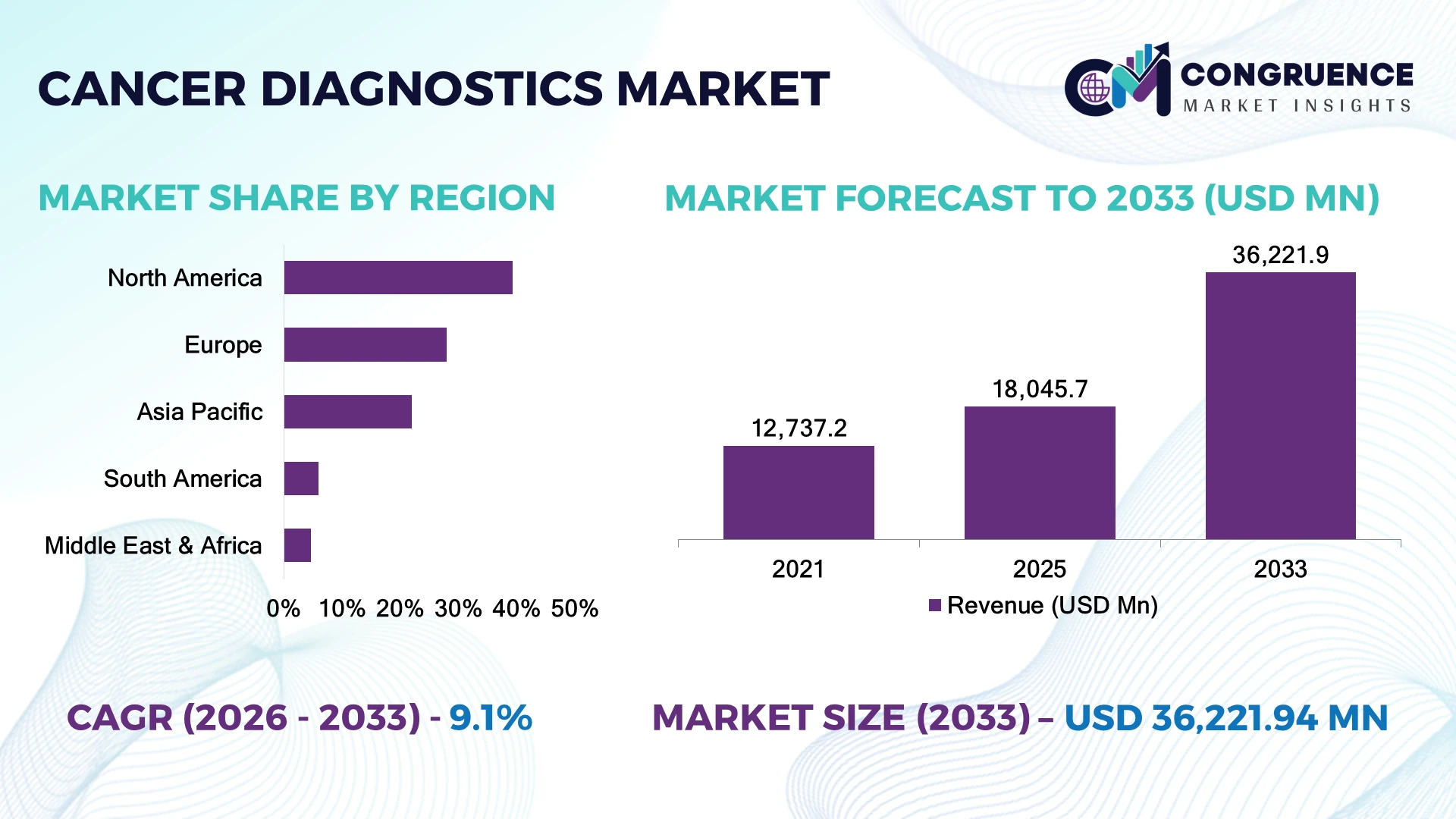
The Global Cancer Diagnostics Market was valued at USD 18,045.7 Million in 2025 and is anticipated to reach a value of USD 36,221.9 Million by 2033 expanding at a CAGR of 9.1% between 2026 and 2033. Growth is being driven by precision oncology, wider molecular testing, liquid biopsy commercialization, AI-assisted pathology, and expansion of early-detection programs.
The United States remains the dominant country, accounting for approximately 33.7% of global cancer diagnostics activity, supported by advanced molecular laboratories, genomic testing, imaging infrastructure, and a large biopharma ecosystem. The country recorded more than 2.0 million new cancer cases projected for 2025, while India is expanding screening capacity through national health programs. The 2025 U.S.–China trade environment is also encouraging diagnostic manufacturers to diversify component sourcing and regionalize laboratory supply chains.
Strategic implication: suppliers should prioritize integrated molecular platforms, AI-enabled workflows, and localized service capacity in high-volume oncology markets.
Market Size & Growth: USD 18.05 billion in 2025 to USD 36.22 billion by 2033 at 9.1% CAGR, driven by molecular testing and precision oncology.
Top Growth Drivers: IVD immunoassays 53.2%, hospitals 53.1%, and North America 39.3% anchor current diagnostic demand.
Short-Term Forecast: By 2028, AI-assisted pathology can reduce manual review workload by approximately 15–25% while improving laboratory throughput.
Emerging Technologies: Liquid biopsy, NGS, AI pathology, spatial profiling, and multi-cancer early-detection platforms are reshaping diagnostic workflows.
Regional Leaders: North America could exceed USD 15 billion, Europe USD 10 billion, and Asia-Pacific USD 8 billion by 2033, with molecular testing expanding fastest in Asia.
Consumer/End-User Trends: Hospitals account for approximately 53% of diagnostic spending, while laboratories increasingly adopt centralized genomic and automated testing workflows.
Pilot/Case Example: 2025 AI pathology deployments demonstrated diagnostic workflows capable of delivering algorithm-supported results within 1–2 days for selected oncology applications.
Competitive Landscape: Roche, Abbott, Thermo Fisher Scientific, Danaher, and Illumina lead major platform categories, while specialized liquid-biopsy firms intensify technology competition.
Regulatory & ESG Impact: FDA clearances and reimbursement expansion are accelerating commercialization, while digital workflows can reduce repeat testing, slide handling, and laboratory material consumption.
Investment & Funding: More than USD 24 billion in disclosed 2025–2026 strategic capital commitments and transactions underscore consolidation around screening, AI pathology, and precision diagnostics.
Innovation & Future Outlook: AI-native pathology, liquid biopsy, multimodal biomarkers, and decentralized testing will shift competition toward earlier detection and integrated clinical decision support.
Cancer diagnostics demand is concentrating around molecular profiling, liquid biopsy, AI pathology, and advanced imaging, with laboratories and oncology centers driving technology adoption. IVD immunoassays represented approximately 53% of diagnostic demand in 2025, while genomic and blood-based testing is expanding access to minimally invasive detection. Regulatory scrutiny and reimbursement development are increasingly determining commercialization speed, setting the foundation for the strategic transformation ahead.
Cancer diagnostics is becoming strategically important because diagnostic platforms increasingly determine treatment selection, clinical-trial eligibility, recurrence monitoring, and the economics of precision oncology. The market is shifting from episodic tissue-based diagnosis toward integrated molecular, digital, and blood-based testing. This transformation is forcing laboratories, pharmaceutical companies, and diagnostic manufacturers to compete around data quality, turnaround time, and clinical utility rather than instrumentation alone.
Technology is creating measurable workflow advantages. AI-assisted digital pathology can reduce manual slide-review workload by approximately 15–25%, while liquid biopsy removes tissue-acquisition requirements for selected testing pathways and enables repeat sampling. North America remains the largest commercial base because of advanced laboratories and reimbursement infrastructure, whereas Asia-Pacific is expanding through new screening programs, laboratory networks, and lower-cost molecular testing.
Over the next 2–3 years, centralized laboratories will increase automation while hospitals expand genomic and companion-diagnostic capabilities. Roche's 2026 agreement to acquire PathAI for USD 750 million upfront plus up to USD 300 million in milestones demonstrates the strategic value assigned to AI-enabled pathology. Companies are consequently directing capital toward integrated platforms, data assets, and specialized partnerships. Competitive advantage will increasingly depend on connecting accurate detection with rapid interpretation and actionable treatment decisions.
Molecular diagnostics is shifting cancer testing from broad classification toward biomarker-led treatment selection, with immunoassay-based testing still representing roughly 53% of diagnostic demand and NGS adoption expanding across major oncology centers. In the United States, companion diagnostics are increasingly embedded in targeted-therapy pathways, while large laboratories are consolidating genomic testing to improve utilization. AI-assisted pathology can reduce manual review workloads by approximately 15–25%, creating measurable throughput gains. Diagnostic companies are responding through assay expansion, laboratory automation, companion-diagnostic partnerships, and acquisitions of AI pathology capabilities. The strategic advantage is moving toward platforms that combine tissue, molecular, and digital data within one workflow rather than selling standalone instruments.
High testing costs and uneven reimbursement remain significant constraints, particularly for advanced genomic and liquid-biopsy assays. Comprehensive molecular profiling can involve substantially higher per-patient costs than conventional pathology, while reimbursement coverage varies considerably across U.S. payers and European health systems. Specialized molecular tests can also require 10–20% higher laboratory operating expenditure because of sequencing reagents, bioinformatics, and quality-control requirements. In India and Southeast Asia, limited access to accredited molecular laboratories further restricts decentralized adoption. Companies are mitigating these pressures through centralized high-throughput laboratories, reagent-volume contracts, multiplexed assays, and lower-cost sequencing workflows. The non-obvious constraint is utilization: sophisticated platforms generate poor economics when installed capacity remains below sustainable test volumes.
Liquid biopsy creates a major opportunity for earlier detection, treatment selection, and longitudinal monitoring without repeated tissue collection. Circulating tumor DNA testing can reduce dependence on invasive sampling, while blood-based workflows support repeat testing during treatment. Adoption remains concentrated in advanced oncology centers, leaving substantial whitespace as assay sensitivity improves. In the United States, pharmaceutical companies are expanding companion-diagnostic collaborations around targeted therapies, while Chinese laboratories are increasing high-throughput molecular testing capacity. AI-assisted interpretation and multi-cancer detection platforms can further automate complex biomarker analysis. Companies are investing in assay validation, biopharma partnerships, and decentralized sample logistics. The strongest opportunity lies in longitudinal monitoring, where recurring blood testing can create higher laboratory utilization than one-time diagnostic episodes.
Cancer diagnostics increasingly combines pathology images, genomic profiles, biomarker results, and clinical records, creating integration requirements that conventional laboratory information systems were not designed to manage. Digital pathology adoption remains below 50% across many healthcare systems, while genomic workflows can generate hundreds of thousands of data points per patient. Cybersecurity requirements further increase infrastructure complexity as diagnostic platforms become cloud-connected. In the United States and Europe, laboratories must also maintain interoperability across hospital systems and evolving regulatory frameworks. Companies need standardized data architectures, secure cloud environments, validated AI models, and specialist bioinformatics teams. The non-obvious challenge is not data generation but clinical usability: disconnected diagnostic outputs can delay treatment decisions even when individual tests achieve high analytical accuracy.
AI Pathology Moves Into Routine Workflows: Digital pathology adoption is expanding across major oncology laboratories, with AI-assisted review capable of reducing manual workload by approximately 15–25% and shortening selected interpretation steps. U.S. health systems are increasing scanner capacity and integrating algorithms into laboratory workflows, while diagnostic companies are strengthening partnerships around image analysis and biomarker quantification.
Liquid Biopsy Gains Clinical Utility: Blood-based cancer testing is moving beyond experimental applications toward treatment monitoring and selected recurrence assessments. Circulating tumor DNA workflows can enable repeat sampling without tissue procedures, while assay sensitivity improvements of roughly 10–20% in selected platforms are supporting broader clinical validation. Laboratories are investing in automated extraction and centralized testing capacity.
Multiplex Testing Reduces Fragmentation: Oncology laboratories are consolidating biomarker analysis through multiplex panels and NGS workflows, reducing the need for separate sequential assays. Integrated panels can evaluate dozens to hundreds of genomic alterations from limited specimens, improving tissue utilization by approximately 15–25%. Pharmaceutical-diagnostic partnerships are accelerating companion-diagnostic development around targeted therapies.
Distributed Testing Strengthens Access: India, China, and Southeast Asian markets are expanding molecular-testing networks as laboratories move selected assays closer to regional hospitals. Decentralized sample collection combined with centralized sequencing can reduce logistics-related turnaround by approximately 20%, while automated pre-analytical systems improve consistency. Companies are responding with hub-and-spoke laboratory models, regional partnerships, and standardized assay platforms.
In vitro diagnostics (IVD) represents the leading type, accounting for approximately 52–53% of global cancer diagnostics demand, supported by high-throughput immunoassays, established laboratory infrastructure, and recurring reagent consumption. Diagnostic imaging remains a critical mature category for detection, staging, and treatment planning, while molecular diagnostics is the fastest-growing strategic segment as oncology shifts toward biomarker-driven treatment selection. Genomic and liquid-biopsy testing is expanding strongly as precision oncology adoption increases. Companies are responding by expanding automated analyzers, multiplex assays, companion diagnostics, and integrated laboratory platforms.
Molecular diagnostics is gaining disproportionate investment because clinical value increasingly depends on actionable genomic information rather than diagnosis alone. NGS, PCR, liquid biopsy, and tumor biomarker platforms are being integrated with pathology and clinical decision systems. Imaging remains essential for breast, lung, and colorectal cancer pathways, while biopsy and cytology retain importance for tissue confirmation. The investment priority is shifting toward platforms that combine high-volume routine testing with higher-value precision oncology capabilities.
A 2025 U.S. diagnostic-laboratory survey found that approximately 65% of laboratories already performing NGS in-house expected double-digit volume growth over the following three years, with 35% anticipating growth above 30%.
Diagnostic imaging is the leading application, representing approximately 60–63% of cancer-diagnostics demand, reflecting its central role in tumor localization, staging, treatment planning, and screening. CT, MRI, PET, mammography, and ultrasound maintain extensive installed bases and recurring utilization across hospitals. Tumor biomarker testing, biopsy, immunohistochemistry, and in-situ hybridization remain essential for pathological confirmation and treatment characterization. Liquid biopsy and genomic applications are the fastest-shifting use cases as minimally invasive testing gains clinical relevance.
The application mix is moving from detection-only workflows toward integrated diagnosis and treatment guidance. AI-assisted imaging improves interpretation efficiency, while liquid biopsy supports repeat molecular assessment without repeated tissue acquisition. Companies are expanding AI algorithms, multiplex biomarker panels, companion diagnostics, and blood-based assays alongside established imaging portfolios. Imaging therefore continues to drive high-volume infrastructure utilization, while molecular applications increasingly influence therapeutic selection and longitudinal monitoring. This combination is redirecting investment toward integrated diagnostic pathways rather than standalone testing modalities.
A 2025 U.S. diagnostic-laboratory survey found that more than 90% of surveyed laboratory executives expected in-house testing volumes to increase over the following three years, with molecular and advanced pathology staining showing particularly strong momentum.
Hospitals represent the leading end-user group, accounting for approximately 49–53% of cancer-diagnostics spending because they combine imaging, pathology, biopsy, molecular testing, oncology treatment, and multidisciplinary clinical teams within integrated facilities. Diagnostic laboratories represent the fastest-growing specialized buyer group as centralized testing improves utilization and supports high-volume molecular workflows. Imaging centers and cancer research institutes remain strategically important for advanced imaging, clinical trials, biomarker development, and translational oncology. Hospitals therefore retain purchasing influence through large equipment and reagent contracts.
Large hospital systems are increasingly centralizing genomic and pathology services, while commercial laboratories are expanding automation and specialized testing capacity. In India, hospitals account for approximately 54% of oncology end-use activity, while diagnostic laboratories represent around 17%, reflecting the concentration of advanced cancer care within tertiary facilities. Companies are responding with integrated analyzer contracts, reference-laboratory partnerships, reagent agreements, and managed diagnostic services. The competitive opportunity is shifting toward scalable laboratory networks capable of serving multiple hospitals while maintaining consistent turnaround times, quality control, and test availability.
A 2025 nationwide Indian cytopathology survey found that 37% of participating centers received more than 2,000 FNAC cases annually, while only 10.2% had access to whole-slide imaging, highlighting substantial headroom for laboratory digitization.
North America accounted for the largest market share at 39.3% in 2025 however, Asia-Pacific is expected to register the fastest growth, expanding at a CAGR of 10.3% between 2026 and 2033.
Precision oncology and AI-enabled pathology are reshaping diagnostic infrastructure
North America represents approximately 39.3% of global cancer diagnostics demand, supported by advanced molecular laboratories, high imaging utilization, strong biopharma integration, and established reimbursement infrastructure. The United States concentrates most regional activity, particularly in genomic testing, companion diagnostics, digital pathology, and liquid biopsy. More than 2 million new cancer cases are projected annually in the U.S., sustaining high laboratory and imaging workloads. Major health systems are expanding automated pathology and centralized molecular testing to improve utilization and turnaround. AI-assisted pathology adoption is also accelerating, with selected workflows reducing manual review requirements by approximately 15–25%. Diagnostic manufacturers are responding through platform expansion, oncology partnerships, laboratory automation, and acquisitions targeting clinical AI capabilities.
United States Market Outlook: The United States remains the principal cancer diagnostics market because of its concentration of academic medical centers, commercial laboratories, pharmaceutical companies, and advanced imaging infrastructure. Molecular profiling is increasingly embedded in targeted-treatment pathways, while companion diagnostics support oncology drug selection. Large laboratory networks are investing in automated sequencing, digital pathology, and centralized testing platforms capable of processing high patient volumes.
Screening modernization and precision diagnostics are strengthening laboratory demand
Europe accounts for approximately 28% of global cancer diagnostics demand, supported by organized screening programs, established pathology networks, and increasing molecular testing across Germany, France, the United Kingdom, Italy, and Spain. Public healthcare systems are prioritizing earlier diagnosis and standardized oncology pathways, while genomic testing is becoming more integrated into treatment selection. Digital pathology adoption is expanding as laboratories address workforce constraints and improve remote case review. Germany and the UK are strengthening genomic infrastructure through centralized testing networks, while France is expanding molecular oncology capabilities. Manufacturers are emphasizing automated analyzers, interoperable laboratory systems, and lower-resource workflows that improve utilization without requiring proportional increases in laboratory staffing.
Germany Market Outlook: Germany combines extensive hospital infrastructure with sophisticated pathology, imaging, and molecular testing capabilities. University hospitals and specialized cancer centers are major users of advanced diagnostics, particularly NGS and digital pathology. Increasing laboratory automation is helping address specialist workforce pressure, while integrated diagnostic platforms support standardized testing across hospital networks. Suppliers with strong local service coverage and interoperable systems are positioned for institutional procurement.
Large patient volumes and expanding molecular infrastructure are accelerating adoption
Asia-Pacific represents approximately 22% of global cancer diagnostics demand and has the strongest combination of patient volume, laboratory expansion, and improving access to advanced testing. China, Japan, South Korea, India, and Australia are the principal markets, with China and Japan supporting sophisticated molecular and imaging infrastructure while India expands diagnostic access through private laboratory networks. Molecular testing capacity is increasing as sequencing costs decline and oncology centers adopt biomarker-driven treatment. India is also strengthening screening and pathology networks beyond major metropolitan hospitals. Companies are establishing regional laboratories, distributor partnerships, and localized manufacturing to reduce turnaround times and equipment costs. Hub-and-spoke models are particularly relevant for extending advanced testing beyond major cities.
China Market Outlook: China is the largest cancer diagnostics market in Asia-Pacific by testing scale, supported by extensive tertiary hospitals, domestic diagnostic manufacturers, and rapidly expanding molecular laboratories. NGS and precision oncology adoption is increasing across major cancer centers, while domestic companies are strengthening reagent and sequencing-platform capabilities. High patient volumes support efficient centralized testing, creating opportunities for automation, AI interpretation, and integrated molecular-pathology platforms.
Laboratory centralization is improving access to advanced oncology testing
South America accounts for approximately 6% of global cancer diagnostics demand, with Brazil representing the largest commercial market, followed by Argentina, Colombia, and Chile. Demand is concentrated in major metropolitan healthcare networks where hospitals and private laboratories provide the majority of advanced oncology services. Brazil is expanding molecular and pathology capabilities through private laboratory groups, while Chile and Argentina maintain established cancer-treatment centers. Advanced testing remains less evenly distributed than in North America and Europe, creating operational demand for centralized reference laboratories and regional sample logistics. Companies are responding through laboratory partnerships, automated analyzers, reagent agreements, and hub-and-spoke models. Centralized molecular testing can reduce equipment duplication while allowing specialized laboratories to maintain higher platform utilization.
Brazil Market Outlook: Brazil represents the region's largest diagnostic opportunity because of its population scale, private laboratory infrastructure, and concentration of oncology services in São Paulo, Rio de Janeiro, and other major cities. Private laboratory networks are expanding molecular testing and automated pathology, while hospitals increasingly outsource specialized assays to reference laboratories. Suppliers with broad service networks and reagent availability have an advantage in maintaining consistent turnaround across geographically dispersed facilities.
Healthcare modernization is accelerating advanced oncology diagnostic deployment
Middle East & Africa accounts for approximately 5% of global cancer diagnostics demand, with Saudi Arabia, the UAE, South Africa, and Israel representing important technology and healthcare centers. Saudi Arabia and the UAE are investing heavily in tertiary hospitals, oncology centers, genomic medicine, and centralized laboratory infrastructure. Large healthcare projects are incorporating advanced imaging, molecular diagnostics, and digital pathology into integrated cancer-care facilities. In South Africa, private healthcare networks provide a significant share of sophisticated diagnostic capacity, while broader access remains constrained by infrastructure and affordability differences. Companies are responding through distributor partnerships, laboratory outsourcing, regional service hubs, and localized training. The strongest commercial opportunities are concentrated around new hospitals and specialist oncology centers rather than dispersed low-volume facilities.
Saudi Arabia Market Outlook: Saudi Arabia is emerging as a major Middle Eastern cancer diagnostics hub through healthcare modernization, specialist hospital development, and increasing investment in precision medicine. New oncology facilities are adopting molecular testing, advanced imaging, and digital laboratory workflows alongside broader clinical infrastructure. Centralized laboratory models are particularly relevant for improving utilization of expensive genomic platforms, while partnerships with international diagnostic technology providers support technical expertise and workforce development.
Roche, Abbott, Siemens Healthineers, Thermo Fisher Scientific, and Danaher compete across immunodiagnostics, imaging, molecular testing, pathology, and automation, while Illumina and liquid-biopsy firms challenge them in precision oncology. The top five collectively represent approximately 49% of cancer diagnostics revenue, indicating moderate concentration. Competition centers on technology, installed base, reimbursement access, and turnaround: molecular platforms can improve biomarker coverage 20–30%, AI pathology can reduce review workload 15–25%, and centralized automation can raise laboratory throughput 10–20%. Roche is integrating AI pathology through acquisitions, Abbott is expanding cancer screening through Exact Sciences, and Illumina is partnering with laboratories to distribute genomic testing. The competitive shift is toward vertical integration of assays, software, clinical data, and laboratory networks. Entry barriers include regulatory validation, clinical evidence, reimbursement, and installed ecosystems. Regional laboratories compete through lower-cost testing and localization. Winning requires clinical utility, scalable workflows, reimbursement access, and integrated platforms that convert diagnostic data into oncology decisions.
Roche Diagnostics
Abbott Laboratories
Siemens Healthineers
Thermo Fisher Scientific
Danaher Corporation
Illumina, Inc.
QIAGEN N.V.
Becton, Dickinson and Company
Agilent Technologies
bioMérieux SA
Hologic, Inc.
Exact Sciences Corporation
Guardant Health
Natera, Inc.
Current cancer diagnostics is shifting from standalone assays toward integrated digital pathology, NGS, and automated laboratory workflows. AI-assisted pathology can reduce manual review workload by 15–25%, while automated sample preparation improves throughput by roughly 10–20%. Digital pathology remains below 50% adoption in many healthcare systems, leaving substantial deployment headroom.
Emerging liquid biopsy, comprehensive genomic profiling, spatial biology, and multiplex biomarker platforms are improving tissue utilization and repeat testing. Compared with sequential single-marker testing, multiplex molecular panels can increase actionable biomarker coverage by approximately 20–30% from limited specimens. Liquid-biopsy workflows also enable repeated monitoring without additional tissue collection. Roche, Illumina, and Thermo Fisher benefit from integrating assays, instruments, software, and clinical partnerships.
Between 2026 and 2028, AI-native pathology, multi-cancer detection, molecular residual disease testing, and cloud-based interpretation will become increasingly operationally important. NCI’s Vanguard Study is enrolling up to 24,000 participants to evaluate multi-cancer detection workflows, strengthening clinical evidence requirements. Companies that connect diagnostics with treatment selection, laboratory automation, and longitudinal monitoring will gain workflow and data advantages. The technology race is therefore shifting from analytical accuracy alone toward integrated clinical utility, faster turnaround, scalable deployment, and interoperable oncology data infrastructure for hospitals, laboratories, pharmaceutical partners, and community oncology networks worldwide.
May 2026 Roche agreed to acquire PathAI for USD 750 million upfront plus USD 300 million milestones, combining AI pathology with companion diagnostics. The transaction strengthens automated digital workflows and accelerates integrated oncology testing worldwide at scale. Source: roche.com (Roche)
November 2025 Abbott agreed to acquire Exact Sciences for USD 21 billion equity value, expanding into cancer screening and precision oncology. The transaction adds Cologuard and Oncotype DX, materially broadening Abbott’s global oncology diagnostics portfolio and screening reach. Source: reuters.com (Reuters)
March 2026 Illumina and Labcorp expanded precision-oncology collaboration, including distributed genomic profiling and liquid-biopsy testing. A study covering more than 7,600 NSCLC samples found actionable or trial-linked variants in over 72% of tumors, supporting broader testing access nationally. Source: illumina.com (Illumina)
January 2025 NCI selected Guardant Health’s Shield MCD test for the Vanguard Study, alongside ClearNote’s assay. The study plans enrollment of up to 24,000 participants, establishing a major clinical-validation pathway for multi-cancer detection technologies and informing future trials. Source: cancer.gov (Cancer Prevention)
The Cancer Diagnostics Market Report covers in vitro diagnostics, imaging, molecular diagnostics, biopsy, pathology, and emerging liquid-biopsy technologies across screening, detection, staging, biomarker profiling, treatment selection, and monitoring applications. End-user coverage includes hospitals, diagnostic laboratories, imaging centers, cancer institutes, and research organizations across North America, Europe, Asia-Pacific, South America, and Middle East & Africa.
The report evaluates NGS, AI-assisted pathology, digital pathology, companion diagnostics, circulating tumor DNA, multi-cancer detection, and automated laboratory workflows. IVD represents approximately 52–53% of demand, while North America contributes about 39% and hospitals account for roughly half of end-user activity. Competitive assessment covers global diagnostics companies, molecular specialists, liquid-biopsy developers, and regional laboratories, supporting investment planning, geographic expansion, partnership strategy, technology prioritization, and competitive positioning through 2026–2033.
| Report Attribute/Metric | Report Details |
|---|---|
|
Market Revenue in 2025 |
USD 18,045.7 Million |
|
Market Revenue in 2033 |
USD 36,221.9 Million |
|
CAGR (2026 - 2033) |
9.1% |
|
Base Year |
2025 |
|
Forecast Period |
2026 - 2033 |
|
Historic Period |
2021 - 2025 |
|
Segments Covered |
By Type
By Application
By End-User
|
|
Key Report Deliverable |
Revenue Forecast, Growth Trends, Market Dynamics, Segmental Overview, Regional and Country-wise Analysis, Competition Landscape |
|
Region Covered |
North America, Europe, Asia-Pacific, South America, Middle East, Africa |
|
Key Players Analyzed |
Roche Diagnostics, Abbott Laboratories, Siemens Healthineers, Thermo Fisher Scientific, Danaher Corporation, Illumina, Inc., QIAGEN N.V., Becton, Dickinson and Company, Agilent Technologies, bioMérieux SA, Hologic, Inc., Exact Sciences Corporation, Guardant Health, Natera, Inc. |
|
Customization & Pricing |
Available on Request (10% Customization is Free) |




