
Reports
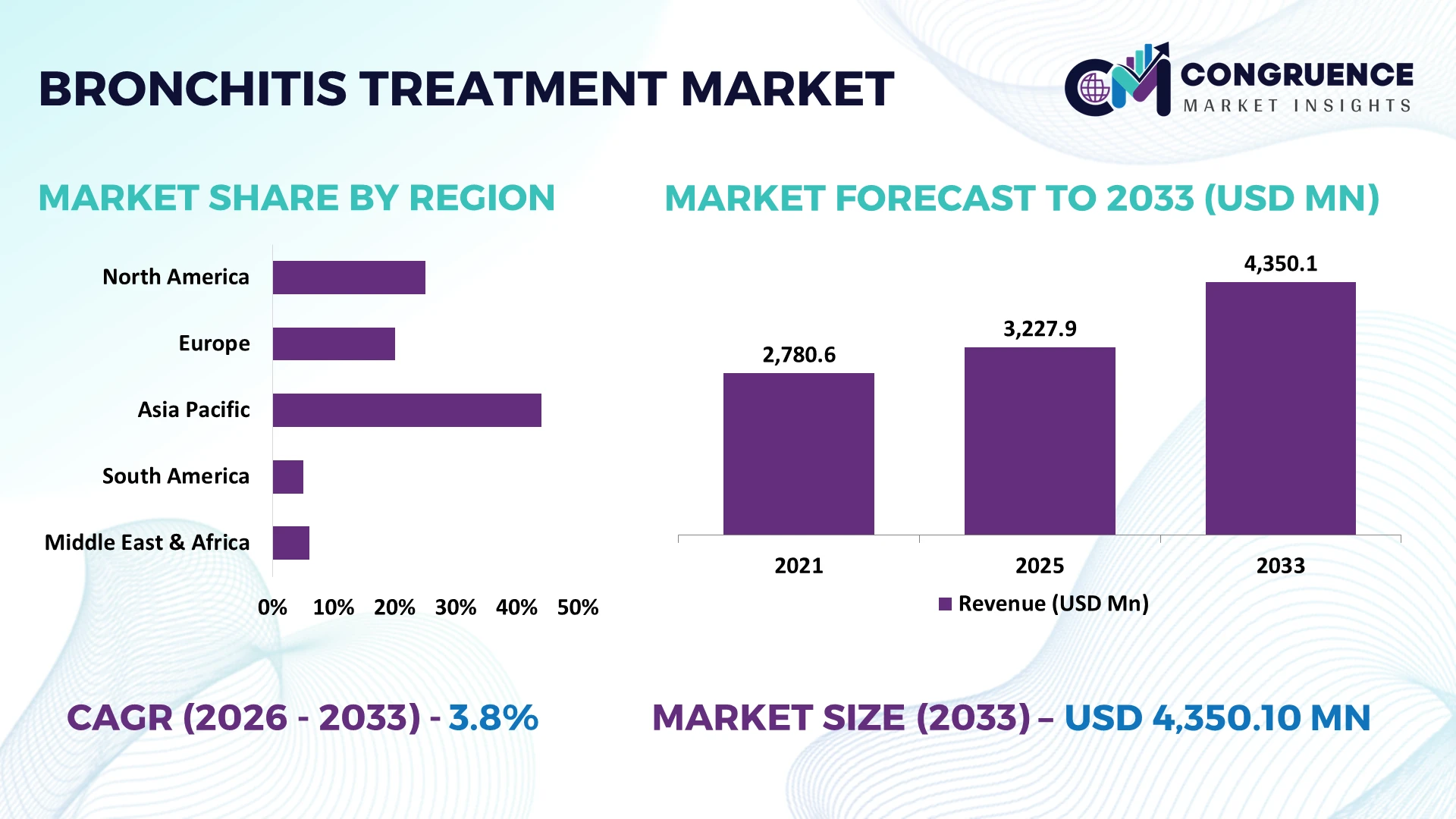
The Global Bronchitis Treatment Market was valued at USD 3227.91 Million in 2025 and is anticipated to reach a value of USD 4350.1 Million by 2033 expanding at a CAGR of 3.8% between 2026 and 2033. Market growth is driven by persistent smoking-related respiratory disorders, rising chronic bronchitis treatment requirements, advanced inhalation therapies, and the introduction of targeted biologics for COPD-associated airway inflammation.
The United States maintains a strong position in the global bronchitis treatment industry through advanced pharmaceutical research, respiratory drug manufacturing, and specialist healthcare infrastructure. Approximately 4.4% of US adults reported a diagnosis of COPD, emphysema, or chronic bronchitis in 2025. Regeneron's planned US infrastructure and manufacturing investments exceed USD 7 billion, strengthening domestic biologics production. Compared with India, where household air pollution and respiratory treatment accessibility shape clinical priorities, the United States emphasizes precision therapeutics, advanced nebulization technologies, and specialist pulmonary treatment.
Pharmaceutical manufacturers prioritizing differentiated inhalation therapies, domestic production capacity, and targeted respiratory biologics are positioned to strengthen long-term competitive advantages.
The Bronchitis Treatment Market encompasses prescription medications, bronchodilators, mucolytics, inhaled corticosteroids, and specialized therapies addressing acute and chronic bronchial inflammation. Healthcare demand concentrates on pulmonary clinics, hospital respiratory departments, and outpatient pharmaceutical distribution. Emerging innovations include dual-action nebulized therapies, connected inhalers, and biomarker-guided biologics targeting specific inflammatory pathways. Clinical studies of ensifentrine demonstrated approximately 43% lower moderate or severe COPD exacerbation rates than placebo in one pivotal trial, highlighting the therapeutic value of advanced formulations. Increasing antimicrobial stewardship and localized pharmaceutical manufacturing are reshaping treatment strategies, creating distinct opportunities for product differentiation and strategic portfolio expansion.
The Bronchitis Treatment Market is becoming strategically important as pharmaceutical competition shifts from conventional symptom management toward targeted inflammation control, exacerbation prevention, and differentiated respiratory drug delivery. Regulatory approvals for innovative COPD maintenance therapies are expanding treatment pathways for patients with chronic bronchitis. Growing emphasis on outpatient disease management is also encouraging pharmaceutical manufacturers to develop therapies that reduce hospitalization requirements and improve treatment continuity. This transition strengthens the commercial importance of clinical differentiation and specialized pulmonary portfolios.
Advanced biologics demonstrate measurable advantages over conventional maintenance therapy alone in appropriately selected COPD patients. Dupilumab achieved a 34% reduction in moderate or severe exacerbations compared with placebo added to standard treatment. The United States leads advanced respiratory commercialization, while India prioritizes affordable inhaled medicines, accessible diagnostics, and scalable treatment infrastructure. These differences influence product pricing, distribution partnerships, and therapeutic development priorities.
During 2026–2028, treatment innovation will increasingly emphasize biomarker-guided prescribing, connected inhalation devices, and decentralized respiratory monitoring. Sanofi and Regeneron's commercialization of Dupixent for eligible COPD patients demonstrates how pharmaceutical partnerships translate clinical innovation into specialized treatment access. Manufacturers integrating clinical evidence, respiratory diagnostics, and differentiated delivery platforms will secure stronger competitive positioning and long-term therapeutic relevance.
The increasing prevalence of chronic respiratory conditions is strengthening demand for maintenance therapies, bronchodilators, and specialized bronchitis treatment formulations. In the United States, diagnosed COPD affected 7.0% of adults aged 45 and older in 2024, increasing to 10.3% among individuals aged 65 and above. Prevalence reached 10.6% in nonmetropolitan communities, indicating substantial respiratory treatment requirements outside major healthcare centers. Tobacco exposure, occupational pollutants, and persistent airway inflammation contribute to recurring treatment needs. Expansion of outpatient pulmonary services and home-based nebulization is shifting medication delivery beyond hospitals. Pharmaceutical manufacturers are responding through inhaled combination therapies, improved drug delivery devices, and partnerships with respiratory care providers. Companies offering reliable maintenance treatment alongside accessible outpatient distribution gain stronger prescription retention and market penetration.
Unequal treatment accessibility and increasingly selective prescribing practices constrain bronchitis medication commercialization. In 2023, salbutamol inhalers were generally available through public primary healthcare facilities in fewer than two-thirds of low and lower-middle-income countries. Nearly 90% of premature COPD deaths occur in low and middle-income economies, reflecting substantial gaps in diagnosis and treatment access. Additionally, smoking accounts for approximately 30–40% of COPD cases in these economies, complicating prevention and disease management. In the United States, antibiotic stewardship discourages routine antimicrobial prescriptions for uncomplicated acute bronchitis, limiting inappropriate prescription volumes. Manufacturers are responding through affordable generic inhalers, localized pharmaceutical distribution, and differentiated symptomatic treatment portfolios. Reliable essential medicine availability and appropriate prescribing are increasingly important to sustainable market participation.
Next-generation inhaled therapeutics create significant opportunities for differentiated bronchitis-associated COPD treatment. Verona Pharma's ensifentrine combines PDE3 and PDE4 inhibition through a single nebulized formulation, addressing bronchodilation and inflammatory mechanisms. Its ENHANCE clinical trials demonstrated 36% and 43% reductions in moderate or severe COPD exacerbation rates versus placebo across separate studies, with pooled findings indicating a 40% reduction over 24 weeks. These results highlight opportunities for pharmaceutical manufacturers to develop multifunctional respiratory therapies beyond conventional single-mechanism products. In China, expanding respiratory specialist services and domestic pharmaceutical innovation support opportunities in inhaled drug development and pulmonary care delivery. Companies investing in molecule differentiation, nebulization technology, and clinical partnerships can strengthen treatment portfolios while developing specialized distribution models serving patients with persistent respiratory symptoms.
Effective commercialization of advanced bronchitis-associated COPD therapies requires consistent patient selection, inhaler technique, and longitudinal clinical monitoring. In the United States, COPD prevalence among adults aged 65 and above reaches 14.0% in nonmetropolitan communities compared with 8.5% in large central metropolitan areas, creating substantial differences in specialist access and treatment coordination. Dupilumab clinical eligibility incorporates blood eosinophil concentrations of at least 300 cells/µL, requiring appropriate diagnostic testing before therapy selection. Integrating biomarker assessment, specialist referral, and ongoing prescription management increases operational complexity for healthcare providers. Pharmaceutical companies must invest in clinician education, adherence-support platforms, and diagnostic partnerships to maintain consistent therapeutic outcomes. Competitive advantage increasingly depends on successful implementation across healthcare settings rather than pharmaceutical innovation alone.
Antibiotics represent the leading segment of the Bronchitis Treatment Market, accounting for approximately 36.12% of treatment demand by market value in 2025. Their established pharmaceutical production infrastructure, generic availability, and use in appropriately diagnosed bacterial respiratory infections support their commercial position. However, antibiotic stewardship increasingly restricts unnecessary prescribing for uncomplicated acute bronchitis, shifting treatment strategies toward evidence-based intervention. Bronchodilators represent the fastest-growing therapeutic category, supported by expanding utilization of long-acting inhaled formulations and combination therapies for chronic bronchitis associated with COPD. Pharmaceutical manufacturers are strengthening respiratory portfolios through differentiated inhaler devices, improved formulation stability, and specialized pulmonary distribution partnerships.
Corticosteroids maintain an important role in selected patients requiring inflammatory control, particularly within combination maintenance regimens. Expectorants and mucolytics address mucus-related symptoms, while antitussives provide short-term cough suppression where clinically appropriate. Antiviral drugs serve specific diagnosed viral infections rather than routine bronchitis treatment. The transition toward inhaled maintenance therapy is shifting investment priorities from conventional medication volume toward therapeutic differentiation, sustained symptom control, and clinically demonstrated effectiveness.
Acute Bronchitis represents the leading application in the global Bronchitis Treatment Market, accounting for approximately 58.96% of market value in 2025. Its dominance reflects frequent outpatient consultations, seasonal respiratory infections, and substantial utilization of short-duration symptomatic medications. Treatment demand concentrates on cough relief, respiratory infection assessment, and management of uncomplicated airway irritation. Pharmaceutical companies are expanding accessible symptomatic treatment formulations while adapting product promotion to antimicrobial stewardship requirements. Chronic Bronchitis represents the fastest-growing application, supported by recurring pulmonary symptoms, continuing medication requirements, and greater adoption of maintenance inhalation therapies among patients with COPD.
Airway Inflammation is gaining clinical importance through improved treatment selection for persistent bronchial symptoms, while Mucus Clearance supports demand for expectorant and mucolytic formulations. Symptom Management remains commercially relevant across outpatient and self-care settings, whereas Respiratory Infection Management increasingly emphasizes pathogen-appropriate treatment decisions. The combined shift toward long-term disease control and clinically targeted intervention is encouraging manufacturers to develop differentiated respiratory medication portfolios, improve product availability, and strengthen healthcare provider partnerships.
Retail Pharmacies represent a leading end-user segment in the Bronchitis Treatment Market, accounting for approximately 44.71% of market value in 2025. Their extensive prescription dispensing networks, convenient access to symptomatic medications, and established relationships with patients support substantial treatment demand. Retail distribution is particularly important for short-duration respiratory prescriptions and continued medication refills. Hospitals maintain a critical position in managing severe respiratory infections and complicated pulmonary conditions requiring intensive clinical supervision. Specialty Clinics concentrate on advanced respiratory assessment and treatment optimization, while Primary Care Clinics provide initial diagnosis, appropriate prescribing, and continuity of care.
Online Pharmacies represent the fastest-growing distribution-oriented end-user category, supported by digital prescriptions, home delivery, and recurring medication requirements. Home Healthcare is gaining importance for patients requiring nebulized treatments and assisted respiratory medication administration. Pharmaceutical companies are responding through omnichannel distribution arrangements, pharmacy partnerships, patient support programs, and improved medication availability. These developments are shifting competitive priorities toward prescription accessibility, reliable fulfillment, and treatment continuity beyond traditional clinical facilities.
North America accounted for the largest market share at 35.40% in 2025 however, Asia-Pacific is expected to register the fastest growth, expanding at a CAGR of 10.11% between 2026 and 2033.

Advanced Respiratory Therapeutics and Specialized Care Infrastructure
North America maintains a leading position in the global bronchitis treatment industry through established pharmaceutical manufacturing, specialist pulmonary care networks, and extensive prescription drug distribution. The region benefits from advanced clinical research infrastructure and comparatively strong commercialization pathways for innovative respiratory medicines. The United States drives therapeutic innovation, while Canada emphasizes publicly financed respiratory treatment access and structured disease management. Recent FDA approvals of targeted COPD therapies have expanded the treatment landscape for patients with persistent inflammatory symptoms, including chronic bronchitis phenotypes. Pharmaceutical companies are strengthening specialty pharmacy partnerships, expanding clinical education programs, and developing differentiated inhalation formulations. The increasing integration of respiratory diagnostics with treatment selection supports more efficient prescribing and reduces unnecessary medication utilization. Regional competition increasingly favors manufacturers offering clinically differentiated products alongside dependable reimbursement and distribution capabilities.
United States Market Outlook: The United States represents the region's principal commercial and pharmaceutical innovation center. In May 2025, the FDA approved GSK's Nucala for eligible adults with eosinophilic COPD, expanding treatment options for patients inadequately controlled by conventional inhaled maintenance therapy. Established specialist networks, clinical trial infrastructure, and regulatory expertise strengthen the commercialization of advanced respiratory medicines and support investment in targeted treatment portfolios.
Guideline-Based Treatment and Community Respiratory Care Expansion
Europe represents a major bronchitis treatment market, supported by established pharmaceutical development, coordinated clinical guidelines, and extensive primary healthcare systems. Germany, France, and the United Kingdom anchor regional pharmaceutical activity through respiratory drug research, regulated dispensing networks, and specialist pulmonary services. European treatment pathways increasingly emphasize appropriate antibiotic prescribing, inhaler optimization, and prevention of COPD exacerbations. The European Medicines Agency's respiratory therapy evaluations support the availability of differentiated treatments across participating healthcare systems. Healthcare providers are strengthening community-based respiratory assessment to reduce avoidable hospital admissions and improve medication continuity. Pharmaceutical manufacturers are adapting through device innovation, clinical evidence generation, and partnerships with healthcare delivery organizations. The transition toward preventive pulmonary care also strengthens opportunities for digital adherence monitoring, structured patient education, and integrated treatment management across public and private healthcare channels.
United Kingdom Market Outlook: The United Kingdom combines NHS respiratory care infrastructure with established pharmaceutical research and commercial expertise. In March 2026, the government announced a £10 million partnership involving NHS England and pharmaceutical companies to improve asthma and COPD care closer to home. This initiative supports earlier respiratory assessment, community treatment delivery, and closer coordination between primary care professionals and specialist services.
Pharmaceutical Manufacturing Scale and Expanding Treatment Accessibility
Asia-Pacific is emerging as a major center for respiratory pharmaceutical manufacturing, generic medication distribution, and expanding pulmonary healthcare infrastructure. China and India provide substantial production capabilities for active pharmaceutical ingredients, finished formulations, and inhalation therapies. Japan and South Korea contribute advanced drug delivery technologies and established respiratory clinical research systems. Increasing urban air pollution exposure, tobacco-related respiratory conditions, and expanding diagnostic capabilities are shaping treatment requirements across the region. Government initiatives supporting pharmaceutical localization and healthcare accessibility are strengthening opportunities for domestic manufacturers. India's production-linked incentive programs encourage investment in pharmaceutical manufacturing and domestic supply-chain capabilities. Regional companies are expanding affordable respiratory portfolios, improving formulation technologies, and strengthening relationships with hospital and pharmacy distributors. Competitive differentiation increasingly depends on balancing medication affordability with consistent product quality and efficient distribution across diverse healthcare systems.
India Market Outlook: India holds a strategic position through its large pharmaceutical manufacturing base and extensive generic medicine distribution networks. The country supplies approximately 20% of global generic medicines by volume, demonstrating substantial production and export capabilities. Companies including Cipla, Lupin, and Sun Pharmaceutical Industries maintain respiratory treatment portfolios spanning inhaled medications and conventional pharmaceutical formulations. Domestic manufacturing scale supports affordable medication availability, while expanding healthcare coverage strengthens opportunities for pulmonary treatment access.
Public Healthcare Procurement and Affordable Respiratory Medication Access
South America's bronchitis treatment industry is shaped by public healthcare procurement, generic medication availability, and expanding access to respiratory diagnostics. Brazil accounts for a major concentration of regional pharmaceutical manufacturing and treatment demand, while Argentina, Chile, and Colombia contribute established hospital and retail pharmacy networks. Public healthcare systems play an important role in purchasing essential respiratory medicines and maintaining treatment continuity for patients with chronic pulmonary conditions. Brazil's Unified Health System provides a nationwide framework for respiratory disease management, including medication access through public pharmaceutical assistance programs. Regional manufacturers and multinational pharmaceutical companies are strengthening local distribution partnerships and adapting product portfolios to government procurement requirements. Import dependency for specialized respiratory medicines and uneven specialist availability influence commercialization strategies. Companies offering affordable formulations, dependable inventory management, and localized distribution gain operational advantages in public and private healthcare channels.
Brazil Market Outlook: Brazil combines one of South America's largest pharmaceutical industries with a universal public healthcare framework serving a population exceeding 200 million. The country's ANVISA regulatory system establishes product quality and commercialization requirements, while public pharmaceutical assistance supports essential medicine distribution. Domestic manufacturing capabilities, established pharmacy chains, and respiratory care services create opportunities for generic bronchodilators, mucolytics, and standardized maintenance treatments.
Healthcare Infrastructure Modernization and Respiratory Access Transformation
The Middle East and Africa bronchitis treatment market reflects contrasting healthcare investment priorities and respiratory medication accessibility. Saudi Arabia and the United Arab Emirates are strengthening specialist healthcare infrastructure, while South Africa and Egypt emphasize essential medication distribution and public healthcare capacity. Government healthcare modernization programs are encouraging pharmaceutical partnerships, digital health deployment, and improved specialist treatment access. Saudi Arabia's 2025 healthcare transformation initiatives included major hospital infrastructure commitments, supporting broader opportunities for advanced pulmonary services. African markets continue to face uneven respiratory diagnostic availability, creating demand for affordable inhaled medicines and reliable pharmacy distribution. International pharmaceutical manufacturers are responding through local distribution agreements, hospital supply partnerships, and differentiated treatment portfolios. Regional competitiveness increasingly depends on regulatory coordination, procurement efficiency, and the ability to serve both premium specialist treatment markets and cost-sensitive public healthcare systems.
Saudi Arabia Market Outlook: Saudi Arabia represents a significant healthcare infrastructure and pharmaceutical investment center under Vision 2030. Primary healthcare coverage reached 97.5% of population clusters, strengthening the national platform for chronic disease identification and outpatient care. The Seha Virtual Hospital network connects 241 healthcare facilities, expanding specialist service accessibility. These developments create opportunities for respiratory diagnostics, inhalation therapy distribution, and coordinated pulmonary treatment pathways.
The Bronchitis Treatment Market exhibits a concentrated competitive structure, with AstraZeneca, GSK, Boehringer Ingelheim, Teva Pharmaceutical Industries, and Merck collectively representing approximately 65–75% of industry share. Global pharmaceutical leaders compete through respiratory treatment portfolios, patented formulations, clinical evidence, and established distribution networks. Cipla, Lupin, and Dr. Reddy's Laboratories challenge established manufacturers through cost-efficient generics and localized production. AstraZeneca's Breztri demonstrated 24% fewer COPD exacerbations versus dual bronchodilator therapy, while GSK strengthens differentiation through advanced inhaled and biologic medicines. Sanofi competes through targeted respiratory immunology partnerships. Companies are expanding specialty treatment capabilities, optimizing pharmaceutical supply chains, and developing combination inhalers to improve treatment accessibility. Regulatory approval requirements, clinical development costs, and intellectual property protection create substantial entry barriers. Increasing generic competition is shifting commercial priorities toward differentiated delivery systems and patient adherence. Winning requires demonstrated therapeutic effectiveness, competitive pricing, dependable manufacturing, and broad clinical access across diverse healthcare systems.
Advanced inhalation technologies are transforming bronchitis treatment through optimized aerosol delivery, fixed-dose combinations, and improved airway deposition. Modern pressurized metered-dose inhalers integrate multiple therapeutic agents, simplifying maintenance regimens for patients with chronic bronchitis associated with COPD. Clinical evidence demonstrates approximately 20% fewer moderate or severe COPD exacerbations with selected triple therapies compared with single-agent bronchodilation. Pharmaceutical manufacturers benefit from differentiated formulations, improved treatment continuity, and established inhaler production infrastructure.
Emerging biologic technologies target inflammatory pathways using blood eosinophil measurements to guide patient selection. Mepolizumab demonstrated a 31% reduction in moderate or severe exacerbations within a chronic bronchitis subgroup compared with placebo alongside existing maintenance treatment. This precision approach offers advantages over conventional symptom-focused escalation. Connected inhalers and electronic adherence platforms complement pharmaceutical innovation through dose tracking, remote monitoring, and improved identification of medication administration errors.
Disruptive development increasingly emphasizes IL-33 inhibition, integrated respiratory diagnostics, and environmentally optimized aerosol systems. Next-generation inhaler propellants target carbon footprint reductions approaching 90% while maintaining therapeutic equivalence. Between 2026 and 2028, manufacturers combining advanced formulations, digital monitoring, and sustainable device engineering will strengthen clinical differentiation. Established respiratory companies with integrated research and manufacturing capabilities gain advantages in commercialization, regulatory execution, and treatment accessibility.
June 2024: Verona Pharma secured FDA approval for Ohtuvayre, introducing dual PDE3/PDE4 inhibition for COPD maintenance treatment. Clinical development involved 1,553 patients across two pivotal trials, establishing a differentiated nebulized respiratory therapy and expanding treatment options for chronic airway disease. Source: fda.gov.
May 2025: GSK received FDA approval for Nucala as an add-on COPD maintenance treatment. Its MATINEE trial demonstrated 21% fewer moderate or severe exacerbations, expanding biologic treatment options for patients with eosinophilic inflammation and strengthening GSK's respiratory specialization. Source: gsk.com.
April 2026: AstraZeneca reported positive Phase III MIRANDA results for tozorakimab, an investigational IL-33-targeting biologic. Administered at 300 mg every two weeks, treatment significantly reduced COPD exacerbations, advancing the company's pipeline beyond established inhaled therapies and reinforcing precision medicine investment. Source: reuters.com.
September 2026: Chiesi advanced European regulatory submissions for next-generation propellant inhalers, covering triple and dual combination therapies. Its HFA-152a platform targets up to 90% lower product carbon footprints, strengthening respiratory device sustainability while preserving established therapeutic delivery systems. Source: chiesi.com.
The Bronchitis Treatment Market Report provides comprehensive analysis of pharmaceutical therapies, treatment applications, healthcare distribution channels, and competitive developments between 2026 and 2033. Type segmentation covers antibiotics, bronchodilators, corticosteroids, expectorants, antitussives, mucolytics, and antiviral drugs. Application analysis evaluates acute bronchitis, chronic bronchitis, symptom management, airway inflammation, mucus clearance, and respiratory infection management. End-user coverage includes hospitals, specialty clinics, primary care clinics, retail pharmacies, online pharmacies, and home healthcare services.
Geographical analysis examines North America, Europe, Asia-Pacific, South America, and the Middle East & Africa, highlighting treatment accessibility, pharmaceutical manufacturing, regulatory developments, and distribution capabilities. The report evaluates 14 major pharmaceutical companies alongside emerging respiratory technologies, biologic therapies, advanced inhalation platforms, and digital treatment monitoring. Strategic insights support portfolio optimization, investment planning, geographical expansion, competitive benchmarking, and identification of differentiated treatment opportunities across established and developing healthcare markets.
| Report Attribute/Metric | Report Details |
|---|---|
Market Revenue in 2025 | USD 3227.91 Million |
Market Revenue in 2033 | USD 4350.1 Million |
CAGR (2026 - 2033) | 3.8% |
Base Year | 2025 |
Forecast Period | 2026 - 2033 |
Historic Period | 2021 - 2025 |
Segments Covered | By Type
By Application
By End-User
|
Key Report Deliverable | Revenue Forecast, Growth Trends, Market Dynamics, Segmental Overview, Regional and Country-wise Analysis, Competition Landscape |
Region Covered | North America, Europe, Asia-Pacific, South America, Middle East, Africa |
Key Players Analyzed | AstraZeneca PLC, GSK plc, Boehringer Ingelheim International GmbH, Novartis AG, Pfizer Inc., Sanofi S.A., Merck & Co., Inc., Teva Pharmaceutical Industries Ltd., Cipla Limited, Lupin Limited, Dr. Reddy's Laboratories Limited, Sun Pharmaceutical Industries Limited, Chiesi Farmaceutici S.p.A., Zydus Lifesciences Limited |
Customization & Pricing | Available on Request (10% Customization is Free) |




