
Reports
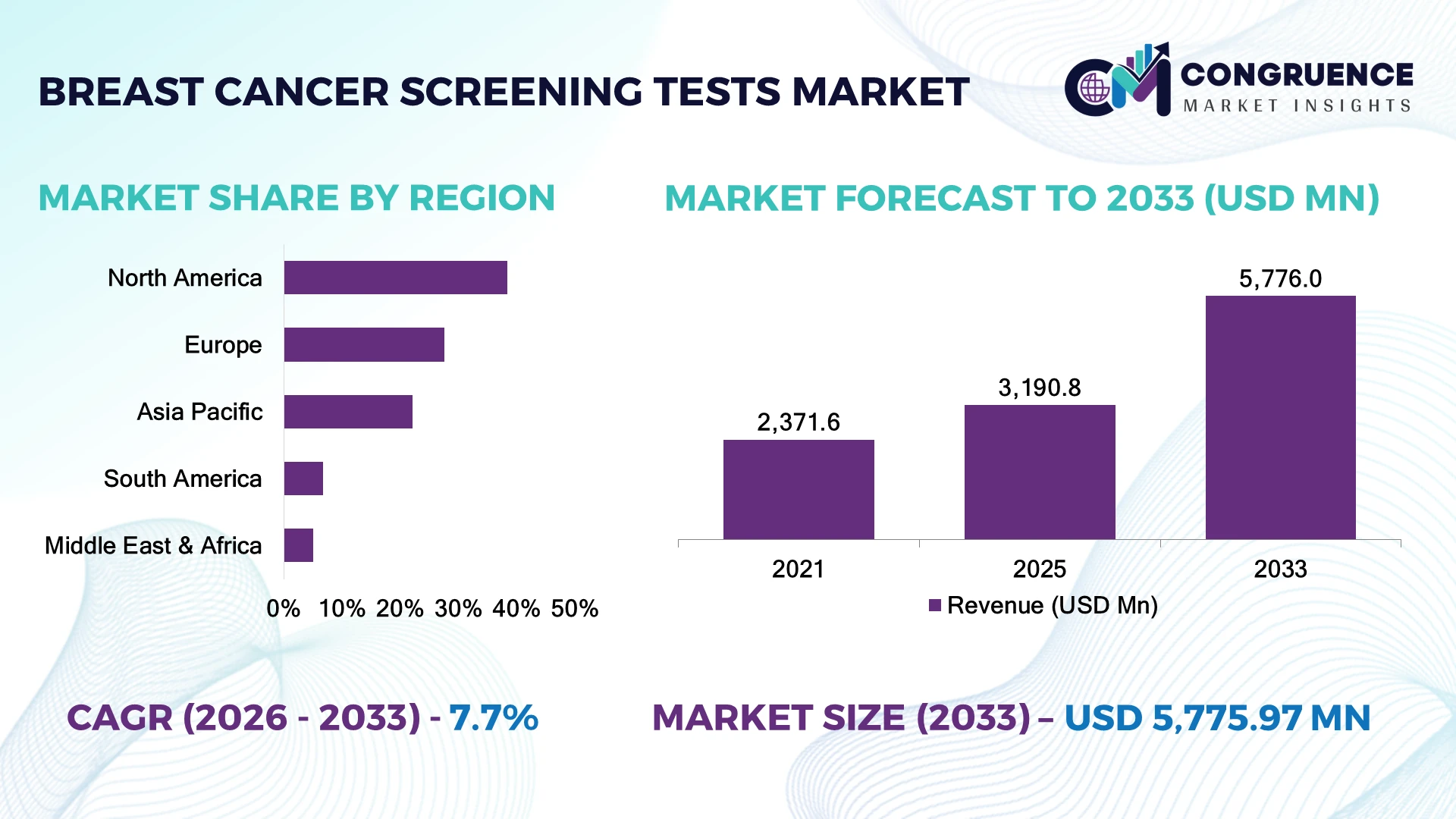
The Global Breast Cancer Screening Tests Market was valued at USD 3,190.8 Million in 2025 and is anticipated to reach a value of USD 5,776.0 Million by 2033 expanding at a CAGR of 7.7% between 2026 and 2033. Growth is being driven by expanded screening eligibility, rapid adoption of digital breast tomosynthesis, AI-assisted image interpretation, and investments in decentralized screening infrastructure.
The U.S. remains the dominant country market, accounting for an estimated 30%+ share of global spending, supported by more than 9,100 certified mammography facilities and approximately 44.8 million annual mammography procedures. Digital breast tomosynthesis is available across more than 8,600 certified facilities, while the 2024 U.S. screening-policy shift toward screening from age 40 is expanding the addressable population. This infrastructure scale substantially exceeds deployment levels across most emerging markets.
Strategically, suppliers should prioritize AI-enabled workflows, tomosynthesis-compatible systems, and scalable screening models that convert regulatory changes into higher utilization and faster diagnostic throughput.
Market Size & Growth: USD 3,190.8 Million in 2025 is projected to reach USD 5,776.0 Million by 2033 at a 7.7% CAGR, supported by digital mammography, tomosynthesis, and AI-assisted screening adoption.
Top Growth Drivers: Screening eligibility expansion 20%, digital breast tomosynthesis penetration 15%, and AI-enabled workflow adoption 12% are strengthening high-growth screening demand.
Short-Term Forecast: By 2028, AI-supported workflows are positioned to reduce radiologist reading workloads by 30–45% while improving screening throughput without proportionate staffing expansion.
Emerging Technologies: AI triage, 3D digital breast tomosynthesis, and automated breast ultrasound are shifting screening from image acquisition toward risk-stratified and workflow-optimized detection.
Regional Leaders: North America is projected at approximately USD 2.19 billion by 2033, Europe at USD 1.68 billion, and Asia Pacific at USD 1.27 billion, with AI adoption accelerating across digitally connected screening networks.
Consumer/End-User Trends: The 2024 U.S. policy shift to screening from age 40 expands the routinely addressable population, while dense-breast assessment is increasing interest in supplemental ultrasound and MRI.
Pilot/Case Example: The 2021–2022 Swedish MASAI trial involving 105,934 women achieved a 44.2% reduction in screen-reading workload with AI-supported mammography while maintaining non-inferior screening performance.
Competitive Landscape: North American imaging networks maintain a leading position, while major imaging technology suppliers and AI specialists compete across mammography, tomosynthesis, automated ultrasound, and image-analysis platforms.
Regulatory & ESG Impact: Updated U.S. screening guidance expands screening from age 40, while AI-enabled triage can reduce interpretation workload by more than 40%, improving utilization of constrained radiology capacity.
Investment & Funding: More than USD 59 million in identifiable 2025–2026 investments and clinical funding has targeted AI-enabled breast screening, risk prediction, and imaging commercialization, reinforcing technology-provider and healthcare-network partnerships.
Innovation & Future Outlook: The market is shifting from standalone mammography toward AI-assisted, risk-based screening ecosystems integrating prior images, automated triage, 3D imaging, predictive analytics, and portable ultrasound.
The Breast Cancer Screening Tests Market is increasingly concentrated around digital mammography, tomosynthesis, AI-assisted interpretation, and supplemental imaging for dense breasts. AI-supported screening has demonstrated workload reductions exceeding 40% in large-scale evaluations, while Germany and India illustrate how centralized programs and emerging-market partnerships are accelerating technology deployment.
Breast cancer screening is becoming a strategically important healthcare technology segment because capacity constraints, earlier screening requirements, and rising diagnostic complexity are changing how imaging providers allocate equipment, radiologist time, and capital. In the U.S., the 2024 recommendation to screen women aged 40–74 every two years materially broadens routine screening coverage and increases pressure on providers to absorb additional examination volumes efficiently.
Technology selection is therefore moving beyond image quality toward measurable workflow economics. In Sweden's MASAI trial, AI-supported screening reduced screen-reading workload by 44.2%, while subsequent evaluation reported sensitivity of 80.5% versus 73.8% for standard double reading, with specificity remaining 98.5% for both approaches. North America retains the largest installed infrastructure, whereas Europe is advancing AI-integrated screening workflows and Asia is prioritizing scalable deployment models.
Over the next 2–3 years, providers are expected to prioritize AI triage, DBT upgrades, automated ultrasound, and interoperable imaging platforms. Germany demonstrates scaled AI deployment, while India is attracting partnerships designed to extend advanced screening beyond major urban centers. Competitive advantage will increasingly depend on reducing interpretation bottlenecks while maintaining diagnostic quality, regulatory compliance, and cost-efficient screening capacity.
The U.S. screening-policy shift to biennial mammography from age 40 has structurally expanded the addressable screening population, while breast cancer incidence among women aged 40–49 has increased by approximately 2% annually. Nearly 95% of U.S. certified mammography facilities now have digital breast tomosynthesis capability, strengthening the transition toward higher-resolution screening. The policy change is estimated to enable nearly 20% more lives to be saved, increasing examination volumes and radiology workload. Providers are responding through DBT upgrades, AI-assisted interpretation, and capacity partnerships. The non-obvious advantage is that AI investment increasingly addresses radiologist bottlenecks rather than simply improving image analysis.
Nearly 50% of women have dense breasts, creating a persistent limitation for conventional mammography and increasing the operational need for supplemental imaging assessment. At the same time, U.S. mammography oversight recorded 15.6% of inspected facilities with Level 2 noncompliance and 1% with Level 1 noncompliance as of July 2026. These requirements increase quality-assurance workload, equipment validation, staff training, and compliance expenditure. Uncertainty around supplemental ultrasound and MRI utilization further complicates equipment planning. Providers are reducing exposure by standardizing imaging protocols, consolidating quality-management functions, and negotiating multi-year technology agreements. The key constraint is not equipment availability alone but maintaining compliant throughput across increasingly complex screening pathways.
AI-assisted mammography presents a measurable capacity opportunity: Sweden's MASAI trial reduced screen-reading workload by 44.2% while maintaining non-inferior screening performance. This creates an attractive business case for high-volume screening centers facing radiologist shortages and rising examination loads. In India, decentralized screening models using portable ultrasound, cloud-based image management, and centralized specialist interpretation can extend advanced diagnostics beyond metropolitan hospitals. Companies are positioning through AI-healthcare partnerships, interoperable imaging platforms, and localized deployment models. A particularly valuable opportunity lies in converting AI from a diagnostic add-on into a workflow orchestration layer that prioritizes examinations, routes abnormal findings, and increases utilization of existing imaging infrastructure without proportional expansion of specialist staffing.
Scaling advanced screening requires more than installing AI or DBT systems; workflow integration remains a major execution challenge. The U.S. performs approximately 44.8 million mammography procedures annually, creating substantial interoperability and reporting requirements across imaging networks. Screening disparities also remain material, with Black women experiencing approximately 40% higher breast cancer mortality than White women despite comparable or higher reported mammography utilization. AI deployment must therefore accommodate heterogeneous datasets, clinical protocols, and follow-up pathways rather than operate as an isolated algorithm. Companies need investment in interoperable PACS and RIS connectivity, cybersecurity controls, workforce training, and standardized validation. The strategic risk is inconsistent deployment: fragmented workflows can dilute AI productivity gains and undermine the scalability of otherwise high-performing screening technologies.
AI-Assisted Reading Scaling: AI-supported mammography is moving from pilot programs toward operational deployment, with the MASAI trial demonstrating a 44.2% reduction in screen-reading workload. Screening networks are integrating AI into triage and interpretation workflows to absorb higher examination volumes without equivalent increases in radiologist staffing.
DBT Becomes Infrastructure Standard: U.S. adoption has reached approximately 95% of certified mammography facilities, with 8,623 facilities equipped for digital breast tomosynthesis by July 2026. Providers are increasingly treating DBT as core screening infrastructure, accelerating replacement cycles for legacy 2D-only systems and increasing demand for integrated imaging platforms.
Age-Based Screening Expands: The U.S. shift to biennial screening from age 40 is changing scheduling, capacity planning, and outreach models, with breast cancer incidence among women aged 40–49 rising approximately 2% annually. Providers are expanding appointment capacity and digital recall systems to manage younger screening cohorts more efficiently.
Dense-Breast Workflows Intensify: Nearly 50% of women have dense breasts, increasing attention to supplemental imaging and structured risk assessment. Because evidence remains insufficient for universal supplemental ultrasound or MRI, providers are favoring risk-based pathways, creating demand for decision-support software rather than indiscriminate expansion of imaging capacity.
Digital mammography remains the leading type, accounting for approximately 52% of market demand, supported by extensive installed infrastructure, established reimbursement pathways, and compatibility with AI-enabled image analysis. Digital breast tomosynthesis (DBT) represents the fastest-growing type, with an estimated 26% share, as providers increasingly prioritize 3D visualization and improved lesion characterization. Breast ultrasound and breast MRI collectively account for approximately 19%, retaining strategic relevance for dense-breast evaluation and high-risk screening, while conventional film-screen mammography has declined to below 3% as legacy equipment is retired. Companies are shifting capital toward integrated digital platforms, automated positioning, cloud connectivity, and software-enabled imaging rather than standalone hardware.
DBT now represents more than 60% of new mammography system deployments across several developed screening markets, while AI compatibility is becoming a procurement consideration for approximately 35% of enterprise imaging upgrades. This is shifting vendor competition toward workflow productivity and lifetime equipment economics. Manufacturers are responding through modular DBT upgrades, AI partnerships, interoperability packages, and bundled service contracts, while healthcare networks increasingly favor platforms capable of supporting multiple screening modalities.
The U.S. Food and Drug Administration reported 9,117 certified facilities with 2D digital units and 8,638 facilities with DBT units as of August 2026, meaning approximately 95% of certified mammography facilities had DBT capability.
Population-based screening is the leading application, representing approximately 58% of market demand because organized programs generate predictable examination volumes and enable high utilization of mammography infrastructure. Opportunistic screening accounts for nearly 24%, while high-risk surveillance represents approximately 18% and is expanding faster as genetic-risk assessment and personalized screening pathways become integrated with imaging. High-risk surveillance is increasingly combining mammography with MRI, ultrasound, and risk-stratification software, creating a more complex but higher-value diagnostic workflow. Companies are responding by integrating multiple modalities into unified screening platforms and developing referral partnerships with oncology and primary-care networks.
AI-supported screening is also reshaping application economics, with prospective research demonstrating workload reductions exceeding 40% in selected screening workflows. Centralized scheduling, automated worklists, cloud-based image exchange, and algorithm-assisted triage are enabling providers to increase examination throughput without equivalent increases in specialist staffing. Population screening remains the volume anchor, but high-risk surveillance is becoming strategically important because it generates greater demand for advanced modalities and specialized software.
The 2025 Swedish MASAI trial evaluated 105,934 women and reported a 44.2% reduction in screen-reading workload with AI-supported mammography, demonstrating measurable productivity potential for high-volume screening operations.
Hospitals represent the leading end-user group, accounting for approximately 46% of market demand, supported by integrated radiology departments, oncology services, multidisciplinary breast centers, and established referral networks. Independent diagnostic imaging centers hold approximately 31%, while specialty breast clinics account for around 14% and public health and mobile screening programs approximately 9%. Diagnostic imaging centers represent the fastest-growing buyer group because their business models depend heavily on equipment utilization, reporting speed, referral conversion, and multi-site operational efficiency. Companies are increasingly targeting these buyers with managed-service contracts, tiered pricing, software bundles, and interoperability solutions.
More than 70% of U.S. mammography activity is concentrated within established healthcare and imaging networks, strengthening demand for standardized PACS connectivity, AI-assisted reporting, and centralized worklist management. Hospitals continue to prioritize comprehensive platforms capable of supporting complex diagnostic pathways, whereas imaging centers place greater emphasis on throughput and equipment uptime. Manufacturers are therefore shifting from one-time equipment sales toward recurring software, maintenance, analytics, and workflow contracts, creating stronger customer retention and higher lifetime account value.
The U.S. Food and Drug Administration reported 44,864,442 annual mammography procedures as of August 2026, highlighting the substantial recurring examination volume available to hospital and diagnostic-imaging operators.
North America accounted for the largest market share at 38.4% in 2025 however, Asia-Pacific is expected to register the fastest growth, expanding at a CAGR of 9.1% between 2026 and 2033.
AI-Enabled Infrastructure Is Redefining Screening Capacity
North America commands the largest share of the global Breast Cancer Screening Tests Market, supported by dense mammography infrastructure, high DBT penetration, established reimbursement pathways, and rapid enterprise adoption of AI-assisted interpretation. The U.S. alone recorded 9,107 certified mammography facilities and 44.8 million annual mammography procedures in 2026, creating one of the world's largest recurring screening workloads. Approximately 95% of certified U.S. facilities had DBT capability, positioning 3D imaging as an established procurement standard rather than an emerging modality. The 2024 U.S. screening-policy change beginning routine screening at age 40 is further increasing capacity requirements. Providers are responding through AI workflow integration, equipment replacement programs, centralized reporting, and multi-site imaging partnerships.
U.S. Market Outlook: The U.S. remains the region's primary technology and demand center, supported by 9,106 facilities equipped with 2D digital mammography and 8,623 with DBT as of July 2026. Annual procedure volume of nearly 44.8 million reinforces recurring equipment, software, maintenance, and AI workflow demand. Enterprise buyers increasingly prioritize interoperable platforms that improve radiologist productivity rather than purchasing imaging hardware independently.
Cross-Border AI Infrastructure Is Accelerating Modernization
Europe represents approximately 27.6% of the global Breast Cancer Screening Tests Market, with demand anchored by organized national screening programs, advanced hospital infrastructure, and increasingly coordinated digital-health investment. Procurement is shifting toward interoperable imaging, AI validation, and federated data environments as healthcare systems modernize screening pathways. The European Commission's AI-powered advanced screening-centre network attracted almost 270 healthcare organizations through its first 2026 expression-of-interest process, demonstrating substantial institutional interest in clinical AI deployment. Pan-European breast-imaging initiatives are also consolidating datasets and standardized workflows across multiple countries. Companies are responding through consortium partnerships, localized validation programs, and software integration, making regulatory interoperability an increasingly important competitive differentiator.
Germany Market Outlook: Germany is the most strategically significant European market due to its extensive diagnostic infrastructure, specialist radiology base, and structured population screening framework. The country's large hospital and imaging-network footprint provides an attractive environment for AI-assisted mammography validation and deployment. Vendors are increasingly targeting German providers with interoperable platforms, clinical decision-support tools, and workflow automation rather than standalone imaging equipment.
Large Untapped Populations Are Driving Scalable Deployment
Asia-Pacific accounts for approximately 22.1% of global market demand and represents the fastest-expanding screening environment as Japan, China, India, South Korea, and Australia combine advanced imaging infrastructure with substantial underserved populations. India is particularly important because metropolitan screening capacity is increasingly complemented by mobile diagnostics, tele-radiology, portable ultrasound, and cloud-based image interpretation. Japan and South Korea maintain higher technology penetration, while emerging Asian markets prioritize lower-cost, scalable deployment models. Companies are adapting through local manufacturing, distributor partnerships, cloud-enabled screening platforms, and compact imaging systems. The strategic opportunity is not simply equipment expansion but deployment models that connect decentralized image acquisition with centralized specialist interpretation.
India Market Outlook: India offers the strongest structural expansion opportunity because screening infrastructure remains concentrated in major cities while demand extends across secondary and tier-three healthcare markets. Portable ultrasound, AI-assisted mammography, and tele-radiology can reduce dependence on specialist availability at individual facilities. Vendors are increasingly pursuing hospital partnerships and localized service networks, creating scalable models that combine equipment utilization with centralized interpretation and maintenance support.
Public Screening Capacity Is Driving Selective Modernization
South America represents approximately 6.8% of global Breast Cancer Screening Tests Market demand, with Brazil accounting for the majority of regional utilization because of its population scale, public healthcare infrastructure, and concentration of diagnostic facilities. Brazil's national screening framework continues to emphasize mammography for women aged 50–69 at two-year intervals, creating a defined institutional demand base. Equipment modernization is increasingly focused on digital mammography, mobile screening units, and connectivity between primary-care facilities and specialist centers. Budget constraints and uneven infrastructure remain important deployment considerations. Companies are therefore emphasizing service contracts, refurbished equipment, local distribution, and partnerships with public healthcare operators rather than relying exclusively on premium-system sales.
Brazil Market Outlook: Brazil remains the strategic anchor because it combines the region's largest healthcare system with extensive public-sector screening requirements. The country's screening framework provides a recurring institutional customer base, while geographic dispersion creates demand for mobile and decentralized imaging. Vendors that combine affordable digital systems with maintenance coverage, remote interpretation, and public-sector procurement capabilities are better positioned to expand beyond major urban centers.
Preventive-Care Modernization Is Creating New Screening Hubs
The Middle East & Africa accounts for approximately 5.1% of global Breast Cancer Screening Tests Market demand, but selected Gulf markets are rapidly modernizing preventive-care infrastructure. Saudi Arabia is leading institutional transformation through integrated screening pathways, digital appointment systems, and health-cluster deployment under Vision 2030. The 2026 Taakkad preventive-screening initiative operates across Riyadh's health clusters and incorporates breast cancer screening into broader preventive-care pathways. This model is shifting demand from isolated diagnostic facilities toward integrated primary-care networks. Companies are responding through partnerships with public healthcare systems, mobile screening capabilities, digital referral platforms, and managed equipment services. Africa remains more infrastructure-constrained, making portable systems and decentralized screening models commercially important.
Saudi Arabia Market Outlook: Saudi Arabia is the region's strongest technology-adoption market, supported by centralized healthcare transformation, substantial public-sector investment, and integrated health clusters. Taakkad's deployment across all Riyadh health clusters demonstrates how preventive screening is being embedded into digitally coordinated care pathways. The country's 20 health clusters provide a scalable institutional framework for imaging vendors, AI developers, and managed-service providers seeking multi-site deployment opportunities.
Hologic, GE HealthCare, Siemens Healthineers, Philips, and Fujifilm compete as global imaging OEMs, while DeepHealth, ScreenPoint Medical, and other AI specialists challenge them through software-led screening intelligence. The top five players are estimated to control about 55% of the market, with competition centered on technology, installed-base access, workflow integration, and service models. AI-enabled systems can reduce reading workload by 33–44%, while DBT deployments exceed 60% of new mammography installations in developed markets. Global OEMs compete through integrated hardware-software platforms and hospital contracts; AI innovators compete through interoperability and algorithm performance; regional suppliers compete on price, localization, and service responsiveness. The competitive shift is moving from equipment specifications toward recurring software and workflow value, reinforced by partnerships such as GE HealthCare and DeepHealth. High regulatory-validation costs, clinical evidence requirements, and installed-base relationships create significant entry barriers. Winning requires validated AI, modality compatibility, service infrastructure, and scalable recurring deployments across major networks.
Hologic, Inc.
GE HealthCare Technologies Inc.
Siemens Healthineers AG
Koninklijke Philips N.V.
FUJIFILM Holdings Corporation
Canon Medical Systems Corporation
Konica Minolta, Inc.
Planmed Oy
ScreenPoint Medical
Lunit Inc.
iCAD, Inc.
Delphinus Medical Technologies
Perimeter Medical Imaging AI, Inc.
AI-assisted mammography is the most consequential technology shift, moving screening from image interpretation toward workflow-supported detection. Siemens Healthineers reports AI can reduce radiologist reading workload by up to 33% and improve diagnostic accuracy by up to 10%, while AI-assisted breast imaging has demonstrated cancer-detection gains of up to 29% in published evaluations. By 2028, vendors integrating AI into mammography consoles, PACS, and reporting will gain an advantage over standalone algorithm suppliers because deployment requires minimal workflow disruption.
Digital breast tomosynthesis is becoming the operational baseline in advanced screening networks. Approximately 95% of certified U.S. mammography facilities had DBT capability in 2026, reducing reliance on 2D-only systems. Deep-learning reconstruction and synthetic 2D generation improve image consistency while supporting faster interpretation. Hologic’s Envision platform demonstrates the hardware trajectory with a 2.5-second scan time, improving high-volume throughput.
Disruptive technology is predictive and multimodal AI. FDA-authorized technologies now extract future-risk signals using existing mammograms, while prior-exam integration compares historical and current images without new image acquisition. These capabilities can reduce repeat work and improve prioritization by roughly 10–20% in targeted workflows. From 2026–2028, competitive advantage will favor OEMs and AI firms that combine validated algorithms, interoperable data architecture, cybersecurity, and recurring software services beyond imaging hardware sales across enterprise networks.
June 2026 Fujifilm India installed its first AI-powered AMULET SOPHINITY digital mammography system at NM Medical, Mumbai, combining AI, low-dose imaging, and workflow automation. The deployment strengthens advanced breast-imaging capacity in India and supports scalable preventive-screening infrastructure nationwide. Source: fujifilm.com
April 2026 GE HealthCare expanded its collaboration with DeepHealth to commercialize AI-powered breast screening internationally. The Breast Suite demonstrated a 21% increase in breast cancer detection in a large U.S. real-world analysis, strengthening integrated hardware-software deployment models globally. Source: gehealthcare.com
March 2026 Perimeter Medical Imaging AI received FDA Premarket Approval for Claire, an adjunctive 3D optical imaging system combining depth visualization with AI-assisted detection. The clearance expands intraoperative breast-imaging options and validates a technology pathway beyond conventional mammography. Source: fda.gov
December 2025 Hologic reported a study of 7,500 screening exams in which its AI-powered mammography technology flagged one-third of breast cancer cases initially interpreted as negative. The finding strengthens the case for AI-assisted review and supports enterprise adoption. Source: hologic.com
The Breast Cancer Screening Tests Market Report covers the principal screening modalities, applications, end-user groups, technologies, and geographic markets shaping commercial demand through 2033. Type coverage includes digital mammography, digital breast tomosynthesis, breast ultrasound, breast MRI, and emerging screening technologies. Application analysis covers population screening, opportunistic screening, and high-risk surveillance, while end-user assessment spans hospitals, diagnostic imaging centers, specialty breast clinics, and public or mobile screening programs.
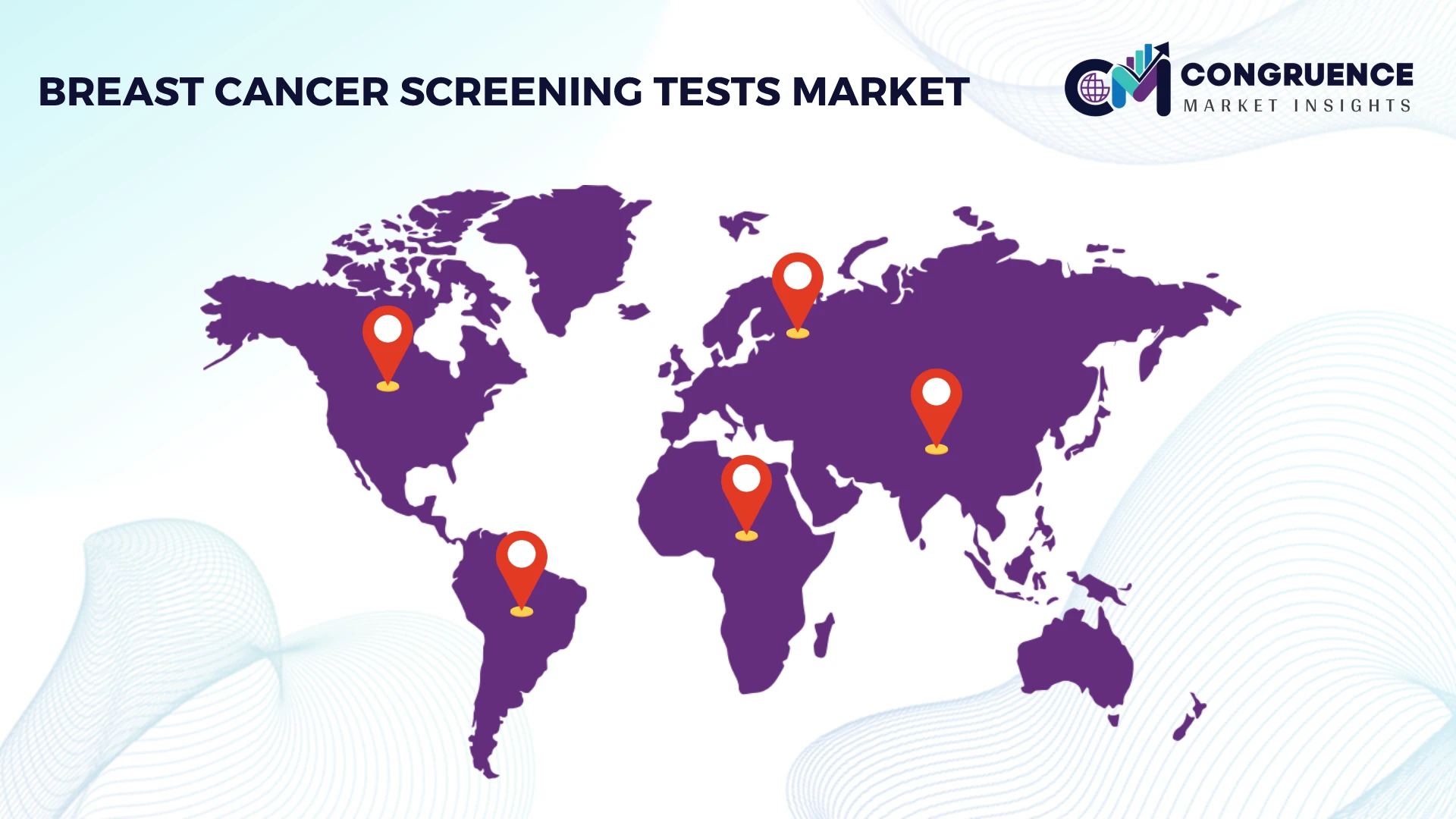
The report evaluates North America, Europe, Asia-Pacific, South America, and the Middle East & Africa, with country-level analysis emphasizing the U.S., Germany, India, Brazil, and Saudi Arabia. Technology coverage includes AI-assisted interpretation, automated workflow management, 3D imaging, predictive risk assessment, cloud connectivity, and interoperable imaging platforms. With approximately 95% of certified U.S. mammography facilities equipped for DBT, the analysis identifies where modernization is already established and where deployment remains underpenetrated, supporting investment planning, market entry, capacity expansion, partnership strategy, and competitive positioning for 2026–2033.
| Report Attribute/Metric | Report Details |
|---|---|
|
Market Revenue in 2025 |
USD 3,190.8 Million |
|
Market Revenue in 2033 |
USD 5,776.0 Million |
|
CAGR (2026 - 2033) |
7.7% |
|
Base Year |
2025 |
|
Forecast Period |
2026 - 2033 |
|
Historic Period |
2021 - 2025 |
|
Segments Covered |
By Type
By Application
By End-User
|
|
Key Report Deliverable |
Revenue Forecast, Growth Trends, Market Dynamics, Segmental Overview, Regional and Country-wise Analysis, Competition Landscape |
|
Region Covered |
North America, Europe, Asia-Pacific, South America, Middle East, Africa |
|
Key Players Analyzed |
Hologic, Inc., GE HealthCare Technologies Inc., Siemens Healthineers AG, Koninklijke Philips N.V., FUJIFILM Holdings Corporation, Canon Medical Systems Corporation, Konica Minolta, Inc., Planmed Oy, ScreenPoint Medical, Lunit Inc., iCAD, Inc., Delphinus Medical Technologies, Perimeter Medical Imaging AI, Inc. |
|
Customization & Pricing |
Available on Request (10% Customization is Free) |




