
Reports
The Global Blood Glucose Testing Market was valued at USD 1,680.0 Million in 2025 and is anticipated to reach a value of USD 3,323.0 Million by 2033 expanding at a CAGR of 8.9% between 2026 and 2033. Growth is driven by rising adoption of continuous glucose monitoring devices, integration of digital diabetes management platforms, and advancements in minimally invasive glucose sensing technologies.
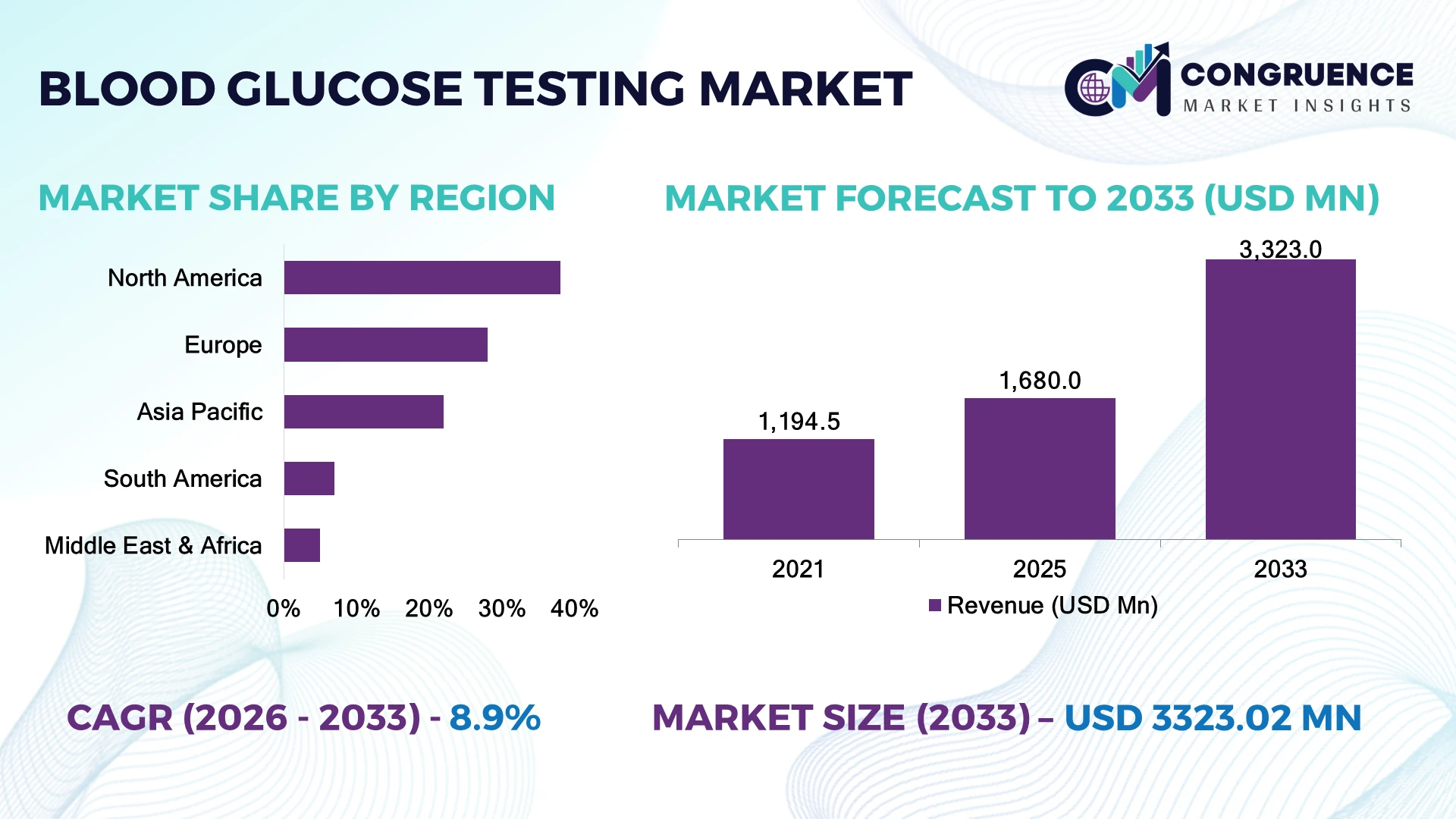
The United States dominates with over 35% market share, supported by strong diabetes care infrastructure, FDA-approved device adoption, and healthcare technology investments exceeding USD 100 billion annually. Germany and Japan follow with advanced monitoring systems covering over 70% of diabetic care facilities, while Asia-Pacific is expanding through government diabetes programs and local manufacturing growth.
Strategic decisions increasingly focus on connected monitoring ecosystems, cost-efficient sensor production, and regional supply-chain resilience.
Market Size & Growth: USD 1,680.0 Million (2025) to USD 3,323.0 Million (2033) at 8.9% CAGR, driven by continuous glucose monitoring and connected healthcare devices.
Top Growth Drivers: Continuous monitoring adoption 25%+, diabetes prevalence impact 20%+, digital health integration 15%+.
Short-Term Forecast: By 2028, sensor-based monitoring adoption is expected to improve patient monitoring efficiency by 30% and reduce manual testing frequency.
Emerging Technologies: AI-based glucose analytics, wearable sensors, and cloud-connected monitoring platforms are transforming diabetes management.
Regional Leaders: North America targets USD 1.3 billion+ with digital adoption; Europe approaches USD 900 million with regulatory support; Asia-Pacific exceeds USD 800 million through healthcare expansion.
Consumer/End-User Trends: Over 60% of diabetic patients increasingly prefer automated monitoring solutions over conventional finger-prick testing.
Pilot/Case Example: 2023 digital diabetes monitoring programs in the U.S. reported around 20% improvement in patient adherence through connected glucose tracking.
Competitive Landscape: Leading companies include Abbott, Dexcom, Roche, Medtronic, and Ascensia, with Abbott holding approximately 30% share in advanced glucose monitoring systems.
Regulatory & ESG Impact: Global healthcare digitization policies are improving remote monitoring access by over 25% while reducing unnecessary clinical visits.
Investment & Funding: More than USD 5 billion invested in digital diabetes care technologies, partnerships, and sensor manufacturing expansion.
Innovation & Future Outlook: Next-generation non-invasive sensors, AI prediction tools, and personalized diabetes management platforms are shaping future competitive strategies.
The Blood Glucose Testing Market is witnessing stronger demand for wearable monitoring solutions, advanced sensor accuracy, and interoperable healthcare platforms. Product innovations such as compact continuous glucose monitors and smartphone-connected meters are improving patient engagement, with digital monitoring usage increasing by more than 40% in developed markets. Regulatory approvals, semiconductor supply-chain improvements, and expansion of remote healthcare infrastructure are accelerating adoption across hospitals, clinics, and home-care environments, creating new opportunities for technology providers.
The Blood Glucose Testing Market is becoming strategically important as healthcare systems shift toward preventive diabetes management, remote monitoring, and data-driven patient care. Companies are competing through connected devices, sensor innovation, and integrated digital platforms rather than traditional testing equipment alone. Recent healthcare infrastructure modernization and regulatory acceptance of remote monitoring solutions are reshaping product strategies across major markets.
Advanced continuous glucose monitoring systems provide real-time insights with improved efficiency compared with conventional finger-prick testing, reducing manual testing requirements by nearly 50% for many users. North America leads in technology adoption and reimbursement support, while Asia-Pacific is expanding rapidly through government diabetes initiatives and local manufacturing investments. Europe continues emphasizing data security, clinical accuracy, and sustainable healthcare delivery.
Companies are increasing investments in partnerships, wearable technology development, and regional production facilities to strengthen supply-chain reliability. For example, healthcare providers are deploying connected glucose monitoring systems in home-care programs to improve patient compliance and reduce hospital workload. The next 2–3 years will prioritize AI-enabled analytics, affordable sensor technologies, and scalable digital ecosystems. Strategic positioning will depend on innovation speed, regulatory readiness, and the ability to deliver integrated glucose management solutions worldwide.
The increasing adoption of continuous glucose monitoring (CGM) systems is reshaping diabetes management, with wearable glucose devices accounting for over 40% of new patient monitoring preferences in developed markets. Rising diabetes screening programs in the United States and Japan, combined with smartphone-based health platforms, are accelerating device integration. Regulatory approvals for remote patient monitoring solutions have expanded clinical acceptance by more than 30% since 2020. Companies are responding through sensor miniaturization, cloud-based analytics partnerships, and manufacturing expansion to improve accessibility. The key strategic shift is moving from periodic glucose measurement toward continuous data-driven disease management.
High sensor costs, reimbursement variations, and dependence on specialized semiconductor components remain major constraints for broader blood glucose testing adoption. In emerging economies, affordability barriers restrict access, with advanced monitoring devices often costing 20–40% more than conventional testing solutions. Global supply disruptions affecting electronic components and medical-grade materials have increased procurement complexity for manufacturers. Countries such as India and Brazil continue facing infrastructure gaps in diabetes monitoring access outside major urban centers. Companies are reducing exposure through localized production, multi-source supplier agreements, and strategic manufacturing investments. Operational efficiency and cost optimization remain critical for improving scalability without compromising device accuracy.
Artificial intelligence-driven glucose analytics and connected healthcare platforms are creating significant opportunities for personalized diabetes management. AI-enabled monitoring systems can improve predictive glucose alerts by more than 25% compared with traditional tracking methods, supporting earlier intervention. Increasing adoption of digital health programs in countries such as China, South Korea, and the United Kingdom is expanding demand for integrated monitoring solutions. Companies are investing in software ecosystems, wearable sensor research, and healthcare partnerships to strengthen recurring service models. A key emerging opportunity lies in combining glucose data with lifestyle, medication, and biometric insights to create comprehensive chronic disease management platforms.
The growing use of connected glucose monitoring devices introduces challenges related to interoperability, cybersecurity, and healthcare data management. More than 50% of healthcare organizations are prioritizing stronger digital security frameworks as connected medical devices expand. Integration between glucose sensors, electronic health records, and telemedicine platforms remains inconsistent across healthcare systems, particularly in developing markets. In the United States and European countries, evolving data protection requirements are increasing compliance complexity for manufacturers. Companies must invest in secure cloud infrastructure, standardized communication protocols, and cybersecurity partnerships. Long-term competitiveness will depend on delivering reliable, interoperable systems while maintaining patient trust and regulatory compliance.
Wearable Sensor Integration Growth Continuous glucose monitoring adoption is reshaping diabetes workflows, with wearable sensors gaining more than 35% preference among digitally engaged patients. Hospitals in the United States are expanding remote monitoring programs, while manufacturers are improving sensor accuracy and reducing calibration requirements by nearly 20%. Companies are scaling partnerships with digital health platforms to strengthen connected care ecosystems and improve patient retention.
AI-Based Glucose Analytics Expansion Artificial intelligence-powered glucose prediction tools are increasingly integrated into monitoring platforms, improving early risk identification by approximately 25% compared with traditional tracking methods. Healthcare providers in Japan and South Korea are adopting predictive analytics to optimize chronic care management. Companies are investing in software automation and cloud infrastructure to convert glucose data into actionable clinical insights.
Home Testing Workflow Shift Home-based glucose monitoring is expanding as healthcare systems prioritize decentralized care models, with home-use adoption increasing by over 30% in developed healthcare markets. Rising telemedicine integration after regulatory changes has accelerated patient self-management. Companies are redesigning compact devices, improving mobile connectivity, and expanding direct-to-consumer distribution channels.
Localized Manufacturing Strategies Medical device supply chains are shifting toward regional production, with manufacturers increasing local sourcing by 20–30% to reduce component dependency. Government healthcare initiatives in India and China are encouraging domestic device manufacturing and technology partnerships. Companies are restructuring supply networks, investing in automation, and developing alternative component suppliers to improve operational resilience.
Continuous glucose monitoring systems represent the leading type segment, accounting for approximately 55% of adoption, supported by real-time tracking capability, improved patient compliance, and integration with smartphones and insulin delivery systems. Their ability to reduce manual testing frequency by nearly 40% has increased preference among diabetes care providers. Traditional blood glucose meters continue maintaining demand, particularly in cost-sensitive markets, where affordability and accessibility remain important factors. Companies are expanding CGM manufacturing capacity and improving sensor lifespan to strengthen market penetration. The fastest-growing type is advanced wearable glucose monitoring technology, driven by demand for minimally invasive solutions and personalized healthcare analytics. Adoption of connected devices has increased by more than 30% among technology-enabled healthcare users. Emerging sensor technologies are gaining attention, while conventional testing products remain relevant for routine monitoring. Manufacturers are prioritizing miniaturization, cloud connectivity, and lower-cost production models to capture expanding patient segments.
Diabetes management is the leading application segment, accounting for nearly 70% of market utilization due to increasing demand for accurate glucose tracking among Type 1 and Type 2 diabetes patients. Hospitals, clinics, and home-care providers rely on glucose testing solutions to improve treatment decisions and reduce complications. Routine monitoring applications maintain strong demand, especially in countries such as the United States and Germany, where structured diabetes care programs support device adoption. The fastest-growing application is remote patient monitoring, supported by telehealth expansion and connected healthcare infrastructure. Adoption of remote monitoring platforms has increased by more than 35% since 2020, enabling healthcare providers to manage patients outside traditional clinical settings. Companies are integrating glucose devices with electronic health records and digital platforms to improve workflow efficiency. Emerging applications in preventive healthcare and wellness tracking are creating additional opportunities beyond traditional diabetes management.
Hospitals and clinics represent the leading end-user segment, contributing approximately 50% of overall device utilization due to high testing volumes, clinical accuracy requirements, and integration with patient management systems. Healthcare facilities in the United States, Germany, and Japan are expanding advanced monitoring deployment, with digital workflow adoption increasing by more than 30%. Companies are developing enterprise-focused solutions with improved interoperability and data management capabilities. The fastest-growing end-user segment is home healthcare, driven by aging populations, remote care adoption, and patient preference for self-monitoring solutions. Home-based usage has increased by nearly 40% in developed markets as healthcare providers seek cost-efficient care delivery models. Retail pharmacies and diagnostic centers continue supporting accessibility, while specialty diabetes clinics are adopting advanced analytics platforms. Manufacturers are responding through customized solutions, strategic healthcare partnerships, and consumer-focused device expansion.
North America accounted for the largest market share at 38% in 2025 however, Asia-Pacific is expected to register the fastest growth, expanding at a CAGR of 10.2% between 2026 and 2033.
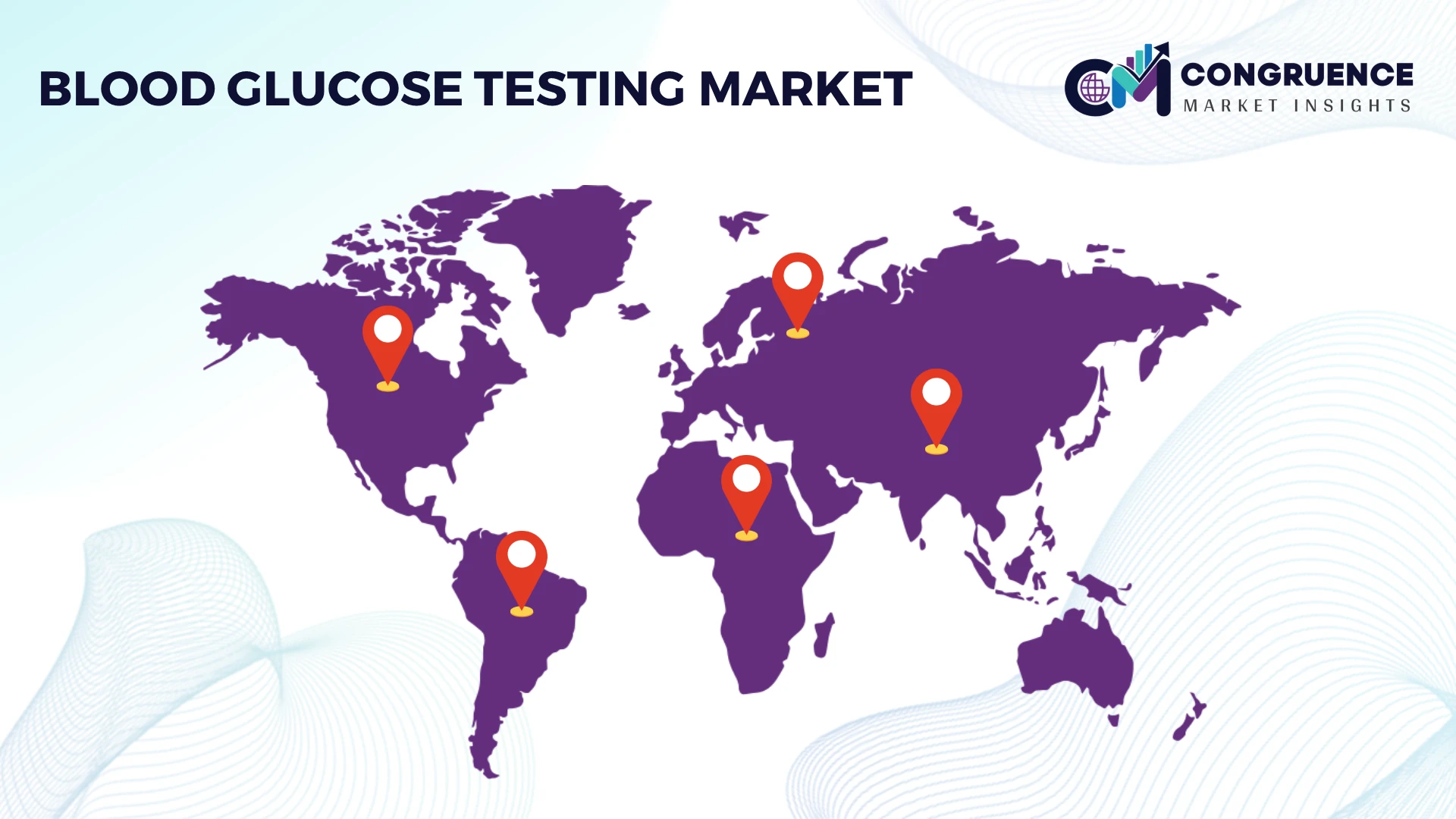
North America remains the dominant market, supported by advanced healthcare infrastructure, strong reimbursement frameworks, and rapid adoption of continuous glucose monitoring systems. The region contributes approximately 38% of global demand, with the United States representing the largest deployment base due to high diabetes prevalence and digital healthcare integration. More than 60% of newly diagnosed technology-eligible patients are adopting connected glucose monitoring solutions across major healthcare networks. Partnerships between device manufacturers and telehealth providers are expanding remote monitoring capabilities, while companies are increasing domestic production capacity to strengthen supply reliability. Strategic focus is shifting toward integrated platforms combining sensors, analytics, and patient management tools.
United States Market Outlook: The United States leads North American adoption through strong clinical infrastructure, technology innovation, and healthcare digitization. Over 70% of major diabetes care centers have integrated advanced glucose monitoring solutions into patient management workflows. FDA approvals, insurance coverage expansion, and partnerships between medical technology firms and healthcare providers continue strengthening commercial deployment.
Europe maintains a strong position through structured healthcare systems, medical device regulation, and increasing adoption of connected monitoring technologies. Countries including Germany, the United Kingdom, and France are driving demand through public healthcare modernization and improved diabetes management programs. The region accounts for nearly 28% of global usage, with more than 50% of specialized diabetes clinics adopting digital monitoring platforms. Regulatory emphasis on patient data security and device accuracy is encouraging manufacturers to improve interoperability and compliance capabilities. Companies are investing in localized production, clinical partnerships, and sustainable device designs to align with European healthcare priorities.
Germany Market Outlook: Germany represents Europe’s strongest market due to advanced medical infrastructure, industrial capabilities, and healthcare technology adoption. More than 65% of diabetes specialty centers utilize digital monitoring solutions, supported by strong reimbursement structures and medical innovation programs. Manufacturers are expanding partnerships with hospitals and research institutions to accelerate device integration.
Asia-Pacific is emerging as the fastest-expanding market due to rising diabetes cases, improving healthcare access, and growing domestic medical device production. Countries such as China, Japan, India, and South Korea are increasing glucose monitoring adoption through government healthcare initiatives and digital platforms. The region contributes approximately 22% of market demand, while local manufacturers are improving production capabilities to reduce dependence on imported devices. China has increased medical device manufacturing investments by more than 30% in recent years, supporting supply-chain localization. Companies are focusing on affordable sensors, mobile-connected devices, and partnerships with healthcare providers to address large patient populations.
China Market Outlook: China holds a strategic position through its expanding medical technology manufacturing ecosystem and large diabetes patient base. More than 40% of new healthcare technology investments in chronic disease management are directed toward digital monitoring and connected solutions. Domestic companies are strengthening production capacity and developing cost-efficient glucose testing platforms.
South America is experiencing gradual growth driven by improving healthcare accessibility, increasing diabetes awareness, and expansion of diagnostic infrastructure. Brazil and Argentina represent major demand centers, supported by public healthcare programs and private-sector investments. The region contributes approximately 7% of global market activity, with urban healthcare facilities accounting for more than 60% of advanced glucose testing deployments. Infrastructure limitations and uneven reimbursement availability continue influencing adoption patterns. Companies are responding through affordable product portfolios, distributor partnerships, and localized service networks to improve accessibility. The market opportunity is increasingly concentrated in expanding home-care monitoring and pharmacy-based testing solutions.
Brazil Market Outlook: Brazil remains the largest South American market due to its healthcare network scale and growing chronic disease management initiatives. More than 50% of advanced glucose testing deployments are concentrated in major urban healthcare centers. Companies are strengthening distribution partnerships and improving affordability to expand access beyond metropolitan areas.
The Middle East & Africa market is developing through healthcare modernization programs, rising diabetes awareness, and investment in advanced medical infrastructure. Gulf countries such as Saudi Arabia and the United Arab Emirates are leading adoption through smart healthcare initiatives and hospital technology upgrades. The region represents approximately 5% of global demand, with advanced healthcare facilities accounting for nearly 60% of high-end monitoring system deployments. Government-led healthcare transformation programs are encouraging partnerships between technology providers and medical institutions. Companies are focusing on scalable monitoring solutions, regional distribution networks, and digital platforms to overcome accessibility challenges.
Saudi Arabia Market Outlook: Saudi Arabia is a key market due to healthcare transformation initiatives, investment in digital hospitals, and rising demand for chronic disease management solutions. More than 30% of major hospitals have expanded digital healthcare capabilities through modernization programs. Medical technology companies are increasing partnerships with healthcare providers to support connected glucose monitoring adoption.
The Blood Glucose Testing Market features competition between global technology leaders such as Abbott, Dexcom, Roche, and Medtronic against regional manufacturers and cost-focused diagnostic suppliers. The top five players collectively account for approximately 60% of the market, creating a moderately consolidated structure. Competition is driven by sensor accuracy, device connectivity, affordability, supply reliability, and integration with digital health platforms. Advanced CGM providers are improving monitoring performance by 20–30% through algorithm upgrades, while cost-focused players compete through localized production and pricing strategies. Companies are expanding manufacturing capacity, forming healthcare partnerships, and integrating AI-based analytics into monitoring ecosystems. The competitive landscape is shifting toward connected care platforms, vertical integration, and supply-chain control as device companies move beyond traditional glucose meters. Entry barriers remain high due to regulatory approvals, clinical validation requirements, and established healthcare networks. Winning players will require superior sensor innovation, scalable production, and seamless digital healthcare integration.
Dexcom, Inc.
F. Hoffmann-La Roche Ltd.
Medtronic plc
Ascensia Diabetes Care Holdings AG
LifeScan IP Holdings, LLC
Terumo Corporation
B. Braun Melsungen AG
ACON Laboratories, Inc.
ARKRAY Inc.
Trividia Health, Inc.
Senseonics Holdings, Inc.
Continuous glucose monitoring (CGM) technology is transforming the blood glucose testing landscape through real-time tracking, wearable sensors, and automated data analysis. Compared with traditional finger-stick meters, advanced CGM systems reduce manual testing requirements by nearly 50% and improve glucose visibility through continuous data streams. Adoption among digitally connected diabetes patients has increased by more than 35%, encouraging companies to expand sensor production, cloud platforms, and healthcare partnerships.
Artificial intelligence-based glucose analytics and predictive algorithms are becoming important competitive differentiators. AI-enabled systems improve early glucose fluctuation detection by approximately 25% and support personalized treatment decisions. Companies including device manufacturers and digital health providers are integrating machine learning, mobile applications, and remote monitoring capabilities to improve clinical efficiency and patient engagement.
Between 2026 and 2028, non-invasive sensing, interoperable healthcare platforms, and automated insulin management integration will shape market competition. Manufacturers investing in miniaturized sensors, cybersecurity, and connected ecosystems will gain advantages through improved workflow efficiency and patient retention. Technology leaders benefit by combining hardware innovation with software-driven healthcare services, while traditional device suppliers face pressure to modernize product portfolios.
August 2025 Abbott launched the FreeStyle Libre 2 Plus sensor in India, introducing automatic glucose readings every minute and optional alerts. The technology supports real-time diabetes management and improves monitoring convenience. The launch strengthens Abbott’s CGM expansion strategy in high-growth diabetes markets. Source: www.abbott.in
November 2024 Dexcom partnered with ŌURA to integrate Dexcom glucose biosensor data with Oura Ring health metrics. Dexcom invested USD 75 million in ŌURA’s Series D funding, creating a broader metabolic health ecosystem and expanding connected monitoring capabilities. Source: www.investors.dexcom.com
May 2025 Roche announced a USD 550 million investment to expand its Indianapolis diagnostics manufacturing hub for continuous glucose monitoring solutions. The expansion strengthens U.S. production capacity, creates hundreds of jobs, and improves supply-chain resilience. Source: www.diagnostics.roche.com
May 2025 Medtronic announced plans to separate its Diabetes business into a standalone company. The restructuring enables focused investment in diabetes technology, including glucose monitoring and automated insulin management platforms.
The Blood Glucose Testing Market Report provides comprehensive analysis across major product types, applications, end-users, and geographic markets. The study covers traditional glucose meters, continuous monitoring systems, wearable technologies, diabetes management applications, hospitals, clinics, home healthcare, and diagnostic centers. Regional evaluation includes North America, Europe, Asia-Pacific, South America, and Middle East & Africa, highlighting adoption patterns, infrastructure development, and technology deployment trends.
The report examines competitive positioning, innovation strategies, supply-chain developments, and emerging opportunities across connected healthcare ecosystems. It analyzes how companies are leveraging AI integration, sensor advancements, digital platforms, and manufacturing expansion to strengthen market presence. With more than 10 major industry participants assessed, the report supports investment decisions, expansion planning, partnership strategies, and competitive positioning from 2026 to 2033.
| Report Attribute / Metric | Details |
|---|---|
| Market Revenue (2025) | USD 1,680.0 Million |
| Market Revenue (2033) | USD 3,323.0 Million |
| CAGR (2026–2033) | 8.9% |
| Base Year | 2025 |
| Forecast Period | 2026–2033 |
| Historic Period | 2021–2025 |
| Segments Covered |
By Type
By Application
By End-User
|
| Key Deliverables | Revenue Forecast; Market Trends; Growth Drivers & Restraints; Technology Insights; Segmentation Analysis; Regional Insights; Competitive Landscape; Regulatory & ESG Overview; Recent Developments |
| Regions Covered | North America; Europe; Asia-Pacific; South America; Middle East & Africa |
| Companies Profiled | Abbott Laboratories; Dexcom, Inc.; F. Hoffmann-La Roche Ltd.; Medtronic plc; Ascensia Diabetes Care Holdings AG; LifeScan IP Holdings, LLC; Terumo Corporation; B. Braun Melsungen AG; ACON Laboratories, Inc.; ARKRAY Inc.; Trividia Health, Inc.; Senseonics Holdings, Inc. |
| Customization & Pricing | Available on Request (10% Customization Free) |




