
Reports
The Global Blood Biological Products Market was valued at USD 40,324.1 Million in 2025 and is anticipated to reach a value of USD 65,740.2 Million by 2033 expanding at a CAGR of 6.3% between 2026 and 2033. Growth is driven by expanding plasma-derived immunoglobulin use, rising demand for albumin and coagulation factors, and continued investment in plasma-collection capacity and fractionation infrastructure.
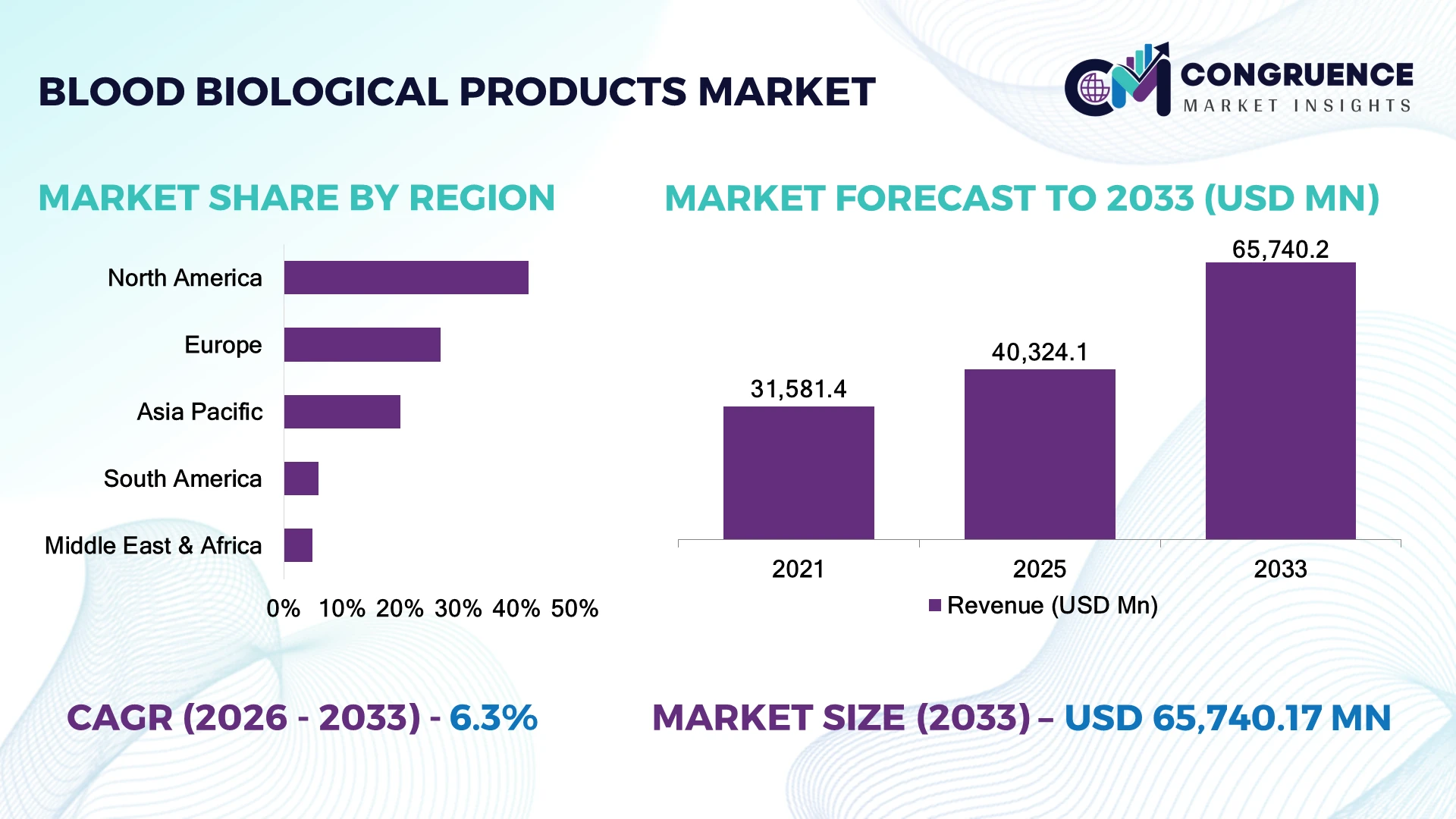
The United States remains the dominant country, representing approximately 40% of global plasma-derived product supply, supported by extensive plasma-collection networks, biotechnology manufacturing, and advanced fractionation capacity. U.S. plasma collection substantially exceeds European collection intensity, while Europe continues strengthening domestic supply resilience following pandemic-era shortages. In 2026, geopolitical and trade considerations are accelerating attention toward regional plasma security, particularly for immunoglobulins and albumin. Advanced fractionation and cold-chain infrastructure remain central to maintaining product availability and manufacturing yields.
Strategically, manufacturers with diversified plasma sourcing, high-yield fractionation, and geographically resilient production networks hold the strongest supply-security advantage.
Market Size & Growth: USD 40.32 billion in 2025 to USD 65.74 billion by 2033 at 6.3% CAGR, driven by immunoglobulin demand and plasma-fractionation capacity expansion.
Top Growth Drivers: Immunoglobulins 38%; albumin 24%; coagulation factors 18%.
Short-Term Forecast: By 2028, automation and advanced fractionation controls can improve manufacturing yield and process efficiency by 8–12%.
Emerging Technologies: Continuous fractionation, advanced chromatography, pathogen-reduction systems, and AI-enabled quality monitoring are strengthening biological-product manufacturing.
Regional Leaders: North America approaches USD 27 billion, Europe USD 20 billion, and Asia-Pacific USD 14 billion by 2033, with Asia-Pacific expanding plasma-processing infrastructure.
Consumer/End-User Trends: Hospitals and specialty-care providers account for approximately 65% of demand, led by immunodeficiency, critical-care, hematology, and replacement therapies.
Pilot/Case Example: 2026 plasma-fractionation modernization programs targeting 5–10% higher recovery are increasing the value extracted from each collected plasma unit.
Competitive Landscape: CSL remains a leading global participant with an estimated 15–20% share of major plasma-derived product activity, alongside Grifols, Takeda, Octapharma, and Kedrion.
Regulatory & ESG Impact: Plasma traceability, pathogen safety, and energy-efficient processing are reducing quality and resource-management risks across modern fractionation facilities.
Investment & Funding: More than USD 2 billion is being directed across plasma collection, fractionation capacity, specialty biologics, and supply-chain expansion, particularly in North America and Europe.
Innovation & Future Outlook: Next-generation purification, recombinant alternatives, digital batch control, and expanded plasma networks are shifting competition toward yield, supply security, and manufacturing resilience.
The Blood Biological Products Market is increasingly concentrated around immunoglobulins, albumin, coagulation factors, and specialized plasma-derived therapies, with immunoglobulins representing approximately 38% of demand. Advanced chromatography, automated fractionation, pathogen-reduction technologies, and digital quality systems are improving manufacturing consistency. In 2026, supply-security initiatives are gaining importance as manufacturers diversify plasma sourcing and regional production following pandemic-era disruptions and evolving trade conditions, creating a stronger transition toward resilient biological-product supply chains.
Blood biological products are becoming strategically important because plasma-derived medicines are critical to immunology, hematology, critical care, and rare-disease treatment, while production remains dependent on specialized collection and fractionation infrastructure. Immunoglobulins, albumin, and coagulation products require tightly controlled biological inputs, making plasma availability a strategic manufacturing constraint rather than a conventional raw-material issue. This is pushing major producers toward greater collection capacity, geographic diversification, and vertically integrated supply networks.
Technology is improving the economics of fractionation. Automated process monitoring and advanced chromatography can improve recovery and reduce process variability by approximately 8–12% compared with less integrated legacy workflows. North America retains the strongest plasma-collection ecosystem, while Europe is emphasizing supply resilience and Asia-Pacific is expanding domestic fractionation and biologics infrastructure.
Through 2026–2028, companies are prioritizing plasma-center expansion, higher-yield purification, digital batch monitoring, and partnerships that secure upstream supply. A practical priority is increasing product recovery from each plasma donation because even a 5% yield improvement can materially increase available therapeutic output without requiring equivalent growth in collection volume. Competitive advantage will increasingly depend on plasma security, fractionation efficiency, quality consistency, and geographically resilient manufacturing rather than capacity alone.
Immunoglobulins account for approximately 38–40% of blood biological product demand, making therapeutic plasma utilization the primary volume driver. Albumin contributes roughly 20–25%, while coagulation factors remain concentrated in specialty hematology applications. Demand intensity is particularly strong in the United States, where extensive plasma-collection infrastructure supports continuous fractionation throughput. Manufacturers are responding by expanding collection centers, upgrading purification systems, and improving plasma yield per donation. Advanced chromatography and process automation can improve recovery by approximately 5–10%, increasing output without proportional collection expansion. The strategic shift is toward extracting greater therapeutic value from each plasma unit, making yield optimization as important as adding collection capacity.
Plasma-derived manufacturing remains constrained by dependence on specialized collection networks, with North America supplying a disproportionately large share of globally collected source plasma. Plasma collection and testing can represent approximately 30–40% of upstream operating requirements, while cold-chain and quality-control activities add another 10–15% to logistics complexity. European manufacturers face particular supply-security pressure because domestic plasma availability does not fully match therapeutic demand. Companies are therefore diversifying collection geography, securing long-term plasma procurement arrangements, and increasing regional fractionation capacity. The non-obvious constraint is that additional manufacturing capacity delivers limited benefit without sufficient qualified plasma input, making upstream collection economics a critical bottleneck for scalability.
Advanced purification creates an opportunity to increase therapeutic output from existing plasma volumes rather than relying entirely on additional collections. Continuous processing, high-resolution chromatography, and automated process control can improve recovery by approximately 5–12%, while digital monitoring can reduce batch-related deviations by roughly 10–15%. China, India, and selected Middle Eastern markets are expanding biologics infrastructure, creating opportunities for localized fractionation and specialty-product manufacturing. Companies are investing in process intensification, modular manufacturing, and technology partnerships to improve utilization of existing facilities. A particularly attractive opportunity lies in recovering multiple proteins from each plasma pool more efficiently, increasing manufacturing value while reducing material losses and strengthening supply resilience.
Modern blood biological production involves tightly linked collection, testing, fractionation, purification, fill-finish, and cold-chain workflows, creating significant integration complexity. Quality-control activities can represent approximately 10–15% of manufacturing operations, while deviations across multiple processing stages can extend batch-release timelines by several days. Facilities also require specialized bioprocessing personnel, validated analytical systems, and continuous regulatory compliance. Companies operating across the United States, Europe, and Asia must maintain consistent specifications despite differing regulatory frameworks and infrastructure maturity. The long-term challenge is scaling output without increasing quality deviations or energy intensity. Manufacturers are therefore investing in digital batch records, automated monitoring, workforce training, and predictive maintenance to strengthen process consistency and facility utilization.
Plasma Collection Becomes Strategic: Manufacturers are prioritizing collection-network optimization as plasma availability increasingly determines downstream fractionation utilization. Leading operators are targeting approximately 5–10% higher collection productivity through donor-center automation, scheduling optimization, and improved donor retention. The operational shift is significant because increasing yield per donor can expand therapeutic output without matching increases in facility footprint.
Fractionation Moves Toward Automation: Automated chromatography, process sensors, and digital batch monitoring are gaining adoption across modern plasma-processing facilities, with automation improving selected process-efficiency measures by approximately 5–12%. Companies are integrating real-time quality monitoring with manufacturing execution systems to identify deviations earlier. This reduces manual intervention and improves consistency across high-volume biological production.
Regional Supply Security Strengthens: Europe and Asia are increasing attention to domestic plasma and fractionation infrastructure following pandemic-era supply disruptions. Regional production initiatives are targeting approximately 10–20% reductions in dependence on distant finished-product supply for selected biological therapies. Manufacturers are responding through local partnerships, facility investment, and diversified sourcing, making geographic resilience an increasingly important procurement criterion.
Protein Recovery Gains Priority: Manufacturers are increasingly evaluating facilities by total protein recovery rather than individual product throughput. Advanced purification can improve recovery by roughly 5–10%, while integrated fractionation allows albumin, immunoglobulins, and coagulation proteins to be extracted from shared plasma pools. This creates a non-obvious competitive advantage: better recovery can increase effective capacity without constructing an equivalent amount of new processing infrastructure.
Plasma-derived products represent the leading type, accounting for approximately 65–70% of the global blood biological products market, supported by established therapeutic use of immunoglobulins, albumin, coagulation factors, and specialty plasma proteins. Immunoglobulins alone represent roughly 38–40% of total demand, while albumin contributes approximately 20–25%. These products benefit from established clinical protocols, scalable fractionation infrastructure, and recurring hospital utilization. Recombinant blood products represent a smaller but strategically important segment, particularly in coagulation care, where manufacturers prioritize pathogen-independent production and targeted therapies.
Specialty biological products, including fibrinogen, antithrombin, alpha-1 proteinase inhibitor, and other purified proteins, are gaining importance as treatment pathways become more specialized. Recombinant and engineered products are the fastest-shifting segment, supported by improved manufacturing consistency and reduced dependence on plasma collection. Companies are therefore balancing plasma-center expansion with recombinant technology partnerships and higher-yield purification. The investment implication is clear: upstream plasma security remains essential, but differentiated biologics increasingly determine portfolio value.
The World Health Organization reported in 2026 that only 49 of 168 reporting countries produce plasma-derived medicinal products from domestically collected plasma, while 119 countries rely entirely on imports or reported no use, highlighting substantial localization potential.
Immunoglobulin therapy represents the leading application, accounting for approximately 38–42% of global blood biological product demand, driven by primary immunodeficiency, autoimmune disorders, neurological conditions, and replacement therapies. Albumin-based applications contribute approximately 20–25%, supported by critical-care, surgery, liver disease, and volume-management requirements. Coagulation-factor applications account for roughly 15–18% and remain highly specialized. Immunoglobulin is also the fastest-shifting application because expanding indications and subcutaneous delivery options are increasing treatment flexibility beyond conventional hospital infusion models.
Critical-care and specialty hematology applications remain operationally important despite smaller volumes because treatment often requires dependable availability and strict quality assurance. Companies are expanding fractionation capacity, optimizing immunoglobulin purification, and developing subcutaneous and more concentrated formulations. Hospitals are also strengthening inventory planning because product interruptions directly affect continuity of care. The commercial priority is therefore shifting toward supply reliability and differentiated delivery formats rather than volume expansion alone.
WHO reported in 2026 that approximately 21.5 million litres of plasma from 36 reporting countries were fractionated for plasma-derived medicinal products, equivalent to about 27% of plasma recovered from whole-blood donations, underscoring the importance of fractionation utilization.
Hospitals represent the leading end-user, accounting for approximately 60–65% of global blood biological product consumption because immunoglobulins, albumin, coagulation factors, and specialty plasma proteins require controlled clinical administration and specialist monitoring. Specialty clinics and hematology centers contribute approximately 15–20%, particularly through immunodeficiency and bleeding-disorder management, while diagnostic and blood-service organizations represent roughly 10–15%. Hospital procurement remains mature and volume-driven, whereas specialty clinics are the faster-shifting group as subcutaneous immunoglobulin and outpatient treatment pathways expand.
The growing outpatient model is changing purchasing behavior: specialty providers increasingly prioritize concentrated formulations, predictable supply, and delivery flexibility rather than conventional bulk hospital procurement. Companies are responding through healthcare partnerships, specialty-distribution agreements, localized inventory, and expanded product presentations. Blood establishments remain strategically important because they control the upstream plasma interface. This creates a vertically connected buying ecosystem in which manufacturers must align collection, fractionation, regulatory compliance, and hospital supply planning.
WHO reported in 2026 that global blood collection reached approximately 120.4 million donations, with high-income countries collecting 36% despite representing only 15% of the world's population, highlighting persistent differences in blood-system capacity and access.
North America accounted for the largest market share at 42.0% in 2025 however, Asia-Pacific is expected to register the fastest growth, expanding at a CAGR of 8.1% between 2026 and 2033.
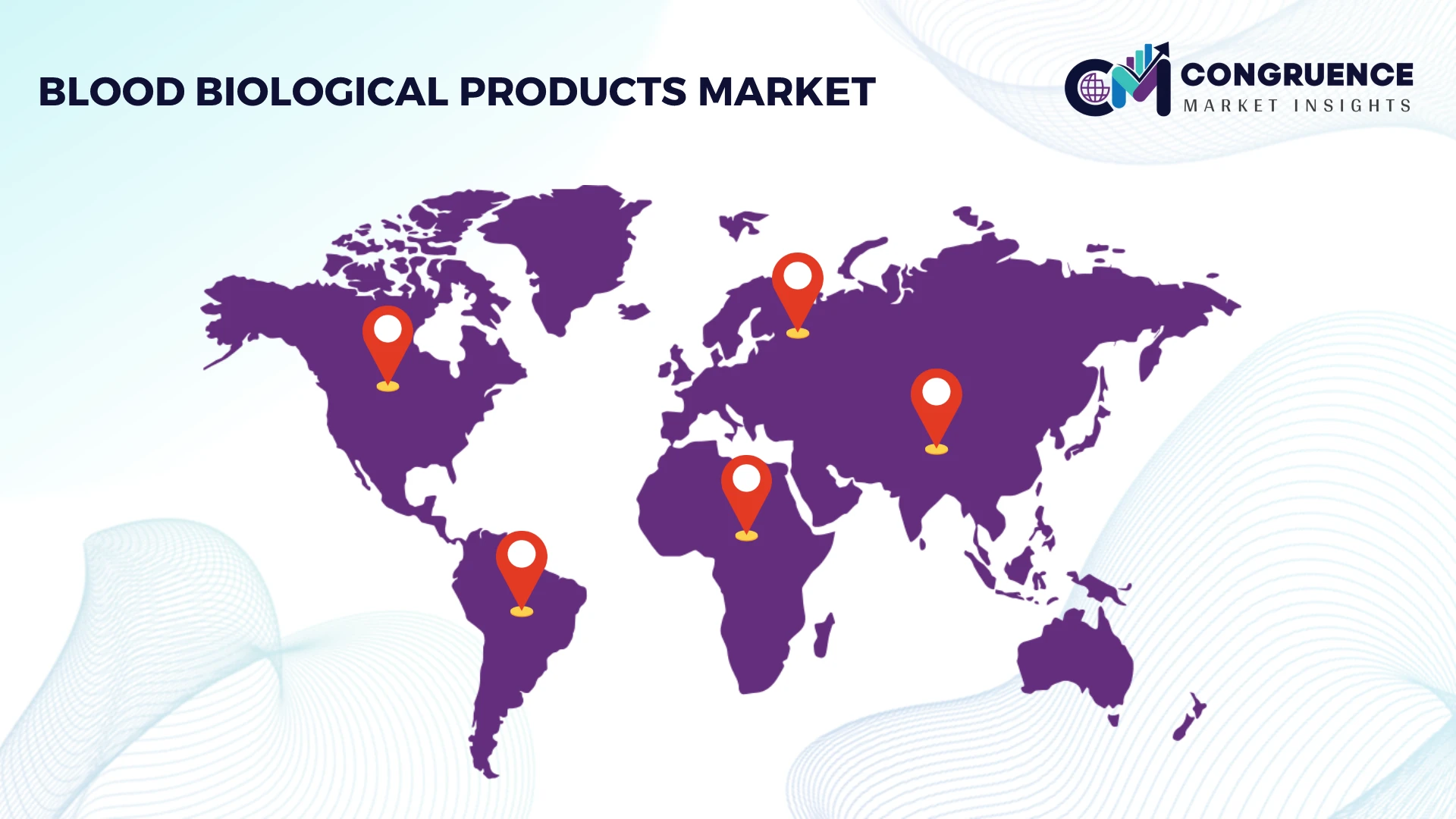
Plasma collection scale and fractionation integration reinforce North American supply leadership
North America contributes approximately 42.0% of the global blood biological products market, with the United States accounting for the overwhelming share of regional production and consumption. The region benefits from extensive plasma-collection networks, advanced fractionation facilities, established hospital procurement, and sophisticated cold-chain infrastructure. Immunoglobulins represent roughly 40% of regional product demand, supported by immunology, neurology, hematology, and specialty-care applications. Major manufacturers continue investing in plasma-center expansion, purification capacity, and higher-yield processing. Automated process monitoring and advanced chromatography are improving selected recovery metrics by approximately 5–10%. The region's structural advantage is upstream integration: companies controlling both plasma collection and downstream fractionation can better manage input availability, production scheduling, and therapeutic supply continuity.
United States Market Outlook: The United States remains the global center of plasma collection and fractionation, supported by a dense donor-center network and major manufacturing operations. The country accounts for approximately 40% of global source-plasma collection, creating a substantial upstream advantage. Manufacturers are investing in collection-center productivity, purification technology, and specialty biologics capacity, while vertically integrated supply chains strengthen resilience against international logistics and procurement disruptions.
Supply-security programs are accelerating domestic plasma and fractionation capabilities
Europe represents approximately 27% of the global blood biological products market, with Germany, France, Italy, Spain, and the United Kingdom forming important manufacturing and consumption centers. The region remains highly dependent on coordinated plasma collection, pharmaceutical-grade fractionation, and cross-border distribution. Immunoglobulins and albumin collectively account for more than 55% of regional demand, while specialty coagulation products support high-value hospital applications. European manufacturers are prioritizing domestic plasma collection, manufacturing modernization, and inventory resilience following supply disruptions experienced during the pandemic period. Advanced purification and digital quality systems are increasingly deployed to improve batch consistency and resource utilization. The strategic shift is toward reducing dependence on external supply while maintaining stringent biological-product quality and traceability.
Germany Market Outlook: Germany is Europe's strategically important market because of its advanced pharmaceutical manufacturing base, extensive hospital infrastructure, and established blood-collection system. The country accounts for approximately 20% of European blood biological product demand and maintains strong capabilities in plasma-derived medicines and specialty therapeutics. Manufacturers are emphasizing domestic sourcing, process automation, and integrated quality systems to strengthen supply continuity and production efficiency.
Domestic fractionation capacity is becoming a strategic healthcare priority
Asia-Pacific accounts for approximately 20% of the global blood biological products market, with China, Japan, South Korea, and Australia representing major demand and manufacturing centers. China is expanding domestic plasma collection and fractionation infrastructure, while Japan maintains sophisticated pharmaceutical manufacturing and specialty-care systems. Immunoglobulins and albumin together represent more than 55% of regional consumption, reflecting substantial hospital and specialty-care requirements. Companies are increasing investment in plasma centers, fractionation plants, purification technology, and cold-chain logistics. China is particularly focused on strengthening domestic supply, reducing exposure to imported biological products, and improving manufacturing scale. The strategic opportunity extends beyond demand growth: localized fractionation can improve supply responsiveness while creating regional manufacturing platforms.
China Market Outlook: China is the region's largest strategic market, supported by a large hospital network, expanding plasma-collection infrastructure, and substantial domestic demand for albumin and immunoglobulins. Plasma-derived products account for a significant share of biological-product consumption, while domestic manufacturers continue expanding collection and fractionation capacity. Investment is increasingly focused on purification technology, manufacturing quality, and geographically distributed plasma-collection networks.
Brazil is strengthening domestic biological-product access through healthcare infrastructure
South America contributes approximately 6% of the global blood biological products market, with Brazil representing the principal demand and healthcare-infrastructure center. The market is supported by public hospitals, specialty-care networks, blood establishments, and growing pharmaceutical manufacturing capabilities. Albumin and immunoglobulin products account for more than 50% of regional demand, reflecting their importance across critical care, immunology, and hospital treatment. Brazil continues to strengthen domestic pharmaceutical and biological-product capabilities, while procurement remains sensitive to imported product availability and currency conditions. Manufacturers are responding through local distribution partnerships, inventory planning, and selective domestic production. The key commercial opportunity lies in improving supply reliability while expanding access to specialty plasma-derived therapies across major hospital networks.
Brazil Market Outlook: Brazil represents approximately 60% of South America's blood biological products demand and has the region's most developed pharmaceutical and blood-service infrastructure. The country's extensive public healthcare system creates substantial institutional procurement requirements. Manufacturers are strengthening local distribution, cold-chain capabilities, and specialty-product availability, while domestic production initiatives can reduce dependence on imported finished biological products and improve supply responsiveness.
Healthcare modernization is increasing demand for reliable specialty-biological supply
Middle East & Africa accounts for approximately 5% of the global blood biological products market, with Saudi Arabia, the United Arab Emirates, Israel, and South Africa representing key healthcare and pharmaceutical centers. The region remains dependent on imported plasma-derived therapies, particularly immunoglobulins, albumin, and coagulation products. Specialty biological products account for more than 50% of demand in major advanced-care markets, supported by tertiary hospitals and expanding specialty-care infrastructure. Gulf countries are investing in pharmaceutical manufacturing, cold-chain logistics, and healthcare localization, creating opportunities for regional distribution and selected biological-product production. Companies are establishing local partnerships and strengthening inventory buffers to reduce exposure to international logistics disruptions. Supply localization is becoming a strategic differentiator as healthcare systems seek greater therapeutic independence.
Saudi Arabia Market Outlook: Saudi Arabia is the region's leading investment-driven market, supported by healthcare modernization, pharmaceutical localization initiatives, and expanding tertiary-care infrastructure. Specialty biological products are concentrated in major hospital systems, where immunoglobulins, albumin, and coagulation therapies represent critical procurement categories. The country's pharmaceutical-localization agenda is encouraging manufacturers to evaluate regional production, packaging, distribution, and cold-chain partnerships rather than relying exclusively on imported finished products.
CSL, Grifols, Takeda, Octapharma, and regional plasma fractionators compete across immunoglobulins, albumin, and coagulation products. The top five are estimated to control approximately 60% of plasma-derived product activity, reflecting high concentration in collection and fractionation. Competition centers on plasma access, yield, manufacturing reliability, and product breadth: immunoglobulins represent about 38–40% of demand, while advanced fractionation can improve recovery 5–10%. CSL and Grifols are expanding vertically through collection and manufacturing; Takeda and Octapharma are strengthening regional capacity and partnerships. The competitive shift is toward supply security, higher plasma utilization, and geographically diversified production rather than standalone plant scale. Entry barriers remain substantial because plasma networks, validated fractionation facilities, regulatory approvals, and specialized expertise require heavy capital and long qualification cycles. Regional entrants increasingly compete through localized plasma programs and government partnerships. Winning requires secured plasma supply, superior yield, dependable quality, and integrated manufacturing that converts every donation into maximum therapeutic output.
CSL Limited
Grifols, S.A.
Takeda Pharmaceutical Company Limited
Octapharma AG
Kedrion Biopharma Inc.
Biotest AG
ADMA Biologics, Inc.
China Biologics Products Holdings, Inc.
LFB S.A.
Sanquin
Bio Products Laboratory
SK Plasma
China National Biotec Group
Kamada Ltd.
Modern blood biological manufacturing is moving toward automated fractionation, advanced chromatography, continuous monitoring, and digital batch records. Automated process controls can improve selected recovery and throughput measures by 5–10%, while real-time sensors reduce manual quality checks by 10–15%. Adoption is strongest in plasma-processing facilities, where integrated manufacturing execution systems connect collection, purification, testing, and release. This integration improves batch visibility and reduces deviation response time.
Emerging technologies include continuous chromatography, single-use processing components, predictive maintenance, and AI-assisted process analytics. Continuous and intensified processing can improve equipment utilization by 10–20% versus batch-oriented workflows, while predictive analytics can reduce unplanned downtime by 5–10%. Advanced pathogen-reduction and viral-clearance technologies strengthen product safety and manufacturing resilience. Large vertically integrated producers benefit most because they possess sufficient process data and facility scale to train models and optimize multiple production stages.
From 2026–2028, digital twins, AI-driven yield optimization, and automated release workflows will become increasingly important. Digital process optimization can improve yield by 2–5% without equivalent plasma-volume expansion. Companies combining proprietary plasma data with automated fractionation gain an advantage in cost control, capacity utilization, and supply responsiveness. Investment now matters because qualifying integrated technologies requires long validation cycles, specialized workforce training, and regulatory documentation before deployment.
June 2024 Takeda expanded its Los Angeles plasma-fractionation site with a $230 million investment, adding up to 2 million liters of annual capacity and 125 positions. The project strengthens U.S. supply resilience through advanced automation and digital manufacturing. Source: takeda.com (Takeda)
July 2025 Grifols announced a €160 million Barcelona facility designed to double European plasma-fractionation capacity. The 25-hectare biotechnology hub will support more than 300,000 patients and create over 400 specialized jobs, strengthening regional supply resilience through digital manufacturing. Source: grifols.com (Grifols.com)
October 2025 Octapharma completed a €200 million Vienna expansion, increasing production volumes by 50% and adding 160 jobs. Expanded inspection, packaging, logistics, and manufacturing capacity strengthens global supply of plasma-derived medicines for immunology, haemophilia, and intensive-care applications. Source: octapharma.com (Octapharma AG)
June 2026 WHO reported 120.4 million blood donations globally, with 36% collected in high-income countries. The data highlighted persistent plasma-product access disparities, reinforcing policy focus on sustainable donation systems, domestic fractionation, quality assurance, and resilient blood-product supply chains. Source: who.int (World Health Organization)
The Blood Biological Products Market Report covers plasma-derived therapies, coagulation factors, albumin, immunoglobulins, specialty plasma proteins, and recombinant or engineered blood products across therapeutic and clinical applications. End-user analysis includes hospitals, specialty clinics, blood establishments, pharmaceutical manufacturers, and other healthcare providers across North America, Europe, Asia-Pacific, South America, and Middle East & Africa. Emerging areas include subcutaneous immunoglobulin delivery, advanced fractionation, pathogen reduction, and localized plasma processing.
The report evaluates approximately 65–70% concentration of demand in plasma-derived products, with immunoglobulins representing roughly 38–40% of overall consumption. Competitive analysis examines plasma collection, fractionation yield, manufacturing integration, cold-chain infrastructure, regulatory positioning, and supply-security strategies. The findings support capacity planning, geographic expansion, sourcing diversification, technology investment, partnership decisions, competitive positioning, and portfolio development through 2026–2033.
| Report Attribute/Metric | Report Details |
|---|---|
|
Market Revenue in 2025 |
USD 40,324.1 Million |
|
Market Revenue in 2033 |
USD 65,740.2 Million |
|
CAGR (2026 - 2033) |
6.3% |
|
Base Year |
2025 |
|
Forecast Period |
2026 - 2033 |
|
Historic Period |
2021 - 2025 |
|
Segments Covered |
By Type
By Application
By End-User
|
|
Key Report Deliverable |
Revenue Forecast, Growth Trends, Market Dynamics, Segmental Overview, Regional and Country-wise Analysis, Competition Landscape |
|
Region Covered |
North America, Europe, Asia-Pacific, South America, Middle East, Africa |
|
Key Players Analyzed |
CSL Limited, Grifols, S.A., Takeda Pharmaceutical Company Limited, Octapharma AG, Kedrion Biopharma Inc., Biotest AG, ADMA Biologics, Inc., China Biologics Products Holdings, Inc., LFB S.A., Sanquin, Bio Products Laboratory, SK Plasma, China National Biotec Group, Kamada Ltd. |
|
Customization & Pricing |
Available on Request (10% Customization is Free) |




