
Reports
The Global Bioinformatics Market was valued at USD 2,010.0 Million in 2025 and is anticipated to reach a value of USD 6,278.1 Million by 2033 expanding at a CAGR of 15.3% between 2026 and 2033. Rapid expansion of AI-enabled genomic sequencing platforms, precision medicine programs, and large-scale biological data analytics infrastructure is accelerating bioinformatics adoption across pharmaceutical, clinical, and research ecosystems.
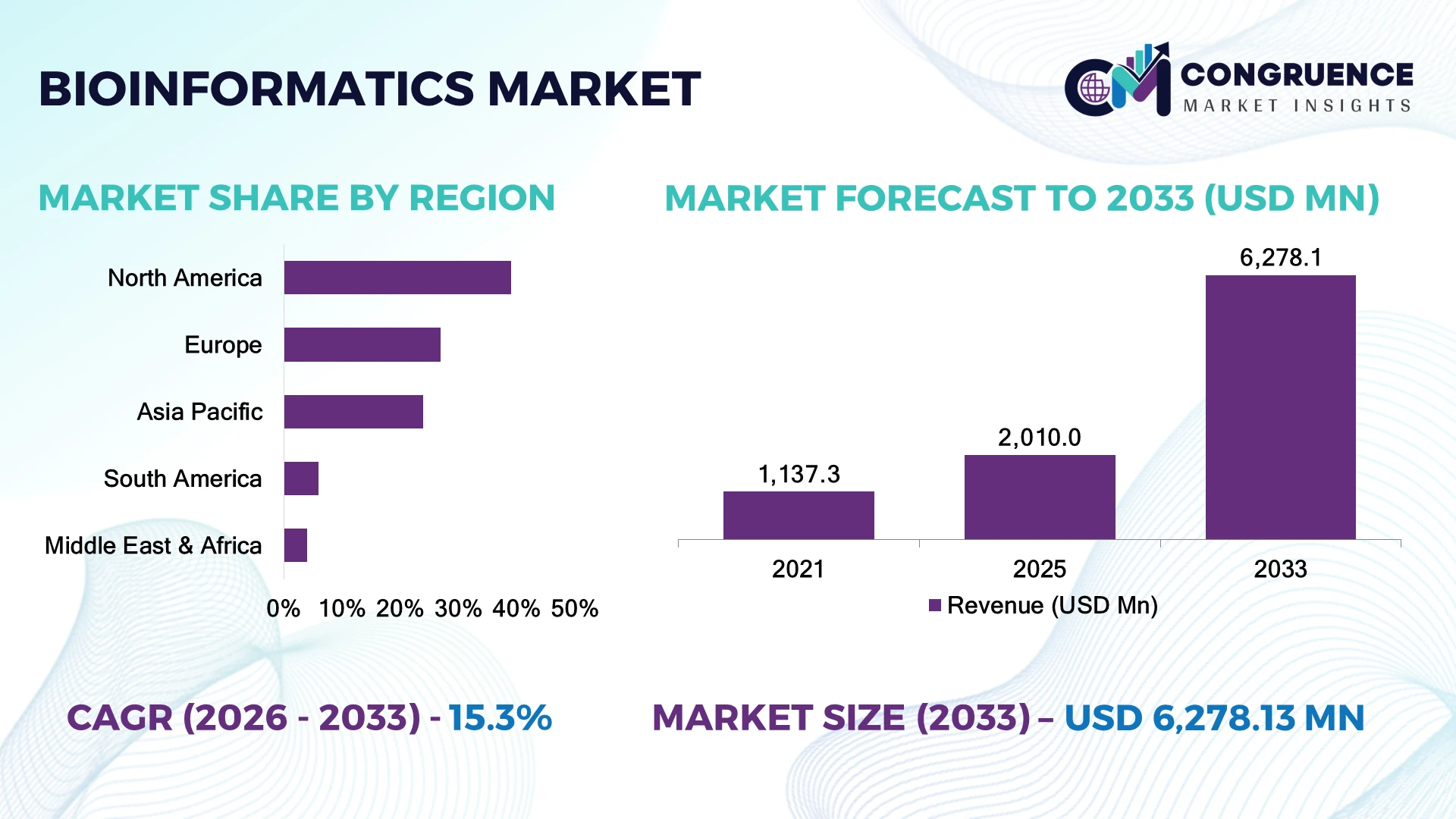
The United States dominates the global bioinformatics landscape with approximately 39% market share, supported by over 50% of global genomic sequencing capacity and annual life sciences R&D investments exceeding USD 200 billion. More than 70% of leading pharmaceutical companies utilize advanced bioinformatics workflows for drug discovery, while China has expanded national genomics capabilities at a faster pace through large-scale sequencing initiatives. The U.S. maintains a stronger commercial ecosystem, whereas China demonstrates higher deployment momentum across population genomics projects.
Organizations that strengthen bioinformatics capabilities today are positioning themselves to capture competitive advantages in precision healthcare, drug development efficiency, and data-driven biological innovation.
Market Size & Growth: The market expands from USD 2,010.0 million in 2025 to USD 6,278.1 million by 2033, driven by AI-powered genomic analysis, multi-omics integration, and precision medicine initiatives.
Top Growth Drivers: Genomic sequencing adoption (+28%), AI-based drug discovery deployment (+34%), and clinical bioinformatics utilization (+22%) remain the three strongest growth catalysts.
Short-Term Forecast: By 2028, bioinformatics workflows are expected to reduce genomic data processing time by nearly 40% while improving analytical efficiency by over 30%.
Emerging Technologies: Generative AI, cloud-native bioinformatics platforms, and single-cell multi-omics analytics are reshaping advanced biological data interpretation.
Regional Leaders: North America exceeds USD 2.4 billion, Europe approaches USD 1.6 billion, and Asia-Pacific surpasses USD 1.8 billion by 2030, supported by precision medicine expansion and sequencing infrastructure investments.
Consumer/End-User Trends: More than 65% of pharmaceutical R&D programs now integrate bioinformatics platforms during target identification and biomarker discovery stages.
Pilot/Case Example: In 2024, AI-assisted genomic interpretation programs reduced variant analysis workloads by approximately 50% across selected clinical genomics laboratories.
Competitive Landscape: The top five companies control nearly 42% of market activity, led by Illumina, Thermo Fisher Scientific, QIAGEN, Agilent Technologies, and SOPHiA GENETICS.
Regulatory & ESG Impact: Data governance frameworks and genomic privacy regulations have improved compliance adoption by over 35% across healthcare institutions.
Investment & Funding: Annual investments exceed USD 8 billion globally, with strategic partnerships, cloud infrastructure expansion, and AI integration attracting substantial capital.
Innovation & Future Outlook: Advanced digital biology platforms, federated genomic analytics, and automated drug-target discovery systems are becoming central competitive differentiators.
Bioinformatics has become a critical foundation for genomic medicine, drug discovery, agricultural biotechnology, and molecular diagnostics. AI-enhanced sequence analysis, cloud-based data management, and multi-omics platforms are improving research productivity and accelerating biological insights. More than 60% of newly generated genomic datasets now require advanced computational analysis, while evolving data governance frameworks and distributed research collaborations continue to reshape deployment strategies, creating a strong foundation for the strategic discussion below.
Bioinformatics has evolved from a research-support function into a strategic capability that directly influences pharmaceutical competitiveness, clinical decision-making, and biotechnology innovation. The increasing volume of genomic, proteomic, and transcriptomic data is forcing organizations to modernize analytical infrastructure and integrate advanced computational workflows. Digital transformation across healthcare and life sciences is strengthening demand for scalable data interpretation platforms and collaborative research ecosystems.
Modern AI-enabled bioinformatics systems deliver significantly higher efficiency than legacy analytical workflows. Automated variant interpretation platforms can reduce analysis time by nearly 50% while improving data-processing throughput by more than 30%. The United States leads in commercial deployment and pharmaceutical integration, whereas China is rapidly scaling national genomics infrastructure and population sequencing programs. This contrast reflects different strategic priorities: commercialization versus large-scale biological data generation.
Over the next two to three years, adoption of cloud-native analytics, federated data environments, and multi-omics platforms is expected to accelerate across research and healthcare institutions. Companies are expanding partnerships with sequencing providers, AI developers, and healthcare networks to strengthen analytical capabilities. Organizations that establish integrated bioinformatics ecosystems will secure stronger competitive positioning through faster discovery cycles, improved operational efficiency, and superior biological intelligence.
Precision medicine programs are transforming bioinformatics into a core operational requirement across pharmaceutical and healthcare sectors. More than 70% of large pharmaceutical companies now integrate bioinformatics tools into drug discovery workflows, while AI-assisted genomic analysis has improved target identification efficiency by approximately 35%. The continued decline in sequencing costs, exceeding 90% over the past decade, has accelerated genomic data generation and created demand for advanced analytical platforms. The U.S. Precision Medicine Initiative and China's genomics expansion programs continue to increase data volumes requiring computational interpretation. In response, companies are investing in cloud-based bioinformatics infrastructure, acquiring AI capabilities, and expanding strategic partnerships with sequencing providers. The key operational impact is faster biological insight generation, enabling shorter research cycles and more efficient therapeutic development.
Data fragmentation remains a major structural limitation for bioinformatics deployment. Nearly 45% of life sciences organizations report interoperability challenges between sequencing platforms, laboratory information systems, and analytical software environments. Storage requirements for genomic datasets continue to expand, with some research programs experiencing annual data growth above 30%. Regulatory requirements governing genomic data privacy add additional compliance burdens, particularly in Europe and cross-border research collaborations. These constraints increase operational costs and slow platform scalability. To mitigate risk, companies are adopting hybrid cloud architectures, establishing standardized data formats, and pursuing localized data-hosting strategies. A critical business implication is that organizations with stronger data governance frameworks can accelerate research productivity while reducing integration-related operational disruptions.
The convergence of genomics, proteomics, transcriptomics, and metabolomics is creating substantial opportunities for advanced bioinformatics solutions. Multi-omics research adoption has increased by more than 25% among leading biotechnology organizations, while AI-enabled biological modeling has improved predictive accuracy by approximately 30% in selected discovery applications. National healthcare digitization initiatives in India and Saudi Arabia are expanding access to biological datasets and supporting broader deployment of analytical platforms. Companies are increasing investment in cloud-native architectures, digital biology ecosystems, and collaborative research networks to capitalize on these developments. A particularly valuable opportunity lies in integrating diverse biological datasets into unified decision-support environments, enabling faster biomarker discovery and more efficient therapeutic development than traditional single-dataset approaches.
Long-term market expansion depends on the ability to manage increasingly complex analytical environments. More than 40% of life sciences organizations report shortages of skilled bioinformatics professionals, while advanced AI and machine-learning workflows require specialized computational expertise. Cybersecurity risks are also intensifying as genomic databases expand, with healthcare remaining one of the most targeted sectors for data breaches. Large-scale sequencing projects generate data volumes that can increase by over 25% annually, placing additional pressure on infrastructure and workforce capacity. Companies must address these challenges through workforce development, academic partnerships, automation investments, and secure computing environments. The strategic challenge is not generating biological data but converting it into reliable, actionable intelligence at scale while maintaining compliance, security, and operational consistency.
AI-Native Analysis Workflows Scale Bioinformatics platforms are rapidly embedding generative AI and machine learning into sequence interpretation and biomarker discovery workflows. Enterprise deployment of AI-assisted genomic analysis has increased by nearly 35%, while automated variant classification reduces manual review workloads by over 45%. Technology transitions across pharmaceutical R&D are shortening analysis cycles and improving data consistency. Companies are expanding AI partnerships and integrating cloud-based analytics engines to increase throughput and reduce operational bottlenecks.
Multi-Omics Integration Accelerates Organizations are moving beyond standalone genomics toward integrated proteomics, transcriptomics, and metabolomics environments. Multi-omics program adoption has increased by approximately 28%, while integrated datasets improve biological target validation rates by nearly 25%. Research institutions in the United States and the United Kingdom are restructuring workflows around unified biological data ecosystems. Vendors are responding through platform consolidation, interoperability upgrades, and strategic acquisitions that support end-to-end biological intelligence.
Cloud Infrastructure Becomes Standard Cloud-native bioinformatics deployment has surpassed 60% among large life sciences organizations as genomic datasets continue expanding by more than 30% annually. Regulatory requirements for secure data management and cross-institution collaboration are accelerating migration from on-premise systems. Organizations are adopting hybrid architectures to improve scalability, reduce infrastructure costs by nearly 20%, and enable faster computational resource allocation. Technology providers are expanding managed services and regional data-hosting capabilities.
Federated Data Networks Expand Data-sharing limitations and genomic privacy regulations are driving adoption of federated analytics environments. More than 40% of advanced genomics projects now utilize distributed data-access models, reducing data movement requirements by approximately 50%. This non-obvious shift enables collaborative research without centralized storage expansion. Companies are investing in secure computation frameworks, cross-enterprise partnerships, and governance automation to support compliant collaboration while maintaining analytical performance.
The bioinformatics market is segmented by Knowledge Management Tools, Bioinformatics Platforms, Bioinformatics Services, and Sequencing Platforms. Sequencing Platforms hold the leading position with approximately 38% market share due to their direct integration with genomic analysis workflows, high data-generation capacity, and critical role in precision medicine initiatives. Pharmaceutical companies and genomics laboratories continue prioritizing sequencing infrastructure investments as biological data volumes expand. Bioinformatics Platforms account for a significant share because of their ability to support end-to-end analysis, data visualization, and workflow automation across research environments.
Bioinformatics Services represent the fastest-growing segment as organizations increasingly outsource complex analytical tasks to specialized providers. Service adoption has increased by nearly 30% among biotechnology firms seeking flexible expertise and lower infrastructure requirements. Knowledge Management Tools continue gaining relevance through enhanced data organization and collaborative research capabilities, supporting approximately 20% higher workflow efficiency in data-intensive environments. Companies are expanding service portfolios, strengthening cloud-based platforms, and pursuing partnerships with sequencing technology providers to capture evolving demand and support broader adoption across healthcare and life sciences ecosystems.
The bioinformatics market is segmented by Genomics, Chemoinformatics & Drug Design, Proteomics, Transcriptomics, Metabolomics, and Others. Genomics remains the dominant application segment with approximately 42% market share, driven by widespread use in precision medicine, disease diagnostics, and therapeutic development. Increasing sequencing activity and expanding national genomics programs continue concentrating demand within genomic data analysis. Proteomics and Transcriptomics maintain strong adoption across pharmaceutical research as organizations seek deeper biological insights beyond DNA sequencing alone.
Chemoinformatics & Drug Design is emerging as the fastest-growing application segment, supported by AI-driven target identification and computational drug discovery workflows. Adoption of advanced molecular modeling platforms has increased by roughly 27%, improving candidate screening efficiency and reducing laboratory testing requirements. Metabolomics is also gaining strategic importance in biomarker discovery and disease pathway analysis. Companies are integrating multiple application environments into unified platforms, enabling researchers to combine genomic, molecular, and clinical datasets. This convergence is strengthening demand for scalable computational infrastructure and creating new opportunities for specialized analytics providers.
The bioinformatics market is segmented by Pharmaceutical & Biotechnology Companies, Academic & Research Institutes, Hospitals & Clinics, Contract Research Organizations (CROs), and Others. Pharmaceutical & Biotechnology Companies account for the largest share at approximately 46%, supported by extensive use of bioinformatics in drug discovery, biomarker identification, and clinical development programs. These organizations manage large biological datasets and require sophisticated analytical capabilities to accelerate research productivity. Academic & Research Institutes remain a substantial segment due to ongoing investments in genomics, molecular biology, and translational research initiatives.
Contract Research Organizations (CROs) represent the fastest-growing end-user category as pharmaceutical firms increasingly outsource bioinformatics-intensive activities. Demand for outsourced computational biology services has risen by nearly 25%, allowing organizations to access specialized expertise without expanding internal infrastructure. Hospitals & Clinics are also increasing adoption as genomic diagnostics become more integrated into routine healthcare workflows. Companies are targeting these segments through customized software environments, subscription-based pricing models, and strategic collaborations. Competitive positioning is increasingly determined by the ability to deliver scalable, user-specific solutions that address varying operational requirements across research and clinical settings.
North America accounted for the largest market share at 39% in 2025 however, Asia-Pacific is expected to register the fastest growth, expanding at a CAGR of 17.8% between 2026 and 2033.
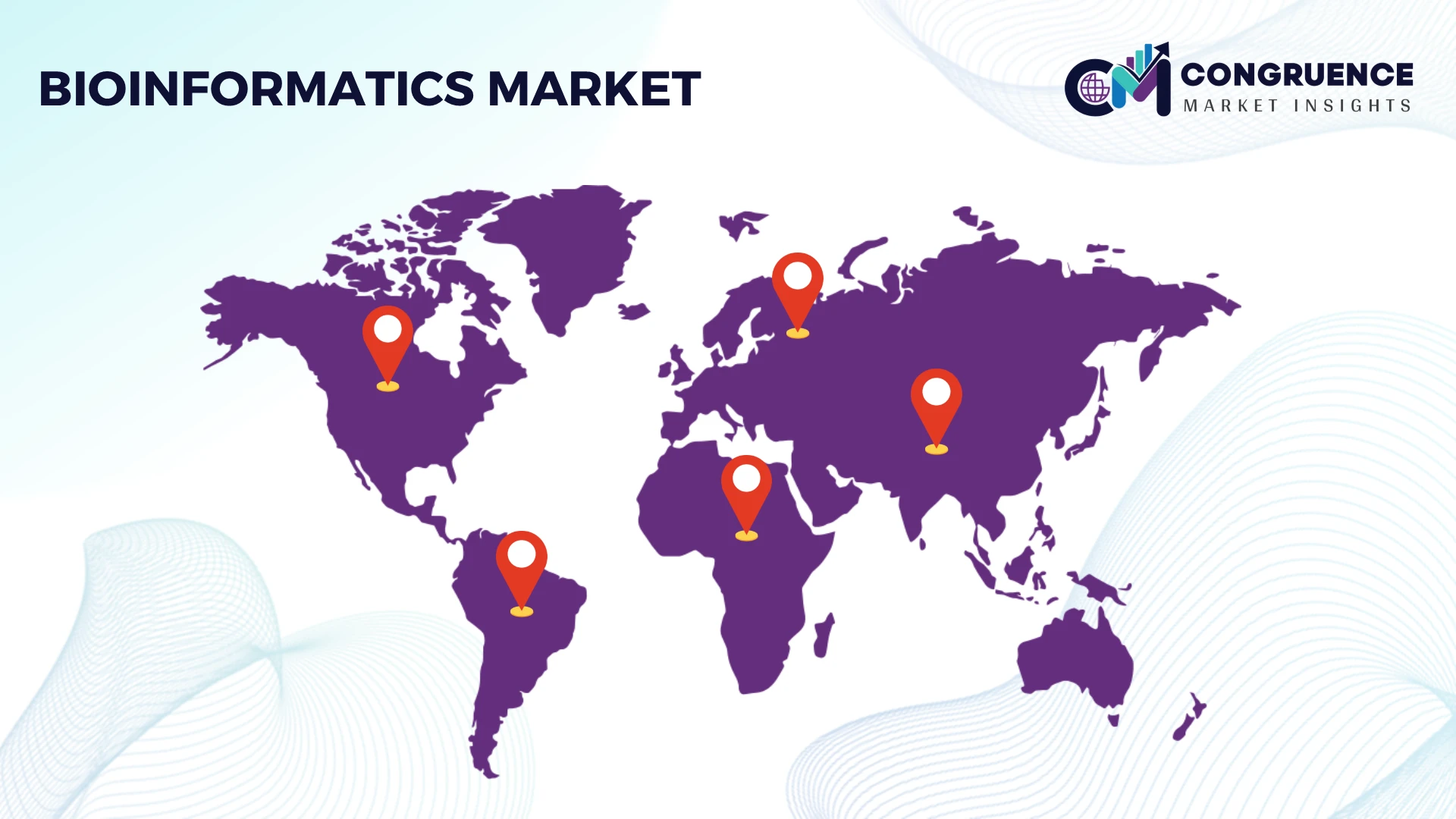
North America remains the most mature bioinformatics ecosystem, benefiting from strong pharmaceutical R&D activity, advanced sequencing infrastructure, and large-scale computational biology deployment. The region contributes nearly 39% of global demand and maintains the highest concentration of commercial genomics platforms. Pharmaceutical companies continue modernizing research workflows through AI-assisted data analysis, cloud-native computing, and integrated multi-omics environments. Enterprise adoption of automated genomic interpretation platforms has increased significantly as organizations seek faster biological insight generation. Investments in secure data-sharing frameworks and high-performance computing facilities are also supporting analytical scalability. The region's leadership position is reinforced by strong collaboration among healthcare institutions, biotechnology firms, and technology providers focused on accelerating precision medicine initiatives.
United States Market Outlook: The United States serves as the operational center of the global bioinformatics industry through its extensive genomics infrastructure, biotechnology ecosystem, and pharmaceutical research capabilities. The country hosts a majority of the world's leading genomic sequencing providers and maintains the largest concentration of computational biology specialists. More than 50% of large-scale precision medicine programs globally involve U.S.-based research institutions or enterprises. Continued investment in AI-enabled drug discovery, advanced sequencing technologies, and secure genomic data platforms positions the country as the primary innovation hub for next-generation bioinformatics applications.
Europe accounts for approximately 27% of the global bioinformatics market and benefits from strong research collaboration networks, advanced healthcare systems, and structured genomic initiatives. The region's focus on precision medicine, translational research, and digital health modernization continues to support sustained deployment of bioinformatics platforms. Regulatory emphasis on genomic data management has accelerated investments in secure analytics infrastructure and interoperable data environments. Pharmaceutical and biotechnology organizations are increasingly integrating multi-omics analytics into therapeutic development pipelines. The expansion of collaborative genomic research programs across multiple countries has strengthened demand for scalable cloud-based solutions. Organizations are prioritizing data quality, compliance automation, and secure cross-institutional collaboration to improve operational efficiency and research productivity.
Germany Market Outlook: Germany represents the largest bioinformatics market in Europe due to its strong biotechnology sector, pharmaceutical manufacturing base, and advanced research infrastructure. The country has significantly expanded national genomics and digital health initiatives, creating substantial demand for computational biology solutions. German research institutions and healthcare networks continue deploying integrated genomic analytics platforms to improve disease characterization and personalized treatment strategies. Strong industrial-academic collaboration and investment in high-performance computing resources have established Germany as a leading European center for bioinformatics innovation and enterprise deployment.
Asia-Pacific accounts for approximately 24% of global bioinformatics activity and represents the most dynamic deployment environment for genomic technologies. Rapid expansion of sequencing infrastructure, growing biotechnology investment, and large population-scale genomics initiatives are driving adoption across healthcare and research sectors. National programs focused on precision medicine and digital healthcare modernization are increasing demand for advanced analytical platforms. Several countries are expanding domestic computational biology capabilities to reduce reliance on external analytical resources. The region has experienced substantial growth in cloud-based genomic data processing and AI-enabled biological modeling. Enterprise investment is increasingly directed toward scalable platforms capable of supporting growing biological datasets and expanding research collaboration networks.
China Market Outlook: China has emerged as the most influential bioinformatics market within Asia-Pacific through extensive genomics infrastructure development and large-scale sequencing deployment. The country operates some of the world's largest genomic data generation programs and continues investing heavily in precision medicine capabilities. Bioinformatics adoption is expanding across pharmaceutical research, clinical diagnostics, and population health initiatives. More than 30% of newly established large-scale sequencing facilities in the region are located in China, strengthening domestic analytical capacity. Strategic investments in AI, cloud computing, and biotechnology innovation continue enhancing the country's competitive position in computational biology.
South America represents approximately 6% of the global bioinformatics market and is gradually strengthening its position through healthcare modernization and genomic research expansion. Adoption is concentrated within major research institutions, pharmaceutical organizations, and national healthcare programs. Increasing interest in precision medicine and disease surveillance applications is creating new demand for computational biology solutions. Infrastructure limitations and uneven technology distribution remain operational challenges; however, targeted investments in genomic laboratories and cloud-based analytical platforms are improving accessibility. Cross-border research collaborations and public-sector initiatives are also supporting broader deployment of bioinformatics capabilities. The region continues prioritizing scalable solutions that can address growing biological data requirements while minimizing infrastructure constraints.
Brazil Market Outlook: Brazil leads the South American bioinformatics market through its extensive healthcare network, biotechnology ecosystem, and growing genomic research capabilities. National investments in precision medicine and public health genomics are expanding demand for advanced analytical platforms. Brazilian universities, research centers, and healthcare institutions increasingly utilize bioinformatics tools for infectious disease research, oncology studies, and population genetics programs. The country's expanding cloud-computing infrastructure and increasing participation in international genomics collaborations are strengthening operational capacity and supporting long-term adoption across both research and clinical environments.
The Middle East & Africa region accounts for approximately 4% of global bioinformatics activity and is advancing through healthcare transformation programs, biotechnology investments, and genomic medicine initiatives. Several countries are prioritizing precision healthcare infrastructure and expanding national genomic databases to support long-term healthcare modernization goals. Demand is increasingly concentrated within academic research centers, healthcare institutions, and government-backed genomics projects. Investments in digital health infrastructure, cloud computing, and advanced diagnostics are improving analytical capabilities across the region. While deployment remains less mature than in developed markets, targeted infrastructure development and international partnerships continue strengthening adoption. Organizations are focusing on scalable bioinformatics platforms that support clinical genomics, rare disease research, and population health initiatives.
Saudi Arabia Market Outlook: Saudi Arabia has established itself as the leading bioinformatics market in the Middle East through substantial investment in healthcare modernization, genomics infrastructure, and biotechnology development. National transformation programs are supporting large-scale genomic data generation and expanding computational biology capabilities. The country is strengthening precision medicine deployment across healthcare networks while investing in advanced research facilities and digital health platforms. Increasing collaboration between healthcare providers, research institutions, and technology companies is accelerating implementation of bioinformatics solutions. Strong government support and expanding genomic research programs position Saudi Arabia as a key regional center for future bioinformatics innovation and deployment.
The competitive landscape is led by Illumina, QIAGEN, Thermo Fisher Scientific, Agilent Technologies, and SOPHiA GENETICS, which collectively account for approximately 42% of global market activity. Competition is primarily between sequencing-integrated platform leaders and specialized bioinformatics software innovators, while regional analytics providers compete through customization and service flexibility. Technology performance remains the primary differentiator, with AI-enabled workflows improving analysis efficiency by nearly 35% and automated interpretation reducing manual processing requirements by over 40%. Cloud-native deployment has lowered infrastructure costs by approximately 20%, intensifying competition around scalability and turnaround speed. Market leaders are expanding through AI partnerships, multi-omics platform development, and integrated software ecosystems, while specialized providers focus on clinical interpretation and precision medicine applications. The competitive shift is moving from standalone analytics tools toward end-to-end biological intelligence platforms. High regulatory requirements, genomic data governance complexity, and infrastructure investment needs remain key entry barriers. Winning requires superior data integration, AI-driven insights, interoperability, and enterprise-scale deployment capabilities.
QIAGEN N.V.
Thermo Fisher Scientific Inc.
Agilent Technologies, Inc.
SOPHiA GENETICS SA
PerkinElmer Informatics
Revvity Signals Software
DNASTAR, Inc.
Partek Incorporated
Bio-Rad Laboratories, Inc.
Oxford Nanopore Technologies plc
Waters Corporation
BGI Genomics Co., Ltd.
Dassault Systèmes BIOVIA
Bioinformatics technology is increasingly centered on AI-driven analytics, cloud-native computing, and multi-omics integration. AI-assisted genomic interpretation platforms now reduce manual analysis workloads by more than 45%, while machine learning models improve variant prioritization accuracy by approximately 30%. Adoption of cloud-based bioinformatics environments has exceeded 60% among large pharmaceutical and biotechnology organizations, enabling faster processing of rapidly expanding biological datasets. These technologies provide measurable operational advantages through improved scalability, reduced infrastructure complexity, and accelerated research timelines.
The most significant shift involves the transition from conventional rule-based bioinformatics workflows to AI-enabled predictive analytics. Compared with legacy analytical systems, modern AI-supported platforms improve data-processing throughput by nearly 50% and shorten biological interpretation cycles by over 35%. Multi-omics platforms integrating genomics, proteomics, transcriptomics, and metabolomics are also gaining traction, supporting deeper biological insights and more effective biomarker discovery. Pharmaceutical companies, contract research organizations, and precision medicine providers gain the greatest competitive advantage from these integrated environments.
Between 2026 and 2028, federated analytics, generative AI models, and automated biological knowledge graphs are expected to become mainstream deployment priorities. Organizations adopting these technologies early will benefit from faster target identification, improved clinical decision support, stronger data interoperability, and enhanced competitive positioning across drug discovery, diagnostics, and precision healthcare applications.
January 2025 – Illumina announced a collaboration with NVIDIA to combine sequencing technologies, multi-omics analytics, and AI foundation models for biological data interpretation. The initiative targets accelerated genomic analysis and scalable AI deployment across research workflows. Business impact includes faster drug-target discovery and improved computational efficiency. Source: Illumina Press Release
April 2025 – Illumina and Tempus AI expanded their partnership to advance genomic AI innovation using multimodal clinical datasets. The collaboration focuses on molecular profiling across major disease categories and supports broader clinical adoption of sequencing-based decision tools. Business impact includes stronger evidence generation and precision medicine deployment. Source: Illumina News Center
September 2024 – SOPHiA GENETICS expanded its SOPHiA UNITY network by adding multiple healthcare organizations to its collective intelligence ecosystem. The initiative increased access to multimodal oncology datasets and strengthened collaborative research capabilities. Business impact includes broader data availability and enhanced precision oncology development. Source: SOPHiA GENETICS News
October 2025 – Illumina launched BioInsight, a dedicated business focused on AI, software, and large-scale multiomic data assets. The initiative expands access to advanced biological datasets and supports faster discovery workflows. Business impact includes improved drug-target identification and expanded enterprise bioinformatics capabilities. Source: Illumina Press Release
The report provides comprehensive coverage of the global bioinformatics market across key types, including Knowledge Management Tools, Bioinformatics Platforms, Bioinformatics Services, and Sequencing Platforms. It evaluates application-level demand across genomics, proteomics, transcriptomics, metabolomics, chemoinformatics & drug design, and emerging analytical domains. End-user assessment covers pharmaceutical and biotechnology companies, academic and research institutes, hospitals and clinics, contract research organizations, and other specialized users. Regional analysis spans North America, Europe, Asia-Pacific, South America, and the Middle East & Africa, representing more than 95% of global deployment activity.
The study examines technology adoption patterns, AI integration trends, cloud-based analytics deployment, multi-omics expansion, and evolving enterprise investment priorities. Competitive benchmarking includes leading platform providers, sequencing technology companies, software developers, and precision medicine innovators. The report delivers strategic insights for market entry, partnership evaluation, infrastructure planning, portfolio development, and competitive positioning while highlighting emerging opportunities in federated analytics, digital biology ecosystems, and next-generation computational life sciences between 2026 and 2033.
| Report Attribute / Metric | Details |
|---|---|
| Market Revenue (2025) | USD 2,010.0 Million |
| Market Revenue (2033) | USD 6,278.1 Million |
| CAGR (2026–2033) | 15.3% |
| Base Year | 2025 |
| Forecast Period | 2026–2033 |
| Historic Period | 2021–2025 |
| Segments Covered |
By Type
By Application
By End-User
|
| Key Deliverables | Revenue Forecast; Market Trends; Growth Drivers & Restraints; Technology Insights; Segmentation Analysis; Regional Insights; Competitive Landscape; Regulatory & ESG Overview; Recent Developments |
| Regions Covered | North America; Europe; Asia-Pacific; South America; Middle East & Africa |
| Companies Profiled | Illumina, Inc.; QIAGEN N.V.; Thermo Fisher Scientific Inc.; Agilent Technologies, Inc.; SOPHiA GENETICS SA; PerkinElmer Informatics; Revvity Signals Software; DNASTAR, Inc.; Partek Incorporated; Bio-Rad Laboratories, Inc.; Oxford Nanopore Technologies plc; Waters Corporation; BGI Genomics Co., Ltd.; Dassault Systèmes BIOVIA |
| Customization & Pricing | Available on Request (10% Customization Free) |




