
Reports
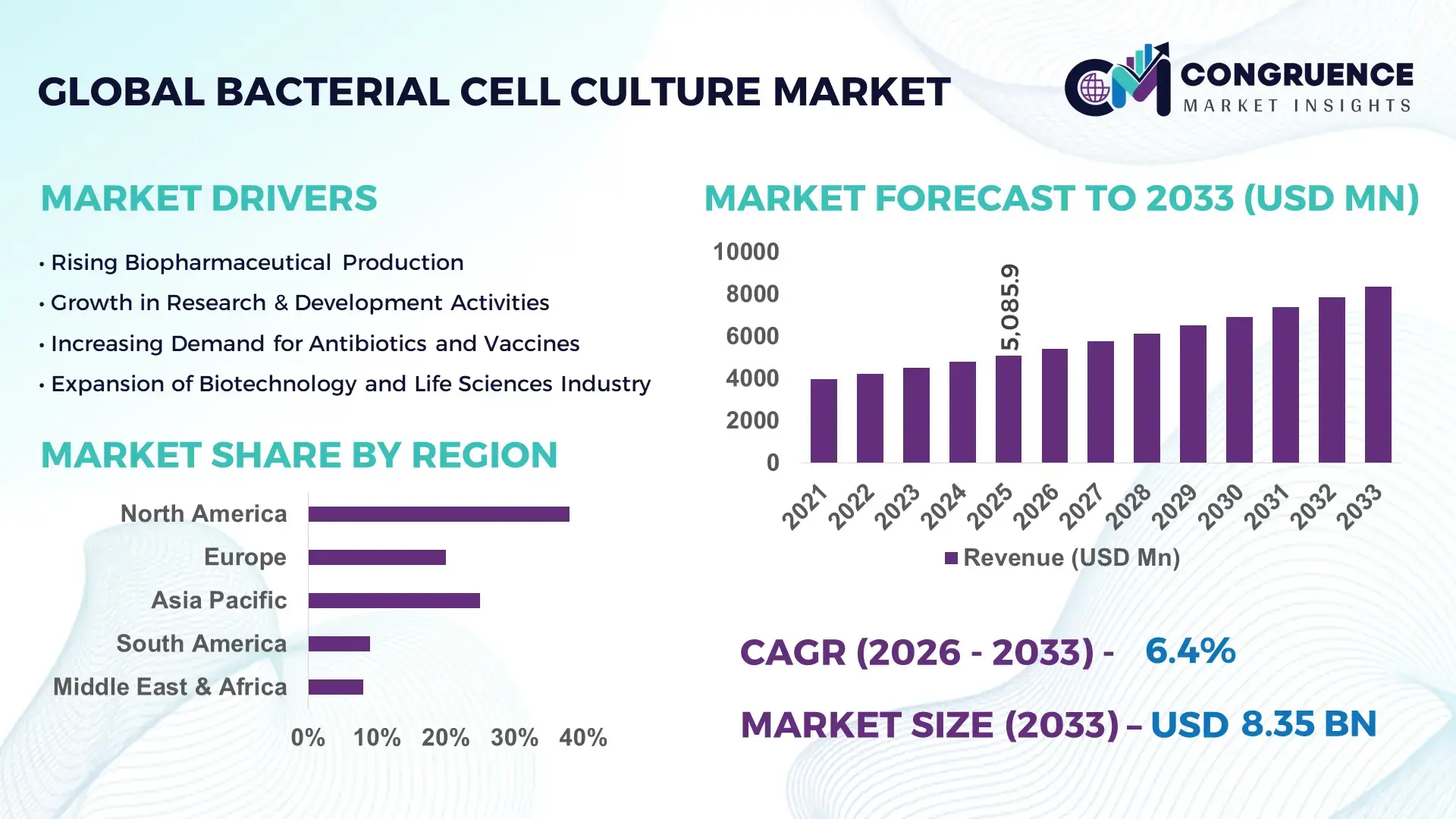
The Global Bacterial Cell Culture Market was valued at USD 5085.92 Million in 2025 and is anticipated to reach a value of USD 8354.15 Million by 2033 expanding at a CAGR of 6.4% between 2026 and 2033. This growth is driven by rising demand for biologics manufacturing, vaccines, recombinant proteins, and advanced microbial research across pharmaceutical, biotechnology, and academic sectors.
The United States represents the most influential country within the global bacterial cell culture ecosystem. The country hosts over 1,500 active biotechnology firms utilizing bacterial culture systems for recombinant protein production, enzyme synthesis, and vaccine development. Annual biopharmaceutical R&D expenditure exceeded USD 90 billion, with bacterial expression platforms accounting for an estimated 35% of early-stage biologics production workflows. Large-scale fermentation facilities commonly exceed 50,000-liter capacity, supporting industrial enzyme and therapeutic protein manufacturing. Adoption of automated bioreactors and single-use bacterial culture systems has surpassed 60% across mid-to-large bioprocessing facilities, reflecting advanced technological integration and strong institutional research activity.
Market Size & Growth: Valued at USD 5085.92 Million in 2025, projected to reach USD 8354.15 Million by 2033, expanding at a CAGR of 6.4%, driven by increased biologics production and microbial research applications.
Top Growth Drivers: Biopharmaceutical adoption growth at 42%, recombinant protein demand increase of 38%, and bioprocess efficiency improvement of 29%.
Short-Term Forecast: By 2028, process optimization and automation are expected to reduce bacterial culture operating costs by approximately 18%.
Emerging Technologies: High-cell-density fermentation, AI-driven culture optimization platforms, and next-generation single-use bioreactors.
Regional Leaders: North America projected at USD 3,150 Million by 2033 with strong biologics adoption; Europe at USD 2,280 Million driven by vaccine R&D; Asia-Pacific at USD 2,050 Million supported by contract manufacturing expansion.
Consumer/End-User Trends: Pharmaceutical and biotechnology companies account for over 55% of demand, followed by academic and research institutes with increasing adoption of ready-to-use media.
Pilot or Case Example: A 2024 automated fermentation pilot reduced bacterial culture downtime by 22% and improved yield consistency by 17%.
Competitive Landscape: Market leader holds approximately 21% share, with major competitors including global life science reagent and bioprocess equipment providers.
Regulatory & ESG Impact: Stricter GMP compliance, reduced antibiotic usage mandates, and sustainability-driven waste reduction initiatives are influencing purchasing decisions.
Investment & Funding Patterns: Recent investments exceeded USD 1.4 billion, with strong growth in venture funding for microbial synthetic biology platforms.
Innovation & Future Outlook: Integration of digital bioprocess control, scalable modular facilities, and engineered bacterial strains is shaping next-generation production models.
The bacterial cell culture market serves critical industry sectors including pharmaceuticals, biotechnology, food and industrial enzymes, and academic research, with pharmaceutical and biotech applications contributing nearly 60% of total demand. Recent innovations such as optimized growth media, genetically engineered bacterial strains, and real-time culture monitoring systems are enhancing productivity and reproducibility. Regulatory emphasis on quality control, biosafety, and sustainable manufacturing practices continues to influence product development and facility upgrades. Regionally, North America and Europe dominate high-value consumption, while Asia-Pacific shows rapid growth due to expanding contract research and manufacturing activity. Looking ahead, increased adoption of synthetic biology, continuous fermentation, and automation is expected to redefine efficiency benchmarks and support long-term market expansion.
The Bacterial Cell Culture Market holds strategic relevance as a foundational platform for biologics manufacturing, industrial enzymes, vaccines, and synthetic biology applications. Enterprises are aligning bacterial cell culture strategies with scalability, cost efficiency, and regulatory compliance to secure resilient supply chains. High-cell-density fermentation combined with automated process control delivers a 30% productivity improvement compared to conventional batch fermentation standards. Asia-Pacific dominates in volume, while North America leads in adoption with approximately 68% of biopharmaceutical enterprises integrating advanced bacterial culture systems into core production workflows.
From a future pathways perspective, digitalization and AI-driven bioprocess optimization are becoming central to competitive strategy. By 2028, AI-enabled culture monitoring and predictive control are expected to improve yield consistency by 22% while reducing batch failure rates by 18%. Sustainability and compliance are also shaping investment decisions, with firms committing to ESG metrics such as 25% water reuse and 20% reduction in culture media waste by 2030 through closed-loop processing systems.
A measurable micro-scenario illustrates this trajectory: in 2024, Germany-based biomanufacturing facilities achieved a 19% reduction in energy consumption through the deployment of automated bacterial fermentation control platforms integrated with real-time analytics. Collectively, these strategic shifts position the Bacterial Cell Culture Market as a pillar of resilience, compliance, and sustainable growth, enabling industries to meet rising biologics demand while adhering to stricter environmental and quality standards.
The rapid expansion of biologics and vaccine development programs is a primary driver of the Bacterial Cell Culture Market. Bacterial expression systems are used in over 40% of early-stage biologics development due to their speed and cost efficiency. Global vaccine development programs increasingly rely on bacterial cultures for antigen production and plasmid DNA manufacturing, with production cycle times reduced by up to 35% compared to traditional systems. Pharmaceutical companies are also scaling bacterial fermentation capacity to support biosimilar development and enzyme-based therapeutics. Increased funding for infectious disease preparedness and antimicrobial research further strengthens demand, as bacterial cell culture platforms remain central to rapid-response manufacturing and process scalability.
Despite technological progress, contamination risk and batch-to-batch variability continue to restrain the Bacterial Cell Culture Market. Bacterial systems are highly sensitive to environmental fluctuations, with contamination incidents capable of causing up to 15% production losses in large-scale fermentation facilities. Maintaining sterile conditions requires advanced infrastructure, skilled personnel, and rigorous monitoring, increasing operational complexity. Smaller laboratories and emerging-market manufacturers often face limitations in adopting automated containment and monitoring systems. Additionally, regulatory audits demand extensive validation and documentation, extending process timelines. These factors collectively slow adoption among cost-sensitive users and constrain full-scale utilization in less mature bioprocessing environments.
Synthetic biology presents significant growth opportunities for the Bacterial Cell Culture Market by enabling engineered bacterial strains with enhanced productivity and specificity. Genetically optimized bacteria can improve target protein yield by over 25% while reducing raw material consumption. Industrial enzyme producers are increasingly adopting customized bacterial platforms to support biofuels, food processing, and specialty chemicals manufacturing. Governments and private investors are supporting synthetic biology initiatives, leading to expanded pilot-scale and commercial-scale bacterial culture facilities. These developments open new application areas beyond pharmaceuticals, positioning bacterial cell culture as a versatile platform for next-generation industrial biotechnology solutions.
Rising compliance and operational costs represent a major challenge for the Bacterial Cell Culture Market. Implementation of advanced monitoring, validation, and documentation systems can increase facility operating costs by 20% or more. Stricter biosafety and waste management regulations require additional investment in effluent treatment and containment infrastructure. Energy-intensive fermentation processes further elevate cost pressures, particularly in regions with high utility prices. For contract manufacturers, balancing compliance investments with competitive pricing remains difficult. These challenges necessitate continuous process optimization and capital allocation, influencing expansion decisions and slowing market penetration among smaller industry participants.
• Accelerated Adoption of Modular and Prefabricated Bioprocess Facilities: Modular and prefabricated construction models are increasingly reshaping infrastructure planning in the Bacterial Cell Culture market. Approximately 55% of newly commissioned bacterial culture facilities report measurable cost benefits through modular deployment, with project timelines shortened by nearly 30%. Pre-fabricated fermentation suites, utility skids, and cleanroom modules manufactured off-site using automated systems are reducing on-site labor requirements by 25%. This trend is particularly pronounced in Europe and North America, where rapid capacity scaling and compliance-driven upgrades are critical for biologics and enzyme production facilities.
• Expansion of High-Cell-Density and Continuous Fermentation Systems: The market is witnessing a strong shift toward high-cell-density bacterial culture systems capable of increasing biomass yield by 35–40% per production cycle. Continuous fermentation adoption has grown by over 28% across industrial biotechnology users, driven by reduced downtime and improved substrate utilization. Compared to traditional batch processes, continuous systems deliver up to 20% improvement in space utilization, making them attractive for facilities facing footprint constraints and higher throughput requirements.
• Integration of Digital Monitoring and AI-Enabled Process Control: Digitalization is transforming bacterial cell culture operations, with more than 62% of large-scale facilities deploying real-time sensors and advanced analytics platforms. AI-enabled control systems are improving process stability, reducing batch variability by approximately 18%, and lowering contamination-related disruptions by 15%. Predictive maintenance tools integrated into fermenters are also extending equipment uptime by 12%, supporting higher operational efficiency and consistency in regulated production environments.
• Growing Emphasis on Sustainable Media and Resource Optimization: Sustainability-focused innovations are gaining traction, with over 40% of manufacturers transitioning toward low-waste or recyclable culture media formulations. Water reuse systems integrated into bacterial culture operations are delivering up to 22% reduction in total water consumption, while energy-efficient agitation and aeration technologies are lowering power usage by nearly 17%. These trends reflect increasing alignment between operational efficiency targets and environmental compliance expectations across global bioprocessing facilities.
The Bacterial Cell Culture Market segmentation reflects diversified demand across product types, applications, and end-user categories, driven by distinct operational requirements and regulatory environments. By type, culture media and reagents form the operational backbone of bacterial cultivation, while bioreactors and ancillary systems enable scalability and process control. Application-wise, pharmaceutical and biotechnology manufacturing dominates usage due to extensive reliance on bacterial systems for recombinant proteins, plasmid DNA, and enzymes, followed by research and industrial biotechnology applications. From an end-user perspective, large biopharmaceutical companies represent the primary adopters, supported by growing uptake among contract research and manufacturing organizations as well as academic institutions. This segmentation structure highlights a market characterized by both high-volume industrial demand and innovation-led niche applications, with adoption patterns varying by scale, automation intensity, and compliance needs.
The Bacterial Cell Culture Market by type is led by culture media and reagents, which account for approximately 46% of total adoption due to their recurring usage across research, pilot, and commercial-scale production. Bioreactors and fermenters represent around 32%, reflecting their critical role in scale-up and controlled bacterial growth environments. While media dominates current usage, single-use bioreactors and automated fermentation systems are emerging as the fastest-growing type, expanding at an estimated 8.2% annually, driven by reduced cleaning requirements and faster changeover times. Traditional reusable fermenters, monitoring sensors, and downstream accessories collectively contribute nearly 22%, serving niche and cost-sensitive applications.
By application, pharmaceutical and biotechnology manufacturing leads the Bacterial Cell Culture Market with close to 52% share, supported by extensive use in recombinant protein, enzyme, and plasmid DNA production. Research and academic applications follow at approximately 26%, reflecting consistent demand for standardized bacterial culture systems in molecular biology and microbiology studies. Industrial biotechnology applications, including food processing and bio-based chemicals, collectively account for about 22%. Among these, industrial biotechnology is the fastest-growing application, expanding at an estimated 7.6% annually due to increased adoption of bacterial enzymes and bio-catalysts.
End-user segmentation shows pharmaceutical and biotechnology companies as the dominant group, representing nearly 55% of total utilization, driven by large-scale production requirements and stringent quality standards. Contract research and manufacturing organizations hold around 24%, benefiting from outsourced biologics development and flexible capacity models. Academic and government research institutions contribute approximately 21%, supported by rising public funding and collaborative research initiatives. Contract organizations are the fastest-growing end-user segment, expanding at an estimated 8.0% annually as over 60% of mid-sized biotech firms increasingly outsource bacterial culture-based production and development activities.
North America accounted for the largest market share at 38.6% in 2025 however, Asia-Pacific is expected to register the fastest growth, expanding at a CAGR of 7.4% between 2026 and 2033.
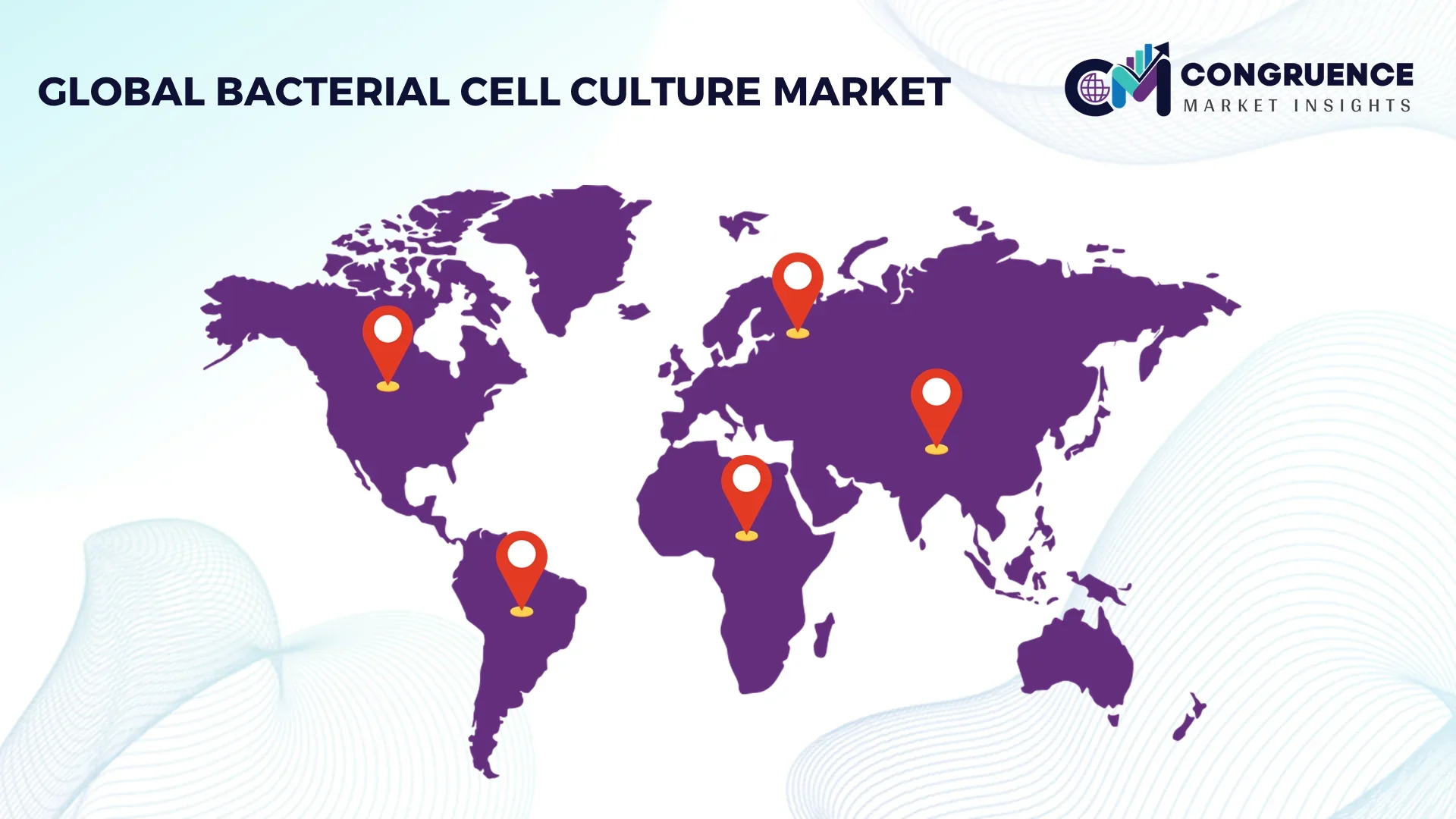
North America’s leadership is supported by high biopharmaceutical production intensity, with over 60% of large-scale biologics facilities relying on bacterial cell culture systems. Europe followed with approximately 27.9% share, driven by vaccine research, enzyme manufacturing, and strict quality compliance frameworks. Asia-Pacific accounted for nearly 23.5% in 2025, supported by expanding fermentation capacity, rising contract manufacturing activity, and government-backed biotechnology clusters. South America and the Middle East & Africa together contributed around 10.0%, reflecting emerging adoption tied to public health initiatives, academic research expansion, and gradual industrial biotechnology investments. Regional demand varies significantly by application focus, automation levels, and regulatory maturity, shaping differentiated growth trajectories across global markets.
How is advanced biopharmaceutical manufacturing shaping innovation intensity?
The North America Bacterial Cell Culture Market accounted for approximately 38.6% of global demand in 2025, supported by strong uptake across pharmaceuticals, biotechnology, and industrial enzymes. Biopharma and life sciences contribute over 65% of regional usage, driven by recombinant protein and plasmid DNA production. Regulatory frameworks emphasizing GMP compliance and biosafety have accelerated adoption of automated and single-use bacterial culture systems, with digital fermentation platforms deployed in more than 70% of large facilities. Government funding programs supporting infectious disease research and synthetic biology further strengthen demand. Local industry players are investing in AI-enabled process control to improve batch consistency by nearly 20%. Regional consumer behavior shows higher enterprise-level adoption in healthcare and life sciences, with research institutions prioritizing standardized, ready-to-use bacterial culture solutions.
Why is regulatory alignment influencing technology selection and purchasing behavior?
The Europe Bacterial Cell Culture Market represented nearly 27.9% of global share in 2025, led by Germany, the UK, and France, which together account for over 60% of regional demand. Pharmaceutical manufacturing and vaccine research are the primary drivers, supported by sustainability-focused initiatives emphasizing waste reduction and resource efficiency. Adoption of high-cell-density fermentation systems has increased by 34% across regulated facilities. Regional regulatory bodies promote traceability and process transparency, influencing demand for digitally monitored bacterial culture platforms. European manufacturers are also investing in recyclable media and closed-loop water systems, achieving up to 22% reduction in resource usage. Consumer behavior reflects strong preference for compliant, explainable, and environmentally aligned bacterial culture technologies.
How is rapid capacity expansion transforming competitive positioning?
The Asia-Pacific Bacterial Cell Culture Market ranked as the fastest-growing region, accounting for approximately 23.5% of global volume in 2025. China, India, and Japan collectively contribute over 70% of regional consumption, supported by large-scale fermentation infrastructure and expanding contract manufacturing activity. New bacterial culture facilities in the region have increased production capacity by nearly 40% over the past five years. Innovation hubs focused on synthetic biology and industrial enzymes are driving adoption of cost-optimized bacterial systems. Regional manufacturers emphasize scalability and speed, with mid-sized enterprises adopting automated fermentation at rates exceeding 45%. Consumer behavior highlights growth driven by cost efficiency, academic research expansion, and outsourced bioprocessing demand.
What role do public health initiatives play in shaping regional demand?
The South America Bacterial Cell Culture Market accounted for roughly 6.1% of global share in 2025, with Brazil and Argentina as key contributors. Public vaccine manufacturing, academic microbiology research, and food biotechnology are primary application areas. Government incentives supporting domestic biologics production have increased bacterial culture infrastructure investments by 28% across public laboratories. Trade policies encouraging regional manufacturing have improved access to fermentation equipment and culture media. Local producers are focusing on small-to-mid-scale bacterial systems optimized for flexibility. Consumer behavior in the region reflects demand closely tied to public healthcare programs and localized production requirements.
How is gradual modernization influencing adoption patterns?
The Middle East & Africa Bacterial Cell Culture Market represented approximately 3.9% of global demand in 2025, led by the UAE, Saudi Arabia, and South Africa. Regional demand is driven by public health research, academic institutions, and emerging vaccine manufacturing initiatives. Investments in laboratory modernization have increased adoption of standardized bacterial culture media by 31%. Strategic trade partnerships are improving access to bioprocessing technologies, while regulatory reforms are strengthening biosafety compliance. Local organizations are focusing on workforce training and modular laboratory setups. Consumer behavior shows preference for robust, low-maintenance bacterial culture systems suited to developing infrastructure environments.
United States – 32.4% market share: Dominance driven by high biopharmaceutical production capacity, extensive R&D infrastructure, and advanced bacterial fermentation technologies.
Germany – 9.8% market share: Strong position supported by vaccine manufacturing, industrial biotechnology adoption, and strict regulatory alignment across bacterial cell culture operations.
The Bacterial Cell Culture market exhibits a moderately consolidated competitive structure, with an estimated 45–50 active global and regional competitors operating across media, reagents, bioreactors, and integrated culture systems. The top five companies collectively account for approximately 52% of total market presence, reflecting strong brand concentration in high-performance media formulations, automated fermentation platforms, and scalable production solutions. Competition is increasingly shaped by product differentiation, automation depth, and regulatory readiness, rather than pricing alone.
Strategic initiatives dominate competitive positioning. More than 35% of leading players introduced upgraded bacterial media or single-use-compatible systems between 2023 and 2025, targeting contamination reduction and faster turnaround times. Partnerships between bioprocess technology providers and biopharmaceutical manufacturers increased by 28%, focused on co-developing application-specific bacterial culture solutions. Mergers and capability-driven acquisitions remain selective, with fewer than 10 major consolidation deals recorded globally, indicating a preference for organic innovation and platform expansion.
Innovation intensity is high, with over 60% of leading competitors integrating digital monitoring, AI-based optimization, or modular bioprocess designs into their portfolios. Sustainability is also a competitive lever, as firms adopting low-waste media and recyclable consumables report up to 20% improvement in procurement preference among regulated end users. Overall, competitive dynamics are defined by technological sophistication, compliance alignment, and the ability to support both large-scale manufacturing and flexible research applications.
Thermo Fisher Scientific Inc.
Merck KGaA
Danaher Corporation
Sartorius AG
Lonza Group
Corning Incorporated
HiMedia Laboratories
Eppendorf SE
Technological advancement is a central force shaping the Bacterial Cell Culture Market, with innovation focused on scalability, precision, automation, and compliance. High-cell-density fermentation technologies are increasingly deployed to maximize biomass output, delivering 35–45% higher cell yields per batch compared to conventional fermentation systems. These platforms enable efficient utilization of substrates and reactor volume, making them essential for recombinant protein, enzyme, and plasmid DNA production.
Automation and digital process control are becoming standard across mid-to-large scale operations. More than 65% of commercial bacterial culture facilities now utilize real-time sensors to monitor pH, dissolved oxygen, and metabolite concentrations. AI-enabled analytics platforms are reducing batch variability by 18–22% and lowering contamination-related losses by approximately 15%, significantly improving production reliability. Predictive maintenance technologies integrated into fermenters have also extended equipment uptime by 10–14%, reducing unplanned shutdowns.
Single-use and hybrid bioreactor technologies are gaining momentum, accounting for nearly 30% of new bacterial culture installations. These systems reduce cleaning and validation time by up to 40%, support rapid changeovers, and improve biosafety compliance. In parallel, advances in bacterial culture media—including chemically defined and antibiotic-free formulations—have improved growth consistency by 20% while supporting sustainability goals through lower waste generation.
Emerging technologies such as continuous fermentation, microfluidic screening platforms, and genome-edited bacterial strains are redefining productivity benchmarks. Continuous processing has demonstrated 20% improvement in space utilization and reduced downtime across industrial settings. Collectively, these technology trends are enabling more resilient, efficient, and environmentally aligned bacterial cell culture operations, positioning the market for long-term operational optimization and innovation-driven growth.
• In September 2024, Merck KGaA completed the launch of the EZ-Cult bacterial culture system, featuring integrated monitoring and control capabilities that reduce manual intervention by 70% and enhance process precision for research and bioproduction workflows, significantly advancing culture automation.
• In May 2025, Thermo Fisher Scientific introduced an AI-enabled bacterial culture monitoring system that automates growth tracking and quality control, improving reproducibility and throughput in R&D and pilot labs through real-time data analytics and automated alerts. (HTF MI)
• In 2025, Danaher Corporation finalized the acquisition of a bioinformatics startup focused on AI-based bacterial cell culture analytics to augment its Cytiva bioprocessing portfolio, strengthening data-driven process optimization capabilities across bacterial fermentation operations. (HTF MI)
• In October 2024, Bio-Rad Laboratories expanded its product line with new chemically defined, animal-free bacterial culture media formulated to enhance consistency and reduce contamination risks for regulated pharmaceutical manufacturing environments. (HTF MI)
The scope of the Bacterial Cell Culture Market Report encompasses comprehensive segmentation across product types, application domains, geographic regions, and technology enablers that define current and future industry landscapes. Product segmentation includes detailed coverage of culture media and reagents, bioreactors and fermenters, single-use systems, automated monitoring platforms, and ancillary equipment, offering clarity on utilization patterns from laboratory research to large-scale industrial biomanufacturing. Technology insights focus on digital integration, AI-enabled control systems, high-cell-density fermentation platforms, and sustainable media formulations that are reshaping operational performance and quality assurance across sectors.
Application segments in the report examine bacterial culture use in pharmaceutical and biotechnology manufacturing, academic and clinical research, industrial enzyme production, environmental and food microbiology testing, and synthetic biology. The report’s geographic analysis delivers in-depth perspectives on North America, Europe, Asia-Pacific, South America, and Middle East & Africa markets, highlighting regional infrastructure trends, regulatory environments, consumption behavior, and adoption dynamics. Industry focus areas include biopharmaceutical process development, contract research and manufacturing organization (CRMO) utilization, and emerging biotechnology ecosystems in Asia and emerging economies.
The report also explores niche segments such as continuous fermentation, microfluidic culture systems, and high-throughput bacterial screening technologies that are gaining traction. Forward-looking sections provide insights into competitive positioning, strategic initiatives, regulatory influences, and technology investments, equipping decision-makers with a thorough understanding of the bacterial cell culture market’s breadth, key drivers, and future opportunities.
| Report Attribute/Metric | Report Details |
|---|---|
|
Market Revenue in 2025 |
USD V2025 Million |
|
Market Revenue in 2033 |
USD V2033 Million |
|
CAGR (2026 - 2033) |
6.4% |
|
Base Year |
2025 |
|
Forecast Period |
2026 - 2033 |
|
Historic Period |
2021 - 2025 |
|
Segments Covered |
By Types
By Application
By End-User
|
|
Key Report Deliverable |
Revenue Forecast, Growth Trends, Market Dynamics, Segmental Overview, Regional and Country-wise Analysis, Competition Landscape |
|
Region Covered |
North America, Europe, Asia-Pacific, South America, Middle East, Africa |
|
Key Players Analyzed |
Thermo Fisher Scientific Inc., Merck KGaA, Danaher Corporation, Sartorius AG, Lonza Group, Corning Incorporated, HiMedia Laboratories, Eppendorf SE |
|
Customization & Pricing |
Available on Request (10% Customization is Free) |




