
Reports
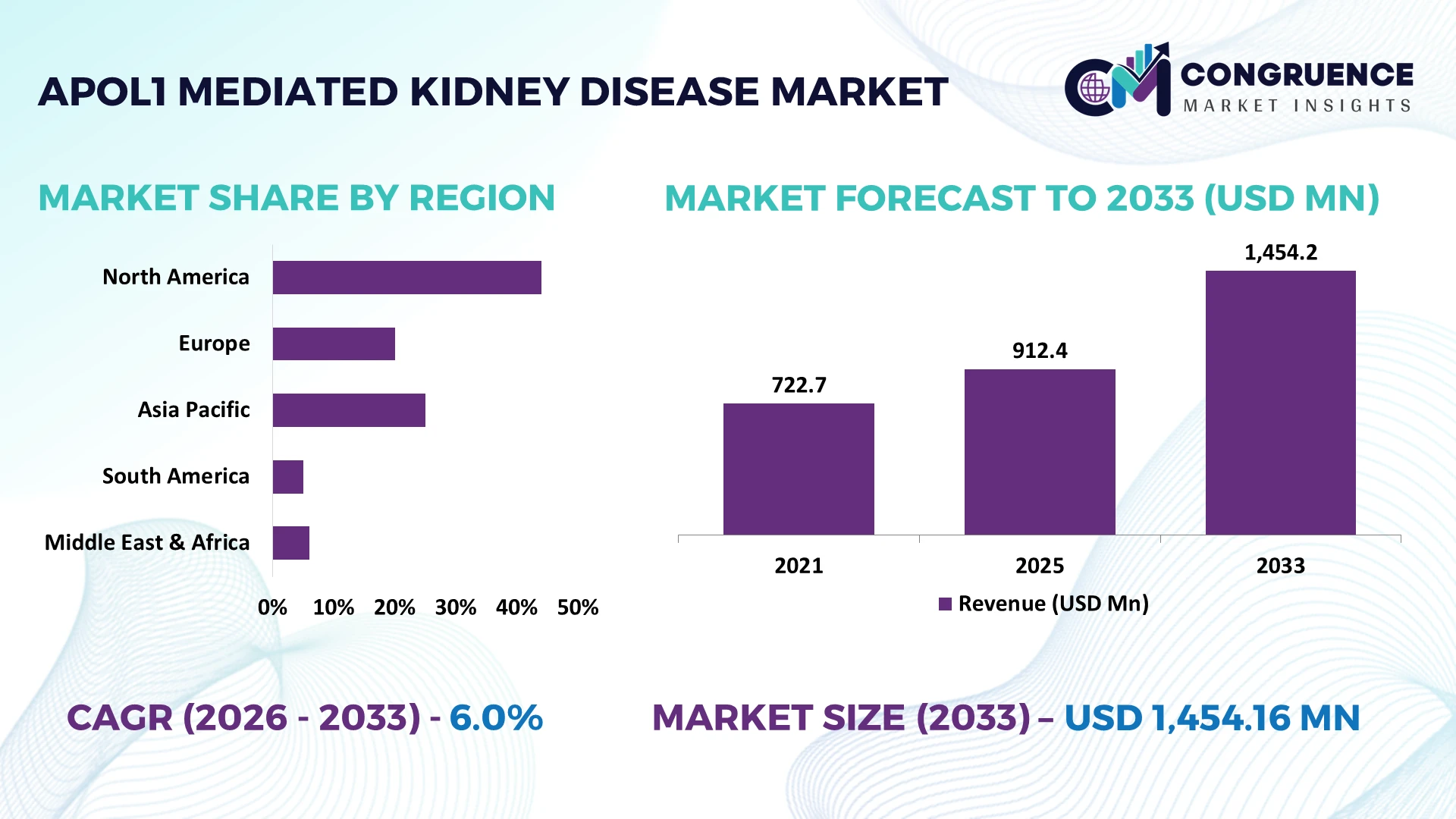
The Global APOL1 Mediated Kidney Disease Market was valued at USD 912.36 Million in 2025 and is anticipated to reach a value of USD 1454.16 Million by 2033 expanding at a CAGR of 6% between 2026 and 2033. Growth is driven by APOL1 genotyping, expansion of genetically defined nephrology cohorts, targeted APOL1 inhibitors, proteinuria-based trial endpoints, and earlier identification of high-risk G1/G2 carriers.
The United States anchors commercial development, where approximately 13% of Black individuals—over 5 million people—carry two APOL1 risk variants. Vertex’s inaxaplin AMPLITUDE Phase 2/3 program has advanced genetically targeted treatment toward potential registration, supported by specialized nephrology and genomic-testing infrastructure. Nigeria presents greater underlying genetic concentration: high-risk genotype prevalence reaches 50.1% among Igbo populations versus roughly 10–15% among Black Americans. West African genomic research expansion is consequently reshaping a disease field historically centered on U.S. cohorts.
Strategically, investment should prioritize genotype-linked diagnostics, trial-site networks serving African-ancestry populations, targeted therapeutics, and U.S.–West African clinical infrastructure capable of converting genetic prevalence into diagnosed, treatment-eligible patients.
Market Size & Growth: USD 912.36 million in 2025 reaches USD 1,454.16 million by 2033 at 6%, supported by genotype-directed APOL1 therapies.
Top Growth Drivers: High-risk genotype prevalence reaches 13% among Black Americans, 29.7% across studied West Africans, and 50.1% among Nigerian Igbo populations.
Short-Term Forecast: By 2027, AMPLITUDE’s 48-week interim analysis establishes the key efficacy checkpoint for accelerated-approval assessment of inaxaplin.
Emerging Technologies: APOL1 genotyping, small-molecule channel inhibition, and biomarker-guided nephrology are converting genetically defined CKD into a targeted-treatment category.
Regional Leaders: Indicative 2033 allocation places North America near USD 800 million, Europe USD 220 million, and Africa USD 190 million as diagnostic capacity expands.
Consumer/End-User Trends: More than 5 million Black Americans carry high-risk APOL1 genotypes, creating a substantial genetically identifiable screening population.
Pilot/Case Example: West African analysis of 8,355 participants found 29.7% carrying two risk variants, establishing a major genetically characterized clinical population.
Competitive Landscape: Vertex leads targeted development, while academic genomic networks and diagnostic laboratories increasingly shape patient identification and trial recruitment.
Regulatory & ESG Impact: Genotype-based enrollment can identify the 10–15% of Black Americans carrying high-risk variants, improving precision over ancestry-only patient selection.
Investment & Funding: AMPLITUDE progressed into Phase 2/3 with full enrollment targeted during 2026, concentrating investment around first-in-class APOL1 inhibition.
Innovation & Future Outlook: High-risk carriers showed 84% higher odds of FSGS in West African research, strengthening the rationale for disease-specific screening and intervention.
The APOL1 Mediated Kidney Disease Market is shifting from supportive CKD management toward genotype-defined diagnosis and disease-mechanism intervention. Approximately 13% of Black Americans carry two APOL1 risk variants, while West African studies reveal substantially higher concentrations in selected populations. Inaxaplin represents the most advanced targeted approach, directly inhibiting APOL1 function rather than managing downstream hypertension or proteinuria alone. Expanded genetic testing, proteinuria monitoring, and African-ancestry clinical recruitment are becoming operational priorities. Recent U.S.–West African genomic collaboration is also broadening evidence beyond historically U.S.-centric cohorts, setting up a strategically important transition toward precision nephrology.
APOL1-mediated kidney disease is becoming strategically important because nephrology is moving from phenotype-based CKD management toward genetically defined intervention. Approximately 13% of Black Americans carry two APOL1 risk variants, creating an identifiable high-risk population exceeding 5 million people. The critical market shift is integration of APOL1 genotyping into specialist workflows, enabling pharmaceutical developers to recruit genetically confirmed cohorts rather than broadly defined FSGS or proteinuric CKD populations.
Targeted APOL1 inhibition offers a mechanistic advantage over legacy supportive care, which primarily controls blood pressure and proteinuria without directly addressing APOL1-driven podocyte injury. Inaxaplin produced a 47.6% mean reduction in proteinuria after 13 weeks in an earlier clinical study. U.S. infrastructure leads therapeutic development and testing, while West Africa provides exceptional genetic concentration; two-risk-variant prevalence reached 29.7% across studied West African populations.
Through 2026–2028, trial readouts, genetic-testing expansion, biomarker integration, and nephrology referral pathways will determine commercial readiness. Vertex’s AMPLITUDE program demonstrates the operating model: genotype confirmation connects screening directly with targeted-drug enrollment. Developers are therefore investing in genetic diagnostics, specialist trial networks, and ancestry-representative recruitment. Competitive leadership will depend on converting genetic risk into diagnosed, clinically actionable disease before therapeutic competition broadens.
APOL1 genotyping is transforming patient identification by separating genetically mediated nephropathy from broader CKD populations with overlapping clinical presentations. Approximately 13% of Black Americans carry two risk variants, while studied West African populations show 29.7% high-risk genotypes and Nigerian Igbo populations reach 50.1%. This concentration gives nephrologists a measurable route from ancestry-associated risk to molecular diagnosis. The real-world shift is toward genotype-confirmed enrollment in APOL1 therapeutic trials, particularly in the United States. Developers are expanding genetic-screening partnerships, nephrology-site networks, and biomarker-supported recruitment to identify treatment-eligible patients earlier. The strategic insight is that diagnostic penetration directly controls therapeutic market formation: without routine APOL1 testing, genetically addressable patients remain classified within heterogeneous FSGS or CKD populations, limiting treatment targeting and commercial efficiency.
The largest structural limitation is uneven access to APOL1 testing and specialist nephrology, particularly where genetic prevalence is highest. Two-risk-variant prevalence reaches 29.7% across studied West African populations and 50.1% among Nigerian Igbo participants, yet genomic laboratories and longitudinal nephrology infrastructure remain substantially more concentrated in the United States. Even there, only about 13% of Black Americans carry the high-risk genotype, meaning ancestry alone produces inefficient screening and trial recruitment. Limited reimbursement consistency, genetic-counseling capacity, and standardized testing pathways restrict conversion from risk identification to diagnosis. Developers are responding with centralized genotyping, trial-sponsored screening, academic partnerships, and targeted site selection. Operationally, the constraint is not genetic prevalence but diagnostic throughput; therapeutic commercialization cannot scale efficiently where laboratories, referral pathways, and confirmatory clinical assessment remain disconnected.
Mechanism-specific therapy creates an opportunity to address patients currently managed through nonspecific CKD pathways. Inaxaplin demonstrated a 47.6% mean proteinuria reduction at 13 weeks in an earlier APOL1-mediated kidney disease study, while high-risk APOL1 carriers in West African research showed 84% higher odds of FSGS. With more than 5 million Black Americans carrying two risk variants, systematic testing can create a substantial genetically characterized treatment funnel. Between 2026 and 2028, genotype-first screening, electronic health-record triggers, kidney biomarkers, and decentralized sample collection can improve patient discovery. Developers are investing in targeted inhibitors, companion testing, African-ancestry recruitment, and specialist-center partnerships. A non-obvious opportunity lies upstream of treatment: diagnostic networks that identify high-risk relatives and earlier-stage patients can expand intervention beyond advanced proteinuric disease and improve clinical-trial efficiency.
High-risk APOL1 status does not translate uniformly into progressive kidney disease, creating a difficult execution problem for screening, trial design, and treatment selection. Approximately 13% of Black Americans carry two risk variants, yet only a subset develops clinically significant APOL1-mediated nephropathy; environmental and biological modifiers influence penetrance. West African genotype prevalence reaches 29.7%, further increasing the need to distinguish genetic susceptibility from actionable disease. Trials must therefore integrate genotype, proteinuria, kidney function, pathology, and longitudinal progression without over-treating asymptomatic carriers. Recruiting representative populations also requires sustained U.S.–African clinical infrastructure and standardized laboratory workflows. Companies must invest in predictive biomarkers, natural-history datasets, digital patient identification, and diverse trial networks. Competitive advantage will belong to developers that accurately identify progression-prone patients rather than simply maximizing genetic screening volumes.
Genotype-First Enrollment Becomes Standard: APOL1 therapeutic programs increasingly require genetically confirmed participants rather than phenotype-only CKD recruitment. Approximately 13% of Black Americans carry two risk variants, compared with 29.7% across studied West African populations. Developers are embedding centralized genotyping into site activation and prescreening, reducing unsuitable enrollment and concentrating clinical resources on molecularly defined patients.
Proteinuria Accelerates Therapeutic Decisions: Proteinuria is becoming an operationally important efficacy measure in APOL1 programs because changes appear earlier than hard kidney outcomes. Inaxaplin produced a 47.6% mean proteinuria reduction after 13 weeks, supporting continued late-stage development. Pharmaceutical teams are combining urinary protein measurements with eGFR and genotype data, shortening evidence-generation cycles while improving dose and patient-selection decisions.
African Recruitment Gains Strategic Weight: Genetic epidemiology is shifting trial-network priorities toward populations historically underrepresented in kidney research. Two APOL1 risk variants occur in 29.7% of studied West Africans and reach 50.1% among Nigerian Igbo participants. Research networks are strengthening African genomic cohorts, biobanking, laboratory workflows, and cross-border collaborations, improving population representation while revealing genotype distributions unavailable from U.S.-only recruitment.
Mechanism-Based Pipelines Reshape Nephrology: APOL1 inhibition is moving treatment development beyond conventional renin-angiotensin and immunosuppressive approaches that address downstream kidney injury. High-risk APOL1 carriers showed 84% higher FSGS odds in West African analysis. Developers are integrating genetic biomarkers with targeted small molecules, while nephrology centers restructure screening pathways around molecular eligibility, creating a precision-treatment model applicable across genetically heterogeneous kidney disease.
APOL1-Associated CKD accounts for an estimated 35–40% of the defined market because it captures a broader clinically relevant population than individual histologic presentations. Approximately 13% of Black Americans carry two APOL1 risk variants, while prevalence reaches 29.7% across studied West African populations. Focal Segmental Glomerulosclerosis represents the most therapeutically advanced disease-specific segment because APOL1-associated FSGS provides measurable proteinuria endpoints and genetically identifiable patients for targeted development.
APOL1-Associated Nephropathy is the fastest-expanding type as genotype-based classification increasingly separates APOL1-driven disease from conventional etiologic labels. HIV-Associated Nephropathy remains clinically relevant because APOL1 risk variants strongly modify susceptibility among people with African ancestry, although modern antiretroviral treatment has altered its disease profile. Lupus Nephritis represents a narrower intersection where APOL1 status can influence kidney outcomes rather than define all disease. Pharmaceutical developers are consequently prioritizing molecularly confirmed APOL1-Associated CKD and FSGS populations, shifting investment from phenotype-defined segmentation toward genetically actionable nephropathy.
Disease Diagnosis represents an estimated 30–35% of application activity because APOL1-mediated kidney disease must first be distinguished from clinically overlapping forms of FSGS and CKD. Genetic Testing forms the molecular foundation of that process: roughly 13% of Black Americans carry two APOL1 risk variants, meaning ancestry-based screening alone lacks sufficient specificity. Disease Monitoring subsequently combines proteinuria, eGFR, and clinical progression indicators to determine whether genetic susceptibility has become actionable nephropathy.
Drug Development is the fastest-growing application as targeted APOL1 inhibition changes testing from risk characterization into therapeutic eligibility infrastructure. Inaxaplin demonstrated a 47.6% mean proteinuria reduction after 13 weeks in an earlier study, increasing the operational importance of genotype-confirmed recruitment and biomarker measurement. Clinical Research remains essential for penetrance modelling, natural-history datasets, and population-specific evidence. Diagnostic laboratories are expanding sequencing and variant interpretation, while pharmaceutical companies integrate testing into trial workflows. The business shift is clear: genetic information increasingly connects diagnosis, enrollment, monitoring, and treatment selection within one precision-nephrology pathway.
Hospitals account for an estimated 35–40% of end-user activity because they combine nephrology, pathology, laboratory diagnostics, kidney biopsy, longitudinal eGFR monitoring, and treatment management within integrated clinical systems. Nephrology Clinics provide concentrated specialist demand, particularly for proteinuric CKD and FSGS patients requiring genetic evaluation. Diagnostic Laboratories perform APOL1 variant testing and increasingly support centralized trial screening, an important capability when only approximately 13% of Black Americans carry two high-risk variants.
Pharmaceutical Companies are the fastest-expanding end-user group as targeted APOL1 programs require large-scale genotyping, biomarker analysis, site qualification, and genetically confirmed recruitment. A 47.6% proteinuria reduction demonstrated with inaxaplin intensified investment in mechanism-specific development. Research Institutes remain strategically important for penetrance studies and African-ancestry genomic datasets; studied West African populations show 29.7% two-risk-variant prevalence. Companies are building hospital-laboratory-pharmaceutical partnerships around testing and trial referral. Competitive advantage increasingly depends on connecting high-risk patients across diagnostics, specialist care, and therapeutic development rather than operating each function independently.
North America accounted for the largest market share at 58% in 2025 however, Middle East & Africa is expected to register the fastest growth, expanding at a CAGR of 7.4% between 2026 and 2033.
Precision Nephrology Concentrates Clinical Development
North America represents approximately 58% of market activity, led overwhelmingly by the United States through advanced nephrology networks, molecular diagnostics, genomic laboratories, and APOL1-targeted drug development. Approximately 10–15% of African Americans carry two high-risk APOL1 alleles, creating a genetically identifiable population exceeding 5 million. Clinical infrastructure increasingly connects APOL1 genotyping with proteinuria measurement, eGFR monitoring, biopsy interpretation, and trial enrollment. Vertex’s late-stage AMPLITUDE program strengthens the region’s position by establishing a development pathway specifically for APOL1-mediated kidney disease. U.S. centers also provide established PCR and sequencing capacity required for genotype-confirmed recruitment. The operational advantage is patient stratification: pharmaceutical developers can concentrate screening within nephrology populations rather than recruit broadly across heterogeneous CKD, improving enrollment precision and strengthening the commercial infrastructure required for mechanism-specific treatment.
United States Market Outlook: The United States combines the largest commercially addressable diagnosed population with mature clinical-trial and genetic-testing infrastructure. Around 13% of Black Americans carry two APOL1 risk variants, while targeted inaxaplin development has already demonstrated 47.6% mean proteinuria reduction at 13 weeks. Integration of genotyping with nephrology referral pathways positions the country as the principal launch environment for APOL1-directed therapeutics.
Genomic Testing Enters Specialized Kidney Care
Europe accounts for approximately 15% of market activity, concentrated in the United Kingdom, France, Netherlands, and specialist genomic-medicine centers serving African and Caribbean ancestry populations. The UK provides a particularly relevant clinical base: people of African or Afro-Caribbean ancestry are estimated to be 3–5 times more likely to develop CKD, while Black patients represent 7.8% of renal-replacement-therapy recipients despite representing 3.0% of the referenced population. APOL1 genotyping is increasingly relevant to donor assessment and genetically unexplained kidney disease. France and the UK also participated in early inaxaplin clinical development, establishing experience with genotype-confirmed recruitment. European institutions are integrating genomic datasets, renal registries, transplant assessment, and specialist nephrology pathways. The strategic requirement is targeted testing rather than population-wide screening because APOL1 risk variants remain concentrated within specific ancestry groups.
United Kingdom Market Outlook: The UK combines genomics infrastructure with established renal registries and substantial African-Caribbean CKD burden. Black patients begin renal replacement therapy at a median 56.5 years versus 65.8 years for White patients. Incorporating APOL1 testing into specialist assessment can sharpen etiologic diagnosis, transplant evaluation, clinical-trial identification, and future targeted-treatment selection.
Targeted Genomics Defines Limited Addressable Demand
Asia-Pacific represents approximately 5% of APOL1-mediated kidney disease market activity because G1 and G2 risk variants are strongly concentrated in populations with recent sub-Saharan African ancestry rather than East or South Asian populations. Consequently, Japan, China, South Korea, Australia, and India contribute principally through genomic research, specialist diagnostics, multinational clinical-development infrastructure, and pharmaceutical capabilities rather than high indigenous disease prevalence. Australia provides the clearest patient-facing opportunity through its diverse migrant population and established genetic-testing infrastructure. Commercial strategies therefore differ materially from conventional CKD markets: broad APOL1 screening across Asian populations produces limited clinical yield, whereas ancestry-informed testing concentrates resources effectively. Pharmaceutical and diagnostic companies are emphasizing centralized sequencing, multinational data integration, and selective clinical-site participation. The region’s strategic relevance lies more in research and drug-development capabilities than in underlying genotype-driven patient volume.
Australia Market Outlook: Australia provides the strongest regional combination of genomic medicine, specialist nephrology, multicultural healthcare delivery, and clinical-trial capability. APOL1 testing is most relevant for patients with recent African ancestry presenting with unexplained proteinuric CKD or FSGS. Targeted referral and centralized genetic testing offer a more efficient operating model than broad population screening.
Brazil Reveals Underdiagnosed Genetic Burden
South America represents approximately 7% of market activity, with Brazil dominating because of its large population with African ancestry and extensive dialysis infrastructure. More than half of Brazil’s population identifies as Black or mixed race, creating a distinctive setting for APOL1-associated disease despite substantial genetic admixture. Brazilian evidence demonstrates that two APOL1 risk alleles were 10 times more common among studied ESRD patients than healthy controls, at 9.4% versus 0.9%. Carriers also initiated dialysis approximately 12 years earlier, highlighting clinically meaningful disease severity. Current limitations include uneven genetic-testing availability and limited routine integration between dialysis networks and molecular nephrology. Diagnostic laboratories and research institutions therefore have an opportunity to develop ancestry-informed testing pathways and connect high-risk dialysis and glomerular-disease populations with precision-nephrology programs.
Brazil Market Outlook: Brazil provides the region’s strongest APOL1 opportunity through population scale, African ancestry, and established renal-care networks. In one dialysis cohort, 12.4% carried two risk alleles, and these patients began dialysis at an average 33.7 years versus 46.1 years among patients with zero or one allele. Earlier genetic identification can materially improve etiologic classification and research recruitment.
West African Genomics Unlocks Disease Identification
Middle East & Africa represents approximately 15% of market activity but contains the world’s highest underlying APOL1 genetic concentration, making West Africa strategically critical for future diagnostics and therapeutic recruitment. A major Ghana–Nigeria analysis involving 8,355 participants found 43.0% carrying one APOL1 risk allele and 29.7% carrying two. Biallelic carriers showed 25% higher odds of CKD and 84% higher odds of FSGS. Nigeria and Ghana therefore provide exceptionally valuable populations for natural-history studies, biomarker development, and genotype-directed trials. The central constraint is infrastructure: advanced genomic laboratories, longitudinal kidney registries, biopsy capacity, and specialist nephrology remain less accessible than in the United States. Pharmaceutical developers and research institutions must build local laboratory partnerships, standardized sample workflows, and sustainable trial-site capabilities to convert genetic prevalence into clinically actionable patient identification.
Nigeria Market Outlook: Nigeria combines exceptional APOL1 prevalence with substantial unmet nephrology needs. Research across Nigeria and Ghana established high-risk genotypes in 29.7% of participants, while specific Nigerian populations demonstrate particularly high risk-variant frequencies. Expanding genotyping, kidney-biopsy access, longitudinal registries, and specialist trial centers would make Nigeria strategically important for representative APOL1 therapeutic development.
Vertex Pharmaceuticals leads targeted APOL1 therapeutics through inaxaplin, competing with emerging precision-nephrology developers, diagnostic laboratories, genomic platforms, and established renal-drug companies seeking genetically stratified CKD positions. Vertex, Labcorp, Natera, Quest Diagnostics, and major specialist developers collectively represent an estimated 55–60% of organized commercial and development activity. Competition centers on therapeutic efficacy, genotype accuracy, patient identification, trial speed, and nephrology-network access. Inaxaplin’s 47.6% proteinuria reduction establishes a demanding efficacy benchmark, while high-risk genotypes occur in approximately 10–15% of African Americans. Players are integrating companion diagnostics, centralized testing, biomarker workflows, academic partnerships, and ancestry-focused recruitment. Competition is shifting from broad CKD management toward mechanism-specific intervention and genetically confirmed populations. The principal entry barrier is assembling validated APOL1 biology, longitudinal patient data, specialized trial sites, and scalable testing infrastructure simultaneously. Winning requires clinically differentiated therapy, rapid genotype-to-referral conversion, representative recruitment, regulatory execution, and integrated diagnostic-treatment pathways capable of identifying progression-prone patients efficiently.
Vertex Pharmaceuticals Incorporated
Novartis AG
AstraZeneca plc
Gilead Sciences, Inc.
Travere Therapeutics, Inc.
Otsuka Pharmaceutical Co., Ltd.
Vera Therapeutics, Inc.
Natera, Inc.
Laboratory Corporation of America Holdings
Quest Diagnostics Incorporated
Illumina, Inc.
Thermo Fisher Scientific Inc.
Regeneron Pharmaceuticals, Inc.
Roche Holding AG
Current APOL1 technology combines targeted genotyping, proteinuria quantification, eGFR monitoring, and small-molecule channel inhibition. Labcorp’s multiplex TaqMan PCR identifies G1/G2 risk variants with 4–7-day turnaround, converting ancestry-based suspicion into molecular confirmation. Inaxaplin directly inhibits APOL1 channel function and produced a 47.6% mean proteinuria reduction at week 13, outperforming legacy supportive management that does not directly suppress APOL1-mediated podocyte injury.
Emerging platforms integrate renal gene panels, longitudinal clinical data, and genotype-directed trial recruitment. Natera’s RenasightIQ database contains genetic and clinical information from more than 215,000 CKD patients, including over 13,500 APOL1-positive records, enabling faster cohort identification and phenotype correlation. Centralized sponsored testing also removes patient testing charges for eligible participants, improving diagnostic access while giving pharmaceutical developers more efficient recruitment pathways and better-defined therapeutic populations.
Disruptive development is shifting toward mechanism-specific inhibitors, predictive biomarkers, digital patient finding, and genotype-linked clinical coding. New U.S. ICD-10-CM recognition makes APOL1-mediated kidney disease separately identifiable in healthcare workflows, supporting diagnosis and future treatment tracking. Through 2026–2028, integration of genetic testing with electronic records, proteinuria, eGFR trajectories, and targeted therapy will strengthen precision nephrology. Companies controlling validated genomic datasets, laboratory access, and referral networks gain recruitment speed and commercialization advantage; providers should build genotype-to-treatment pathways now.
April 2024 Vertex advanced inaxaplin into Phase 3 at 45 mg once daily and expanded AMPLITUDE enrollment to adolescents aged 10–17. Earlier Phase 2a treatment reduced proteinuria 47.6%, establishing clinical proof for direct APOL1 inhibition and broadening pivotal development. Source: vrtx.com
September 2025 Vertex completed enrollment of AMPLITUDE’s interim-analysis cohort. The global Phase 2/3 program will assess patients after 48 weeks, creating a potential accelerated-approval pathway and moving the first targeted APOL1 inhibitor toward a decisive regulatory efficacy assessment. Source: biospace.com
October 2025 CMS implemented dedicated ICD-10-CM recognition for APOL1-mediated kidney disease, including N07.B and family-history code Z84.11. The coding change makes genetically confirmed AMKD separately visible in U.S. healthcare claims, improving diagnosis tracking, patient identification, and future treatment-management infrastructure. Source: cms.gov
May 2026 ClinicalTrials.gov updated Vertex’s AMPLIFIED Phase 2 study to active, not recruiting after enrolling 42 participants. The trial extends inaxaplin development into moderate-proteinuria and type-2-diabetes populations excluded from AMPLITUDE, testing whether targeted APOL1 inhibition can address broader clinical phenotypes. Source: clinicaltrials.gov
The report covers Focal Segmental Glomerulosclerosis, HIV-Associated Nephropathy, Lupus Nephritis, APOL1-Associated CKD, and APOL1-Associated Nephropathy across Disease Diagnosis, Genetic Testing, Disease Monitoring, Drug Development, and Clinical Research. End-user assessment includes Hospitals, Nephrology Clinics, Diagnostic Laboratories, Pharmaceutical Companies, and Research Institutes. Approximately 13% of Black Americans carry two APOL1 risk variants, establishing genetic testing as a critical market-enabling technology.
Geographic analysis spans North America, Europe, Asia-Pacific, South America, and Middle East & Africa, including high-prevalence West African populations where two-risk-variant prevalence reached 29.7% in a major cohort. Technology coverage evaluates APOL1 genotyping, TaqMan PCR, renal gene panels, proteinuria biomarkers, eGFR analytics, clinicogenomic databases, and targeted APOL1 inhibitors. The 2026–2033 framework supports therapeutic investment, diagnostic-network expansion, trial-site selection, competitive positioning, patient-identification strategy, and precision-nephrology planning.
| Report Attribute/Metric | Report Details |
|---|---|
Market Revenue in 2025 | USD 912.36 Million |
Market Revenue in 2033 | USD 1454.16 Million |
CAGR (2026 - 2033) | 6% |
Base Year | 2025 |
Forecast Period | 2026 - 2033 |
Historic Period | 2021 - 2025 |
Segments Covered | By Type
By Application
By End-User
|
Key Report Deliverable | Revenue Forecast, Growth Trends, Market Dynamics, Segmental Overview, Regional and Country-wise Analysis, Competition Landscape |
Region Covered | North America, Europe, Asia-Pacific, South America, Middle East, Africa |
Key Players Analyzed | Vertex Pharmaceuticals Incorporated, Novartis AG, AstraZeneca plc, Gilead Sciences, Inc., Travere Therapeutics, Inc., Otsuka Pharmaceutical Co., Ltd., Vera Therapeutics, Inc., Natera, Inc., Laboratory Corporation of America Holdings, Quest Diagnostics Incorporated, Illumina, Inc., Thermo Fisher Scientific Inc., Regeneron Pharmaceuticals, Inc., Roche Holding AG |
Customization & Pricing | Available on Request (10% Customization is Free) |




