
Reports
The Global Apheresis Equipment Market was valued at USD 256 Million in 2025 and is anticipated to reach a value of USD 398.87 Million by 2033 expanding at a CAGR of 5.7% between 2026 and 2033. Growth is being driven by expanding plasma collection infrastructure, rising therapeutic apheresis procedures for autoimmune and hematological disorders, and wider integration of automated cell separation platforms across advanced healthcare systems.
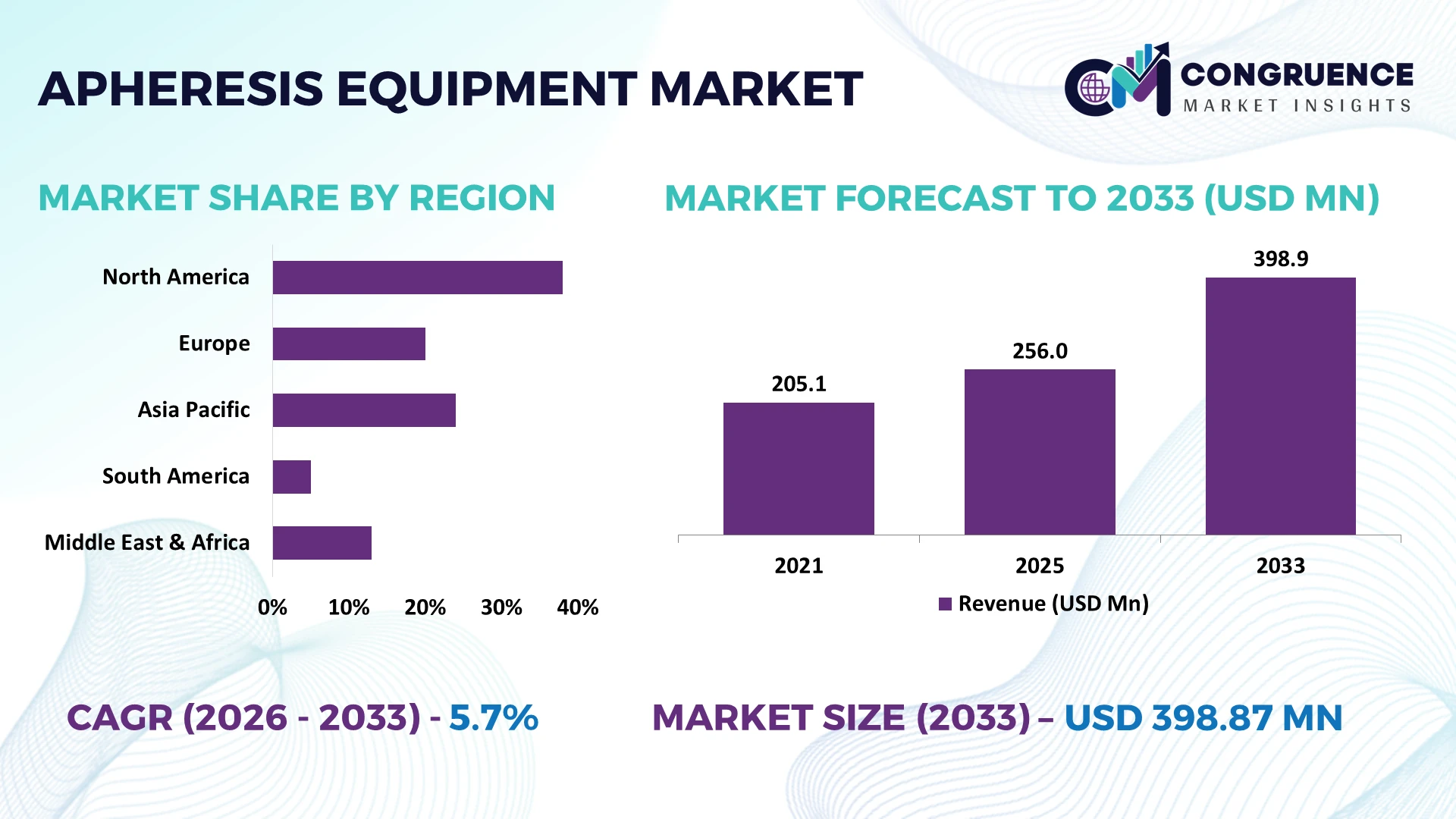
The United States remains the dominant country, accounting for approximately 41% of global installed apheresis equipment capacity, supported by sustained investments in plasma collection networks, biotechnology manufacturing, and advanced hospital infrastructure. Automation adoption exceeds 68% across major collection centers, while Germany maintains stronger penetration in therapeutic hospital-based applications than several other European countries due to specialized clinical programs. Ongoing plasma security initiatives following global supply-chain disruptions continue to reinforce domestic collection capabilities.
Manufacturers should prioritize scalable automation, localized service networks, and high-throughput collection platforms to strengthen long-term competitive positioning in high-investment healthcare markets.
Market Size & Growth: USD 256 Million (2025) to USD 398.87 Million (2033) at 5.7% CAGR, supported by automated plasma collection expansion and advanced therapeutic applications.
Top Growth Drivers: Plasma collection capacity expands 9%, therapeutic procedures increase 7%, and automation adoption improves operational productivity by 12%.
Short-Term Forecast: By 2028, collection workflow efficiency improves 15% while consumable waste declines approximately 10% through advanced automation.
Emerging Technologies: AI-assisted monitoring, automated cell separation, and digital connectivity reduce processing variability by nearly 18% across advanced facilities.
Regional Leaders: North America approaches USD 165 Million, Europe USD 108 Million, and Asia-Pacific USD 82 Million, driven by hospital modernization and regional manufacturing expansion.
Consumer/End-User Trends: More than 63% of high-volume plasma centers prioritize automated systems that reduce operator intervention and improve donor throughput.
Pilot/Case Example: A 2026 hospital modernization program increased therapeutic procedure capacity by 22% through integrated digital workflow optimization.
Competitive Landscape: The leading manufacturer holds approximately 19% market share, with competition centered among Terumo, Fresenius Kabi, Haemonetics, Asahi Kasei, and Nikkiso.
Regulatory & ESG Impact: Digital traceability and resource-efficient systems reduce documentation time by 25% while strengthening compliance with evolving healthcare regulations.
Investment & Funding: More than USD 520 Million supports manufacturing expansion, strategic partnerships, and plasma infrastructure amid ongoing regional supply-chain diversification.
Innovation & Future Outlook: Next-generation connected platforms, predictive maintenance, and precision therapeutic technologies accelerate operational standardization and strengthen global competitive differentiation.
Growing demand for therapeutic plasma exchange, stem cell collection, and plasma-derived medicine production continues to reshape the Apheresis Equipment Market. Advanced automation and digital monitoring platforms have improved procedure consistency by nearly 18%, while manufacturers increasingly localize component sourcing to strengthen supply resilience. Regulatory emphasis on traceability and quality assurance is accelerating technology upgrades, creating a strong foundation for the strategic market assessment that follows.
The Apheresis Equipment Market has become strategically important as healthcare systems prioritize plasma security, advanced blood component management, and specialized therapeutic procedures. Competition increasingly centers on automation capability, service coverage, and digital connectivity rather than hardware alone. Infrastructure modernization across plasma collection networks and tighter traceability requirements are accelerating investment in connected apheresis platforms that improve operational visibility while supporting standardized clinical workflows and supply-chain resilience.
Modern automated apheresis systems process procedures approximately 20% faster than legacy semi-manual platforms while reducing operator intervention by nearly 25%, improving utilization across high-volume collection centers. The United States continues to lead large-scale plasma collection deployment, whereas Japan emphasizes precision therapeutic applications supported by advanced hospital integration and clinical automation. Over the next two to three years, digital fleet management adoption is expected to exceed 55% among newly commissioned high-capacity collection facilities, strengthening predictive maintenance and equipment availability.
A 2026 plasma center expansion program integrating connected monitoring and workflow automation shortened donor turnaround time by approximately 16% while improving scheduling efficiency. Manufacturers are responding through localized service hubs, software partnerships, and expanded manufacturing footprints to improve equipment uptime and regulatory responsiveness. Companies combining digital intelligence, reliable after-sales support, and scalable automation will secure stronger competitive positioning as healthcare providers prioritize operational efficiency and long-term clinical performance.
The rapid expansion of automated plasma collection infrastructure remains the primary structural driver for the Apheresis Equipment Market. Automated collection platforms increase donor throughput by approximately 18% while reducing procedure variability by nearly 15%, enabling more consistent plasma supply for biopharmaceutical manufacturing. In the United States, continued investment in domestic plasma collection capacity has accelerated deployment of connected collection systems following strategic healthcare supply-chain initiatives. Equipment manufacturers are expanding production capacity, strengthening distributor partnerships, and integrating digital workflow software to support higher equipment utilization. An important operational shift is the growing preference for modular systems that simplify maintenance and shorten installation time by nearly 20%, allowing providers to scale operations faster while improving equipment lifecycle performance and reducing service interruptions.
High capital investment requirements and uneven healthcare infrastructure continue to limit wider deployment of advanced apheresis equipment. Installation and validation expenses account for nearly 30% of initial project costs, while annual maintenance obligations frequently represent 10% to 12% of operating budgets for specialized treatment centers. India and several emerging healthcare markets continue to face limited access to specialized collection facilities and trained operators, slowing technology deployment despite increasing clinical demand. Manufacturers are addressing these constraints through localized component sourcing, long-term service contracts, and flexible equipment financing models. A notable strategic response involves regional assembly operations that shorten procurement lead times by approximately 18%, improving delivery consistency while reducing exposure to international logistics disruptions and imported component dependency.
Integration of AI-enabled monitoring, predictive maintenance, and connected clinical analytics creates significant opportunities beyond conventional hardware sales. Digital workflow optimization improves equipment utilization by approximately 17%, while predictive servicing reduces unexpected downtime by nearly 22%. Germany is expanding smart hospital infrastructure that supports interoperable medical devices, encouraging suppliers to develop software-enabled therapeutic ecosystems rather than standalone equipment. Companies are increasing R&D investment, forming software partnerships, and introducing cloud-connected monitoring platforms that enable remote diagnostics and performance benchmarking. A non-obvious opportunity lies in subscription-based digital service models, allowing manufacturers to generate recurring operational value while healthcare providers benefit from continuous software upgrades and improved fleet management without major infrastructure replacement.
Long-term market expansion depends on successful integration of advanced equipment with hospital information systems, workforce training, and standardized clinical workflows. Implementation timelines can extend by approximately 20% when interoperability requirements are not addressed during procurement, while specialized operator training requirements increase deployment preparation by nearly 15%. Japan and South Korea are emphasizing digital healthcare integration, requiring manufacturers to deliver equipment compatible with evolving clinical data environments. Companies must strengthen cybersecurity architecture, interoperability standards, and technical training partnerships to maintain deployment consistency across complex healthcare networks. Organizations capable of combining secure digital integration with comprehensive workforce support will establish stronger operational resilience and sustain competitive differentiation in increasingly technology-driven clinical environments.
Connected Workflow Automation Expansion Advanced workflow automation is reshaping plasma and therapeutic collection operations, with digital scheduling and equipment connectivity reducing procedure turnaround by nearly 18% and improving device utilization by approximately 20%. Healthcare providers in the United States are integrating centralized fleet management to optimize multi-site operations, while manufacturers are expanding software partnerships and remote service capabilities to improve uptime. Labor shortages and increasing procedural complexity continue to accelerate adoption of integrated workflow platforms.
Disposable Set Localization Strategies Manufacturers are restructuring supply chains by regionalizing disposable kit production, reducing procurement lead times by nearly 22% and improving inventory availability by approximately 17%. Japan and Germany are increasing localized component sourcing following recent healthcare supply-chain disruptions. Companies are expanding regional manufacturing partnerships, strengthening supplier diversification, and redesigning logistics networks to reduce operational risk while improving delivery consistency for hospitals and plasma collection facilities.
Precision Therapeutic Procedure Integration Hospitals are increasingly deploying disease-specific therapeutic protocols supported by advanced monitoring software, improving treatment consistency by approximately 16% while reducing manual parameter adjustments by nearly 21%. Clinical standardization initiatives and updated treatment pathways are encouraging equipment suppliers to integrate intelligent procedure guidance. Companies are investing in software-enabled platforms and clinician training programs to strengthen differentiation beyond traditional hardware performance.
Predictive Service Model Adoption Predictive maintenance supported by equipment analytics is reducing unplanned downtime by nearly 24% while extending preventive service intervals by approximately 15%. A non-obvious operational shift is the growing use of performance benchmarking across distributed equipment fleets to optimize maintenance scheduling. Manufacturers are expanding subscription-based service agreements, remote diagnostics, and lifecycle management partnerships, allowing healthcare providers to improve asset productivity without increasing engineering resources.
Plasmapheresis remains the leading segment, representing approximately 47% of total equipment deployment due to its critical role in plasma-derived medicine production and therapeutic plasma exchange. High-throughput automation, standardized disposable systems, and compatibility with modern plasma collection centers support its dominant position. Leukapheresis maintains strong demand for oncology and immunotherapy applications, while Erythrocytapheresis continues serving specialized treatment pathways for hematological disorders. Manufacturers are expanding dedicated plasma collection platforms and strengthening partnerships with collection organizations to improve operational capacity and equipment standardization.
Plateletpheresis is the fastest-growing segment as hospitals increase single-donor platelet collection to improve transfusion quality and inventory efficiency. Adoption has increased by approximately 14% across advanced transfusion centers, while automation reduces collection variability by nearly 18%. Companies are prioritizing intelligent collection algorithms, ergonomic system design, and workflow optimization to strengthen competitiveness. Investment is increasingly shifting toward versatile platforms capable of supporting multiple collection procedures, allowing providers to maximize equipment utilization and improve long-term operational flexibility.
Plasma Collection leads the application landscape with an estimated 44% share, supported by expanding plasma-derived biologics manufacturing and large-scale collection infrastructure. Automated collection systems improve donor throughput by approximately 18% while reducing processing variability by nearly 15%, making plasma collection the preferred investment area for high-volume facilities. Blood Collection remains an established application supporting routine transfusion services, while Therapeutic Apheresis continues expanding across autoimmune, neurological, and hematological treatment pathways.
Stem Cell Collection represents the fastest-growing application as cell-based therapies and transplantation programs expand globally. Procedure volumes have increased by approximately 13% in specialized treatment centers, encouraging manufacturers to integrate advanced monitoring, digital documentation, and precision collection technologies. Companies are scaling deployment through clinical partnerships, equipment customization, and workflow automation to support evolving regenerative medicine requirements. Demand is increasingly concentrated in facilities capable of integrating collection systems with broader cellular therapy programs.
Hospitals remain the dominant end-user segment with approximately 49% of total equipment deployment due to comprehensive clinical infrastructure, high therapeutic procedure volumes, and multidisciplinary treatment capabilities. Integrated transfusion services and specialized hematology departments support sustained equipment utilization, while digital hospital modernization improves workflow coordination by approximately 17%. Blood Banks continue representing a major purchasing group through expanding plasma and blood component collection activities, supported by ongoing automation initiatives.
Specialty Clinics are the fastest-growing end-user category as outpatient therapeutic procedures increase and focused treatment centers expand advanced hematology services. Equipment deployment within specialty facilities has risen by approximately 15%, while streamlined workflows reduce patient turnaround times by nearly 14%. Research Institutes remain strategically important for technology validation and next-generation therapeutic development. Manufacturers are targeting these end-users through customized service agreements, scalable equipment configurations, and collaborative clinical partnerships that strengthen long-term customer retention and technology adoption.
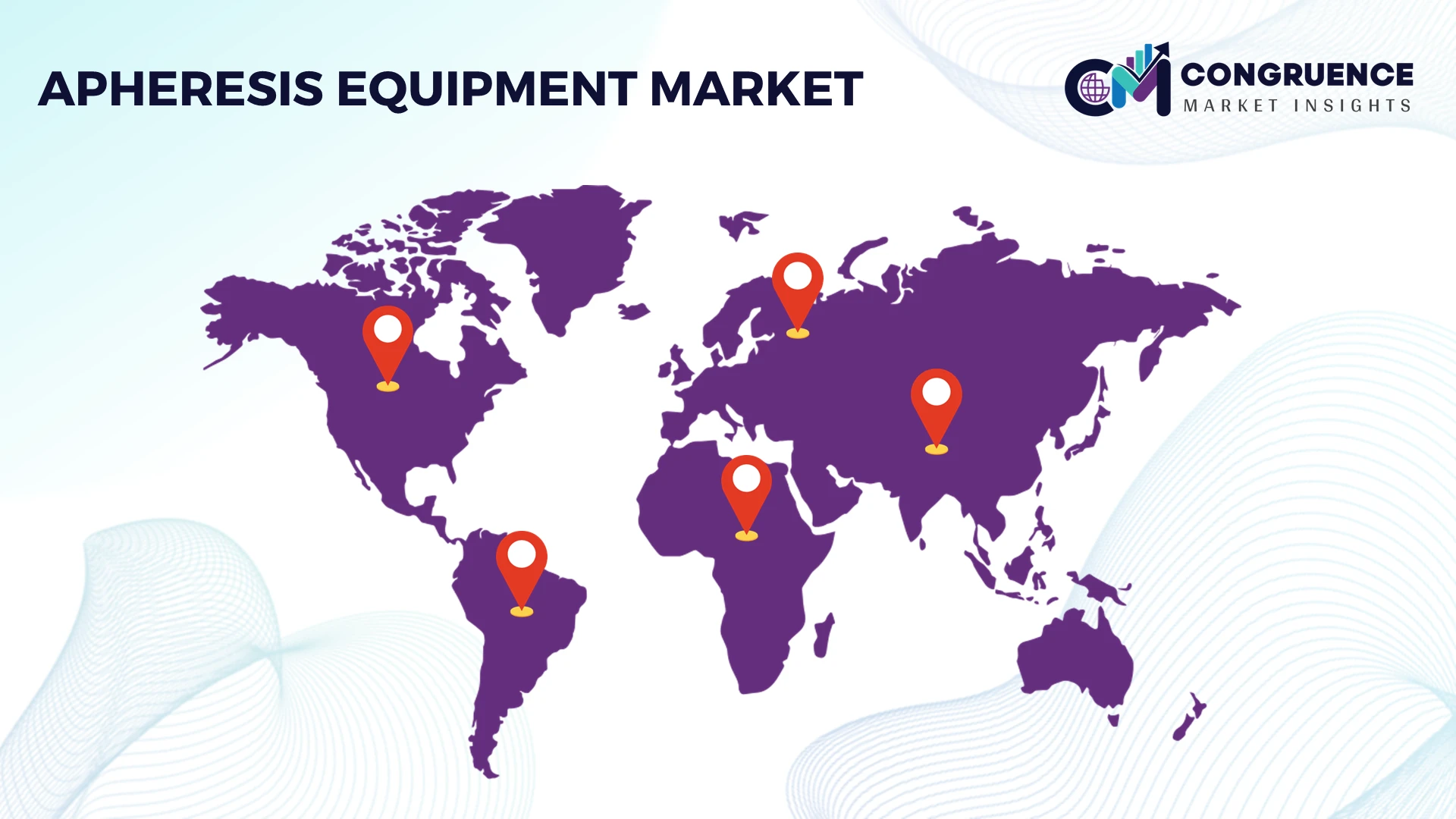
North America accounted for the largest market share at 41% in 2025 however, Asia-Pacific is expected to register the fastest growth, expanding at a 7.4% between 2026 and 2033.
Advanced Plasma Infrastructure Strengthens Market Leadership
North America remains the largest regional market due to its extensive plasma collection infrastructure, high concentration of therapeutic apheresis procedures, and strong adoption of automated collection technologies. More than 65% of high-volume plasma centers operate digitally integrated apheresis platforms, supporting higher equipment utilization and standardized clinical workflows. Healthcare providers continue modernizing blood collection infrastructure through connected monitoring, predictive maintenance, and centralized fleet management. A notable operational trend is the expansion of multi-site plasma collection networks, reducing equipment downtime by approximately 18% through coordinated service models. Manufacturers are reinforcing regional production, expanding technical support capabilities, and strengthening long-term healthcare partnerships to maintain deployment leadership while improving supply continuity for hospitals and blood collection organizations.
United States Market Outlook: The United States remains the operational center of the regional market, supported by the world's largest plasma collection network and advanced therapeutic treatment capacity. More than 70% of newly commissioned large plasma collection centers deploy automated workflow systems with digital traceability capabilities. Equipment manufacturers continue expanding service infrastructure, clinician training, and software integration to support high-throughput collection operations while strengthening resilience through localized supply-chain investments.
Clinical Standardization Drives Technology Adoption
Europe maintains a strong position through advanced healthcare infrastructure, standardized transfusion practices, and increasing therapeutic apheresis utilization across specialist hospitals. The region contributes approximately 29% of global equipment deployment, supported by modernization of blood establishments and growing investment in digital documentation systems. Cross-border quality harmonization encourages adoption of interoperable apheresis technologies capable of improving workflow consistency by nearly 16%. Manufacturers increasingly collaborate with healthcare providers to integrate software-driven procedure management and predictive servicing. Continued replacement of aging equipment with connected platforms is strengthening operational reliability while supporting regulatory compliance and long-term equipment lifecycle optimization.
Germany Market Outlook: Germany leads the European market through advanced hospital infrastructure, strong biomedical engineering capabilities, and extensive therapeutic apheresis deployment. More than 60% of tertiary healthcare centers utilize digitally integrated blood component management systems. Domestic healthcare providers continue investing in equipment modernization, technical training, and intelligent clinical workflows, positioning the country as a leading innovation and deployment hub for advanced apheresis technologies.
Healthcare Expansion Accelerates Equipment Deployment
Asia-Pacific represents the fastest-expanding market as governments increase investment in specialized healthcare infrastructure, plasma collection capabilities, and advanced hospital technologies. The region accounts for approximately 22% of global deployment, while installation volumes continue rising through expansion of metropolitan medical centers. Automation adoption has increased by nearly 19% among newly established collection facilities, improving operational consistency and donor throughput. International manufacturers are expanding production partnerships, localized distribution networks, and technical service operations to support increasing equipment demand. Strong healthcare infrastructure development and expanding biotechnology activities continue reshaping procurement priorities across major economies.
China Market Outlook: China is the region's largest strategic market due to rapid healthcare infrastructure expansion, growing plasma collection capacity, and domestic medical technology manufacturing. Approximately 20% more advanced blood component processing systems have been deployed in major urban healthcare networks over recent years. Companies are expanding manufacturing facilities, research collaborations, and localized product development to meet increasing institutional procurement requirements and strengthen technology competitiveness.
Healthcare Modernization Supports Clinical Expansion
South America continues strengthening its position through expanding blood service modernization and improved access to specialized therapeutic procedures. The region represents approximately 5% of global equipment deployment, with Brazil accounting for the largest operational concentration. Hospital modernization programs have increased automated blood component processing adoption by nearly 14%, improving procedure consistency and reducing manual intervention. Manufacturers are expanding distributor partnerships and technical support networks while balancing infrastructure limitations across secondary healthcare facilities. Investment priorities increasingly focus on operational efficiency, equipment reliability, and workforce capability development to support broader clinical deployment.
Brazil Market Outlook: Brazil remains the leading country through its extensive public healthcare system, growing transfusion infrastructure, and expanding therapeutic treatment capacity. Major referral hospitals continue integrating automated collection technologies, improving workflow productivity by approximately 15%. Equipment suppliers are strengthening local partnerships, after-sales support, and clinician education to improve deployment consistency while addressing regional infrastructure variability.
Healthcare Investment Accelerates Specialized Care
The Middle East & Africa market is advancing through sustained healthcare investment, hospital modernization, and expansion of specialized clinical services. The region contributes approximately 3% of global deployment but demonstrates increasing adoption within large tertiary healthcare facilities. National healthcare transformation programs have increased procurement of advanced blood management systems, while digital hospital initiatives improve operational coordination by nearly 13%. Equipment manufacturers are strengthening distributor alliances, technical service capabilities, and healthcare partnerships to support growing institutional demand. Investment remains concentrated in countries expanding advanced clinical infrastructure and specialized hematology services.
Saudi Arabia Market Outlook: Saudi Arabia leads regional deployment through extensive healthcare modernization initiatives, investment in specialized hospitals, and expanding digital healthcare infrastructure. More than 55% of newly equipped tertiary hospitals incorporate advanced blood management technologies into modernization programs. Manufacturers continue strengthening local service capabilities, clinical partnerships, and workforce training to support long-term equipment deployment while aligning with national healthcare transformation priorities.
Competition is led by Terumo, Fresenius Kabi, Haemonetics, Asahi Kasei Medical, and Nikkiso, while specialized manufacturers challenge established leaders through niche therapeutic platforms and customized workflow solutions. The top five players collectively control approximately 68% of the market, competing primarily through automation capability, clinical performance, and global service infrastructure rather than price alone. Connected platforms improve operational efficiency by nearly 18%, while localized manufacturing shortens equipment delivery cycles by approximately 20%, creating measurable competitive advantages. Global technology leaders compete against regional manufacturers on software integration and lifecycle support, whereas cost-focused suppliers emphasize localized production and flexible procurement models. Companies are expanding manufacturing footprints, forming hospital partnerships, strengthening digital service portfolios, and integrating consumables with equipment to reinforce customer retention. Regulatory compliance, clinical validation, and extensive service networks remain major entry barriers. Winning requires scalable automation, dependable supply continuity, rapid technical support, and differentiated digital workflow capabilities that improve long-term operational performance.
Terumo Corporation
Fresenius Kabi AG
Haemonetics Corporation
Asahi Kasei Medical Co., Ltd.
Nikkiso Co., Ltd.
B. Braun SE
Cerus Corporation
Macopharma
Kawasumi Laboratories, Inc.
Miltenyi Biotec
Medica S.p.A.
Infomed SA
HemaCare Corporation
SB-KAWASUMI Laboratories, Inc.
Automation remains the core technology transforming the Apheresis Equipment Market, with intelligent cell separation, closed-loop fluid management, and touchscreen workflow control becoming standard across advanced collection centers. Around 68% of newly installed systems incorporate digital procedure guidance and automated parameter adjustment, improving collection efficiency by approximately 16% while reducing operator intervention by nearly 20%. Compared with legacy semi-manual platforms, next-generation automated systems complete high-volume procedures about 22% faster and deliver more consistent blood component quality. Healthcare providers benefit from higher equipment utilization, while manufacturers strengthen competitiveness through software-enabled service portfolios and integrated consumable ecosystems.
Emerging technologies between 2026 and 2028 focus on AI-assisted monitoring, predictive maintenance, cloud-based fleet management, and interoperability with hospital information systems. Nearly 52% of large plasma collection organizations are deploying connected monitoring platforms that reduce unplanned equipment downtime by approximately 18%. Digital twin maintenance models and remote diagnostics enable proactive servicing, lowering lifecycle maintenance costs by nearly 12%. Companies integrating analytics, cybersecurity, and remote software updates gain stronger customer retention through higher equipment availability and streamlined regulatory documentation.
Disruptive innovation is shifting toward precision therapeutic apheresis, intelligent disposable tracking, and real-time treatment optimization using machine-learning algorithms. Smart sensor integration improves procedural accuracy by approximately 15%, while RFID-enabled consumable management reduces inventory errors by nearly 17%. Global technology leaders investing in software-driven ecosystems and modular platforms secure competitive advantages over hardware-focused suppliers. Between 2026 and 2028, organizations that accelerate digital integration, predictive service capabilities, and intelligent workflow automation will achieve faster deployment, stronger operational resilience, and greater differentiation in increasingly technology-driven clinical environments.
February 2026 Haemonetics received U.S. FDA clearance for the NexSys PCS Plasma Collection System with Persona PLUS Technology, strengthening automated plasma collection capabilities and improving donor-center workflow efficiency. The update expands the company's plasma technology portfolio for collection operators. Source: https://www.haemonetics.com
November 2025 Terumo Blood and Cell Technologies partnered with Santersus AG to advance therapeutic apheresis technology for sepsis treatment using the Spectra Optia platform. The collaboration targets a condition responsible for nearly 20% of global deaths and supports multinational clinical development. Source: https://www.terumo.com
September 2025 Terumo and CSL Plasma completed deployment of the Rika Plasma Donation System across all CSL Plasma centers in the United States, expanding standardized automated plasma collection across the company's nationwide network and improving donor experience and operational consistency.
June 2026 Haemonetics reorganized its reporting structure by combining its Plasma and Blood Center businesses into a dedicated Apheresis segment, aligning operational resources around specialized technologies and accelerating strategic focus on blood and plasma collection markets. Source: https://haemonetics.gcs-web.com
This report provides comprehensive analysis of the Apheresis Equipment Market across major procedure types, applications, end-user groups, and regional markets. It evaluates Plasmapheresis, Plateletpheresis, Leukapheresis, and Erythrocytapheresis alongside Blood Collection, Therapeutic Apheresis, Plasma Collection, and Stem Cell Collection across Hospitals, Blood Banks, Specialty Clinics, and Research Institutes. The assessment covers more than 10 major industry participants, deployment trends, technology adoption patterns, and evolving competitive dynamics shaping healthcare operations.
The study examines regional performance across North America, Europe, Asia-Pacific, South America, and the Middle East & Africa, highlighting operational deployment, digital technology integration, and infrastructure modernization. It analyzes automation adoption exceeding 60% in advanced collection facilities, connected workflow implementation, predictive maintenance, AI-enabled monitoring, and intelligent consumable management. Strategic insights support investment prioritization, product expansion, partnership planning, competitive benchmarking, and long-term market positioning between 2026 and 2033 while identifying emerging opportunities across therapeutic care, plasma collection, and next-generation clinical technologies.
| Report Attribute/Metric | Report Details |
|---|---|
Market Revenue in 2025 | USD 256 Million |
Market Revenue in 2033 | USD 398.87 Million |
CAGR (2026 - 2033) | 5.7% |
Base Year | 2025 |
Forecast Period | 2026 - 2033 |
Historic Period | 2021 - 2025 |
Segments Covered | By Type
By Application
By End-User
|
Key Report Deliverable | Revenue Forecast, Growth Trends, Market Dynamics, Segmental Overview, Regional and Country-wise Analysis, Competition Landscape |
Region Covered | North America, Europe, Asia-Pacific, South America, Middle East, Africa |
Key Players Analyzed | Terumo Corporation, Fresenius Kabi AG, Haemonetics Corporation, Asahi Kasei Medical Co., Ltd., Nikkiso Co., Ltd., B. Braun SE, Cerus Corporation, Macopharma, Kawasumi Laboratories, Inc., Miltenyi Biotec, Medica S.p.A., Infomed SA, HemaCare Corporation, SB-KAWASUMI Laboratories, Inc. |
Customization & Pricing | Available on Request (10% Customization is Free) |




