
Reports
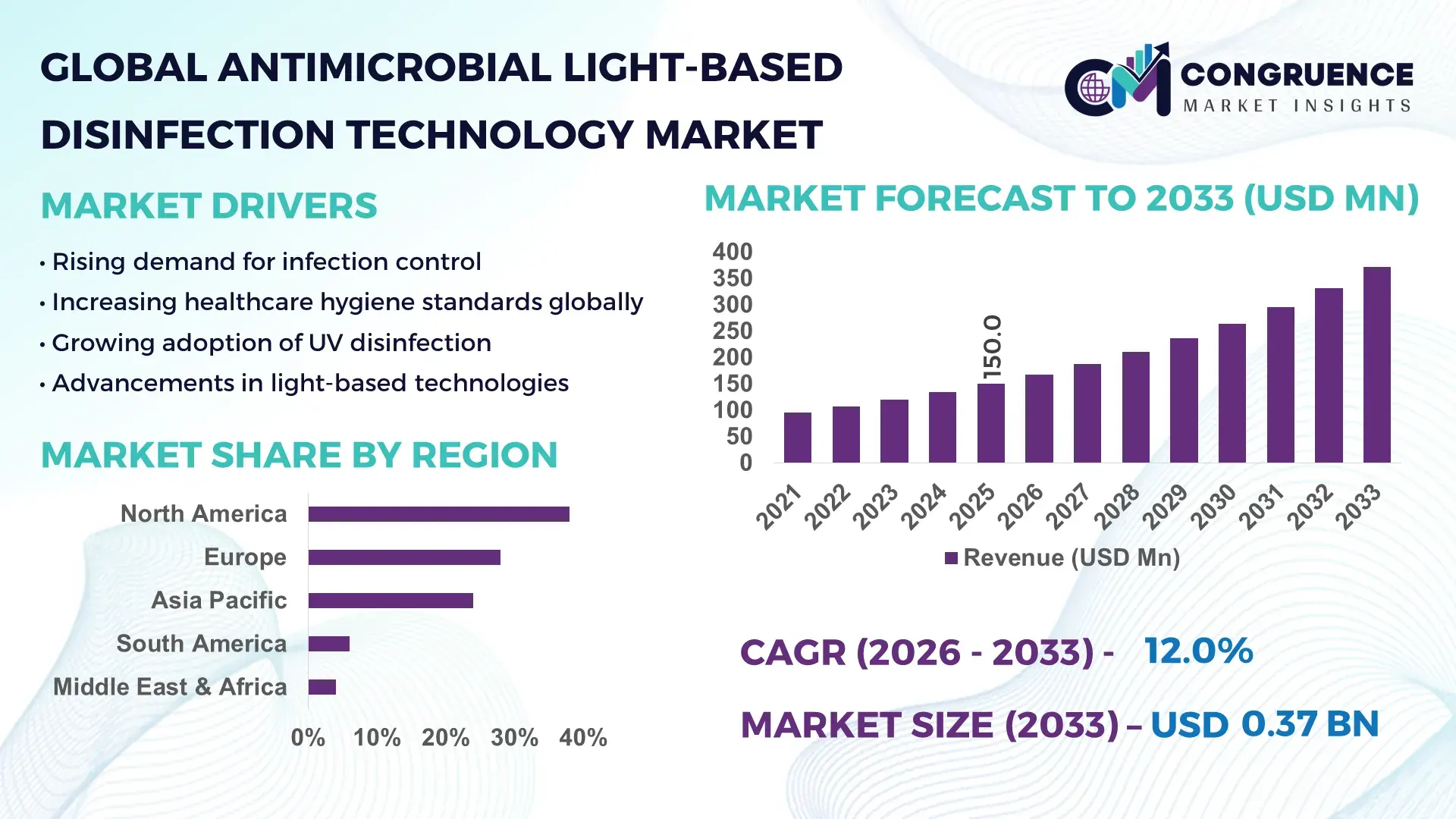
The Global Antimicrobial Light-Based Disinfection Technology Market was valued at USD 150.0 Million in 2025 and is anticipated to reach a value of USD 371.4 Million by 2033 expanding at a CAGR of 12% between 2026 and 2033, according to an analysis by Congruence Market Insights. The growth is primarily driven by increasing demand for non-chemical, automated, and high-efficiency disinfection solutions across healthcare, transportation, and public infrastructure environments.
The United States remains the dominant country in this market, supported by advanced healthcare infrastructure and strong investment in infection control technologies. In 2025, over 65% of large hospitals in the U.S. integrated UV-C or antimicrobial lighting systems into their sanitation workflows, while more than 12,000 healthcare facilities deployed automated disinfection robots. The country also accounts for over 40% of global patents filed in UV-based disinfection technologies, reflecting significant R&D activity. Industrial applications, including food processing and pharmaceutical manufacturing, contribute to approximately 28% of domestic installations, while transportation hubs such as airports and metro systems report over 35% adoption of antimicrobial lighting systems. Government-backed initiatives and private sector investments exceeding USD 500 million annually further reinforce technological advancements, particularly in far-UVC (222 nm) solutions and AI-integrated disinfection systems.
Market Size & Growth: Valued at USD 150.0 Million in 2025 and projected to reach USD 371.4 Million by 2033 at 12% CAGR, driven by rising infection prevention standards.
Top Growth Drivers: Healthcare adoption (68%), automation efficiency gains (45%), regulatory compliance demand (52%).
Short-Term Forecast: By 2028, operational sanitation costs are expected to reduce by 30% through automated UV systems.
Emerging Technologies: Far-UVC (222 nm), AI-enabled robotic disinfection, IoT-integrated smart lighting systems.
Regional Leaders: North America (~USD 145M by 2033, hospital automation), Europe (~USD 110M by 2033, regulatory adoption), Asia-Pacific (~USD 85M by 2033, infrastructure expansion).
Consumer/End-User Trends: Hospitals account for 55% usage, while public transport and commercial spaces show 35% rising adoption rates.
Pilot or Case Example: In 2024, a hospital network reduced infection rates by 28% using UV disinfection robots.
Competitive Landscape: Market leader holds ~22% share, followed by 4–5 major global players with strong product portfolios.
Regulatory & ESG Impact: 60% of organizations align with chemical-free sanitation targets, reducing hazardous disinfectant use by 40%.
Investment & Funding Patterns: Over USD 1.2 Billion invested globally in UV and antimicrobial lighting technologies since 2023.
Innovation & Future Outlook: Integration with smart buildings and AI-driven monitoring is expected to reshape automated hygiene ecosystems.
Healthcare contributes approximately 55% of demand, followed by commercial infrastructure at 25% and industrial sectors at 20%. Technological advancements such as far-UVC lighting and IoT-enabled systems are accelerating adoption. Regulatory emphasis on chemical-free sanitation and sustainability is driving demand, while Asia-Pacific consumption is expanding rapidly due to urban infrastructure development and public health initiatives.
The Antimicrobial Light-Based Disinfection Technology Market is strategically positioned at the intersection of public health, automation, and sustainability. As infection prevention becomes a top priority across healthcare, transportation, and commercial infrastructure, organizations are increasingly adopting light-based disinfection solutions to enhance operational efficiency and compliance. Technologies such as far-UVC (222 nm) systems deliver up to 99.9% pathogen reduction compared to traditional chemical disinfectants, which typically achieve 85–90% surface coverage efficiency, making them significantly more reliable in high-risk environments.
From a regional perspective, North America dominates in volume due to its extensive healthcare network and early technology adoption, while Europe leads in adoption with over 58% of enterprises integrating antimicrobial lighting systems driven by stringent regulatory mandates. Asia-Pacific, meanwhile, is witnessing rapid infrastructure-driven deployment, particularly in smart cities and transportation networks.
By 2028, AI-integrated disinfection systems are expected to reduce manual intervention requirements by 40% while improving operational efficiency by 35%. Organizations are also aligning with ESG commitments, with over 50% of firms targeting a 45% reduction in chemical disinfectant usage by 2030 through adoption of light-based solutions. In 2025, a major U.S.-based hospital network achieved a 30% reduction in hospital-acquired infections through deployment of autonomous UV disinfection robots, demonstrating measurable impact.
Looking ahead, the Antimicrobial Light-Based Disinfection Technology Market is evolving into a critical pillar of resilient infrastructure, enabling safer environments while supporting sustainability goals and regulatory compliance. Continuous advancements in AI, IoT, and photonics technologies will further strengthen its role in next-generation sanitation ecosystems.
The Antimicrobial Light-Based Disinfection Technology Market is characterized by rapid technological advancements, increasing regulatory oversight, and growing demand for automated sanitation solutions. The shift from chemical-based disinfectants to light-based systems is driven by the need for efficiency, safety, and sustainability. Healthcare facilities, which account for a significant portion of installations, are integrating UV-C and far-UVC systems to minimize hospital-acquired infections. Additionally, commercial spaces such as airports, offices, and retail environments are adopting antimicrobial lighting solutions to enhance hygiene standards and customer confidence. Industrial sectors, including food processing and pharmaceuticals, are leveraging these technologies to meet stringent sanitation requirements. The market is also influenced by advancements in robotics and IoT integration, enabling real-time monitoring and automated disinfection cycles. However, factors such as high initial costs and safety concerns related to UV exposure continue to shape adoption patterns.
The increasing prevalence of hospital-acquired infections and heightened awareness of hygiene standards are key drivers of market growth. Studies indicate that healthcare facilities implementing UV-based disinfection systems have achieved up to 30% reduction in infection rates. In 2025, over 70% of hospitals in developed economies adopted automated disinfection technologies to enhance patient safety. Additionally, the COVID-19 pandemic has accelerated demand across public spaces, with airports and transit systems reporting over 40% adoption of antimicrobial lighting solutions. Industrial sectors are also contributing, with food processing plants integrating UV systems to ensure compliance with safety regulations. The ability of light-based technologies to eliminate pathogens without chemical residues makes them particularly attractive, further boosting adoption across multiple industries.
Despite its advantages, the high upfront cost of antimicrobial light-based systems remains a significant restraint. Installation costs for advanced UV-C or far-UVC systems can be 2–3 times higher than traditional chemical-based solutions, making them less accessible for small and medium enterprises. Maintenance requirements, including periodic replacement of UV lamps and calibration of sensors, add to operational expenses. Safety concerns related to prolonged UV exposure also necessitate additional protective measures, increasing overall costs. In developing regions, limited awareness and budget constraints further hinder adoption, with less than 25% of healthcare facilities implementing advanced disinfection technologies. These factors collectively slow down market penetration, particularly in cost-sensitive markets.
The integration of antimicrobial lighting systems into smart infrastructure presents significant growth opportunities. Smart buildings equipped with IoT-enabled disinfection systems can automate sanitation processes, reducing manual intervention by up to 40%. In 2025, approximately 35% of newly constructed commercial buildings incorporated smart disinfection technologies. Public transportation systems, including metro networks and airports, are increasingly deploying UV-based solutions to enhance passenger safety, with adoption rates exceeding 30% in major urban centers. Additionally, advancements in far-UVC technology, which is safer for human exposure, are opening new applications in occupied spaces such as offices and schools. These developments are expected to drive widespread adoption and expand the market’s scope.
Safety regulations and technical limitations pose significant challenges to market growth. Regulatory bodies impose strict guidelines on UV exposure levels to prevent health risks, limiting the use of certain technologies in occupied spaces. For instance, conventional UV-C systems require controlled environments, reducing their applicability in continuous-use scenarios. Technical challenges, such as uneven light distribution and shadowing effects, can result in incomplete disinfection, impacting effectiveness. Additionally, the lack of standardized testing protocols creates uncertainty among end-users. In 2025, nearly 30% of potential adopters cited safety concerns as a primary barrier to implementation. Addressing these challenges through innovation and regulatory alignment is crucial for sustained market growth.
Rapid adoption of far-UVC (222 nm) technology: Over 35% of new installations in 2025 utilized far-UVC systems due to their ability to operate safely in occupied environments. Studies indicate these systems can inactivate up to 99.9% of airborne pathogens within minutes, making them highly effective for healthcare and commercial spaces.
Integration with AI and IoT platforms: Approximately 42% of advanced disinfection systems now incorporate AI-driven automation and IoT connectivity, enabling real-time monitoring and predictive maintenance. This integration has improved operational efficiency by 30% and reduced manual intervention by 40% in large facilities.
Expansion in public infrastructure applications: Adoption in transportation hubs such as airports and metro systems has increased by 38%, with over 50 major airports globally deploying antimicrobial lighting solutions to enhance passenger safety and hygiene standards.
Growth in industrial and food safety applications: Industrial sectors account for nearly 20% of installations, with UV-based systems reducing microbial contamination by up to 95% in food processing environments, ensuring compliance with stringent safety regulations.
The Antimicrobial Light-Based Disinfection Technology Market is segmented based on type, application, and end-user, reflecting diverse adoption patterns across industries. UV-C systems dominate due to their proven effectiveness in eliminating pathogens, while emerging technologies such as far-UVC and LED-based solutions are gaining traction. Applications span healthcare, commercial infrastructure, and industrial sectors, with healthcare leading due to stringent infection control requirements. End-user insights reveal strong adoption among hospitals, followed by transportation and commercial facilities. Regional variations also influence segmentation, with developed markets focusing on advanced technologies and emerging markets prioritizing cost-effective solutions.
UV-C disinfection systems account for approximately 48% of total adoption, making them the leading segment due to their established efficacy in eliminating bacteria and viruses. Far-UVC systems currently hold around 22% share but are the fastest-growing segment, expected to expand at a CAGR of 15%, driven by their ability to operate safely in occupied environments. LED-based antimicrobial lighting solutions contribute nearly 18% share, offering energy efficiency and longer lifespan. Other technologies, including photocatalytic oxidation systems, collectively account for 12% of the market, catering to niche industrial applications.
• In 2025, a major healthcare network deployed far-UVC systems across 50 facilities, reducing airborne pathogen levels by 35%.
Healthcare applications dominate with approximately 55% share, driven by the need to reduce hospital-acquired infections and maintain stringent hygiene standards. Commercial infrastructure accounts for around 25% of adoption, with increasing deployment in offices, retail spaces, and transportation hubs. Industrial applications represent 20%, focusing on food safety and pharmaceutical manufacturing. The fastest-growing segment is public infrastructure, expanding at a CAGR of 14%, supported by government investments in smart city projects. In 2025, over 45% of airports globally reported implementing antimicrobial lighting systems to enhance passenger safety.
• In 2025, over 150 hospitals globally deployed UV-based disinfection systems, improving infection control outcomes significantly.
Hospitals and healthcare facilities lead with approximately 52% share, reflecting high demand for infection control solutions. Commercial enterprises, including offices and retail chains, account for 28%, while industrial users contribute 20%. The fastest-growing end-user segment is transportation, with a CAGR of 13%, driven by increasing adoption in airports and metro systems. In 2025, more than 40% of large enterprises reported integrating antimicrobial lighting into their facilities, highlighting growing awareness and adoption.
• In 2025, a major airport authority implemented UV-based disinfection systems across terminals, reducing microbial contamination by 30%.
North America accounted for the largest market share at 38% in 2025 however, Asia-Pacific is expected to register the fastest growth, expanding at a CAGR of 14% between 2026 and 2033.
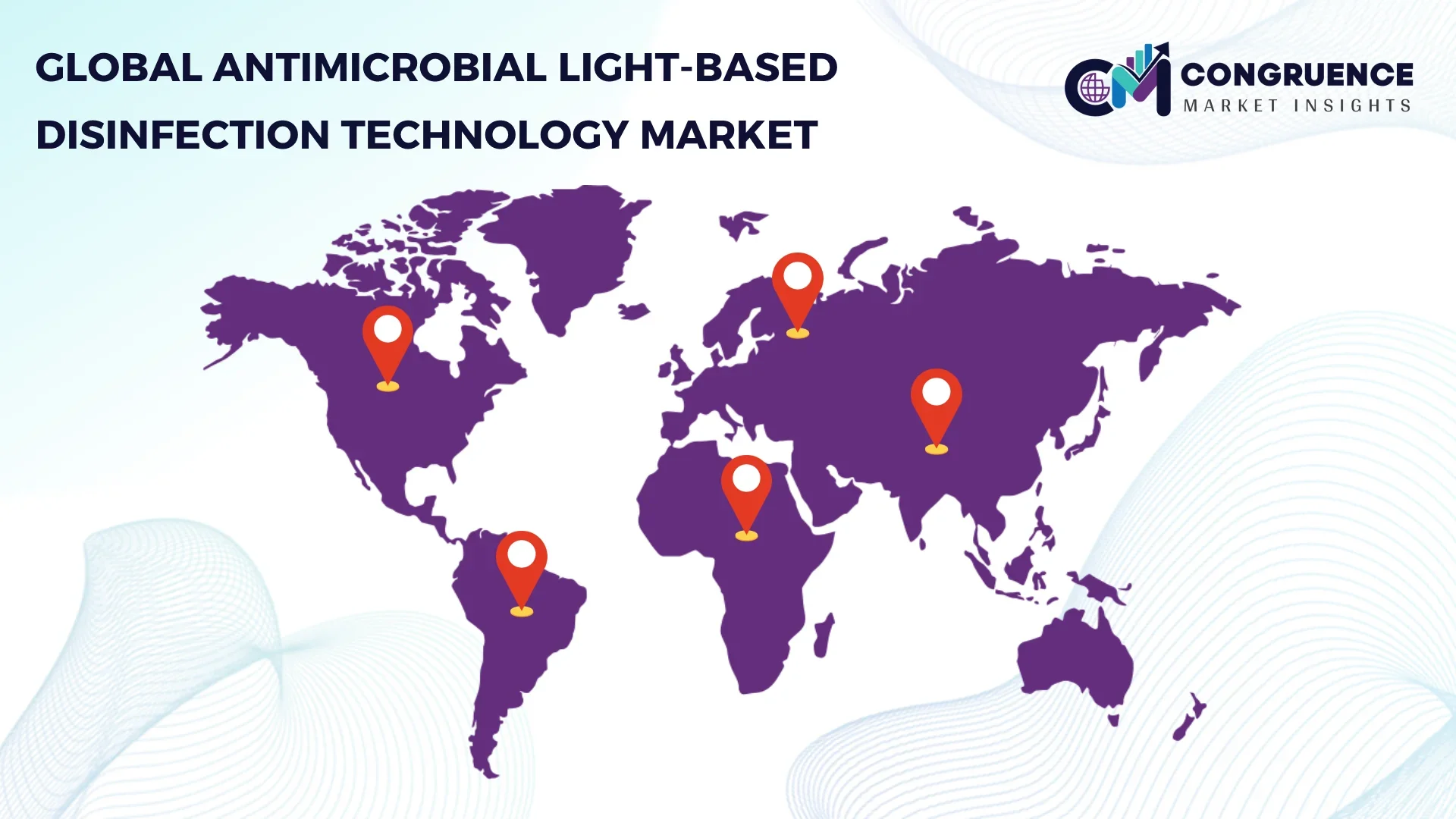
North America’s dominance is driven by high adoption in healthcare and commercial infrastructure, with over 65% of hospitals integrating UV-based systems. Europe holds approximately 28% share, supported by stringent regulatory frameworks and sustainability initiatives. Asia-Pacific accounts for 24%, with rapid urbanization and infrastructure development driving demand. South America and the Middle East & Africa collectively contribute 10%, with increasing investments in public health infrastructure and smart city projects.
North America holds approximately 38% market share, driven by strong demand from healthcare and commercial sectors. Over 65% of hospitals have adopted UV-based disinfection systems, supported by government initiatives and regulatory standards. The region benefits from advanced technological infrastructure, with over 40% of systems integrated with AI and IoT platforms. Local players are focusing on innovation, developing far-UVC solutions for continuous disinfection in occupied spaces. Consumer behavior reflects high awareness, with enterprises prioritizing automated sanitation solutions to enhance safety and compliance.
Europe accounts for approximately 28% market share, with key markets including Germany, the UK, and France leading adoption. Regulatory bodies emphasize sustainability and chemical-free sanitation, driving demand for light-based technologies. Over 55% of enterprises have implemented antimicrobial lighting systems to meet compliance requirements. Technological advancements, including energy-efficient LED solutions, are gaining traction. Consumer behavior is influenced by regulatory pressure, leading to increased adoption of transparent and explainable disinfection technologies.
Asia-Pacific represents 24% of the market, with China, India, and Japan as key contributors. Rapid urbanization and smart city initiatives are driving adoption, particularly in transportation and commercial infrastructure. The region ranks highest in growth, with increasing investments in healthcare and public safety. Local players are expanding production capacity to meet rising demand, while innovation hubs focus on cost-effective solutions. Consumer behavior is characterized by rapid adoption of new technologies, driven by increasing awareness and government support.
South America holds approximately 6% market share, with Brazil and Argentina leading adoption. Government initiatives aimed at improving public health infrastructure are driving demand for antimicrobial lighting solutions. The region is witnessing increased deployment in hospitals and transportation hubs. Local players are focusing on affordable solutions to cater to cost-sensitive markets. Consumer behavior reflects growing awareness, with demand tied to improved hygiene standards and regulatory compliance.
The Middle East & Africa accounts for around 4% market share, with the UAE and South Africa leading growth. Infrastructure projects, particularly in healthcare and construction, are driving demand. Technological modernization and partnerships with global players are accelerating adoption. Local regulations emphasize safety and sustainability, supporting market growth. Consumer behavior varies, with increasing adoption in urban areas driven by awareness and government initiatives.
United States – 34% Market share: Due to advanced healthcare infrastructure and high technology adoption
Germany – 18% Market share: It is driven by strong regulatory frameworks and industrial applications
The Antimicrobial Light-Based Disinfection Technology Market is moderately fragmented, with over 45 active global and regional players competing across technology segments such as UV-C systems, far-UVC solutions, and LED-based antimicrobial lighting. The top five companies collectively account for approximately 48% of the market share, indicating a competitive yet innovation-driven landscape. Key players are focusing on product differentiation through advanced features such as AI integration, IoT connectivity, and energy-efficient designs. Strategic partnerships with healthcare institutions and commercial enterprises are common, enabling companies to expand their customer base and enhance product adoption. Mergers and acquisitions are also shaping the market, with companies acquiring smaller firms to strengthen their technological capabilities. Innovation remains a key competitive factor, with over 30% of companies investing in R&D to develop next-generation disinfection solutions. The market is characterized by rapid technological advancements and increasing competition, driving continuous improvement in product performance and efficiency.
Xenex Disinfection Services
Atlantic Ultraviolet Corporation
Trojan Technologies
American Ultraviolet
Halma plc
AquiSense Technologies
Lumalier Corporation
Ushio Inc.
OSRAM GmbH
LG Electronics
Panasonic Corporation
Heraeus Holding
Technological advancements are at the core of the Antimicrobial Light-Based Disinfection Technology Market, driving efficiency, safety, and scalability. UV-C technology remains the most widely used, capable of inactivating up to 99.9% of pathogens within seconds under optimal conditions. Far-UVC (222 nm) technology is emerging as a breakthrough innovation, offering similar efficacy while being safe for human exposure, enabling continuous disinfection in occupied spaces. LED-based antimicrobial lighting solutions are gaining traction due to their energy efficiency, with systems consuming up to 40% less power compared to traditional UV lamps.
Integration with artificial intelligence and IoT is transforming operational capabilities, allowing real-time monitoring, automated scheduling, and predictive maintenance. Approximately 42% of advanced systems now incorporate these technologies, improving efficiency and reducing downtime. Robotics is another key area, with autonomous UV disinfection robots capable of covering large areas with minimal human intervention.
Advancements in materials and coatings are also enhancing performance, with reflective surfaces improving light distribution by up to 25%. Hybrid systems combining UV and photocatalytic oxidation technologies are being developed to address limitations such as shadowing effects. These innovations are expected to expand the application scope and improve overall effectiveness, making antimicrobial light-based technologies a critical component of modern sanitation strategies.
• In January 2022, Signify N.V.deployed 7,500 Philips UV-C air disinfection units across schools in Munich, enabling continuous indoor air disinfection in occupied classrooms. The systems were designed to operate silently during teaching hours, improving safety for thousands of students and staff. Source: www.signify.com
• In February 2021, Signify N.V.installed 11 UV-C upper-air disinfection unitsat a professional rugby stadium in the UK, marking the first deployment of such systems in a professional sports club globally, enhancing air sanitation in high-contact indoor environments.
• In October 2021, Signify N.V.launched the Philips UV-C disinfection boxfor consumer use, capable of reducing SARS-CoV-2 on surfaces by over 99% within secondsunder lab conditions, expanding antimicrobial light applications into household and personal item disinfection.
• In March 2021, Signify N.V.validated through laboratory testing that its UV-C upper-air luminaires can inactivate 99.99% of airborne SARS-CoV-2 within 10 minutes, reinforcing the effectiveness of antimicrobial lighting in enclosed environments such as offices and retail spaces.
The Antimicrobial Light-Based Disinfection Technology Market Report provides a comprehensive analysis of the industry, covering key segments such as type, application, and end-user. The report examines various technologies, including UV-C systems, far-UVC solutions, LED-based antimicrobial lighting, and hybrid disinfection systems. It also explores applications across healthcare, commercial infrastructure, industrial sectors, and transportation, highlighting their respective adoption patterns and operational requirements.
Geographically, the report covers major regions including North America, Europe, Asia-Pacific, South America, and the Middle East & Africa, providing detailed insights into regional trends, infrastructure developments, and regulatory frameworks. The analysis includes over 20 countries, offering a granular view of market dynamics and growth opportunities.
The report also evaluates technological advancements, including AI integration, IoT-enabled systems, and robotic disinfection solutions, providing insights into their impact on operational efficiency and scalability. Additionally, it covers emerging trends such as far-UVC technology and smart infrastructure integration.
With detailed insights into competitive landscape, innovation trends, and industry applications, the report serves as a valuable resource for stakeholders, enabling informed decision-making and strategic planning in the Antimicrobial Light-Based Disinfection Technology Market.
| Report Attribute / Metric | Details |
|---|---|
| Market Revenue (2025) | USD 150.0 Million |
| Market Revenue (2033) | USD 371.4 Million |
| CAGR (2026–2033) | 12% |
| Base Year | 2025 |
| Forecast Period | 2026–2033 |
| Historic Period | 2021–2025 |
| Segments Covered |
By Type
By Application
By End-User Insights
|
| Key Report Deliverables | Revenue Forecast; Market Trends; Growth Drivers & Restraints; Technology Insights; Segmentation Analysis; Regional Insights; Competitive Landscape; Regulatory & ESG Overview; Recent Developments |
| Regions Covered | North America; Europe; Asia-Pacific; South America; Middle East & Africa |
| Key Players Analyzed | Signify N.V.; Xenex Disinfection Services; UV Light Technology Limited; Atlantic Ultraviolet Corporation; Trojan Technologies; American Ultraviolet; Halma plc; AquiSense Technologies; Lumalier Corporation; Ushio Inc.; OSRAM GmbH; LG Electronics; Panasonic Corporation; Heraeus Holding |
| Customization & Pricing | Available on Request (10% Customization Free) |




