
Reports
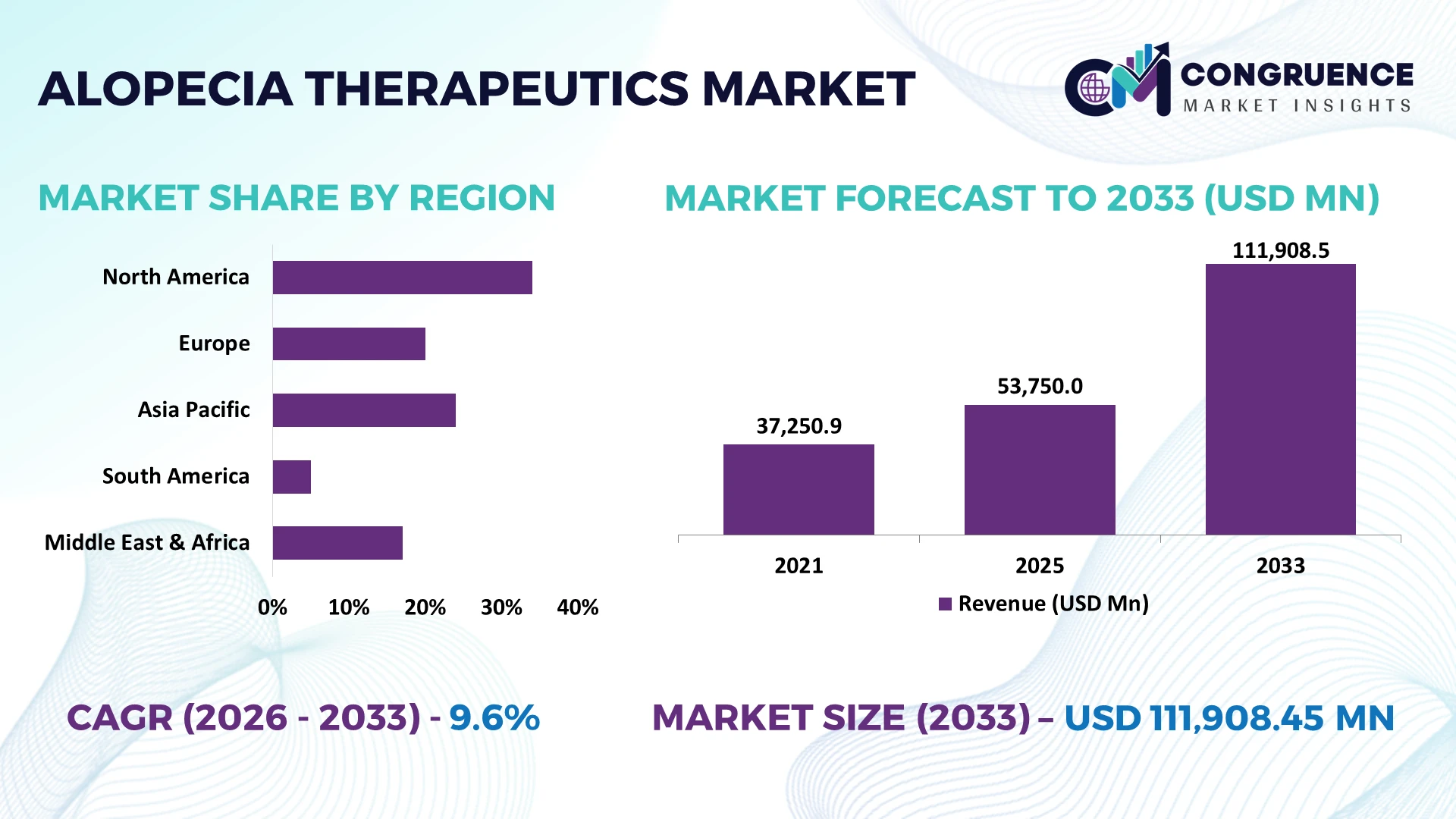
The Global Alopecia Therapeutics Market was valued at USD 53750 Million in 2025 and is anticipated to reach a value of USD 111908.45 Million by 2033 expanding at a CAGR of 9.6% between 2026 and 2033. Growth is being accelerated by oral JAK inhibitors, adolescent alopecia areata indications, precision immunology pipelines, improved dermatology diagnosis, and the transition from corticosteroid-led management toward targeted systemic and disease-modifying therapies.
The United States leads the advanced alopecia therapeutics landscape, with approximately 700,000 people living with alopecia areata and nearly 300,000 having moderate-to-severe disease. China represents a major expansion pool with about 3.49 million alopecia areata patients, including 2.29 million women. Japan is another high-value market, where physician-adjusted prevalence reaches 1.45% and roughly 70% of diagnosed patients in a major claims study were diagnosed by dermatologists. The UK is strengthening targeted-treatment access, with regulatory authorization extending JAK-based therapy to patients aged 12+ and, in 2026, adding deuruxolitinib for severe adult disease. These country differences highlight a global shift from conventional topical treatment toward specialized immunomodulatory care, while U.S.-Asia pharmaceutical development and cross-border commercialization are widening competitive access.
Strategically, manufacturers should prioritize the United States for premium targeted-therapy penetration while treating China and Japan as high-volume expansion markets and the UK as an increasingly important regulatory-access gateway.
Market Size & Growth: USD 53.75 billion in 2025 advances toward USD 111.91 billion by 2033 at 9.6%, driven by targeted JAK therapies and broader treatment eligibility.
Top Growth Drivers: Targeted immunomodulators 40%, expanded diagnosis 25%, and adolescent therapy penetration 20% represent the strongest commercialization forces.
Short-Term Forecast: By 2028, targeted systemic therapies are positioned to raise advanced-treatment penetration by approximately 25% across severe alopecia areata populations.
Emerging Technologies: JAK1/JAK3 inhibition, siRNA-lipid conjugates, AI-supported dermatology assessment, and anti-OX40 biologics are reshaping advanced alopecia therapeutics development.
Regional Leaders: North America approaches USD 44.8 billion, Europe USD 31.3 billion, and Asia-Pacific USD 26.9 billion by 2033, supported by expanding targeted-therapy adoption.
Consumer/End-User Trends: About 80% of alopecia areata patients develop signs before age 40, strengthening demand for earlier intervention and durable treatment.
Pilot/Case Example: In 2025, baricitinib achieved successful scalp-hair regrowth in 71% of treated adolescents after 52 weeks, strengthening pediatric expansion potential.
Competitive Landscape: Eli Lilly remains a major targeted-therapy leader alongside Pfizer, Sun Pharma, Incyte, AbbVie, and emerging immunodermatology biotechnology developers.
Regulatory & ESG Impact: Ritlecitinib extends targeted treatment to patients aged 12+, materially enlarging the addressable severe-alopecia population beyond adult-only therapies.
Investment & Funding: USD 100 million in seed financing supported Alys Pharmaceuticals’ immunodermatology platform, demonstrating strong capital interest in next-generation precision alopecia therapeutics.
Innovation & Future Outlook: Anti-OX40 therapy demonstrated a 30.1% mean SALT-score reduction in a severe-patient subset, highlighting longer-acting biologics beyond conventional JAK inhibition.
The alopecia therapeutics market is shifting toward targeted immunomodulators, adolescent treatment, oral JAK inhibitors, precision biologics, and localized genetic medicines. Clinical programs are increasingly targeting durable regrowth rather than temporary symptom control, with next-generation anti-OX40 therapy demonstrating approximately 30% SALT-score improvement. Expanding regulatory approvals and cross-border pharmaceutical commercialization are simultaneously widening access, setting up a decisive strategic transition toward differentiated, disease-modifying treatment portfolios.
Alopecia therapeutics is becoming strategically important as treatment shifts from broadly acting corticosteroids and cosmetic management toward targeted immunology and sustained disease control. U.S. alopecia areata prevalence is approximately 0.21%, including 0.09% with moderate-to-severe disease, creating a concentrated population for specialty therapeutics. Regulatory expansion into adolescent patients is simultaneously widening addressable treatment pathways and intensifying competition around JAK selectivity, safety and durability.
Targeted oral therapy provides a measurable advantage over legacy episodic management: 71% of adolescents receiving baricitinib 4 mg achieved successful scalp-hair regrowth after 52 weeks. China presents greater population scale, with approximately 3.49 million alopecia areata patients, versus roughly 700,000 prevalent U.S. cases; the United States, however, maintains stronger targeted-therapy commercialization and specialist access. This contrast is pushing developers toward country-specific clinical, reimbursement and distribution strategies.
Through 2026–2028, adolescent indications, biomarker-guided treatment, anti-OX40 biologics and combination regimens will broaden competitive pathways. A practical example is continued JAK therapy: only 7% of continuously treated baricitinib patients lost treatment benefit by week 152 versus 80% after withdrawal. Companies are therefore prioritizing lifecycle management, pediatric trials and differentiated immunology partnerships. Competitive advantage will increasingly depend on durable response, patient selection and continuous-treatment economics.
The strongest structural driver is the transition from corticosteroid-centered management toward clinically validated targeted immunomodulation. U.S. alopecia areata prevalence is approximately 0.21%, while moderate-to-severe disease represents 0.09%, equivalent to roughly 300,000 patients requiring more intensive management. Clinical evidence is reinforcing this transition: 71% of adolescents receiving baricitinib 4 mg achieved successful scalp-hair regrowth after 52 weeks. Regulatory acceptance of oral JAK inhibitors has consequently transformed alopecia areata from a treatment area dominated by off-label options into a specialty-pharmaceutical category. The non-obvious advantage is treatment continuity: only 7% of patients maintaining baricitinib lost benefit by week 152. Companies are responding through pediatric studies, indication extensions, selective JAK development and immunodermatology partnerships designed to secure longer patient-treatment lifecycles.
Treatment persistence, safety monitoring and reimbursement requirements remain structural constraints on scalable targeted-therapy adoption. Withdrawal data illustrate the economic problem: 80% of baricitinib responders who discontinued therapy lost treatment benefit by week 152, compared with only 7% continuing treatment. Separate real-world evidence found relapse in 50% of evaluable patients after dose reduction, with recurrence averaging about 24 weeks. This dependence on sustained therapy increases lifetime treatment burden and creates payer pressure, particularly where dermatology reimbursement is restrictive. In the United States, approximately 300,000 people have moderate-to-severe alopecia areata, making coverage criteria commercially significant at scale. Manufacturers are reducing access friction through patient-support programs, longer-duration evidence generation and optimized dosing strategies. The key operational constraint is therefore not initial response but maintaining clinically meaningful regrowth without creating unsustainable monitoring and reimbursement burdens.
The strongest untapped opportunity lies in treating patients earlier and extending precision therapies into younger populations. Approximately 700,000 Americans have alopecia areata, while China has about 3.49 million patients; Chinese women account for 2.29 million cases, revealing a substantial population for differentiated treatment and diagnostic pathways. Pediatric development provides another expansion route: 71% of adolescents receiving baricitinib 4 mg achieved successful scalp-hair regrowth at one year, supporting regulatory strategies beyond adult indications. Through 2026–2028, biomarker-supported patient selection, selective JAK inhibition, anti-OX40 biologics and RNA-based approaches will diversify treatment mechanisms. A less obvious opportunity is intervention before prolonged disease becomes established, potentially improving therapeutic responsiveness and treatment economics. Companies are positioning through pediatric trials, China-focused development, licensing partnerships and immunodermatology R&D platforms that combine diagnostics with targeted treatment selection.
The central long-term challenge is converting clinical hair regrowth into durable, consistently manageable outcomes across heterogeneous patients. Alopecia areata varies substantially by severity, disease duration and treatment history, complicating trial design and real-world patient selection. A pooled analysis reported a 54% recurrence rate among JAK-treated patients, driven mainly by treatment withdrawal, while long-term baricitinib data showed 80% losing benefit after withdrawal versus 7% during continued treatment. Retreatment can restore response, but 4-mg baricitinib recaptured SALT ≤20 response in 87.5% of evaluated patients rather than universally. This creates lifecycle-management complexity involving monitoring, adherence, dose optimization and switching between therapeutic mechanisms. Companies must build longitudinal evidence, predictive biomarkers and specialist treatment algorithms alongside new products. Sustainable competitive positioning will depend less on headline regrowth rates and more on maintaining response safely across multi-year treatment journeys.
Real-World JAK Use Matures: Treatment selection is moving from trial-led prescribing toward outcome-driven JAK sequencing. A 2025 Rotterdam cohort found 61% of patients achieved substantial regrowth, cumulative response reached 59.7% by month 12, and 75% of nonresponders improved after switching JAK inhibitors. Dermatology practices are consequently introducing longer monitoring cycles and mechanism-based switching, while manufacturers invest in comparative evidence and treatment-persistence programs.
Pediatric Pipelines Move Forward: Adolescent alopecia areata is becoming an active product-lifecycle priority rather than an underserved extension market. In 2025, baricitinib 4 mg produced successful scalp regrowth in 71% of adolescents after 52 weeks; severe disease begins before adulthood in nearly 50% of affected patients. Developers are expanding pediatric cohorts, preparing regulatory submissions and redesigning clinical programs around earlier intervention, increasing lifetime treatment potential.
Durability Becomes Commercial Benchmark: Prescribing decisions increasingly emphasize sustained response rather than initial hair regrowth. European real-world analysis of 741 severe patients found 55.6% received topical corticosteroids, yet only 10.6% achieved SALT ≤20 sustained for at least six months. This evidence gap is redirecting development toward durable immunomodulation, maintenance dosing and longitudinal endpoints, giving companies with stronger persistence data an advantage in reimbursement discussions.
Quantified Monitoring Gains Importance: Alopecia management is becoming more measurement-intensive as advanced therapies require objective response tracking. A 2025 Chinese cohort reported 53% achieving SALT20 by week 24 and 78.7% by treatment completion, while eyebrow and eyelash response reached 85.2% and 90.4%. Specialist centers are integrating standardized SALT assessment, imaging and scheduled follow-ups, enabling faster treatment adjustment and generating real-world evidence for manufacturers.
Topical Treatments represent the leading type, with an estimated 40–45% share of treatment utilization, supported by broad applicability across androgenetic alopecia, alopecia areata and temporary hair-loss conditions. Their dominance reflects low administration complexity, established minoxidil and corticosteroid use, retail availability and compatibility with combination regimens. Oral Medications are gaining strategic importance as JAK inhibitors and established anti-androgen approaches move treatment toward systemic disease control. In severe alopecia areata, real-world JAK therapy produced substantial regrowth in 61% of patients, illustrating the performance advantage available in appropriately selected populations.
Regenerative Therapies represent the fastest-developing segment as platelet-rich plasma, follicular regenerative approaches and cell-associated research attract higher-value clinical demand. Injectable Therapies remain important for localized alopecia areata through intralesional corticosteroid delivery, while Hair Growth Devices address non-invasive adjunctive treatment through low-level light and stimulation technologies. Investment is therefore splitting between scalable topical portfolios and higher-differentiation systemic or regenerative platforms. Companies are developing combination protocols, improved topical delivery systems and precision immunology products rather than relying on single-mechanism portfolios.
Androgenetic Alopecia is the leading application, accounting for an estimated 55–60% of treated hair-loss demand because hereditary pattern hair loss remains the most common cause globally and affects both men and women. Its scale supports mature demand for minoxidil, anti-androgen therapies, combination treatment and device-assisted regrowth. Alopecia Areata is the fastest-growing therapeutic application because targeted JAK-STAT modulation is transforming management of moderate-to-severe autoimmune hair loss. In real-world practice, 61% of JAK-treated patients achieved substantial regrowth, while cumulative response reached 59.7% at 12 months.
Cicatricial Alopecia remains a specialist segment where early inflammatory control is operationally critical because follicular destruction can become irreversible. Telogen Effluvium sustains episodic demand linked to physiological stress, medications and nutritional triggers, whereas Traction Alopecia maintains targeted demand among patients exposed to repetitive follicular tension. Companies are consequently separating high-volume pattern-hair-loss portfolios from specialty autoimmune pipelines, investing in JAK inhibitors, improved diagnostics and longitudinal monitoring. This segmentation increasingly rewards companies capable of serving both consumer-accessible and prescription-intensive treatment pathways.
Dermatology Clinics represent the leading end-user group, with an estimated 40–45% share of professionally managed alopecia treatment demand because diagnosis, SALT assessment, intralesional therapy and JAK monitoring require specialist oversight. Hospitals remain critical for severe autoimmune disease, multidisciplinary evaluation and patients with treatment-related comorbidities. Specialty Clinics are the fastest-growing end-user category as dedicated trichology and hair-restoration centers integrate medical treatment, imaging, regenerative procedures and longitudinal monitoring. In one 2025 real-world cohort, 61% of JAK-treated patients achieved substantial regrowth after a median seven months, highlighting the importance of sustained specialist follow-up.
Pharmacies retain substantial importance for topical products, prescription fulfillment and maintenance therapy, while Research Centers drive biomarker discovery, clinical trials and next-generation immunology programs. Suppliers are increasingly differentiating distribution accordingly: consumer-accessible products flow through pharmacy channels, whereas targeted systemic medicines rely on dermatologist education, reimbursement support and specialist networks. Partnerships with clinical centers also generate treatment-persistence evidence, giving manufacturers a competitive advantage when negotiating access for advanced therapies.
North America accounted for the largest market share at approximately 40% in 2025 however, Asia-Pacific is expected to register the fastest growth, expanding at a CAGR of approximately 11.4% between 2026 and 2033.
Targeted Immunology Reshapes Treatment Standards
North America holds approximately 40% of global alopecia therapeutics demand, supported by specialist dermatology infrastructure, rapid adoption of targeted systemic medicines, extensive clinical development, and established reimbursement pathways. The United States has roughly 700,000 people living with alopecia areata, including approximately 300,000 with moderate-to-severe disease, creating substantial demand for advanced prescription therapies. FDA authorization of baricitinib, ritlecitinib and deuruxolitinib has moved severe alopecia areata treatment toward JAK-pathway modulation and away from predominantly off-label immunosuppression. Pharmaceutical companies are concentrating clinical education, patient-support programs and post-approval evidence generation around specialist practices. Canada contributes through universal healthcare infrastructure and academic dermatology networks, although formulary access can moderate deployment speed. Competitive differentiation increasingly depends on durable regrowth, adolescent eligibility, safety monitoring and payer acceptance rather than simply introducing additional hair-growth products.
United States Market Outlook: The United States remains the principal innovation and commercialization center because three targeted oral therapies have gained FDA approval for severe alopecia areata. Ritlecitinib extends targeted treatment to patients aged 12 years and older, widening specialist prescribing beyond adult populations. Strong biotechnology financing, clinical-trial infrastructure and dermatologist access make the country a priority for indication expansion and next-generation immunology launches.
Reimbursement Evidence Drives Targeted Adoption
Europe represents approximately 27% of global alopecia therapeutics demand, combining sophisticated dermatology services with stricter health-technology assessment and reimbursement requirements. Targeted JAK therapy is increasingly embedded in severe alopecia areata management, but national access differs considerably because pricing, reimbursement and prescribing criteria remain country-specific. A European real-world analysis covering 741 severe patients recorded a mean baseline SALT score of 63.5, while only 10.6% achieved sustained SALT ≤20 under existing treatment pathways, highlighting substantial unmet need for durable disease control. Germany, France, Italy and the UK provide important specialist-treatment networks and clinical research capacity. Companies are strengthening real-world evidence programs and longer-duration outcome datasets to demonstrate persistence and healthcare value. Competition is consequently shifting toward therapies that combine clinically meaningful regrowth with manageable safety surveillance and evidence robust enough to satisfy national reimbursement agencies.
United Kingdom Market Outlook: The UK provides a strategically important regulatory and health-technology assessment environment for advanced alopecia therapies. Targeted treatment availability has expanded beyond conventional corticosteroids, including therapies for severe disease and adolescent patients. The 2026 authorization of deuruxolitinib for severe adult alopecia areata further broadens therapeutic choice, increasing pressure on manufacturers to demonstrate comparative durability, safety and NHS-relevant treatment value.
Patient Scale Accelerates Therapeutic Localization
Asia-Pacific accounts for approximately 23% of global market activity and combines enormous patient scale with expanding dermatology capacity, pharmaceutical manufacturing and locally developed immunology pipelines. China alone has an estimated 3.49 million people with alopecia areata, including approximately 2.29 million women, creating a substantially larger potential patient pool than the United States. Japan offers mature specialist infrastructure and established access to JAK-based treatments, while South Korea combines advanced dermatology services with a commercially developed hair-care ecosystem. India is strengthening its role through pharmaceutical manufacturing, generics capabilities and multinational licensing relationships. Market execution increasingly requires localized clinical evidence, competitive pricing and distribution beyond major metropolitan hospitals. Developers are therefore expanding Asian clinical programs, licensing targeted compounds and adapting access strategies to national reimbursement structures rather than transferring U.S. commercialization models unchanged.
China Market Outlook: China provides the region's strongest scale opportunity because its estimated alopecia areata population exceeds 3 million. Large dermatology departments, expanding biotechnology capabilities and domestic drug-development infrastructure support broader deployment of targeted therapies. Local developers and multinational companies are advancing immunology pipelines while improving clinical-trial coverage, creating stronger competition around affordability, patient identification and locally validated treatment protocols.
Specialist Access Concentrates Advanced Demand
South America represents approximately 6% of global alopecia therapeutics activity, with advanced prescription demand concentrated in Brazil, Argentina, Chile and major metropolitan healthcare systems. Brazil provides the largest addressable base through its extensive dermatology community, private healthcare networks and established pharmaceutical distribution infrastructure. Access outside major urban centers remains less consistent, making scalable diagnosis and specialist referral important operational constraints. Conventional topical and oral treatments retain substantial utilization because acquisition costs are lower than newer immunomodulators, while severe alopecia areata increasingly creates demand for specialist-directed systemic therapy. Teledermatology and digital consultation models are improving access across geographically dispersed populations and enabling earlier specialist triage. Pharmaceutical companies are emphasizing physician education, private-market distribution, patient assistance and regulatory registration rather than immediately pursuing broad premium-therapy penetration across every national market.
Brazil Market Outlook: Brazil anchors South American commercialization through a population exceeding 200 million, a sizeable private healthcare system and one of the region's strongest dermatology networks. Its combination of specialist clinics, pharmaceutical distribution and clinical research infrastructure makes it the preferred launch market for advanced therapies. Companies that align pricing, physician education and patient-support programs with local purchasing conditions hold a stronger pathway to sustained adoption.
Private Healthcare Modernization Expands Access
Middle East & Africa represents approximately 4% of global alopecia therapeutics demand, but deployment is highly concentrated in Gulf healthcare hubs and major African cities. Saudi Arabia and the UAE are strengthening dermatology capacity through hospital modernization, private specialty clinics and digitally integrated healthcare services, supporting greater use of prescription and procedure-based hair-loss treatments. High consumer expenditure on dermatology and aesthetic medicine also creates crossover opportunities for clinically validated alopecia therapies. In Africa, specialist shortages, reimbursement limitations and uneven pharmaceutical distribution continue to favor established topical products over premium targeted immunotherapies. Multinational suppliers are consequently prioritizing distributor partnerships and premium urban healthcare networks rather than uniform geographic expansion. The strategic opportunity lies in linking medical dermatology with expanding specialist infrastructure while maintaining differentiated access models for lower-income markets.
Saudi Arabia Market Outlook: Saudi Arabia offers the strongest strategic position through healthcare modernization under Vision 2030, expanding private-sector participation and investment in specialized clinical services. More than 70% of the population is below 40 years old, supporting a sizeable demographic base for dermatology and hair-loss management. Advanced hospital networks and digital-health adoption strengthen the country's suitability for specialist-led targeted therapy deployment.
Eli Lilly, Pfizer, Sun Pharma, Incyte, and emerging immunodermatology developers compete across targeted JAK inhibition, established hair-loss therapies, and next-generation biologics. The top five players collectively command approximately 45% of branded therapeutic activity, leaving significant competition across topical, systemic, and regenerative categories. Technology differentiation increasingly outweighs price: advanced JAK therapies can deliver substantial scalp regrowth in over 50% of selected severe patients, while continuous therapy reduces response loss from 80% after withdrawal to roughly 7%. Companies compete through indication expansion, adolescent approvals, clinical partnerships, licensing, and longitudinal evidence generation. Sun Pharma strengthens commercialization through deuruxolitinib, while Eli Lilly and Pfizer leverage established immunology infrastructure. The competitive shift favors selective immunomodulation, durable-response evidence, and biomarker-supported treatment over conventional symptom management. Regulatory safety requirements, clinical-development costs, reimbursement evidence, and specialist access remain formidable entry barriers. Winning requires differentiated efficacy, manageable long-term safety, broader indications, strong payer evidence, and scalable dermatology distribution across priority countries.
Eli Lilly and Company
Pfizer Inc.
Sun Pharmaceutical Industries Ltd.
Incyte Corporation
Concert Pharmaceuticals
AbbVie Inc.
Johnson & Johnson
Bristol Myers Squibb
Sanofi
Regeneron Pharmaceuticals
Aclaris Therapeutics
Equillium, Inc.
Arcutis Biotherapeutics
Alys Pharmaceuticals
Current alopecia therapeutics center on selective JAK inhibition, standardized SALT scoring, digital scalp imaging, and combination regimens. Oral JAK platforms deliver meaningful regrowth in over 50% of selected severe patients, while continuous therapy can reduce response loss from 80% after withdrawal to roughly 7%. Adoption is strongest in specialist dermatology centers, giving established immunology companies an operational advantage through monitoring infrastructure, payer evidence, and physician education.
Emerging technologies include anti-OX40 biologics, cytokine-directed peptides, RNA-based therapeutics, regenerative cell approaches, and AI-assisted phenotype assessment. Compared with legacy corticosteroid-led management, targeted JAK therapy has produced about 40% greater rates of substantial scalp coverage in populations, while imaging-supported assessment can improve scoring consistency by approximately 15%. Developers are integrating biomarkers with longitudinal digital monitoring to identify responders earlier, reduce ineffective treatment cycles, and strengthen evidence packages for reimbursement and indication expansion.
Disruptive development is shifting toward durable immune reset rather than continuous broad immunosuppression. T-regulatory-cell agonists and localized RNA delivery could reduce systemic exposure by 20–30% if clinical translation confirms design goals. Between 2026 and 2028, pediatric indications, precision selection, maintenance optimization, and combination biologic strategies will become decisive. Companies acting now gain trial-positioning, dermatologist access, and lifecycle-management advantages before treatment algorithms consolidate globally.
June 2024 Equillium reported Phase 2 EQ101 results in alopecia areata, with 20% of completers achieving SALT ≤20 and 29% among moderate-to-severe patients. The result supported dose and delivery optimization, strengthening a differentiated cytokine-targeting development pathway. Source: equilliumbio.com
July 2025 Sun Pharma launched LEQSELVI 8 mg tablets across the United States after resolving patent litigation with Incyte. Nationwide availability added another oral JAK option for adults with severe alopecia areata, intensifying branded treatment competition. Source: reuters.com
October 2025 Eli Lilly reported one-year BRAVE-AA-PEDS data showing 54.1% of adolescents on baricitinib 4 mg achieved at least 80% scalp coverage, supporting planned global regulatory submissions and strengthening its pediatric alopecia treatment positioning and lifecycle strategy. Source: dermatologytimes.com
March 2026 Sun Pharma received UK MHRA approval for LEQSELVI in adults with severe alopecia areata. The regulator authorized deuruxolitinib through the International Recognition Procedure, expanding targeted JAK access and strengthening Sun Pharma’s European dermatology commercialization. Source: gov.uk
The Alopecia Therapeutics Market Report evaluates competitive and treatment dynamics across Topical Treatments, Oral Medications, Injectable Therapies, Hair Growth Devices, and Regenerative Therapies. Application coverage includes Androgenetic Alopecia, Alopecia Areata, Cicatricial Alopecia, Telogen Effluvium, and Traction Alopecia, while end-user analysis spans Dermatology Clinics, Hospitals, Specialty Clinics, Pharmacies, and Research Centers. Targeted systemic therapies already deliver meaningful scalp regrowth in more than 50% of selected severe alopecia areata patients.
Regional coverage includes North America, Europe, Asia-Pacific, South America, and Middle East & Africa, with country-level assessment of regulatory access, specialist infrastructure, treatment adoption, and competitive positioning. The report examines JAK inhibitors, precision immunology, biologics, regenerative platforms, RNA therapeutics, digital scalp assessment, and pediatric treatment expansion. Between 2026 and 2033, these insights support portfolio investment, licensing decisions, geographic expansion, clinical-development prioritization, partnership strategy, and positioning around durable disease-modifying therapies.
| Report Attribute/Metric | Report Details |
|---|---|
Market Revenue in 2025 | USD 53750 Million |
Market Revenue in 2033 | USD 111908.45 Million |
CAGR (2026 - 2033) | 9.6% |
Base Year | 2025 |
Forecast Period | 2026 - 2033 |
Historic Period | 2021 - 2025 |
Segments Covered | By Type
By Application
By End-User
|
Key Report Deliverable | Revenue Forecast, Growth Trends, Market Dynamics, Segmental Overview, Regional and Country-wise Analysis, Competition Landscape |
Region Covered | North America, Europe, Asia-Pacific, South America, Middle East, Africa |
Key Players Analyzed | Eli Lilly and Company, Pfizer Inc., Sun Pharmaceutical Industries Ltd., Incyte Corporation, Concert Pharmaceuticals, AbbVie Inc., Johnson & Johnson, Bristol Myers Squibb, Sanofi, Regeneron Pharmaceuticals, Aclaris Therapeutics, Equillium, Inc., Arcutis Biotherapeutics, Alys Pharmaceuticals |
Customization & Pricing | Available on Request (10% Customization is Free) |




