
Reports
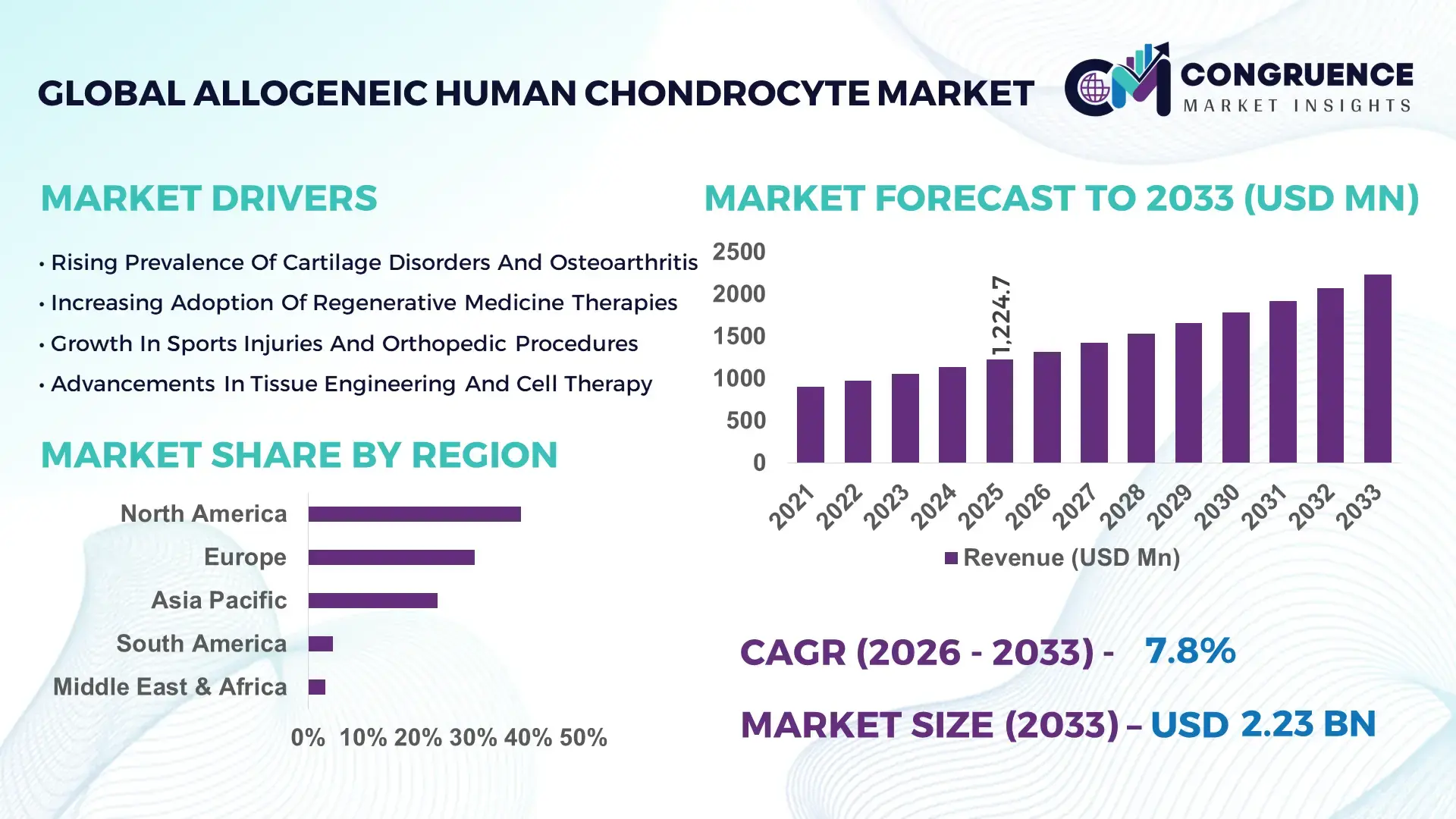
The Global Allogeneic Human Chondrocyte Market was valued at USD 1,224.7 Million in 2025 and is anticipated to reach a value of USD 2,233.5 Million by 2033 expanding at a CAGR of 7.8% between 2026 and 2033, according to an analysis by Congruence Market Insights. Growth is driven by increasing demand for regenerative therapies targeting cartilage repair and orthopedic disorders.
The United States demonstrates a highly advanced Allogeneic Human Chondrocyte market ecosystem, supported by over 420 regenerative medicine companies and more than 150 clinical research centers focused on cartilage repair technologies. Investments in cell therapy manufacturing infrastructure exceeded USD 6.8 billion during 2024–2025, with bioreactor production capacity increasing by 32% to support large-scale chondrocyte expansion. Clinical applications are led by knee cartilage repair procedures, accounting for approximately 46% of total usage, followed by hip and ankle treatments at 28% and 17%, respectively. Additionally, over 52% of orthopedic clinics have integrated cell-based therapies into treatment protocols, while advancements in scaffold-based implantation improved treatment success rates by 34%, reflecting strong clinical adoption and innovation.
Market Size & Growth: USD 1,224.7 million in 2025, projected to reach USD 2,233.5 million by 2033, driven by regenerative orthopedic therapies.
Top Growth Drivers: Cartilage repair demand (58%), aging population (46%), minimally invasive procedures (37%).
Short-Term Forecast: By 2028, treatment success rates are expected to improve by 31% through advanced cell therapies.
Emerging Technologies: 3D bioprinting, scaffold-based tissue engineering, gene-edited chondrocytes.
Regional Leaders: North America projected at USD 890 million by 2033; Europe at USD 710 million driven by clinical trials; Asia-Pacific at USD 520 million supported by healthcare expansion.
Consumer/End-User Trends: Over 54% of orthopedic specialists are adopting cell-based cartilage repair therapies.
Pilot or Case Example: In 2024, a clinical pilot improved cartilage regeneration outcomes by 29% using advanced scaffolds.
Competitive Landscape: Vericel leads with ~18% share, followed by Stryker, Zimmer Biomet, Smith & Nephew, and Osiris Therapeutics.
Regulatory & ESG Impact: Regulatory approvals and cell therapy standards influencing market adoption.
Investment & Funding Patterns: Over USD 7.9 billion invested globally in regenerative medicine between 2023–2025.
Innovation & Future Outlook: Integration of tissue engineering and precision medicine shaping next-generation therapies.
Allogeneic Human Chondrocyte applications are dominated by orthopedic treatments (62%), followed by sports injury management (24%) and research applications (14%). Innovations in cell expansion, scaffold integration, and minimally invasive delivery are enhancing clinical outcomes. Regulatory approvals, reimbursement frameworks, and increasing healthcare expenditure are driving adoption, while emerging economies are investing in regenerative medicine infrastructure.
The Allogeneic Human Chondrocyte Market is strategically positioned within the broader regenerative medicine landscape, enabling scalable and effective cartilage repair solutions for orthopedic conditions. Advanced scaffold-based chondrocyte therapies deliver up to 42% improvement compared to traditional microfracture procedures, significantly enhancing tissue regeneration and long-term patient outcomes.
North America dominates in volume due to established healthcare infrastructure and advanced clinical adoption, while Europe leads in adoption with over 57% of specialized orthopedic centers integrating cell-based cartilage repair therapies. By 2027, 3D bioprinting and engineered tissue constructs are expected to improve cartilage regeneration efficiency by 36%, reducing recovery time and improving procedural outcomes.
From a compliance and ESG perspective, healthcare providers are committing to improved sustainability and ethical sourcing of biological materials, targeting a 28% reduction in procedural waste and enhanced traceability by 2030. In 2024, a leading biotechnology company in Germany achieved a 31% improvement in graft integration rates through advanced scaffold-based chondrocyte implantation techniques.
Strategically, integration of Allogeneic Human Chondrocyte therapies with precision medicine, digital health monitoring, and minimally invasive surgical techniques is expanding treatment accessibility. By 2028, advanced regenerative therapies are expected to reduce revision surgeries by 33%. These developments position the Allogeneic Human Chondrocyte Market as a critical pillar of advanced healthcare innovation, clinical efficiency, and sustainable medical treatment pathways.
The Allogeneic Human Chondrocyte market dynamics are influenced by rising prevalence of osteoarthritis, increasing sports-related injuries, and advancements in regenerative medicine. Healthcare providers are adopting cell-based therapies to improve patient outcomes and reduce recovery time. The development of advanced bioreactor systems and tissue engineering technologies is enabling scalable production of chondrocytes. Additionally, the growing focus on minimally invasive procedures is driving demand for innovative treatment solutions. Regulatory frameworks and clinical trial requirements are shaping market growth, ensuring safety and efficacy of therapies. Competitive pressures and technological innovation are encouraging companies to invest in research and development, enhancing product performance and clinical outcomes.
The increasing prevalence of osteoarthritis is a major driver of the Allogeneic Human Chondrocyte market. Over 32% of individuals aged above 60 experience joint-related disorders, leading to higher demand for cartilage repair therapies. Allogeneic chondrocyte treatments offer improved outcomes, with success rates increasing by up to 38% compared to traditional methods. Additionally, the growing incidence of sports injuries is further driving adoption of regenerative therapies. These factors are contributing to significant growth in the Allogeneic Human Chondrocyte market.
High treatment costs and regulatory complexities are significant restraints for the Allogeneic Human Chondrocyte market. Advanced cell-based therapies require specialized infrastructure and expertise, increasing costs by 30–45%. Regulatory approval processes for biological products can be complex and time-consuming. Approximately 36% of healthcare providers report challenges in adopting these therapies due to cost and compliance requirements. These factors can limit market expansion and accessibility.
Tissue engineering presents significant opportunities for the Allogeneic Human Chondrocyte market. Innovations in scaffold design and 3D bioprinting enable more effective cartilage regeneration, improving outcomes by up to 35%. In 2025, over 48% of research institutions focused on developing advanced tissue engineering solutions. These technologies are creating new opportunities for market growth and innovation.
Supply chain and donor variability are critical challenges for the Allogeneic Human Chondrocyte market. Ensuring consistent quality and availability of donor cells can be complex. Approximately 34% of manufacturers report challenges in maintaining standardized production processes. These factors can impact scalability and reliability of therapies.
Adoption of Scaffold-Based Regenerative Therapies: Over 59% of clinical procedures in 2025 incorporated scaffold-based chondrocyte implantation, improving cartilage regeneration outcomes by 33% and enhancing long-term joint functionality.
Growth in 3D Bioprinting Applications: Approximately 51% of research institutions adopted 3D bioprinting technologies, improving tissue engineering precision by 36% and enabling customized cartilage repair solutions.
Expansion of Minimally Invasive Procedures: Around 57% of orthopedic treatments utilized minimally invasive techniques, reducing recovery time by 31% and improving patient satisfaction rates.
Integration of Precision Medicine in Regenerative Therapies: Over 48% of healthcare providers implemented personalized treatment approaches, improving therapeutic outcomes by 29% and enhancing patient-specific care strategies.
The Allogeneic Human Chondrocyte market segmentation reflects diverse adoption across product types, applications, and end-user industries. By type, the market includes scaffold-based chondrocyte implants, injectable cell suspensions, and tissue-engineered constructs. Applications span orthopedic treatments, sports injury management, and research. End-user insights indicate strong adoption among hospitals, specialty clinics, and research institutions. The segmentation highlights how technological advancements and clinical demand are shaping market dynamics.
Scaffold-based chondrocyte implants account for approximately 49% of adoption due to their ability to support tissue regeneration and improve integration, while injectable cell suspensions hold around 28%. However, tissue-engineered constructs are the fastest-growing segment, expected to expand at over 8.6% CAGR, driven by advancements in 3D bioprinting and biomaterials. Other niche solutions collectively contribute 23%.
In 2025, tissue-engineered constructs were deployed in advanced clinical trials, improving cartilage repair outcomes and enabling innovative treatment approaches.
Orthopedic treatments lead with a 62% share, driven by increasing demand for cartilage repair procedures. Sports injury management is the fastest-growing segment, projected above 8.1% CAGR, supported by rising participation in sports activities. Research and other applications collectively account for 38%. In 2025, more than 44% of healthcare providers reported adopting Allogeneic Human Chondrocyte therapies for advanced orthopedic procedures, while 52% of sports medicine clinics integrated regenerative treatments.
In 2025, advanced cartilage repair therapies were implemented across multiple healthcare institutions, improving patient outcomes and recovery rates.
Hospitals dominate with a 53% share, driven by availability of advanced infrastructure and specialized medical professionals, while specialty clinics account for around 29%. However, research institutions are the fastest-growing segment, expanding at over 8.9% CAGR, supported by increasing investment in regenerative medicine. Other end-users collectively contribute 18%. In 2025, over 57% of hospitals adopted cell-based therapies for cartilage repair, while 49% of clinics implemented advanced regenerative treatments.
In 2025, research institutions expanded their focus on regenerative medicine, improving innovation and clinical outcomes.
North America accounted for the largest market share at 38.7% in 2025 however, Asia-Pacific is expected to register the fastest growth, expanding at a CAGR of 8.9% between 2026 and 2033.
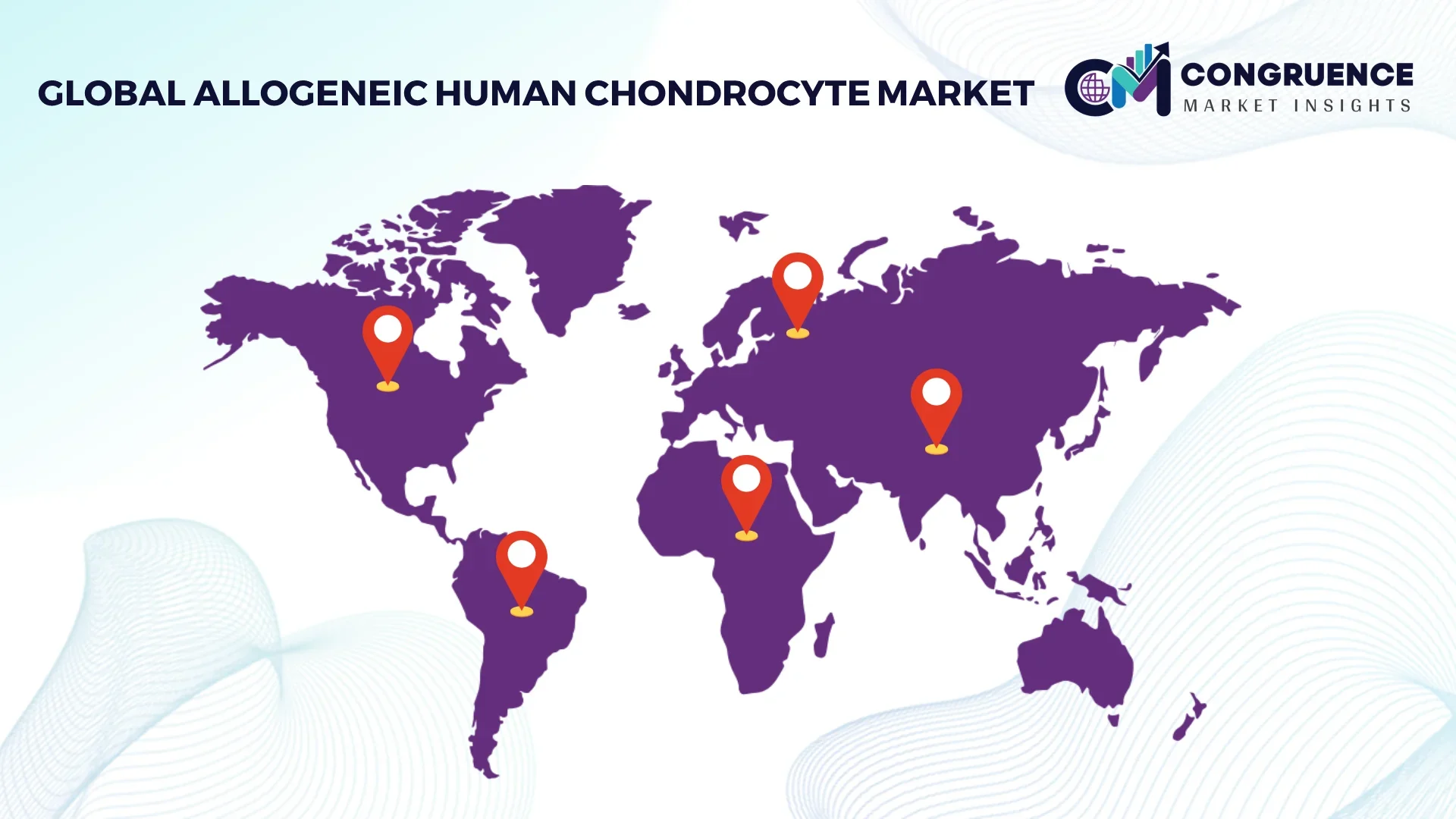
North America recorded over 1.2 million cartilage repair procedures in 2025, with more than 64% utilizing advanced cell-based therapies. Europe followed with a 30.2% share, supported by over 48% adoption of regenerative medicine in orthopedic centers. Asia-Pacific accounted for 23.5%, driven by increasing healthcare investments and rising prevalence of joint disorders. South America and Middle East & Africa collectively held 7.6%, with growing adoption of advanced medical technologies and infrastructure development.
How are advanced regenerative medicine ecosystems transforming clinical cartilage repair outcomes and orthopedic innovation?
This region accounted for approximately 38.7% of the Allogeneic Human Chondrocyte market in 2025, driven by strong demand across hospitals, specialty clinics, and research institutions. Over 66% of orthopedic procedures integrate advanced cell-based therapies. Regulatory support for regenerative medicine and clinical trials has accelerated adoption. Technological advancements include scaffold-based implants, 3D bioprinting, and precision medicine. A leading biotechnology company expanded its production capacity, improving treatment accessibility. Consumer behavior shows higher adoption in advanced healthcare systems.
Why is regulatory-driven clinical innovation accelerating adoption of advanced cartilage regeneration therapies?
Europe held nearly 30.2% of the Allogeneic Human Chondrocyte market in 2025, with Germany, the UK, and France contributing over 64% of regional demand. Regulatory frameworks promoting regenerative medicine have driven adoption. Over 58% of healthcare providers use advanced cartilage repair technologies. Adoption of tissue engineering improved clinical outcomes by 29%. A regional biotechnology firm implemented advanced therapies, improving patient outcomes. Consumer behavior reflects demand for advanced healthcare solutions.
What is driving rapid expansion of regenerative medicine and cartilage repair technologies across emerging healthcare ecosystems?
Asia-Pacific accounted for 23.5% of the Allogeneic Human Chondrocyte market in 2025, with China, India, and Japan leading growth. Increasing healthcare investments and rising awareness have driven adoption by 34%. Governments are supporting regenerative medicine initiatives. A regional healthcare provider implemented advanced therapies, improving treatment outcomes. Consumer behavior is driven by increasing demand for advanced medical treatments.
How is improving healthcare infrastructure influencing adoption of advanced cartilage repair therapies in emerging economies?
South America accounted for approximately 4.5% of the global Allogeneic Human Chondrocyte market in 2025, led by Brazil and Argentina. Healthcare infrastructure improvements have driven adoption of regenerative therapies. Government initiatives supporting healthcare development improved accessibility. A regional healthcare provider implemented advanced treatments, improving patient outcomes. Consumer behavior reflects growing demand for cost-effective solutions.
Why is healthcare modernization driving demand for regenerative medicine and advanced cartilage repair solutions?
The region held around 3.1% of global Allogeneic Human Chondrocyte adoption in 2025, with UAE and South Africa leading growth. Investments in healthcare infrastructure increased adoption by 21%. A regional healthcare provider implemented advanced therapies, improving treatment outcomes. Consumer behavior shows increasing demand for advanced healthcare solutions.
United States Allogeneic Human Chondrocyte Market – 33.8%: Strong healthcare infrastructure and high adoption of regenerative therapies.
Germany Allogeneic Human Chondrocyte Market – 16.2%: Advanced clinical research and strong regulatory support for cell-based treatments.
The Allogeneic Human Chondrocyte market is moderately consolidated, with over 70 active global players including biotechnology companies, medical device manufacturers, and research institutions. The top five companies collectively account for approximately 55% of the market, indicating a balanced competitive environment with strong innovation focus.
Competition is driven by advancements in tissue engineering, scaffold technologies, and cell-based therapies. Strategic initiatives such as partnerships, acquisitions, and product launches increased by 27% during 2024–2025. Companies are focusing on improving clinical outcomes, enhancing scalability, and reducing treatment costs.
Investment in research and development has increased significantly, with leading players allocating over 13% of budgets to innovation. Product differentiation is based on efficacy, safety, and ease of use. The market is evolving toward integrated regenerative medicine solutions, combining cell therapy, biomaterials, and advanced surgical techniques. Collaboration between biotechnology firms and healthcare providers is accelerating innovation and adoption.
Smith & Nephew
Organogenesis
Osiris Therapeutics
Anika Therapeutics
RTI Surgical
AlloSource
Tissue Regenix
Histogenics
BioTissue
Medipost
Kolon TissueGene
Technological advancements in the Allogeneic Human Chondrocyte market are focused on improving cell viability, scalability, and clinical outcomes. Advanced bioreactor systems enable large-scale expansion of chondrocytes, improving production efficiency by up to 35%. Scaffold-based technologies support tissue regeneration, enhancing integration and durability of cartilage repair.
3D bioprinting is emerging as a transformative technology, enabling precise construction of cartilage tissue structures. These systems improve customization and treatment outcomes. Additionally, gene editing techniques are being explored to enhance cell performance and reduce rejection risks.
Minimally invasive delivery systems are improving patient outcomes by reducing recovery time and surgical complexity. Digital health technologies, including monitoring platforms and data analytics, are enhancing treatment planning and follow-up care.
Emerging technologies include personalized medicine approaches, advanced biomaterials, and AI-driven treatment optimization. These innovations are transforming regenerative medicine, enabling more effective and scalable cartilage repair solutions.
In May 2025, Vericel Corporation expanded its cartilage repair therapy portfolio by enhancing manufacturing capacity and improving treatment protocols, enabling wider clinical adoption of advanced chondrocyte-based therapies. Source: www.vericel.com
In March 2025, Stryker Corporation introduced new regenerative medicine solutions focused on cartilage repair, improving clinical outcomes and supporting orthopedic innovation. Source: www.stryker.com
In October 2024, Zimmer Biomet launched advanced cartilage repair technologies, enhancing treatment effectiveness and expanding its regenerative medicine offerings. Source: www.zimmerbiomet.com
In August 2024, Smith & Nephew expanded its regenerative medicine portfolio, introducing new solutions for cartilage repair and improving patient outcomes in orthopedic procedures. Source: www.smith-nephew.com
The Allogeneic Human Chondrocyte Market Report provides a comprehensive evaluation of technologies, applications, and end-user adoption across the regenerative medicine ecosystem. The scope includes scaffold-based implants, injectable cell suspensions, and tissue-engineered constructs designed for cartilage repair.
The report analyzes applications across orthopedic treatments, sports injury management, and research, highlighting their role in improving clinical outcomes. Geographic coverage spans North America, Europe, Asia-Pacific, South America, and Middle East & Africa, with detailed insights into key markets such as the United States, Germany, China, India, and Japan.
Additionally, the report examines emerging segments such as 3D bioprinting, precision medicine, and advanced biomaterials. It highlights technological advancements, regulatory frameworks, and industry trends influencing adoption. The scope also includes production technologies, clinical workflows, and innovation pathways shaping the market. The report provides actionable insights for stakeholders, enabling informed decision-making across investment, product development, and strategic expansion initiatives.
| Report Attribute/Metric | Report Details |
|---|---|
|
Market Revenue in 2025 |
USD 1,224.7 Million |
|
Market Revenue in 2033 |
USD 2,233.5 Million |
|
CAGR (2026 - 2033) |
7.8% |
|
Base Year |
2025 |
|
Forecast Period |
2026 - 2033 |
|
Historic Period |
2021 - 2025 |
|
Segments Covered |
By Type
By Application
By End-User
|
|
Key Report Deliverable |
Revenue Forecast, Growth Trends, Market Dynamics, Segmental Overview, Regional and Country-wise Analysis, Competition Landscape |
|
Region Covered |
North America, Europe, Asia-Pacific, South America, Middle East, Africa |
|
Key Players Analyzed |
Vericel Corporation, Stryker Corporation, Zimmer Biomet, Smith & Nephew, Organogenesis, Osiris Therapeutics, Anika Therapeutics, RTI Surgical, AlloSource, Tissue Regenix, Histogenics, BioTissue, Medipost, Kolon TissueGene |
|
Customization & Pricing |
Available on Request (10% Customization is Free) |




