
Reports
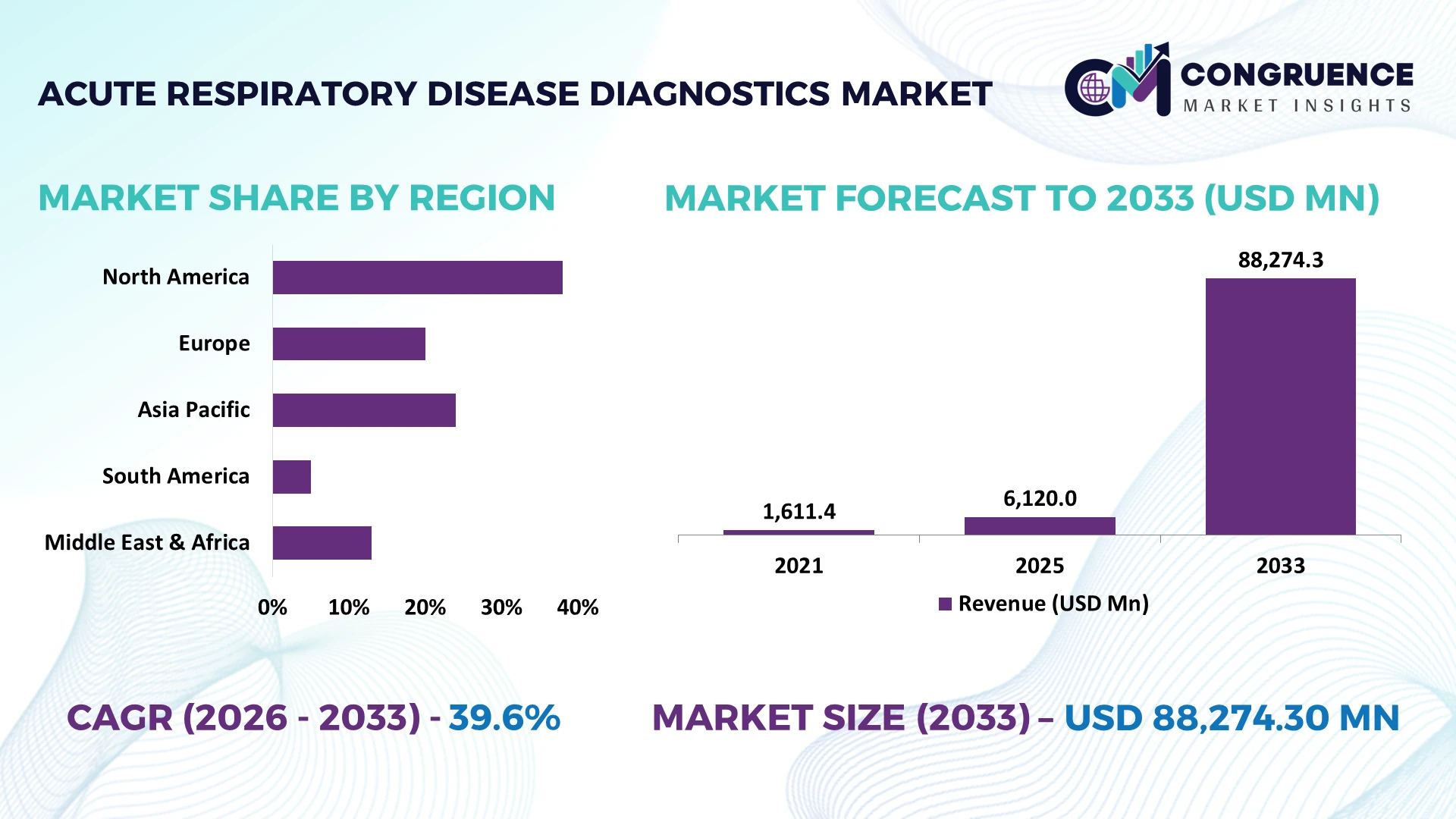
The Global Acute Respiratory Disease Diagnostics Market was valued at USD 6120 Million in 2025 and is anticipated to reach a value of USD 88274.3 Million by 2033 expanding at a CAGR of 39.6% between 2026 and 2033. Growth is driven by the transition from single pathogen testing toward automated multiplex molecular panels that simultaneously identify influenza, respiratory syncytial virus, SARS CoV 2, and bacterial respiratory infections, reducing diagnostic delays and improving treatment selection.
The United States holds a leading position in advanced respiratory diagnostics, supported by extensive molecular laboratory infrastructure, established reimbursement mechanisms, and rapid commercialization of multiplex testing platforms. Approximately 70% of US clinical laboratories use BioFire FilmArray platforms, demonstrating substantial penetration of syndromic respiratory testing. The country's competitive advantage is reinforced by established diagnostic manufacturers and FDA cleared testing technologies. India represents an important capacity expansion market, with its national Viral Research and Diagnostic Laboratories network reaching 163 laboratories in 2026. This expansion, alongside geopolitical concerns about emerging infectious disease surveillance and pandemic preparedness, strengthens demand for decentralized testing infrastructure and locally manufactured molecular diagnostic kits.
Strategic investment should prioritize multiplex PCR platforms, rapid point of care testing, and scalable reagent supply chains, while targeting emerging diagnostic infrastructure markets for long term commercial expansion.
Market Size & Growth: USD 6,120 million in 2025 to USD 88,274.3 million by 2033, with 39.6% CAGR, driven by automated multiplex molecular diagnostics.
Top Growth Drivers: 70% US laboratory platform penetration, 94.1% to 99.5% molecular panel agreement, and 163 Indian diagnostic laboratories.
Short Term Forecast: By 2028, automated respiratory testing workflows target 20% lower processing costs and 30% higher laboratory throughput.
Emerging Technologies: Multiplex PCR, AI assisted radiology interpretation, and automated cartridge based pathogen identification accelerate advanced respiratory testing.
Regional Leaders: North America leads commercial deployment, Asia Pacific expands diagnostic infrastructure, and Europe strengthens molecular testing integration.
Consumer & End User Trends: Hospitals account for substantial testing activity, while approximately 70% US clinical laboratory utilization of FilmArray demonstrates established syndromic testing adoption.
Pilot & Case Example: India's 2026 VRDL expansion to 163 laboratories strengthens decentralized pathogen detection and national respiratory surveillance capacity.
Competitive Landscape: BioFire Diagnostics leads through extensive FilmArray laboratory utilization, competing with Roche, QIAGEN, DiaSorin, and Thermo Fisher Scientific.
Regulatory & ESG Impact: Multiplex testing with 94.1% to 99.5% positive and negative agreement supports diagnostic accuracy, antimicrobial stewardship, and reduced unnecessary testing.
Investment & Funding: India allocated INR 52.81 crore to Viral Research and Diagnostic Laboratories during 2025–2026, strengthening public diagnostic infrastructure.
Innovation & Future Outlook: Next generation syndromic panels, AI enabled clinical interpretation, and decentralized molecular platforms shift competition toward faster results, broader pathogen coverage, and integrated surveillance.
Demand is concentrated in hospitals, diagnostic laboratories, emergency departments, and point of care facilities managing influenza, RSV, COVID 19, and bacterial pneumonia. Multiplex molecular testing is gaining commercial importance because a single specimen can identify 6 to more than 20 respiratory pathogens, improving diagnostic coverage and clinical decision making. AI assisted imaging, automated sample processing, and cartridge based molecular platforms are strengthening diagnostic workflows. An estimated 70% utilization of FilmArray platforms across US clinical laboratories demonstrates the maturity of syndromic testing. India's expanding surveillance network further reinforces the shift toward decentralized diagnostics, creating opportunities for manufacturers to scale affordable, locally produced testing solutions.
Acute Respiratory Disease Diagnostics is becoming strategically important as diagnostic manufacturers compete to deliver faster pathogen identification, broader panel coverage, and decentralized testing capabilities. The shift from centralized laboratory testing toward rapid multiplex molecular platforms is reshaping hospital procurement, diagnostic infrastructure, and investment priorities. In the United States, multiplex PCR testing reduced diagnostic turnaround from 48 hours to 12 hours in a hospital evaluation, representing a 75% improvement and strengthening treatment decisions.
Regional competition reflects different commercialization priorities. The United States emphasizes advanced molecular platforms and clinical integration, while India is modernizing diagnostic infrastructure through 167 Viral Research and Diagnostic Laboratories and expanded genomic surveillance. European healthcare systems prioritize diagnostic efficiency and antimicrobial stewardship. These differences create opportunities for manufacturers to develop differentiated pricing, testing formats, and distribution strategies.
During 2027–2029, competitive advantage will increasingly depend on automated sample processing, integrated reporting, and reliable reagent availability. For example, India's laboratory expansion demonstrates how manufacturers can combine equipment deployment, institutional partnerships, and locally supported testing networks. Companies investing in cartridge based assays, regional manufacturing, and hospital integration will secure stronger procurement relationships. Long term positioning will depend on balancing diagnostic accuracy, turnaround efficiency, affordability, and scalable infrastructure.
The transition toward multiplex molecular diagnostics is accelerating demand for advanced respiratory pathogen identification. A hospital evaluation demonstrated a 75% reduction in turnaround time, from 48 hours to 12 hours, while diagnostic yield increased from 61.6% to 80.6%. Simultaneous detection of influenza, RSV, SARS CoV 2, and other respiratory pathogens reduces sequential testing requirements and supports targeted treatment. The CDC's expanded emphasis on multiplex testing for co circulating respiratory viruses reinforces this technological shift. Manufacturers are responding through expanded assay portfolios, automated cartridge development, and hospital partnerships. The strongest commercial advantage lies in delivering faster results without requiring laboratories to operate multiple independent testing workflows.
Multiplex molecular testing faces affordability and infrastructure constraints, particularly in developing healthcare systems. WHO indicates that diagnostics receive only 3% to 5% of healthcare budgets despite approximately 70% of healthcare decisions relying on diagnostic results. Respiratory panel procurement costs also experienced volatility, with large panel costs increasing from USD 164 to USD 202 during the early pandemic period, an increase of 23%. Limited laboratory financing, skilled personnel, and reliable procurement systems restrict adoption in smaller Indian hospitals and underserved facilities. Manufacturers are addressing these barriers through locally manufactured reagents, tiered assay portfolios, distributor partnerships, and compact testing instruments. Competitive pricing and lower per test operating costs remain essential for broader institutional penetration.
Decentralized molecular testing presents a substantial opportunity across emerging healthcare infrastructure markets. India has operationalized 167 Viral Research and Diagnostic Laboratories, supporting diagnostic capabilities for approximately 35 to 40 viral pathogens and conducting more than 7 million tests. Expansion of genomic surveillance and infectious disease research creates opportunities for manufacturers supplying rapid PCR systems, portable analyzers, and integrated laboratory information platforms. The establishment of four additional regional National Institute of Virology facilities further supports geographic decentralization. Companies are positioning through technology transfer, domestic manufacturing partnerships, and institution specific assay development. An important opportunity lies in supplying smaller hospitals with modular platforms that combine respiratory testing with broader infectious disease surveillance.
Scaling advanced respiratory diagnostics requires consistent interoperability, data protection, and technical workforce capabilities across different healthcare systems. In the United States, hacking and information technology incidents accounted for 81% of reported healthcare data breaches in 2024, highlighting the exposure associated with connected diagnostic infrastructure. Ransomware represented another 11% of reported breaches that year, creating operational pressure on digital healthcare networks. Automated respiratory analyzers must integrate reliably with laboratory information systems, electronic health records, and disease surveillance databases without compromising patient confidentiality. Companies must strengthen cybersecurity architecture, software validation, and instrument connectivity while expanding technical training. Long term competitiveness will depend on delivering interoperable diagnostic ecosystems that maintain uninterrupted testing operations and secure clinical data exchange.
Year Round Respiratory Testing Expansion: Respiratory diagnostics are shifting from seasonal testing peaks toward continuous infectious disease surveillance. In the 2026 MLO molecular diagnostics survey, 45% of laboratory professionals reported a 0% to 25% increase in respiratory testing, while 82% identified infectious diseases as the leading molecular testing demand category. Manufacturers are expanding rapid molecular portfolios and strengthening reagent availability to accommodate sustained testing volumes beyond influenza season.
Diagnostic Stewardship and Panel Optimization: Hospitals are restructuring respiratory panel selection to control unnecessary testing and reagent expenditure. A 2025 study covering 245 medical facilities identified a post pandemic shift toward smaller respiratory panels, with small panel utilization reaching 58 tests per facility monthly compared with 47 large panel tests. Diagnostic manufacturers are responding with configurable assay menus and targeted panels, improving procurement flexibility and reducing unnecessary broad spectrum testing.
Laboratory Supply Chain Stabilization: Diagnostic reagent sourcing is becoming more predictable after pandemic related procurement disruptions. The 2026 MLO survey found that only 22% of laboratories reported supply shortages affecting testing capacity, compared with 85% in 2022. This improvement supports more consistent instrument utilization and inventory planning. Manufacturers are diversifying reagent suppliers, maintaining regional distribution networks, and strengthening inventory management to protect hospital testing continuity.
Connected Point of Care Surveillance: Healthcare providers are integrating rapid molecular testing into nursing homes, emergency departments, and decentralized clinical workflows. A nursing home pilot reported that more than 80% of participating facilities modified testing protocols following point of care implementation. Companies are responding with portable analyzers, simplified reporting interfaces, and connected surveillance capabilities, creating opportunities to improve outbreak recognition without increasing dependence on centralized laboratory infrastructure.
Molecular Diagnostics represents the leading type, with an estimated 43% share of the global Acute Respiratory Disease Diagnostics Market. Its dominance reflects superior pathogen identification, multiplex testing capability, and compatibility with automated laboratory workflows. Point of Care Tests represent the fastest growing type, with an estimated 17% share, as hospitals increasingly prioritize rapid clinical decisions outside centralized laboratories. Antigen Tests retain relevance for affordable initial screening, while Antibody Tests primarily support retrospective exposure assessment rather than acute infection identification.
Microbiology Tests remain important for bacterial pathogen identification and antimicrobial susceptibility assessment, whereas Imaging Based Diagnostics support pneumonia evaluation and complication assessment. Molecular testing adoption is supported by increasing laboratory automation, with rapid molecular testing used by 55% of respondents in the 2026 MLO survey. Manufacturers are prioritizing compact analyzers, cartridge based assays, and integrated platforms. Investment is increasingly shifting toward rapid molecular and decentralized testing formats rather than standalone conventional diagnostic equipment.
Influenza Detection represents the leading application, with an estimated 29% market share, supported by recurring seasonal outbreaks, hospital admissions, and established molecular surveillance programs. COVID 19 Detection accounts for an estimated 24%, reflecting continued diagnostic requirements for vulnerable patients and institutional infection control. RSV Detection is the fastest growing application, with an estimated 19% share, driven by improved molecular testing access and stronger surveillance among infants and older adults. Pneumonia Diagnosis remains important for distinguishing viral and bacterial infections, while Tuberculosis Detection and COPD Assessment serve specialized diagnostic requirements.
Application demand is becoming more differentiated as hospitals prioritize pathogen specific testing rather than ordering broad panels for every respiratory presentation. The CDC recorded 4.0% RSV positivity among nearly 3 million PCR test results during the 2025–2026 surveillance period. This reinforces investment in RSV focused assay development and seasonal testing capacity. Manufacturers are expanding influenza, RSV, and SARS CoV 2 combination panels while integrating pneumonia related bacterial targets. The commercial priority is increasingly targeted diagnostic coverage aligned with patient risk and treatment decisions.
Hospitals represent the leading end user, with an estimated 39% market share, reflecting high respiratory testing volumes across emergency departments, intensive care units, and inpatient wards. Diagnostic Laboratories account for an estimated 28%, supported by centralized molecular testing, reference testing, and high throughput workflows. Home Healthcare Providers represent the fastest growing end user, with an estimated 9% share, as portable testing technologies and decentralized care models expand access beyond conventional laboratory settings. Specialty Clinics and Emergency Care Centers strengthen demand through targeted patient assessment, while Research Institutes support assay validation and pathogen surveillance.
Purchasing priorities differ considerably across these institutions. Hospitals emphasize rapid turnaround, automated workflows, and electronic medical record integration, whereas independent laboratories prioritize throughput, reagent economics, and instrument utilization. A 2026 industry survey found that hospital and health system laboratories represented 59% of respondents' workplaces, up from 51% in 2025. Manufacturers are strengthening hospital procurement partnerships while developing compact instruments, simplified operating systems, and flexible pricing for smaller facilities. Future demand increasingly favors interoperable platforms that support multiple care settings without requiring equivalent infrastructure investments.
North America accounted for the largest market share at an estimated 41% in 2025; however, Asia Pacific is expected to register the fastest growth, supported by expanding molecular diagnostic infrastructure, domestic manufacturing, and infectious disease surveillance investments. Regional market positioning reflects differences in healthcare expenditure, laboratory capacity, reimbursement structures, and access to advanced respiratory testing.

Advanced Molecular Testing and Integrated Laboratory Networks
North America maintains its leadership through established molecular diagnostic infrastructure, strong hospital procurement, and commercial concentration of leading diagnostic manufacturers. The United States accounts for the majority of regional demand, supported by widespread PCR testing, automated laboratory networks, and established reimbursement pathways. More than 450 US public health and clinical laboratories participate in the CDC's National Respiratory and Enteric Virus Surveillance System, providing extensive respiratory pathogen monitoring capacity. Canada contributes through provincial laboratory networks and public health surveillance, while Mexico presents additional demand for affordable molecular and antigen testing. Manufacturers are strengthening instrument placements, reagent distribution, and integrated respiratory panels to improve laboratory utilization. The competitive advantage increasingly comes from combining diagnostic accuracy with dependable consumable availability and established hospital relationships.
United States Market Outlook: The United States remains the region's principal technology and commercialization center. Its extensive clinical laboratory network, FDA regulatory framework, and established molecular diagnostics companies support rapid introduction of respiratory pathogen panels. Investment priorities include automated testing, integrated surveillance, and decentralized molecular platforms. Manufacturers benefit from established hospital procurement channels and opportunities to expand testing menus across emergency and outpatient facilities.
Regulatory Harmonization and Surveillance Modernization
Europe's market is shaped by coordinated infectious disease surveillance, stringent diagnostic quality requirements, and modernization of public health laboratory networks. Germany, France, the United Kingdom, and the Netherlands represent important markets for molecular respiratory testing and automated laboratory platforms. The European Union's designation of a dedicated respiratory virus reference laboratory, scheduled to become operational in January 2027, strengthens cross border pathogen identification and laboratory standardization. The network will coordinate testing methodologies covering influenza, RSV, SARS CoV 2, and emerging respiratory threats. IVDR compliance is also influencing product development, documentation, and commercialization timelines. Manufacturers are prioritizing validated assays, interoperable reporting systems, and partnerships with national reference laboratories to improve regulatory readiness and institutional procurement access.
Germany Market Outlook: Germany benefits from its advanced hospital infrastructure, established biotechnology sector, and strong laboratory automation capabilities. Its concentration of diagnostic technology developers and research institutions supports innovation in molecular testing, reagents, and analytical instrumentation. Manufacturers targeting Germany are prioritizing IVDR compliant respiratory panels, automated workflows, and collaborations with university hospitals to strengthen clinical validation and commercial adoption.
Domestic Manufacturing and Diagnostic Network Expansion
Asia Pacific is becoming a major expansion market as China, India, Japan, and South Korea strengthen diagnostic manufacturing, hospital laboratory capacity, and infectious disease surveillance. India has operationalized 167 Viral Research and Diagnostic Laboratories across 27 states and five union territories, improving access to advanced pathogen identification and public health testing. China contributes through domestic molecular diagnostic manufacturing and large hospital procurement networks, while Japan and South Korea provide advanced assay development and laboratory automation capabilities. Growing demand for affordable respiratory panels is encouraging suppliers to localize reagent production and establish regional service networks. Companies are increasingly adapting instrument pricing, assay menus, and distribution partnerships to accommodate differences in hospital purchasing capacity and laboratory infrastructure.
China Market Outlook: China holds a strategically important position through its domestic diagnostic reagent manufacturing, biotechnology ecosystem, and large scale hospital laboratory infrastructure. Local manufacturers benefit from established production capabilities and access to extensive clinical testing networks. Investment in molecular platforms, automated sample processing, and domestically developed assay technologies strengthens supply chain resilience and reduces dependence on imported diagnostic consumables.
Public Laboratory Networks and Targeted Testing Expansion
South America's market is concentrated in Brazil, Argentina, Chile, and Colombia, where public health laboratories and private diagnostic networks support respiratory pathogen identification. Brazil has a particularly important position because of its national influenza and severe acute respiratory infection surveillance infrastructure. During 2025, Brazil recorded 163,378 severe acute respiratory infection cases through epidemiological week 33, compared with 122,538 during the corresponding 2024 period. This increase strengthens institutional requirements for laboratory capacity, respiratory panels, and timely pathogen reporting. However, uneven laboratory distribution, imported reagent dependency, and currency volatility constrain procurement consistency. Manufacturers are responding through local distributor agreements, flexible instrument configurations, and partnerships with public laboratories to improve geographic coverage and consumable availability.
Brazil Market Outlook: Brazil represents the region's strongest commercial opportunity through its established public health laboratory system, large hospital network, and substantial respiratory disease surveillance requirements. The country's SIVEP Gripe reporting infrastructure supports monitoring of severe respiratory infections and pathogen distribution. Companies can strengthen market access through public procurement partnerships, locally supported reagent distribution, and diagnostic platforms suited to high volume reference laboratories.
Healthcare Modernization and Diagnostic Localization
The Middle East and Africa market is shaped by hospital infrastructure investment, infectious disease preparedness, and the modernization of centralized diagnostic facilities. Saudi Arabia, the United Arab Emirates, and South Africa represent important commercial centers because of their healthcare spending, laboratory modernization, and established private hospital networks. Saudi Arabia's Vision 2030 healthcare transformation is supporting investment in digital health, laboratory automation, and advanced clinical infrastructure. In Africa, limited access to specialized molecular laboratories and dependence on imported reagents continue to influence testing economics. Manufacturers are targeting major urban healthcare centers through distributor partnerships, centralized laboratory installations, and service agreements. Portable molecular platforms and locally supported maintenance models offer a practical route to expanding access without requiring extensive centralized infrastructure.
Saudi Arabia Market Outlook: Saudi Arabia benefits from healthcare modernization, investment in advanced hospital infrastructure, and increasing adoption of integrated diagnostic technologies. Vision 2030 supports greater digital integration and private sector participation in healthcare delivery. Diagnostic companies are positioning through hospital technology partnerships, molecular laboratory installations, and automated testing solutions that align with institutional procurement and national healthcare transformation priorities.
The market is fragmented, with Roche, Abbott, Cepheid, bioMérieux, and Thermo Fisher competing against QIAGEN, Hologic, QuidelOrtho, BD, and assay developers. The top five players hold an estimated 35% combined share, leaving room for specialist molecular testing and lower cost suppliers. Roche and Abbott compete through broad molecular and antigen portfolios, while Cepheid and bioMérieux differentiate through cartridge based syndromic platforms. Thermo Fisher competes on laboratory scale, reagent breadth, and supply contracts. Purchasing decisions emphasize sensitivity, turnaround time, per test economics, menu breadth, and reagent continuity. Automated platforms target 30% to 50% lower hands on processing than manual workflows. Companies are expanding assay menus, securing hospital partnerships, localizing consumables, and integrating instruments with laboratory information systems. Regulatory validation and installed base service requirements create high entry barriers. Competition is shifting from standalone test performance toward dependable hardware, recurring consumables, software connectivity, and supply resilience. Winning requires validated accuracy, competitive total cost, and reliable local support.
F. Hoffmann La Roche AG
Abbott Laboratories
bioMérieux SA
Cepheid
Thermo Fisher Scientific Inc.
QIAGEN N.V.
Hologic Inc.
QuidelOrtho Corporation
Becton, Dickinson and Company
Bio Rad Laboratories Inc.
Seegene Inc.
Siemens Healthineers AG
DiaSorin S.p.A.
Sysmex Corporation
Current acute respiratory diagnostics rely on real time PCR, antigen assays, automated microbiology, and imaging supported assessment. Multiplex PCR is the key laboratory technology: Roche's TAGS platform expands simultaneous detection from four targets to fifteen, a 275% increase over the conventional benchmark. Broader coverage reduces sequential testing and supports targeted treatment decisions in care.
Emerging cartridge based molecular platforms combine sample preparation, amplification, and result interpretation in compact instruments. Rapid molecular testing was reported by 55% of laboratories in a 2026 industry survey, signalling adoption beyond reference laboratories. Compared with manual workflows, automation can reduce hands on processing by an estimated 30% to 50%, improving staff utilization and throughput across acute settings. AI assisted chest imaging adds triage support, with gains dependent on validation and integration.
Disruptive development through 2026 to 2028 will center on connected syndromic panels, digital reflex testing, and interoperable laboratory information systems. Digital reflex workflows report additional targets from the same sample run, limiting repeat collection and reagent use. Roche benefits from high throughput customization, while Cepheid and cartridge platform suppliers compete on decentralized speed. Providers should prioritize validated panels, open connectivity, and dependable reagent supply; these capabilities will shape procurement and platform loyalty at scale.
August 2025: Roche received FDA 510(k) clearance for cobas Respiratory 4-flex, using TAGS technology to detect and differentiate SARS-CoV-2, influenza A and B, and RSV, with digital reflex reporting. Launch expands high-throughput syndromic testing on cobas analyzers in the US. Source: roche.com
November 2026: Cepheid secured CE marking under IVDR for Xpert Respiratory Panel, compatible with existing GeneXpert systems and requiring less than one minute of hands-on time. The certification expands access across CE accepting markets on installed GeneXpert platforms without redesign. Source: cepheid.com
December 2025: BD expanded its BD MAX menu through IVDR certified VIASURE respiratory assays developed with Certest Biotec. The system processes up to 24 samples per run, strengthening automated multiplex testing options for European clinical laboratories and hospitals nationwide. Source: bd.com
June 2026: Cipla opened a sputum inflammometry laboratory at Mumbai's Breathfree Lung Wellness Center, adding specialized airway inflammation testing for asthma, COPD, and bronchiectasis. The facility advances precision respiratory assessment and integrated specialist care for complex patients in western India. Source: cipla.com
The Acute Respiratory Disease Diagnostics Market Report examines six types: Molecular Diagnostics, Antigen Tests, Antibody Tests, Microbiology Tests, Imaging Based Diagnostics, and Point of Care Tests. Application coverage includes Influenza, COVID 19, RSV, pneumonia, tuberculosis, and COPD assessment, alongside six end user groups spanning hospitals, diagnostic laboratories, specialty clinics, emergency care centers, research institutes, and home healthcare providers.
The report evaluates North America, Europe, Asia Pacific, South America, and the Middle East and Africa, assessing country level infrastructure, regulatory conditions, manufacturing capacity, procurement patterns, and diagnostic access. Technology coverage includes multiplex PCR, rapid molecular platforms, automated workflows, digital reporting, and connected surveillance. Competitive analysis profiles 14 active companies and examines product positioning, partnerships, localization, and deployment strategies. These insights support investment prioritization, market entry, portfolio planning, competitive positioning, and expansion decisions through 2033.
| Report Attribute/Metric | Report Details |
|---|---|
Market Revenue in 2025 | USD 6120 Million |
Market Revenue in 2033 | USD 88274.3 Million |
CAGR (2026 - 2033) | 39.6% |
Base Year | 2025 |
Forecast Period | 2026 - 2033 |
Historic Period | 2021 - 2025 |
Segments Covered | By Type
By Application
By End-User
|
Key Report Deliverable | Revenue Forecast, Growth Trends, Market Dynamics, Segmental Overview, Regional and Country-wise Analysis, Competition Landscape |
Region Covered | North America, Europe, Asia-Pacific, South America, Middle East, Africa |
Key Players Analyzed | F. Hoffmann La Roche AG, Abbott Laboratories, bioMérieux SA, Cepheid, Thermo Fisher Scientific Inc., QIAGEN N.V., Hologic Inc., QuidelOrtho Corporation, Becton, Dickinson and Company, Bio Rad Laboratories Inc., Seegene Inc., Siemens Healthineers AG, DiaSorin S.p.A., Sysmex Corporation |
Customization & Pricing | Available on Request (10% Customization is Free) |




