Global Acute Decompensated Heart Failure (ADHF) Market Report Overview
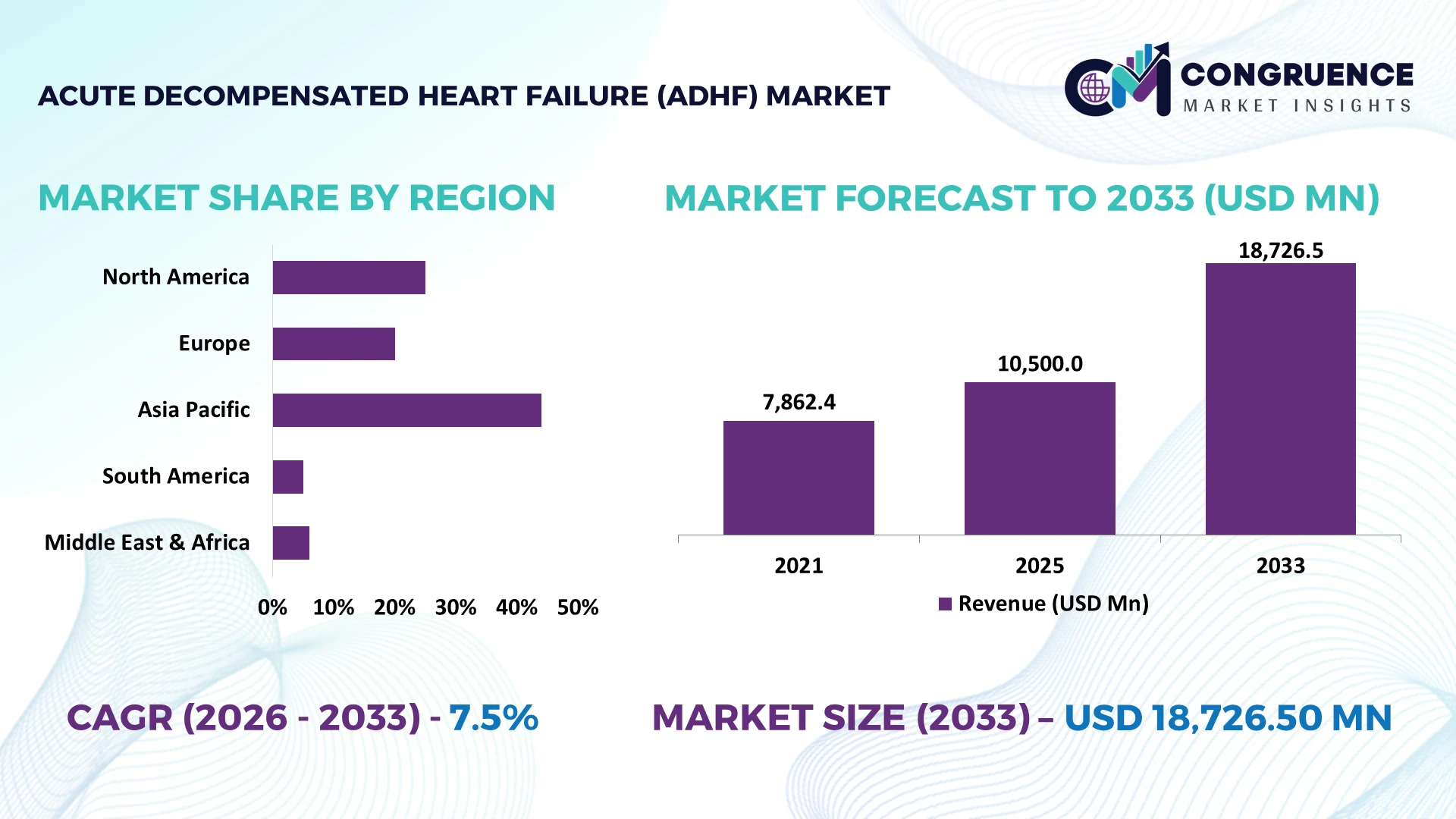
The Global Acute Decompensated Heart Failure (ADHF) Market was valued at USD 10500 Million in 2025 and is anticipated to reach a value of USD 18726.5 Million by 2033 expanding at a CAGR of 7.5% between 2026 and 2033. Growth is driven by rising acute heart failure hospitalization rates, inadequate optimization of guideline directed medical therapy, and increasing adoption of rapid congestion assessment, intravenous diuretics, and advanced hemodynamic monitoring.
The United States represents the dominant national market, supported by its established cardiovascular pharmaceutical, hospital equipment, and cardiac monitoring industries, with an estimated 35% market allocation for strategic planning. Its 6.7 million adult heart failure population and expanding reimbursement for implantable monitoring technologies strengthen commercial opportunities. Novartis reported USD 11.2 billion in global R&D expenditure in 2025, supporting broader cardiovascular innovation. By comparison, India's National Heart Failure Registry recorded 47.5% guideline directed therapy utilization among eligible patients, highlighting substantial treatment optimization opportunities across emerging healthcare markets.
Strategic implication: Pharmaceutical developers and cardiac device manufacturers should prioritize the United States for advanced technology commercialization while expanding affordable acute treatment and diagnostic capabilities across India and other high burden markets.
Key Highlights of the Global Acute Decompensated Heart Failure (ADHF) Market
-
Market Size & Growth: USD 10.50 billion in 2025, reaching USD 18.73 billion by 2033 at 7.5% CAGR, driven by advanced congestion management and cardiovascular treatment innovation.
-
Top Growth Drivers: Ischemic heart disease accounts for 72% of recorded Indian registry cases; guideline directed therapy utilization stands at 47.5%; 8.4% experienced readmission within 90 days.
-
Short Term Forecast: By 2028, hospitals are targeting a 5% reduction in avoidable ADHF readmissions through earlier intervention and coordinated discharge management, a planning target rather than an established clinical outcome.
-
Emerging Technologies: AI supported ECG interpretation, automated lung ultrasound, and implantable pulmonary artery pressure sensors are advancing early congestion identification and treatment personalization.
-
Regional Leaders: North America leads with an estimated 2033 allocation of USD 7.86 billion, Europe USD 5.24 billion, and Asia Pacific USD 4.12 billion. These are analytical regional allocations, reflecting advanced monitoring adoption, established hospital networks, and expanding cardiovascular treatment infrastructure, respectively.
-
Consumer/End User Trends: India's 10,851 patient registry highlights treatment gaps, with only 47.5% of eligible patients receiving guideline directed therapies, creating opportunities for hospital based treatment optimization.
-
Pilot/Case Example: The 2024 CAVAL US AHF pilot recorded a 13.3% versus 36.7% 90 day composite event rate with ultrasound guided treatment, demonstrating a 63.7% relative reduction in the intervention group.
-
Competitive Landscape: Abbott leads implantable cardiac pressure monitoring through CardioMEMS, while Novartis, AstraZeneca, Boehringer Ingelheim, Bayer, Pfizer, and Medtronic compete across pharmaceutical and cardiovascular technology segments.
-
Regulatory & ESG Impact: The 2025 US CMS expansion of CardioMEMS coverage potentially extends access to 1.2 million additional patients, strengthening reimbursement opportunities for remote cardiac monitoring.
-
Investment & Funding: Novartis reported USD 11.2 billion in global R&D expenditure in 2025, reinforcing pharmaceutical innovation, cardiovascular pipeline development, and advanced therapeutic research.
-
Innovation & Future Outlook: Next generation pulmonary pressure sensors, AI assisted diagnostics, SGLT2 inhibitors, and personalized decongestion protocols will shift competition toward earlier intervention, fewer hospitalizations, and improved post discharge outcomes.
The Acute Decompensated Heart Failure (ADHF) Market is gaining traction across emergency departments, intensive care units, and specialized cardiac centers, particularly for intravenous diuretics, vasodilators, inotropic therapies, and advanced hemodynamic monitoring. Ischemic heart disease represents 72% of recorded cases in India's National Heart Failure Registry, reinforcing demand for integrated cardiovascular treatment pathways. Innovations in pulmonary artery pressure sensors, AI assisted diagnostics, and point of care ultrasound are strengthening clinical decision making. The 2025 US reimbursement expansion for CardioMEMS, covering an additional 1.2 million potential patients, illustrates the growing importance of reimbursement supported monitoring. These developments establish a strategic foundation for evaluating competitive positioning and investment priorities.
What Is the Strategic Relevance and Future Pathways of the Acute Decompensated Heart Failure (ADHF) Market?
The Acute Decompensated Heart Failure (ADHF) Market is becoming strategically important as hospitals prioritize faster decongestion, reduced inpatient mortality, and improved post discharge outcomes. Competition is shifting from conventional intravenous diuretic treatment toward integrated care combining advanced cardiac monitoring, biomarker testing, and early optimization of guideline directed medical therapy. This transition is strengthening investment opportunities across cardiovascular pharmaceuticals, diagnostic equipment, and remote patient monitoring.
Technology differentiation is increasingly measurable. In the DOSE trial, high dose intravenous loop diuretics produced 37% greater fluid loss and 43% greater weight loss than low dose treatment, demonstrating the operational value of optimized decongestion protocols. The United States leads advanced cardiac monitoring deployment, whereas India presents substantial treatment optimization opportunities, with only 47.5% of eligible patients receiving guideline directed therapy.
During 2027–2029, hospitals will increasingly prioritize urinary sodium guided treatment, point of care ultrasound, and integrated discharge protocols. European clinical practice is advancing objective decongestion assessment, while Indian hospitals are expanding access to specialized cardiac services. Companies are strengthening pharmaceutical portfolios, diagnostic partnerships, and connected monitoring capabilities. Competitive advantage will depend on combining treatment effectiveness, measurable hospitalization improvements, and affordable technology deployment.
Acute Decompensated Heart Failure (ADHF) Market Dynamics
DRIVER:
Rising Acute Heart Failure Hospitalizations and Treatment Optimization
The increasing clinical burden of acute heart failure is accelerating demand for intravenous diuretics, cardiac diagnostics, and advanced decongestion therapies. India's National Heart Failure Registry documented ischemic heart disease in 72% of enrolled patients, while 14.2% experienced 90 day mortality and 8.4% required readmission. These outcomes strengthen hospital investment in early intervention and treatment optimization. The 2025 Heart Failure Association of India guidelines emphasize comprehensive guideline directed therapy, creating opportunities for pharmaceutical manufacturers to expand SGLT2 inhibitor, ARNI, and combination treatment portfolios. Companies are strengthening hospital partnerships and physician education programs to improve therapy initiation and capture underpenetrated treatment opportunities.
RESTRAINT:
Limited Access to Advanced Cardiac Treatment Infrastructure
Unequal access to specialized cardiac infrastructure restricts advanced ADHF treatment deployment, particularly in developing healthcare markets. India's heart failure registry indicates that only 47.5% of eligible patients received guideline directed therapy, while cardiac device utilization remained below 2%, compared with more than 30% in European registries. High acquisition costs, limited reimbursement, and uneven availability of electrophysiology and monitoring facilities constrain technology commercialization. Dependence on imported implantable cardiac devices also exposes manufacturers and hospitals to procurement and currency pressures. Companies are addressing these limitations through localized distribution, hospital procurement agreements, affordable diagnostic portfolios, and partnerships with domestic healthcare providers.
OPPORTUNITY:
AI Enabled Decongestion and Precision Monitoring
Advanced congestion assessment presents an opportunity to improve treatment decisions and strengthen hospital efficiency. Urinary sodium guided diuretic adjustment uses a threshold of 70 mEq/L within two hours to assess early treatment response, creating opportunities for integrated laboratory and bedside diagnostic solutions. India's 14.2% 90 day mortality rate also highlights the commercial relevance of improved risk stratification and post discharge surveillance. AI assisted echocardiography, automated lung ultrasound interpretation, and implantable pulmonary artery pressure sensors are emerging innovation priorities. Companies investing in connected diagnostics, clinical decision support, and SGLT2 inhibitor research are positioned to develop integrated treatment ecosystems. Partnerships with Indian hospital networks offer particularly attractive deployment opportunities.
CHALLENGE:
Clinical Integration and Continuity of Patient Monitoring
Maintaining consistent treatment outcomes across emergency departments, intensive care units, and post discharge settings remains a significant execution challenge. India's National Heart Failure Registry reported 14.2% mortality within 90 days, while 8.4% of patients experienced readmission, demonstrating the difficulty of maintaining effective treatment beyond initial stabilization. Integrating electronic health records, laboratory biomarkers, imaging systems, and remote monitoring devices requires standardized clinical workflows and trained personnel. Inconsistent data exchange and limited specialist availability complicate technology adoption across hospital networks. Manufacturers must invest in interoperable monitoring platforms, cybersecurity, clinical training, and hospital integration partnerships to establish scalable solutions and maintain long term competitive differentiation.
Acute Decompensated Heart Failure (ADHF) Market Latest Trends
-
Hospital Treatment Protocol Standardization: Hospitals are moving toward protocol driven intravenous diuretic administration and response monitoring. A 2025 Danish registry study covering 6,009 acute heart failure patients found loop diuretic utilization of 88.7%, compared with 36.1% for vasodilators. This treatment concentration is encouraging pharmaceutical manufacturers to strengthen injectable formulations, dosing protocols, and hospital supply agreements. Standardized treatment pathways are also improving procurement predictability and clinical workflow consistency.
-
Remote Monitoring Deployment Expansion: Connected cardiac monitoring is changing post discharge management, with hospitals integrating remote weight tracking, symptom surveillance, and automated clinical alerts. A 2025 real world study reported rehospitalization declining from 18.1% to 13.4% following remote monitoring implementation. Healthcare technology providers are expanding connected monitoring partnerships and home based intervention services. The operational shift is particularly important for hospitals seeking to reduce repeat admissions without increasing inpatient capacity.
-
Cardiovascular Therapy Portfolio Restructuring: Pharmaceutical companies are prioritizing combination treatment pathways involving diuretics, ARNI therapies, and SGLT2 inhibitors. The 2025 Heart Failure Association of India guidelines reinforce structured acute heart failure management and early treatment optimization. Manufacturers are strengthening hospital focused portfolios and physician education, while expanding clinical evidence generation. The competitive shift favors companies connecting acute stabilization with longer term disease management rather than relying exclusively on individual drug categories.
-
Post Discharge Care Model Transformation: Hospitals are strengthening coordinated follow up, with 77.8% of cardiac hospitalization patients receiving outpatient follow up within 30 days in a 2025 study, compared with 73.4% before the pandemic. In person and hybrid care pathways are gaining operational importance. Healthcare providers are investing in coordinated cardiology appointments, electronic patient records, and structured discharge programs to improve continuity and reduce avoidable readmissions.
Segmentation Analysis
By Type
Diuretics Lead as SGLT2 Inhibitors Reshape Treatment Priorities
Diuretics represent the leading treatment segment, accounting for an estimated 44% share, supported by their established role in rapid fluid removal, pulmonary congestion control, and inpatient stabilization. Their compatibility with existing hospital protocols and relatively accessible administration sustain widespread utilization. Vasodilators retain relevance in hypertensive presentations, while inotropes and vasopressors address low cardiac output and hemodynamic instability. Beta blockers remain important for therapy optimization after stabilization, rather than routine initiation during acute decompensation. SGLT2 inhibitors represent the fastest advancing category as hospitals increasingly incorporate early initiation into comprehensive heart failure treatment pathways.
The treatment mix is shifting toward therapies that connect acute stabilization with long term disease management. Danish registry findings indicate 88.7% utilization for loop diuretics, compared with 36.1% for vasodilators and 3% for inotropes. Pharmaceutical companies are prioritizing SGLT2 inhibitor portfolios, combination therapies, and hospital partnerships, while established manufacturers retain investment in injectable diuretics and cardiovascular supportive medications.
- The European Heart Journal: Acute Cardiovascular Care published a 2025 Danish registry analysis involving 6,009 hospitalized patients, demonstrating substantial differences in acute therapy utilization and reinforcing the importance of differentiated pharmaceutical portfolios.
By Application
Fluid Overload Management Anchors Clinical Demand
Fluid Overload Management represents the leading application, accounting for an estimated 38% share, because pulmonary and systemic congestion remain central treatment priorities in acute decompensation. Intravenous diuretics, fluid balance assessment, and electrolyte monitoring underpin hospital protocols. Pulmonary Edema Management remains closely connected to emergency stabilization, while Blood Pressure Stabilization and Cardiac Output Support address specific hemodynamic complications. Renal Function Management is gaining importance because impaired kidney function complicates diuretic response and treatment adjustment.
Post Discharge Care represents the fastest advancing application as hospitals strengthen early follow up, medication optimization, and remote surveillance. A 2025 study recorded 77.8% follow up within 30 days after cardiac hospitalization, compared with 73.4% before the pandemic. Companies are integrating remote monitoring, diagnostic alerts, and electronic care coordination to extend treatment beyond hospital admission. This shift strengthens demand for connected clinical platforms and coordinated cardiovascular services.
- A 2025 real world telemonitoring study reported rehospitalization declining from 18.1% to 13.4% following implementation, highlighting the operational value of integrating monitoring with early intervention and home based heart failure management.
By End-User
Hospitals Dominate While Cardiac Care Centers Expand
Hospitals represent the leading end user, accounting for an estimated 54% share, reflecting their concentration of emergency admissions, intensive care infrastructure, intravenous drug administration, and continuous hemodynamic monitoring. Their procurement requirements cover diuretics, vasodilators, vasopressors, diagnostic equipment, and cardiac monitoring systems. Emergency Departments remain critical for initial stabilization, while Cardiac Care Centers manage complex cases requiring specialist intervention. Specialty Clinics and Ambulatory Care Centers support follow up, medication adjustment, and longitudinal patient management.
Cardiac Care Centers represent the fastest advancing end user category as healthcare providers strengthen specialized heart failure services and multidisciplinary treatment pathways. Their growing role in advanced diagnostics and coordinated care is encouraging manufacturers to develop integrated equipment packages, institutional partnerships, and specialist focused pharmaceutical programs. Hospitals retain purchasing scale, but specialized centers offer opportunities for targeted technology deployment and differentiated service contracts. Companies are increasingly aligning sales strategies with clinical specialization rather than relying exclusively on centralized hospital procurement.
- The Heart Failure Society of America reported 1.2 million primary heart failure hospitalizations in the United States in 2021, involving 949,075 individuals. This inpatient burden reinforces hospitals' position as the principal ADHF treatment and procurement centers.
Region-Wise Market Insights
North America accounted for the largest market share at 39% in 2025; however, Asia Pacific is expected to register the fastest growth, expanding at a CAGR of 9.2% between 2026 and 2033.

North America Acute Decompensated Heart Failure (ADHF) Market
Advanced Cardiac Infrastructure and Integrated Hospital Treatment Drive Market Leadership
North America maintains its leadership through established cardiovascular treatment infrastructure, high hospital admission volumes, advanced pharmaceutical availability, and widespread access to cardiac diagnostics. The United States accounts for most regional commercial activity, supported by approximately 6.7 million adults living with heart failure. Hospitals increasingly integrate intravenous diuretic protocols, biomarker testing, echocardiography, and implantable pulmonary artery pressure monitoring into acute treatment pathways. The expansion of Medicare coverage for remote cardiac monitoring is strengthening commercial opportunities for connected device manufacturers. Abbott, Medtronic, and pharmaceutical companies are competing through clinical evidence, monitoring integration, and hospital partnerships. Increasing investment in specialized heart failure programs also strengthens institutional procurement, making clinical outcomes and reimbursement access decisive competitive factors.
United States Market Outlook: The United States remains the principal commercialization center because of its established cardiovascular research ecosystem, specialized cardiac hospitals, and advanced medical device manufacturing capabilities. Approximately 6.7 million adults have heart failure, supporting sustained institutional demand for acute stabilization and follow up services. Companies are prioritizing implantable monitoring, SGLT2 inhibitor adoption, and integrated hospital treatment pathways to strengthen clinical penetration and institutional relationships.
Europe Acute Decompensated Heart Failure (ADHF) Market
Clinical Standardization and Digital Cardiology Reshape Treatment Delivery
Europe accounts for an estimated 28% of the global market, supported by established public healthcare systems, cardiovascular research networks, and standardized acute heart failure treatment protocols. Germany, France, Italy, and the United Kingdom represent important pharmaceutical procurement and hospital deployment markets. The European Society of Cardiology's clinical recommendations reinforce early decongestion, hemodynamic assessment, and optimization of guideline directed medical therapy. Germany's substantial cardiovascular disease burden strengthens demand for specialized cardiac diagnostics and inpatient treatment. European hospitals are also expanding electronic health records and remote patient monitoring to improve post discharge coordination. Pharmaceutical manufacturers are prioritizing clinical evidence generation and hospital partnerships, while medical technology companies are strengthening interoperability and diagnostic integration to compete for institutional procurement contracts.
Germany Market Outlook: Germany benefits from its extensive hospital infrastructure, established pharmaceutical manufacturing base, and strong medical technology industry. Heart failure prevalence reaches approximately 3.9% of the population in available national estimates. Its specialized cardiac centers and established reimbursement environment support demand for advanced echocardiography, intravenous treatment systems, and cardiovascular monitoring. Manufacturers are positioning Germany as an important market for clinical validation and technology commercialization.
Asia-Pacific Acute Decompensated Heart Failure (ADHF) Market
Expanding Cardiovascular Infrastructure Accelerates Treatment Adoption
Asia Pacific represents an estimated 23% of the market, with growth supported by large patient populations, increasing cardiovascular hospitalization, and expanding specialist treatment capacity. China and India offer substantial opportunities through hospital modernization, domestic pharmaceutical production, and wider availability of cardiac diagnostics. China recorded approximately 16 million prevalent heart failure cases in international epidemiological estimates, while India's healthcare system continues expanding specialized cardiovascular services. Japan contributes through advanced diagnostic equipment, established pharmaceutical research, and sophisticated hospital infrastructure. Increasing adoption of SGLT2 inhibitors, point of care ultrasound, and electronic patient monitoring is changing treatment workflows. Manufacturers are strengthening local distribution, hospital partnerships, and affordable therapeutic portfolios to address differences in purchasing power and specialist availability.
China Market Outlook: China offers substantial commercial opportunities through its domestic pharmaceutical manufacturing ecosystem, expanding tertiary hospital network, and large cardiovascular patient population. Its approximately 16 million prevalent heart failure cases create significant requirements for acute stabilization, diagnostic monitoring, and medication management. Domestic manufacturers are strengthening generic cardiovascular drug portfolios, while international companies are expanding clinical collaborations and hospital access strategies.
South America Acute Decompensated Heart Failure (ADHF) Market
Hospital Modernization and Domestic Pharmaceutical Access Shape Demand
South America accounts for an estimated 5% of the global market, with Brazil representing the principal commercial center. Demand is concentrated in public and private tertiary hospitals that manage acute pulmonary congestion, cardiovascular complications, and recurrent admissions. Brazil's estimated heart failure prevalence of 1% highlights a substantial treatment population requiring sustained inpatient and outpatient services. Public healthcare procurement through the Sistema Único de Saúde influences pharmaceutical availability and institutional purchasing decisions. Uneven access to specialist cardiologists and advanced monitoring equipment creates differences between metropolitan hospitals and smaller healthcare facilities. Manufacturers are responding through generic drug distribution, local pharmaceutical partnerships, and targeted hospital supply agreements. Affordable injectable therapies and scalable diagnostic systems remain important competitive priorities.
Brazil Market Outlook: Brazil leads regional commercialization through its large hospital network, domestic pharmaceutical industry, and established public healthcare procurement system. Its Unified Health System provides a substantial institutional purchasing channel for cardiovascular medicines and essential hospital treatments. Companies are prioritizing local distribution partnerships, affordable diuretic formulations, and improved access to cardiac diagnostics to strengthen market penetration beyond major metropolitan centers.
Middle East & Africa Acute Decompensated Heart Failure (ADHF) Market
Healthcare Investment and Specialist Infrastructure Modernization
The Middle East and Africa account for an estimated 5% of the global market, with Saudi Arabia, the United Arab Emirates, and South Africa representing important healthcare investment and treatment centers. Gulf countries are expanding tertiary hospitals, cardiovascular specialty services, and advanced diagnostic infrastructure through national healthcare modernization programs. Saudi Arabia's Health Sector Transformation Program is encouraging private sector participation and specialized treatment capacity. South Africa remains an important pharmaceutical distribution and specialist care market, although uneven hospital infrastructure restricts advanced monitoring deployment. Increasing diabetes and hypertension burdens strengthen the need for acute cardiovascular treatment. Medical device companies are pursuing hospital partnerships, while pharmaceutical manufacturers are expanding regional distribution and affordable treatment availability.
Saudi Arabia Market Outlook: Saudi Arabia is strengthening its position through hospital expansion, healthcare digitization, and investment in specialized cardiovascular services. Vision 2030 healthcare transformation is encouraging private sector participation, integrated hospital networks, and advanced diagnostic deployment. International pharmaceutical and medical device manufacturers are pursuing local distribution arrangements, institutional partnerships, and specialist treatment programs to access expanding healthcare procurement opportunities.
Market Competition Landscape
The competitive landscape combines pharmaceutical leaders Novartis, AstraZeneca, Boehringer Ingelheim, Bayer, and Pfizer with device innovators Abbott, Medtronic, Boston Scientific, and Edwards Lifesciences. Drug manufacturers compete in diuretics, vasodilators, SGLT2 inhibitors, and heart failure treatment pathways, while device companies target hemodynamic monitoring and post discharge surveillance. The top five pharmaceutical participants command an estimated 48% of the branded treatment segment, while the ADHF ecosystem remains fragmented across medicines, diagnostics, and monitoring equipment. Competition centers on clinical outcomes, hospital formulary access, reimbursement, supply reliability, and integration with care pathways. SGLT2 inhibitor adoption and connected monitoring are shifting investment toward evidence backed combination treatment and longitudinal management. Established manufacturers are expanding partnerships and lifecycle portfolios; device innovators are integrating sensors with data systems. Entry barriers include clinical trial costs, regulatory approval, physician confidence, and procurement contracts. Winning requires supply, demonstrable decongestion benefits, competitive pricing, and integrated hospital partnerships.
Companies Profiled in the Acute Decompensated Heart Failure (ADHF) Market Report
-
Novartis AG
-
AstraZeneca plc
-
Boehringer Ingelheim International GmbH
-
Bayer AG
-
Pfizer Inc.
-
Merck & Co., Inc.
-
Sanofi S.A.
-
Abbott Laboratories
-
Medtronic plc
-
Boston Scientific Corporation
-
Edwards Lifesciences Corporation
-
Bristol Myers Squibb
-
Johnson & Johnson
Technology Insights for the Acute Decompensated Heart Failure (ADHF) Market
Current ADHF technology centers on intravenous loop diuretics, rapid natriuretic assessment, bedside echocardiography, and biomarker testing. Urinary sodium measurement within two hours helps identify inadequate diuretic response; threshold guided adjustment can accelerate treatment decisions by 1–2 hours versus waiting for weight change. Hospitals integrating laboratory results with electronic records improve dosing visibility and reduce fragmented clinical workflows.
Emerging technologies include lung ultrasound, automated congestion analysis, and implantable pulmonary artery pressure sensors. A 2025 real world remote monitoring implementation was associated with rehospitalization falling from 18.1% to 13.4%, a 4.7 percentage point reduction. Pooled evidence also indicates implantable hemodynamic monitoring has a stronger hospitalization effect than noninvasive monitoring, with risk ratios of 0.72 and 0.83 respectively. This favors device makers offering actionable physiological data, not passive alerts.
Disruptive development is shifting toward AI supported triage, connected care platforms, and precision decongestion protocols combining sodium, renal function, and ultrasound findings. Compared with weight led assessment alone, integrated physiological monitoring enables earlier escalation and more individualized therapy, although clinical benefit depends on workflow adherence. During 2026–2028, hospitals will prioritize interoperable platforms and validated decision support; pharmaceutical companies benefit when therapies connect acute stabilization with post discharge management routinely.
Recent Developments in the Global Acute Decompensated Heart Failure (ADHF) Market
-
April 2026: Bayer's AskBio completed enrollment of 173 participants in the Phase 2 GenePHIT trial of one time AB-1002 gene therapy for HFrEF. The milestone advances cardiac gene therapy evaluation and strengthens Bayer's regenerative cardiovascular pipeline, and validates investment. Source: bayer
-
January 2025: Tectonic Therapeutic reported a 17.9% reduction in pulmonary capillary wedge pressure with TX45 in its Phase 1b HFpEF study. The hemodynamic signal supports further development of targeted therapies for expansion into larger confirmatory heart failure studies. Source: tectonictx
-
February 2025: Heartseed completed enrollment of 10 patients in its Phase 1/2 LAPiS study of iPSC derived cardiomyocyte therapy HS-001 for advanced ischemic heart failure, advancing regenerative medicine development and expanding Japan's regenerative cardiology research program for ischemic disease. Source: heartseed
-
March 2025: BioCardia reported two year CardiAMP-HF Phase 3 outcomes, including improved composite outcomes among patients with elevated cardiac stress biomarkers, despite the overall primary endpoint not reaching statistical significance, supporting targeted development in biomarker selected patients with HFrEF populations. Source: biocardia
Scope of the Acute Decompensated Heart Failure (ADHF) Market Report
The Acute Decompensated Heart Failure (ADHF) Market Report evaluates treatment demand, clinical deployment, competitive positioning, and technology adoption across diuretics, vasodilators, inotropes, vasopressors, beta blockers, and SGLT2 inhibitors. Application coverage includes fluid overload management, cardiac output support, blood pressure stabilization, pulmonary edema management, renal function management, and post discharge care. End user analysis examines hospitals, cardiac care centers, specialty clinics, emergency departments, and ambulatory care centers, distinguishing high acuity procurement from longitudinal monitoring requirements.
The report assesses North America, Europe, Asia Pacific, South America, and the Middle East & Africa, with country level analysis of healthcare infrastructure, treatment access, reimbursement, and diagnostic deployment. It also examines remote hemodynamic monitoring, point of care ultrasound, biomarker guided decongestion, and AI enabled clinical decision support. Company profiling and competitive analysis identify portfolio priorities, partnership activity, and barriers to adoption, supporting investment planning, market entry, capacity expansion, and competitive positioning through 2033.
Acute Decompensated Heart Failure (ADHF) Market Report Summary
| Report Attribute/Metric | Report Details |
|---|
Market Revenue in 2025 | USD 10500 Million |
Market Revenue in 2033 | USD 18726.5 Million |
CAGR (2026 - 2033) | 7.5% |
Base Year | 2025 |
Forecast Period | 2026 - 2033 |
Historic Period | 2021 - 2025 |
Segments Covered | By TypeBy ApplicationFluid Overload Management Blood Pressure Stabilization Pulmonary Edema Management Renal Function Management
By End-User |
Key Report Deliverable | Revenue Forecast, Growth Trends, Market Dynamics, Segmental Overview, Regional and Country-wise Analysis, Competition Landscape |
Region Covered | North America, Europe, Asia-Pacific, South America, Middle East, Africa |
Key Players Analyzed | Novartis AG, AstraZeneca plc, Boehringer Ingelheim International GmbH, Bayer AG, Pfizer Inc., Merck & Co., Inc., Sanofi S.A., Abbott Laboratories, Medtronic plc, Boston Scientific Corporation, Edwards Lifesciences Corporation, Bristol Myers Squibb, Johnson & Johnson |
Customization & Pricing | Available on Request (10% Customization is Free) |





