
Reports
The Global ACTH Deficiency Treatment Market was valued at USD 846 Million in 2025 and is anticipated to reach a value of USD 1308.2 Million by 2033 expanding at a CAGR of 5.6% between 2026 and 2033. Growth is driven by improved diagnosis of secondary adrenal insufficiency, expanding hydrocortisone replacement therapy, pituitary disorder screening, and adoption of modified release glucocorticoid formulations.
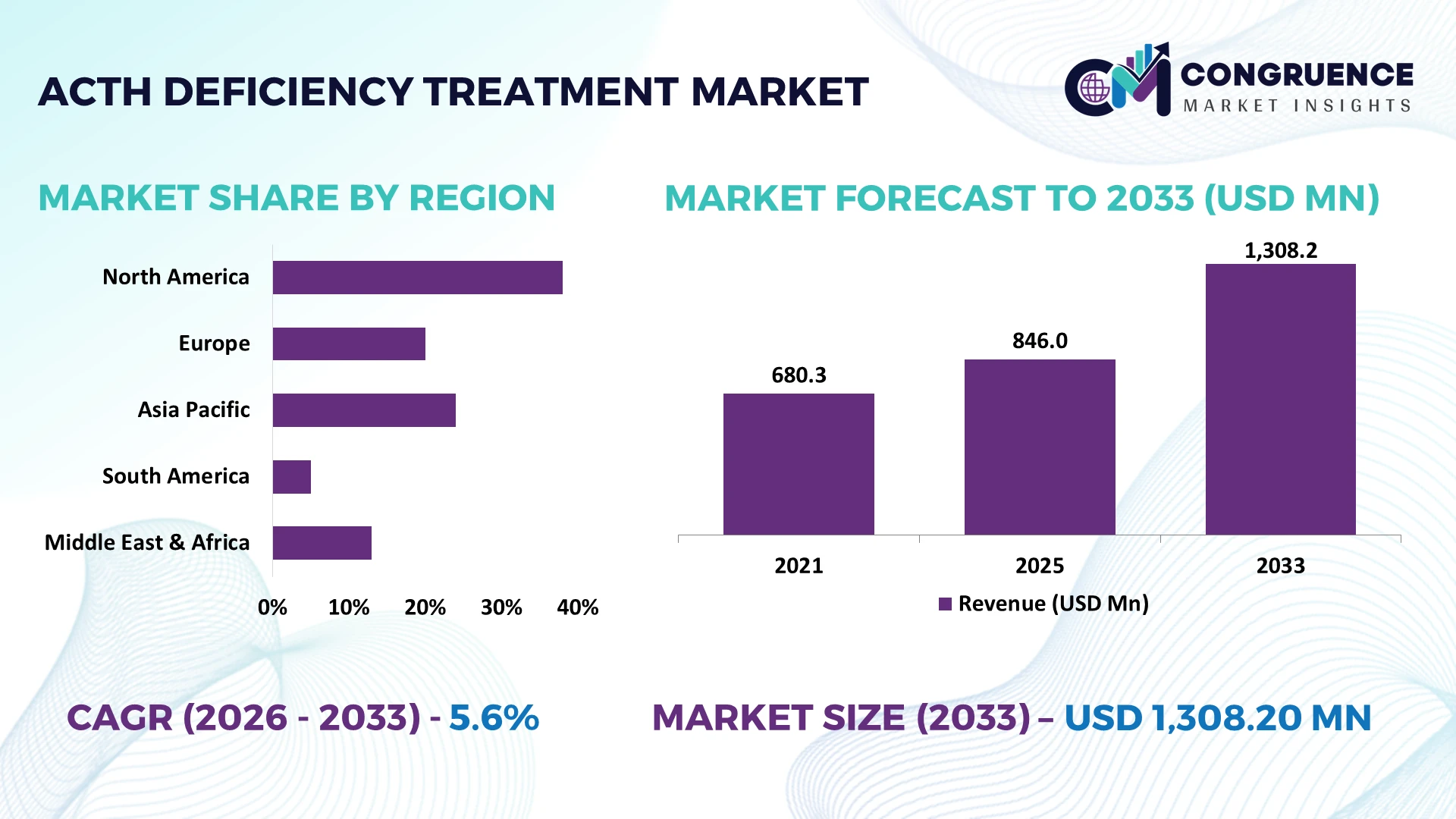
The United States holds a leading position in the ACTH Deficiency Treatment Market, with an estimated 38% global share in 2025, supported by specialized endocrinology services and pharmaceutical innovation. The National Institutes of Health operates with an approximately USD 48 billion annual research budget, supporting broader biomedical research rather than ACTH specific programs. Compared with India, the United States offers greater access to specialized pituitary centers, dynamic hormone testing, and modified release therapies. FDA approved hydrocortisone products strengthen treatment availability and clinical management capabilities.
Strategically, pharmaceutical companies should prioritize specialized endocrinology networks, reliable hydrocortisone supply, and improved diagnostic access to capture treatment opportunities across developed and emerging healthcare systems.
Market Size & Growth: USD 846 million in 2025, reaching USD 1,308.2 million by 2033 at 5.6% CAGR, supported by improved endocrine diagnosis and glucocorticoid replacement.
Top Growth Drivers: Illustrative growth contribution estimates assign 40% to improved diagnosis, 35% to replacement therapy access, and 25% to pituitary disease management.
Short Term Forecast: By 2028, digitally supported endocrine care programs target 15% faster follow up coordination and 10% fewer missed appointments.
Emerging Technologies: Modified release hydrocortisone, wearable monitoring, and AI supported endocrine assessment represent 3 evolving clinical management approaches.
Regional Leaders: Illustrative 2033 allocations place North America at USD 497.12 million, Europe at USD 366.30 million, and Asia Pacific at USD 327.05 million, emphasizing specialty care, advanced formulations, and diagnostic expansion respectively.
Consumer / End User Trends: Conventional oral hydrocortisone replacement commonly requires 2 to 3 daily doses, strengthening interest in simplified treatment schedules.
Pilot / Case Example: A proposed 2027 endocrine telemonitoring pilot targets 20% faster clinical follow up through digital appointment coordination and patient education.
Competitive Landscape: Pfizer, Bristol Myers Squibb, Sandoz, Teva, and Hikma participate in corticosteroid supply; individual ACTH deficiency treatment shares remain unverified.
Regulatory & ESG Impact: FDA oversight strengthens treatment quality, while 100% patient access to emergency steroid education remains an important clinical management objective.
Investment & Funding: Approximately USD 48 billion in annual NIH funding supports biomedical research infrastructure, including broader endocrine disease investigation.
Innovation & Future Outlook: Physiological cortisol replacement, digital adherence tools, and 24 hour hormone rhythm modeling are reshaping specialized adrenal insufficiency management.
The ACTH Deficiency Treatment Market addresses secondary adrenal insufficiency associated with pituitary disorders, hypothalamic dysfunction, and complications following pituitary surgery or radiotherapy. Hydrocortisone remains central to cortisol replacement, while specialized endocrine services support diagnosis through morning cortisol measurement and dynamic stimulation testing. Conventional replacement regimens commonly involve 2 to 3 daily doses, creating opportunities for modified release formulations and improved medication adherence. Increasing recognition of adrenal crisis risks is strengthening patient education and emergency treatment preparedness. These clinical developments are shifting competitive priorities toward reliable drug availability, individualized treatment delivery, and integrated endocrinology care pathways.
The ACTH Deficiency Treatment Market is becoming strategically important as healthcare systems strengthen secondary adrenal insufficiency diagnosis, long term cortisol replacement, and adrenal crisis prevention. Competition is shifting from conventional corticosteroid availability toward individualized treatment, specialist access, and coordinated endocrine care. The United States benefits from established pituitary treatment centers, while India's expanding diagnostic infrastructure creates opportunities for affordable hormone testing and pharmaceutical distribution. Digital healthcare adoption is encouraging manufacturers and providers to integrate medication management with specialist follow up.
Modified release hydrocortisone offers an operational advantage over conventional formulations requiring 2 to 3 daily doses, potentially reducing dosing frequency by 50% to 67% when transitioning to once daily treatment. This simplifies administration without guaranteeing equivalent clinical outcomes for every patient. Between 2026 and 2028, specialized endocrine networks are expected to prioritize electronic prescribing, standardized diagnostic pathways, and remote patient education. Illustrative implementation targets include 15% faster appointment coordination and 10% fewer missed consultations.
A practical deployment involves connecting pituitary clinic records with pharmacy dispensing systems and emergency steroid education programs. Pharmaceutical companies are strengthening formulation research, specialist partnerships, and distribution reliability. Competitive leadership increasingly depends on clinically appropriate replacement therapies, dependable medication access, and integrated patient support infrastructure.
Improved recognition of pituitary disorders is strengthening demand for ACTH deficiency diagnosis and lifelong glucocorticoid replacement. Secondary adrenal insufficiency develops when inadequate ACTH secretion reduces adrenal cortisol production, requiring specialist assessment and individualized treatment. Conventional hydrocortisone therapy commonly involves 2 to 3 daily doses, creating adherence challenges and opportunities for simplified regimens. In the United States, endocrine service modernization supports electronic prescribing and coordinated pituitary care. Illustrative provider improvement targets include 15% faster diagnostic referrals and 10% fewer missed follow up visits. Pharmaceutical manufacturers are expanding formulation development, clinician education, and specialist distribution partnerships. The strategic advantage lies in connecting reliable corticosteroid supply with earlier diagnosis and structured treatment continuity.
ACTH deficiency treatment faces structural limitations from restricted access to endocrinologists, specialized hormone testing, and affordable replacement formulations. Morning cortisol measurements often require additional dynamic testing, increasing diagnostic complexity and patient expenditure. In India, specialist concentration in metropolitan hospitals creates access barriers for patients outside major healthcare centers. A modeled 10% increase in diagnostic expenditure can intensify affordability pressures, while a 15% rise in medicine procurement costs affects long term treatment budgets. Conventional hydrocortisone remains comparatively accessible, but specialized formulations face reimbursement and distribution limitations. Healthcare providers are strengthening laboratory referral networks, while pharmaceutical suppliers pursue generic availability, localized distribution, and institutional procurement agreements. Affordable diagnostic pathways remain essential for expanding treatment access.
Personalized cortisol replacement creates opportunities for pharmaceutical innovation beyond conventional immediate release hydrocortisone. Modified release formulations aim to better approximate physiological cortisol exposure, while digital medication management supports scheduled dosing and patient education. Illustrative implementation programs target 20% improvement in appointment adherence and 15% faster specialist follow up coordination. Emerging wearable monitoring and predictive clinical analytics offer additional research opportunities, although direct cortisol measurement remains technologically challenging. India's expanding digital healthcare infrastructure provides opportunities for remote endocrinology consultations and integrated pharmacy services. Pharmaceutical developers are investing in specialized formulations, patient support platforms, and partnerships with endocrine treatment centers. Differentiation increasingly depends on combining convenient administration with clinically validated outcomes and accessible long term care.
Maintaining appropriate cortisol replacement across changing physiological conditions represents a significant clinical and operational challenge. ACTH deficiency patients require individualized glucocorticoid dosing, particularly during infections, surgery, and other physical stressors. Excessive replacement increases metabolic complications, while insufficient treatment raises adrenal crisis risks. Conventional hydrocortisone schedules involve 2 to 3 daily administrations, complicating adherence and treatment adjustment. Healthcare systems implementing digital monitoring can establish operational targets of 15% fewer missed consultations and 20% faster emergency education delivery. United States endocrine specialists emphasize individualized stress dosing instructions and emergency hydrocortisone preparedness. Pharmaceutical companies and healthcare providers must invest in clinician training, validated treatment protocols, and coordinated patient support. Sustainable competitiveness depends on treatment safety, continuity, and reliable emergency preparedness.
- Standardized Emergency Steroid Supply Protocols: Hospitals are strengthening emergency corticosteroid inventory procedures to improve treatment readiness during adrenal crises. Emergency preparedness programs increasingly emphasize 100 mg injectable hydrocortisone protocols and 24 hour medicine accessibility. United States healthcare providers are standardizing emergency medication kits and pharmacy replenishment workflows. Pharmaceutical distributors are responding through improved inventory coordination, standardized packaging, and institutional supply agreements, reducing treatment interruptions and strengthening emergency department preparedness for patients with established adrenal insufficiency.
- Integrated Endocrine Laboratory Testing Workflows: Diagnostic laboratories are improving coordination between cortisol assays and ACTH testing to reduce specimen handling errors. Morning cortisol assessment commonly occurs between 8 AM and 9 AM, while ACTH samples require laboratory specific handling procedures. United Kingdom laboratory networks are strengthening sample transport validation and electronic test ordering. Diagnostic companies are upgrading laboratory information systems and analytical platforms, improving result traceability and reducing unnecessary repeat testing during complex pituitary evaluations.
- Specialized Pharmaceutical Packaging Modernization: Corticosteroid suppliers are strengthening packaging identification and product traceability to reduce dispensing errors. United States pharmaceutical serialization requirements support package level identification using 2 dimensional data matrix codes and standardized transaction records. Manufacturers are upgrading labeling equipment and distribution verification systems to improve inventory visibility. This transition supports more accurate product identification across different hydrocortisone strengths and reduces operational complexity for hospital pharmacies managing emergency and maintenance formulations.
- Structured Treatment Documentation Gains Priority: Endocrinology providers are incorporating standardized adrenal insufficiency documentation into electronic medical records. Clinical workflows increasingly distinguish routine replacement instructions from emergency stress dosing protocols, covering 2 separate treatment situations. German healthcare organizations are strengthening electronic medication records and discharge documentation. Healthcare technology providers are developing configurable endocrine templates and clinical decision support tools, improving information continuity between specialist consultations, hospital admissions, and community pharmacies.
Hydrocortisone represents the leading treatment type, with an illustrative 55% market share in 2025, reflecting its established role in physiological cortisol replacement and extensive clinical familiarity. Its short duration of action allows individualized dose adjustments, making it central to secondary adrenal insufficiency management. Conventional treatment commonly involves 2 to 3 daily doses, supporting established pharmaceutical manufacturing and hospital procurement networks. Prednisolone accounts for an illustrative 20% share, offering longer glucocorticoid activity and less frequent administration for selected patients. Cortisone Acetate remains relevant where conversion to active cortisol provides an appropriate replacement option, although availability varies between countries.
Modified Release Hydrocortisone represents the fastest growing type, supported by interest in simplified administration and improved alignment with physiological cortisol patterns. Its illustrative 15% market share reflects a smaller but strategically important specialized treatment segment. Pharmaceutical developers are prioritizing formulation research, clinical differentiation, and specialist education. Compared with established immediate release products, advanced formulations require additional clinical evidence and reimbursement justification. Manufacturers are expanding specialist partnerships and targeted distribution strategies to strengthen adoption.
Adrenal Insufficiency Management represents the leading application, accounting for an illustrative 35% of the ACTH Deficiency Treatment Market in 2025. Its dominance reflects continuous glucocorticoid replacement requirements, specialist monitoring, and recurring pharmaceutical utilization. Hormone Replacement Therapy accounts for an estimated 25%, emphasizing individualized cortisol dosing and long term endocrine management. Adult ACTH Deficiency remains an established treatment category, particularly among patients with pituitary tumors, previous pituitary surgery, or hypothalamic disorders. Conventional hydrocortisone regimens commonly require 2 to 3 daily administrations, influencing treatment scheduling and pharmaceutical dispensing requirements.
Adrenal Crisis Prevention represents the fastest growing application as healthcare providers strengthen emergency preparedness and standardized stress dosing education. Pediatric ACTH Deficiency requires specialized dosing accuracy, age appropriate formulations, and coordinated endocrine supervision. Hospitals are expanding emergency treatment protocols, while pharmaceutical companies prioritize injectable hydrocortisone availability and differentiated pediatric formulations. Healthcare providers are integrating clinical documentation, medication reconciliation, and patient education to improve treatment continuity. Commercial opportunities increasingly concentrate on dependable emergency products and specialized treatment support rather than conventional maintenance prescribing alone.
Hospitals represent the dominant end user segment, accounting for an illustrative 42% of the ACTH Deficiency Treatment Market in 2025. Their leadership reflects concentrated diagnostic infrastructure, emergency treatment capabilities, and access to multidisciplinary endocrine specialists. Hospital pharmacies manage routine glucocorticoid replacement alongside injectable emergency corticosteroids, supporting recurring institutional procurement. Endocrinology Clinics account for an estimated 28% share, focusing on hormone assessment, individualized treatment adjustment, and long term monitoring. Specialty Care Centers serve patients requiring coordinated pituitary management, complex diagnostic evaluation, and specialist treatment planning.
Endocrinology Clinics represent the fastest growing end user segment as healthcare systems increasingly shift stable patient management toward specialized outpatient services. Pediatric Clinics maintain distinct requirements for age appropriate formulations and precise dose adjustments, while Research Institutes investigate improved cortisol replacement technologies and treatment outcomes. Pharmaceutical manufacturers are strengthening specialist education, institutional supply contracts, and customized distribution arrangements. Healthcare providers are expanding coordinated referral pathways and electronic treatment documentation. Future purchasing priorities increasingly emphasize consistent medicine availability, treatment convenience, and integrated clinical support across specialist care environments.
North America accounted for the largest market share at an estimated 38% in 2025 however, Asia Pacific is expected to register the fastest growth, expanding at a CAGR of an estimated 7.2% between 2026 and 2033.
Specialized Endocrinology Networks and Advanced Cortisol Replacement
North America accounted for an estimated 38% of the global ACTH Deficiency Treatment Market in 2025, supported by advanced pituitary disorder management, established pharmaceutical infrastructure, and specialized endocrinology services. The United States leads regional treatment activity through academic hospitals, endocrine clinics, and comprehensive pituitary centers. Clinical workflows increasingly integrate morning cortisol measurement, dynamic hormone testing, and individualized glucocorticoid replacement. Conventional hydrocortisone regimens generally require 2 to 3 daily administrations, encouraging interest in formulations that simplify medication schedules. Pharmaceutical companies are strengthening specialist distribution partnerships and developing differentiated treatment options. Hospital emergency protocols commonly recommend an initial 100 mg intravenous hydrocortisone dose for adults experiencing adrenal crisis. Regional competitive positioning increasingly depends on treatment availability, clinical education, and coordination between endocrinologists, pharmacies, and emergency departments to maintain continuity of care.
United States Market Outlook: The United States benefits from extensive pituitary research infrastructure, FDA regulated pharmaceutical development, and specialized endocrine treatment facilities. Eton Pharmaceuticals received FDA approval for KHINDIVI in 2025, introducing a 1 mg/mL hydrocortisone oral solution for pediatric adrenal insufficiency. This development strengthens individualized pediatric dosing capabilities and illustrates opportunities for manufacturers developing specialized corticosteroid formulations alongside established generic replacement therapies.
Modified Release Formulations and Standardized Endocrine Care
Europe represented an estimated 28% of the global ACTH Deficiency Treatment Market in 2025, supported by specialized healthcare infrastructure, pharmaceutical research capabilities, and established endocrine treatment guidelines. Germany, the United Kingdom, France, and Sweden maintain significant clinical expertise in pituitary disorders and secondary adrenal insufficiency. European treatment pathways increasingly emphasize physiological cortisol replacement, emergency steroid education, and coordinated specialist monitoring. Modified release hydrocortisone products offer once daily administration for selected patients, compared with conventional regimens requiring 2 to 3 daily doses. This treatment distinction supports pharmaceutical innovation and specialized prescribing. European regulatory requirements also emphasize clinical evidence, manufacturing quality, and pharmacovigilance. Pharmaceutical companies are expanding specialist engagement and formulation development, while healthcare providers strengthen patient education and standardized adrenal crisis management. Competitive differentiation increasingly depends on demonstrated clinical value and reimbursement accessibility.
United Kingdom Market Outlook: The United Kingdom maintains established endocrinology networks through the National Health Service and specialized pituitary treatment centers. NICE published guidance on adrenal insufficiency identification and management in 2024, supporting standardized diagnosis, glucocorticoid replacement, and emergency preparedness. British healthcare providers emphasize individualized stress dosing instructions and access to emergency hydrocortisone. Specialist prescribing and coordinated pharmacy services strengthen continuity across hospital and community healthcare settings.
Generic Pharmaceutical Manufacturing and Expanding Diagnostic Accessibility
Asia Pacific accounted for an estimated 25% of the global ACTH Deficiency Treatment Market in 2025, supported by pharmaceutical manufacturing capabilities, expanding hospital networks, and improving access to endocrine diagnostics. China, India, Japan, and South Korea represent important treatment and pharmaceutical development markets. Japan maintains advanced pituitary disease management capabilities, while India benefits from established generic corticosteroid production. Healthcare providers are expanding access to morning cortisol assessment, ACTH stimulation testing, and specialist endocrinology consultations. Conventional hydrocortisone replacement commonly requires 2 to 3 daily doses, reinforcing demand for dependable pharmaceutical distribution. India's expanding digital healthcare infrastructure supports electronic health records and specialist referral coordination. Manufacturers are strengthening domestic production, institutional supply agreements, and hospital partnerships. Regional competitiveness increasingly depends on affordable medication access, diagnostic availability, and reliable distribution across metropolitan and underserved healthcare markets.
India Market Outlook: India maintains substantial generic pharmaceutical manufacturing capabilities and expanding specialist healthcare infrastructure in Hyderabad, Mumbai, Bengaluru, and Delhi. The Ayushman Bharat Digital Mission supports digital health records and healthcare information exchange. Indian manufacturers supply conventional corticosteroid formulations, while tertiary hospitals provide pituitary hormone assessment and replacement therapy. Affordable generic medicines and expanding diagnostic laboratory networks support treatment accessibility, although advanced endocrine testing remains concentrated in larger medical centers.
Public Healthcare Procurement and Specialist Treatment Accessibility
South America represented an estimated 6% of the global ACTH Deficiency Treatment Market in 2025, with Brazil accounting for the largest concentration of specialized endocrine treatment activity. Argentina, Chile, and Colombia contribute through established hospital networks and specialist medical services. Regional treatment demand primarily involves conventional glucocorticoid replacement, pituitary disorder assessment, and emergency adrenal insufficiency management. Brazil's public healthcare infrastructure supports chronic disease treatment, although access to specialized dynamic hormone testing varies between metropolitan and rural locations. Hospitals commonly rely on oral hydrocortisone for maintenance therapy and injectable corticosteroids for adrenal emergencies. Pharmaceutical suppliers are strengthening institutional procurement relationships and local distribution partnerships. Imported formulation costs, specialist workforce concentration, and diagnostic infrastructure limitations influence treatment accessibility. Competitive advantage depends on affordable pharmaceutical supply and reliable clinical service coverage.
Brazil Market Outlook: Brazil maintains South America's largest healthcare infrastructure and established pharmaceutical regulatory framework through ANVISA. Specialized medical centers in São Paulo and Rio de Janeiro provide pituitary disorder evaluation and endocrine replacement therapy. The Unified Health System supports public healthcare delivery, while private hospitals contribute advanced diagnostic capabilities. Standard adult adrenal crisis protocols include an initial 100 mg hydrocortisone injection, reinforcing institutional demand for dependable emergency corticosteroid availability.
Healthcare Modernization and Specialized Endocrine Infrastructure Investment
The Middle East and Africa accounted for an estimated 3% of the global ACTH Deficiency Treatment Market in 2025, reflecting concentrated specialist healthcare capabilities and uneven access to advanced endocrine diagnostics. Saudi Arabia, the United Arab Emirates, South Africa, and Egypt maintain important tertiary hospitals supporting pituitary disorder management. Saudi Arabia's Vision 2030 healthcare transformation initiatives encourage specialized service expansion, hospital modernization, and pharmaceutical supply development. Healthcare institutions are strengthening cortisol testing capabilities, specialist referrals, and glucocorticoid replacement services. Conventional hydrocortisone regimens typically involve 2 to 3 daily doses, creating recurring medication supply requirements. Pharmaceutical distributors are expanding institutional relationships, while healthcare providers improve emergency steroid education and clinical documentation. Regional competitiveness depends on dependable medicine availability, specialist training, and sustainable diagnostic infrastructure.
Saudi Arabia Market Outlook: Saudi Arabia is strengthening specialized healthcare infrastructure through its Health Sector Transformation Program. Major medical institutions in Riyadh and Jeddah provide endocrinology consultations, pituitary assessment, and glucocorticoid replacement management. The Saudi Food and Drug Authority regulates pharmaceutical registration and quality. Hospital modernization and electronic healthcare integration support improved specialist coordination, while pharmaceutical localization initiatives create opportunities for institutional corticosteroid suppliers and specialized treatment providers.
The ACTH Deficiency Treatment Market features competition between established corticosteroid manufacturers, specialty formulation developers, and generic pharmaceutical suppliers. Pfizer, Teva, Hikma, Sandoz, and Eton Pharmaceuticals compete through product availability, formulation differentiation, pricing, and institutional distribution. Their combined market share is illustratively estimated at 45%, reflecting fragmented treatment supply and specialized pharmaceutical positioning. Generic suppliers target 10% procurement savings, while formulation innovators pursue 15% improvements in treatment coordination and 20% reductions in administrative processing time through integrated care models. Companies strengthen competitiveness through manufacturing expansion, formulation licensing, hospital partnerships, and specialized distribution agreements. Competition increasingly centers on pediatric dosing accuracy, modified release hydrocortisone, and emergency corticosteroid accessibility. Regulatory approvals, clinical validation, reimbursement limitations, and pharmaceutical manufacturing requirements create substantial entry barriers. Successful suppliers must combine affordable treatment options, differentiated formulations, reliable distribution, and specialist partnerships to secure durable competitive advantages across developed and emerging healthcare systems worldwide.
Pfizer Inc.
Teva Pharmaceutical Industries Ltd.
Hikma Pharmaceuticals PLC
Sandoz Group AG
Eton Pharmaceuticals Inc.
Neurocrine Biosciences Inc.
Recordati S.p.A.
Sun Pharmaceutical Industries Ltd.
Aurobindo Pharma Ltd.
Viatris Inc.
ADVANZ PHARMA Corp. Limited
Endo Inc.
Fresenius Kabi AG
Current technologies prioritize physiological cortisol replacement, accurate hormone testing, and reliable emergency treatment. Conventional hydrocortisone typically requires 2 to 3 daily doses, whereas selected modified release formulations permit once daily administration, reducing dosing frequency by 50% to 67%. Automated cortisol immunoassays support laboratory standardization, while electronic prescribing improves medication traceability. Hospitals integrating laboratory results with endocrine records can target 15% faster administrative coordination. Established pharmaceutical manufacturers benefit from scalable conventional formulations, while specialty developers differentiate through dosing convenience and clinically validated replacement profiles.
Emerging technologies include pediatric hydrocortisone solutions, precision dosing systems, and automated medication reminders. A 1 mg/mL oral solution enables individualized pediatric administration without tablet splitting, addressing formulation limitations for smaller doses. Digital adherence programs can establish operational targets of 20% fewer missed appointments and 10% faster prescription reconciliation. Specialty clinics are adopting integrated patient records and electronic communication, strengthening coordination between endocrinologists, pharmacists, and caregivers. Manufacturers investing in pediatric formulations and interoperable support platforms gain differentiation beyond conventional corticosteroid pricing.
Between 2026 and 2028, continuous cortisol sensing research, predictive analytics, and physiological delivery systems could reshape specialized treatment. Clinical validation remains essential before routine deployment. Developers combining precise formulations, digital monitoring, and emergency preparedness infrastructure will strengthen treatment continuity and competitive positioning.
May 2025: Eton Pharmaceuticals received FDA approval for KHINDIVI, a hydrocortisone oral solution for pediatric adrenal insufficiency. Its 1 mg/mL concentration enables individualized dosing without tablet splitting, expanding treatment options for children aged five years and older. Source: etonpharma.com.
March 2025: Crossject expanded its collaboration with Eton Pharmaceuticals, advancing ready to use injectable hydrocortisone development. The formulation addresses conventional emergency products requiring more than 10 preparation steps, potentially simplifying hospital administration and strengthening emergency treatment preparedness. Source: crossject.com.
January 2026: Neurocrine Netherlands' Efmody received a positive European Medicines Agency committee opinion recommending an expanded indication for adrenal insufficiency in patients aged 12 years and older, supporting broader regulatory access to modified release hydrocortisone treatment. Source: ema.europa.eu.
July 2026: Eton Pharmaceuticals submitted a regulatory supplement seeking to expand KHINDIVI treatment eligibility below age five after demonstrating bioequivalence to ALKINDI SPRINKLE. The filing targets younger pediatric patients and could broaden access to liquid hydrocortisone replacement. Source: sec.gov.
The ACTH Deficiency Treatment Market Report examines pharmaceutical treatment strategies, clinical adoption, and competitive developments between 2026 and 2033. Coverage includes 4 treatment types: Hydrocortisone, Prednisolone, Cortisone Acetate, and Modified Release Hydrocortisone. Application analysis addresses Adrenal Insufficiency Management, Hormone Replacement Therapy, Adrenal Crisis Prevention, Pediatric ACTH Deficiency, and Adult ACTH Deficiency. End user assessment encompasses Hospitals, Endocrinology Clinics, Specialty Care Centers, Pediatric Clinics, and Research Institutes, highlighting procurement priorities and treatment delivery requirements.
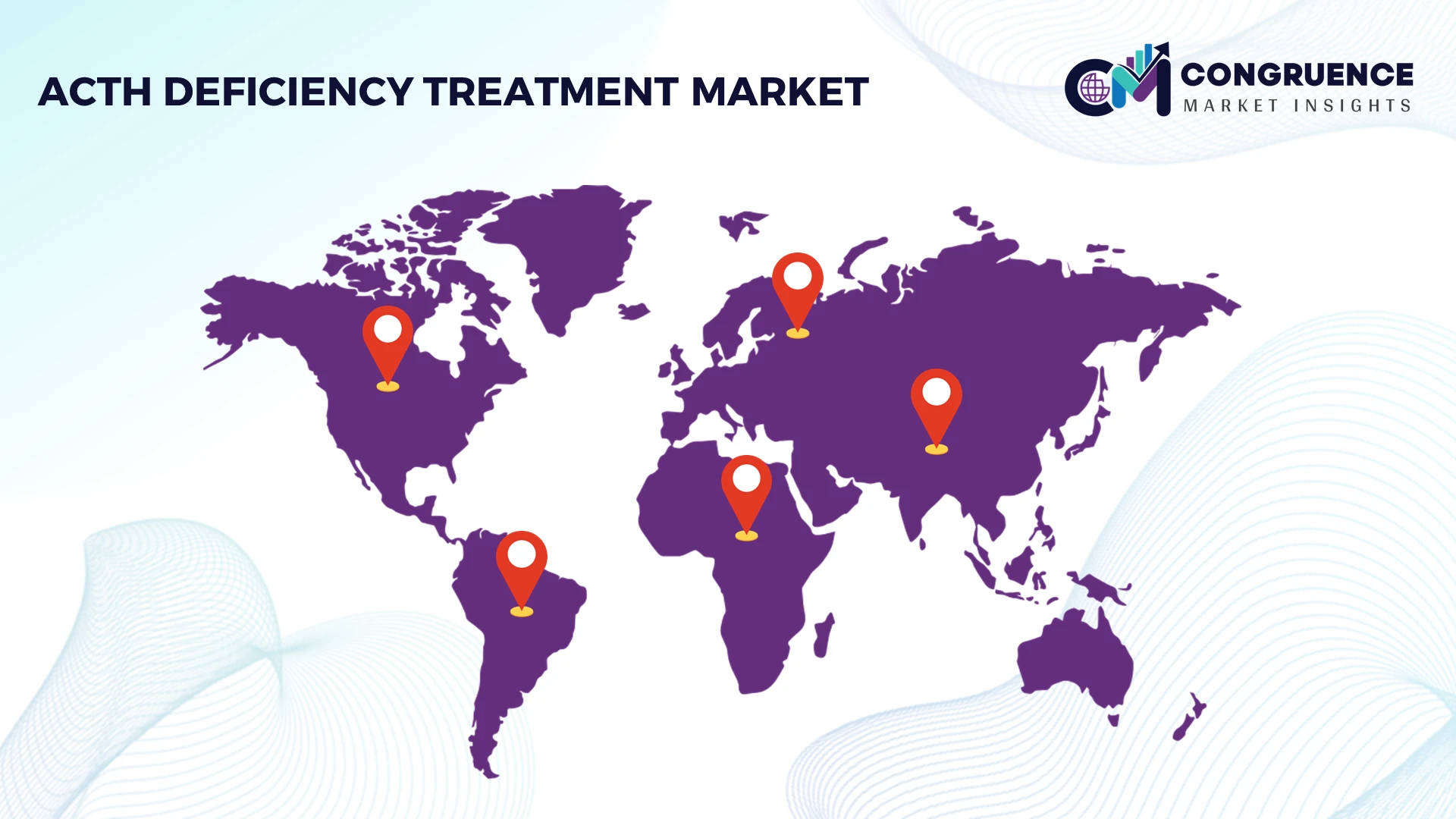
Geographic analysis evaluates North America, Europe, Asia Pacific, South America, and the Middle East and Africa. Technology coverage includes physiological cortisol replacement, pediatric dosing formulations, emergency hydrocortisone delivery, and digital endocrine care. Competitive assessment examines established manufacturers, specialty pharmaceutical developers, regulatory positioning, and distribution partnerships, supporting investment decisions, market entry planning, and expansion priorities.
| Report Attribute/Metric | Report Details |
|---|---|
Market Revenue in 2025 | USD 846 Million |
Market Revenue in 2033 | USD 1308.2 Million |
CAGR (2026 - 2033) | 5.6% |
Base Year | 2025 |
Forecast Period | 2026 - 2033 |
Historic Period | 2021 - 2025 |
Segments Covered | By Type
By Application
By End-User
|
Key Report Deliverable | Revenue Forecast, Growth Trends, Market Dynamics, Segmental Overview, Regional and Country-wise Analysis, Competition Landscape |
Region Covered | North America, Europe, Asia-Pacific, South America, Middle East, Africa |
Key Players Analyzed | Pfizer Inc., Teva Pharmaceutical Industries Ltd., Hikma Pharmaceuticals PLC, Sandoz Group AG, Eton Pharmaceuticals Inc., Neurocrine Biosciences Inc., Recordati S.p.A., Diurnal Group Limited (acquired by Neurocrine Biosciences, excluded as a separate company), Sun Pharmaceutical Industries Ltd., Aurobindo Pharma Ltd., Viatris Inc., Advanz Pharma Corp. Limited, Endo Inc. |
Customization & Pricing | Available on Request (10% Customization is Free) |




