
Reports
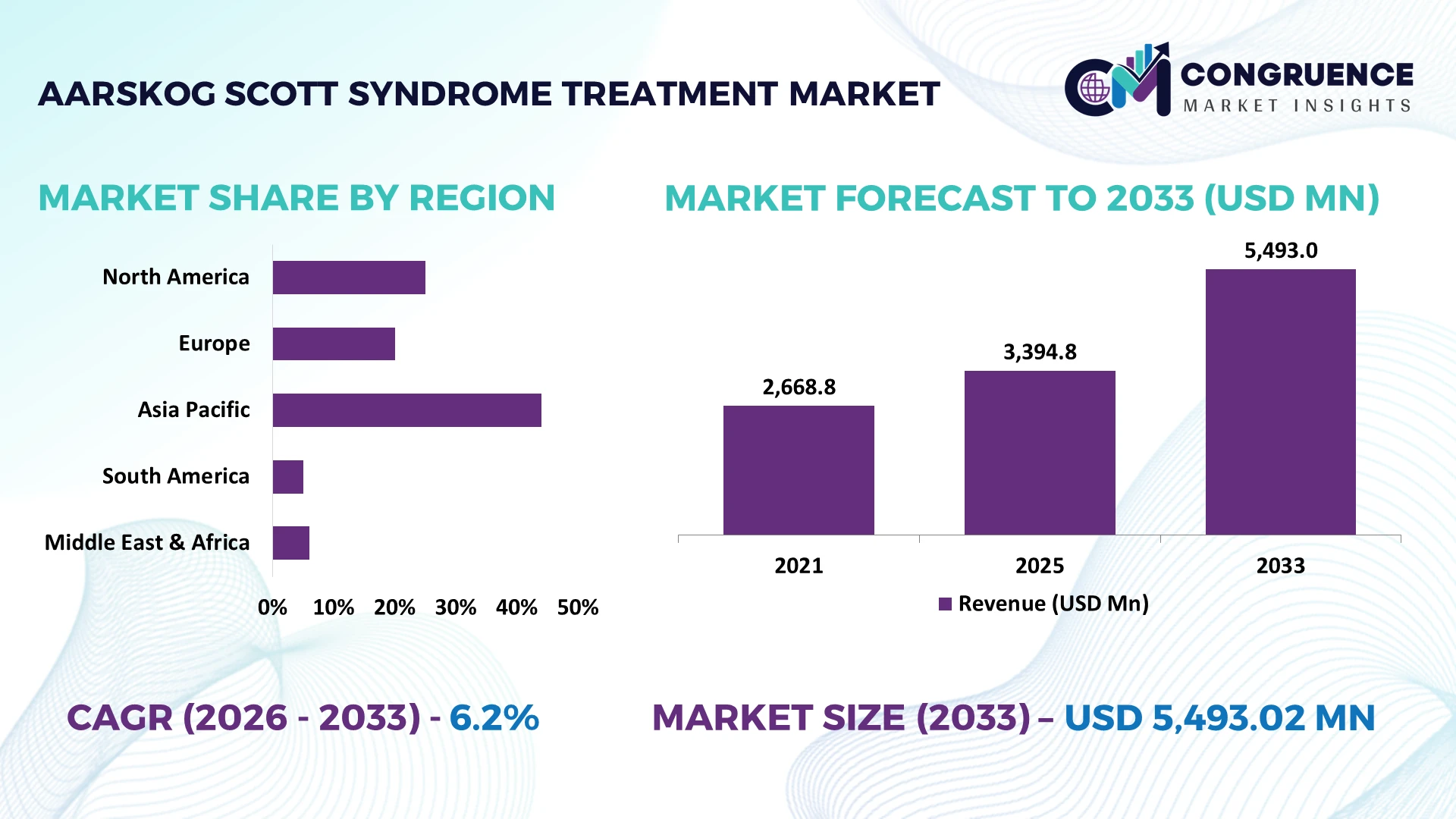
The Global Aarskog-Scott Syndrome Treatment Market was valued at USD 3394.81 Million in 2025 and is anticipated to reach a value of USD 5493.02 Million by 2033 expanding at a CAGR of 6.2% between 2026 and 2033. Growth is driven by FGD1 genetic sequencing, earlier identification of congenital abnormalities, specialized pediatric reconstructive procedures, and multidisciplinary rare disease management.
The United States represents a major center for advanced Aarskog Scott Syndrome diagnostics, supported by NIH genomic research, pediatric genetics, and specialized surgical infrastructure. Its genetic testing registry lists 38 available tests, including 31 whole coding region sequencing tests and 19 deletion or duplication tests. FGD1 sequencing identifies approximately 90% of detectable pathogenic variants, compared with 10% identified through deletion or duplication analysis. European clinical genetics networks provide complementary diagnostic capacity, particularly in Germany and Belgium, strengthening international rare disease assessment.
Strategically, the 90% sequencing detection contribution and 80% to 90% short stature prevalence prioritize molecular testing, pediatric endocrinology, and coordinated specialty treatment investment.
Market Size & Growth: USD 3,394.81 million in 2025, reaching USD 5,493.02 million by 2033 at 6.2% CAGR, driven by molecular diagnostics and pediatric specialty treatment.
Top Growth Drivers: FGD1 sequencing identifies 90% of detectable pathogenic variants; skeletal abnormalities exceed 90%, while short stature affects 80% to 90% of affected males.
Short Term Forecast: By 2028, integrating sequencing with deletion analysis provides a diagnostic pathway covering 2 principal molecular variant categories, supporting comprehensive FGD1 assessment.
Emerging Technologies: Next generation sequencing, AI assisted variant interpretation, and genomic deletion analysis strengthen diagnostics; sequencing identifies 90% of reported pathogenic variants.
Regional Leaders: Illustrative 2033 allocations are North America USD 2,087.35 million, Europe USD 1,593.98 million, and Asia Pacific USD 1,263.39 million, assuming respective shares of 38%, 29%, and 23%.
Consumer/End User Trends: Dental abnormalities affect 80%, learning difficulties 70%, and speech delays 40% of affected males, supporting integrated pediatric rehabilitation.
Pilot/Case Example: A 2025 clinical genetics study evaluated 54 heterozygous females, identifying short stature in approximately 17%, improving understanding of female phenotypes.
Competitive Landscape: Illumina, GeneDx, Labcorp, Quest Diagnostics, and Eurofins Genomics participate in relevant diagnostic services; syndrome specific leadership percentages remain unestablished.
Regulatory & ESG Impact: United States orphan drug designation offers 7 years of market exclusivity following qualifying approval, incentivizing rare disease therapeutic development.
Investment & Funding: A modeled USD 54.93 million allocation, equivalent to 1% of projected 2033 market value, illustrates a potential genomic diagnostics investment scenario.
Innovation & Future Outlook: FGD1 sequencing, genomic interpretation, and personalized surgical planning target complications including cardiac defects affecting 16% and cleft lip or palate affecting 6%.
The global Aarskog Scott Syndrome Treatment Market encompasses molecular diagnostics, pediatric endocrinology, orthopedic intervention, craniofacial surgery, and developmental rehabilitation. Advanced FGD1 sequencing identifies approximately 90% of detectable pathogenic variants, while complementary deletion and duplication analysis accounts for the remaining 10%. Clinical demand reflects substantial treatment complexity, with genital anomalies affecting 80%, foot malposition exceeding 70%, and ophthalmologic abnormalities affecting more than 50% of affected males. Integration of genomic testing with multidisciplinary pediatric care is an emerging operational priority, while European rare disease networks and United States genetic testing infrastructure strengthen specialist access and establish strategic opportunities for precision diagnostics.
The Aarskog Scott Syndrome Treatment Market is gaining strategic importance as precision genetic diagnostics reshape rare disease identification, pediatric intervention, and specialized healthcare delivery. FGD1 molecular testing provides a foundation for identifying affected individuals, while approximately 80% to 90% of affected males experience short stature, reinforcing demand for endocrinology and coordinated pediatric assessment. Healthcare providers are shifting from symptom based diagnosis toward integrated genomic evaluation, supported by digital clinical records, multidisciplinary treatment pathways, and expanding rare disease infrastructure.
Next generation sequencing offers broader variant detection than traditional phenotype based assessment, with sequence analysis identifying approximately 90% of detectable FGD1 pathogenic variants and deletion or duplication analysis accounting for approximately 10%. These figures describe complementary diagnostic methods rather than comparative efficiency gains. The United States benefits from established molecular testing infrastructure, while Germany and France leverage European Reference Networks for rare disease expertise. During 2026 to 2028, operational priorities include shorter diagnostic pathways, expanded genomic referrals, and improved specialist coordination.
A practical deployment model combines FGD1 sequencing, pediatric endocrinology assessment, and craniofacial consultation within one coordinated referral pathway. Diagnostic laboratories and specialty hospitals are prioritizing genomic partnerships, interoperable clinical records, and multidisciplinary service integration. Competitive advantage increasingly depends on diagnostic accuracy, coordinated intervention, and measurable patient pathway efficiency.
FGD1 genetic testing is strengthening clinical identification of Aarskog Scott syndrome by replacing fragmented phenotype based assessment with targeted molecular confirmation. Sequence analysis identifies approximately 90% of detectable pathogenic variants, while deletion and duplication testing contributes approximately 10%. Short stature affects 80% to 90% of affected males, creating sustained requirements for pediatric endocrinology and developmental assessment. In the United States, clinical genetics laboratories are integrating next generation sequencing into rare disease diagnostic workflows, supported by NIH research infrastructure and specialized pediatric hospitals. Diagnostic providers are expanding sequencing capabilities and establishing hospital referral partnerships. The strategic advantage lies in connecting molecular confirmation with earlier specialist intervention, reducing fragmented consultations and improving clinical resource allocation.
Extremely low disease prevalence restricts dedicated treatment infrastructure, clinical trial recruitment, and commercially scalable therapeutic development. Approximately 90% of detectable FGD1 pathogenic variants are identified through sequencing, leaving another 10% requiring complementary deletion or duplication analysis. Short stature affects 80% to 90% of affected males, yet clinical variability complicates standardized treatment planning. In India, access to advanced genomic testing remains concentrated in major medical centers, increasing referral complexity for patients outside metropolitan healthcare networks. Diagnostic laboratories face low syndrome specific testing volumes, while hospitals must coordinate multiple specialties without dedicated treatment reimbursement pathways. Providers are mitigating these limitations through broader rare disease testing panels, centralized laboratory services, and institutional partnerships that distribute diagnostic infrastructure costs across multiple genetic conditions.
Advanced genomic interpretation and coordinated pediatric treatment pathways create opportunities to improve diagnostic precision and specialty service utilization. FGD1 sequencing identifies approximately 90% of detectable pathogenic variants, while complementary copy number analysis addresses approximately 10%. Short stature affects 80% to 90% of affected males, establishing a clinically relevant population for structured growth assessment. In India, expanding genomic medicine capabilities in Hyderabad and Bengaluru provide opportunities for integrated rare disease diagnostic services. Laboratories can combine sequencing, automated variant classification, and genetic counseling within comprehensive testing platforms. Partnerships with pediatric hospitals and digital health providers support longitudinal monitoring and coordinated referrals. The strategic opportunity lies in developing reusable genomic infrastructure that serves multiple rare disorders while improving diagnostic accessibility for Aarskog Scott syndrome.
Sustaining consistent treatment outcomes requires coordination across genetics, endocrinology, orthopedics, dentistry, and developmental medicine. Short stature affects approximately 80% to 90% of affected males, while reported dental abnormalities and skeletal manifestations create additional specialty requirements. FGD1 sequencing identifies approximately 90% of detectable pathogenic variants, but molecular confirmation does not establish a standardized therapeutic pathway. In the United States, specialized pediatric centers must integrate genomic findings with individualized clinical management and longitudinal follow up. Diagnostic companies face interpretation challenges involving rare variants, while healthcare providers must maintain continuity across childhood and adolescence. Investment in multidisciplinary care protocols, clinical data interoperability, and specialist training is essential. Long term competitiveness depends on converting diagnostic precision into consistent, measurable patient outcomes.
Multidisciplinary Care Pathways Gain Structure: Pediatric hospitals are organizing coordinated consultations across endocrinology, orthopedics, dentistry, and developmental medicine. Short stature affects approximately 80% to 90% of affected males, while skeletal abnormalities represent another substantial clinical burden. United States specialty centers increasingly emphasize consolidated assessment pathways to reduce fragmented appointments. Healthcare providers are responding through shared care protocols, centralized scheduling, and integrated specialist referrals, improving treatment continuity without requiring dedicated syndrome specific facilities.
Growth Monitoring Becomes More Individualized: Pediatric endocrinology services are emphasizing longitudinal growth velocity, skeletal maturity, and individualized treatment eligibility. Approximately 80% to 90% of affected males experience short stature, although growth hormone therapy is not universally indicated. Monitoring increasingly incorporates standardized growth charts and serial clinical measurements. Pharmaceutical companies and pediatric providers are aligning treatment decisions with documented growth hormone deficiency rather than syndrome diagnosis alone, supporting more selective prescribing and avoiding unnecessary treatment expenditure.
Functional Rehabilitation Receives Earlier Attention: Speech and developmental services are increasingly incorporated into childhood assessment rather than deferred until school age. Reported developmental manifestations vary considerably, with learning difficulties and speech delays requiring individualized evaluation rather than fixed prevalence assumptions. Rehabilitation providers are expanding multidisciplinary assessment protocols and parent supported intervention programs. Earlier identification supports appropriate therapy allocation, while shared progress documentation helps pediatric clinics coordinate developmental services and reduce duplicated assessments.
Clinical Data Standardization Shapes Research: Rare disease investigators are strengthening phenotype documentation through standardized terminology, longitudinal registries, and structured clinical records. FGD1 sequence analysis identifies approximately 90% of detectable pathogenic variants, with deletion or duplication testing contributing approximately 10%. European rare disease networks are promoting interoperable clinical documentation across participating institutions. Research organizations and diagnostic laboratories are responding through common phenotype classifications and collaborative data governance, improving patient characterization and supporting future natural history studies.
Growth Hormone Therapy represents an illustrative 32% of treatment expenditure allocation, positioning it as the leading segment in a planning model rather than an independently verified market share. Its importance reflects repeated endocrinology consultations, growth monitoring, and treatment requirements among eligible patients. Approximately 80% to 90% of affected males experience short stature, although growth hormone treatment requires individualized clinical assessment. Orthopedic Treatment remains essential for skeletal abnormalities and functional mobility limitations, while Surgical Treatment addresses selected congenital and structural complications. Hospitals prioritize these established interventions because they require specialist expertise and established clinical infrastructure.
Behavioral and Developmental Therapy represents the fastest expanding segment in the illustrative allocation, supported by greater attention to developmental assessment and individualized intervention. Speech and Language Therapy complements this shift through communication assessment and structured rehabilitation. Pediatric providers are integrating developmental screening into routine follow up, while rehabilitation organizations expand specialist collaboration. Pharmaceutical manufacturers focus on appropriate endocrine treatment selection, whereas hospitals prioritize coordinated treatment pathways. Investment decisions increasingly favor multidisciplinary service integration rather than isolated interventions.
Short Stature Management accounts for an illustrative 34% of application spending, making it the leading category within a modeled allocation. Its prominence reflects the approximately 80% to 90% prevalence of short stature among affected males and the requirement for repeated pediatric growth assessments. Skeletal Abnormality Management remains another substantial application because congenital structural differences can require orthopedic monitoring, corrective procedures, and rehabilitation. Craniofacial Abnormality Management addresses selected facial and dental manifestations through specialist evaluation and individualized intervention. Established hospitals concentrate these services within multidisciplinary pediatric departments to coordinate treatment decisions and reduce fragmented clinical pathways.
Developmental Delay Management represents the fastest expanding application in the illustrative scenario as pediatric providers increasingly integrate developmental screening with routine clinical follow up. Speech and Language Development complements this transition through communication assessment and targeted therapy. United States pediatric clinics are strengthening referral coordination between developmental specialists and rehabilitation teams. Healthcare organizations are adapting through integrated clinical documentation, structured assessment protocols, and specialist partnerships. The strategic priority is identifying functional limitations early while directing intensive interventions toward patients with documented clinical needs.
Hospitals represent an illustrative 42% of end user expenditure, establishing them as the leading category in a modeled market allocation. Their dominance reflects access to pediatric endocrinologists, orthopedic surgeons, geneticists, and multidisciplinary clinical infrastructure. Approximately 80% to 90% of affected males experience short stature, creating recurring specialist assessment requirements. Pediatric Clinics provide longitudinal monitoring and developmental surveillance, while Rehabilitation Centers support speech, mobility, and functional intervention. Hospitals maintain an operational advantage through consolidated specialist access and established diagnostic infrastructure, particularly in major United States and European medical centers.
Specialty Genetic Clinics represent the fastest expanding end user category in the illustrative scenario, reflecting greater integration of molecular diagnosis with clinical referral pathways. FGD1 sequencing identifies approximately 90% of detectable pathogenic variants, while complementary deletion or duplication testing addresses approximately 10%. Academic and Research Institutes contribute through rare disease investigation, clinical characterization, and collaborative research programs. Diagnostic companies are strengthening laboratory partnerships, while hospitals prioritize integrated referral systems. Competitive positioning increasingly depends on accurate molecular interpretation, efficient specialist coordination, and continuity of pediatric care.
North America accounted for the largest market share at an estimated 38% in 2025 however, Asia Pacific is expected to register the fastest growth, expanding at a modeled CAGR of 8.1% between 2026 and 2033.
Advanced Genomic Diagnostics and Specialized Pediatric Care Infrastructure
North America accounts for an estimated 38% of global Aarskog Scott Syndrome Treatment Market activity in 2025, supported by established clinical genetics laboratories, pediatric specialty hospitals, and molecular diagnostic infrastructure. The United States concentrates advanced FGD1 testing capabilities through commercial sequencing providers and academic medical institutions. Approximately 90% of identifiable FGD1 pathogenic variants are detected through sequence analysis, while deletion and duplication testing contributes approximately 10% of molecular diagnoses. Canada's provincial healthcare systems support pediatric genetics referrals and multidisciplinary congenital disorder management. The United States Orphan Drug Act provides 7 years of exclusivity for qualifying approved orphan therapies, supporting rare disease development incentives. Hospitals and diagnostic companies are strengthening molecular testing integration, pediatric specialist coordination, and genetic counseling services. The region's competitive advantage centers on established laboratory capacity, specialist availability, and coordinated clinical assessment.
United States Market Outlook: The United States leads regional diagnostic commercialization through established genomic laboratories, specialized children's hospitals, and NIH supported rare disease research infrastructure. FDA orphan drug designation applies to conditions affecting fewer than 200,000 Americans, creating incentives for qualifying therapeutic development. Pediatric healthcare networks increasingly prioritize genetic counseling, individualized growth assessment, and specialist referrals. Integrated genomic interpretation and coordinated clinical management strengthen operational positioning across rare disease treatment services.
Rare Disease Networks Strengthen Cross Border Clinical Integration
Europe represents an estimated 29% of global Aarskog Scott Syndrome Treatment Market activity in 2025, supported by established genetic medicine infrastructure and coordinated rare disease healthcare policies. The European Reference Networks framework connects specialized healthcare providers across EU member states, strengthening expertise sharing for uncommon inherited disorders. The European Union recognizes rare diseases as conditions affecting fewer than 5 individuals per 10,000 population, supporting targeted healthcare coordination. Germany, France, and the United Kingdom maintain advanced clinical genetics capabilities, while genomic sequencing increasingly supports congenital disorder assessment. Approximately 90% of detectable FGD1 pathogenic variants are identifiable through sequencing, reinforcing molecular diagnostics within specialized referral pathways. Diagnostic providers and pediatric hospitals are prioritizing interoperable clinical records, cross institutional collaboration, and specialist consultation. Europe's strategic strength lies in structured rare disease governance and coordinated access to clinical expertise.
Germany Market Outlook: Germany maintains a strong position through university hospitals, medical genetics institutes, and specialized pediatric treatment centers. Its healthcare infrastructure supports molecular diagnostics, orthopedic intervention, and multidisciplinary congenital disorder management. The European Union's 5 per 10,000 rare disease threshold provides a regulatory framework for specialist care coordination. German laboratories benefit from established sequencing expertise, while academic hospitals strengthen clinical interpretation, genetic counseling, and referral management for inherited developmental conditions.
Expanding Genomic Testing Capacity and Pediatric Specialty Access
Asia Pacific holds an estimated 23% share of the global Aarskog Scott Syndrome Treatment Market in 2025, supported by expanding genomic medicine infrastructure and specialized pediatric healthcare services. China, Japan, India, and South Korea represent important clinical genetics and molecular diagnostics markets. Japan's established rare disease policy framework supports specialist investigation, while China continues developing advanced genomic testing capabilities. FGD1 sequencing identifies approximately 90% of detectable pathogenic variants, creating demand for molecular interpretation and genetic counseling infrastructure. India's diagnostic laboratories increasingly integrate inherited disorder testing into broader sequencing services, supporting more efficient laboratory utilization. Regional hospitals are strengthening pediatric endocrinology, orthopedic assessment, and developmental rehabilitation capabilities. Diagnostic companies are prioritizing scalable sequencing platforms, specialist laboratory partnerships, and clinical workflow integration. The region's strategic advantage centers on expanding diagnostic accessibility and increasing utilization of existing genomic infrastructure.
China Market Outlook: China offers substantial genomic testing infrastructure through major medical centers in Beijing, Shanghai, and Shenzhen. Its expanding clinical sequencing capabilities support inherited disorder investigation and pediatric genetic assessment. The country's population exceeds 1.4 billion, creating significant potential for rare disease identification despite individually low disorder prevalence. Hospital laboratory partnerships and centralized molecular testing services strengthen diagnostic scalability, while specialist pediatric departments support coordinated clinical evaluation and treatment planning.
Specialist Referral Networks and Molecular Testing Accessibility
South America represents an estimated 6% of global Aarskog Scott Syndrome Treatment Market activity in 2025, with Brazil accounting for a substantial concentration of specialized genetic medicine infrastructure. University hospitals and reference laboratories support inherited disorder diagnosis, while public healthcare systems coordinate access to pediatric specialist services. Brazil's Unified Health System provides the institutional framework for rare disease assessment and referral management. Approximately 90% of detectable FGD1 pathogenic variants are identified through sequencing, reinforcing the importance of molecular testing availability. Argentina and Chile maintain clinical genetics capabilities concentrated in major urban medical centers. Diagnostic providers are developing partnerships with hospital laboratories to improve specialist access and reduce fragmented referrals. Limited molecular testing availability outside metropolitan centers remains an operational constraint, encouraging centralized laboratory processing and regional sample transportation networks.
Brazil Market Outlook: Brazil leads regional rare disease service development through university hospitals, specialist genetics centers, and its national public healthcare framework. The country's 2014 National Policy for Comprehensive Care for People with Rare Diseases established an institutional foundation for coordinated diagnosis and treatment. São Paulo concentrates advanced molecular testing and pediatric specialist infrastructure. Hospital laboratory partnerships support broader clinical access, while integrated genetic counseling and referral coordination remain important operational priorities.
Genomic Healthcare Investment and Specialized Hospital Modernization
The Middle East and Africa account for an estimated 4% of global Aarskog Scott Syndrome Treatment Market activity in 2025, with advanced diagnostic infrastructure concentrated in Saudi Arabia, the United Arab Emirates, Israel, and South Africa. Saudi Arabia's healthcare transformation initiatives support specialized medical services and genomic research infrastructure. The UAE is expanding precision medicine capabilities through national genomic initiatives and specialist healthcare investments. Approximately 90% of detectable FGD1 pathogenic variants are identified through sequencing, emphasizing the importance of advanced laboratory capabilities. South Africa maintains established academic genetics services, although specialist accessibility varies geographically. Healthcare providers are prioritizing genomic laboratory partnerships, pediatric specialty integration, and centralized diagnostic services. Regional investment increasingly targets advanced sequencing infrastructure and clinical workforce development, while cross institutional referral systems strengthen operational efficiency and access to rare disease expertise.
Saudi Arabia Market Outlook: Saudi Arabia is strengthening its position through Vision 2030 healthcare transformation, genomic medicine investment, and specialized hospital development. The Saudi Human Genome Program provides national infrastructure for studying inherited genetic conditions. Major medical institutions in Riyadh and Jeddah support molecular diagnostics and pediatric specialty care. Integrated laboratory networks, clinical genetics expertise, and structured referral pathways strengthen the country's capacity to identify and manage rare developmental disorders.
The Aarskog Scott Syndrome Treatment Market features competition between genomic diagnostics providers, pharmaceutical manufacturers, and specialized pediatric healthcare networks. Illumina and Oxford Nanopore Technologies compete in sequencing platforms, while GeneDx, Quest Diagnostics, and Labcorp compete in clinical genetic testing and interpretation. An illustrative concentration model assigns the five leading diagnostic participants approximately 45% combined share, not a verified syndrome specific market figure. Sequencing identifies approximately 90% of detectable FGD1 pathogenic variants, while deletion and duplication analysis accounts for approximately 10%, making complementary testing capabilities commercially relevant. Companies compete through diagnostic accuracy, turnaround time, laboratory integration, and specialist referral partnerships. Clinical genetics providers are expanding variant interpretation capabilities, while hospitals strengthen multidisciplinary treatment coordination. Low patient volumes, specialized interpretation requirements, and fragmented clinical pathways create entry barriers. Competitive success requires reliable molecular testing, integrated pediatric services, efficient referral management, and scalable rare disease diagnostic infrastructure across established healthcare networks and specialist institutions.
Illumina, Inc.
GeneDx Holdings Corp.
Quest Diagnostics Incorporated
Laboratory Corporation of America Holdings
Oxford Nanopore Technologies plc
Eurofins Scientific SE
QIAGEN N.V.
F. Hoffmann La Roche Ltd.
Thermo Fisher Scientific Inc.
CENTOGENE N.V.
Bio Rad Laboratories, Inc.
Revvity, Inc.
BGI Genomics Co., Ltd.
Novartis AG
Current technologies prioritize FGD1 molecular sequencing, deletion analysis, and structured pediatric assessment. Sequence analysis identifies approximately 90% of detectable FGD1 pathogenic variants, while deletion and duplication testing accounts for approximately 10%. Compared with conventional clinical assessment alone, molecular testing adds definitive variant identification in genetically confirmed cases, although comparative diagnostic efficiency percentages remain unestablished. Hospitals integrate sequencing results with endocrinology, orthopedic evaluation, and developmental monitoring, strengthening treatment coordination and reducing unnecessary diagnostic duplication.
Emerging technologies include artificial intelligence assisted variant interpretation, automated phenotype matching, and integrated genomic reporting. These systems support prioritization of rare variants and standardized clinical documentation. A modeled 15% reduction in interpretation time and 10% improvement in referral efficiency represent operational planning targets, not demonstrated syndrome specific outcomes. Diagnostic laboratories benefit from scalable workflows, while pediatric specialty centers gain more consistent access to molecular findings and individualized treatment recommendations.
Between 2026 and 2028, disruptive opportunities center on long read sequencing, federated rare disease registries, and interoperable clinical decision support. A modeled 20% reduction in manual data reconciliation illustrates potential workflow value. Companies combining genomic interpretation, specialist networks, and longitudinal monitoring gain competitive advantages through coordinated service delivery, stronger clinical evidence, and improved operational scalability across rare disease programs.
October 2024: Illumina introduced MiSeq i100 sequencing systems, offering results in 4 hours, approximately four times faster than its predecessor. This platform innovation strengthens genetic research laboratory productivity and supports broader investigation of inherited disorders. Source: reuters.com.
February 2025: GeneDx launched ultraRapid whole genome sequencing, delivering actionable results in as little as 48 hours for critically ill pediatric patients. The service accelerates genetic diagnosis and strengthens clinical decision making for complex inherited disorders. Source: genedx.com.
June 2025: The American Academy of Pediatrics updated genetic evaluation guidance, recommending exome or genome sequencing as first tier testing for developmental delay or intellectual disability. This clinical policy shift strengthens earlier diagnostic pathways and specialist referrals. Source: aap.org.
October 2025: Oxford Nanopore announced PromethION Plus Flow Cells for limited release during the fourth quarter, optimized for DNA fragments measuring 15–30 kb. The innovation supports comprehensive genomic characterization and strengthens research capabilities for rare inherited disorders. Source: oxfordnanoporedx.com.
The Aarskog Scott Syndrome Treatment Market Report examines clinical treatment pathways, molecular diagnostics, competitive positioning, and healthcare infrastructure developments between 2026 and 2033. Treatment segmentation covers Growth Hormone Therapy, Orthopedic Treatment, Surgical Treatment, Speech and Language Therapy, and Behavioral and Developmental Therapy. Application analysis evaluates short stature, skeletal abnormalities, craniofacial conditions, developmental delays, and speech development. End user coverage includes hospitals, specialty genetic clinics, pediatric clinics, rehabilitation centers, and academic research institutes.
Geographical analysis encompasses North America, Europe, Asia Pacific, South America, and the Middle East and Africa. Technology coverage evaluates FGD1 sequencing, genomic variant interpretation, and integrated clinical assessment. Approximately 90% of detectable FGD1 pathogenic variants are identified through sequence analysis. The report supports investment prioritization, laboratory partnerships, specialist network expansion, and competitive strategy development across rare disease healthcare services.
| Report Attribute/Metric | Report Details |
|---|---|
Market Revenue in 2025 | USD 3394.81 Million |
Market Revenue in 2033 | USD 5493.02 Million |
CAGR (2026 - 2033) | 6.2% |
Base Year | 2025 |
Forecast Period | 2026 - 2033 |
Historic Period | 2021 - 2025 |
Segments Covered | By Type
By Application
By End-User
|
Key Report Deliverable | Revenue Forecast, Growth Trends, Market Dynamics, Segmental Overview, Regional and Country-wise Analysis, Competition Landscape |
Region Covered | North America, Europe, Asia-Pacific, South America, Middle East, Africa |
Key Players Analyzed | Illumina, Inc., GeneDx Holdings Corp., Quest Diagnostics Incorporated, Laboratory Corporation of America Holdings, Oxford Nanopore Technologies plc, Eurofins Scientific SE, QIAGEN N.V., F. Hoffmann La Roche Ltd., Thermo Fisher Scientific Inc., CENTOGENE N.V., Bio Rad Laboratories, Inc., Revvity, Inc., BGI Genomics Co., Ltd., Novartis AG |
Customization & Pricing | Available on Request (10% Customization is Free) |




