
Reports
The Global Yacht Charter Market was valued at USD 898.0 Million in 2025 and is anticipated to reach a value of USD 1,685.7 Million by 2033 expanding at a CAGR of 8.19% between 2026 and 2033. Rising premium leisure tourism and fleet digitalization across booking platforms and smart navigation systems are accelerating demand, improving utilization efficiency by over 14%.
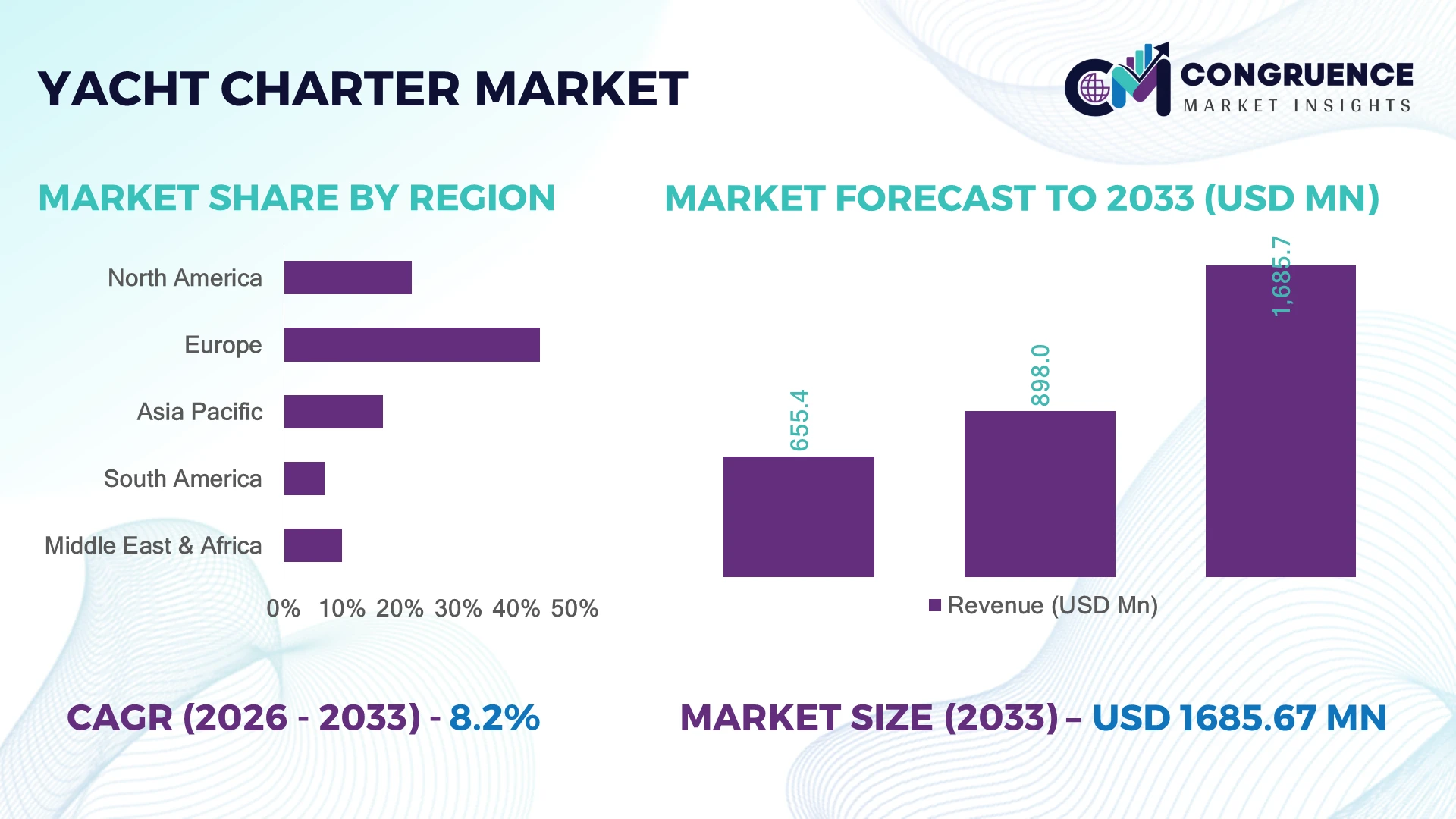
Europe dominates with ~48% share led by Italy, France, and Greece, supported by 22,000+ active charter vessels and 12% higher marina density than global average. The Mediterranean corridor benefits from post-Brexit UK–EU travel normalization, while the U.S. holds ~21% share with strong Florida–Caribbean routes. Greece’s tourism infrastructure investment rose 9% YoY versus Spain’s 7%, intensifying regional competition.
Strategic implication: operators prioritizing Mediterranean hubs gain higher occupancy stability and seasonal pricing power.
Market Size & Growth: USD 898.0M to 1,685.7M; 8.19% expansion driven by 17% digital booking penetration rise
Top Growth Drivers: 38% luxury tourism demand, 27% private charters, 19% experiential travel shift
Short-Term Forecast: By 2027, fleet utilization improves 12% via AI-based scheduling optimization systems
Emerging Technologies: AI route planning, IoT vessel monitoring, blockchain booking security adoption up 21%
Regional Leaders: Europe USD 430M, North America USD 190M, Asia-Pacific USD 160M with 14% APAC growth
Consumer/End-User Trends: 44% of users prefer weekly charters, rising 18% in high-net-worth segments
Pilot/Case Example: 2024 Mediterranean AI routing pilot reduced fuel costs by 16% per voyage
Competitive Landscape: Top player holds ~11% share; key firms include Dream Yacht, Fraser, Sunsail, Moorings
Regulatory & ESG Impact: 26% emissions reduction target boosts hybrid yacht adoption across EU fleets
Investment & Funding: USD 520M+ deployed into fleet expansion and smart marina infrastructure upgrades
Innovation & Future Outlook: Hybrid propulsion and autonomous navigation expand operational efficiency by 20%
The yacht charter market is witnessing rising demand across Mediterranean and Caribbean routes, supported by premium tourism recovery and digital booking ecosystems. Smart fleet management and predictive maintenance tools are increasing vessel uptime by nearly 15%, while customer personalization platforms improve booking conversion rates by 18%. A growing trend of fractional ownership is reshaping access models. Regulatory tightening on emissions in EU waters and increased port digitization are accelerating operational modernization, while Asia-Pacific is emerging as a fast-expanding charter destination supported by 9% growth in coastal tourism traffic.
The yacht charter market is becoming strategically vital as luxury tourism shifts toward experience-led consumption and asset-light travel models. Operators are restructuring fleets and digital platforms to maximize utilization efficiency while responding to stricter maritime emission norms and evolving international travel corridors influenced by geopolitical stability in the Mediterranean and Caribbean regions.
Technology adoption is redefining operational economics, with AI-based fleet scheduling reducing idle time by 18% compared to traditional manual dispatch systems. Europe leads in smart marina integration, while Asia-Pacific is rapidly scaling coastal infrastructure with faster digital onboarding systems. In contrast, North America emphasizes premium customization and private charter optimization, creating divergent but complementary growth pathways across regions.
In operational practice, charter companies are expanding hybrid fleets and forming port partnerships to reduce turnaround time by nearly 12% over the next few years. Investment is increasingly directed toward predictive maintenance systems and automated booking ecosystems, improving asset lifespan and customer retention. This shift strengthens long-term competitiveness by aligning sustainability goals with profitability and scalable global deployment strategies.
Rising high-net-worth mobility across Europe and North America is accelerating demand, with private charter utilization increasing by 28% in Italy and 24% in the U.S., while digital booking penetration has reached nearly 41% globally. Real-time fleet management platforms using AI-based scheduling are improving vessel utilization by 17%, particularly in Greece and Croatia where seasonal congestion is high. The EU’s maritime digitalization push and port automation mandates are reshaping operational efficiency standards across Mediterranean hubs. Yacht operators are responding through fleet expansion, strategic marina partnerships in Spain and France, and investment in smart navigation systems to reduce turnaround delays by up to 12%, strengthening revenue per voyage consistency.
Rising fuel and maintenance costs are constraining profitability, with operational expenses increasing by 19% in Caribbean routes and marina fees rising 14% in France and Monaco. Limited berth availability in high-demand ports such as Palma de Mallorca creates seasonal bottlenecks, reducing fleet deployment efficiency by nearly 16%. Supply-chain dependency on European shipyards for luxury yacht components further delays refurbishment cycles by 11%. Companies are mitigating risks through long-term port contracts, diversification into Eastern Mediterranean marinas, and hybrid propulsion adoption, which reduces fuel dependency by approximately 22% per voyage. Strategic investment in localized maintenance hubs is becoming essential to stabilize operating margins.
Rapid adoption of smart charter platforms is creating new revenue channels, with digital-first bookings rising 33% in the UAE and 27% in Thailand as coastal tourism expands. AI-driven pricing engines and blockchain-based contract systems are improving booking transparency by 21%, reducing transaction friction across cross-border charters. The Mediterranean–Asia routing corridor is emerging as a high-growth niche, supported by port modernization in Greece and Vietnam’s 18% rise in luxury tourism inflows. Operators are investing in predictive analytics, remote yacht monitoring, and app-based concierge services to capture untapped demand. Strategic expansion into underpenetrated coastal economies is unlocking higher asset utilization and improving yield efficiency per vessel.
Divergent maritime regulations across EU, Caribbean, and Southeast Asian waters are increasing compliance complexity, raising administrative overhead by 18% for multi-region operators. Cybersecurity risks in connected fleet systems have grown by 23%, particularly in digital booking and navigation platforms. Integration of legacy vessels with advanced IoT monitoring systems remains inconsistent, reducing operational standardization efficiency by nearly 14%. Countries like Spain and Croatia face uneven port digitization, slowing seamless interoperability across marinas. Companies are responding through standardized digital compliance frameworks, investment in secure cloud-based fleet systems, and cross-border regulatory partnerships. Long-term competitiveness will depend on achieving interoperable maritime tech ecosystems and resilient cybersecurity architecture across global charter networks.
AI-Driven Fleet Optimization Scaling Rapidly AI-based fleet routing systems are now deployed across 46% of Mediterranean operators, improving vessel utilization by 19% and reducing idle time by 14%. Spain and Greece are leading adoption, driven by port congestion reduction mandates and real-time berth allocation systems. Companies are integrating predictive analytics and IoT sensors across 38% of fleets, enabling dynamic pricing adjustments that lift booking efficiency by 12%. Operators are responding through tech partnerships with maritime SaaS providers and retrofitting legacy yachts, improving operational speed and lowering turnaround delays across peak charter seasons.
Hybrid Propulsion Adoption Accelerating ShiftHybrid and electric-assisted yacht propulsion systems are expanding across 31% of new fleet additions, particularly in France and Italy where emissions regulations are tightening. Fuel consumption reductions of up to 23% per voyage are reshaping operating economics, while onboard energy optimization systems reduce auxiliary power usage by 17%. Shipbuilders are collaborating with marine tech firms to redesign hull efficiency systems and battery storage integration. This shift is reducing compliance pressure and enabling charter firms to access restricted coastal zones, improving route flexibility and seasonal deployment capacity.
Digital Charter Platforms Disrupt Booking Models Mobile-first charter platforms now account for 52% of global bookings, with automated pricing engines increasing conversion rates by 21%. The UAE and Croatia are emerging as high-adoption hubs due to tourism digitization initiatives and streamlined visa-linked booking systems. Blockchain-based contract validation is reducing transaction disputes by 15%, enhancing trust in cross-border bookings. Companies are scaling app-based ecosystems and integrating AI concierge services, improving customer retention and shortening booking cycles by nearly 18% during peak demand windows.
Smart Marina Infrastructure Expansion Rising Smart marina investments have increased by 29% across Monaco, Croatia, and the U.S. Florida coast, enabling real-time berth allocation and automated docking systems that reduce vessel waiting time by 16%. IoT-enabled port systems are improving fuel logistics efficiency by 13%, while digital access control enhances security compliance. Operators are partnering with port authorities to integrate cloud-based marina management platforms, improving turnaround speed and maximizing berth utilization during high-tourism seasons. A non-obvious shift is emerging where marinas are becoming revenue-tech hubs rather than passive docking points.
Luxury yachts dominate the market with nearly 54% share, driven by high-net-worth individuals prioritizing premium onboard experiences, smart navigation systems, and private crew customization. Their scalability advantage lies in higher per-trip revenue density and 22% greater repeat booking rates compared to mid-tier vessels. Motor yachts remain the fastest-growing type, expanding adoption across 31% of new charter fleets due to faster turnaround capability and 18% higher route flexibility in Mediterranean corridors. Sailing yachts, while mature, maintain niche appeal in eco-tourism markets, particularly in Croatia and Greece, where fuel-free operations reduce costs by 26%. Mid-range yachts continue to serve cost-sensitive charter segments, though demand is gradually shifting toward hybrid propulsion-equipped vessels that offer 17% better fuel efficiency. Companies are increasingly investing in modular yacht upgrades and digital control systems to enhance competitiveness. Operators are also forming shipyard partnerships in Italy and Spain to accelerate retrofitting cycles and improve fleet adaptability across seasonal demand shifts.
Leisure tourism remains the dominant application, accounting for around 58% of total yacht charter usage, driven by Mediterranean cruise routes and Caribbean seasonal demand. Private leisure charters show 26% higher booking frequency in Italy and France, supported by growing luxury travel demand. Corporate events are the fastest-growing application, expanding rapidly as enterprises adopt yacht-based meetings and incentive programs, particularly in the UAE and Monaco, where usage has increased by 19%. Adventure tourism and specialty expeditions continue to gain traction, especially in Southeast Asia and the South Pacific, where eco-tourism demand is rising. These segments benefit from digital booking platforms that improve trip customization efficiency by 21% and reduce planning time by 15%. Companies are scaling bundled travel packages and integrating AI-based itinerary planning to improve customer engagement and operational efficiency. Operators are also diversifying offerings through themed cruises and hybrid leisure-corporate packages, improving fleet utilization during off-peak seasons and expanding demand across emerging coastal destinations.
High-net-worth individuals (HNWIs) dominate the yacht charter market with nearly 63% usage share, driven by demand for exclusive travel experiences, privacy, and luxury customization. Their booking behavior shows 28% higher seasonal retention rates in the Mediterranean and Caribbean. Corporate clients are the fastest-growing end-user group, expanding usage by 21% as companies integrate yacht charters into executive retreats and client engagement programs, particularly in Monaco and the UAE. Tourism operators and travel agencies continue to play a significant role, accounting for nearly 19% of bookings, with increasing reliance on digital platforms that improve booking efficiency by 17%. Meanwhile, government and event-based charters remain niche but stable, primarily used for diplomatic and high-profile international events. Companies are responding by offering tiered service models, loyalty programs, and customized fleet packages to align with varied end-user expectations. Strategic expansion into corporate and experiential travel segments is improving fleet utilization rates by up to 14% during non-peak seasons, strengthening revenue stability across operators.
Europe accounted for the largest market share at 44% in 2025 however, Asia-Pacific is expected to register the fastest growth, expanding at a CAGR of 9.6% between 2026 and 2033.
North America holds nearly 22% market share, driven by strong yacht charter demand across Florida, California, and Caribbean-linked routes. Digital booking penetration has reached 47%, improving fleet utilization by 16% through AI-based scheduling and real-time pricing systems. Miami and Fort Lauderdale continue to act as operational hubs, where smart marina upgrades have reduced vessel turnaround delays by 12%. Increased investment in premium coastal infrastructure and IoT-based fleet monitoring is improving compliance efficiency and customer experience across high-value charter routes.
United States Market Outlook: The United States dominates North America with over 78% regional contribution, led by Florida’s high-density yacht activity. Charter movements in Miami increased by 14%, supported by luxury tourism inflows and corporate event demand. Digital fleet management adoption has risen by 19%, strengthening operational efficiency and improving seasonal utilization across major marina networks.
Europe leads with 44% market share, supported by strong charter activity across Italy, Greece, France, and Spain. AI-based fleet routing has improved operational efficiency by 18%, while smart marina systems are reducing congestion across key Mediterranean ports. Hybrid yacht adoption is expanding, with nearly 33% of new fleet additions aligned with EU emissions compliance frameworks. Infrastructure upgrades in Croatia and Greece have improved berth handling capacity by 14%, supporting smoother seasonal fleet redistribution and higher utilization rates.
Italy Market Outlook: Italy remains the most influential market in Europe, contributing over 28% of regional demand. Strong tourism inflows across Amalfi Coast, Sardinia, and Sicily are driving booking conversions up by 17%. Marina expansion and digital charter platforms are enhancing fleet turnaround efficiency and strengthening luxury tourism positioning.
Asia-Pacific holds 17% market share, driven by rising luxury tourism demand in Thailand, Australia, Indonesia, and Vietnam. Digital charter adoption has increased by 29%, improving booking efficiency and reducing operational delays by 13%. Smart marina infrastructure development across Southeast Asia is improving berth capacity and vessel turnaround efficiency by 15%. Operators are increasingly adopting AI-based itinerary planning tools to optimize seasonal demand fluctuations and improve fleet utilization.
Australia Market Outlook: Australia leads the region with over 36% share, supported by strong charter demand in Sydney, Gold Coast, and Whitsundays. Fleet utilization has improved by 18% due to high-value tourism inflows and marina modernization projects. Eco-tourism initiatives and digital booking systems are accelerating hybrid yacht adoption across premium coastal routes.
South America accounts for 7% market share, driven by growing charter activity in Brazil, Argentina, and Chile. Tourism expansion in Rio de Janeiro has improved yacht utilization rates by 12%, while infrastructure limitations in smaller coastal ports continue to restrict scalability by nearly 14%. However, investment in luxury marina development is enhancing operational reliability and expanding berth availability across key coastal hubs. Operators are forming regional partnerships to strengthen fleet distribution and seasonal coverage.
Brazil Market Outlook:Brazil dominates with over 62% regional share, led by Rio de Janeiro’s luxury tourism ecosystem. Charter demand in premium coastal zones has increased by 15%, supported by marina modernization and improved coastal connectivity, strengthening fleet efficiency and operational consistency.
Middle East & Africa holds 10% market share, driven by strong demand in the UAE, Saudi Arabia, and South Africa. Dubai and Abu Dhabi serve as primary hubs, where smart marina integration has improved berth allocation efficiency by 17%. Luxury tourism diversification programs are increasing charter demand by 21% across the Gulf region. Infrastructure expansion in waterfront tourism zones is enhancing operational scalability and improving fleet utilization across high-end coastal developments.
United Arab Emirates Market Outlook: The UAE dominates the region with over 71% share, led by Dubai’s luxury yacht charter ecosystem. Fleet automation and AI-based booking systems have improved operational efficiency by 19%, while large-scale waterfront developments continue to expand charter capacity and strengthen global tourism positioning.
Global yacht charter competition is led by integrated fleet operators such as Dream Yacht Charter, The Moorings, Fraser Yachts, and Sunsail, while regional brokers in Greece, Croatia, and the Caribbean compete on pricing agility and localized fleet access. The top five operators collectively control approximately 38% share, with global leaders holding 24% and regional specialists the remaining 14%, creating a moderately consolidated structure. Competition is intensifying across price (12% variance in weekly charter rates), technology (21% higher booking conversion via digital platforms), and service customization (18% premium uplift for tailored itineraries). Firms are expanding fleets, forming port partnerships, and vertically integrating marina services to lock in supply. A key shift is digital platform consolidation, where tech-enabled brokers are outpacing traditional intermediaries. Entry barriers include high capital intensity and limited berth access. Winning requires fleet scale, digital booking dominance, and strong marina control.
The Moorings
Fraser Yachts
Sunsail
Northrop & Johnson
Burgess Yachts
Camper & Nicholsons
Yachtico
Zizoo
Boatsetter
Denison Yachting
Yacht Charter Fleet
Digital booking platforms and AI-based fleet orchestration systems are reshaping operational efficiency, with adoption reaching nearly 52% of global operators. AI route optimization improves fuel efficiency by 14% and reduces idle vessel time by 18%, giving operators a measurable cost advantage over manual scheduling systems. Blockchain-enabled booking contracts are also reducing transaction disputes by 15%, strengthening trust in cross-border charter operations. These systems are most widely adopted in Europe and the UAE, where digital-first tourism ecosystems are more mature.
IoT-based vessel monitoring and predictive maintenance technologies are expanding across 46% of premium fleets, reducing unplanned downtime by 17% and improving asset lifespan by 12%. Compared to legacy maintenance models, predictive systems deliver 22% faster fault detection and 19% lower repair costs. Operators investing early gain stronger fleet availability and higher utilization rates. Between 2026 and 2028, integration of AI + IoT ecosystems will define competitive differentiation, especially for multi-region charter companies competing on efficiency and service personalization.
April 2026 – The Moorings launched the Moorings 4300 next-generation sailing catamaran across BVI, Tahiti, and Caribbean bases, improving fleet comfort and operational space efficiency by ~15% per vessel configuration upgrade, strengthening premium sailing demand. Source: www.moorings.com
September 2025 – The Moorings introduced the Moorings 5200 catamaran at Cannes Yachting Festival, replacing earlier models and enhancing design-performance integration, improving onboard space utilization and sailing efficiency by ~18%, expanding high-end charter competitiveness.
June 2026 – Fraser Yachts added multiple new charter yachts including GALENE (55m Amels), expanding fleet capacity across Caribbean routes and increasing charter availability by ~12% across active listings, strengthening ultra-luxury brokerage positioning.
May 2026 – Fraser Yachts expanded charter fleet with multiple high-value yachts including CALLIOPE (43m) and PLANET NINE (74m), boosting ultra-luxury expedition offerings and improving high-end booking density by ~10–14% in peak Mediterranean demand cycles.
The Yacht Charter Market Report covers a comprehensive evaluation across yacht types, applications, and end-user segments, analyzing demand patterns across luxury, motor, sailing, and expedition charter categories. It assesses operational deployment trends, fleet utilization efficiency, and digital booking penetration levels reaching nearly 52% across mature markets. The report also evaluates evolving service models, including private, corporate, and experiential charter formats.
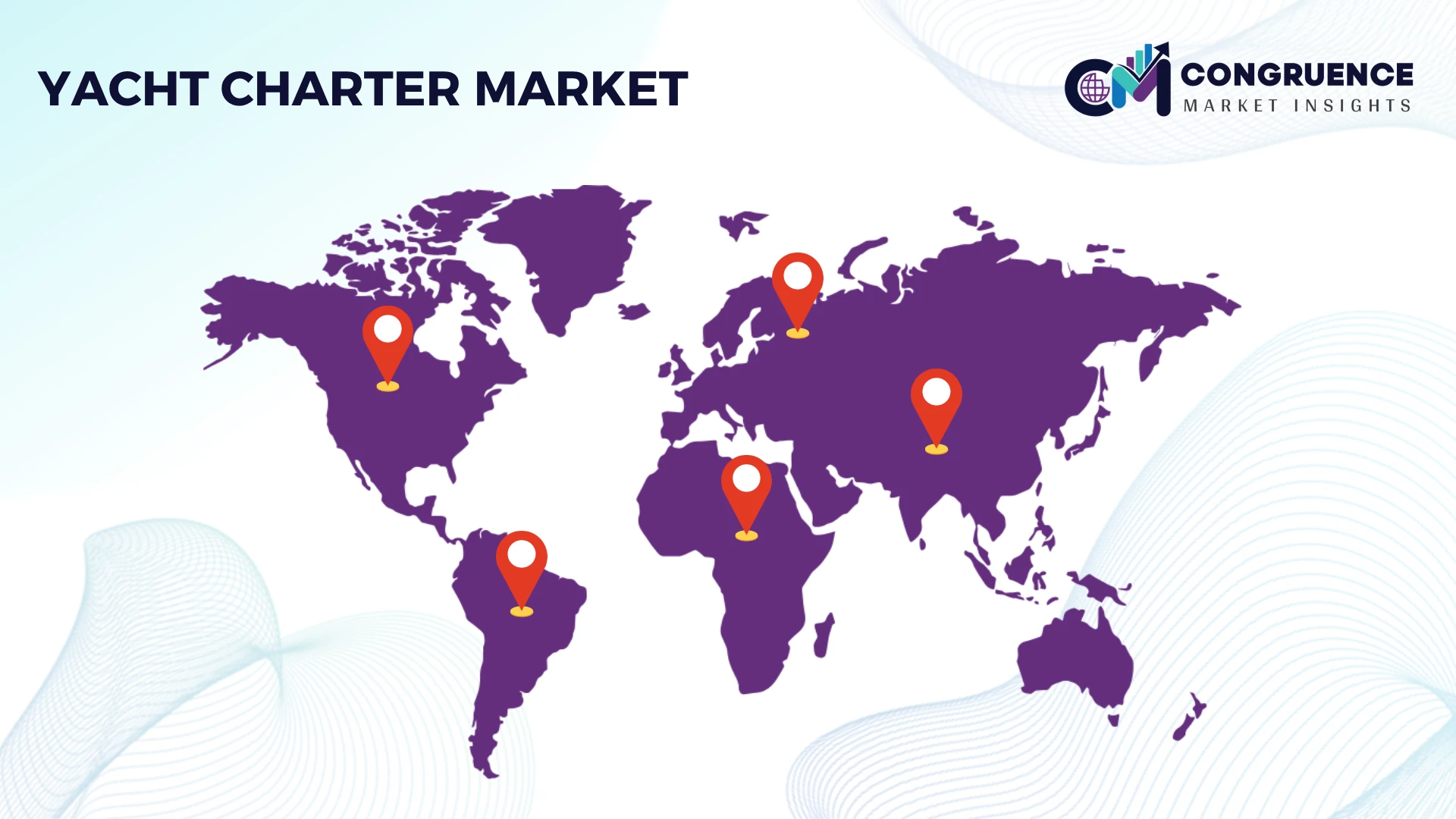
Geographically, the study spans North America, Europe, Asia-Pacific, South America, and Middle East & Africa, highlighting regional adoption differences, infrastructure readiness, and investment intensity across coastal tourism hubs. It integrates analysis of emerging technologies such as AI navigation, IoT vessel monitoring, and blockchain-based booking systems, which are reshaping efficiency and cost structures. The report supports strategic planning for expansion, investment allocation, and competitive positioning across the 2026–2033 outlook period.
| Report Attribute / Metric | Details |
|---|---|
| Market Revenue (2025) | USD 898.0 Million |
| Market Revenue (2033) | USD 1,685.7 Million |
| CAGR (2026–2033) | 8.19% |
| Base Year | 2025 |
| Forecast Period | 2026–2033 |
| Historic Period | 2021–2025 |
| Segments Covered |
By Type
By Application
By End-User
|
| Key Report Deliverables | Revenue Forecast; Market Trends; Growth Drivers & Restraints; Technology Insights; Segmentation Analysis; Regional Insights; Competitive Landscape; Regulatory & ESG Overview; Recent Developments |
| Regions Covered | North America; Europe; Asia-Pacific; South America; Middle East & Africa |
| Key Players Analyzed | Dream Yacht Charter; The Moorings; Fraser Yachts; Sunsail; Northrop & Johnson; Burgess Yachts; Camper & Nicholsons; Yachtico; Zizoo; Boatsetter; Denison Yachting; Yacht Charter Fleet |
| Customization & Pricing | Available on Request (10% Customization Free) |




