
Reports
The Global Water and Wastewater Treatment Market was valued at USD 15200 Million in 2025 and is anticipated to reach a value of USD 23133.36 Million by 2033 expanding at a CAGR of 5.39% between 2026 and 2033. Growth is driven by stricter industrial discharge standards, wastewater reuse mandates, membrane-based treatment upgrades, and rising investment in resource-recovery infrastructure.
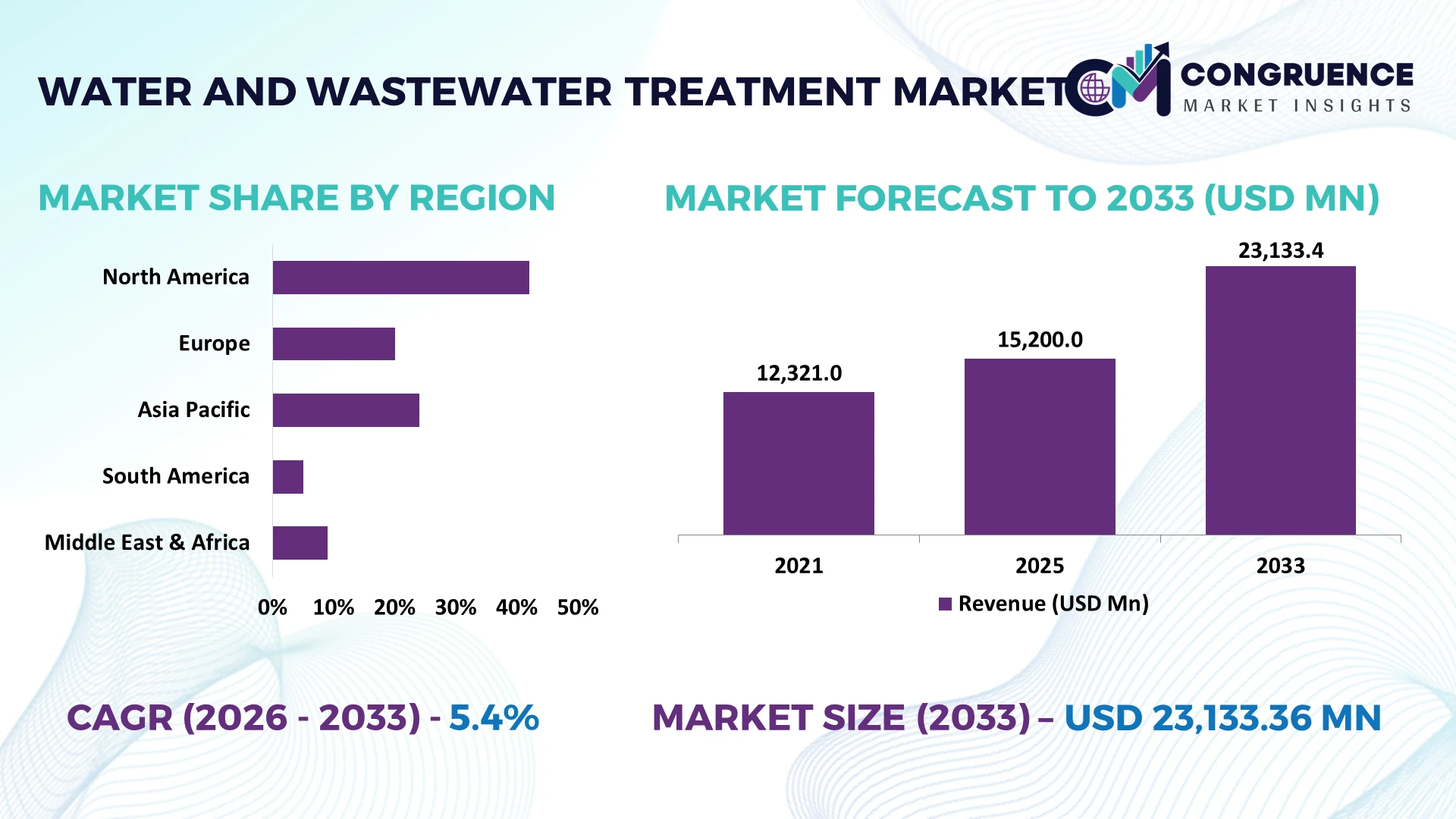
China remains the dominant country, supported by large municipal networks, chemical, semiconductor, power, and manufacturing industries, with Asia-Pacific representing about 38.6% of global market activity. China’s 2025 industrial water consumption reached 95.37 billion cubic meters, while industrial water use declined 1.8% year-on-year, reflecting efficiency-driven treatment investment. India is expanding wastewater infrastructure faster from a lower installed base, while China prioritizes advanced reuse and industrial recycling. The EU’s tighter wastewater rules further accelerate tertiary-treatment adoption.
Strategic implication: suppliers should prioritize China-led industrial reuse, advanced filtration, automation, and compliance-oriented treatment systems.
Market Size & Growth: USD 15.2 billion in 2025 rising to USD 23.13 billion by 2033 at 5.39% CAGR, supported by advanced reuse and stricter industrial discharge controls.
Top Growth Drivers: Water reuse 32%, industrial treatment 27%, regulatory upgrades 21%, identifying the strongest demand pools.
Short-Term Forecast: By 2028, digital process controls are positioned to reduce treatment operating costs by 8–12% and improve energy efficiency by 5–10%.
Emerging Technologies: AI optimization, membrane bioreactors, and digital twins are reshaping monitoring, predictive maintenance, chemical dosing, and resource recovery.
Regional Leaders: Asia-Pacific approaches USD 8.9 billion by 2033, North America USD 6.9 billion, and Europe USD 4.6 billion, with reuse and tertiary treatment accelerating adoption.
Consumer/End-User Trends: Industrial users are increasing recycled-water integration, with closed-loop and reuse systems targeting 20–30% reductions in freshwater dependence.
Pilot/Case Example: 2025 AI-enabled membrane research demonstrated up to 25% lower fouling rates, improving membrane stability and reducing intervention requirements.
Competitive Landscape: Integrated leaders including Veolia, SUEZ, Xylem, Ecolab, and Kurita compete across equipment, chemicals, digital platforms, and managed services; leading players collectively represent roughly 20% of the fragmented market.
Regulatory & ESG Impact: Newer wastewater standards are shifting investment toward tertiary treatment, nutrient removal, and PFAS control, with compliance systems targeting 90%+ monitoring coverage.
Investment & Funding: Global water infrastructure requires more than USD 50 billion annually across developing Asia, strengthening public-private partnerships, technology deployment, and regional expansion.
Innovation & Future Outlook: AI-enabled plants, advanced membranes, nutrient recovery, and energy-positive treatment are shifting competition from basic treatment capacity toward measurable lifecycle efficiency.
The Water and Wastewater Treatment Market is increasingly concentrated around municipal reuse, industrial recycling, semiconductor manufacturing, power generation, pharmaceuticals, and food processing, where water quality directly affects production continuity. Advanced membranes and AI-based controls are gaining traction as operators target 5–10% lower energy consumption and tighter contaminant control. China’s 2025 industrial water-efficiency improvement, alongside tighter European wastewater requirements, reinforces investment in closed-loop systems, predictive monitoring, and tertiary treatment. This shift moves purchasing decisions from capacity expansion toward measurable efficiency, compliance, resilience, and resource recovery.
Water and wastewater treatment is becoming a strategic industrial asset as manufacturers face tighter discharge requirements, freshwater constraints, and pressure to maintain uninterrupted production. The shift from wastewater disposal toward water recovery is restructuring investment priorities across semiconductor, pharmaceutical, chemical, food-processing, and power facilities. Companies increasingly treat water infrastructure as part of production resilience rather than standalone environmental compliance.
Technology adoption is strengthening this transition. Membrane-based systems can deliver 10–20% higher water-recovery efficiency than conventional clarification-based treatment, while automated dosing and real-time monitoring can reduce chemical consumption by 5–15%. China emphasizes large-scale industrial water reuse, India is expanding treatment infrastructure, and Europe is moving toward stricter tertiary and micropollutant treatment. These markets differ in emphasis: industrial efficiency, infrastructure expansion, and regulatory sophistication.
Over the next 2–3 years, retrofit projects, water-reuse loops, smart monitoring, and energy-efficient treatment will receive greater investment than basic capacity additions. Manufacturing facilities using treated effluent for cooling and process applications can reduce freshwater dependence and improve operating continuity. Companies are responding through modular treatment expansion, automation partnerships, membrane integration, and long-term service contracts. Competitive advantage will increasingly depend on measurable water recovery, compliance performance, operating efficiency, and lifecycle reliability.
Industrial water reuse is becoming a core investment driver as manufacturers seek lower freshwater dependence and stronger production resilience. China targeted a 16% reduction in water consumption per industrial value added and approximately 94% reuse among large-scale industrial users. Semiconductor, chemical, and power facilities are consequently expanding membrane filtration, recycling loops, and advanced biological treatment. Companies are redirecting capital toward onsite reuse because reducing freshwater intake can simultaneously lower supply exposure and wastewater-discharge volumes. The strategic shift is significant: treatment equipment is increasingly evaluated through water recovery and production continuity rather than installed capacity alone.
High upfront investment and uneven supporting infrastructure continue to constrain deployment, particularly where collection networks and treatment facilities are underdeveloped. India’s Ganga basin generates approximately 10,160 MLD of sewage against treatment capacity of about 7,820 MLD, leaving a substantial infrastructure gap. Advanced membrane and tertiary systems can also increase project costs by 10–25% compared with basic treatment configurations. Companies are reducing exposure through modular systems, phased installations, local engineering partnerships, and long-term operation contracts. The immediate business constraint is therefore not technology availability but the cost and readiness of infrastructure required to operate advanced treatment systems consistently.
Advanced water reuse creates opportunities for suppliers that combine treatment with resource recovery, automation, and digital monitoring. Membrane-based recycling can increase usable-water recovery by 10–20%, while nutrient-recovery systems can convert wastewater constituents into commercially useful inputs. Europe’s tighter requirements for micropollutants are accelerating demand for activated carbon, advanced oxidation, and high-performance filtration. Companies are expanding R&D and forming technology partnerships to deliver integrated treatment platforms rather than standalone equipment. The non-obvious opportunity lies in industrial water loops, where the same treatment investment can reduce freshwater purchases, wastewater discharge, chemical consumption, and production interruptions simultaneously.
Integrating biological treatment, membranes, sensors, automation, analytics, and legacy infrastructure is becoming a major execution challenge. Modern plants can involve dozens of interconnected monitoring and control points, while cybersecurity requirements add another layer of operational complexity. Energy consumption also remains significant, with advanced aeration, pumping, and membrane processes potentially accounting for 20–40% of plant operating costs. Companies must therefore invest in interoperable control architectures, predictive maintenance, operator training, and energy-recovery systems. The strategic challenge is maintaining consistent treatment performance while upgrading aging infrastructure without disrupting plant operations, making phased modernization and standardized digital interfaces increasingly important.
AI-Led Plant Optimization: AI-enabled wastewater treatment is moving from pilots toward routine operations, with public-sector WWTP AI adoption estimated at 25% in 2025 and projected to reach 60% by 2035. Utilities are applying predictive analytics to aeration, chemical dosing, and maintenance, reducing manual intervention and improving process consistency.
Advanced Compliance Deployment: Europe’s revised wastewater rules are accelerating tertiary treatment, PFAS, microplastic, and micropollutant monitoring. The directive entered force in January 2025, pushing operators toward continuous monitoring and advanced filtration while pharmaceutical and cosmetics producers face responsibility for at least 80% of specified micropollutant-removal costs.
Reuse Moves Beyond Agriculture: Treated-water reuse is expanding into industrial processes, energy production, and urban applications. The EU currently reuses only 2.4% of wastewater, leaving substantial deployment headroom, while companies are developing closed-loop systems that reduce freshwater intake and wastewater discharge simultaneously.
Resource Recovery Gains Priority: Treatment facilities are increasingly integrating nutrient and energy recovery alongside water purification. The EU directed 37.7% of environmental-protection investment toward wastewater projects in 2025, encouraging operators to combine compliance upgrades with circular-resource systems and higher-value recovery models.
Municipal Treatment remains the leading type at approximately 35% share, supported by large installed networks, mandatory sanitation infrastructure, and continuous replacement requirements. Industrial Treatment follows near 27%, with demand concentrated in chemicals, power, food processing, and electronics. Drinking Water Treatment represents about 18%, while Desalination, Sludge Treatment, and Water Reuse account for smaller but strategically important portions. Companies are prioritizing modular plants, membrane upgrades, and automation to improve lifecycle economics and retrofit aging facilities.
Water Reuse is the fastest-growing type, supported by freshwater constraints and closed-loop industrial operations. Its adoption is shifting treatment investment from disposal toward resource recovery, with reuse systems targeting 15–30% reductions in freshwater intake at suitable facilities. Desalination remains important for water-stressed coastal markets, while Sludge Treatment is gaining value through digestion and resource recovery. Suppliers are increasingly bundling treatment, monitoring, and recovery technologies to strengthen contract value.
Municipal Wastewater leads applications at approximately 38% share because urban sanitation networks require continuous collection, biological treatment, sludge management, and compliance monitoring. Drinking Water follows at nearly 25%, while Industrial Wastewater accounts for around 18% as manufacturers strengthen contaminant removal and water-quality controls. Process Water and Stormwater remain more specialized, with demand concentrated around manufacturing sites and climate-exposed urban infrastructure. Companies are increasingly integrating digital monitoring with conventional treatment assets to improve operational visibility and reduce manual sampling requirements.
Water Recycling is the fastest-growing application, with deployment expanding as industrial facilities seek lower freshwater exposure and tighter process control. Recycling projects can target 15–25% reductions in freshwater intake where treated effluent is suitable for cooling, utilities, or process applications. Stormwater systems are also gaining importance as rainfall intensity increases, while Process Water treatment is becoming more application-specific. Suppliers are responding with modular filtration, membrane systems, automated controls, and integrated reuse packages.
Municipalities represent the dominant end-user group at approximately 41% share because wastewater collection, sanitation, drinking-water protection, and regulatory compliance require large-scale continuous infrastructure. Power Plants follow at around 15%, supported by cooling-water treatment and process-water requirements, while Chemical Plants and Food & Beverage facilities maintain strong demand for contaminant-specific treatment. Pharmaceutical Plants, Oil & Gas, and Mining Companies represent more specialized applications where treatment specifications are increasingly stringent. Companies are tailoring systems around flow characteristics, contaminant profiles, and operating cycles rather than standardized plant configurations.
Pharmaceutical Plants are among the fastest-expanding specialized buyers, driven by tighter control of active pharmaceutical residues and micropollutants. Advanced oxidation, activated carbon, membranes, and continuous monitoring are gaining importance, with advanced treatment potentially reducing targeted contaminant loads by more than 90% in appropriately designed systems. Chemical and Oil & Gas operators are emphasizing customized pretreatment, while Mining Companies increasingly require high-recovery systems. Suppliers are responding through application-specific engineering, technology partnerships, and lifecycle service contracts.
North America accounted for the largest market share at 34% in 2025 however, Asia-Pacific is expected to register the fastest growth, expanding at a CAGR of 6.1% between 2026 and 2033.
Infrastructure Modernization and Digital Treatment Integration
North America maintains a strong market position through aging municipal infrastructure, industrial water reuse, and technology-intensive treatment upgrades. The United States dominates regional deployment, with federal water infrastructure programs directing substantial capital toward wastewater modernization, resilience, and reuse. Advanced monitoring, membrane filtration, nutrient removal, and automated process controls are increasingly integrated into existing plants rather than deployed as standalone systems. In 2025, the U.S. Environmental Protection Agency made $6.5 billion in WIFIA funding available for water infrastructure projects, reinforcing project financing capacity. Industrial demand is concentrated across chemicals, semiconductor manufacturing, food processing, and power generation. Suppliers are expanding engineering services, digital platforms, and long-term operating contracts to capture recurring revenue and improve plant performance.
United States Market Outlook: The United States remains the region’s principal demand center because of its extensive municipal network and large industrial base. Fort Worth secured a $347 million water infrastructure loan in 2025 for wastewater collection, treatment, and beneficial water reuse, demonstrating the increasing integration of treatment capacity with industrial and irrigation applications.
Regulatory Modernization Drives Advanced Treatment
Europe is shifting from conventional wastewater treatment toward tertiary processing, micropollutant removal, energy efficiency, and circular resource management. The revised urban wastewater framework is accelerating investment in advanced filtration, nutrient removal, monitoring, and sludge recovery across established municipal networks. Wastewater-related projects represented 37.7% of total environmental-protection investment in the European Union in 2025, demonstrating the sector’s infrastructure priority. Germany, France, Italy, and the Netherlands remain important technology and deployment markets, while industrial facilities increasingly integrate water recycling into environmental management systems. Suppliers are strengthening membrane, oxidation, digital monitoring, and energy-recovery portfolios. The regional competitive advantage increasingly rests on compliance engineering and lifecycle efficiency rather than basic treatment capacity.
Germany Market Outlook: Germany combines mature wastewater infrastructure with strong environmental engineering capabilities and industrial water demand. Its chemical, automotive, pharmaceutical, and manufacturing industries require high-quality process-water treatment, supporting adoption of advanced filtration, biological treatment, automation, and resource-recovery systems. Industrial operators increasingly integrate treatment performance with energy and material-efficiency targets.
Industrial Scale and Rapid Capacity Deployment
Asia-Pacific combines the largest concentration of industrial water demand with substantial municipal treatment requirements, making China, Japan, South Korea, and India central deployment markets. China recorded 95.37 billion cubic meters of industrial water use in 2025, while industrial water consumption per unit of industrial added value declined 7.2%, strengthening demand for efficiency-oriented treatment technologies. India is simultaneously expanding municipal capacity through large infrastructure programs. Under AMRUT, 4,447 MLD of new or augmented sewage treatment capacity had been created by March 2025, including 1,437 MLD designed for recycle and reuse. Companies are prioritizing localized manufacturing, membrane systems, automation, and industrial water-recycling partnerships to address scale, cost, and freshwater constraints.
China Market Outlook: China leads regional industrial treatment demand through extensive manufacturing, chemical processing, electronics, power generation, and municipal infrastructure. In 2025, total industrial water use declined by 1.73 billion cubic meters from the previous year, encouraging manufacturers to invest in recycling, process optimization, and high-efficiency treatment systems that reduce freshwater intensity without compromising production.
Sanitation Investment and Concession-Led Expansion
South America is increasingly driven by sanitation deficits, municipal modernization, industrial water management, and concession-based infrastructure development. Brazil represents the largest deployment opportunity, with wastewater coverage and treatment capacity still below universal-service requirements. Brazil’s 2025 sanitation investment through the New PAC reached R$22.1 billion, accelerating wastewater, water-supply, and drainage projects. Industrial demand is concentrated in mining, food processing, pulp and paper, chemicals, and oil-related operations where water quality directly affects production. Public-private concessions are becoming an important project-delivery mechanism, while treatment suppliers are expanding local engineering and operation capabilities. The region’s key commercial opportunity lies in combining infrastructure financing with modular treatment, decentralized systems, and long-term maintenance services.
Brazil Market Outlook: Brazil has a substantial infrastructure replacement and expansion requirement, with only 51.8% of generated wastewater receiving adequate treatment in 2024. The country’s 2025 sanitation investment surge is strengthening demand for treatment plants, sewer networks, sludge management, and water-reuse infrastructure. Concession models are creating opportunities for technology providers with strong local execution and lifecycle-service capabilities.
Water Security Drives High-Value Reuse Projects
The Middle East & Africa market is increasingly shaped by water scarcity, desalination integration, industrial expansion, and large-scale water-reuse programs. Gulf countries are deploying advanced membranes, reverse osmosis, tertiary treatment, and digital monitoring to reduce dependence on limited freshwater resources. Saudi Arabia and the United Arab Emirates remain major project centers, supported by urban development, petrochemicals, tourism, and industrial diversification. Wastewater reuse is becoming operationally important for irrigation, district cooling, industrial utilities, and municipal applications. Companies are increasingly forming engineering partnerships and expanding local service capabilities to meet demanding project specifications. The region favors high-efficiency systems where water recovery, energy optimization, and reliable long-term operation justify higher technology intensity.
Saudi Arabia Market Outlook: Saudi Arabia combines severe water scarcity with large municipal and industrial infrastructure programs, making advanced wastewater reuse strategically important. Treatment systems increasingly support irrigation, industrial utilities, and urban development, while reverse osmosis and high-recovery technologies improve water availability. Suppliers with strong EPC capabilities, local partnerships, and long-term O&M expertise are positioned around large integrated projects.
The global market pits Veolia, SUEZ, Xylem, Ecolab, and Kurita against regional engineering firms, membrane suppliers, and equipment manufacturers. The top five players collectively hold approximately 18% share, reflecting a fragmented structure where municipal and industrial projects remain distributed across providers. Competition centers on lifecycle cost, treatment performance, automation, supply reliability, and customization. Digital controls can improve process efficiency by 5–10%, while membrane optimization can reduce operating costs by 5–15%, shifting purchasing beyond equipment price. Veolia and SUEZ emphasize integrated infrastructure and managed services; Xylem combines treatment equipment with digital monitoring; Ecolab competes through chemicals and analytics; Kurita strengthens process-water solutions. Players are expanding through partnerships, local manufacturing, service networks, and technology integration. The competitive shift is moving toward recurring service contracts, resource recovery, and digital optimization. High qualification requirements, installed-base relationships, and project financing create entry barriers. Winning requires technology depth, reliable supply, localized execution, and measurable lifecycle savings.
Veolia
SUEZ
Xylem Inc.
Ecolab Inc.
Kurita Water Industries Ltd.
Pentair plc
DuPont
Toray Industries, Inc.
Kubota Corporation
Mitsubishi Chemical Group Corporation
A. O. Smith Corporation
Evoqua Water Technologies
Membrane bioreactors (MBRs), advanced oxidation, ultraviolet disinfection, and variable-speed aeration are strengthening current treatment performance. EPA analysis indicates MBRs can deliver about 15% median energy savings, while optimized dissolved-oxygen control can reduce energy use 15%. MBRs produce higher-quality effluent in smaller footprints than conventional activated-sludge systems. Adoption is moving toward integrated treatment trains combining sensors, SCADA, membranes, and automated dosing.
Emerging digital twins, AI process optimization, and real-time monitoring are shifting plants from reactive to predictive operations. AI use in treatment plants was estimated at 10–15% among early adopters, with adoption reaching around 25–30% in 2025. Real-time controls can deliver approximately 10% median energy savings by adjusting aeration, pumping, and chemical dosing to loads. Operators gain faster response, lower chemical consumption, and consistent compliance, while analytics providers gain differentiation.
By 2026–2028, resource recovery, PFAS treatment, advanced membranes, and autonomous controls will integrate into platforms. Compared with legacy fixed-dose systems, optimized controls can reduce energy demand by 10–15%. Digital-first suppliers and integrated OEM-service providers benefit because monitoring and optimization strengthen customer retention. Companies can retrofit legacy plants, capturing efficiency gains while preparing facilities for tighter discharge and reuse requirements today.
March 2024 Ecolab partnered with Lindström Group on advanced filtration at its Chennai laundry plant, recovering 74% of process water and cutting freshwater use 56%. The deployment strengthened water recycling, reduced freshwater dependence, and improved compliance across high-volume textile operations. Source: Ecolab
July 2025 Veolia selected membrane bioreactors and reverse osmosis for Brazil’s Vitória Water Reclamation Station, designed to reclaim 85% of municipal wastewater. The 38,880 m³/day facility redirects reclaimed water to industrial users, strengthening drought resilience and freshwater security globally today. Source: Veolia
May 2025 SUEZ launched construction of Haliotis 2 in Nice, a €700 million wastewater recovery complex serving 680,000 inhabitants. The project integrates advanced treatment and resource recovery, creating large-scale municipal modernization capacity while strengthening environmental compliance and resilience for municipalities. Source: SUEZ
April 2025 Kurita began joint development of PFAS-free components for water treatment facilities ahead of Japan’s fiscal-2026 PFOA and PFOS testing requirements. The initiative targets equipment redesign and supply-chain adaptation, positioning Kurita for chemical-control standards across treatment infrastructure and systems. Source: Kurita
The report evaluates the Water and Wastewater Treatment Market across Municipal Treatment, Industrial Treatment, Drinking Water Treatment, Desalination, Sludge Treatment, and Water Reuse, with application coverage spanning Drinking Water, Municipal Wastewater, Industrial Wastewater, Process Water, Stormwater, and Water Recycling. End-user analysis covers Municipalities, Chemical Plants, Food & Beverage, Pharmaceutical Plants, Power Plants, Oil & Gas, and Mining Companies, enabling comparison of deployment intensity, treatment requirements, and purchasing priorities.
Regional coverage includes North America, Europe, Asia-Pacific, South America, and the Middle East & Africa, with assessment of infrastructure modernization, industrial demand, regulatory shifts, and technology deployment. The report examines membranes, MBRs, advanced oxidation, UV disinfection, AI controls, digital monitoring, PFAS treatment, and resource recovery. It supports investment planning, market-entry decisions, capacity expansion, partnership strategy, competitive positioning, and technology prioritization across 2026–2033.
| Report Attribute/Metric | Report Details |
|---|---|
Market Revenue in 2025 | USD 15200 Million |
Market Revenue in 2033 | USD 23133.36 Million |
CAGR (2026 - 2033) | 5.39% |
Base Year | 2025 |
Forecast Period | 2026 - 2033 |
Historic Period | 2021 - 2025 |
Segments Covered | By Type
By Application
By End-User
|
Key Report Deliverable | Revenue Forecast, Growth Trends, Market Dynamics, Segmental Overview, Regional and Country-wise Analysis, Competition Landscape |
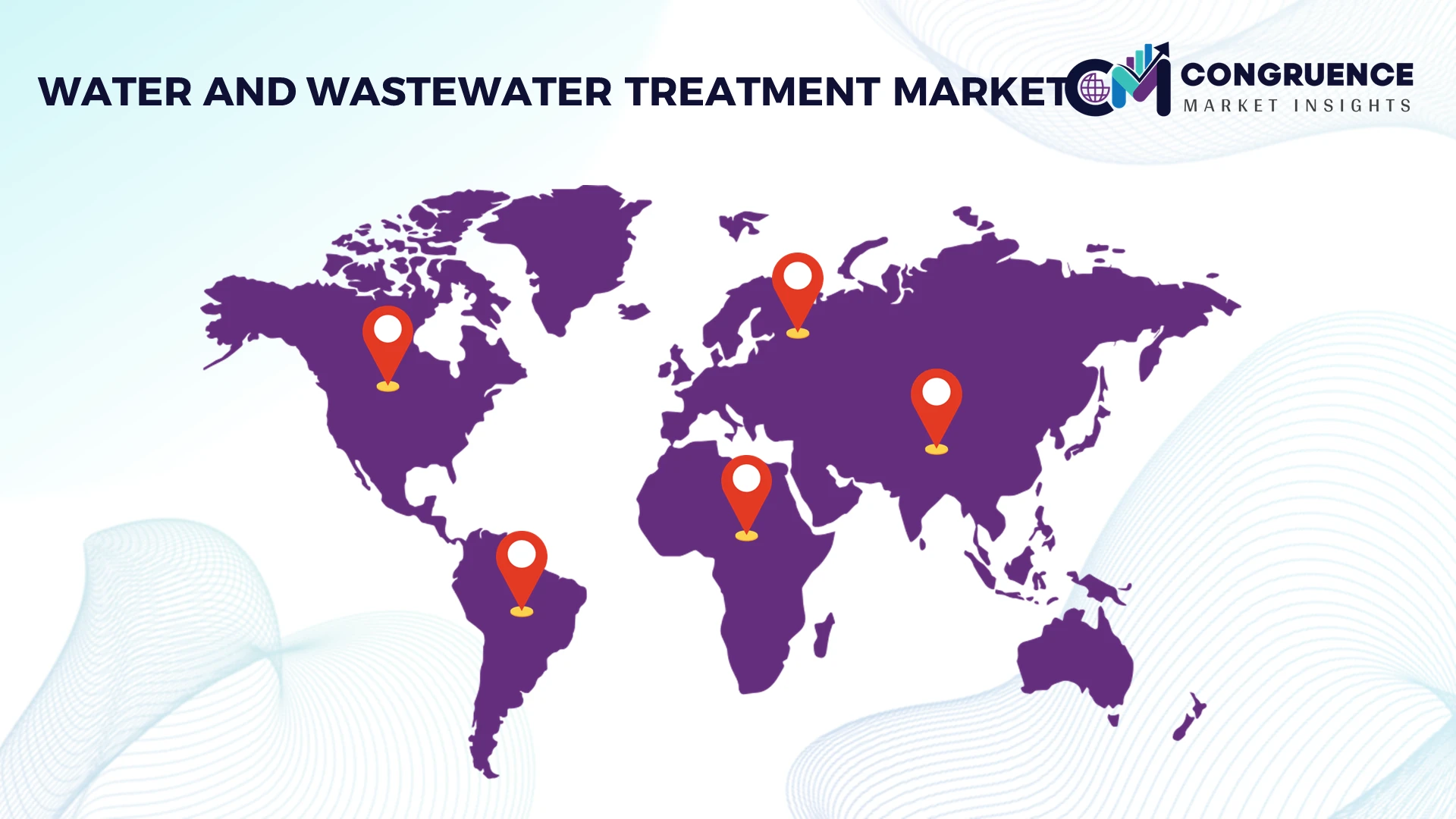
Region Covered | North America, Europe, Asia-Pacific, South America, Middle East, Africa |
Key Players Analyzed | Veolia, SUEZ, Xylem Inc., Ecolab Inc., Kurita Water Industries Ltd., Pentair plc, DuPont, Toray Industries, Inc., Kubota Corporation, Mitsubishi Chemical Group Corporation, A. O. Smith Corporation, Evoqua Water Technologies |
Customization & Pricing | Available on Request (10% Customization is Free) |




