
Reports
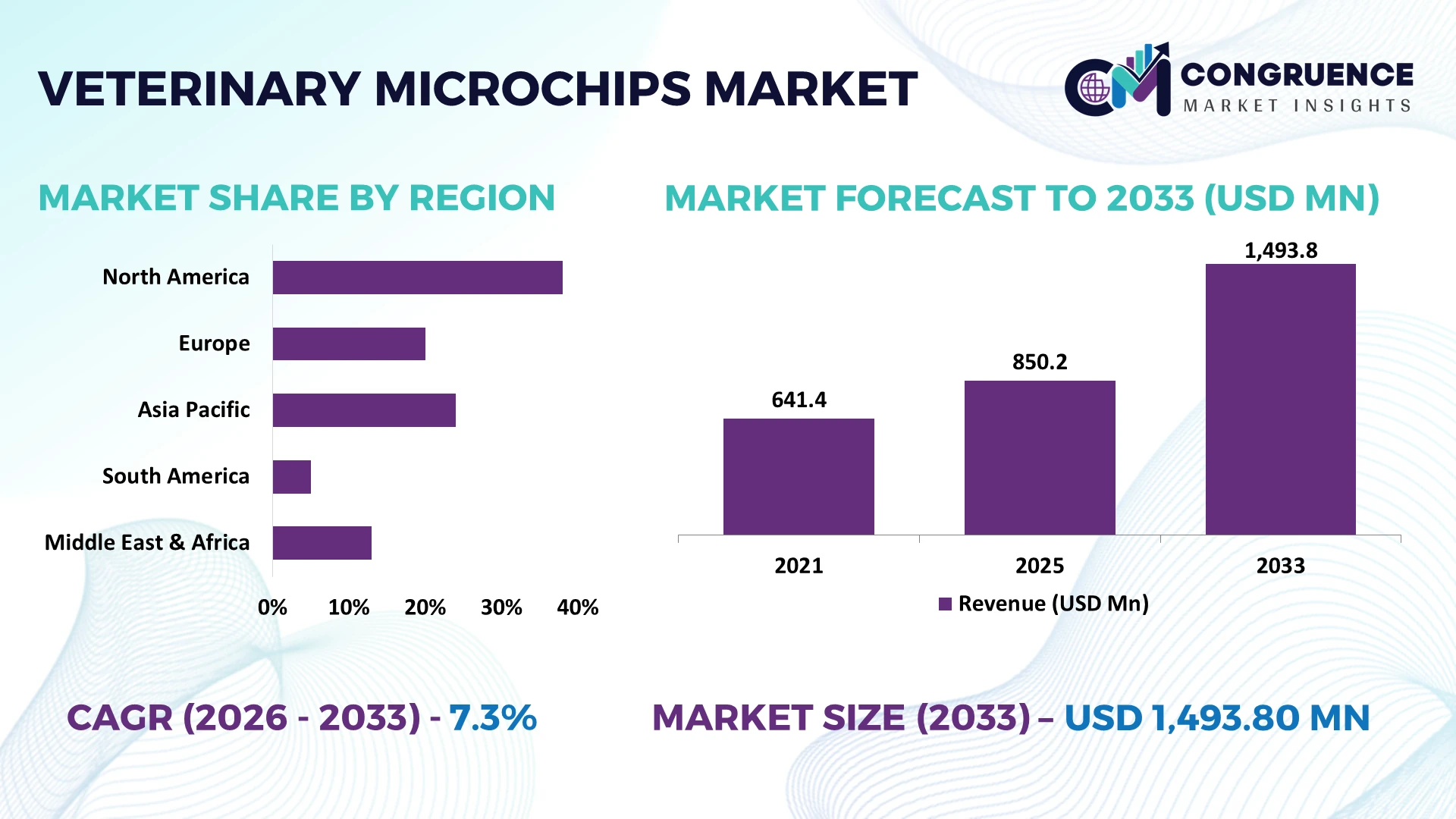
The Global Veterinary Microchips Market was valued at USD 850.18 Million in 2025 and is anticipated to reach a value of USD 1493.8 Million by 2033 expanding at a CAGR of 7.3% between 2026 and 2033. Growth is driven by mandatory pet identification regulations, ISO 11784/11785 microchip standardization, veterinary clinic implantation programs, and integration of animal identification databases with recovery and traceability systems.
The United States represents a major veterinary microchip market, supported by approximately 94 million pet-owning households and established veterinary identification infrastructure. The American Pet Products Association estimates that 71% of US households own pets, compared with approximately 60% of UK households. US veterinary practices, shelters, and animal identification providers support nationwide implantation and registration services, while California's pet identification requirements reinforce adoption. Investment priorities center on ISO-compatible scanners, integrated registration platforms, and shelter identification workflows, strengthening recovery infrastructure across companion animal services.
Strategically, manufacturers should prioritize universal scanner compatibility, reliable registration databases, and veterinary distribution partnerships to capture recurring identification and animal recovery demand.
Market Size & Growth: USD 850.18 million in 2025, reaching USD 1,493.8 million by 2033 at 7.3% CAGR, supported by compulsory identification.
Top Growth Drivers: US pet ownership reaches 71% of households, UK ownership approaches 60%, and England requires microchipping for 100% of eligible dogs and cats.
Short-Term Forecast: By 2028, integrated registration workflows targeting 20% faster processing strengthen veterinary clinic efficiency; this remains an operational benchmark.
Emerging Technologies: Three developments—RFID miniaturization, cloud registration, and mobile scanner integration—improve identification workflows and record accessibility.
Regional Leaders: Illustrative 2033 allocations: North America USD 567.64 million, Europe USD 448.14 million, Asia-Pacific USD 328.64 million; adoption follows veterinary digitization and identification mandates.
Consumer/End-User Trends: Approximately 94 million US households own pets, strengthening demand for permanent identification and recovery services.
Pilot/Case Example: England's 2024 cat microchipping mandate extended compulsory identification to cats aged 20 weeks and older.
Competitive Landscape: Merck Animal Health, Datamars, Virbac, Trovan, and Avid compete; company-specific global market shares remain unverified.
Regulatory & ESG Impact: ISO 11784 specifies 64-bit identification codes, supporting standardized animal traceability and cross-border scanner interoperability.
Investment & Funding: Sector-wide investment totals remain undisclosed; funding priorities include 2 infrastructure layers: RFID hardware and registration databases.
Innovation & Future Outlook: ISO-compatible identification and connected databases support 24-hour registration access and increasingly integrated veterinary workflows.
The Veterinary Microchips Market is transitioning from standalone RFID implantation toward integrated animal identification and recovery infrastructure. Veterinary hospitals, shelters, breeders, and animal welfare organizations increasingly require compatible scanners, accurate registration records, and accessible ownership information. England's mandatory cat microchipping regulations, effective June 2024, establish identification requirements from 20 weeks of age, reinforcing compliance-driven adoption. Manufacturers are improving chip miniaturization, implantation systems, and database connectivity, while veterinary software providers strengthen digital record integration. These developments shift competitive differentiation toward interoperability, registration reliability, and coordinated animal recovery services, establishing the foundation for strategic market evaluation.
Veterinary microchips are becoming strategically important as permanent animal identification shifts from optional veterinary services toward regulated ownership verification and digital recovery infrastructure. England extended compulsory microchipping to cats aged 20 weeks and older in June 2024, strengthening demand for compliant identification and registration systems. The United States offers substantial commercial scale, with approximately 94 million pet-owning households, while European adoption increasingly reflects statutory identification requirements. Manufacturers are aligning product portfolios with ISO-compatible identification, veterinary software integration, and accessible registration platforms to strengthen distribution relationships.
Technology differentiation increasingly centers on scanner interoperability, automated registration, and electronic patient record connectivity. Compared with manual identification workflows, integrated scanning and registration systems targeting 20% shorter processing times offer a theoretical 25% improvement in administrative throughput under unchanged staffing conditions. ISO 11784 establishes standardized identification coding, while ISO 11785 defines communication requirements supporting compatible readers. Between 2026 and 2028, veterinary providers will prioritize registration completeness, scanner reliability, and digital record synchronization.
England's compulsory feline identification framework demonstrates how regulation translates into recurring implantation and database maintenance requirements. Manufacturers are expanding veterinary partnerships and developing connected identification services. Competitive advantage depends on reliable identification, accurate ownership records, and efficient recovery coordination across veterinary and animal welfare networks.
Compulsory animal identification regulations are strengthening demand for veterinary microchips and associated registration services. England requires microchipping for eligible dogs and cats, establishing a legal identification framework covering both companion animal categories. Approximately 71% of US households own pets, while UK pet ownership approaches 60%, supporting substantial identification infrastructure requirements. England's June 2024 feline microchipping mandate expanded compulsory identification to cats aged 20 weeks and older. Veterinary practices, shelters, and animal welfare organizations are integrating implantation procedures with registration verification and ownership updates. Manufacturers including Datamars and Virbac are strengthening scanner compatibility and veterinary distribution capabilities. Commercial differentiation increasingly depends on complete registration records and reliable animal recovery services rather than implantation volume alone.
Veterinary microchip adoption faces structural constraints from fragmented registration databases, inconsistent scanner compatibility, and recurring ownership information maintenance. ISO 11784 specifies standardized identification coding, while ISO 11785 establishes communication protocols; however, older proprietary identification systems remain in circulation. The United States has approximately 94 million pet-owning households, creating substantial requirements for interoperable identification infrastructure. England's identification regulations cover cats from 20 weeks of age, but implantation alone does not guarantee accurate registration records. Veterinary providers face administrative costs associated with database access, record updates, and scanner procurement. Manufacturers are responding through universal readers, integrated registration platforms, and partnerships with animal recovery organizations. The central operational limitation is maintaining accurate ownership information across independent databases without increasing veterinary administrative workloads.
Cloud-connected veterinary identification systems create opportunities to integrate microchip scanning, patient records, ownership verification, and animal recovery workflows. Approximately 71% of US households own pets, establishing a substantial potential user base for digital identification services. England's compulsory identification requirements apply to cats aged 20 weeks and older, demonstrating the role of regulation in accelerating database participation. Integrated registration workflows targeting 20% shorter processing times provide a theoretical 25% administrative throughput improvement under unchanged staffing conditions. Manufacturers are developing mobile-compatible readers, automated registration interfaces, and veterinary software partnerships to simplify identification management. Between 2026 and 2028, competitive differentiation will increasingly depend on interoperable databases and efficient ownership updates. The strongest opportunity lies in improving recovery outcomes through verified information rather than expanding hardware distribution alone.
Maintaining reliable veterinary microchip identification requires consistent scanner performance, secure ownership databases, and accurate information throughout an animal's lifetime. ISO 11784 defines standardized identification codes, while ISO 11785 supports communication compatibility, but successful recovery still depends on accessible and current registration records. With approximately 94 million US pet-owning households, database maintenance represents a substantial operational challenge. A hypothetical 5% rate of outdated records across 1 million registrations would leave 50,000 records requiring correction, illustrating the consequences of incomplete ownership updates. Veterinary organizations must also address cybersecurity, duplicate registrations, and interoperability between independent recovery systems. Manufacturers are investing in secure registration platforms, standardized data exchange, and automated record verification. Sustainable competitiveness depends on maintaining identification accuracy after implantation, not simply increasing chip deployment.
Miniaturized Transponders Improve Implantation Workflows: Manufacturers are refining injectable microchips with approximately 1.4 mm and 2.1 mm diameter options, compared with conventional devices measuring around 2.1 × 12 mm. Smaller implants support less invasive procedures for cats and small animals. Veterinary suppliers are expanding miniature transponder portfolios and compatible implantation kits, improving procedural flexibility without changing permanent identification requirements.
Universal Readers Support Mixed Chip Populations: Veterinary clinics increasingly use multiprotocol scanners supporting 125 kHz, 128 kHz, and 134.2 kHz identification systems. ISO-compatible transponders operate at 134.2 kHz, while legacy proprietary devices require additional reader compatibility. Manufacturers are expanding universal scanning capabilities and staff training to improve identification reliability, particularly when shelters receive animals with unknown implantation histories.
Feline Identification Compliance Reshapes Clinic Scheduling: England's June 2024 regulation requires cats aged 20 weeks and older to carry registered microchips. Veterinary practices are incorporating implantation checks into routine vaccination and preventive care appointments, reducing separate identification visits. Suppliers are coordinating implantation kits, scanners, and registration documentation to support higher procedural consistency and reduce missed compliance opportunities.
Digital Ownership Records Gain Operational Priority: Approximately 71% of American households own pets, creating substantial requirements for accurate identification records and ownership transfers. A registration workflow shortened by 20% theoretically increases administrative throughput by 25% under unchanged staffing conditions. Database operators and veterinary software providers are integrating record verification, automated reminders, and ownership update interfaces to reduce administrative workload and improve recovery coordination.
RFID Microchips Lead Established Identification Infrastructure
RFID Microchips represent the leading type in the Veterinary Microchips Market, with an indicative 42% market share in 2025, supported by established identification infrastructure, passive transponder reliability, and broad veterinary scanner compatibility. ISO-Compliant Microchips are positioned as the fastest-growing type as veterinary practices and animal identification authorities prioritize standardized identification protocols. ISO-compatible devices typically operate at 134.2 kHz, supporting international recognition and standardized reader communication. Injectable Microchips remain commercially important because implantation procedures integrate directly into veterinary appointments, shelter intake operations, and preventive animal care. Manufacturers are expanding miniature transponder portfolios and compatible implantation systems to improve procedural convenience.
Non-ISO Microchips retain relevance within existing identification networks, particularly where legacy 125 kHz or 128 kHz systems remain operational. However, their interoperability limitations encourage migration toward standardized transponders and multiprotocol scanners. Conventional microchips commonly measure approximately 2.1 × 12 mm, while miniature alternatives feature diameters approaching 1.4 mm. Suppliers including Datamars and Trovan are developing identification technologies and scanner solutions to strengthen compatibility. Investment priorities increasingly favor standardized identification systems, integrated registration services, and dependable veterinary distribution.
Pet Identification Dominates Regulated Microchip Deployment
Pet Identification and Registration represents the leading application, with an indicative 55% market share in 2025, supported by companion animal ownership, mandatory identification regulations, and established veterinary implantation networks. Approximately 71% of US households own pets, creating substantial demand for permanent identification and recovery services. England's compulsory feline microchipping requirements apply from 20 weeks of age, reinforcing regulated implantation and registration workflows. Livestock Identification and Traceability remains important for animal movement records, disease control, and agricultural supply chain management. Manufacturers are strengthening transponder durability, scanner interoperability, and registration integration to support reliable identification across different animal populations.
Animal Health Monitoring represents a developing application as connected veterinary information systems integrate identification records with clinical histories and preventive care workflows. Equine Identification supports ownership verification, competition registration, and animal movement documentation, while Wildlife Tracking contributes to conservation research and population management. ISO-compatible microchips operating at 134.2 kHz support standardized identification across several applications. Suppliers are expanding specialized implantation products, veterinary software integration, and institutional partnerships to improve identification accuracy and commercial differentiation.
Veterinary Clinics Lead Routine Implantation Demand
Veterinary Hospitals and Clinics represent the leading end-user segment, with an indicative 48% market share in 2025, supported by routine implantation procedures, preventive care appointments, and established relationships with pet owners. Approximately 94 million US households own pets, creating substantial demand for identification services and registration support. Veterinary practices integrate microchip implantation with vaccination, sterilization, and wellness appointments, improving procedural convenience. Animal Shelters and Rescue Centers represent the fastest-growing end-user category as identification checks become integral to animal intake, adoption, and reunification workflows. Manufacturers are developing bundled implantation kits, universal scanners, and registration interfaces to support high-volume identification requirements.
Livestock Farms prioritize durable identification and traceability systems for herd management and animal movement records. Zoos and Wildlife Conservation Centers use specialized transponders for individual animal identification, while Animal Research Institutions require consistent identification across controlled research populations. ISO-compatible devices operating at 134.2 kHz support standardized scanning across these environments. Suppliers are expanding institutional distribution, staff training, and digital registration partnerships to strengthen customer retention and operational reliability.
North America accounted for the largest market share at an estimated 38% in 2025 however, Asia-Pacific is expected to register the fastest growth, expanding at an estimated CAGR of 9.2% between 2026 and 2033.

Veterinary Identification Networks and Integrated Recovery Infrastructure
North America represents an estimated 38% of the global veterinary microchips market, supported by established companion animal healthcare infrastructure, shelter identification programs, and electronic registration services. The United States maintains the largest regional commercial base, with approximately 94 million pet-owning households. Veterinary hospitals increasingly incorporate microchip implantation into preventive care appointments, while animal shelters use universal scanners during intake and adoption procedures. Canada supports identification through veterinary associations, municipal licensing programs, and animal recovery networks. ISO-compatible transponders operating at 134.2 kHz facilitate standardized identification across veterinary facilities. Companies including Merck Animal Health and Avid compete through implantation products, scanner compatibility, and registration services. Regional purchasing priorities emphasize database accessibility, accurate ownership transfers, and reliable identification across independent veterinary and animal welfare organizations.
United States Market Outlook: The United States benefits from extensive veterinary distribution networks, established companion animal identification providers, and widespread shelter participation. Approximately 71% of American households own pets, supporting a substantial potential customer base for implantation and registration services. California requires shelters and rescue organizations to microchip dogs and cats before release, strengthening identification coverage. Veterinary providers increasingly prioritize integrated registration software and multiprotocol scanners to support animal recovery.
Mandatory Identification and Cross-Border Registration Standardization
Europe accounts for an estimated 32% of the global veterinary microchips market, supported by compulsory animal identification regulations, established veterinary networks, and standardized transponder requirements. England extended mandatory microchipping to cats aged 20 weeks and older in June 2024, expanding identification obligations beyond dogs. France requires identification of dogs and cats through recognized methods, while Germany maintains animal identification requirements in selected jurisdictions and regulated activities. European veterinary providers increasingly use ISO-compatible 134.2 kHz transponders to support reliable scanning and cross-border animal movement documentation. Manufacturers including Datamars and Virbac supply identification products through veterinary distribution channels. Regulatory enforcement is strengthening demand for accurate registration, ownership updates, and accessible identification records. Competitive differentiation increasingly depends on regulatory compatibility, implantation convenience, and reliable database connectivity rather than hardware pricing alone.
United Kingdom Market Outlook: The United Kingdom maintains established pet identification infrastructure supported by veterinary practices, animal welfare organizations, and authorized microchip databases. England requires eligible cats to be microchipped by 20 weeks of age, while dogs must be identified under existing compulsory requirements. Veterinary providers incorporate identification checks into routine consultations, and database operators support ownership verification and recovery coordination. Regulatory compliance strengthens recurring demand for registration maintenance and compatible scanning equipment.
Companion Animal Healthcare Expansion and Livestock Identification Modernization
Asia-Pacific represents an estimated 23% of the global veterinary microchips market, supported by expanding companion animal healthcare, livestock traceability initiatives, and veterinary infrastructure development. China maintains substantial pet healthcare activity across Beijing, Shanghai, and Shenzhen, where veterinary clinics increasingly provide identification and registration services. Japan benefits from established companion animal identification regulations, while Australia maintains electronic livestock identification infrastructure. Japan introduced mandatory microchipping requirements for dogs and cats sold by breeders and pet shops in June 2022, establishing a regulated identification channel. Australia uses electronic identification systems extensively in livestock management, supporting traceability and animal movement documentation. Regional manufacturers and distributors are expanding ISO-compatible transponder availability, scanner integration, and veterinary partnerships. Market development increasingly reflects differences between regulated companion animal identification and agricultural traceability requirements.
Japan Market Outlook: Japan maintains established veterinary identification infrastructure supported by compulsory microchipping requirements for dogs and cats sold by breeders and pet shops. The June 2022 regulatory framework strengthened permanent identification and ownership registration practices. Japanese veterinary clinics and animal welfare organizations use standardized identification systems to support animal recovery and ownership verification. Domestic distributors emphasize miniature transponders, reliable implantation procedures, and registration compatibility within established companion animal healthcare networks.
Livestock Traceability and Companion Animal Identification Development
South America represents an estimated 4% of the global veterinary microchips market, supported by livestock management, companion animal healthcare, and animal identification modernization. Brazil maintains the region's largest commercial livestock infrastructure, with a cattle population exceeding 230 million animals, creating substantial requirements for traceability and herd identification technologies. However, conventional livestock identification methods remain more widespread than injectable microchips in large commercial herds. Argentina contributes through established veterinary services and livestock traceability programs, while Chile supports companion animal registration through national identification requirements. Manufacturers are evaluating electronic identification systems, veterinary distribution partnerships, and integrated animal management platforms. Regional constraints include uneven scanner availability, implantation costs, and fragmented registration infrastructure. Commercial opportunities concentrate on specialized breeding, companion animal services, and regulated traceability applications rather than universal livestock microchipping.
Brazil Market Outlook: Brazil benefits from extensive livestock production, established veterinary services, and expanding companion animal healthcare infrastructure. The country's large cattle population supports investment in electronic animal identification and traceability systems, although ear tags remain important in commercial herd management. Veterinary microchip suppliers are targeting companion animal clinics, specialized breeding operations, and animal welfare organizations through compatible scanners, implantation products, and localized distribution partnerships.
Animal Traceability Infrastructure and Veterinary Service Modernization
The Middle East & Africa represents an estimated 3% of the global veterinary microchips market, supported by companion animal healthcare development, livestock management, and specialized animal identification requirements. The United Arab Emirates maintains regulated pet identification and registration systems, while Saudi Arabia is expanding veterinary infrastructure and animal health services. South Africa contributes through established veterinary practices, companion animal welfare organizations, and livestock identification activities. ISO-compatible transponders operating at 134.2 kHz support standardized identification for veterinary applications and international animal movement. Regional adoption is influenced by veterinary service accessibility, scanner availability, and registration infrastructure. Manufacturers are strengthening distribution partnerships and supplying implantation kits alongside compatible readers. Competitive opportunities concentrate on regulated urban pet ownership, animal import documentation, and specialized livestock identification rather than broad compulsory implantation across all animal categories.
United Arab Emirates Market Outlook: The UAE maintains established veterinary clinics, municipal animal registration systems, and identification requirements for companion animals in major urban centers. Dubai's pet registration framework supports microchip identification and ownership records, strengthening demand for compatible implantation products and scanners. Veterinary providers serve domestic pet owners and internationally transported animals, making standardized identification important for documentation, recovery, and regulatory compliance. Suppliers benefit from partnerships with veterinary hospitals and municipal registration networks.
Merck Animal Health, Datamars, Virbac, Avid, and Trovan compete across veterinary transponders, implantation systems, scanners, and identification services. Their combined global market share remains unverified because manufacturers do not consistently disclose microchip-specific sales. Merck emphasizes integrated animal identification and recovery services, while Datamars competes through transponder manufacturing and traceability infrastructure. Virbac leverages veterinary distribution, whereas Avid and Trovan emphasize identification technology and reader compatibility. ISO-compatible devices operate at 134.2 kHz, competing with legacy 125 kHz and 128 kHz systems. Miniature implants approaching 1.4 mm diameter challenge conventional 2.1 mm designs, strengthening differentiation in companion animal applications. Companies are expanding multiprotocol scanners, veterinary partnerships, and connected registration services. Regulatory identification requirements favor standardized products, while fragmented databases create integration barriers. Competitive leadership requires reliable implantation, universal scanning, accurate ownership records, and sustained veterinary channel relationships. Suppliers integrating hardware with dependable recovery infrastructure secure stronger institutional purchasing positions and long-term differentiation.
Merck Animal Health
Datamars SA
Virbac SA
Avid Identification Systems, Inc.
Trovan Ltd.
PetLink
Microchip ID Systems, Inc.
PeddyMark Ltd.
Animalcare Group plc
Bio-Thermo Identification
EIDAP Inc.
Micro-ID Ltd.
Current veterinary microchip technology relies on passive RFID transponders, ISO 11784 identification codes, and ISO 11785 communication protocols. Standardized devices operate at 134.2 kHz, enabling identification through compatible veterinary scanners. Miniature implants measuring approximately 1.4 mm in diameter offer a 33% reduction compared with conventional 2.1 mm devices. This improves implantation suitability for smaller animals. Veterinary clinics benefit from standardized identification, while manufacturers compete through implant dimensions, scanner reliability, and distribution coverage.
Emerging technologies integrate multiprotocol readers, cloud registration platforms, and electronic veterinary records. Universal scanners accommodate legacy 125 kHz and 128 kHz transponders alongside ISO systems. Automated registration reduces manual transcription and ownership verification steps. A modeled 20% reduction in administrative processing time delivers 25% higher throughput under unchanged staffing conditions. England's compulsory feline identification framework, covering cats aged 20 weeks and older, strengthens deployment of compatible identification infrastructure.
Between 2026 and 2028, connected registration services and secure ownership verification will reshape competitive positioning. Manufacturers are developing mobile scanning interfaces, automated record synchronization, and integrated recovery workflows. Hardware suppliers gain differentiation through reliable implantation systems, while database operators strengthen retention through accurate records. Investment priorities center on interoperability, cybersecurity, and dependable identification across veterinary networks and shelters.
October 2025: AKC Reunite launched a temperature-sensing microchip operating at 134.2 kHz, combining permanent identification with temperature readings through compatible scanners. The innovation supports less invasive veterinary wellness checks and creates additional clinical utility for established animal identification infrastructure. Source: prnewswire.com
May 2025: Datamars presented its OMNI MAX universal microchip scanner, featuring a 360-degree antenna read field designed to improve identification speed and reliability. The portable reader strengthens veterinary and shelter scanning workflows, supporting identification across varied animal handling environments. Source: pet.datamars.com
September 2025: Cats Protection published its 2025 CATS Report, finding that 74% of UK cats were microchipped, compared with 75% in 2024. The findings exposed persistent identification gaps, strengthening the case for targeted veterinary outreach and registration compliance initiatives. Source: cats.org.uk
June 2024: The UK Department for Environment, Food and Rural Affairs implemented compulsory microchipping for owned cats in England by 20 weeks of age. Covering a population exceeding 9 million cats, the regulation expanded veterinary identification and registration requirements. Source: gov.uk
The Veterinary Microchips Market Report evaluates identification technologies, deployment infrastructure, competitive positioning, and investment priorities between 2026 and 2033. Type segmentation covers RFID Microchips, Injectable Microchips, ISO-Compliant Microchips, and Non-ISO Microchips. Application analysis includes Pet Identification and Registration, Livestock Identification and Traceability, Equine Identification, Wildlife Tracking, and Animal Health Monitoring. End-user coverage examines Veterinary Hospitals and Clinics, Animal Shelters and Rescue Centers, Livestock Farms, Zoos and Wildlife Conservation Centers, and Animal Research Institutions.
Regional assessment covers North America, Europe, Asia-Pacific, South America, and the Middle East & Africa. Technology evaluation addresses 134.2 kHz identification, miniature transponders, multiprotocol scanners, temperature-sensing implants, and connected registration databases. The report examines regulatory compliance, veterinary distribution, animal traceability, and recovery infrastructure to support investment planning, geographic expansion, product differentiation, and long-term competitive strategy.
| Report Attribute/Metric | Report Details |
|---|---|
Market Revenue in 2025 | USD 850.18 Million |
Market Revenue in 2033 | USD 1493.8 Million |
CAGR (2026 - 2033) | 7.3% |
Base Year | 2025 |
Forecast Period | 2026 - 2033 |
Historic Period | 2021 - 2025 |
Segments Covered | By Type
By Application
By End-User
|
Key Report Deliverable | Revenue Forecast, Growth Trends, Market Dynamics, Segmental Overview, Regional and Country-wise Analysis, Competition Landscape |
Region Covered | North America, Europe, Asia-Pacific, South America, Middle East, Africa |
Key Players Analyzed | Merck Animal Health, Datamars SA, Virbac SA, Avid Identification Systems, Inc., Trovan Ltd., PetLink, Microchip ID Systems, Inc., PeddyMark Ltd., Animalcare Group plc, Bio-Thermo Identification, EIDAP Inc., Micro-ID Ltd. |
Customization & Pricing | Available on Request (10% Customization is Free) |




