
Reports
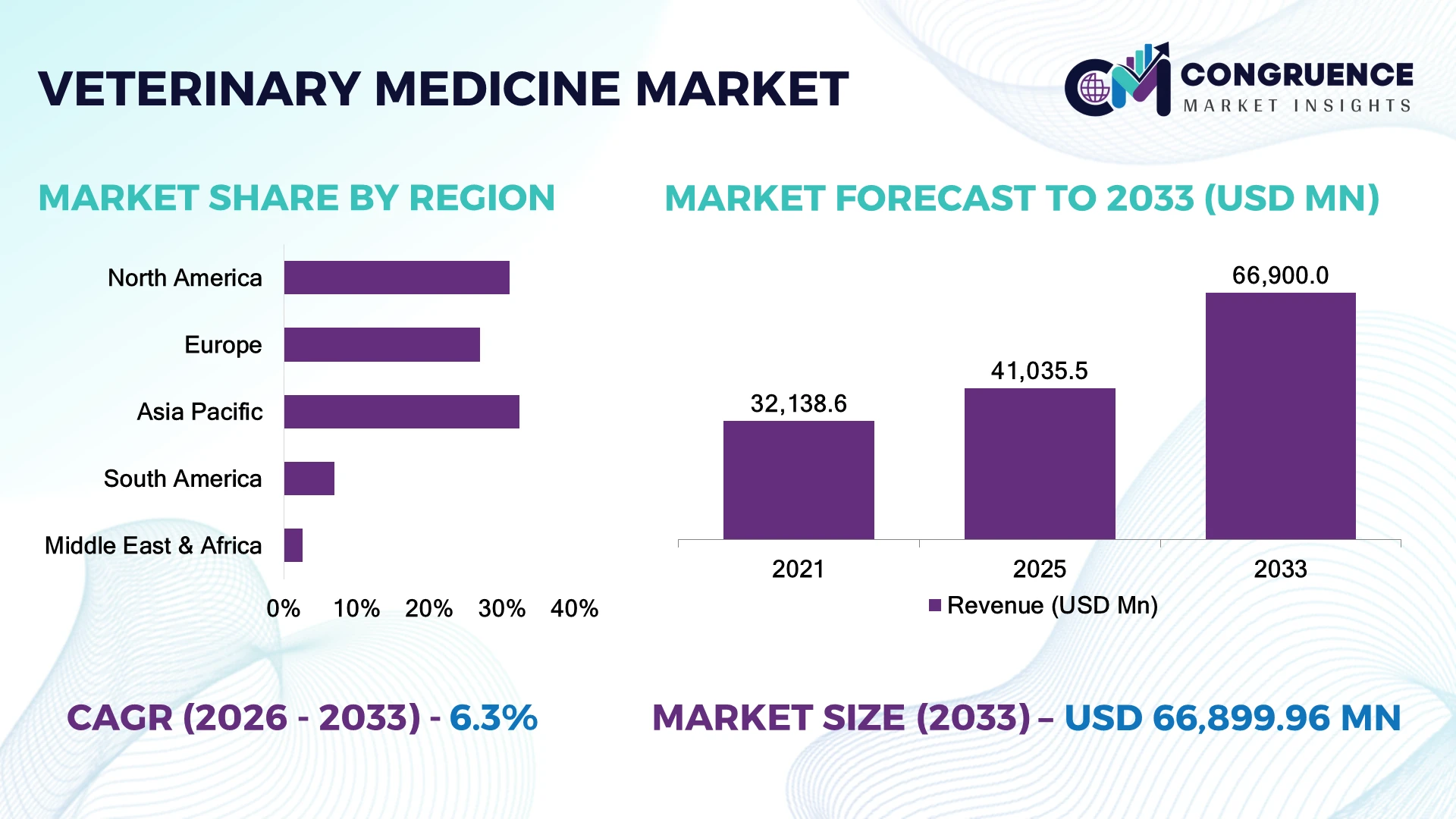
The Global Veterinary Medicine Market was valued at USD 41,035.5 Million in 2025 and is anticipated to reach a value of USD 66,900.0 Million by 2033 expanding at a CAGR of 6.3% between 2026 and 2033. Growth is driven by rising companion-animal healthcare spending, livestock disease prevention, advanced biologics, antimicrobial stewardship, and increasing adoption of preventive veterinary care.
The U.S. represents approximately 35% of global veterinary medicine demand, supported by a large companion-animal base, intensive livestock production, advanced diagnostics, and strong pharmaceutical infrastructure. China follows with expanding livestock-health requirements and domestic manufacturing. U.S. veterinary practices show roughly 60–70% adoption of digital practice-management systems, while emerging markets remain more price-sensitive. Avian influenza outbreaks in 2025–2026 continue to reinforce disease-control investment.
Strategic implication: manufacturers should prioritize preventive therapeutics, companion-animal innovation, livestock biosecurity, and region-specific access strategies.
The Veterinary Medicine Market is expanding across companion-animal therapeutics, livestock vaccines, parasiticides, antibiotics, biologics, diagnostics, and preventive care. Biologic and precision-treatment adoption is increasing by approximately 8–12% in advanced markets. AI diagnostics and wearable monitoring are gaining traction, while antimicrobial-resistance controls and poultry disease outbreaks are reshaping procurement and treatment protocols across global supply chains, setting the foundation for strategic investment.
Veterinary medicine is becoming strategically important as animal health shifts from reactive treatment toward prevention, precision diagnostics, and continuous disease management. Pharmaceutical companies are competing not only on drug efficacy but also on vaccination platforms, diagnostics, digital monitoring, and treatment convenience. Companion-animal healthcare is particularly attractive because chronic-condition management generates recurring demand, while livestock producers increasingly prioritize disease prevention to protect productivity and reduce biosecurity losses.
A major market shift is the tightening of antimicrobial-use controls alongside stronger surveillance of zoonotic and transboundary diseases. Digital veterinary platforms can reduce administrative processing by 15–20% versus paper-heavy workflows, while connected diagnostics accelerate case triage and follow-up. North America remains the most advanced market for premium therapeutics and digital practice infrastructure; Asia-Pacific is expanding through livestock modernization, domestic pharmaceutical production, and rising urban pet ownership.
Over the next 2–3 years, manufacturers are expected to prioritize long-acting formulations, next-generation vaccines, AI-assisted diagnostics, and connected monitoring. A practical deployment combines wearable activity monitoring with automated alerts and veterinary review for chronic conditions, reducing unnecessary visits while improving intervention speed. Companies are responding through acquisitions, licensing, manufacturing localization, and diagnostic partnerships. Competitive advantage will increasingly come from integrated animal-health platforms rather than individual products.
Preventive vaccination, parasiticide use, and chronic-disease management are shifting veterinary medicine from reactive treatment toward scheduled animal-health programs. Companion-animal preventive-care adoption is increasing 7–10%, while livestock vaccination programs are expanding 6–9% as producers prioritize herd productivity and disease containment. Rising antimicrobial-resistance controls are accelerating investment in vaccines and non-antibiotic therapeutics, particularly in the U.S. and European livestock sectors. Companies are expanding long-acting formulations, combination vaccines, and digital adherence platforms to capture recurring treatment demand. A non-obvious advantage is that preventive protocols improve pharmaceutical demand visibility, enabling manufacturers to forecast production more accurately and reduce inventory volatility. Partnerships between pharmaceutical companies, veterinary networks, and diagnostic providers are strengthening integrated disease-management offerings.
Veterinary pharmaceutical production remains exposed to active pharmaceutical ingredient, biologic-input, packaging, and cold-chain costs, with imported inputs representing roughly 20–40% of manufacturing requirements for several emerging-market suppliers. Temperature-sensitive biologics can increase logistics and storage costs by 15–25% compared with conventional formulations. India and Brazil remain particularly exposed to imported specialized ingredients and equipment, creating procurement sensitivity when international shipping or regulatory clearance is disrupted. Companies are responding through dual sourcing, localized formulation, longer-term supplier contracts, and regional manufacturing hubs. The operational pressure is increasingly shifting from drug discovery to supply reliability: manufacturers with diversified API and biologic-input networks can protect service levels while competitors face production delays and margin compression.
AI-assisted diagnostics, wearable monitoring, genomic testing, and precision dosing are creating higher-value veterinary medicine applications beyond conventional therapeutics. Digital diagnostic adoption across advanced veterinary practices is expanding approximately 10–15%, while connected monitoring can reduce unnecessary clinical visits by 15–20% for suitable chronic-care cases. In India, China, and Brazil, expanding companion-animal ownership and modern veterinary hospitals create additional demand for premium diagnostics and targeted therapies. Companies are investing in AI-enabled platforms, veterinary telehealth partnerships, and integrated diagnostic ecosystems. A less obvious opportunity lies in linking diagnostic data with pharmaceutical treatment protocols, allowing manufacturers to demonstrate measurable outcomes and strengthen recurring treatment relationships rather than competing solely on drug price.
Veterinary healthcare faces persistent workforce constraints alongside increasingly complex digital workflows. Staffing shortages can reduce clinical capacity by 10–15%, while fragmented practice-management systems can increase administrative handling by approximately 10–20%. Smaller clinics in the U.S., India, and Southeast Asia often lack the infrastructure required to integrate laboratory results, imaging, electronic prescriptions, and wearable data into a unified workflow. Cybersecurity requirements further complicate connected-care deployment as patient and practice data become increasingly digitized. Companies must therefore invest in interoperable platforms, automated documentation, workforce training, and managed technology services. The strategic challenge is not simply technology availability; it is achieving consistent adoption without increasing veterinarian workload, implementation costs, or clinical complexity.
AI Diagnostics Move Into Clinics: AI-supported imaging and decision tools are expanding adoption by roughly 10–15%, while automated laboratory workflows can reduce diagnostic turnaround 15–25%. U.S. veterinary networks are integrating decision support into routine consultations, shifting competition toward faster clinical throughput and software-enabled service differentiation.
Long-Acting Therapies Gain Traction: Extended-release injectables and sustained-delivery formulations are reducing treatment frequency by approximately 20–40% for selected indications. This shift is particularly relevant to chronic companion-animal care, where adherence remains difficult. Pharmaceutical companies are prioritizing lifecycle reformulation, specialty-clinic partnerships, and home-treatment support.
Antimicrobial Stewardship Reshapes Procurement: Tighter antimicrobial-use controls are increasing demand for vaccines, diagnostics, and preventive therapeutics, with targeted stewardship programs reducing antibiotic exposure by more than 20% in selected livestock settings. Producers are adopting disease surveillance before treatment, while manufacturers expand alternative therapies and vaccination portfolios.
Localized Supply Chains Strengthen: Geopolitical shipping disruptions and API concentration are encouraging manufacturers to diversify production and regionalize critical inputs. Localization programs can reduce replenishment exposure by 15–25% and shorten lead times. Companies are establishing dual-sourcing contracts and manufacturing partnerships, particularly across India, China, and Brazil.
Pharmaceuticals Lead While Biologics Accelerate
Pharmaceuticals represent the leading product type, accounting for approximately 55–57% of global veterinary medicine demand, supported by broad use of anti-infectives, parasiticides, anti-inflammatory drugs, analgesics, and chronic-care therapies. Their scalability, established distribution, and comparatively straightforward administration sustain dominance across livestock and companion-animal settings. Biologics are the fastest-growing category, with adoption increasing roughly 8–12% as vaccines, monoclonal antibodies, and advanced immunotherapies gain traction. Diagnostics and medicated feed additives remain strategically important, particularly for herd surveillance and production-animal disease management.
The investment shift is toward higher-value biologics and precision therapeutics, while manufacturers retain pharmaceutical portfolios for volume coverage. Long-acting formulations are reducing treatment frequency by approximately 20–40% for selected indications, strengthening adherence and product differentiation. Companies are expanding biologics manufacturing, partnering with diagnostic developers, and reformulating mature products to defend market share. The strategic opportunity is to combine therapeutics with diagnostics rather than compete solely through molecule-level differentiation.
Livestock Disease Control Anchors Demand
Production-animal applications account for approximately 60–63% of veterinary medicine demand, reflecting the scale of poultry, cattle, swine, and aquaculture health programs. High-volume vaccination, parasiticide, anti-infective, and nutritional-health programs support concentrated purchasing by large producers and integrators. Companion-animal treatment is the fastest-growing application, expanding approximately 8–12% as pet owners increase spending on chronic disease, dermatology, pain management, and preventive care. Diagnostics and precision monitoring are becoming increasingly embedded within higher-value companion-animal treatment pathways.
Livestock applications remain more price-sensitive, with procurement decisions strongly linked to mortality prevention, feed efficiency, and production continuity. Companion-animal providers increasingly prioritize treatment persistence and administration convenience, supporting premium formulations and longer-duration therapies. Companies are therefore segmenting portfolios by animal economics, expanding direct relationships with integrated poultry and livestock producers while developing specialty-clinic partnerships for companion animals. The non-obvious shift is toward outcome-linked treatment value rather than unit-price competition, particularly in mature pet-care markets.
Veterinary Hospitals and Clinics Remain Central
Veterinary hospitals and clinics represent approximately 50–55% of organized veterinary medicine purchasing, supported by direct clinical prescribing, diagnostic infrastructure, specialist services, and access to injectable and biologic therapies. Veterinary pharmacies and drug stores remain important for routine pharmaceuticals and over-the-counter products, while livestock producers, farms, and integrated animal-health operations account for substantial direct procurement. Digital veterinary platforms and specialized animal-health service providers are the fastest-evolving end-user group, with technology-enabled adoption increasing approximately 10–15%.
Large hospital networks increasingly favor integrated procurement, digital records, diagnostic connectivity, and specialty therapeutics, whereas independent clinics remain more price-conscious and distributor-dependent. Livestock enterprises prioritize disease prevention, biosecurity, and predictable supply, increasing demand for contract-based purchasing and customized vaccination programs. Manufacturers are responding with tiered pricing, veterinary-network partnerships, direct technical support, and integrated diagnostic offerings. Competitive positioning is shifting toward account-level ecosystems: suppliers that connect medicines, diagnostics, data, and clinical support gain greater purchasing influence than standalone product vendors.
Asia-Pacific accounted for the largest market share at 32.4% in 2025 however, Middle East & Africa is expected to register the fastest growth, expanding at a CAGR of 7.2% between 2026 and 2033.

Premium companion-animal care and advanced biologics strengthen U.S. market leadership
North America represents approximately 31% of global veterinary medicine demand, supported by high-value companion-animal therapeutics, livestock vaccination, specialty clinics, and sophisticated pharmaceutical distribution. The U.S. accounts for more than 85% of regional activity, with biologics, parasiticides, chronic-disease therapies, and advanced diagnostics concentrated across large veterinary networks. Digital practice-management adoption exceeds 60% among larger practices, accelerating electronic prescribing and connected diagnostics. Major manufacturers are expanding specialty portfolios and strengthening veterinary-clinic partnerships, while antimicrobial stewardship is increasing demand for preventive alternatives. Canada contributes through structured livestock-health programs and companion-animal care but remains smaller in premium pharmaceutical consumption.
U.S. Market Outlook:
The U.S. combines the world's deepest animal-health pharmaceutical infrastructure with extensive veterinary hospital networks and high companion-animal healthcare spending. Specialty therapeutics account for an increasing proportion of treatment value, while approximately 10–15% growth in digital veterinary workflows is improving prescription management and clinical data integration. Pharmaceutical companies are prioritizing biologics, long-acting therapies, diagnostics, and direct partnerships with veterinary groups.
Regulatory stewardship accelerates preventive and lower-antibiotic treatment models
Europe accounts for approximately 27% of global veterinary medicine demand, with Germany, France, the U.K., Italy, and Spain forming the principal commercial markets. Tight antimicrobial-use controls are accelerating vaccine, diagnostic, and preventive-treatment adoption, while veterinary pharmaceutical manufacturers increasingly align portfolios with responsible-use requirements. Advanced biologics and companion-animal therapies are concentrated in Western European markets, where specialty veterinary infrastructure is well established. Germany's integrated livestock sector and sophisticated distribution networks support high-volume preventive programs, while the U.K. emphasizes clinical governance and digital veterinary workflows.
Germany Market Outlook:
Germany provides the strongest combination of livestock production, companion-animal healthcare infrastructure, veterinary pharmaceutical distribution, and regulatory sophistication in Europe. Preventive vaccination and parasite-control programs remain commercially important, while specialty clinics increasingly adopt digital records and diagnostic integration. Manufacturers are strengthening German distribution partnerships and expanding biologic and low-antimicrobial treatment portfolios to align with evolving animal-health stewardship requirements.
Livestock scale and manufacturing localization reshape regional supply
Asia-Pacific contributes approximately 32% of global veterinary medicine demand, supported by China's livestock production, India's dairy and poultry sectors, Japan's mature companion-animal care, and expanding Southeast Asian aquaculture. China and India together account for more than 55% of regional animal-health consumption, while domestic pharmaceutical manufacturing is reducing dependence on imported formulations. Disease surveillance and vaccination programs are gaining importance as producers manage avian, swine, and cattle health risks. Manufacturers are localizing production, expanding distributor networks, and forming partnerships with large integrators to improve rural availability and reduce supply-chain lead times.
China Market Outlook:
China combines substantial livestock production with one of the world's largest veterinary pharmaceutical manufacturing bases. Poultry and swine health programs generate significant demand for vaccines, anti-infectives, parasiticides, and diagnostic services. Domestic manufacturers increasingly compete on formulation economics and local distribution, while multinational companies emphasize premium biologics, technology partnerships, and specialized companion-animal portfolios. Automated livestock monitoring is also strengthening disease-detection capabilities across large commercial farms.
Brazilian livestock intensity drives preventive-health procurement
South America represents approximately 7% of global veterinary medicine demand, with Brazil accounting for more than 60% of regional consumption. Large-scale cattle, poultry, and swine production creates sustained demand for vaccines, parasiticides, anti-infectives, and nutritional-health products. Brazil's integrated meat-processing ecosystem supports centralized procurement and standardized herd-health programs, while Argentina and Colombia provide additional livestock and companion-animal opportunities. Supply-chain exposure to imported active ingredients remains a constraint, encouraging local formulation and distributor partnerships. Manufacturers are increasingly targeting large producers with customized vaccination schedules and disease-monitoring programs rather than relying exclusively on conventional retail channels.
Brazil Market Outlook:
Brazil's scale in cattle and poultry production makes it the region's most strategically important veterinary medicine market. Large producers increasingly use structured vaccination, parasite-control, and biosecurity protocols to protect production efficiency. More than half of organized regional demand is concentrated in Brazil, creating attractive conditions for local manufacturing, contract distribution, and technical-service partnerships. Pharmaceutical companies are expanding direct relationships with livestock integrators while premium companion-animal products gain traction in major urban centers.
Livestock modernization and disease-control investment expand pharmaceutical access
Middle East & Africa represents approximately 9% of global veterinary medicine demand, with Saudi Arabia, the United Arab Emirates, South Africa, Egypt, and Israel forming important commercial centers. Livestock modernization, poultry production, aquaculture, and zoonotic-disease surveillance are strengthening demand for vaccines, parasiticides, diagnostics, and preventive therapeutics. Gulf markets are investing in modern veterinary hospitals and laboratory infrastructure, while African markets remain more fragmented and distribution-dependent. Companies are responding through distributor agreements, localized inventory, veterinary training, and regional cold-chain improvements. Digital consultation and diagnostic connectivity are increasingly relevant where specialist veterinary coverage remains limited.
Saudi Arabia Market Outlook:
Saudi Arabia is emerging as the region's strongest premium veterinary-health market, supported by livestock modernization, expanding poultry production, and investment in specialized veterinary infrastructure. Riyadh and Jeddah concentrate advanced clinics, laboratories, and pharmaceutical distribution capabilities. Large commercial farms increasingly adopt structured vaccination and biosecurity programs, while companion-animal clinics are expanding premium diagnostics and therapeutics. International manufacturers are strengthening local distributor relationships and pursuing hospital, laboratory, and livestock-enterprise partnerships to improve market access.
Zoetis, Boehringer Ingelheim, Merck Animal Health, Elanco, and Virbac compete as global leaders, while Ceva, Vetoquinol, Dechra, and regional manufacturers challenge them through specialized portfolios and cost positioning. The top five players collectively control approximately 45–50% of animal-health sales. Competition centers on innovation, pricing, supply reliability, clinical evidence, and formulation convenience: long-acting products can reduce dosing frequency 20–40%, digital diagnostics improve workflow efficiency 10–15%, and localized sourcing can shorten replenishment cycles 15–25%. Leaders are expanding biologics, vaccines, parasiticides, diagnostics, and specialty therapeutics through acquisitions, licensing, manufacturing investments, and veterinary-network partnerships. Zoetis emphasizes diagnostics and companion-animal innovation; Merck strengthens livestock technology; Elanco is expanding dairy and preventive-health capabilities. The competitive shift is toward integrated animal-health platforms, supply localization, and precision treatment rather than standalone drug portfolios. Regulatory approvals, R&D intensity, manufacturing validation, and veterinarian relationships remain major entry barriers. Winning requires differentiated products, resilient supply, clinical value, and integrated customer ecosystems.
Veterinary medicine technology is moving from conventional treatment toward AI-assisted diagnostics, monoclonal antibodies, precision dosing, connected wearables, and automated laboratory systems. AI-enabled imaging can reduce diagnostic review time by 15–25%, while point-of-care analyzers shorten turnaround by 20–30%. Adoption is strongest in larger U.S. veterinary networks, where digital records and diagnostic connectivity are increasingly integrated.
Long-acting injectables and advanced vaccine platforms are improving adherence and reducing repeat administration by roughly 20–40% for selected indications. Compared with manual laboratory workflows, automated point-of-care testing can deliver results 30–50% faster, improving clinical throughput and treatment decisions. Zoetis, Merck Animal Health, and Elanco benefit from combining therapeutics, diagnostics, and digital platforms, creating stronger customer retention than standalone pharmaceutical portfolios.
From 2026–2028, connected monitoring, AI-supported triage, genomic diagnostics, and interoperable practice-management systems will become more commercially important. Large hospital networks can reduce administrative handling 10–20% through workflow automation, while livestock operators gain earlier disease detection and tighter medication control. Companies investing now in integrated data ecosystems, manufacturing automation, and companion-animal biologics will strengthen differentiation, accelerate adoption, and capture higher-value clinical workflows. Real-world evidence from connected platforms also strengthens payer discussions, supports product lifecycle decisions, and enables manufacturers to link therapeutic performance with clinical outcomes across species.
November 2025 Zoetis committed $1.3 billion through 2031 for U.S. manufacturing expansion, including a $590 million Georgia facility. The investment strengthens monoclonal-antibody and vaccine capacity, supports roughly 100 jobs, and reinforces domestic supply resilience for companion-animal products globally. Source: zoetis.comZoetis
May 2026 Elanco completed its acquisition of AHV International, expanding its dairy-health portfolio across transition-cow care and productivity solutions. The transaction strengthens livestock positioning and combines AHV’s technology with Elanco’s global commercial infrastructure, accelerating integrated farm-animal health offerings. Source: elanco.comElanco
June 2026 Merck Animal Health agreed to acquire TARGAN, adding high-speed biodevice technology including WingScan for poultry performance. Merck had invested in TARGAN since 2017 and ranked among its largest shareholders, strengthening technology-led poultry-health integration at scale commercially. Source: merck.comMerck.com
July 2026 FDA launched a pilot prioritizing reviews for animal-drug applications using U.S.-manufactured finished products and active ingredients. The initiative targets supply resilience and shortages by accelerating qualifying reviews, creating a regulatory incentive for domestic veterinary pharmaceutical manufacturing. Source: fda.gov U.S. Food and Drug Administration
The Veterinary Medicine Market Report covers pharmaceuticals, biologics, vaccines, diagnostics, parasiticides, medicated products, and emerging precision-health solutions across companion animals, livestock, poultry, aquaculture, and other veterinary applications. End-user analysis includes veterinary hospitals and clinics, livestock producers, veterinary pharmacies, animal-health service providers, and specialized care networks. Geographic coverage spans North America, Europe, Asia-Pacific, South America, and Middle East & Africa.
The report evaluates preventive medicine, antimicrobial stewardship, long-acting formulations, AI diagnostics, connected monitoring, genomic testing, digital prescribing, and automated laboratory workflows. Leading companies account for approximately 45–50% of organized market activity, while digital veterinary adoption is increasing 10–15% across advanced practices. The analysis supports investment planning, manufacturing localization, portfolio expansion, partnership selection, competitive benchmarking, technology prioritization, and market-entry decisions through 2026–2033, including emerging opportunities in precision livestock health, companion-animal biologics, and technology-enabled veterinary services.
| Report Attribute/Metric | Report Details |
|---|---|
|
Market Revenue in 2025 |
USD 41,035.5 Million |
|
Market Revenue in 2033 |
USD 66,900.0 Million |
|
CAGR (2026 - 2033) |
6.3% |
|
Base Year |
2025 |
|
Forecast Period |
2026 - 2033 |
|
Historic Period |
2021 - 2025 |
|
Segments Covered |
By Type
By Application
By End-User
|
|
Key Report Deliverable |
Revenue Forecast, Growth Trends, Market Dynamics, Segmental Overview, Regional and Country-wise Analysis, Competition Landscape |
|
Region Covered |
North America, Europe, Asia-Pacific, South America, Middle East, Africa |
|
Key Players Analyzed |
Zoetis Inc., Boehringer Ingelheim Animal Health, Merck Animal Health, Elanco Animal Health Incorporated, Virbac, Ceva Santé Animale, Vetoquinol, Dechra Pharmaceuticals, Phibro Animal Health Corporation, Huvepharma, Norbrook Laboratories, Animalcare Group plc, Neogen Corporation |
|
Customization & Pricing |
Available on Request (10% Customization is Free) |




