
Reports
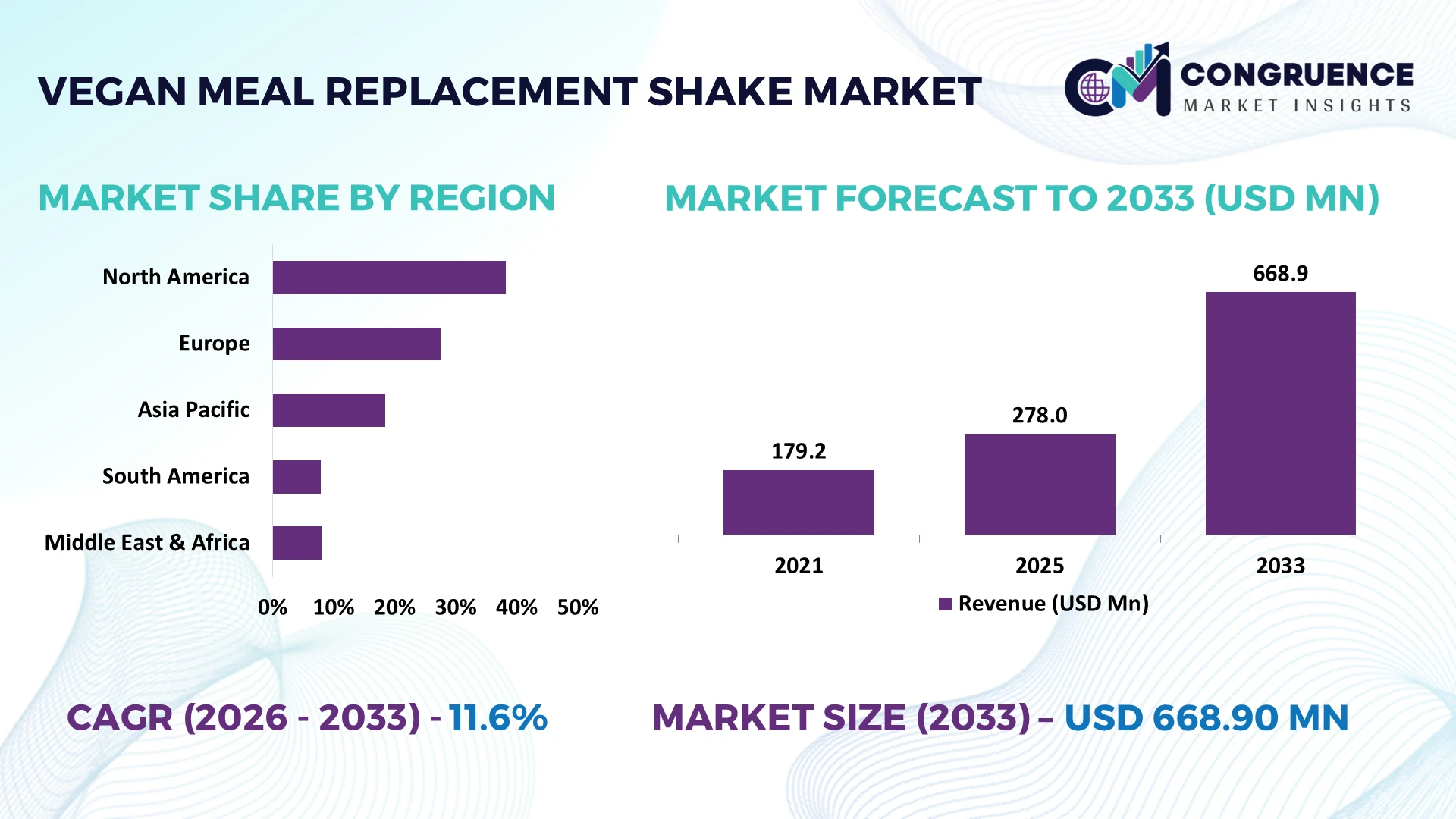
The Global Vegan Meal Replacement Shake Market was valued at USD 278.0 Million in 2025 and is anticipated to reach a value of USD 668.9 Million by 2033 expanding at a CAGR of 11.6% between 2026 and 2033. Growth is driven by advancements in plant-protein formulation, improved amino acid profiling, clean-label ingredient processing, and the expansion of convenient nutrition products across sports nutrition, weight management, and functional food applications.
The United States represents a major commercial hub, supported by established plant-based food manufacturers, sports nutrition brands, and extensive e-commerce distribution. Domestic manufacturers are increasingly investing in pea, soy, oat, and rice protein formulations, while growing retail penetration strengthens product accessibility. Compared with emerging markets such as India, the United States benefits from more mature specialty nutrition distribution and established consumer adoption. Meanwhile, India's expanding fitness ecosystem and plant-based food manufacturing capabilities are creating new opportunities for localized production and affordable formulations. Global trade diversification and evolving food-labeling requirements are also influencing ingredient sourcing and product positioning.
Manufacturers prioritizing protein quality, formulation affordability, and geographically diversified ingredient sourcing will strengthen their competitive positioning in the global vegan meal replacement shake industry.
Market Size & Growth: The global market is projected to increase from USD 278.0 million in 2025 to USD 668.9 million by 2033, expanding at 11.6% CAGR. Improved plant-protein processing, amino acid optimization, and functional formulation technologies are strengthening product competitiveness.
Top Growth Drivers: Rising preference for plant-based nutrition (estimated 35% contribution to incremental demand), increasing fitness-oriented consumption (30%), and expanding weight-management applications (25%) are major commercial growth catalysts. These are indicative demand-driver estimates, not measured market shares.
Short-Term Forecast: By 2028, manufacturers are targeting 10–15% improvements in formulation and production efficiency through automated blending, optimized ingredient handling, and reduced processing waste.
Emerging Technologies: Precision fermentation, AI-assisted nutritional formulation, and advanced protein extraction are transforming product development. Manufacturers are improving amino acid balance, texture, solubility, and flavor masking to compete with conventional dairy-based formulations.
Regional Leaders: North America is estimated to account for approximately USD 235 million in 2033, supported by established sports nutrition channels; Europe is projected at approximately USD 175 million, driven by clean-label and sustainability-oriented consumption; Asia Pacific is estimated at approximately USD 165 million, supported by expanding fitness participation and digital retail penetration. These are indicative regional allocation estimates.
Consumer/End-User Trends: Approximately 60% of the target consumer segment is increasingly associated with convenience-led nutrition purchasing behavior, including portable meal replacements, high-protein formulations, and personalized dietary solutions. This represents an indicative consumer-behavior benchmark.
Pilot/Case Example: A 2025 illustrative manufacturing pilot involving automated powder blending and inline quality monitoring demonstrates a potential 12% reduction in processing losses and improved batch consistency, highlighting the operational value of production automation.
Competitive Landscape: Established plant-based nutrition brands, including Huel, Orgain, Garden of Life, Soylent, and Kate Farms, compete through protein formulation, ingredient transparency, flavor innovation, and distribution expansion. No independently verified individual market-share percentage is assigned to the market leader.
Regulatory & ESG Impact: Clean-label requirements, allergen declarations, and sustainability reporting are influencing product development. Manufacturers targeting a 15% reduction in packaging material use are prioritizing recyclable containers, lighter packaging, and responsible ingredient sourcing.
Investment & Funding: Investment is increasingly directed toward plant-protein processing, product research, manufacturing expansion, and retail partnerships. Strategic funding priorities include pea-protein capacity, fermentation technologies, and specialized functional nutrition formulations.
Innovation & Future Outlook: Next-generation formulations incorporating precision-fermented proteins, fiber enrichment, probiotics, and personalized nutrition are reshaping competition. Companies are shifting from basic meal replacement products toward multifunctional nutrition solutions with differentiated health and convenience positioning.
The vegan meal replacement shake industry is increasingly moving beyond conventional powdered nutrition toward multifunctional, protein-rich products designed for everyday dietary management. Pea and fava bean proteins, improved flavor-masking technologies, and fiber-enriched formulations are addressing important product limitations. High-protein formulations containing 20–30 grams of protein per serving are gaining commercial relevance, while manufacturers are strengthening ingredient traceability and diversifying sourcing to manage international supply-chain disruptions. This transition creates opportunities for differentiated products and stronger brand positioning.
The vegan meal replacement shake market is becoming strategically important as food manufacturers reposition plant-based nutrition from a specialized dietary category into a broader functional food business. Competitive advantage increasingly depends on protein quality, ingredient traceability, formulation science, and scalable manufacturing rather than simply offering dairy-free alternatives. Companies with integrated ingredient sourcing and differentiated nutritional profiles are better positioned to capture premium retail and institutional distribution opportunities.
A significant industry shift involves replacing conventional single-source plant proteins with blended formulations combining pea, soy, rice, and oat proteins. Conventional formulations often face limitations in amino acid balance, texture, and solubility, whereas optimized protein blends improve nutritional completeness and consumer acceptance. Automated blending, advanced extrusion, and precision fermentation are further strengthening production consistency. North America leads in established commercial distribution, while India and China offer opportunities for localized manufacturing, affordable protein formulations, and expanding digital retail channels.
Over the next 2–3 years, manufacturers will prioritize improved protein digestibility, reduced sugar content, and shorter product-development cycles. For example, companies developing pea-and-rice protein combinations can target sports nutrition and convenient meal replacement applications through contract manufacturing and ingredient partnerships. Strategic investment in formulation research, regional sourcing, and omnichannel distribution will determine competitive positioning. Businesses that combine nutritional differentiation with manufacturing efficiency will secure stronger long-term relevance.
The increasing preference for plant-based protein formulations is strengthening demand for vegan meal replacement shakes across fitness, weight management, and everyday nutrition applications. Products delivering 20–30 grams of protein per serving are attracting consumers seeking convenient nutritional alternatives. Improvements in pea-protein isolation, enzymatic processing, and amino acid blending are addressing historical limitations involving texture and digestibility. Plant-based food innovation and expanding specialty nutrition distribution in the United States are accelerating commercial adoption. Companies are responding through investments in protein-blending technologies, clean-label product development, and partnerships with ingredient suppliers. An important competitive shift involves combining protein quality with taste consistency, allowing manufacturers to compete beyond the traditional vegan consumer segment.
High-quality plant proteins often involve substantial extraction, purification, flavor correction, and processing expenses, creating pricing pressure for vegan meal replacement manufacturers. Specialty pea and fava bean protein ingredients can carry estimated procurement premiums of 10–20% over certain conventional commodity protein alternatives, depending on purity, origin, and contract conditions. Additionally, manufacturers frequently require multiple ingredients to achieve acceptable amino acid profiles, increasing formulation and inventory complexity. Agricultural supply fluctuations and transportation disruptions further affect ingredient availability, particularly for internationally sourced proteins. Companies are reducing exposure through diversified sourcing, long-term procurement agreements, domestic ingredient partnerships, and alternative protein blends. The key operational limitation is maintaining nutritional quality without allowing ingredient costs to undermine mass-market affordability.
Advanced plant-protein blending presents opportunities to develop products targeting specific nutritional requirements, including muscle recovery, weight management, digestive health, and active aging. Combining pea, rice, and fava bean proteins with functional fibers and micronutrients can improve product differentiation while addressing nutritional limitations. Manufacturers incorporating 20–30 grams of protein per serving and 5–10 grams of dietary fiber can target consumers seeking more comprehensive meal replacement solutions. Precision fermentation and improved protein fractionation are emerging innovation pathways that strengthen ingredient functionality. India's expanding packaged nutrition market also creates opportunities for locally sourced formulations and competitively priced products. Companies investing in customized formulations, contract manufacturing, and digital nutrition platforms can establish differentiated positions beyond conventional powdered shakes.
Maintaining consistent taste, solubility, nutritional composition, and shelf stability remains a significant execution challenge as vegan meal replacement manufacturers expand production. Variations in agricultural protein inputs can create approximately 5–10% fluctuations in certain ingredient quality parameters, requiring additional testing and formulation adjustments. Moreover, high-protein formulations containing multiple plant ingredients require careful control of viscosity, sedimentation, moisture, and oxidation. Evolving labeling expectations and allergen-management requirements add further operational complexity across international markets. Manufacturers must strengthen laboratory testing, automated ingredient measurement, and supplier qualification systems. Investment in advanced quality-control infrastructure and standardized protein specifications will be essential to ensure consistent product performance across manufacturing facilities and international distribution networks.
Ready-to-Drink Format Expansion: Ready-to-drink (RTD) vegan shakes are gaining traction as consumers prioritize portable nutrition and reduced preparation time. Manufacturers are expanding aseptic filling, shelf-stable packaging, and single-serving formats to improve retail accessibility. RTD product development increasingly targets 20–30 grams of protein per serving, while packaging optimization aims to reduce material use by 10–15%. Companies are strengthening beverage manufacturing partnerships and convenience-store distribution to capture workplace, travel, and fitness-related consumption.
Clean-Label Protein Reformulation: Manufacturers are reducing artificial sweeteners, synthetic flavors, and unnecessary additives while improving ingredient transparency. Pea, soy, rice, and oat protein combinations are becoming important formulation choices, with blended formulations targeting improvements in amino acid balance and sensory performance. A 2025 consumer survey found that 36% of respondents were likely or very likely to try plant-based proteins, while 11.4% had already tried them. Brands are responding with simplified ingredient lists and clearer nutritional declarations.
Personalized Functional Nutrition: Product portfolios are shifting toward targeted formulations combining protein, dietary fiber, vitamins, minerals, and digestive-health ingredients. Approximately 40% of American consumers identified weight management as a dietary health priority in the 2025 IFIC Food & Health Survey, reinforcing demand for specialized nutritional positioning. Manufacturers are introducing differentiated calorie, protein, and fiber profiles while using digital subscriptions and consumer analytics to refine product assortments.
Supply-Chain Localization and Traceability: Ingredient procurement is shifting toward diversified pea, soy, and rice protein suppliers as manufacturers manage agricultural volatility, import exposure, and quality consistency. EU trade measures affecting imported peas and documented energy-cost fluctuations are reinforcing procurement diversification. Companies are increasing supplier qualification, batch-level traceability, and regional sourcing arrangements. The non-obvious shift is that ingredient traceability is becoming a product-positioning advantage rather than simply a procurement control.
Powder accounted for an estimated 42.5% of the global vegan meal replacement shake market in 2025, supported by lower transportation costs, extended shelf life, flexible serving sizes, and efficient bulk manufacturing. Its compatibility with different plant-based beverages and customizable protein concentrations strengthens its position across household, fitness, and weight-management applications. Ready-to-Drink (RTD) products represented approximately 35.8%, while meal replacement bars accounted for 21.7%. Powder remains the established volume leader, particularly in online and specialty nutrition distribution, whereas RTD is the fastest-growing format as consumers prioritize immediate consumption and portion-controlled packaging.
Manufacturers are increasingly investing in aseptic processing, improved powder dispersion, and packaging innovation. RTD products are attracting greater investment in convenience-oriented retail, while bars retain relevance for portable nutrition and supplementary consumption. Approximately 15–20% improvement in packaging and distribution efficiency represents an important operational target for manufacturers scaling shelf-stable formats. Companies are increasingly balancing powder manufacturing economics with higher-value RTD product development.
Weight Management represented an estimated 37.4% of the global vegan meal replacement shake market in 2025, supported by calorie-controlled formulations, portion management, and convenient nutritional substitution. General Wellness accounted for approximately 31.9%, reflecting routine consumption among health-conscious consumers seeking convenient nutritional balance. Sports Nutrition represented 22.8%, while Others contributed 7.9%. Weight management remains the largest established application because of its association with structured dietary programs, whereas sports nutrition is the fastest-growing application as consumers increasingly prioritize protein intake, recovery, and muscle maintenance.
Manufacturers are differentiating products through calorie-specific formulations, enhanced protein concentrations, and digestive-health ingredients. Sports-oriented portfolios increasingly emphasize 20–30 grams of protein per serving, while general wellness products focus on micronutrient diversity and everyday nutritional convenience. Companies are expanding specialist fitness partnerships and digital subscription channels to strengthen recurring consumption. The commercial implication is a gradual shift from single-purpose weight-control products toward application-specific nutritional portfolios.
Adults accounted for an estimated 72.4% of the global vegan meal replacement shake market in 2025, reflecting their established purchasing participation across workplace nutrition, fitness routines, weight management, and convenient meal consumption. Elderly consumers represented approximately 14.2%, while Children accounted for 13.4%. Adult consumption remains dominant because of broader product accessibility, higher purchasing autonomy, and established sports and wellness distribution networks. Elderly nutrition represents the fastest-growing emerging end-user opportunity as manufacturers increasingly address age-related nutritional requirements and convenient protein intake.
Companies are adapting product development through differentiated protein concentrations, micronutrient enrichment, smaller serving formats, and improved digestibility. Adult-focused products emphasize convenience and fitness performance, while elderly-oriented formulations increasingly prioritize nutritional density, easy preparation, and manageable serving sizes. Children's products require particular attention to age-appropriate nutritional composition, allergen management, and regulatory compliance. Manufacturers are therefore moving toward specialized product portfolios rather than relying exclusively on one formulation across all consumer groups.
North America accounted for the largest market share at 38.2% in 2025 however, Asia-Pacific is expected to register the fastest growth, expanding at a CAGR of 11.5% between 2026 and 2033.
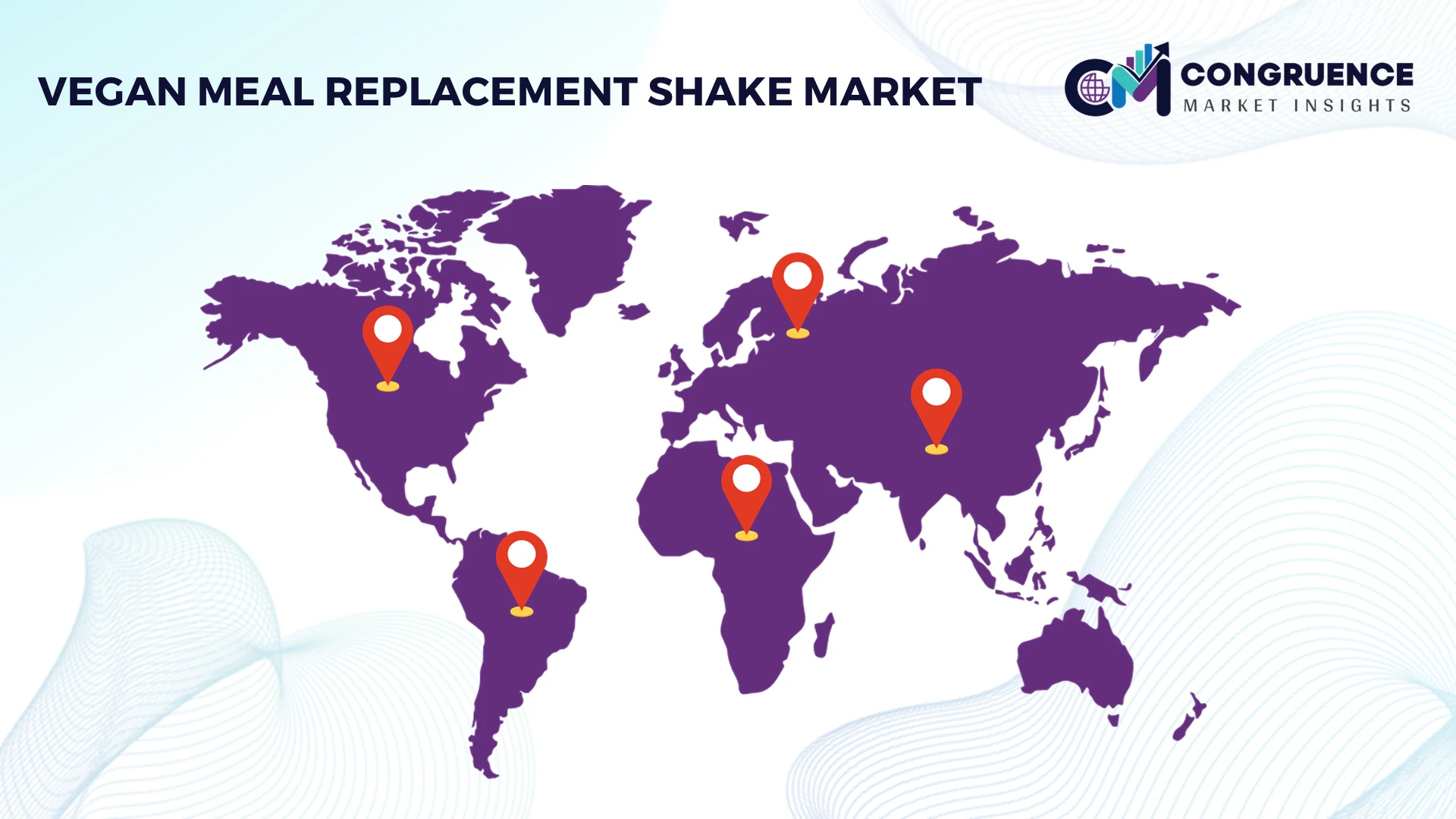
North America holds a leading position in the global vegan meal replacement shake industry, supported by established nutrition brands, sophisticated retail infrastructure, and strong penetration of fitness-oriented products. The United States accounts for the largest share of regional consumption, with Canada contributing through specialty nutrition retail and expanding plant-based food distribution. Approximately 38.2% of global market demand originates from the region, reflecting its mature consumer base and established commercial ecosystem. E-commerce subscriptions, supermarket distribution, and specialty health stores provide manufacturers with multiple routes to market. Companies are strengthening product portfolios through high-protein formulations, organic ingredients, and ready-to-drink formats. Danone's acquisition of Kate Farms in 2025 also highlights increasing strategic investment in specialized plant-based nutrition. The principal competitive advantage lies in combining established brand recognition with rapid product commercialization and extensive distribution reach.
United States Market Outlook: The United States leads North American consumption through its established sports nutrition, functional food, and dietary supplement industries. Companies benefit from advanced food-processing infrastructure, extensive contract manufacturing networks, and sophisticated direct-to-consumer distribution. FDA labeling and food-safety requirements influence formulation and commercialization strategies. Manufacturers are increasingly targeting consumers seeking convenient, high-protein, dairy-free nutrition, while partnerships with specialty retailers and digital subscription platforms strengthen recurring purchases. Investment in product differentiation and domestic manufacturing capabilities supports competitive positioning.
Europe represents approximately 27.5% of the global vegan meal replacement shake market, supported by established plant-based food consumption, sustainability-oriented purchasing, and organized specialty nutrition distribution. Germany, the United Kingdom, and France are important commercial markets, with consumers increasingly prioritizing ingredient transparency, organic certification, and nutritional composition. EU food regulations, including Regulation (EU) No. 609/2013 for foods intended for specific groups, influence product formulation and labeling where applicable. Manufacturers are investing in recyclable packaging, traceable plant-protein sourcing, and formulations with reduced artificial additives. The United Kingdom also benefits from established direct-to-consumer nutrition brands and developed e-commerce channels. Compared with North America, European manufacturers face more complex country-specific commercialization requirements, making regulatory compliance and consistent product labeling important competitive differentiators.
United Kingdom Market Outlook: The United Kingdom benefits from established vegan nutrition brands, specialized food manufacturing, and a mature online health-food retail ecosystem. Companies such as Huel have strengthened the country's position through complete-nutrition formulations, subscription distribution, and international expansion. British manufacturers are increasingly emphasizing product transparency, recyclable packaging, and ingredient traceability. The country's established food innovation ecosystem supports faster commercialization of differentiated plant-based formulations and premium nutritional products.
Asia-Pacific represents approximately 18.4% of the global vegan meal replacement shake market and is positioned as the fastest-growing regional market. China, India, Japan, and Australia are important demand centers, supported by urbanization, increasing fitness participation, and expanding access to packaged nutrition. The region benefits from extensive soy processing capabilities, established food ingredient manufacturing, and growing domestic plant-protein development. Online marketplaces and mobile commerce are expanding access to specialized nutrition products beyond metropolitan retail networks. Manufacturers are introducing locally adapted flavors, affordable protein blends, and smaller packaging formats to address purchasing-power differences. India's growing nutrition and fitness ecosystem provides opportunities for domestic brands, while Chinese manufacturers benefit from extensive food-processing infrastructure. Companies are increasingly combining regional sourcing with digital distribution to improve affordability and market penetration.
China Market Outlook: China holds a strategically important position through its established soy-processing industry, large packaged-food manufacturing base, and sophisticated e-commerce infrastructure. Domestic manufacturers benefit from access to plant-protein ingredients and extensive food-processing capabilities. Major online retail platforms support rapid product launches, consumer testing, and nationwide distribution. Companies are increasingly adapting formulations to local flavor preferences while investing in protein diversification, nutritional fortification, and convenient single-serving packaging.
South America accounts for approximately 7.9% of the global vegan meal replacement shake market, with Brazil representing its most important commercial center. Demand is supported by expanding fitness participation, increasing awareness of plant-based nutrition, and the development of specialized health-food retail. Brazil's established soy cultivation and food-processing industries provide a structural advantage for manufacturers seeking locally sourced plant-protein ingredients. Argentina, Chile, and Colombia offer additional opportunities through urban health-conscious consumers and expanding digital retail access. However, currency fluctuations, imported ingredient costs, and uneven cold-chain and distribution infrastructure constrain the expansion of premium ready-to-drink products. Companies are responding through localized procurement, powder-based formulations, regional distribution partnerships, and competitively priced product sizes. Domestic ingredient availability creates an opportunity to reduce import dependency and improve manufacturing economics.
Brazil Market Outlook: Brazil leads the regional opportunity through its extensive agricultural processing industry, established soy supply chain, and large consumer packaged-food market. Its domestic ingredient ecosystem supports the development of competitively priced plant-based nutrition products. Manufacturers can leverage local protein sourcing and established food-processing facilities to reduce dependence on imported ingredients. Fitness-oriented retail, online nutrition stores, and specialty supplement distributors provide additional routes for market expansion.
Middle East & Africa accounts for approximately 8.0% of the global vegan meal replacement shake market, with demand concentrated in the United Arab Emirates, Saudi Arabia, and South Africa. Rising fitness participation, premium health-food retail, and increasing interest in convenient nutritional products are supporting category development. Saudi Arabia's Vision 2030 initiatives, particularly investments in food manufacturing and domestic food security, are encouraging broader food-sector modernization. The UAE benefits from international retail networks, established import infrastructure, and premium nutrition distribution. South Africa provides an additional opportunity through its developed packaged-food industry and growing health-conscious consumer base. However, imported plant-protein ingredients, transportation costs, and price sensitivity constrain broader market penetration. Manufacturers are responding through distributor partnerships, localized product positioning, and shelf-stable powdered formulations that reduce dependence on refrigerated logistics.
United Arab Emirates Market Outlook: The UAE represents a strategically important market through its international food-trading infrastructure, modern supermarket networks, and established fitness and wellness industry. Dubai and Abu Dhabi provide access to premium nutrition retailers, specialist supplement distributors, and international consumer brands. The country's high dependence on imported food ingredients encourages manufacturers to establish reliable regional distribution agreements and diversified procurement arrangements. Companies targeting the UAE are prioritizing premium formulations, convenient packaging, clear nutritional labeling, and products suited to multicultural consumer preferences.
Huel competes with Soylent and Jimmy Joy in complete-meal powders and ready-to-drink formats, while Orgain, OWYN, and Garden of Life target mainstream plant-protein retail. Ample, Ka’Chava, and Sunwarrior compete through premium whole-food positioning; regional brands challenge them on local flavors and price. The top five brands are estimated to hold approximately 30–35% combined share, indicating a fragmented market with meaningful brand concentration but no single controlling supplier. Competition centers on price-per-serving, protein quality, taste, shelf stability, and omnichannel access. Formulations delivering 20–40 grams of protein differentiate premium products, while value-led brands use larger packs and subscription discounts to defend affordability. Retail expansion, contract manufacturing, ingredient partnerships, and direct-to-consumer subscriptions are practical routes to scale. Danone’s acquisition of Huel signals consolidation around complete nutrition and distribution reach. Entry barriers include formulation expertise, compliant labeling, reliable protein sourcing, and repeat-purchase economics. Winners combine trusted nutrition claims, consistent sensory performance, and cost-efficient distribution.
Huel Ltd.
Soylent Nutrition Inc.
Ample Foods Inc.
YFood Labs GmbH
Nuzest Life Pty Ltd.
Labrada Nutrition
Only What You Need (OWYN)
310 Nutrition LLC
Jimmy Joy B.V.
Saturo Foods GmbH
Sunwarrior LLC
Ka'Chava
Orgain Inc.
PlantFusion
Current production relies on high-shear mixing, spray-dried plant proteins, homogenization, and conventional flavor masking. Enzymatic hydrolysis and precision fractionation improve solubility and reduce gritty mouthfeel; pilot formulations target 10–15% lower sedimentation and 5–8% faster reconstitution than less-refined blends. These gains matter to ready-to-drink producers, where stability failures increase returns and waste. Adoption remains concentrated among larger ingredient suppliers and established brands.Emerging systems combine AI-assisted formulation, digital sensory testing, inline viscosity monitoring, and automated dosing. These tools screen protein ratios and sweetener systems faster, with development-cycle reductions of approximately 15–20% as an operational target, not a verified industry average. Precision fermentation can supply functional proteins, while improved pea, fava, and rice fractionation diversifies sourcing. Larger brands benefit from laboratory capacity and procurement scale; smaller firms access capabilities through contract manufacturers and ingredient partnerships.During 2026–2028, advantage will depend on integrating ingredient traceability, process analytics, and packaging-line quality controls. Compared with manual batch checks, inline monitoring supports tighter consistency; a 5–10% reduction in avoidable rework is a plant-level target, not a market-wide result. Companies should prioritize validated sensory performance, shelf-life testing, and scalable protein supply before costly novel processes. The strongest strategy links product quality to reliable unit economics and repeatability.
The report evaluates the global vegan meal replacement shake industry across powder, ready-to-drink beverages, and bars, with application coverage spanning weight management, general wellness, sports nutrition, and other nutritional uses. End-user analysis examines adults, elderly consumers, and children, while distinguishing product requirements, purchasing behavior, and route-to-market differences. Ingredient and channel considerations include pea, soy, rice, and blended plant proteins, alongside supermarkets, specialist nutrition retailers, and online distribution.Geographic coverage includes North America, Europe, Asia-Pacific, South America, and the Middle East & Africa, with country-level attention to manufacturing capability, consumer adoption, regulation, and sourcing conditions. Technology assessment covers protein fractionation, enzymatic processing, formulation analytics, shelf-life control, and sustainable packaging. The analysis supports investment screening, product prioritization, market-entry planning, partnership selection, and competitive positioning by identifying established demand pools alongside emerging opportunities through 2033.
| Report Attribute / Metric | Details |
|---|---|
| Market Revenue (2025) | USD 278.0 Million |
| Market Revenue (2033) | USD 668.9 Million |
| CAGR (2026–2033) | 11.6% |
| Base Year | 2025 |
| Forecast Period | 2026–2033 |
| Historic Period | 2021–2025 |
| Segments Covered |
By Type
By Application
By End-User
|
| Key Report Deliverables | Revenue Forecast; Market Trends; Growth Drivers & Restraints; Technology Insights; Segmentation Analysis; Regional Insights; Competitive Landscape; Regulatory & ESG Overview; Recent Developments |
| Regions Covered | North America; Europe; Asia-Pacific; South America; Middle East & Africa |
| Key Players Analyzed | Huel Ltd.; Soylent Nutrition Inc.; Ample Foods Inc.; YFood Labs GmbH; Nuzest Life Pty Ltd.; Labrada Nutrition; Only What You Need (OWYN); 310 Nutrition LLC; Jimmy Joy B.V.; Saturo Foods GmbH; Sunwarrior LLC; Ka'Chava; Orgain Inc.; PlantFusion |
| Customization & Pricing | Available on Request (10% Customization Free) |




