
Reports
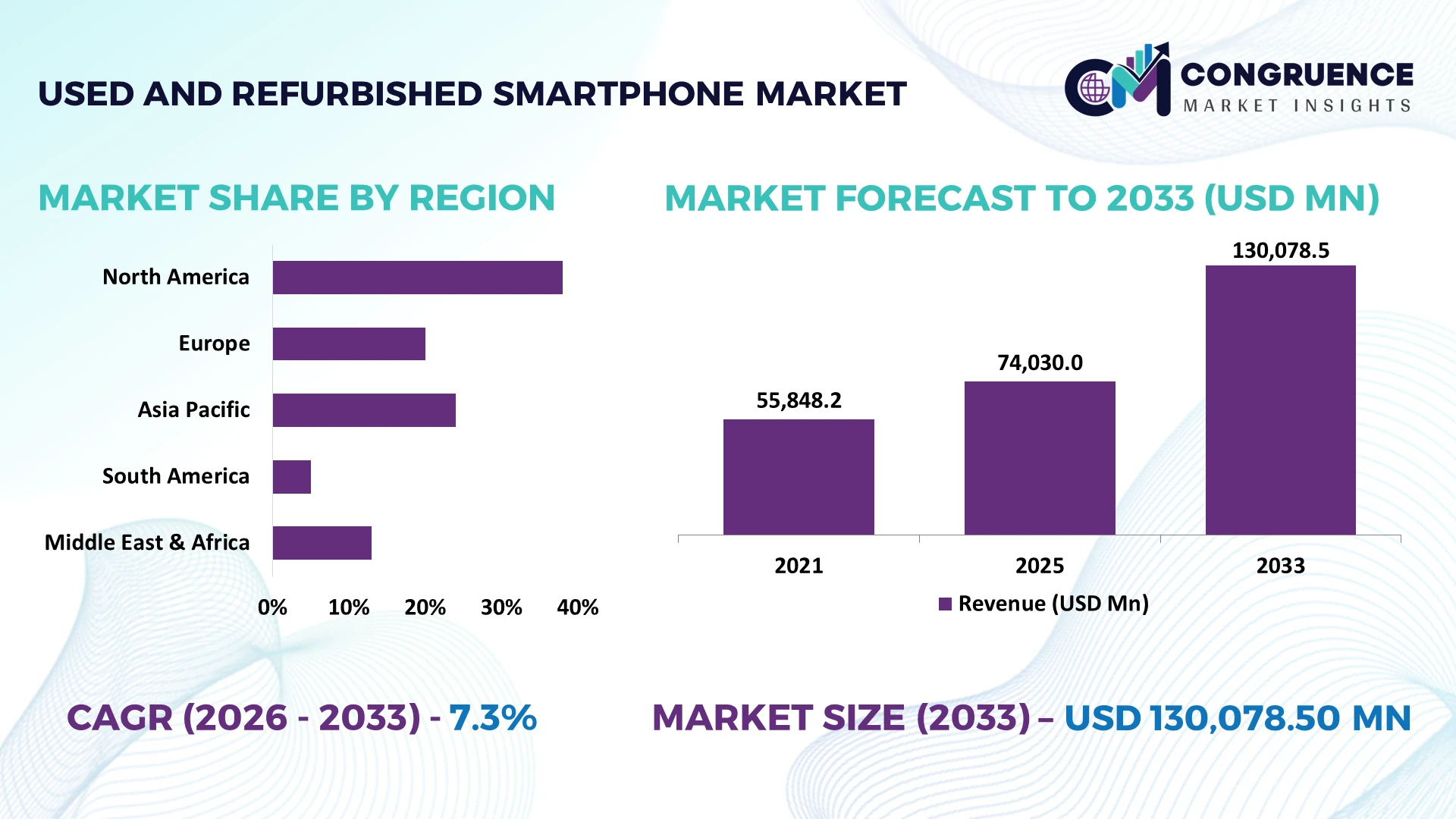
The Global Used and Refurbished Smartphone Market was valued at USD 74030 Million in 2025 and is anticipated to reach a value of USD 130078.5 Million by 2033 expanding at a CAGR of 7.3% between 2026 and 2033. Growth is driven by premium smartphone trade in programs, longer device replacement cycles, automated refurbishment technologies, and expanding certified resale channels.
The United States leads the premium refurbished smartphone ecosystem, supported by approximately 90% smartphone ownership among adults and established carrier trade in infrastructure. Apple and Samsung dominate high value secondary device circulation, while specialized refurbishers invest in automated diagnostics, battery replacement, and device grading. Compared with India, where smartphone ownership remains lower and price sensitivity is stronger, the United States benefits from extensive carrier financing and certified resale distribution. Apple's expanding self service repair ecosystem and European Union repairability regulations are reshaping global refurbishment practices.
Strategically, refurbishment companies should prioritize premium device recovery, automated quality assessment, and cross border resale partnerships to maximize recovered device value and inventory turnover.
Market Size & Growth: USD 74,030 million in 2025, reaching USD 130,078.5 million by 2033 at 7.3% CAGR, driven by premium smartphone trade in programs.
Top Growth Drivers: Illustrative demand weighting assigns 40% to affordability, 35% to device trade ins, and 25% to extended smartphone lifecycles.
Short Term Forecast: By 2028, automated refurbishment targets 15% faster device processing and 10% lower diagnostic expenditure.
Emerging Technologies: Three priorities include AI powered grading, robotic device testing, and automated battery health diagnostics.
Regional Leaders: Indicative 2033 allocations place North America at USD 45,527.48 million, Europe at USD 36,421.98 million, and Asia Pacific at USD 35,121.20 million, supported by carrier trade ins, repairability policies, and resale platforms.
Consumer / End User Trends: Refurbished premium smartphones typically offer 20% to 50% savings against comparable new devices, strengthening value oriented purchasing.
Pilot / Case Example: A proposed 2027 automated grading pilot targets 20% faster inspections through computer vision and standardized diagnostic workflows.
Competitive Landscape: Apple leads premium device ecosystem influence alongside Samsung, Back Market, Amazon Renewed, and Swappie; individual resale shares remain undisclosed.
Regulatory & ESG Impact: European Union ecodesign rules require at least 5 years of operating system updates for covered smartphones, supporting longer usable lifecycles.
Investment & Funding: Back Market announced USD 510 million in Series E funding in 2021, supporting international expansion and refurbished electronics marketplace development.
Innovation & Future Outlook: Three priorities include battery certification, automated condition grading, and device traceability, strengthening trusted circular smartphone commerce.
The global used and refurbished smartphone market serves consumers seeking affordable premium devices, enterprises managing replacement fleets, and retailers monetizing recovered smartphones. Certified resale platforms increasingly emphasize battery condition verification, standardized cosmetic grading, and warranty coverage to improve purchasing confidence. Premium devices often retain stronger secondary market value because of extended software support and established repair networks. European Union smartphone ecodesign requirements introduced in 2025 mandate at least 5 years of operating system updates for covered devices, strengthening lifecycle extension incentives. These developments shift competitive advantage toward reliable device sourcing, transparent quality certification, and efficient refurbishment operations, establishing the foundation for strategic market evaluation.
The used and refurbished smartphone market is becoming strategically important as manufacturers, telecom operators, and resale platforms compete to capture residual device value. Premium smartphones frequently sell at 20% to 50% discounts against comparable new models, strengthening affordability while extending product lifecycles. European Union ecodesign requirements introduced in 2025 mandate at least five years of operating system updates for covered smartphones, encouraging longer device utilization. Companies including Apple, Samsung, and Back Market are strengthening trade in ecosystems, certified refurbishment networks, and quality verification processes.
Technology investment increasingly emphasizes automated diagnostics, computer vision grading, and battery health assessment. Compared with conventional manual inspection, automated testing systems target a modeled 20% reduction in processing time and 15% improvement in grading consistency. The United States benefits from established carrier recovery networks, while India offers substantial opportunities through affordable premium device distribution and organized resale platforms.
Between 2026 and 2028, refurbishment operators are expected to prioritize standardized device certification, automated testing, and regional processing facilities. A practical deployment involves integrating diagnostic software with warehouse inventory systems to improve grading accuracy and inventory turnover. Companies securing reliable device supply, transparent quality certification, and efficient refurbishment operations will strengthen competitive positioning across international secondary smartphone markets.
Structured smartphone trade in programs are accelerating secondary device circulation by connecting new device purchases with organized recovery networks. Refurbished premium smartphones commonly offer 20% to 50% purchase price savings, attracting consumers seeking advanced functionality without flagship replacement costs. Approximately 90% of United States adults own smartphones, creating a substantial installed base for device recovery and resale. Apple's extended software support and Samsung's longer update commitments improve the commercial viability of older premium devices. Telecom operators and resale platforms are expanding collection partnerships, automated diagnostics, and certified refurbishment services. The strategic advantage lies in recovering devices before excessive battery degradation or cosmetic deterioration reduces resale value, improving inventory quality and refurbishment economics.
Used smartphone suppliers face structural constraints from unpredictable trade in volumes, component availability, and inconsistent device condition. Battery replacement, display repairs, and functional testing create variable processing costs across identical smartphone models. An illustrative operating scenario shows that 15% higher replacement component costs and 10% lower recovery yields can significantly weaken refurbishment margins. Apple's component pairing controls and manufacturer specific repair procedures also influence access to replacement parts and diagnostic functionality. Cross border shipments face customs documentation requirements and differing classifications for used electronics. Refurbishers are diversifying collection channels, negotiating component supply agreements, and expanding domestic processing facilities. Standardized grading and early defect screening reduce expenditure on devices with limited resale potential.
Automated refurbishment technologies create opportunities to improve device recovery efficiency, quality consistency, and international resale accessibility. Computer vision grading and integrated diagnostics offer modeled targets of 20% faster inspection and 15% fewer classification errors compared with conventional manual workflows. India represents an attractive expansion market because price sensitive consumers increasingly seek affordable premium smartphones through organized digital marketplaces. European Union repairability requirements also support longer device serviceability and improved spare component availability. Refurbishment companies are investing in automated testing stations, battery certification systems, and partnerships with telecom operators and ecommerce platforms. Between 2026 and 2028, standardized device histories and digital certification records will strengthen consumer trust. Competitive differentiation increasingly depends on converting recovered devices into reliably graded inventory with minimal processing delays.
Maintaining consistent device security and functional reliability across expanding refurbishment volumes presents a significant execution challenge. Refurbishers must verify data erasure, activation lock removal, battery condition, and hardware functionality before resale. Proposed operational benchmarks include 100% verified data sanitization, 95% successful first inspection completion, and 15% fewer warranty related returns. These represent quality management targets rather than established industry performance. Apple's Activation Lock and Android Factory Reset Protection create legitimate ownership verification requirements that complicate processing of improperly released devices. European Union product compliance expectations also increase documentation requirements for refurbished electronics. Companies must invest in certified erasure systems, automated testing, technician training, and digital device traceability. Long term competitiveness depends on scaling refurbishment capacity without compromising data security, product reliability, or customer confidence.
Premium Device Residual Values Strengthen: Apple and Samsung flagship smartphones increasingly anchor organized resale inventories because extended software support preserves usability. Premium refurbished devices typically sell at 20% to 50% discounts against comparable new models. United States resellers are refining model specific pricing and inventory allocation. Operators prioritizing devices with stronger residual values improve stock liquidity and reduce exposure to rapidly depreciating inventory.
Battery Health Transparency Reshapes Purchasing: Refurbished smartphone retailers are emphasizing battery condition disclosure and replacement thresholds to strengthen buyer confidence. Operational quality programs commonly use 80% battery capacity as a minimum acceptance benchmark, while premium product tiers target 90% or higher. Companies are introducing standardized battery reports and clearer grading descriptions. Better disclosure reduces disputes over device condition and supports differentiated warranty offerings.
European Repairability Rules Transform Product Lifecycles: European Union ecodesign requirements introduced in 2025 mandate at least 5 years of operating system updates for covered smartphones and spare parts availability for 7 years after sales end. Manufacturers are adjusting repair documentation and component supply planning. Refurbishment operators benefit from longer serviceability windows, improving inventory recovery decisions and reducing premature device retirement.
Cross Border Device Grading Becomes Standardized: International resale operators are refining cosmetic grading and functional testing procedures to reduce disagreements between sourcing and destination markets. Illustrative operating targets include 15% fewer grading disputes and 10% faster warehouse processing. Companies are implementing standardized inspection checklists, photographic condition records, and centralized inventory classifications. Consistent grading supports international wholesale transactions while limiting costly returns and inventory reconciliation delays.
Certified Refurbished smartphones represent the leading organized resale category, with an indicative 40% market share, supported by standardized functional testing, battery verification, and warranty coverage. Established certification programs strengthen consumer confidence and support premium product positioning across manufacturer affiliated and independent retail channels. Seller Refurbished devices account for an illustrative 30% of demand, reflecting competitive pricing and broad availability through digital marketplaces. These products vary in inspection depth and warranty conditions, creating differentiation opportunities for sellers implementing transparent grading standards. Manufacturers and specialized refurbishers are strengthening automated testing, device traceability, and quality assurance procedures to improve inventory consistency.
Open-Box Smartphones represent the fastest advancing category in an illustrative segmentation model, supported by consumers seeking nearly unused devices at reduced prices. Their commercial appeal reflects limited prior utilization and relatively low refurbishment requirements. Pre-Owned smartphones remain important for highly price sensitive consumers, particularly in India and other emerging markets. Operators are expanding trade in collection partnerships, introducing standardized device condition reports, and optimizing product listings. Investment priorities increasingly favor certified inventory with predictable warranty exposure and efficient processing requirements, while open box distribution strengthens inventory turnover.
Personal Use represents the largest application category, with an indicative 70% market share, supported by consumers seeking affordable access to premium smartphone functionality. Refurbished devices commonly provide 20% to 50% purchase price savings compared with equivalent new models, strengthening demand among budget conscious buyers. India represents an important market because organized resale platforms improve access to premium smartphones at lower acquisition costs. Secondary Device Use remains relevant among consumers requiring backup connectivity, travel devices, or separate personal communication equipment. Retailers are improving device condition transparency, battery verification, and warranty offerings to support consumer purchasing confidence.
Business Use represents the fastest advancing application in an illustrative demand scenario, driven by enterprise device lifecycle management and standardized employee smartphone deployment. Education contributes through institutions requiring affordable connected devices for digital learning and administrative communication. Refurbishment operators are expanding bulk procurement programs, secure data erasure services, and device configuration capabilities. An operational target of 15% faster enterprise device preparation illustrates potential efficiency improvements. Competitive advantage increasingly depends on delivering consistent device specifications, documented security procedures, and dependable replacement inventory across institutional purchasing programs.
Individual Consumers account for an indicative 75% of global used and refurbished smartphone demand, reflecting widespread purchasing through digital marketplaces, carrier resale programs, and specialist electronics retailers. Consumer preferences emphasize affordability, battery reliability, cosmetic condition, and warranty protection. Small Businesses represent an illustrative 12% of demand, supported by affordable employee device provisioning and reduced equipment replacement expenditure. India and the United States offer contrasting purchasing environments, with Indian buyers emphasizing acquisition affordability and American consumers benefiting from established certified resale ecosystems. Retailers are strengthening transparent grading, flexible payment options, and standardized product warranties to improve conversion and customer retention.
Large Enterprises represent the fastest advancing institutional category in an illustrative segmentation model, driven by structured device lifecycle management and corporate sustainability procurement. Educational Institutions contribute through bulk purchasing for digital learning and administrative operations. Refurbishment companies are expanding enterprise partnerships, certified data sanitization services, and standardized device deployment programs. A modeled 20% reduction in acquisition expenditure demonstrates the potential advantage of refurbished enterprise fleets. Suppliers offering dependable device availability, centralized configuration, and documented quality assurance gain stronger institutional purchasing relationships.
North America accounted for the largest market share at an estimated 35% in 2025 however, Asia Pacific is expected to register the fastest growth, expanding at an indicative CAGR of 9.2% between 2026 and 2033.
Carrier Trade In Infrastructure Strengthens Premium Device Recovery
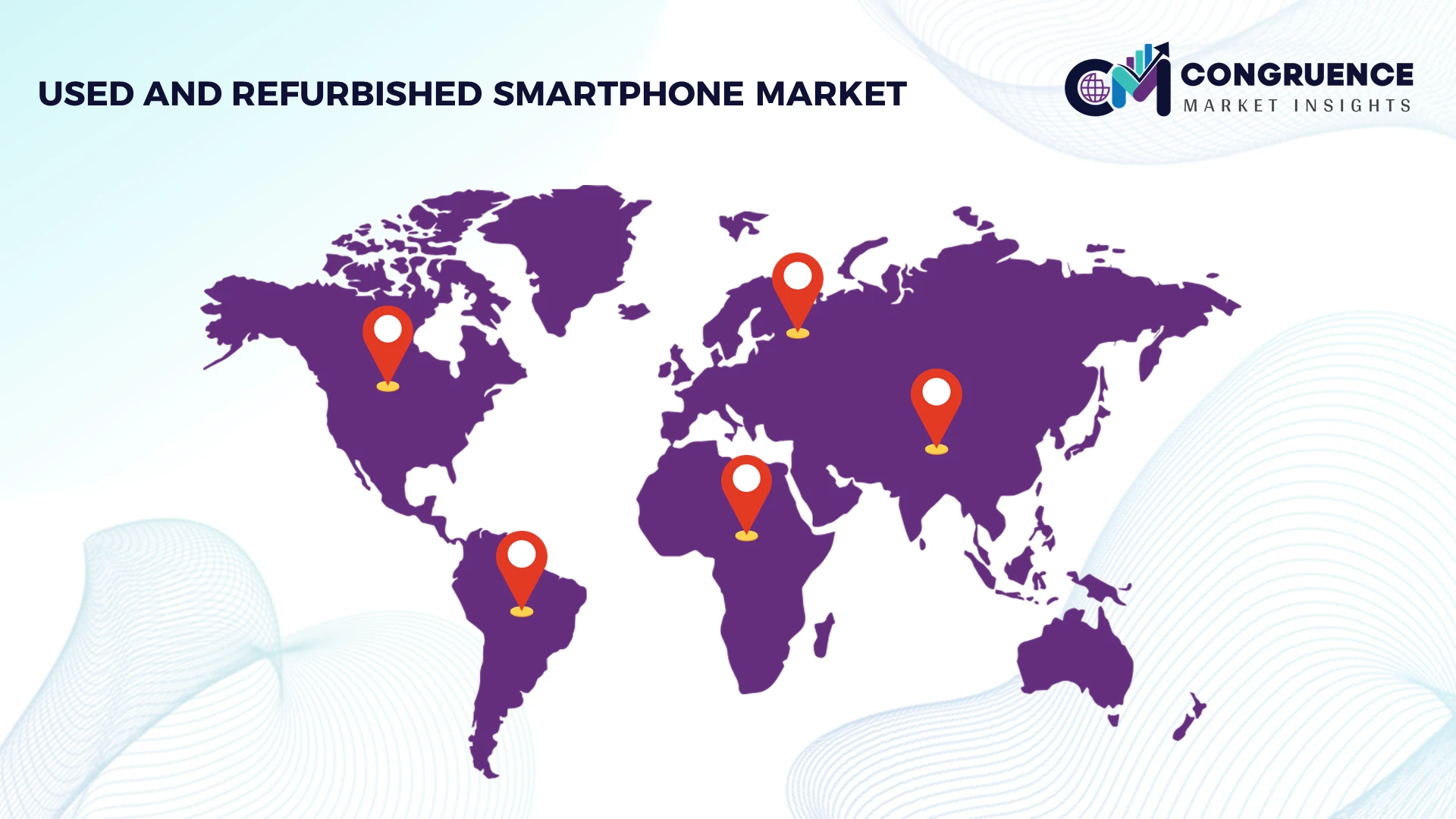
North America holds an estimated 35% share of the global used and refurbished smartphone market, supported by established carrier recovery programs, premium smartphone ownership, and organized resale infrastructure. The United States dominates regional device circulation through Apple, Samsung, Verizon, AT&T, and T Mobile trade in ecosystems. Carrier financing agreements encourage regular device replacement, generating recoverable inventory for certified refurbishment operators. Apple and Samsung smartphones command substantial secondary market attention because of extended software support and established repair networks. Approximately 90% of American adults own smartphones, supporting a substantial installed base for device collection. Automated diagnostics, battery condition verification, and standardized grading strengthen refurbishment productivity. Canadian operators contribute through carrier recycling programs and certified resale partnerships. Companies increasingly prioritize direct device sourcing, warehouse automation, and warranty standardization to improve inventory quality and reduce dependence on fragmented wholesale supply.
United States Market Outlook: The United States benefits from established premium smartphone distribution, advanced logistics infrastructure, and extensive carrier financing arrangements. Apple's trade in programs and manufacturer supported repair services improve device recovery and refurbishment accessibility. The country's population exceeds 340 million, supporting substantial consumer electronics circulation. Specialized resale operators are investing in secure data erasure, automated inspection systems, and certified battery replacement. Enterprise device management programs also create opportunities for bulk smartphone recovery, standardized redeployment, and controlled secondary market distribution.
Repairability Regulation Accelerates Certified Device Lifecycle Extension
Europe accounts for an estimated 28% of global used and refurbished smartphone demand, supported by established electronics resale platforms, consumer sustainability preferences, and increasingly structured repairability requirements. France, Germany, the United Kingdom, and Spain represent important markets for certified smartphones and organized device recovery. European Union ecodesign requirements effective from June 2025 mandate operating system update availability for at least five years for covered smartphones, strengthening long term device usability. Spare parts availability requirements further support repair operations and component procurement planning. Back Market, Swappie, and other specialist platforms compete through device certification, warranty coverage, and transparent cosmetic grading. Refurbishment operators are expanding automated diagnostics, battery replacement capabilities, and localized distribution infrastructure. The strategic advantage increasingly favors companies combining regulatory compliance, dependable device sourcing, and standardized refurbishment processes across national markets.
France Market Outlook: France represents a strategically important refurbished smartphone market through established circular electronics businesses, consumer protection frameworks, and digital resale infrastructure. Back Market, founded in France in 2014, has expanded internationally through a marketplace model connecting consumers with professional refurbishers. French repairability policies encourage transparent product maintenance information and longer device utilization. Refurbishment companies are strengthening certified product listings, consumer warranties, and logistics partnerships to improve purchasing confidence and reduce unnecessary electronic waste.
Large Scale Device Processing and Affordable Premium Access Reshape Distribution
Asia Pacific represents an estimated 27% of global used and refurbished smartphone demand, supported by extensive smartphone manufacturing ecosystems, large consumer populations, and established electronics trading infrastructure. China, India, Japan, and South Korea contribute through device collection, component supply, refurbishment operations, and domestic resale distribution. China's established electronics manufacturing clusters provide access to replacement components, testing equipment, and technical repair capabilities. Japan maintains organized secondhand electronics retail networks, while South Korea benefits from premium smartphone manufacturing expertise. India's expanding digital marketplaces strengthen access to refurbished devices among price sensitive consumers. Manufacturers and resale operators are improving automated functional testing, battery assessment, and standardized grading. India's smartphone user base exceeds 700 million, establishing substantial potential for organized device recovery. Competitive priorities include dependable sourcing, localized refurbishment capacity, and affordable certified product distribution.
China Market Outlook: China maintains significant industrial advantages through Shenzhen's electronics supply chain, established component manufacturing, and extensive domestic resale marketplaces. Platforms including ATRenew support organized collection, inspection, and redistribution of used consumer electronics. China's population exceeds 1.4 billion, creating substantial device circulation and replacement activity. Refurbishment operators benefit from proximity to display, battery, and electronic component suppliers. Investments in automated inspection, device condition classification, and integrated logistics strengthen processing efficiency while supporting domestic and international secondary smartphone distribution.
Affordability Driven Resale Expands Through Digital Retail Platforms
South America represents an estimated 6% of global used and refurbished smartphone demand, supported by price sensitive consumer purchasing, established electronics retail networks, and expanding digital marketplaces. Brazil dominates regional market activity, while Argentina, Chile, and Colombia contribute through organized resale platforms and independent refurbishment businesses. Premium smartphone acquisition costs encourage consumers to consider refurbished alternatives, particularly devices offering substantial discounts against new flagship models. Brazil's extensive mobile telecommunications infrastructure supports device replacement and secondary circulation. Mercado Libre provides an established regional ecommerce ecosystem for electronics transactions, improving access to used devices across multiple countries. Refurbishment operators face import duties, currency volatility, and inconsistent replacement component availability, which influence processing costs. Companies are strengthening domestic collection partnerships, localized repair operations, and warranty services to improve product reliability and reduce dependence on imported refurbished inventory.
Brazil Market Outlook: Brazil offers substantial opportunities through its large consumer electronics market, extensive mobile connectivity, and established digital retail infrastructure. The country has more than 200 million residents, supporting considerable smartphone ownership and replacement activity. Domestic resale operators are expanding device inspection, battery replacement, and warranty capabilities to differentiate certified inventory from informal secondhand transactions. Import taxation and foreign exchange exposure strengthen the commercial importance of domestic device recovery. Companies prioritizing local collection networks and dependable technical servicing gain greater control over inventory availability and refurbishment expenses.
Digital Connectivity Expansion Encourages Organized Device Recommerce
The Middle East and Africa represent an estimated 4% of global used and refurbished smartphone demand, reflecting differences in purchasing power, telecommunications infrastructure, and formal electronics resale penetration. The United Arab Emirates and Saudi Arabia support premium device circulation through established retail and telecommunications networks. South Africa, Nigeria, and Kenya represent important markets for affordable secondary smartphones and independent repair services. Expanding mobile internet connectivity strengthens demand for accessible devices, while imported electronics costs encourage refurbishment and resale activity. The United Arab Emirates benefits from international electronics trading infrastructure and established logistics networks. African markets face uneven device certification practices, component availability constraints, and fragmented collection channels. Companies are strengthening local distribution partnerships, repair capabilities, and standardized product inspection. Competitive positioning increasingly depends on affordable inventory, dependable warranty support, and efficient cross border device logistics.
United Arab Emirates Market Outlook: The United Arab Emirates provides a strategic regional distribution hub through established electronics trading centers, international logistics infrastructure, and strong consumer demand for premium smartphones. Dubai's electronics wholesale networks facilitate device sourcing and redistribution across neighboring markets. The country has approximately 11 million residents and highly developed telecommunications infrastructure, supporting regular device replacement activity. Refurbishment businesses are strengthening certified resale operations, battery condition verification, and international distribution partnerships. Efficient customs processing and access to regional trading networks support organized secondary smartphone commerce.
Competition in the used and refurbished smartphone market centers on Apple, Samsung, Back Market, Amazon Renewed, and ATRenew, alongside specialized operators Swappie and Reebelo. Manufacturer ecosystems compete through certified devices and trade in programs, while independent marketplaces emphasize pricing transparency, inventory breadth, and refurbishment partnerships. An illustrative concentration scenario assigns approximately 30% combined share to the leading five participants, reflecting fragmented global resale distribution rather than verified company allocations. Operational benchmarks targeting 15% faster device grading, 10% lower processing costs, and 20% fewer warranty disputes demonstrate competitive priorities. Apple and Samsung influence premium device supply, while Back Market and Amazon Renewed compete through marketplace distribution and consumer assurance. ATRenew emphasizes collection infrastructure and integrated processing. Industry competition increasingly favors direct sourcing, automated diagnostics, and standardized certification. Device acquisition costs, data security compliance, and reliable replacement components remain entry barriers. Winning requires dependable inventory, verifiable quality, efficient refurbishment, and differentiated warranties.
Apple Inc.
Samsung Electronics Co., Ltd.
Amazon.com, Inc.
Back Market
ATRenew Inc.
Swappie
Reebelo
Cashify
Gazelle
musicMagpie
CeX
refurbed
ecoATM
Gizmogo
Current refurbishment technologies combine automated functional diagnostics, battery health assessment, and secure data erasure to standardize device recovery. Integrated testing platforms examine displays, cameras, connectivity, and charging performance through centralized workflows. Operational targets include 15% faster inspection and 10% lower manual testing expenditure. Deployment is concentrated among organized refurbishment facilities processing substantial device volumes. Automated inventory integration improves traceability, reduces handling errors, and strengthens warranty management for certified smartphone resellers.
Emerging technologies emphasize computer vision grading, artificial intelligence defect recognition, and robotic component handling. Compared with conventional visual inspection, automated cosmetic grading targets 20% faster classification and 12% fewer grading inconsistencies. Digital device passports integrate repair histories, battery condition, and ownership verification into accessible records. Specialist operators including Back Market partners and ATRenew benefit from consistent quality assessment across distributed processing facilities. These performance percentages represent operational planning benchmarks rather than independently measured industry averages.
Between 2026 and 2028, disruptive technologies will prioritize predictive battery diagnostics, automated repair routing, and integrated device lifecycle intelligence. Development programs targeting 18% fewer unnecessary component replacements and 15% improved processing throughput establish measurable efficiency objectives. Smartphone refurbishers investing in interoperable diagnostic systems gain stronger inventory control and faster product certification. Competitive advantage increasingly depends on combining reliable data security, scalable inspection automation, and transparent device condition reporting with efficient recovery networks worldwide.
April 2024: Apple announced support for used genuine iPhone repair parts, with its Self Service Repair program covering 40 products. Automatic component calibration strengthens parts reuse, reduces repair barriers, and supports independent refurbishment and device lifecycle extension. Source: apple.com
December 2024: Swappie reported surpassing 2 million customers and securing a EUR 17 million European Investment Bank loan for research and robotics. The financing strengthens automated refurbishment capacity, inspection consistency, and European device recovery operations across established markets. Source: swappie.com
June 2025: The European Commission introduced smartphone ecodesign rules requiring batteries to retain 80% capacity after 800 charging cycles. Longer component availability and repair access improve refurbishment feasibility, strengthen resale quality expectations, and support circular electronics operations throughout Europe. Source: europa.eu
March 2026: ATRenew reported 41.7 million consumer product transactions during 2025, reflecting expanded electronics recommerce activity. Its integrated sourcing and fulfillment infrastructure strengthens processing scale, while refurbishment capabilities support certified resale distribution across China and additional product categories. Source: sec.gov
The Used and Refurbished Smartphone Market Report evaluates product categories, purchasing applications, customer segments, and competitive strategies between 2026 and 2033. Type segmentation covers Certified Refurbished, Seller Refurbished, Pre-Owned, and Open-Box Smartphones, with Certified Refurbished representing an indicative 40% share. Application coverage includes Personal Use, Business Use, Education, and Secondary Device Use. End user analysis examines Individual Consumers, Small Businesses, Large Enterprises, and Educational Institutions, emphasizing procurement requirements, device quality expectations, and purchasing behavior.
Regional assessment covers North America, Europe, Asia Pacific, South America, and the Middle East and Africa, including emerging resale opportunities in India and Brazil. Technology evaluation examines automated diagnostics, computer vision grading, battery assessment, secure data erasure, and digital device traceability. Strategic analysis supports investment prioritization, refurbishment capacity planning, geographic expansion, supplier partnerships, and competitive positioning.
| Report Attribute/Metric | Report Details |
|---|---|
Market Revenue in 2025 | USD 74030 Million |
Market Revenue in 2033 | USD 130078.5 Million |
CAGR (2026 - 2033) | 7.3% |
Base Year | 2025 |
Forecast Period | 2026 - 2033 |
Historic Period | 2021 - 2025 |
Segments Covered | By Type
By Application
By End-User
|
Key Report Deliverable | Revenue Forecast, Growth Trends, Market Dynamics, Segmental Overview, Regional and Country-wise Analysis, Competition Landscape |
Region Covered | North America, Europe, Asia-Pacific, South America, Middle East, Africa |
Key Players Analyzed | Apple Inc., Samsung Electronics Co., Ltd., Amazon.com, Inc., Back Market, ATRenew Inc., Swappie, Reebelo, Cashify, Gazelle, musicMagpie, CeX, refurbed, ecoATM, Gizmogo |
Customization & Pricing | Available on Request (10% Customization is Free) |