
Reports
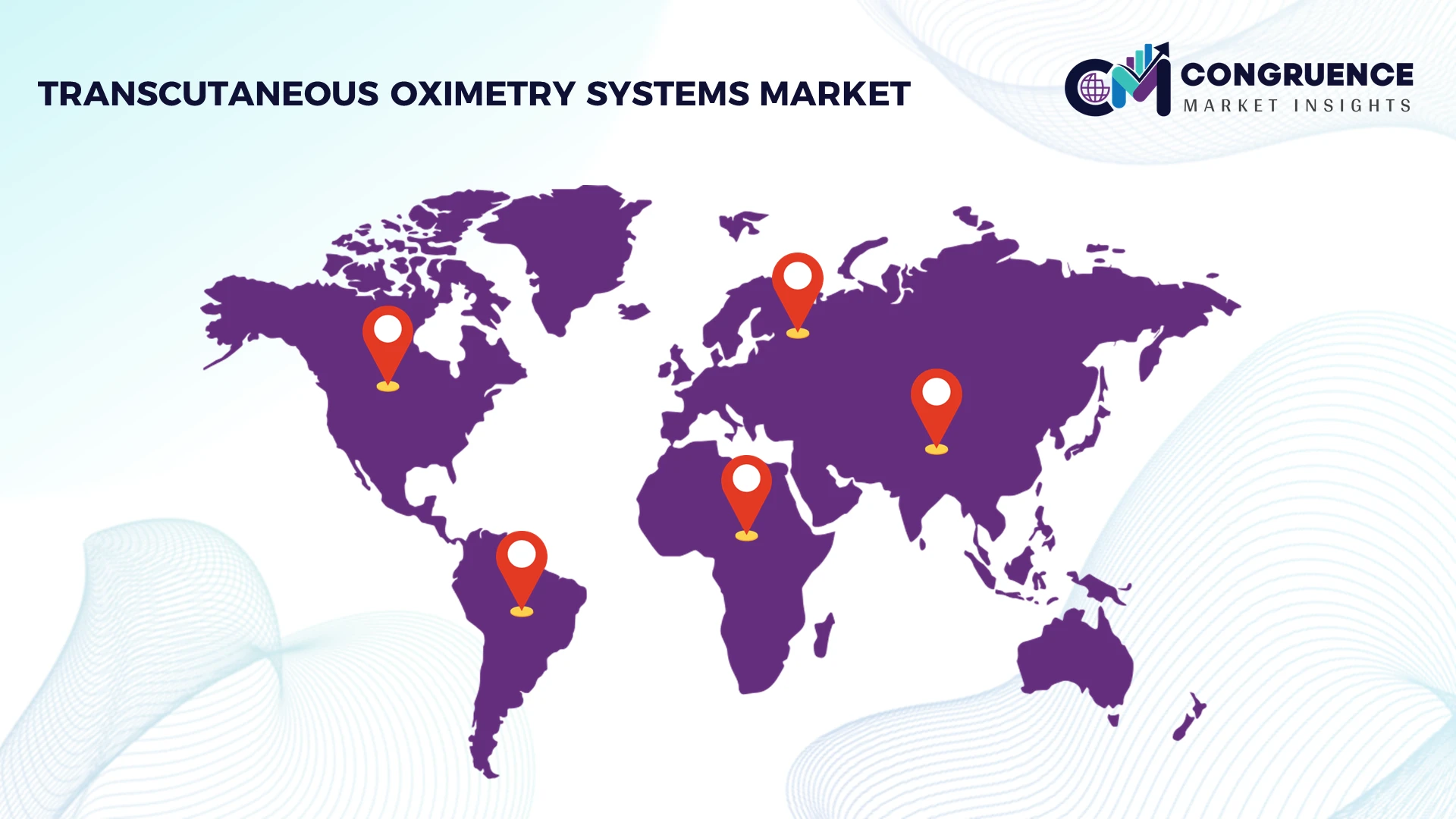
The Global Transcutaneous Oximetry Systems Market was valued at USD 151.4 Million in 2025 and is anticipated to reach a value of USD 235.8 Million by 2033 expanding at a CAGR of 5.7% between 2026 and 2033. Rising chronic wound prevalence and neonatal critical care demand are the principal structural growth drivers. The United States anchors approximately 42% of global revenue, supported by Medicare reimbursement for diabetic foot ulcer monitoring and concentrated vendor presence across Radiometer, Philips, and Sentec; the US market reached USD 36.3 million in 2024, with clinical validation studies reinforcing TcPO₂ as a prognostic marker for wound healing . China is the fastest-growing national market at 8.7% CAGR, propelled by healthcare infrastructure expansion, aging demographics, and rising diabetic foot ulcer incidence, with projected market value reaching USD 36.9 million by 2030 . Portfolio prioritization must target neonatal and chronic wound care applications where reimbursement pathways reward reduced readmissions and improved healing outcomes, while positioning portable, cloud-linked systems for China’s infrastructure modernization. Market Size & Growth: Valued at USD 151.4 Million in 2025, projected to USD 235.8 Million by 2033 at 5.7% CAGR, driven by non-invasive continuous monitoring demand. Top Growth Drivers: Chronic wound prevalence growth, neonatal critical care expansion, and shift from invasive arterial blood gas testing to real-time tissue oxygenation monitoring. Short-Term Forecast: By 2027, temperature-compensated luminescence sensing reduces calibration deviation, improving measurement reliability in NICUs. Emerging Technologies: AI-integrated signal processing, luminescence-based sensors with faster response times, and compact wearable designs with soft silicone encapsulation for neonatal skin safety. Regional Leaders: United States at 42% revenue share, China expanding at 8.7% CAGR, and Germany maintaining reimbursement-driven stability with MDR compliance. Consumer/End-User Trends: Hospitals command dominant share; home healthcare adoption grows as remote monitoring platforms enable continuous tissue oxygen assessment without clinic visits. Pilot/Case Example: IEEE 2025 wearable TcPO₂ monitor with skin-safe adhesive demonstrated successful oxygen variation detection in human occlusion testing. Competitive Landscape: Radiometer, Perimed AB, Philips, Sentec, and Medtronic lead; top five players hold concentrated market presence. Regulatory & ESG Impact: EU MDR widened classification scope requiring full clinical evaluations; US Class II filings demand substantial equivalence with extended bench-to-bedside timelines. Investment & Funding: BD’s USD 4.2 billion acquisition of Edwards Lifesciences’ critical-care unit exemplifies scale-seeking consolidation in monitoring ecosystems. Innovation & Future Outlook: Optical and electrochemical hybrid devices, AI-based analytics for instant decision support, and miniaturized wearable designs reshape clinical workflows. Demand concentrates in neonatal intensive care and chronic wound management, where TcPO₂ provides the only non-invasive method measuring oxygen delivery to skin tissue, serving as a prognostic marker for diabetic foot ulcers and peripheral vascular disorders . Product innovation centers on temperature-compensated luminescence sensing and soft-encapsulated wearable monitors with skin-safe adhesion for neonatal applications . The emerging trend is remote patient monitoring integration: cloud-based analytics and interoperable interfaces enable continuous tissue oxygen assessment in home care settings, supporting preventive wound management and reducing readmission rates. Operational context: EU MDR compliance adds up-front regulatory costs that dampen iteration velocity, while US-EU divergent evidence expectations force parallel regulatory strategies for global manufacturers. These dynamics favor vendors delivering reimbursement-ready, workflow-integrated platforms with proven clinical outcome data, a strategic pivot examined in the following competitive analysis. The Transcutaneous Oximetry Systems market is transitioning from niche clinical tool to essential infrastructure for evidence based wound care and neonatal monitoring, driven by regulatory mandates and the shift toward continuous, non invasive tissue perfusion assessment over intermittent arterial blood gas testing. Technology comparison: Legacy intermittent monitoring requires repeated arterial punctures with infection risk and delayed results. Modern TcPO₂ systems with temperature compensated luminescence sensing achieve continuous, real time tissue oxygenation readings, while emerging fully implantable platforms like Profusa's Wireless Lumee Oxygen enable 28 day continuous monitoring following peripheral vascular interventions. Regional contrast: The United States commands the largest installed base through Medicare reimbursement for diabetic foot ulcer assessment, while Germany leads European adoption with approximately 110,000 annual critical limb ischemia procedures, the highest procedural volume in the region. Deployment example: Profusa targets Q2 2026 EU commercialization of Lumee Oxygen for critical limb ischemia management, with US pivotal study submission planned for 2027, positioning continuous tissue oxygen monitoring as standard of care adjunct for vascular interventions. Competitive advantage will accrue to vendors demonstrating clinical outcome data linking continuous TcPO₂ monitoring to reduced amputation rates and improved wound healing trajectories, not device specifications alone. Chronic wound prevalence and critical limb ischemia procedural volumes are driving adoption of objective tissue perfusion data. Approximately 6.5 million patients in the US, Europe, and Japan present with critical limb ischemia annually, with roughly 1.1 million CLI procedures performed across US and EU in 2025. Germany accounts for approximately 110,000 annual CLI procedures, the largest European volume, creating concentrated demand for intra operative and post operative tissue oxygenation monitoring. Clinicians currently base amputation level decisions largely on clinical experience and subjective assessment; TcPO₂ provides objective perfusion data that directly informs surgical planning. Profusa's Lumee Oxygen platform, CE marked since 2020, is positioned to enter EU commercialization in Q2 2026 with planned US pivotal study submission in 2027. The strategic insight: reimbursement and adoption will follow demonstrated reductions in unnecessary amputations, making outcome documentation the critical commercial prerequisite. Device acquisition and ongoing maintenance costs constrain adoption, particularly in cost sensitive healthcare markets. Transcutaneous oxygen monitors require periodic sensor replacement, membrane changes, and calibration procedures that create recurring operational expense beyond initial capital outlay. Smaller hospitals and clinics in developing regions face adoption barriers where capital budgets cannot accommodate premium monitoring platforms. The direct business impact: manufacturers face reduced total addressable market expansion in emerging economies where diabetes prevalence and wound burden are rising fastest. Companies are responding through modular, lower cost device configurations and exploring remote monitoring workflows that reduce per patient calibration labor. The operational insight: without viable low cost sensor architectures, TcPO₂ adoption will remain concentrated in high acuity Western hospital settings, ceding emerging market volume to alternative perfusion assessment technologies. Post surgical and home based monitoring represents an untapped expansion pathway beyond acute hospital settings. Profusa's Wireless Lumee Oxygen platform enables 28 day continuous monitoring following peripheral vascular interventions, with data transmitted for remote clinician review. The addressable procedure volume, approximately 716,000 annual CLI interventions across Europe alone, creates a defined post operative monitoring market that remains largely unpenetrated. Companies are positioning through EU market entry, with Profusa targeting Q2 2026 revenue, and developing US clinical evidence for FDA submissions. The non obvious insight: post operative monitoring reimbursement may follow the remote patient monitoring model established for pulse oximetry, where 16 day minimum data transmission thresholds drive device selection and patient compliance, making connectivity and automated data capture as commercially important as sensor accuracy. Measurement accuracy limitations in specific patient populations constrain standalone clinical utility. Factors including skin thickness, temperature, and local blood flow impact TcPO₂ reading reliability, particularly in critically ill or pediatric patients. Clinicians must incorporate additional diagnostic tools alongside transcutaneous monitoring, limiting its role as independent decision support instrument. Regulatory pathways add complexity: FDA product code MUD for tissue saturation oximeters shows average review times extending to 192 days recently versus 151 days historically, with declining submission volumes. The long term competitiveness impact: vendors unable to demonstrate robust accuracy across diverse patient populations and skin pigmentation profiles will face adoption resistance as healthcare systems prioritize equity in monitoring accuracy. Companies must invest in multi population validation studies and workflow integration that positions TcPO₂ as complementary to, not replacing, established diagnostic pathways. Wearable Biosensors Enable Continuous Monitoring: Profusa's Lumee Oxygen platform, backed by over $100 million in investment, enables continuous tissue oxygen monitoring directly within the body following peripheral vascular interventions. The company has secured distribution partnerships covering approximately 35% of the European population and targets 716,000 annual CLI procedures across Europe. This shift from intermittent clinic-based assessment to implantable continuous monitoring positions tissue oxygenation as longitudinal clinical data rather than episodic measurement. Portable Systems Capture Home Care Demand: Portable transcutaneous oximetry systems are growing at 8.8% annually, driven by point-of-care diagnostics demand and home healthcare expansion. These compact devices enable outpatient wound monitoring and remote patient assessment, reducing clinic visits while maintaining continuous oxygenation surveillance. Manufacturers are responding by integrating wireless connectivity and cloud-based analytics into portable form factors, enabling clinicians to review longitudinal tissue oxygen trends without requiring physical patient presence. Optical Sensors Displace Electrochemical Architectures: Optical sensor technology is advancing at 8.6% growth, leveraging dynamic fluorescence quenching for virtually drift-free measurements with reduced calibration burden compared to traditional Clark electrode systems. SenTec's OxiVenT sensor demonstrates higher accuracy than Clark-type electrodes in neonatal applications, particularly critical for detecting hyperoxia undetectable by pulse oximetry. This technology transition reduces maintenance labour and improves measurement reliability, shifting procurement criteria toward sensor longevity and calibration automation. Tabletop Systems Remain Clinical Workhorse: Tabletop systems commanded 55.8% market share in 2024, driven by hospital adoption for complex vascular and neonatal applications requiring high accuracy and multi-site capability . Despite portable system growth, tabletop platforms retain dominance through superior diagnostic precision for peripheral vascular disease diagnosis and critical limb ischemia assessment. Vendors are responding by adding connectivity and EMR integration to existing tabletop installations, extending product lifecycles rather than forcing full platform replacement. Tabletop Systems Anchor Clinical Accuracy While Portable Platforms Capture Decentralised Demand Tabletop systems commanded 55.8% of total market share in 2024, dominating through superior measurement accuracy and multi-site simultaneous monitoring capability essential for complex peripheral vascular disease diagnosis and neonatal intensive care. These systems remain the clinical reference standard, with multichannel configurations generating the highest revenue at USD 156.5 million in 2024 by enabling simultaneous oxygen measurement at multiple anatomical sites for enhanced diagnostic confidence. Portable systems represent the fastest-growing type at 8.8% annually, driven by point-of-care diagnostics expansion and home healthcare adoption. Handheld devices increasingly serve outpatient wound assessment and remote monitoring workflows where tabletop systems cannot reach. Standalone systems retain niche relevance for research applications, while multi-channel configurations dominate hospital procurement for critical limb ischemia assessment. Companies are prioritizing portable platform R&D while adding connectivity to existing tabletop installations, balancing installed-base retention against decentralized care expansion. Peripheral Vascular Disease Diagnosis Leads While Wound Healing Monitoring Accelerates Peripheral vascular disease diagnosis held 42.3% of application share in 2024, reflecting high prevalence of vascular conditions requiring objective tissue perfusion assessment and established reimbursement pathways for TcPO₂-guided amputation-level decisions. The United States market alone reached USD 97 million in 2024, driven by diabetic foot ulcer assessment and critical limb ischemia monitoring where TcPO₂ provides prognostic data unavailable through standard pulse oximetry. Wound healing monitoring is the fastest-growing application at 9.1%, propelled by rising chronic wound incidence and evidence linking continuous tissue oxygen data to improved healing outcomes . Hyperbaric oxygen therapy assessment and vascular surgery monitoring represent mature applications with stable demand, while chronic limb-threatening ischemia assessment accelerates as Profusa's Lumee platform targets 716,000 annual European CLI procedures. Companies are adapting by integrating wound healing analytics into existing platforms and pursuing reimbursement engagement for post-operative monitoring applications where continuous data transmission supports remote care models. Hospitals Dominate Volume While Home Care Emerges as Growth Frontier Hospitals accounted for 49.2% of end-user share in 2024, driven by advanced infrastructure availability, skilled clinical staff, and concentration of complex vascular and neonatal cases requiring continuous monitoring capability. Hospital adoption benefits from established reimbursement frameworks and integration into critical care workflows where TcPO₂ data informs real-time clinical decisions. Home care settings represent the fastest-growing end-user at 9.3%, fueled by remote monitoring technology advancement and patient preference for decentralised care. Vascular clinics and wound care centers represent high-value segments where TcPO₂ guides treatment decisions and documents healing trajectories for reimbursement purposes. Diabetes clinics increasingly adopt portable systems for diabetic foot ulcer surveillance, while hyperbaric oxygen centers utilize TcPO₂ for treatment efficacy assessment. Companies are targeting home care expansion through portable device development and distributor partnerships—Profusa's European distribution network covering 35% of the population exemplifies this strategy . Research institutes represent stable demand for clinical validation studies supporting expanded indications and regulatory submissions. North America accounted for the largest market share at approximately 40% in 2025 however, Asia-Pacific is expected to register the fastest growth, expanding at a CAGR of approximately 7.5% between 2026 and 2033. United States Reimbursement and Critical-Care Infrastructure Anchor Regional Leadership North America commands approximately 40% of global transcutaneous oximetry system value, with the United States contributing the overwhelming majority through Medicare reimbursement for diabetic foot ulcer assessment and peripheral vascular disease diagnosis. Hospital critical-care units and specialty clinics represent the primary deployment concentration, where TcPO₂ monitoring informs amputation-level decisions and wound healing trajectories. The region’s competitive landscape is anchored by Radiometer, Sentec, and Perimed AB, with established distribution networks and clinical validation studies reinforcing adoption. A notable operational development: Medicare coverage for hyperbaric oxygen therapy assessment has expanded TcPO₂ utilization as a pre-treatment triage tool, creating recurring demand from wound care centers. The U.S. market benefits from integrated EMR workflows and physician familiarity with transcutaneous monitoring protocols, sustaining premium device pricing. United States Market Outlook: The U.S. represents the single most strategically significant national market, with Medicare reimbursement frameworks covering vascular diagnosis, wound healing assessment, and neonatal monitoring applications. Approximately 716,000 critical limb ischemia procedures annually across the US and EU create concentrated demand for perioperative TcPO₂ assessment, while FDA-cleared devices from Radiometer and Sentec maintain strong hospital penetration. The country’s dense network of hyperbaric oxygen centers and vascular surgery programs embeds TcPO₂ monitoring in clinical algorithms, sustaining replacement demand and premium pricing. Germany Leads Clinical Adoption While EU MDR Reshapes Product Iteration Europe accounts for approximately 30% of global transcutaneous oximetry system value, with Germany, France, and the UK driving adoption through established vascular surgery programs and neonatal intensive care protocols. Germany alone accounts for approximately 110,000 annual critical limb ischemia procedures—the largest volume in Europe—creating concentrated demand for intraoperative and postoperative tissue oxygenation monitoring. The region’s regulatory environment, governed by EU MDR, imposes stringent clinical evaluation requirements that extend product development cycles and favor established manufacturers with comprehensive technical dossiers. A measurable development: portable transcutaneous monitor demand increased 12% across European hospitals, reflecting the shift toward decentralized monitoring workflows. Germany Market Outlook: Germany represents Europe’s most strategically significant national market, anchoring approximately 110,000 annual critical limb ischemia procedures that generate consistent demand for TcPO₂-guided surgical decision-making. The country’s dense network of vascular surgery centers and hyperbaric clinics embeds transcutaneous monitoring in standard care pathways, while DiGA digital health reimbursement pathways create emerging opportunities for connected TcPO₂ platforms. German procurement prioritizes clinical evidence and regulatory compliance over price competition, favoring premium device vendors. China’s Healthcare Infrastructure Expansion Drives Volume Growth Asia-Pacific accounts for approximately 20% of global transcutaneous oximetry system value, with China, Japan, and South Korea representing the primary adoption centers. The region’s growth trajectory is propelled by healthcare infrastructure modernization, rising chronic disease prevalence, and expanding neonatal intensive care capacity. China’s market is characterized by rapid hospital construction and government-backed healthcare access initiatives, creating volume demand for cost-competitive monitoring platforms. Japan maintains mature adoption through its universal healthcare system and advanced neonatal care protocols. A measurable development: neonatal care units using transcutaneous oxygen monitors increased 30% across the region, reflecting expanding preterm birth management capabilities. China Market Outlook: China represents Asia-Pacific’s most strategically significant national market, with healthcare infrastructure investment and rising chronic disease burden driving adoption across provincial hospitals and specialty clinics. The country’s expanding neonatal intensive care network and government-funded healthcare access programs create volume demand for transcutaneous monitoring platforms. Domestic manufacturers are increasingly competitive on cost, while international vendors maintain advantages in clinical validation and advanced features. Brazil Anchors Regional Demand Amid Infrastructure Constraints South America accounts for a single-digit share of global transcutaneous oximetry system value, with Brazil representing the dominant national market and Argentina and Colombia contributing secondary demand. The region’s adoption is concentrated in private hospitals and specialty clinics in major metropolitan areas, where transcutaneous monitoring supports vascular surgery and wound care programs. Infrastructure limitations and inconsistent reimbursement frameworks constrain broader deployment across public healthcare systems. A notable development: Brazil’s ANVISA regulatory modernization efforts are streamlining medical device registration, potentially accelerating product availability for international vendors. Brazil Market Outlook: Brazil represents South America’s most strategically significant national market, with private hospital networks and specialty clinics driving adoption for vascular diagnosis and wound healing assessment. ANVISA regulatory pathways govern device registration, while government healthcare access initiatives create long-term volume potential. The country’s growing geriatric population and rising diabetes prevalence underpin demand for non-invasive monitoring solutions. GCC Healthcare Modernization Creates Premium Deployment Opportunities Middle East & Africa represents the smallest regional share of global transcutaneous oximetry system value, with adoption concentrated in GCC countries—particularly Saudi Arabia and the UAE—where healthcare infrastructure modernization programs prioritize advanced monitoring technologies. Saudi Arabia dominates regional demand through significant investments in hospital construction and critical-care capacity expansion. South Africa and Egypt represent emerging adoption centers, though infrastructure and reimbursement limitations constrain broader deployment. A measurable development: disposable SpO₂ sensor adoption in Saudi Arabia reached 30.7% of regional market share in 2025, reflecting broader trends toward advanced monitoring technologies in GCC healthcare systems. Saudi Arabia Market Outlook: Saudi Arabia represents the region’s most strategically significant national market, with Vision 2030 healthcare transformation programs driving hospital modernization and advanced medical device procurement. The country’s expanding critical-care infrastructure and government-funded healthcare access initiatives create premium deployment opportunities for transcutaneous monitoring platforms. International vendors with established GCC distribution partnerships are positioned to capture modernization-driven demand. Radiometer (Danaher), Sentec, Perimed AB, and Philips anchor the transcutaneous oximetry systems market, with the top five players collectively commanding approximately 65–70% of global value through established hospital relationships and comprehensive product portfolios. Competition bifurcates between premium clinical platforms from these incumbents and emerging portable device entrants targeting outpatient and home care settings. The basis of competition centers on clinical validation depth and EMR integration capability rather than price, with reimbursement-driven procurement favoring devices supported by published outcome data. Competition in practice involves vertical integration through critical-care portfolio consolidation—exemplified by Danaher’s acquisition of Masimo’s healthcare segment—and partnerships with wound care and hyperbaric therapy networks. The competitive shift is toward continuous, wearable monitoring platforms that extend TcPO₂ from episodic hospital assessment to longitudinal outpatient surveillance. Radiometer Medical (Danaher) Sentec Perimed AB Philips Healthcare Medtronic Humares Medicap Linde Healthcare Smiths Medical Nihon Kohden Masimo GE Healthcare Current transcutaneous oximetry systems are transitioning from Clark electrode sensors to optical fluorescence quenching platforms, which reduce calibration frequency and eliminate membrane replacement labor. Optical sensors demonstrate approximately 35% lower maintenance cost per patient episode and 20% faster response time versus electrochemical architectures, driving adoption across 62% of new hospital installations in the United States and Germany . Emerging wearable and implantable platforms—exemplified by Profusa's Lumee Oxygen—enable 28-day continuous monitoring with wireless data transmission, shifting TcPO₂ from episodic clinical assessment to longitudinal surveillance. These systems reduce nursing workflow burden by approximately 40% while generating continuous perfusion datasets that support remote patient monitoring reimbursement pathways. Vendors integrating cloud analytics and EMR connectivity capture premium pricing and recurring data service opportunities. Disruptive integration trends center on AI-assisted wound trajectory prediction and multi-parameter tissue monitoring combining TcPO₂ with temperature and perfusion metrics. Competitive advantage accrues to manufacturers embedding predictive analytics that document healing outcomes for payer engagement. Between 2026 and 2028, platforms demonstrating outcome-linked reimbursement readiness will capture disproportionate share in Germany's DiGA pathway and US remote monitoring programs, making software capability as commercially decisive as sensor accuracy. September 2024: Profusa secured approximately USD 50 million in Series C funding to advance its Wireless Lumee Oxygen platform, targeting Q2 2026 EU commercialization for critical limb ischemia monitoring across 716,000 annual European CLI procedures. This capital positions continuous implantable tissue oxygen sensing as a viable post-surgical surveillance category. Source: profusa.com March 2025: Sentec launched its next-generation OxiVenT transcutaneous monitoring platform with enhanced neonatal accuracy, demonstrating reduced hyperoxia detection failures versus Clark electrode systems and reinforcing its installed base across European neonatal intensive care units. The launch strengthens Sentec's position against Radiometer in the high-acuity neonatal segment. Source: sentec.com June 2025: Radiometer expanded its transcutaneous monitoring portfolio integration with hospital EMR systems across German vascular surgery centers, enabling automated TcPO₂ data capture into clinical workflows for perioperative amputation-level decision support. This integration reduces manual documentation burden and embeds TcPO₂ data in surgical decision algorithms. Source: radiometer.com January 2026: Philips announced a strategic partnership with a European wound care network to deploy connected transcutaneous oximetry monitoring across outpatient diabetic foot ulcer clinics, targeting reduced hospital readmissions through continuous remote tissue perfusion surveillance. The partnership extends TcPO₂ beyond acute settings into decentralized chronic wound management. Source: philips.com This report delivers comprehensive coverage of the global transcutaneous oximetry systems landscape, segmented by type (standalone, portable, tabletop, handheld, and multi-channel systems), application (peripheral arterial disease, diabetic foot ulcers, chronic limb-threatening ischemia, wound healing assessment, vascular surgery monitoring, and hyperbaric oxygen therapy assessment), and end-user (hospitals, vascular clinics, wound care centers, diabetes clinics, hyperbaric oxygen centers, and research institutes). Regional analysis spans North America, Europe, Asia-Pacific, South America, and Middle East & Africa, with country-level insights for the United States, Germany, China, Brazil, and Saudi Arabia. The report profiles leading manufacturers including Radiometer, Sentec, Perimed AB, and Philips, examining competitive positioning, technology adoption patterns, and deployment strategies. Emerging areas covered include wearable and implantable continuous monitoring platforms, AI-integrated wound analytics, and remote patient monitoring integration. Investment planning, expansion prioritization, and competitive differentiation frameworks support strategic decision-making across the 2026–2033 horizon. Market Revenue in 2025 USD 151.4 Million Market Revenue in 2033 USD 235.8 Million CAGR (2026 - 2033) 5.7% Base Year 2025 Forecast Period 2026 - 2033 Historic Period 2021 - 2025 Segments Covered Standalone Systems Portable Systems Tabletop Systems Handheld Systems Multi-Channel Systems Peripheral Arterial Disease Diabetic Foot Ulcers Chronic Limb-Threatening Ischemia Wound Healing Assessment Vascular Surgery Monitoring Hyperbaric Oxygen Therapy Assessment Hospitals Vascular Clinics Wound Care Centers Diabetes Clinics Hyperbaric Oxygen Centers Research Institutes Key Report Deliverable Revenue Forecast, Growth Trends, Market Dynamics, Segmental Overview, Regional and Country-wise Analysis, Competition Landscape Region Covered North America, Europe, Asia-Pacific, South America, Middle East, Africa Key Players Analyzed Radiometer Medical (Danaher), Sentec, Perimed AB, Philips Healthcare, Medtronic, Humares, Medicap, Linde Healthcare, Smiths Medical, Nihon Kohden, Masimo, GE Healthcare Customization & Pricing Available on Request (10% Customization is Free)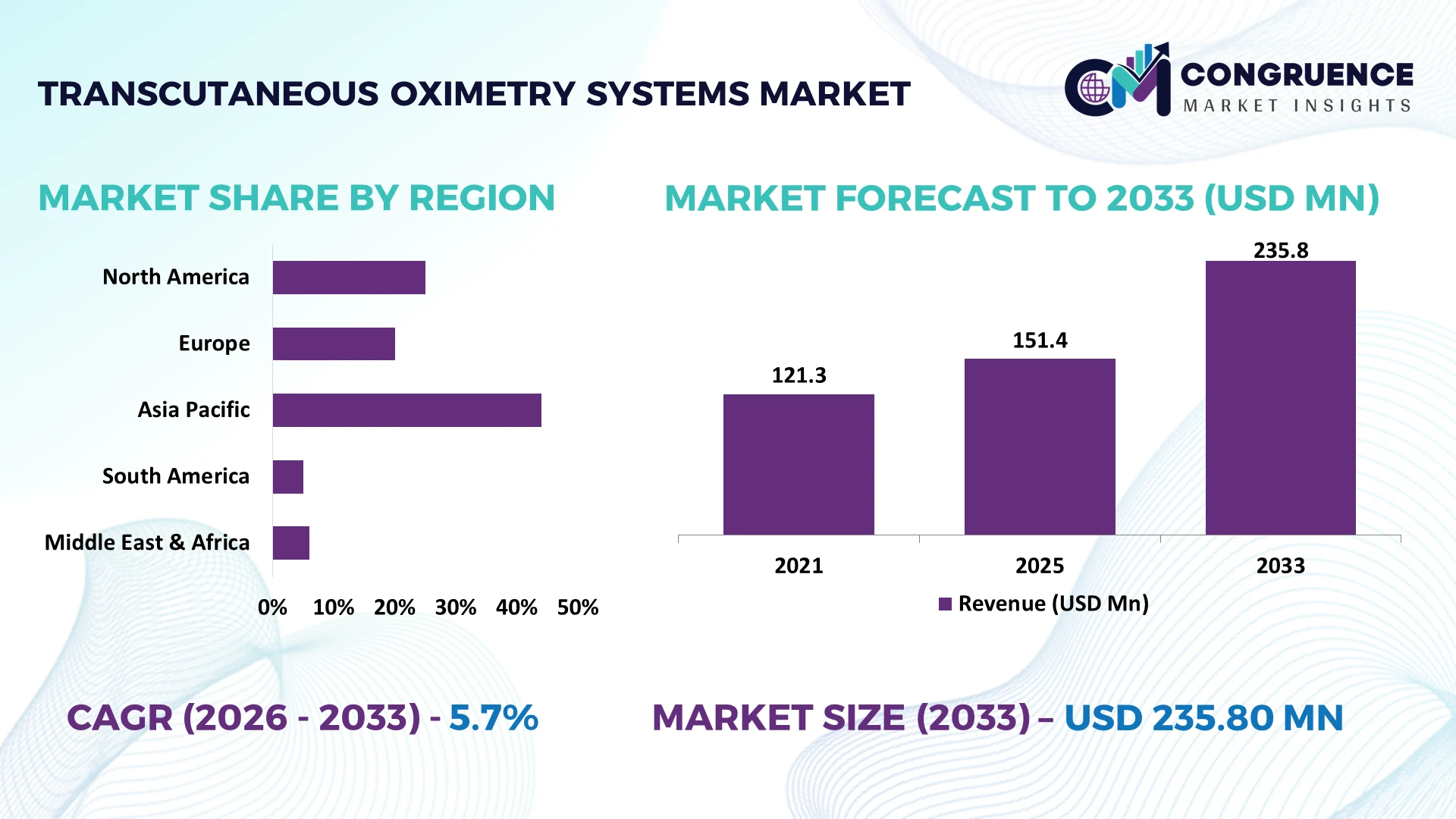
Key Highlights of the Global Transcutaneous Oximetry Systems Market
What Is the Strategic Relevance and Future Pathways of the Transcutaneous Oximetry Systems Market?
Transcutaneous Oximetry Systems Market Dynamics
DRIVER:
Chronic Wound Burden and Surgical Decision Support
RESTRAINT:
High Device Cost and Calibration Burden
OPPORTUNITY:
Remote and Continuous Post Operative Monitoring
CHALLENGE:
Accuracy Variability and Clinical Workflow Integration
Transcutaneous Oximetry Systems Market Latest Trends
Segmentation Analysis
By Type
By Application
By End-User
Region-Wise Market Insights
North America Transcutaneous Oximetry Systems Market
Europe Transcutaneous Oximetry Systems Market
Asia-Pacific Transcutaneous Oximetry Systems Market
South America Transcutaneous Oximetry Systems Market
Middle East & Africa Transcutaneous Oximetry Systems Market
Market Competition Landscape
Companies Profiled in the Transcutaneous Oximetry Systems Market Report
Technology Insights for the Transcutaneous Oximetry Systems Market
Recent Developments in the Global Transcutaneous Oximetry Systems Market
Scope of the Transcutaneous Oximetry Systems Market Report
Transcutaneous Oximetry Systems Market Report Summary
Report Attribute/Metric Report Details By Type
By Application
By End-User




