
Reports
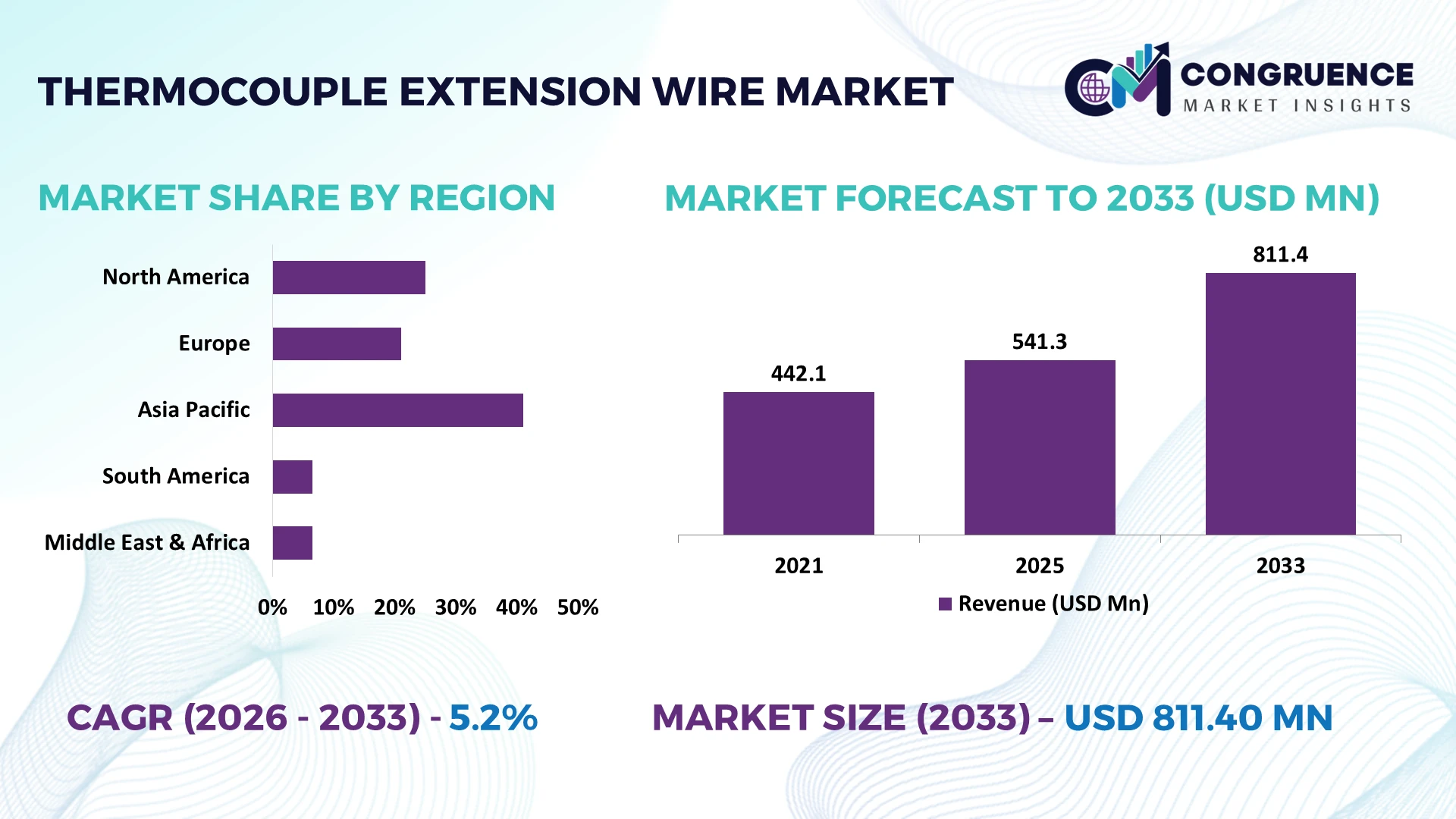
The Global Thermocouple Extension Wire Market was valued at USD 541.3 Million in 2025 and is anticipated to reach a value of USD 811.4 Million by 2033 expanding at a CAGR of 5.19% between 2026 and 2033. Expanding semiconductor fabrication facilities, industrial furnace automation, and precision temperature monitoring across petrochemical and power generation plants are accelerating thermocouple extension wire consumption.
China leads the industrial demand landscape, accounting for approximately 53% of global crude steel production in 2024, compared with India's nearly 8% contribution. China's extensive manufacturing infrastructure, semiconductor fabrication investments, and petrochemical capacity support temperature measurement applications. Government-backed industrial modernization and global semiconductor supply-chain restructuring are accelerating the integration of high-temperature-resistant, shielded thermocouple extension wires across automated production facilities.
Manufacturers prioritizing application-specific insulation, signal integrity, and localized production are positioned to secure long-term industrial procurement contracts.
Market Size & Growth: Valued at USD 541.3 Million in 2025, reaching USD 811.4 Million by 2033 at 5.19% CAGR, driven by industrial automation.
Top Growth Drivers: Industrial automation (40%), precision temperature monitoring (35%), and energy infrastructure modernization (25%) represent indicative demand-driver weightings.
Short-Term Forecast: By 2028, optimized wiring installations target 10–15% lower temperature-monitoring maintenance costs.
Emerging Technologies: Three major innovations include electromagnetic shielding, advanced fluoropolymer insulation, and digitally integrated temperature monitoring.
Regional Leaders: Estimated 2033 values include Asia Pacific (USD 332.7 Million; manufacturing), North America (USD 202.9 Million; automation), and Europe (USD 170.4 Million; energy efficiency).
Consumer/End-User Trends: Industrial buyers increasingly prioritize high-temperature insulation rated above 200°C for demanding environments.
Pilot/Case Example: An illustrative 2025 furnace modernization deployment targets 15% fewer temperature-signal interruptions through shielded wiring.
Competitive Landscape: OMEGA Engineering holds an indicative 10% share, competing with Watlow, Thermo Electric, Durex Industries, and Tempco.
Regulatory & ESG Impact: The European Union's 55% net emissions reduction target by 2030 encourages energy-efficient thermal process monitoring.
Investment & Funding: The USD 52.7 Billion U.S. CHIPS Act funding program supports semiconductor infrastructure and associated instrumentation demand.
Innovation & Future Outlook: Two strategic priorities include miniaturized wiring assemblies and advanced insulation for automated industrial environments.
The Thermocouple Extension Wire Market serves industrial heating systems, semiconductor processing equipment, chemical reactors, aerospace testing facilities, and power generation infrastructure. Advanced fluoropolymer insulation and electromagnetic shielding improve measurement reliability, with optimized installations targeting 10–15% lower maintenance requirements. Semiconductor supply-chain localization is encouraging customized wiring assemblies, shifting competitive priorities toward application-specific engineering, material traceability, and integrated temperature measurement solutions.
Thermocouple extension wires are becoming strategically important as manufacturers prioritize temperature measurement accuracy, production continuity, and process efficiency across increasingly automated industrial environments. Semiconductor supply-chain restructuring and industrial electrification are expanding requirements for reliable temperature-signal transmission. Unlike conventional unshielded wiring, properly engineered shielded configurations can target 10–20% reductions in signal-related troubleshooting costs under electrically noisy operating conditions.
China's extensive steelmaking and chemical processing infrastructure supports high-volume wire consumption, while the United States emphasizes specialized instrumentation for semiconductor fabrication, aerospace testing, and advanced manufacturing. Germany prioritizes standardized, energy-efficient industrial installations. Between 2026 and 2028, advanced manufacturing facilities are expected to target 10–15% reductions in temperature-monitoring maintenance requirements through improved insulation, standardized connections, and predictive maintenance integration.
In automated heat-treatment furnaces, application-specific extension wires maintain thermoelectric compatibility between sensors and remote controllers, reducing measurement deviations and unnecessary production interruptions. Suppliers are expanding customized cable manufacturing, developing high-temperature insulation systems, and strengthening partnerships with instrumentation OEMs. Competitive advantage increasingly depends on verified thermoelectric accuracy, application-specific engineering, dependable material sourcing, and the ability to support industrial customers throughout equipment operating lifecycles.
Industrial automation is accelerating thermocouple extension wire consumption as manufacturers deploy distributed temperature sensors across furnaces, reactors, semiconductor processing chambers, and automated production lines. China accounted for approximately 53% of global crude steel production in 2024, while India contributed nearly 8%, supporting extensive thermal instrumentation requirements. Automated temperature-monitoring upgrades target 10–15% reductions in maintenance-related interruptions through improved signal transmission and diagnostic capabilities. Semiconductor fabrication expansion in the United States further strengthens requirements for specialized wiring assemblies. Manufacturers are increasing production capacity, developing electromagnetic shielding configurations, and partnering with industrial instrumentation suppliers. Thermoelectric compatibility across extended transmission distances is becoming a critical procurement criterion rather than an interchangeable cable specification.
Dependence on nickel-based alloys, copper, and specialized insulation compounds exposes thermocouple extension wire manufacturers to raw material price fluctuations and procurement uncertainty. Indonesia accounted for approximately 59% of global mined nickel production in 2024, highlighting concentrated upstream supply exposure. A 10% increase in alloy procurement costs can raise total manufacturing expenses by approximately 3–5%, assuming materials represent 30–50% of production costs. Smaller suppliers face difficulties maintaining competitive quotations under fixed-price industrial contracts. Manufacturers are addressing these pressures through diversified alloy sourcing, long-term procurement agreements, localized inventory management, and insulation material optimization. Maintaining thermoelectric conformity limits material substitution flexibility, making procurement discipline essential for protecting profitability without compromising measurement accuracy.
Semiconductor fabrication, battery manufacturing, and industrial electrification are creating opportunities for specialized thermocouple extension wires designed for automated, high-precision environments. The European Union's target of reducing net greenhouse gas emissions by at least 55% by 2030 supports investments in energy-efficient industrial heating and process optimization. Advanced temperature-monitoring installations can target 10–15% lower maintenance expenditure, while modular wiring assemblies offer potential installation-time savings of 15–20%. Expanding semiconductor infrastructure in the United States, Japan, and India strengthens opportunities for customized, high-purity insulation and compact cable configurations. Suppliers are investing in advanced extrusion technologies, application-specific shielding, and OEM partnerships. Preassembled, calibration-compatible wiring solutions offer differentiation beyond conventional bulk wire supply.
Maintaining temperature measurement accuracy across complex industrial installations remains a significant execution challenge, particularly as facilities integrate heterogeneous sensors, controllers, connectors, and legacy instrumentation. The U.S. manufacturing industry faces a projected workforce gap of approximately 1.9 million positions out of 3.8 million required jobs through 2033, representing nearly 50% of anticipated staffing needs. Incorrect polarity, incompatible extension alloys, and electromagnetic interference increase commissioning complexity and measurement deviations. Manufacturers targeting 10–15% reductions in installation-related rework must strengthen technical documentation, automated testing, and installer training. Compliance with IEC 60584-3 and ASTM E230 requirements further increases quality-control responsibilities. Competitive scalability depends on standardized installation practices, batch-level traceability, and consistent thermoelectric performance across customized product configurations.
Standardization of Thermoelectric Cable Specifications: Industrial procurement teams are consolidating wiring specifications around IEC 60584-3 and ASTM E230 standards, targeting 10–15% reductions in installation-related rework and 15–20% fewer inventory variants. Manufacturers are restructuring product portfolios around standardized alloy combinations, color coding, and tolerance classifications, improving interchangeability while reducing procurement complexity across multinational manufacturing facilities.
Shift Toward Application-Specific Insulation: Industrial customers are replacing conventional PVC-insulated wires with fluoropolymer and fiberglass alternatives in chemically aggressive environments. PTFE insulation supports operating temperatures approaching 260°C, compared with approximately 105°C for heat-resistant PVC grades. Suppliers are expanding specialized extrusion capabilities, targeting 10–15% longer replacement intervals and improved lifecycle economics.
Expansion of Preterminated Wiring Assemblies: Equipment manufacturers are shifting from bulk extension wire procurement toward factory-terminated assemblies incorporating compatible connectors and identification systems. Standardized assemblies target 15–25% shorter installation times and 10–15% lower commissioning rework. Skilled labor shortages in the United States are encouraging suppliers to expand automated termination and contract assembly capabilities.
Digitization of Material Quality Traceability: Industrial buyers increasingly require batch-level alloy identification, digital conformity documentation, and traceable thermoelectric testing. Automated inspection workflows target 15–20% shorter quality verification cycles and complete batch traceability. Manufacturers are integrating digital quality management platforms and automated resistance testing, strengthening supplier qualification capabilities across regulated industrial environments.
Type K thermocouple extension wires (KX) account for an estimated 42.5% market share in 2025, supported by compatibility with widely installed nickel-chromium and nickel-aluminum thermocouples across industrial furnaces, power generation equipment, and petrochemical facilities. Their broad application suitability, established manufacturing processes, and extensive instrumentation compatibility strengthen procurement advantages. Type J extension wires maintain an estimated 21.5% share, supported by existing machinery, plastics processing equipment, and moderate-temperature industrial applications. Type T extension wires serve refrigeration, laboratory equipment, and low-temperature measurement systems, where thermoelectric stability remains essential.
Type N extension wires represent the fastest-growing segment in the analytical outlook, supported by increasing adoption of Type N thermocouples in demanding thermal processing environments requiring improved sensor stability. Type E extension wires address specialized applications requiring higher thermoelectric sensitivity, while other types serve application-specific instrumentation requirements. Manufacturers are expanding alloy-specific production capabilities and customized insulation configurations. Standardized manufacturing across compatible wire specifications targets 10–15% lower changeover costs, allowing suppliers to balance established industrial demand with emerging precision instrumentation requirements.
Industrial Process Temperature Monitoring dominates the application segment with an estimated 35.8% market share in 2025, supported by extensive thermocouple installations across chemical reactors, industrial furnaces, boilers, and continuous processing equipment. Temperature measurement reliability directly influences product consistency, equipment protection, and operational continuity. Heat Treatment & Furnace Monitoring represents another established application, accounting for approximately 24.6% of demand through metallurgical processing, annealing, and material hardening operations. Power Generation & Turbine Monitoring maintains stable consumption through thermal equipment maintenance and replacement requirements.
Semiconductor Manufacturing & Electronics Processing represents the fastest-growing application in the analytical outlook, driven by increasingly sophisticated deposition, etching, and wafer-processing equipment. Aerospace & Automotive Testing and Laboratory & Research Instrumentation support specialized demand for thermoelectric accuracy and application-specific cable configurations. Equipment manufacturers are targeting 10–15% shorter instrumentation commissioning cycles through standardized extension wire assemblies and compatible connection systems. Suppliers are strengthening partnerships with temperature sensor manufacturers and semiconductor equipment integrators, directing investment toward precision manufacturing capabilities rather than conventional bulk wire production alone.
Industrial Manufacturing Companies lead the end-user segment with an estimated 33.7% market share in 2025, supported by extensive temperature measurement infrastructure across metals processing, machinery manufacturing, plastics production, and industrial heating operations. Replacement cycles, equipment maintenance, and production expansion sustain recurring procurement. Oil & Gas and Petrochemical Companies account for approximately 22.4% of demand, driven by continuous temperature monitoring across refining units, distillation systems, and chemical processing infrastructure. Power Generation Companies maintain established consumption through boiler instrumentation, turbine monitoring, and scheduled facility maintenance.
Semiconductor & Electronics Manufacturers represent the fastest-growing end-user group in the analytical outlook as fabrication facilities expand precision thermal monitoring capabilities across increasingly complex production environments. Aerospace & Automotive Manufacturers prioritize vibration-resistant wiring configurations, while Research Institutions & Testing Laboratories require specialized thermoelectric specifications for experimental and calibration applications. Suppliers are introducing customized procurement agreements, application-specific cable designs, and technical qualification programs targeting 10–15% reductions in customer inventory requirements. Competitive positioning increasingly depends on securing equipment-level specifications and recurring replacement contracts rather than competing exclusively through unit pricing.
Asia Pacific accounted for the largest market share at 41.0% in 2025 however, North America is expected to register the fastest growth, expanding at a CAGR of 6.3% between 2026 and 2033.
North America accounted for 25.0% of the global Thermocouple Extension Wire Market in 2025, supported by advanced manufacturing infrastructure, semiconductor fabrication investments, and established aerospace and petrochemical industries. Industrial facilities increasingly prioritize thermoelectric accuracy, electromagnetic shielding, and insulation durability across automated temperature-monitoring systems. The USD 52.7 billion U.S. CHIPS Act funding program supports semiconductor manufacturing expansion, creating additional requirements for specialized thermal instrumentation and compatible extension wiring. Canada's oil sands processing facilities and Mexico's automotive manufacturing clusters contribute to recurring demand for industrial temperature measurement solutions. Equipment manufacturers are adopting preterminated wiring assemblies to simplify commissioning and reduce installation complexity. Regional suppliers are strengthening domestic manufacturing capabilities, customized cable engineering, and technical partnerships with instrumentation OEMs. Compliance with ASTM standards remains an important competitive differentiator across industrial procurement contracts.
U.S. Market Outlook: The United States dominates regional demand through its extensive aerospace, petroleum refining, and industrial automation infrastructure. With petroleum refining capacity exceeding 18 million barrels per day, the country maintains substantial requirements for temperature monitoring across distillation units, catalytic processing equipment, and industrial furnaces. Manufacturers are prioritizing specialized insulation systems, thermoelectric testing, and customized wiring configurations to support demanding operating environments.
Europe accounted for 21.0% of the global Thermocouple Extension Wire Market in 2025, driven by established industrial automation capabilities, metallurgical processing infrastructure, and stringent equipment performance requirements. Germany, France, Italy, and the United Kingdom maintain extensive manufacturing facilities requiring reliable temperature-signal transmission across industrial heating, chemical processing, and power generation applications. The European Union's commitment to reducing net greenhouse gas emissions by at least 55% by 2030 encourages modernization of energy-intensive manufacturing processes and associated thermal monitoring infrastructure. Industrial buyers increasingly prioritize IEC-compliant extension wires with durable insulation, standardized identification, and documented material traceability. Suppliers are expanding fluoropolymer-insulated product portfolios and strengthening partnerships with industrial equipment manufacturers. Replacement demand from mature manufacturing facilities provides recurring business opportunities, while industrial electrification supports investment in application-specific thermoelectric wiring solutions.
Germany Market Outlook: Germany leads regional demand through its sophisticated industrial machinery, automotive manufacturing, and chemical processing industries. The country recorded approximately 28,000 industrial robot installations in 2023, demonstrating its extensive automation infrastructure. German equipment manufacturers emphasize standardized thermocouple compatibility, precision measurement, and reliable cable performance. Suppliers offering customized wiring assemblies and documented quality conformity are positioned to benefit from industrial modernization and equipment replacement programs.
Asia Pacific accounted for 41.0% of the global Thermocouple Extension Wire Market in 2025, supported by extensive steel production, semiconductor manufacturing, chemical processing, and industrial equipment manufacturing infrastructure. China, Japan, South Korea, and India represent major consumption centers, with Taiwan contributing specialized demand from semiconductor fabrication facilities. China and India collectively accounted for approximately 61% of global crude steel production in 2024, demonstrating the region's substantial thermal processing requirements. Expanding electronics manufacturing and battery production facilities are increasing procurement of application-specific thermocouple extension wires with advanced insulation and consistent thermoelectric performance. Regional manufacturers benefit from established metal processing capabilities, competitive production costs, and integrated component supply chains. Suppliers are expanding automated wire drawing, insulation extrusion, and quality-testing capabilities to address domestic industrial requirements while strengthening export competitiveness across international equipment manufacturing markets.
China Market Outlook: China dominates regional consumption through its extensive industrial production ecosystem and increasingly sophisticated manufacturing infrastructure. The country accounted for approximately 51% of global industrial robot installations in 2023, highlighting the scale of manufacturing automation. Domestic wire manufacturers are expanding specialized alloy processing, customized insulation, and precision testing capabilities. Semiconductor supply-chain localization further supports demand for domestically manufactured thermocouple extension wires and associated instrumentation components.
South America accounted for 6.5% of the global Thermocouple Extension Wire Market in 2025, supported by mining operations, metallurgical processing, petroleum refining, and food manufacturing infrastructure. Brazil, Chile, and Argentina represent significant demand centers, with industrial temperature measurement concentrated across smelting furnaces, chemical processing equipment, and thermal power facilities. Chile produced approximately 5.3 million metric tons of copper in 2024, highlighting the scale of mining and metallurgical operations requiring dependable thermal instrumentation. Industrial customers prioritize durable extension wires capable of withstanding abrasive environments, chemical exposure, and prolonged operating cycles. However, dependence on imported specialized alloys and instrumentation components creates procurement delays and inventory management challenges. Suppliers are strengthening regional distribution partnerships, localized stock availability, and technical support capabilities. Maintenance-driven procurement provides recurring opportunities despite uneven industrial investment and infrastructure development.
Brazil Market Outlook: Brazil leads regional demand through its diversified steelmaking, petroleum refining, automotive, and food processing industries. The country produced approximately 33.7 million metric tons of crude steel in 2024, supporting substantial temperature-monitoring requirements across metallurgical facilities. Industrial buyers increasingly prioritize reliable replacement components and locally available wiring assemblies. Manufacturers strengthening distribution networks and application-specific technical assistance are positioned to capture recurring industrial procurement contracts.
Middle East & Africa accounted for 6.5% of the global Thermocouple Extension Wire Market in 2025, supported by petroleum refining, petrochemical manufacturing, power generation, and mining infrastructure. Saudi Arabia, the United Arab Emirates, Qatar, and South Africa represent important consumption centers, with temperature-monitoring applications concentrated across industrial furnaces, gas processing facilities, and metallurgical operations. Qatar's North Field expansion targets increasing liquefied natural gas production capacity from 77 million to 142 million tonnes annually by 2030, strengthening requirements for process instrumentation. Industrial operators prioritize extension wires with chemical-resistant insulation, reliable thermoelectric performance, and durable protective configurations. Dependence on imported specialized instrumentation components encourages suppliers to establish regional distribution and technical service partnerships. Infrastructure modernization and scheduled refinery maintenance provide recurring procurement opportunities, while local-content initiatives increasingly influence supplier selection and manufacturing investment decisions.
Saudi Arabia Market Outlook: Saudi Arabia dominates regional demand through its extensive petroleum processing, petrochemical manufacturing, and industrial diversification initiatives. The country's Jazan refinery has a processing capacity of approximately 400,000 barrels per day, demonstrating the scale of infrastructure requiring continuous thermal monitoring. Saudi Vision 2030 encourages domestic industrial manufacturing and localized procurement, creating opportunities for thermocouple extension wire suppliers establishing regional assembly, inventory, and technical support capabilities.
The Thermocouple Extension Wire Market exhibits a moderately fragmented competitive structure, with OMEGA Engineering, Watlow, Thermo Electric, TE Wire & Cable, and Tempco collectively representing an estimated 38.5% market share. Established instrumentation suppliers compete against specialized wire manufacturers and cost competitive Asian producers through thermoelectric accuracy, insulation durability, customization, and delivery reliability. Standardized cable assemblies target 15–20% shorter installation times, while optimized manufacturing processes target 10–15% lower production costs. Global manufacturers are strengthening OEM partnerships, expanding specialized insulation portfolios, and integrating automated quality testing to secure industrial procurement contracts. Regional suppliers compete through localized inventories, flexible production schedules, and competitive pricing. Competition is shifting from conventional bulk wire supply toward engineered assemblies with documented material traceability and application specific performance. Alloy consistency, technical certification, and stringent thermoelectric tolerance requirements create substantial entry barriers. Winning requires dependable material sourcing, verified measurement accuracy, responsive customization, and established relationships with major industrial equipment manufacturers.
OMEGA Engineering
Watlow Electric Manufacturing Company
Thermo Electric Company, Inc.
TE Wire & Cable LLC
Tempco Electric Heater Corporation
Pelican Wire
Concept Alloys, LLC
Thermo-Electra B.V.
SAB Bröckskes GmbH & Co. KG
LAPP Group
Pentronic AB
TC Ltd.
Current thermocouple extension wire technologies emphasize thermoelectric alloy consistency, advanced insulation, and electromagnetic interference protection. Type K extension wires represent an estimated 42.5% of market demand, reflecting established industrial compatibility. Compared with conventional unshielded configurations, properly shielded cables target 15–20% fewer interference related measurement disruptions under electrically noisy conditions. Fluoropolymer insulation improves chemical resistance and supports longer service intervals, targeting 10–15% lower replacement requirements across demanding processing environments.
Emerging technologies include automated alloy verification, precision insulation extrusion, and factory terminated wiring assemblies. Automated inspection targets 15–20% shorter quality verification cycles, while preterminated configurations target 20% lower installation time compared with conventional field termination. Integration with digital temperature monitoring platforms strengthens diagnostic capabilities without replacing established thermocouple infrastructure. Semiconductor equipment manufacturers and industrial automation integrators benefit from standardized connections, improved installation consistency, and reduced commissioning complexity.
Between 2026 and 2028, technology investment will increasingly prioritize digitally traceable manufacturing, compact cable configurations, and application specific insulation systems. Emerging automated production workflows target 10–15% reductions in manufacturing waste through improved dimensional control and material utilization. Suppliers integrating precision alloy processing with automated conformity testing gain competitive advantages in regulated industrial procurement. Early investment strengthens qualification capabilities, operational reliability, and customer retention across specialized industrial temperature measurement applications.
June 2026, Watlow introduced its Edge Process Management platform, featuring two panel-mounted device configurations, EPM-07 and EPM-15. The platform integrates temperature measurement, secure digital records, and process automation, strengthening industrial compliance, audit readiness, and thermal instrumentation integration. Source: watlow.com
October 2025, Pelican Wire documented the successful qualification of customized Type K thermocouple conductors ranging from 30–40 AWG for a European sensor manufacturer. The PFA-insulated construction secured repeat orders, strengthening specialized manufacturing capabilities and supporting scalable precision instrumentation procurement. Source: pelicanwire.com
February 2026, LAPP disclosed two acquisitions in China and Brazil, expanding its circular connector and industrial connectivity capabilities. The strategic transactions strengthen localized customer support, diversify distribution channels, and reinforce the company's integrated industrial cable solutions portfolio. Source: lapp.com
September 2026, Pentronic conducted its Traceable Temperature Measurement 1 training program over two days in Västervik, Sweden. The initiative strengthened technical knowledge surrounding industrial temperature measurement, calibration, and traceability, supporting instrumentation users in maintaining consistent measurement quality. Source: pentronic.se
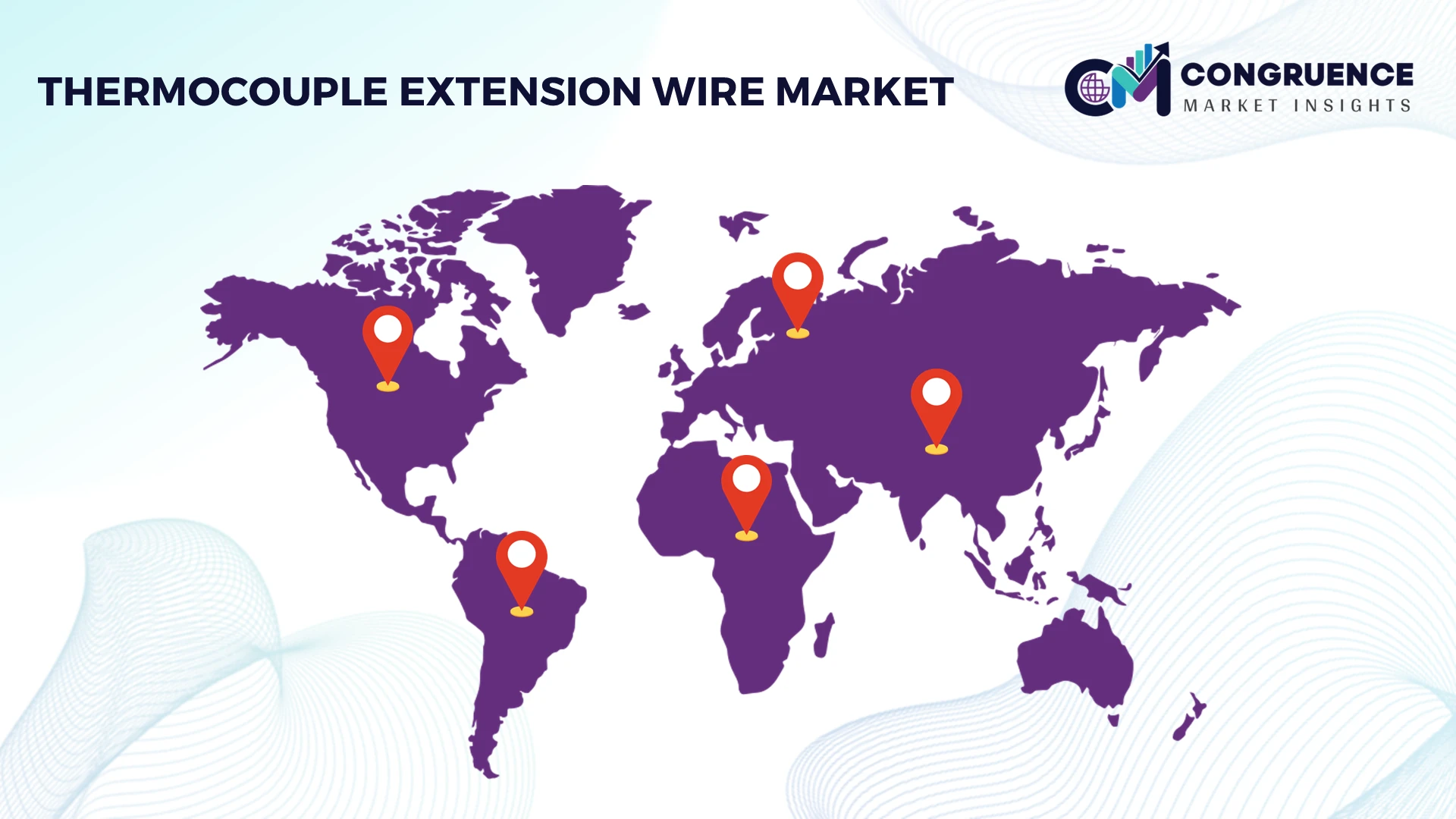
The Thermocouple Extension Wire Market Report provides comprehensive analysis across Type, Application, and End-User segments, covering Type K, Type J, Type T, Type N, Type E, and other thermocouple extension wires. Application coverage includes industrial process temperature monitoring, heat treatment, power generation, semiconductor manufacturing, aerospace and automotive testing, and laboratory instrumentation. The report examines five major geographical regions: North America, Europe, Asia Pacific, South America, and Middle East & Africa, alongside country-specific industrial demand patterns.
The study evaluates advanced insulation materials, electromagnetic shielding, automated quality testing, customized wiring assemblies, and emerging digital instrumentation integration. Competitive analysis covers 12 major market participants, examining product differentiation, manufacturing capabilities, supply-chain strategies, and distribution networks. Strategic insights support investment planning, capacity expansion, technology adoption, market entry decisions, and competitive positioning across established industrial applications and emerging precision temperature measurement markets between 2026 and 2033.
| Report Attribute / Metric | Details |
|---|---|
| Market Revenue (2025) | USD 541.3 Million |
| Market Revenue (2033) | USD 811.4 Million |
| CAGR (2026–2033) | 5.19% |
| Base Year | 2025 |
| Forecast Period | 2026–2033 |
| Historic Period | 2021–2025 |
| Segments Covered |
By Type
By Application
By End-User
|
| Key Report Deliverables | Revenue Forecast; Market Trends; Growth Drivers & Restraints; Technology Insights; Segmentation Analysis; Regional Insights; Competitive Landscape; Regulatory & ESG Overview; Recent Developments |
| Regions Covered | North America; Europe; Asia-Pacific; South America; Middle East & Africa |
| Key Players Analyzed | OMEGA Engineering; Watlow Electric Manufacturing Company; Thermo Electric Company, Inc.; TE Wire & Cable LLC; Tempco Electric Heater Corporation; Pelican Wire; Concept Alloys, LLC; Thermo-Electra B.V.; SAB Bröckskes GmbH & Co. KG; LAPP Group; Pentronic AB; TC Ltd. |
| Customization & Pricing | Available on Request (10% Customization Free) |




