Global Synthetic Biology Food Ingredients Market Report Overview
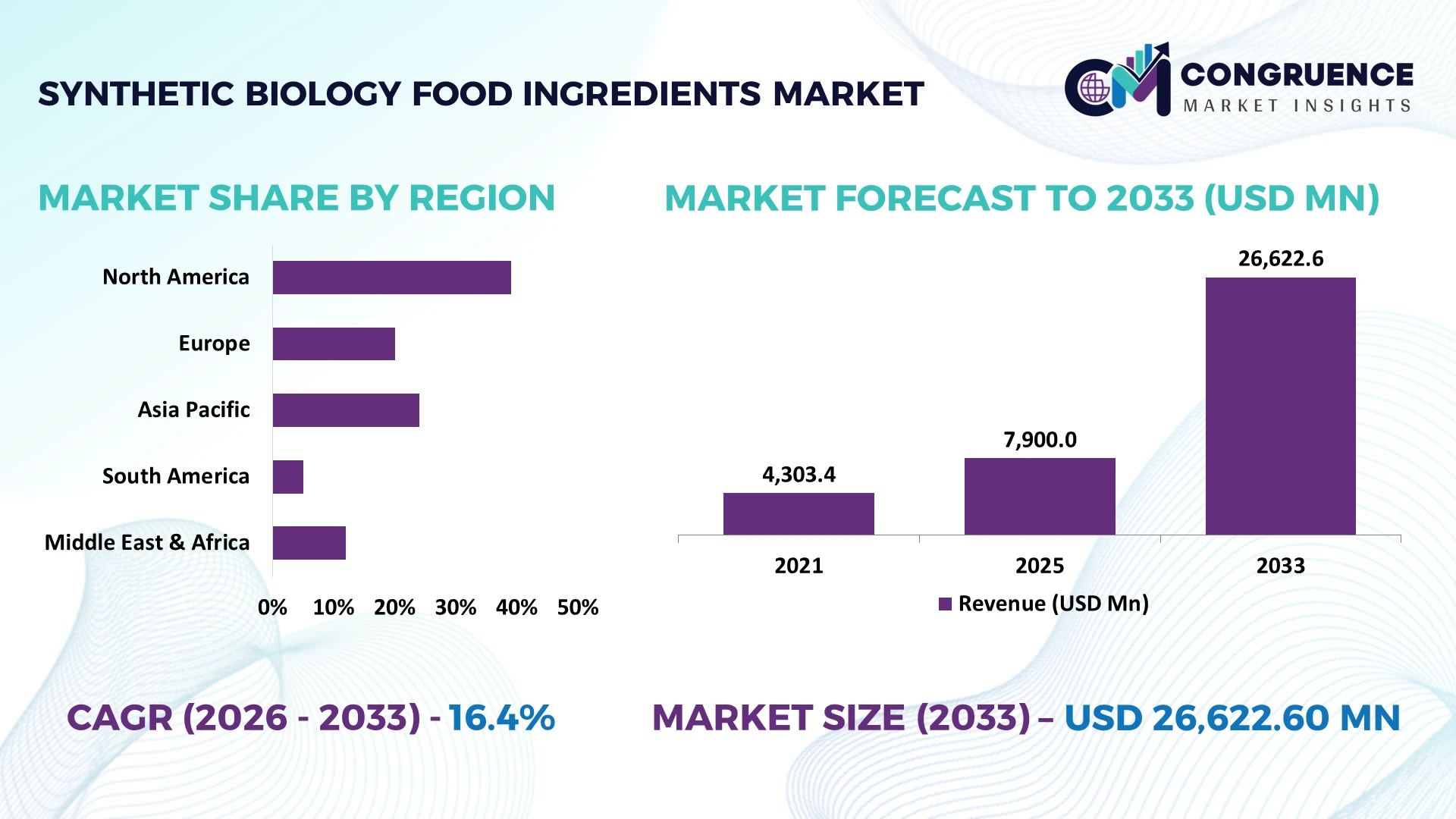
The Global Synthetic Biology Food Ingredients Market was valued at USD 7900 Million in 2025 and is anticipated to reach a value of USD 26622.6 Million by 2033 expanding at a CAGR of 16.4% between 2026 and 2033. Growth is driven by precision fermentation of functional proteins, engineered microbial production of specialty ingredients, AI-assisted strain optimization, and commercial substitution of animal-derived food components.
The United States leads commercial innovation in synthetic biology food ingredients through precision fermentation companies, established biotechnology infrastructure, and FDA regulatory pathways. Perfect Day and Geltor demonstrate microbial production of functional proteins, while commercial partnerships connect ingredient developers with food manufacturers. Perfect Day has reported lifecycle assessments indicating up to 97% lower greenhouse gas emissions for its animal-free whey protein compared with conventional production. Singapore's regulatory approval of novel food products contrasts with the United States' extensive biotechnology manufacturing ecosystem, strengthening competition in advanced food ingredient commercialization.
Strategically, manufacturers should prioritize fermentation productivity, the reported 97% emissions reduction potential, and regulatory market access when evaluating ingredient partnerships and manufacturing investments.
Key Highlights of the Global Synthetic Biology Food Ingredients Market
-
Market Size & Growth: USD 7,900 million in 2025, reaching USD 26,622.6 million by 2033 at 16.4% CAGR, driven by precision fermentation and engineered microbial ingredients.
-
Top Growth Drivers: Up to 97% lower protein production emissions, 99% less water use, and 60% lower energy requirements in selected fermentation assessments.
-
Short-Term Forecast: By 2027, commercial strain optimization programs target 10–20% fermentation productivity improvements, subject to process validation.
-
Emerging Technologies: Three priorities dominate: AI-assisted protein design, CRISPR-enabled microbial engineering, and continuous precision fermentation.
-
Regional Leaders: Illustrative 2033 allocations include North America USD 10,649 million, Europe USD 7,454 million, and Asia-Pacific USD 6,656 million, reflecting commercialization, regulation, and biomanufacturing expansion.
-
Consumer/End-User Trends: Animal-free dairy proteins can achieve over 90% amino acid sequence similarity to conventional counterparts, supporting familiar food formulation functionality.
-
Pilot/Case Example: In 2024, precision fermentation developers expanded commercial protein applications, with selected lifecycle assessments indicating up to 97% lower emissions than conventional dairy production.
-
Competitive Landscape: Perfect Day leads animal-free whey commercialization alongside Geltor, The EVERY Company, Impossible Foods, and Amyris; verified market shares remain unavailable.
-
Regulatory & ESG Impact: Singapore's novel food framework supports premarket assessment, while selected fermentation proteins demonstrate up to 99% lower water requirements.
-
Investment & Funding: Perfect Day previously raised approximately USD 750 million cumulatively, illustrating substantial venture capital support for animal-free dairy protein development.
-
Innovation & Future Outlook: Next-generation engineered microbes target 2 strategic outcomes: higher fermentation yields and improved functional equivalence with conventional ingredients.
The Synthetic Biology Food Ingredients Market is advancing through precision fermentation, engineered enzymes, microbial proteins, and specialty bioactive compounds used in dairy alternatives, confectionery, nutrition, and processed foods. Manufacturers are adopting computational strain engineering and fermentation process optimization to improve ingredient consistency and production scalability. Selected lifecycle assessments indicate up to 97% lower greenhouse gas emissions for animal-free whey protein compared with conventional dairy production, strengthening sustainability-oriented procurement decisions. Regulatory evaluation remains essential, particularly for novel proteins requiring safety assessments. Emerging commercial priorities include improved downstream purification, diversified fermentation feedstocks, and partnerships connecting biotechnology developers with established food ingredient manufacturers.
What Is the Strategic Relevance and Future Pathways of the Synthetic Biology Food Ingredients Market?
Synthetic biology food ingredients are becoming strategically important as manufacturers seek greater control over protein functionality, ingredient consistency, and agricultural supply chain exposure. Precision fermentation enables engineered microorganisms to produce specific proteins without conventional animal farming. The United States leads commercial development through biotechnology startups and established fermentation infrastructure, while Singapore has strengthened its position through novel food regulatory approvals. Manufacturers are restructuring ingredient sourcing around fermentation partnerships, specialized production facilities, and regulatory pathways that support scalable commercialization.
Compared with conventional dairy protein production, selected precision fermentation lifecycle assessments indicate up to 97% lower greenhouse gas emissions and 99% lower water consumption, although outcomes depend on energy sources and manufacturing conditions. These advantages strengthen interest among food manufacturers evaluating environmental performance and supply security. Europe emphasizes regulatory safety assessment and industrial biotechnology capabilities, while China is expanding domestic fermentation infrastructure. AI-assisted strain engineering and automated bioprocess monitoring are improving development workflows, supporting more consistent production of functional proteins and specialty ingredients.
Between 2026 and 2028, commercial priorities will focus on fermentation yield optimization, downstream purification, and manufacturing partnerships. Perfect Day's animal-free whey protein demonstrates practical integration into dairy alternative formulations. Ingredient developers are strengthening collaborations with contract manufacturers and established food companies to reduce infrastructure requirements. Competitive leadership will depend on achieving consistent ingredient quality, regulatory acceptance, and economically viable production at industrial scale.
Synthetic Biology Food Ingredients Market Dynamics
DRIVER:
Precision Fermentation Strengthens Functional Ingredient Supply
Precision fermentation is transforming food ingredient sourcing by enabling microorganisms to manufacture functional proteins, enzymes, and specialty compounds under controlled conditions. Selected lifecycle assessments indicate up to 97% lower greenhouse gas emissions and 99% lower water requirements for animal-free whey protein compared with conventional dairy production. These performance indicators strengthen interest among manufacturers pursuing resource-efficient ingredient supply chains. In the United States, FDA regulatory pathways support evaluation of fermentation-derived food ingredients, encouraging commercial development. Companies such as Perfect Day and The EVERY Company are expanding partnerships with food manufacturers and fermentation specialists. Their strategic focus is delivering consistent ingredient functionality while reducing dependence on agricultural production variability and conventional animal-derived raw materials.
RESTRAINT:
Fermentation Infrastructure Costs Restrict Commercial Scalability
Precision fermentation production faces structural constraints from specialized bioreactor requirements, purification expenses, and dependence on consistent feedstock supplies. Industrial fermentation facilities require controlled temperature, oxygen transfer, and contamination management, increasing operating complexity. Selected lifecycle assessments report up to 97% lower emissions and 99% lower water consumption, but these environmental advantages do not automatically translate into lower manufacturing costs. In the United States, limited access to suitable food-grade fermentation capacity can delay commercial production schedules. Downstream purification also requires substantial processing resources to achieve food-grade specifications. Companies are reducing infrastructure exposure through contract manufacturing agreements, shared fermentation facilities, and process optimization. Commercial viability increasingly depends on achieving stable production yields and minimizing purification losses.
OPPORTUNITY:
AI-Optimized Biomanufacturing Expands Specialty Ingredient Applications
AI-assisted strain engineering, computational protein design, and automated fermentation control are creating opportunities to manufacture specialty food ingredients with improved functionality. Selected precision fermentation assessments demonstrate up to 97% lower greenhouse gas emissions and 99% lower water requirements compared with conventional dairy protein production. These advantages strengthen the commercial positioning of fermentation-derived ingredients where environmental performance influences procurement decisions. Singapore's established novel food assessment framework supports innovation in alternative proteins and engineered food ingredients. Developers are investing in strain screening, protein functionality optimization, and partnerships with food manufacturers. The strategic opportunity extends beyond animal-free proteins into enzymes, specialty fats, and bioactive compounds that require precise molecular composition and consistent manufacturing quality.
CHALLENGE:
Industrial Scale-Up Demands Reliable Bioprocess Performance
Maintaining consistent microbial productivity during industrial scale-up remains a critical execution challenge. Laboratory fermentation performance does not automatically transfer to large production vessels because oxygen transfer, mixing efficiency, and metabolic conditions change with scale. Selected lifecycle assessments indicate up to 97% lower emissions and 99% lower water requirements, but these outcomes depend on industrial operating conditions and energy sourcing. In the United States, commercial developers must also maintain food safety compliance and reproducible ingredient specifications across production batches. Contamination events, strain instability, and inconsistent purification performance can disrupt manufacturing schedules. Companies are investing in automated process analytics, robust strain engineering, and specialized fermentation partnerships. Long-term competitiveness requires reproducible product quality, dependable manufacturing yields, and regulatory compliance across commercial production facilities.
Synthetic Biology Food Ingredients Market Latest Trends
-
Continuous Fermentation Replaces Batch Constraints: Pow.Bio, Bühler, and ATV Technologies demonstrated continuous production of dairy proteins at 3,000-liter scale, achieving threefold productivity and 50% lower production costs in the reported demonstration. Developers are shifting toward continuous bioprocessing to improve equipment utilization and reduce downtime between fermentation batches.
-
Funding Discipline Restructures Commercialization Priorities: Fermentation-focused companies attracted USD 357 million in 2025, compared with USD 632 million in 2024. Tighter financing is shifting investment toward validated manufacturing economics. Ingredient developers are reducing capital-intensive expansion commitments, securing commercial customers earlier, and prioritizing production milestones over laboratory demonstrations.
-
Food Ingredient Research Diversifies Rapidly: IFIS recorded 3,452 fermentation-related research records in 2025, compared with approximately 2,240 in 2024, representing growth exceeding 50%. Research increasingly addresses flavor development, preservation, and protein modification. Ingredient companies are using these findings to refine application testing and strengthen product development pipelines.
-
Manufacturing Footprints Expand Beyond Established Hubs: New fermentation facilities emerged across five countries in 2025: Brazil, Canada, China, Sweden, and the United Kingdom. The sector included more than 163 specialized companies. Manufacturers are pursuing localized production partnerships to improve customer access, shorten qualification cycles, and diversify geographic manufacturing exposure.
Segmentation Analysis
By Type
Amino Acids and Proteins Lead Commercial Ingredient Demand
Amino Acids and Proteins represent the leading segment, with an indicative market share of 35–40% in 2025. This modeled range reflects established nutritional applications and the commercial expansion of fermentation-derived milk and egg proteins; it is not a verified industry share. Their competitive advantage lies in producing specific molecular structures with consistent functional properties. Enzymes represent a more mature category, benefiting from established microbial production processes and established demand in food processing. Vitamins similarly rely on proven fermentation pathways, making manufacturing efficiency and purity central purchasing criteria. Ingredient manufacturers are expanding application testing and improving production specifications to strengthen customer retention.
Lipids and Fatty Acids represent a potentially faster-growing segment as developers engineer microorganisms to produce specialty fats with controlled fatty acid compositions. Natural Flavors and Fragrances benefit from microbial production of selected aroma molecules, reducing dependence on variable agricultural harvests. Functional Carbohydrates support specialized nutrition and formulation applications. Companies are prioritizing differentiated molecular functionality rather than commodity volume, while partnerships with established ingredient distributors improve access to industrial buyers. Investment selection increasingly depends on achievable purity, downstream processing requirements, and formulation performance.
- The Good Food Institute's 2026 fermentation industry assessment identified more than 163 specialized companies active during 2025. Its findings highlight expanding ingredient innovation alongside the commercial importance of manufacturing efficiency, product functionality, and validated customer demand.
By Application
Food and Beverage Fortification Leads Ingredient Integration
Food and Beverage Fortification holds an indicative 30–35% market share in 2025, reflecting broad industrial applications for fermentation-derived amino acids, vitamins, and functional proteins. This modeled allocation requires validation against transaction-level industry data. Fortification benefits from established purchasing specifications, repeat ingredient demand, and integration into existing food production lines. Nutritional Supplements represent another established application, where ingredient identity, purity, and consistent active compound concentrations influence procurement decisions. Manufacturers are developing standardized ingredient documentation and application-specific formulations to reduce customer qualification time and strengthen supply agreements.
Meat and Dairy Alternatives represent the potentially fastest-growing application as companies introduce fermentation-derived milk and egg proteins into commercial products. Flavor and Taste Enhancement is expanding through engineered production of selected aroma compounds that provide consistent sensory characteristics. Food Preservation remains strategically relevant through microbial enzymes and fermentation-derived functional compounds. Product developers are investing in sensory evaluation, ingredient stability testing, and formulation partnerships. Commercial success increasingly depends on delivering the required functionality at practical inclusion rates, rather than simply demonstrating that an ingredient can be produced through synthetic biology.
- A 2026 scientific assessment of precision fermentation-derived food proteins documented multiple FDA GRAS responses for recombinant milk and egg proteins, including additional notifications during 2025. These regulatory milestones support the commercialization pathway for meat and dairy alternative formulations.
By End-User
Food and Beverage Manufacturers Lead Industrial Procurement
Food and Beverage Manufacturers represent the leading end-user segment, with an indicative 35–40% share in 2025. This modeled range reflects their established purchasing infrastructure and ability to incorporate multiple ingredient categories across commercial product portfolios. These buyers prioritize predictable delivery, formulation compatibility, and consistent ingredient specifications. Food Ingredient Manufacturers represent another important purchasing group, integrating fermentation-derived compounds into established ingredient portfolios and distribution networks. Their competitive advantage comes from application development capabilities and relationships with large food producers. Suppliers are strengthening technical service agreements and qualification procedures to reduce switching barriers.
Alternative Protein Producers represent the potentially fastest-growing end-user segment as fermentation-derived proteins enter specialized commercial formulations. Nutraceutical Companies prioritize defined nutritional composition and documented ingredient purity, while Dairy and Meat Processing Companies evaluate functional replacements for selected conventional ingredients. Developers are increasingly offering customized specifications, joint product development, and contracted manufacturing arrangements. The strategic distinction is between established buyers seeking dependable supply and emerging buyers requiring differentiated functionality. Suppliers serving both groups must balance production scale with formulation flexibility and regulatory documentation.
- The Good Food Institute's 2026 assessment reported a 3,000-liter continuous fermentation demonstration involving Pow.Bio, Bühler, and ATV Technologies. The reported threefold productivity improvement illustrates why industrial buyers increasingly evaluate manufacturing performance alongside ingredient functionality.
Region-Wise Market Insights
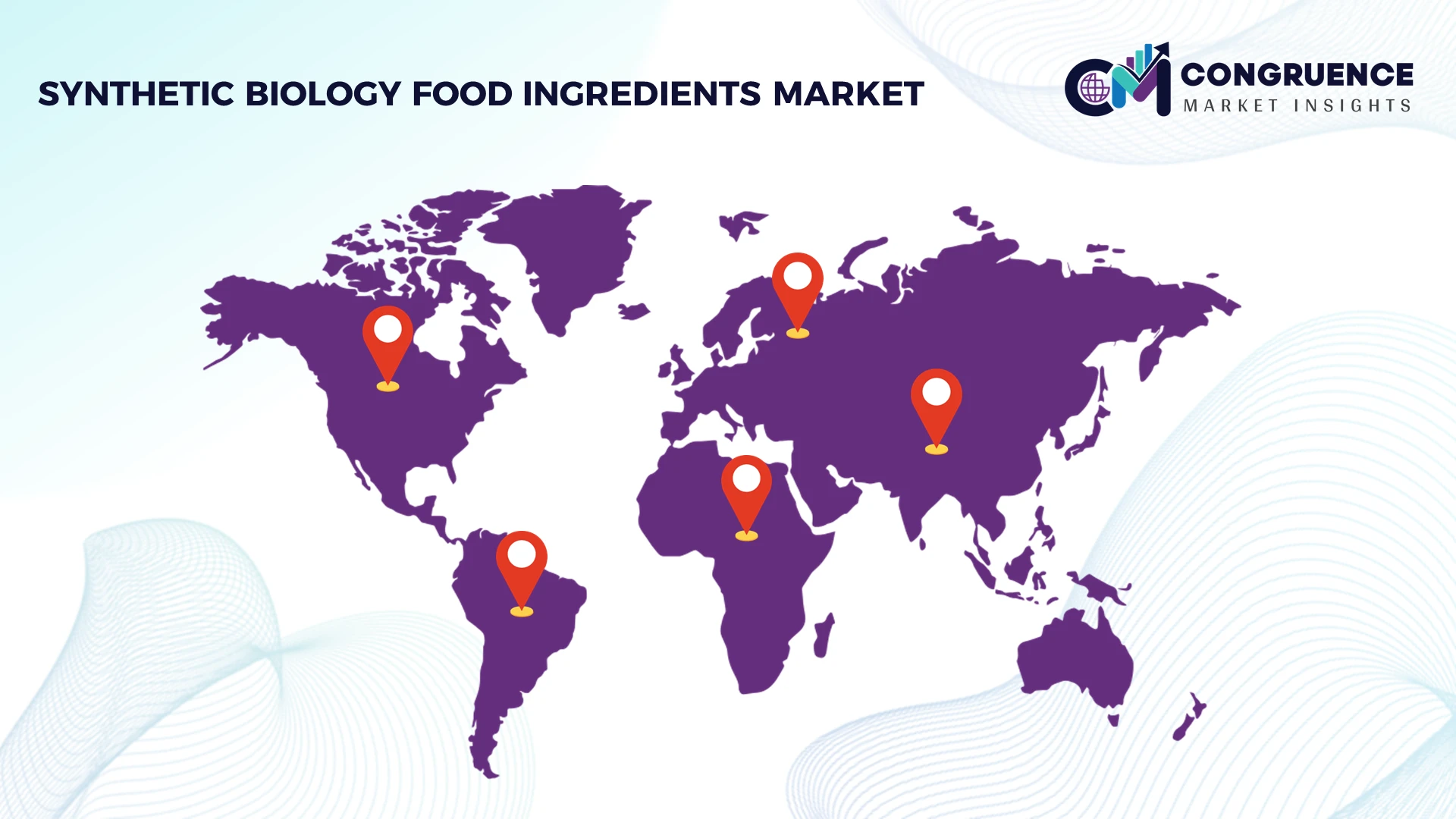
North America accounted for the largest estimated market share at 39% in 2025 however, Asia-Pacific is expected to register the fastest growth, expanding at an estimated CAGR of 18.2% between 2026 and 2033.
North America Synthetic Biology Food Ingredients Market
Precision Fermentation Commercialization Strengthens Regional Leadership
North America held an estimated 39% of the global synthetic biology food ingredients market in 2025, supported by advanced biotechnology research, established fermentation infrastructure, and strong commercial ingredient development. The United States dominates regional activity through companies specializing in engineered proteins, microbial ingredients, and food biotechnology platforms. Canada contributes through industrial fermentation expertise and alternative protein manufacturing initiatives. Commercial developers increasingly prioritize production economics, ingredient functionality, and food safety documentation. The United States Food and Drug Administration provides established pathways for evaluating fermentation-derived food ingredients, supporting commercial market entry. Companies are expanding partnerships with food manufacturers, contract fermentation providers, and ingredient distributors. Competition increasingly centers on achieving reliable industrial yields, consistent ingredient specifications, and scalable purification processes. Regional advantages include specialized biotechnology talent, established research institutions, and access to food manufacturing customers.
United States Market Outlook: The United States maintains strong commercial positioning through biotechnology clusters in California, Massachusetts, and the Midwest. Companies including Perfect Day and The EVERY Company develop fermentation-derived functional proteins for food applications. FDA regulatory pathways support ingredient safety evaluation and commercialization. The country's extensive food manufacturing infrastructure provides opportunities for integrating engineered proteins into established formulations, while contract manufacturing partnerships help developers avoid building dedicated fermentation facilities.
Europe Synthetic Biology Food Ingredients Market
Regulatory Harmonization Reshapes Advanced Ingredient Commercialization
Europe represented an estimated 28% of the global synthetic biology food ingredients market in 2025, supported by industrial biotechnology capabilities, specialized fermentation infrastructure, and established food ingredient manufacturers. Germany, the Netherlands, Denmark, and France contribute through microbial engineering research, industrial enzyme production, and precision fermentation development. The European Food Safety Authority evaluates novel food safety, while European Union regulations influence commercialization requirements for fermentation-derived ingredients. Companies are strengthening regulatory documentation, ingredient characterization, and production traceability to support market authorization. Industrial biotechnology specialists are investing in improved microbial strains and scalable downstream processing technologies. The region's established food ingredient supply chains support collaboration between biotechnology developers and conventional manufacturers. Competitive positioning increasingly depends on regulatory readiness, manufacturing consistency, and the ability to deliver specialized ingredients compatible with existing food processing operations.
Germany Market Outlook: Germany benefits from advanced industrial biotechnology research, established fermentation engineering capabilities, and a substantial food manufacturing sector. Companies and research institutions develop microbial production processes for enzymes, specialty compounds, and functional ingredients. Germany's participation in the European Union novel food framework requires regulatory evaluation before commercialization of qualifying ingredients. Industrial partnerships increasingly focus on improving fermentation productivity, ingredient purity, and integration with existing food manufacturing systems.
Asia-Pacific Synthetic Biology Food Ingredients Market
Biomanufacturing Expansion Accelerates Ingredient Production Capabilities
Asia-Pacific accounted for an estimated 25% of the global synthetic biology food ingredients market in 2025, supported by expanding fermentation infrastructure, biotechnology investment, and growing food ingredient manufacturing capabilities. China leads regional industrial biotechnology capacity, while Singapore provides an established regulatory environment for novel food innovation. Japan and South Korea contribute through advanced fermentation technologies and specialized ingredient manufacturing. China's established industrial fermentation sector supports production of amino acids, enzymes, and vitamins using microbial processes. Companies are investing in strain engineering, production automation, and downstream purification to improve manufacturing economics. Singapore's novel food assessment framework encourages development of alternative proteins and fermentation-derived ingredients. Regional manufacturers are increasingly connecting biotechnology research with commercial ingredient production, strengthening supply chain integration and reducing dependence on imported specialty ingredients.
China Market Outlook: China maintains extensive industrial fermentation infrastructure and established manufacturing capabilities for amino acids, vitamins, and food enzymes. Domestic biotechnology companies are developing engineered microorganisms and advanced fermentation processes to improve ingredient production efficiency. Government support for biotechnology development strengthens research and manufacturing investment. China's large food processing industry provides substantial demand for functional ingredients, while integrated manufacturing capabilities support competitive production costs and domestic supply chain development.
South America Synthetic Biology Food Ingredients Market
Agricultural Feedstock Availability Supports Fermentation Development
South America represented an estimated 5% of the global synthetic biology food ingredients market in 2025, with Brazil accounting for the largest regional industrial biotechnology opportunity. The region benefits from established agricultural processing infrastructure and access to sugarcane, corn, and other fermentation feedstocks. Brazil's biotechnology sector supports microbial ingredient research, industrial fermentation, and renewable feedstock utilization. Argentina and Chile contribute through food biotechnology research and specialized ingredient development. Commercial deployment remains constrained by access to advanced fermentation equipment, specialized technical expertise, and large-scale purification infrastructure. Companies are evaluating partnerships with agricultural processors and established food manufacturers to improve feedstock access and manufacturing integration. Regional opportunities concentrate on producing functional ingredients through locally available substrates while developing the technical infrastructure required for consistent food-grade production.
Brazil Market Outlook: Brazil benefits from extensive sugarcane processing infrastructure and established industrial fermentation experience. Its agricultural sector provides feedstocks suitable for microbial ingredient production, supporting opportunities in enzymes, specialty proteins, and functional compounds. Domestic biotechnology companies are strengthening partnerships with agricultural processors and food manufacturers. Commercial development increasingly emphasizes efficient feedstock conversion, industrial process optimization, and access to specialized fermentation technology for food-grade ingredient production.
Middle East & Africa Synthetic Biology Food Ingredients Market
Food Security Strategies Encourage Biotechnology Investment
Middle East & Africa represented an estimated 3% of the global synthetic biology food ingredients market in 2025, reflecting emerging industrial biotechnology capabilities and targeted food technology investment. The United Arab Emirates, Saudi Arabia, Israel, and South Africa represent important innovation and commercialization markets. Regional interest centers on food supply diversification, advanced ingredient manufacturing, and reduced dependence on imported agricultural products. Israel contributes through established food technology startups and precision fermentation research, while Gulf countries are developing biotechnology infrastructure aligned with food security strategies. Commercial production faces constraints involving specialized fermentation facilities, technical workforce availability, and downstream processing capabilities. Companies are strengthening international technology partnerships, research collaborations, and pilot manufacturing initiatives. Investment priorities emphasize ingredient production systems compatible with local infrastructure and commercially viable industrial fermentation processes.
Israel Market Outlook: Israel maintains an established food technology ecosystem supporting precision fermentation, microbial protein development, and alternative ingredient innovation. Companies including Imagindairy and Remilk have developed animal-free dairy protein technologies using engineered microorganisms. Domestic research institutions contribute expertise in synthetic biology and bioprocess engineering. International manufacturing partnerships support commercial expansion, while the country's specialized biotechnology workforce strengthens development of differentiated food ingredients and scalable production technologies.
Market Competition Landscape
Perfect Day, The EVERY Company, Geltor, and Remilk compete in engineered functional proteins, while DSM-Firmenich and Novonesis leverage established fermentation infrastructure and ingredient distribution networks. The combined global share of the five largest suppliers remains undisclosed; assigning a precise concentration percentage would require independently verified segment sales. Competition centers on fermentation yield, purification efficiency, ingredient functionality, and regulatory readiness. Selected animal-free whey assessments indicate up to 97% lower greenhouse gas emissions and 99% lower water requirements than conventional dairy production, although results vary by process. Specialized developers pursue manufacturing partnerships to reduce infrastructure exposure, while established ingredient suppliers emphasize industrial capacity and customer integration. Competitive differentiation increasingly shifts from laboratory protein production toward repeatable commercial manufacturing and formulation performance. High bioreactor investment, food safety validation, and downstream processing requirements restrict market entry. Winning requires dependable production economics, differentiated ingredient functionality, regulatory acceptance, and manufacturing partnerships supporting reliable commercial supply.
Companies Profiled in the Synthetic Biology Food Ingredients Market Report
-
Perfect Day, Inc.
-
The EVERY Company
-
Geltor, Inc.
-
Remilk Ltd.
-
Imagindairy Ltd.
-
Formo Bio GmbH
-
Onego Bio Ltd.
-
Vivici B.V.
-
Shiru, Inc.
-
Michroma, Inc.
-
MicroSynbiotix Ltd.
-
DSM-Firmenich AG
-
Novonesis A/S
-
C16 Biosciences, Inc.
Technology Insights for the Synthetic Biology Food Ingredients Market
Precision fermentation currently enables engineered microorganisms to manufacture whey proteins, egg proteins, enzymes, and specialty compounds with defined molecular characteristics. CRISPR-based strain engineering improves pathway control, while automated bioreactors maintain oxygen transfer, temperature, and nutrient delivery. Commercial deployment includes animal-free dairy and egg ingredients, with manufacturing partnerships supporting industrial production. Selected lifecycle assessments report 97% lower greenhouse gas emissions for fermentation-derived whey compared with conventional dairy production, although outcomes depend on facility energy sources and processing conditions.
Emerging technologies emphasize continuous fermentation, automated downstream purification, and computational protein design. A reported 3,000-liter continuous fermentation demonstration achieved threefold productivity and 50% lower production costs compared with its conventional batch benchmark. This comparison demonstrates why equipment utilization and uninterrupted processing increasingly influence investment decisions. Advanced process analytics monitor microbial productivity and product quality, helping developers reduce manufacturing variability. Established ingredient manufacturers benefit from existing purification infrastructure, while specialized biotechnology companies compete through differentiated protein functionality.
Disruptive innovation combines artificial intelligence, high-throughput strain screening, and integrated bioprocess control. Developers are connecting molecular design with commercial fermentation data to accelerate optimization. During 2026–2028, investment priorities will shift toward validated yields, continuous processing, and scalable purification. Competitive leadership will depend on consistent specifications, efficient manufacturing, and dependable customer supply.
Recent Developments in the Global Synthetic Biology Food Ingredients Market
-
June 2026: The EVERY Company expanded its manufacturing partnership with Huvepharma, quadrupling production capacity for fermentation-derived egg protein. The expansion followed annual orders secured during early 2026 exceeding 2025 order volumes by 550%, strengthening commercial supply capabilities. Source: every.com
-
September 2025: Onego Bio received an FDA no-questions letter for Bioalbumen following GRAS Notice 1249. The regulatory milestone supported commercialization of fermentation-derived ovalbumin across baking, beverages, and confectionery, strengthening ingredient qualification and access to American food manufacturers. Source: onego.bio
-
July 2025: Vivici introduced precision-fermented Vivitein BLG protein shots, delivering up to 25 grams of protein per 100 milliliters. The formulation demonstrated concentrated protein functionality in compact beverages, expanding commercial opportunities for manufacturers targeting convenient nutritional products. Source: vivici.com
-
March 2026: The EVERY Company partnered with Healthier Comforts to introduce fermentation-derived egg white protein directly to consumers. The product launched in an 8-ounce resealable package, extending OvoPro beyond industrial customers into household baking and food preparation applications. Source: proteinproductiontechnology.com
Scope of the Synthetic Biology Food Ingredients Market Report
The Synthetic Biology Food Ingredients Market Report examines industry structure, manufacturing technologies, commercial adoption, and competitive positioning between 2026 and 2033. Segmentation covers six ingredient types, including proteins, enzymes, vitamins, natural flavors, lipids, and functional carbohydrates; five applications spanning fortification, alternative proteins, taste enhancement, supplements, and preservation; and five end-user categories. Regional analysis evaluates North America, Europe, Asia-Pacific, South America, and Middle East & Africa, emphasizing production infrastructure, regulatory access, and industrial commercialization.
Technology coverage includes precision fermentation, microbial strain engineering, continuous bioprocessing, computational protein design, and downstream purification. The report assesses manufacturing partnerships, ingredient qualification, specialized production capacity, and emerging applications in engineered fats and functional proteins. Competitive analysis supports investment prioritization, supplier selection, geographic expansion, and commercialization strategies through measurable production performance and market positioning.
Synthetic Biology Food Ingredients Market Report Summary
| Report Attribute/Metric | Report Details |
|---|
Market Revenue in 2025 | USD 7900 Million |
Market Revenue in 2033 | USD 26622.6 Million |
CAGR (2026 - 2033) | 16.4% |
Base Year | 2025 |
Forecast Period | 2026 - 2033 |
Historic Period | 2021 - 2025 |
Segments Covered | By TypeNatural Flavors and Fragrances
By ApplicationFood and Beverage Fortification Meat and Dairy Alternatives Flavor and Taste Enhancement
By End-UserFood and Beverage Manufacturers Alternative Protein Producers Dairy and Meat Processing Companies Food Ingredient Manufacturers
|
Key Report Deliverable | Revenue Forecast, Growth Trends, Market Dynamics, Segmental Overview, Regional and Country-wise Analysis, Competition Landscape |
Region Covered | North America, Europe, Asia-Pacific, South America, Middle East, Africa |
Key Players Analyzed | Perfect Day, Inc., The EVERY Company, Geltor, Inc., Remilk Ltd., Imagindairy Ltd., Formo Bio GmbH, Onego Bio Ltd., Vivici B.V., Shiru, Inc., Michroma, Inc., MicroSynbiotix Ltd., DSM-Firmenich AG, Novonesis A/S, C16 Biosciences, Inc. |
Customization & Pricing | Available on Request (10% Customization is Free) |





