
Reports
The Global Sneaker Trading Platform Market was valued at USD 11470 Million in 2025 and is anticipated to reach a value of USD 25001.25 Million by 2033 expanding at a CAGR of 10.23% between 2026 and 2033. Growth is being driven by authenticated resale ecosystems, AI-powered pricing engines, blockchain-backed product verification, and expanding cross-border sneaker commerce across premium and limited-edition collections.
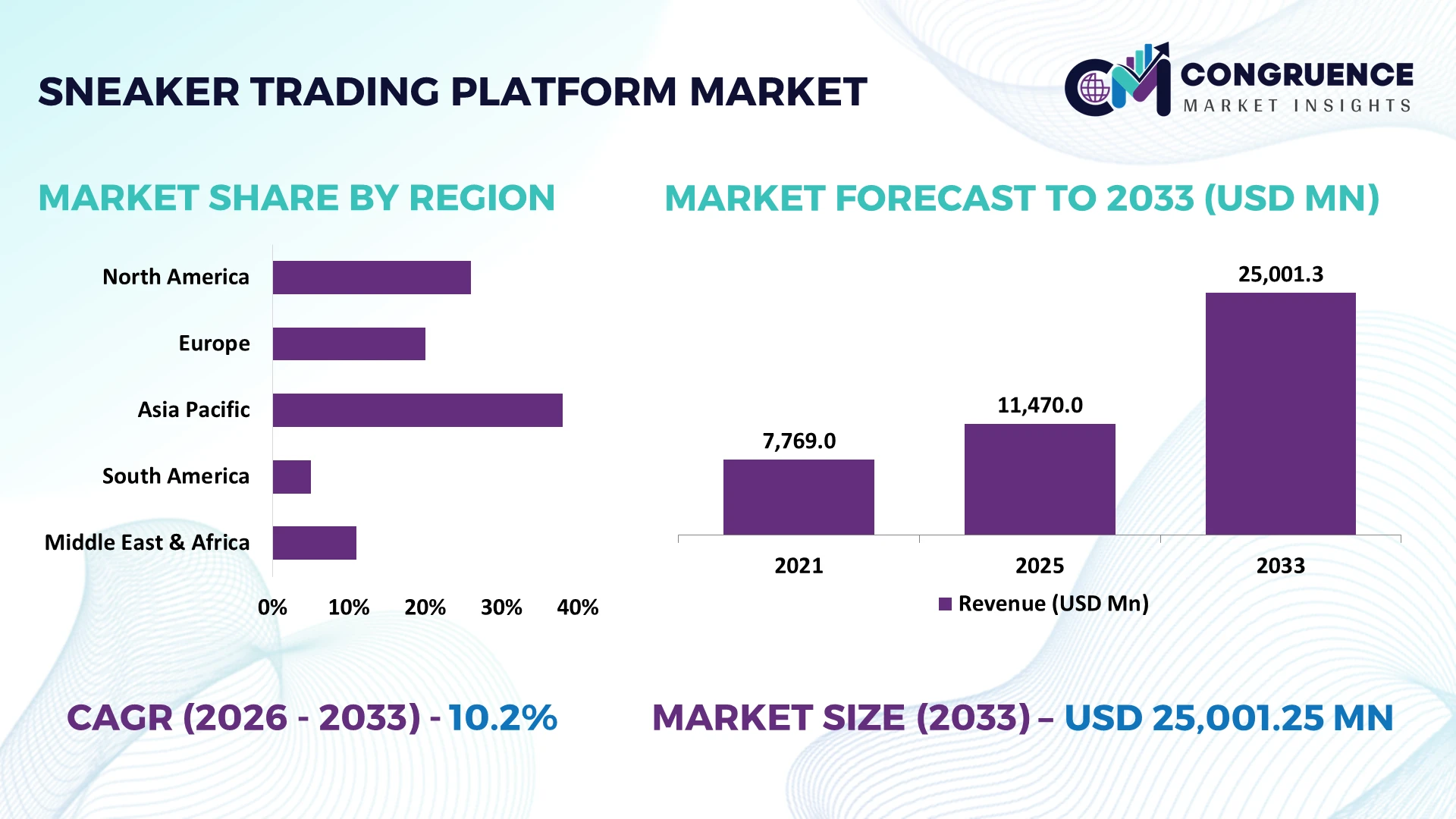
The United States accounts for approximately 41% of global sneaker trading activity, supported by mature resale infrastructure, strong consumer spending, and advanced AI authentication systems, while China contributes nearly 24% through rapid digital marketplace expansion and mobile-first transactions. Continued trade diversification following global supply-chain realignments has accelerated regional inventory redistribution, with automated verification improving authentication accuracy by over 30%, strengthening platform scalability and buyer confidence.
Businesses expanding authenticated cross-border trading capabilities and technology-led verification networks are positioned to secure stronger market competitiveness and higher transaction efficiency.
Market Size & Growth: USD 11470 Million in 2025, projected to reach USD 25001.25 Million by 2033 at 10.23% CAGR, driven by AI-enabled authentication and premium resale expansion.
Top Growth Drivers: Authentication adoption improves trust by 35%, cross-border transactions rise 28%, and limited-edition sneaker launches increase premium resale activity by 22%.
Short-Term Forecast: By 2027, automated verification reduces authentication time by 40% while transaction processing efficiency improves by 32%.
Emerging Technologies: AI pricing algorithms, blockchain authentication, and image-recognition verification increase pricing accuracy by nearly 30% across high-growth trading platforms.
Regional Leaders: North America exceeds USD 9400 Million, Asia Pacific reaches about USD 7600 Million, and Europe surpasses USD 5200 Million, supported by expanding digital marketplace adoption and regional supply-chain diversification.
Consumer/End-User Trends: More than 62% of premium sneaker buyers prefer authenticated digital marketplaces, with mobile transactions exceeding 70% of total trading volume.
Pilot/Case Example: In 2026, AI-driven authentication deployment reduced counterfeit identification errors by 38% while accelerating order verification by 35%.
Competitive Landscape: Leading platform holds approximately 23% market share, with StockX, GOAT, eBay, POIZON, and Stadium Goods maintaining strong competitive positions.
Regulatory & ESG Impact: Digital product verification and sustainable resale models reduce product waste by approximately 18% while strengthening compliance with evolving digital commerce regulations.
Investment & Funding: Global investments exceed USD 1.8 Billion through venture funding, strategic partnerships, and international marketplace expansion amid regional logistics modernization.
Innovation & Future Outlook: Next-generation AI authentication, digital ownership records, and predictive pricing analytics improve transaction transparency by over 30%, supporting long-term platform differentiation.
The Sneaker Trading Platform Market continues to benefit from rising demand for authenticated premium footwear exchanges, AI-powered valuation tools, and faster digital verification workflows. Nearly 68% of high-value resale transactions now rely on automated authentication before completion, while inventory tracking technologies enhance marketplace transparency. Ongoing logistics optimization and evolving digital commerce compliance frameworks are strengthening cross-border operations, setting the foundation for broader strategic market expansion.
The Sneaker Trading Platform Market has become strategically important as authenticated digital resale evolves into a core channel for premium footwear distribution, strengthening competition among marketplaces, brands, and logistics providers. Digital commerce expansion, stricter counterfeit controls, and supply-chain restructuring are encouraging platforms to invest in integrated verification, dynamic pricing, and cross-border fulfillment. More than 60% of premium resale transactions now incorporate automated authentication before order completion, improving buyer confidence and transaction consistency.
AI-enabled image authentication processes verify listings approximately 35% faster than conventional manual inspection while reducing operating costs by nearly 22% through workflow automation. The United States leads in platform maturity with large-scale authenticated trading ecosystems, whereas Japan emphasizes collector-focused marketplaces with higher limited-edition liquidity and specialized verification standards. Over the next two to three years, mobile-first trading is expected to exceed 75% of marketplace activity as digital wallets and instant settlement become standard operational features.
A practical example is the deployment of AI-driven verification centers integrated with regional fulfillment hubs, enabling faster authentication before international shipping. Companies are expanding technology partnerships, investing in localized logistics networks, and strengthening authentication capabilities to improve transaction reliability. Organizations that combine trusted verification, efficient cross-border operations, and advanced data analytics will establish stronger competitive positioning and long-term marketplace resilience.
The primary growth driver is the rapid deployment of AI-powered authentication combined with expanding cross-border resale infrastructure. Automated verification has improved authentication accuracy by approximately 30%, while digital pricing engines reduce valuation inconsistencies by nearly 25%. Around 70% of premium sneaker listings now include advanced image-based verification before transaction approval. Following supply-chain diversification after global logistics disruptions, companies in the United States and Singapore have increased investments in regional authentication centers and fulfillment partnerships to shorten delivery cycles. This structural shift strengthens consumer trust, reduces counterfeit circulation, and enables platforms to scale internationally. Leading companies are accelerating investment in proprietary authentication technologies, strategic logistics alliances, and data-driven pricing systems to strengthen operational efficiency and marketplace differentiation.
Persistent counterfeit activity and inconsistent digital commerce regulations remain significant structural constraints. Approximately 18% of disputed transactions involve authentication or product-condition disagreements, while international compliance requirements increase operational costs by nearly 15% for cross-border marketplace operators. Different customs procedures and consumer protection standards across countries such as the United States and China complicate transaction processing and returns management. These factors reduce operational scalability and pressure platform profitability, particularly for smaller operators. Companies are responding through localized authentication facilities, standardized verification protocols, insurance-backed transaction services, and diversified logistics partnerships that improve operational consistency while reducing regulatory exposure across multiple trading jurisdictions.
Emerging opportunities are centered on digital ownership verification, predictive pricing analytics, and integrated resale ecosystems. AI-driven demand forecasting improves inventory allocation by approximately 28%, while blockchain-supported ownership records reduce verification disputes by nearly 20%. South Korea is accelerating digital marketplace innovation through advanced mobile commerce adoption and authenticated luxury resale integration. Companies are expanding investments in API-enabled partnerships with retailers, payment providers, and logistics specialists to create seamless end-to-end trading experiences. A notable strategic opportunity lies in combining resale intelligence with primary product launches, allowing brands to optimize release strategies, strengthen consumer engagement, and improve marketplace liquidity through connected digital ecosystems.
Long-term execution depends on maintaining secure, scalable, and interoperable marketplace infrastructure across expanding international operations. Cybersecurity incidents targeting digital commerce continue to rise, while approximately 40% of operational costs for premium resale platforms are linked to authentication, dispute management, and fulfillment activities. Integrating AI verification, payment security, and cross-border logistics into a unified platform remains technically demanding, particularly as transaction volumes increase. Companies must invest in cloud-native infrastructure, advanced fraud detection, workforce training, and secure data governance to sustain operational consistency. Organizations that successfully standardize verification workflows and strengthen digital infrastructure will gain durable competitive advantages through faster processing, stronger consumer trust, and higher marketplace efficiency.
AI Verification Becomes Standard Automated image recognition and machine-learning authentication now process nearly 68% of premium sneaker listings, reducing verification time by around 35% while lowering manual inspection requirements by 24%. Rising counterfeit enforcement and stricter digital commerce compliance are accelerating enterprise adoption. Marketplace operators are expanding AI infrastructure, integrating verification into fulfillment workflows, and partnering with specialist authentication providers to improve transaction speed, reduce disputes, and strengthen customer trust across international trading networks.
Cross-Border Fulfillment Optimization International sneaker trading continues shifting toward localized logistics hubs, with average delivery times improving by approximately 27% and return-processing efficiency increasing by 20%. Ongoing supply-chain restructuring and diversified inventory allocation are encouraging platforms to establish regional authentication centers in the United States, Japan, and Singapore. Companies are restructuring warehouse networks, integrating customs automation, and strengthening logistics partnerships to reduce cross-border friction while improving operational consistency for premium resale transactions.
Mobile Commerce Drives Liquidity More than 74% of sneaker marketplace transactions now originate through mobile applications, while digital wallet usage has exceeded 65% of completed purchases. Real-time notifications, instant pricing updates, and integrated payment authentication have shortened purchase decisions by nearly 18%. Platform operators are prioritizing mobile-first interfaces, personalized recommendation engines, and streamlined checkout processes to increase user retention, improve trading frequency, and support faster inventory turnover among active collectors and resellers.
Data-Driven Dynamic Pricing Predictive pricing engines now influence approximately 60% of high-value sneaker listings, improving pricing accuracy by about 28% and reducing prolonged unsold inventory by 16%. Rather than relying solely on historical resale values, platforms increasingly combine demand signals, release calendars, and regional purchasing behavior to optimize pricing decisions. Companies are investing in analytics platforms, expanding retailer partnerships, and embedding real-time market intelligence into seller dashboards to improve marketplace transparency and transaction efficiency.
Marketplace Platforms account for approximately 39% of total platform activity, supported by integrated authentication, payment processing, and logistics capabilities that simplify end-to-end transactions. Their ability to consolidate buyers, sellers, and verification services on a single platform improves operational efficiency while reducing transaction friction by nearly 30%. B2C Platforms remain highly relevant for brand-authorized inventory and premium product releases, particularly in the United States, where structured fulfillment networks strengthen customer confidence and reduce return complexity.
C2C Platforms represent the fastest-growing segment as peer-to-peer digital trading expands through mobile applications and trusted verification systems, with user participation increasing by roughly 24% over recent years. Auction Platforms continue serving collectors seeking limited-edition products and price discovery, particularly for rare releases where bidding mechanisms maximize asset value. Companies are investing in integrated ecosystem development, AI-supported seller tools, and strategic logistics partnerships to strengthen scalability, improve transaction reliability, and capture higher-value trading activity across multiple platform models.
Sneaker Resale represents the largest application, accounting for approximately 46% of platform utilization because it directly supports transaction volume, liquidity, and premium product circulation. Established resale ecosystems benefit from strong consumer participation, while integrated payment systems and automated verification reduce transaction processing time by nearly 25%. Collection Management remains important among enthusiasts seeking digital inventory organization, whereas Price Tracking supports informed purchasing decisions through real-time valuation analytics.
Sneaker Authentication is the fastest-growing application as counterfeit mitigation becomes a strategic requirement across premium marketplaces. AI-assisted verification has improved authentication accuracy by approximately 30%, encouraging broader enterprise deployment and stronger buyer confidence. Price Tracking platforms increasingly integrate predictive analytics that improve pricing precision by around 22%, supporting both collectors and professional resellers. Companies continue expanding automation capabilities, embedding authentication into transaction workflows, and integrating advanced analytics to strengthen operational transparency and improve marketplace efficiency.
Individual Collectors account for approximately 44% of platform demand, driven by limited-edition purchasing, portfolio building, and long-term value appreciation. High engagement with mobile trading applications and digital authentication services has increased repeat marketplace activity by nearly 26%. Resellers represent a mature and operationally intensive segment, leveraging automated pricing tools and inventory analytics to optimize turnover while maintaining competitive listing strategies across multiple marketplaces.
Retailers are emerging as the fastest-growing end-user group as brands increasingly integrate certified resale into omnichannel strategies and customer retention programs. Retail participation has expanded by approximately 21% as enterprises develop trade-in initiatives and authenticated secondary-market offerings. Auction Houses continue serving specialized collectors seeking exclusive releases and rare sneaker assets through premium bidding environments. Companies are tailoring platform capabilities with enterprise dashboards, dynamic pricing tools, and strategic logistics partnerships to address the evolving operational requirements of each buyer group while strengthening long-term ecosystem participation.
North America accounted for the largest market share at 38.8% in 2025 however, Asia-Pacific is expected to register the fastest growth, expanding at a 12.4% CAGR between 2026 and 2033.
Strategic Leadership Through Authentication and Digital Commerce
North America remains the largest regional market due to its mature resale ecosystem, strong digital payment infrastructure, and extensive deployment of AI-based authentication technologies. Nearly 65% of premium sneaker transactions across the region are completed through authenticated digital marketplaces, reinforcing consumer confidence and operational efficiency. The United States and Canada continue expanding regional fulfillment centers and automated verification facilities, reducing authentication turnaround by approximately 32%. Enterprise partnerships between marketplace operators, logistics providers, and payment technology firms continue strengthening transaction reliability. Continuous investment in cloud-native marketplace infrastructure and advanced pricing analytics enables faster inventory circulation while supporting premium product liquidity across large-scale digital trading networks.
United States Market Outlook: The United States leads regional activity through its established collector ecosystem, advanced authentication infrastructure, and high consumer participation in premium sneaker trading. More than 70% of authenticated resale transactions utilize AI-assisted verification before fulfillment. Marketplace operators continue investing in regional logistics hubs, predictive pricing platforms, and integrated digital payment systems to improve operational efficiency. Strong enterprise collaboration with retailers and technology providers reinforces the country's position as the industry's primary innovation and transaction center.
Digital Compliance Strengthens Marketplace Operations
Europe continues strengthening its position through structured digital commerce regulations, expanding circular retail initiatives, and high adoption of authenticated resale platforms. Approximately 28% of regional premium sneaker transactions involve integrated authentication services, supporting greater consumer confidence and lower dispute rates. Investments in localized fulfillment infrastructure and automated verification workflows are improving cross-border transaction consistency by nearly 24%. Enterprise adoption of sustainable resale strategies aligns with broader circular economy objectives while encouraging technology-driven marketplace modernization. Companies increasingly prioritize localized operations, secure payment integration, and advanced inventory management to strengthen long-term operational resilience.
Germany Market Outlook: Germany remains the region's most strategically significant market due to its advanced e-commerce infrastructure, efficient logistics network, and strong consumer demand for authenticated premium footwear. Digital payment adoption exceeds 80% across online retail channels, supporting seamless marketplace transactions. Companies continue expanding warehouse automation, authentication partnerships, and cross-border fulfillment capabilities, enabling higher transaction efficiency while reinforcing Germany's role as a central European distribution and technology hub.
Mobile Commerce Accelerates Regional Scale
Asia-Pacific represents the fastest-expanding regional market, supported by mobile-first commerce, strong sneaker culture, and rapidly expanding digital marketplace ecosystems. More than 72% of regional marketplace transactions originate through smartphones, while automated authentication adoption has increased by approximately 30% over recent years. Investments in logistics modernization, digital payment infrastructure, and AI-enabled verification continue improving marketplace scalability. Cross-border trading activity is increasing as regional fulfillment hubs shorten delivery cycles and strengthen operational flexibility. Companies are prioritizing technology integration and localized platform development to serve expanding collector and reseller communities.
China Market Outlook: China dominates regional marketplace activity through large-scale digital commerce infrastructure, extensive mobile payment adoption, and advanced marketplace innovation. Approximately 75% of sneaker trading transactions are completed through integrated mobile ecosystems with embedded verification services. Companies continue expanding AI-powered authentication, automated fulfillment centers, and real-time pricing technologies, strengthening transaction speed while supporting sustained marketplace liquidity and enterprise-scale digital commerce operations.
Growing Digital Resale Ecosystems
South America is benefiting from increasing digital commerce adoption and rising participation in authenticated sneaker resale despite infrastructure differences across individual markets. Digital marketplace activity has expanded by approximately 22%, supported by wider mobile payment usage and improved logistics connectivity. Local platform operators are strengthening partnerships with authentication providers and delivery companies to improve operational consistency. Although customs procedures and fulfillment limitations remain execution challenges, continued investment in digital commerce infrastructure is improving transaction reliability and encouraging greater participation among collectors and professional resellers.
Brazil Market Outlook: Brazil represents the region's largest operational market due to its sizeable consumer base, expanding online retail ecosystem, and rapidly improving digital payment infrastructure. Mobile commerce accounts for more than 68% of online marketplace activity, encouraging greater participation in authenticated sneaker trading. Companies continue investing in localized fulfillment operations, payment integration, and fraud prevention technologies to improve consumer confidence and strengthen marketplace scalability across major metropolitan centers.
Digital Infrastructure Expands Premium Resale Access
The Middle East & Africa market is progressing through digital infrastructure modernization, expanding e-commerce ecosystems, and increasing adoption of authenticated luxury resale platforms. Approximately 20% of premium online footwear transactions now involve third-party authentication, while investment in smart logistics infrastructure continues improving cross-border fulfillment efficiency. Marketplace operators are expanding regional partnerships with payment providers and logistics specialists to strengthen customer experience. Premium consumer demand and digital transformation initiatives continue encouraging enterprise investment despite varying infrastructure maturity across individual markets.
United Arab Emirates Market Outlook: The United Arab Emirates serves as the region's primary marketplace hub due to its advanced digital infrastructure, international logistics connectivity, and high premium consumer spending. Cross-border digital commerce continues expanding through integrated payment technologies and efficient customs processing. Companies are investing in authentication partnerships, regional fulfillment centers, and AI-enabled marketplace platforms, strengthening operational efficiency while positioning the country as a strategic gateway for premium sneaker trading across the Middle East.
Competition is led by StockX, GOAT, eBay, POIZON, Stadium Goods, and Flight Club, with global digital marketplaces competing directly against specialist authentication-focused platforms and regional resale operators. The top five participants collectively control approximately 63% of authenticated premium sneaker transactions. Competition centers on authentication accuracy, transaction speed, pricing intelligence, and logistics efficiency, with AI verification improving processing efficiency by nearly 30% and automated pricing tools increasing valuation precision by approximately 25%. Leading platforms strengthen market positions through logistics partnerships, regional fulfillment expansion, proprietary authentication technology, and integrated payment ecosystems. Regional operators compete through localized inventory, collector engagement, and faster domestic fulfillment. The competitive landscape is shifting toward technology-driven differentiation as AI, predictive analytics, and digital verification become operational necessities rather than premium features. High investment requirements for authentication infrastructure, consumer trust, and scalable logistics create significant entry barriers. Sustainable competitive success depends on trusted verification, efficient cross-border execution, intelligent pricing, and seamless digital marketplace integration.
StockX
GOAT
eBay
POIZON (Dewu)
Stadium Goods
Flight Club
KLEKT
Novelship
Restocks
SNKRDUNK
Klekt Group
Tradeblock
Alias
AI-powered authentication, computer vision, and predictive pricing engines define the current technology foundation of sneaker trading platforms. More than 68% of premium listings now undergo automated image verification before approval, improving authentication accuracy by approximately 30% while reducing manual processing costs by nearly 22%. Cloud-native marketplace infrastructure supports real-time inventory synchronization and dynamic pricing, enabling faster transaction execution. Compared with legacy manual authentication workflows, AI-enabled verification completes product assessment around 35% faster, strengthening operational consistency and reducing dispute resolution time.
Emerging technologies are centered on blockchain-backed ownership records, intelligent recommendation engines, and API integration with payment providers and logistics partners. Blockchain-based verification reduces ownership disputes by approximately 20%, while machine-learning pricing models improve valuation precision by nearly 28%. Around 45% of enterprise marketplaces have integrated advanced analytics into seller dashboards, allowing real-time demand forecasting and automated pricing adjustments. Platforms adopting these technologies gain stronger inventory liquidity, faster decision-making, and greater customer retention than operators relying on standalone marketplace systems.
Between 2026 and 2028, generative AI-assisted listing creation, digital product passports, and automated cross-border compliance will reshape marketplace operations. Early enterprise deployments indicate listing preparation time can decline by nearly 40%, while intelligent fulfillment routing improves delivery efficiency by approximately 18%. Global leaders investing in integrated AI ecosystems, authentication automation, and predictive commerce platforms will outperform regional operators through superior transaction speed, trusted verification, and scalable international marketplace expansion.
April 2025 StockX introduced its Verified Seller program, allowing qualified sellers to ship directly to customers and reducing average delivery times through streamlined fulfillment workflows. The initiative delivered approximately 30% faster order processing, strengthening marketplace efficiency and customer experience.
July 2025 StockX launched StockX Balance, enabling sellers to earn 5% rewards credit on eligible purchases made using platform balances. The initiative increased seller engagement while reinforcing ecosystem retention and repeat marketplace participation.
October 2025 StockX appointed Pilar Toro to lead Global Brand Integrity and Anti-Counterfeiting efforts, strengthening authentication governance and counterfeit prevention across international operations. The organizational expansion enhanced marketplace trust through dedicated brand protection leadership.
April 2026 StockX launched "Store at StockX," enabling possessionless trading while lowering seller fees through centralized inventory storage. The operational model reduced handling steps and improved fulfillment efficiency, supporting scalable marketplace expansion and faster transaction execution. Source: https://stockx.com/about/our-news/
This report provides comprehensive analysis across B2C Platforms, C2C Platforms, Auction Platforms, and Marketplace Platforms, evaluating their operational positioning, technology adoption, and competitive differentiation. It examines Sneaker Resale, Sneaker Authentication, Price Tracking, and Collection Management applications while assessing demand across Individual Collectors, Resellers, Retailers, and Auction Houses. The study covers North America, Europe, Asia-Pacific, South America, and the Middle East & Africa, representing more than 95% of organized digital sneaker trading activity.
The report evaluates AI-based authentication, blockchain verification, predictive pricing, cloud-native marketplace infrastructure, and digital payment integration while assessing deployment trends, enterprise partnerships, and marketplace modernization. It profiles major industry participants, compares regional operating models, and identifies emerging niche opportunities in authenticated cross-border trading and digital ownership ecosystems. Strategic insights support investment planning, technology deployment, expansion priorities, competitive benchmarking, and long-term business positioning throughout the 2026–2033 market outlook.
| Report Attribute/Metric | Report Details |
|---|---|
Market Revenue in 2025 | USD 11470 Million |
Market Revenue in 2033 | USD 25001.25 Million |
CAGR (2026 - 2033) | 10.23% |
Base Year | 2025 |
Forecast Period | 2026 - 2033 |
Historic Period | 2021 - 2025 |
Segments Covered | By Type
By Application
By End-User
|
Key Report Deliverable | Revenue Forecast, Growth Trends, Market Dynamics, Segmental Overview, Regional and Country-wise Analysis, Competition Landscape |
Region Covered | North America, Europe, Asia-Pacific, South America, Middle East, Africa |
Key Players Analyzed | StockX, GOAT, eBay, POIZON (Dewu), Stadium Goods, Flight Club, KLEKT, Novelship, Restocks, SNKRDUNK, Klekt Group, Tradeblock, Alias |
Customization & Pricing | Available on Request (10% Customization is Free) |




