
Reports
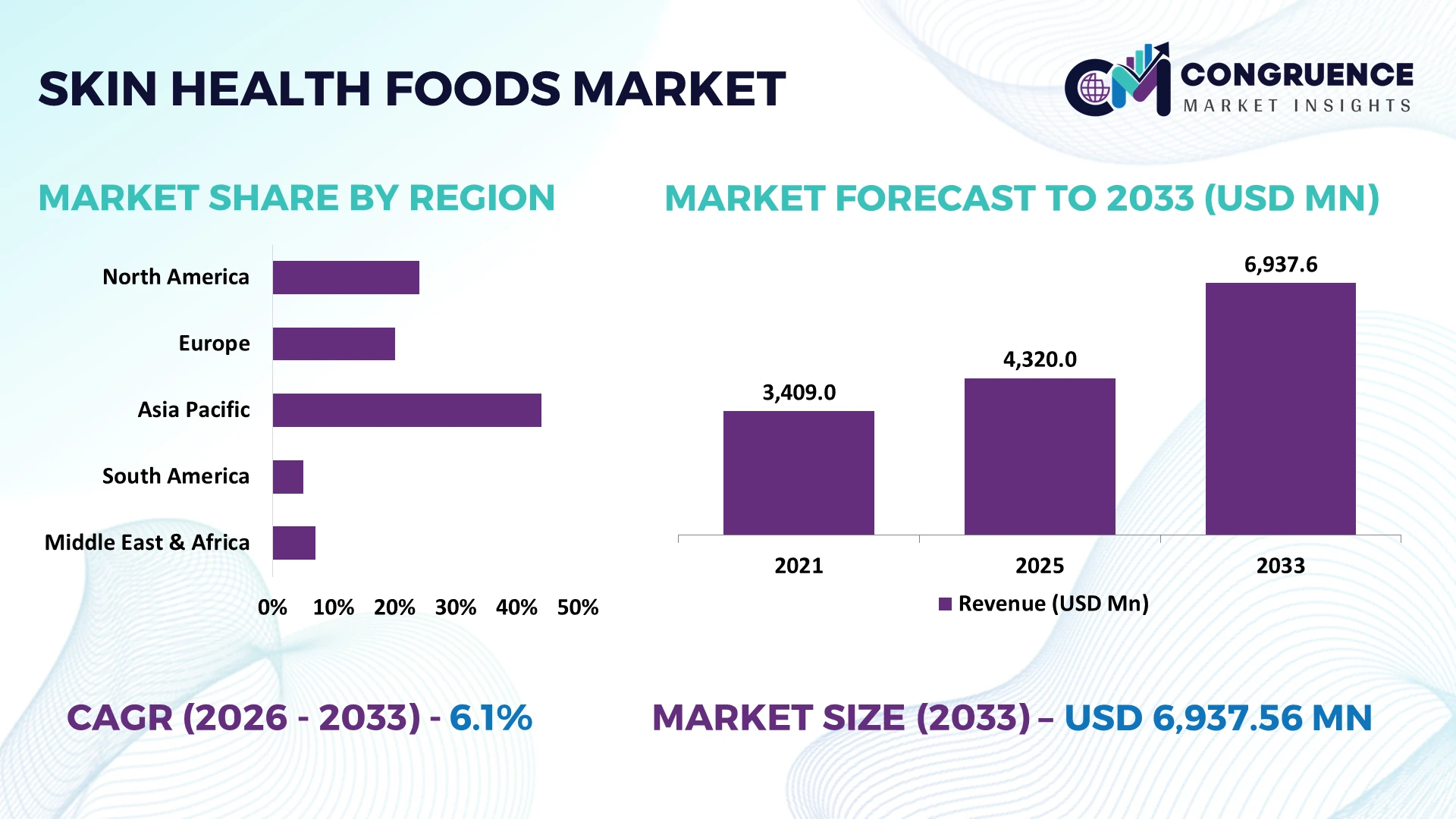
The Global Skin Health Foods Market was valued at USD 4320 Million in 2025 and is anticipated to reach a value of USD 6937.56 Million by 2033 expanding at a CAGR of 6.1% between 2026 and 2033. Rising clinical acceptance of collagen peptides, ceramides, probiotics, and antioxidant-enriched functional nutrition is accelerating premium product launches and repeat consumer purchases across global wellness markets.
Japan dominates the global Skin Health Foods Market with approximately 31% premium product share, supported by over USD 1.3 billion in functional food innovation investments, a mature nutraceutical industry, and nearly 69% consumer adoption of beauty-from-within products. Compared with South Korea, Japan maintains stronger clinical validation and manufacturing capacity, while Indo-Pacific supply chain diversification following Red Sea shipping disruptions reinforces regional production resilience.
Companies investing in clinically backed formulations, regional manufacturing, and ingredient traceability will secure stronger competitive positioning in high-value international markets.
Market Size & Growth: USD 4320 Million (2025) to USD 6937.56 Million (2033) at 6.1% CAGR, supported by advanced functional ingredient innovation.
Top Growth Drivers: Collagen demand +24%, probiotic nutrition +19%, personalized wellness adoption +16%.
Short-Term Forecast: By 2028, production efficiency increases 14% through automation and digital quality control.
Emerging Technologies: AI formulation, precision fermentation, and microencapsulation improve ingredient stability by 22%.
Regional Leaders: Asia-Pacific USD 2.9 Billion, North America USD 1.9 Billion, Europe USD 1.5 Billion, driven by premium nutrition adoption.
Consumer Trends: Around 61% of wellness consumers prefer clinically supported skin health food formulations.
Pilot Example: A 2026 digital traceability project reduced ingredient waste by 13% across manufacturing operations.
Competitive Landscape: Top companies hold nearly 38% share, led by Amway, Shiseido, Nestlé Health Science, Herbalife, and Meiji.
Regulatory & ESG: Sustainable packaging adoption increased 27% as global compliance standards strengthened.
Investment & Funding: More than USD 950 Million invested in capacity expansion, partnerships, and regional supply-chain diversification.
Innovation & Future Outlook: Postbiotic nutrition, bioactive peptides, and precision nutrition are strengthening premium product differentiation.
Skin Health Foods Market expansion is increasingly supported by healthy aging nutrition, microbiome-focused formulations, and clinically validated bioactive ingredients. Around 41% of newly introduced premium products feature multifunctional active compounds that improve skin wellness while aligning with stricter ingredient transparency and resilient regional sourcing strategies. These developments strengthen long-term competitiveness and set the foundation for strategic market evaluation.
Skin health foods are becoming strategically important as consumer wellness shifts from cosmetic treatment to preventive nutrition, encouraging food, nutraceutical, and biotechnology companies to compete through clinically validated formulations. Regulatory harmonization for functional ingredients and restructuring of collagen and botanical extract supply chains are accelerating product standardization, while digital traceability platforms improve ingredient verification and strengthen premium brand positioning across international markets.
Advanced microencapsulation technology delivers nearly 24% higher nutrient bioavailability than conventional blending methods while reducing ingredient degradation by approximately 18%, improving manufacturing efficiency and product consistency. Japan continues to lead clinical product deployment and premium innovation, whereas the United States scales digital nutrition platforms and personalized wellness ecosystems. During the next two to three years, more than 45% of premium product launches are expected to integrate AI-assisted formulation screening and precision ingredient selection to shorten commercialization cycles.
A leading nutraceutical manufacturer recently deployed blockchain-enabled ingredient traceability across marine collagen sourcing, reducing documentation time by 21% while improving compliance efficiency. Companies are expanding partnerships with biotechnology firms, contract manufacturers, and clinical research organizations to strengthen differentiated portfolios. Businesses that combine scientific validation, resilient sourcing networks, and technology-enabled production will establish stronger competitive positioning as the market evolves toward premium, evidence-based nutrition.
Growing acceptance of ingestible beauty solutions is transforming product development strategies as clinically validated collagen peptides, probiotics, and ceramides become mainstream functional ingredients. More than 63% of premium product launches now feature multi-ingredient formulations, while clean-label demand has increased approximately 28%. Japan continues expanding government-supported functional food innovation, encouraging higher clinical validation standards. These developments improve consumer confidence, accelerate premium product differentiation, and support higher repeat purchase rates. In response, companies are increasing investments in clinical trials, ingredient partnerships, and specialized manufacturing facilities while strengthening traceability systems to secure premium positioning and maintain long-term competitive advantages within the functional nutrition ecosystem.
Dependence on marine collagen, specialty botanical extracts, and fermentation-derived bioactives exposes manufacturers to procurement volatility and uneven production costs. Marine ingredient prices have fluctuated by nearly 19%, while import dependency for selected nutraceutical ingredients remains above 45% in several manufacturing markets. Shipping disruptions affecting Asia-Europe trade routes continue extending ingredient lead times, reducing inventory flexibility for premium producers. Companies are responding by diversifying sourcing locations, signing long-term procurement agreements, and increasing localized processing capabilities. Expanding alternative plant-based collagen research also reduces supply dependence while improving operational resilience against future procurement disruptions and regulatory changes.
AI-assisted formulation design, microbiome science, and personalized nutrition platforms are opening new commercial opportunities beyond conventional beauty supplements. Around 44% of premium consumers increasingly seek customized nutrition solutions, while digital health ecosystem integration improves personalized recommendation accuracy by nearly 26%. South Korea is accelerating investments in biotechnology-driven functional ingredients supported by advanced food innovation clusters. Companies are expanding R&D collaborations with biotechnology firms, wearable health platforms, and ingredient specialists to commercialize precision nutrition portfolios. This creates opportunities for higher product differentiation, stronger consumer retention, and efficient premium positioning through scientifically tailored skin wellness formulations.
Maintaining consistent scientific substantiation across multiple regulatory environments remains a significant execution challenge for global manufacturers. Approximately 36% of product development timelines are extended by varying functional claim requirements, while compliance documentation costs have increased nearly 17% for international product registrations. The United States and Japan continue applying different evidence expectations for health claims, increasing commercialization complexity for multinational brands. Companies must invest in harmonized clinical research, digital regulatory management platforms, and cross-border scientific partnerships to accelerate approvals. Organizations that strengthen evidence generation and compliance infrastructure will achieve more consistent global deployment and sustain long-term competitive differentiation.
Precision Ingredient Formulation Clinical-grade collagen peptides, postbiotics, and ceramide complexes are replacing single-ingredient formulations, with nearly 46% of new premium products incorporating multifunctional active blends and bioavailability improving by about 21%. Japan's tighter functional claim standards are encouraging evidence-based product development, prompting manufacturers to expand clinical partnerships and automate formulation optimization to shorten development timelines while strengthening premium positioning.
Digital Traceability Expansion More than 52% of premium manufacturers are deploying digital ingredient traceability platforms, reducing documentation time by approximately 24% and improving supplier verification by 18%. Continued supply-chain restructuring following global shipping disruptions has accelerated blockchain adoption. Companies are integrating supplier management systems and digital compliance workflows to improve procurement transparency, minimize operational disruptions, and strengthen international retail confidence.
Personalized Nutrition Ecosystems AI-enabled nutrition assessment platforms now influence nearly 38% of premium product recommendations, while consumer retention has improved by approximately 16% through personalized supplementation programs. United States wellness companies are expanding partnerships with digital health platforms and diagnostic providers, enabling data-driven formulation recommendations that increase customer engagement and improve product differentiation beyond traditional functional foods.
Sustainable Functional Ingredients Around 34% of newly commercialized formulations now utilize sustainably sourced marine or plant-derived bioactives, reducing ingredient waste by nearly 15% through optimized extraction technologies. Environmental compliance expectations and responsible sourcing initiatives are reshaping procurement strategies. Manufacturers are restructuring supplier networks, investing in alternative protein technologies, and expanding certified ingredient portfolios to strengthen operational resilience and premium brand credibility.
Collagen-Based products lead the Skin Health Foods Market with an estimated 43% share due to extensive clinical validation, high formulation versatility, and compatibility with beverages, powders, capsules, and gummies. Established manufacturing infrastructure and consistent consumer awareness enable scalable production and premium positioning. Vitamin-Based formulations remain essential for daily preventive nutrition, while Antioxidant-Based products strengthen demand through oxidative stress management and skin barrier support. Manufacturers continue enhancing ingredient purity, absorption, and clean-label positioning to reinforce competitive differentiation.
Probiotic-Based products represent the fastest-growing segment as gut-skin axis research accelerates commercial adoption. Nearly 27% of premium launches now combine probiotics with collagen or antioxidants, while ingredient innovation has improved formulation stability by approximately 18%. Companies are expanding biotechnology collaborations, investing in fermentation capacity, and developing multifunctional formulations that address holistic skin wellness. Investment priorities increasingly favor clinically substantiated ingredients capable of supporting long-term product differentiation and premium consumer engagement.
Anti-Aging remains the leading application, accounting for approximately 41% of demand due to rising preference for preventive wellness and clinically supported nutrition. High consumer spending on collagen peptides, ceramides, and antioxidant complexes continues strengthening this segment. Skin Hydration maintains broad adoption through daily functional beverages and supplements, while Skin Repair products increasingly target post-procedure recovery and environmental stress protection.
UV Protection is emerging as the fastest-growing application as consumers integrate ingestible photoprotection with conventional skincare routines. Around 29% of premium product launches now combine antioxidant protection with hydration benefits, while multifunctional formulations have increased by nearly 22%. Acne Management continues expanding among younger consumers through microbiome-focused nutrition strategies. Companies are scaling personalized product portfolios, strengthening dermatology partnerships, and expanding omnichannel distribution to capture evolving consumer demand across specialized skin wellness applications.
Nutraceutical Companies represent the largest end-user segment with approximately 47% market share, supported by specialized formulation capabilities, clinical validation programs, and established functional ingredient supply networks. Their strong manufacturing infrastructure enables rapid commercialization of premium skin wellness products. Food & Beverage Companies continue expanding fortified beverages and nutrition snacks, while Pharmaceutical Companies increasingly integrate evidence-based nutraceuticals into preventive healthcare portfolios.
Retail Consumers form the fastest-growing end-user segment as digital commerce, personalized nutrition platforms, and subscription-based wellness services expand purchasing frequency. Nearly 36% of premium consumers now prefer customized nutrition programs, while direct-to-consumer engagement has improved repeat purchases by approximately 19%. Companies are strengthening ecosystem partnerships, introducing personalized product bundles, and refining pricing strategies to increase customer lifetime value while improving competitive differentiation across premium wellness categories.
Asia-Pacific accounted for the largest market share at 41.8% in 2025 however, North America is expected to register the fastest growth, expanding at a 6.8% CAGR between 2026 and 2033.
Digital Nutrition Ecosystems Accelerate Premium Product Adoption
North America represents one of the most advanced markets for skin health foods, supported by strong clinical nutrition awareness, digital health integration, and premium nutraceutical manufacturing. The region contributes approximately 28% of global demand, with personalized wellness platforms and direct-to-consumer distribution accelerating premium product adoption. More than 58% of newly introduced formulations emphasize clinically validated ingredients and clean-label positioning. Enterprise partnerships between nutrition companies and digital health providers continue improving personalized product recommendations, while manufacturing automation has reduced production cycle times by nearly 16%. Companies are expanding domestic ingredient sourcing and investing in advanced formulation technologies to strengthen operational resilience and premium market differentiation across functional nutrition categories.
United States Market Outlook: The United States leads regional deployment through its mature nutraceutical ecosystem, strong clinical research capabilities, and advanced digital commerce infrastructure. More than 65% of premium beauty nutrition products are distributed through omnichannel retail and subscription platforms. Companies continue investing in AI-supported nutrition personalization, biotechnology collaborations, and ingredient traceability systems to improve customer retention while strengthening premium product competitiveness.
Sustainability Standards Reshape Functional Nutrition Manufacturing
Europe accounts for nearly 24% of the global market, supported by strict ingredient quality standards, advanced food science capabilities, and growing investment in sustainable nutraceutical production. Manufacturers increasingly prioritize responsibly sourced marine collagen, plant-derived bioactives, and recyclable packaging to satisfy evolving regulatory expectations. Approximately 47% of premium formulations now feature verified sustainability claims, while ingredient traceability deployment has expanded by nearly 20%. Companies continue modernizing manufacturing facilities and strengthening cross-border research partnerships to improve product consistency, regulatory compliance, and operational efficiency across high-value wellness categories.
Germany Market Outlook: Germany remains Europe's strategic production hub due to its advanced food processing infrastructure, biotechnology expertise, and regulatory leadership. More than 32% of regional functional ingredient innovation projects originate from German enterprises. Companies continue expanding precision fermentation capabilities and clinical nutrition partnerships, reinforcing the country's role in supplying premium ingredients and scientifically validated formulations throughout Europe.
Manufacturing Scale Supports Global Leadership
Asia-Pacific maintains the largest market position with approximately 41.8% global share, driven by extensive nutraceutical manufacturing capacity, mature functional food industries, and high consumer adoption of beauty-from-within nutrition. More than 54% of global collagen peptide production is concentrated within the region, supported by integrated processing infrastructure and specialized ingredient suppliers. Manufacturers continue expanding export-oriented production while investing in automated quality control systems that improve production consistency by nearly 18%. Enterprise collaborations between food manufacturers and biotechnology firms continue accelerating innovation across clinically validated skin health formulations.
Japan Market Outlook: Japan dominates regional innovation through its established functional food regulatory framework, advanced clinical validation practices, and premium consumer market. Nearly 69% of beauty-focused supplement users regularly consume functional skin nutrition products. Domestic manufacturers continue investing in next-generation bioactive ingredients, personalized nutrition technologies, and sustainable production systems to maintain leadership in premium skin health foods.
Premium Wellness Consumption Expands Gradually
South America is strengthening its market position through growing consumer awareness of preventive nutrition and increasing availability of premium functional food products. The region contributes approximately 6% of global demand, while organized retail distribution has expanded by nearly 18% over recent years. Investment in localized ingredient processing and regional manufacturing partnerships is improving supply continuity despite infrastructure limitations. Companies continue expanding product portfolios featuring botanical extracts and naturally derived bioactives to meet changing wellness preferences while optimizing distribution efficiency through strategic retail alliances.
Brazil Market Outlook: Brazil represents the region's largest commercial market due to its established food manufacturing industry, expanding wellness consumer base, and growing nutraceutical investment. Functional food production capacity continues increasing through modernization initiatives, while digital retail channels account for more than 34% of premium supplement purchases. Manufacturers are strengthening domestic ingredient sourcing and localized product development to improve market responsiveness.
Healthcare Investment Supports Premium Nutrition Expansion
The Middle East & Africa market is advancing through healthcare modernization, premium nutrition awareness, and expanding functional food distribution infrastructure. The region contributes nearly 5% of global demand, supported by rising investment in specialized nutrition products and premium retail networks. Approximately 23% of premium wellness product launches now include clinically validated skin-support formulations. Companies are expanding regional partnerships, improving cold-chain logistics, and strengthening localized distribution systems to improve product availability while addressing import dependency for specialized functional ingredients.
United Arab Emirates Market Outlook: The United Arab Emirates leads regional commercialization through advanced retail infrastructure, international nutrition brands, and supportive investment policies. Premium wellness products have achieved strong penetration across pharmacy and specialty retail channels, with digital sales increasing by approximately 28%. Companies continue establishing regional distribution centers and strategic partnerships to improve operational efficiency and strengthen long-term market presence.
The Skin Health Foods Market is led by Amway, Nestlé Health Science, Herbalife, Meiji Holdings, and Shiseido, competing against specialized nutraceutical innovators and regional functional food manufacturers. The top five players collectively control approximately 39% of the market, creating competition between globally integrated brands and agile regional producers. Technology-driven formulation, clinical validation, ingredient traceability, customization, and premium branding define competitive advantage, while manufacturing automation has improved production efficiency by nearly 15% and digital personalization has increased consumer retention by approximately 18%. Companies are strengthening positions through biotechnology partnerships, localized manufacturing expansion, vertical integration of ingredient sourcing, and premium product innovation. Competitive momentum is shifting toward scientifically validated multifunctional formulations supported by AI-assisted product development and resilient supply networks. High regulatory compliance requirements and extensive clinical documentation create significant entry barriers. Winning in this market requires differentiated science-backed formulations, reliable ingredient sourcing, scalable manufacturing, and trusted premium brand positioning.
Amway
Nestlé Health Science
Herbalife
Meiji Holdings
Shiseido
FANCL Corporation
Suntory Wellness
Blackmores Limited
GNC Holdings
Nature's Bounty
Nu Skin Enterprises
USANA Health Sciences
Jamieson Wellness
Oriflame Cosmetics
Current technology adoption is centered on bioactive collagen peptides, precision fermentation, and microencapsulation to improve ingredient stability and absorption. Microencapsulation increases nutrient bioavailability by approximately 22% while reducing formulation losses by nearly 15% compared with conventional blending. Around 58% of premium product manufacturers have integrated clinically validated ingredient platforms into product development, enabling faster commercialization, stronger quality consistency, and improved consumer confidence through standardized formulations.
Emerging technologies are shifting toward AI-assisted formulation design, microbiome-based ingredient selection, and digital traceability across ingredient supply chains. AI-enabled formulation platforms reduce research cycles by nearly 28%, while blockchain-enabled traceability lowers compliance processing time by approximately 20%. Nearly 42% of innovation-focused manufacturers now deploy digital ingredient verification systems, strengthening supply-chain transparency and premium product positioning. Compared with traditional formulation workflows, AI-supported development improves formulation efficiency by approximately 25%, providing faster validation and reduced development costs.
Disruptive innovation between 2026 and 2028 will increasingly combine precision nutrition, postbiotic ingredients, and personalized wellness ecosystems supported by digital health platforms. Large nutraceutical companies benefit from integrated R&D and manufacturing capabilities, while biotechnology specialists gain advantage through proprietary functional ingredients. Companies investing early in automation, scientific validation, and advanced ingredient technologies are expected to achieve shorter product launch cycles, stronger operational resilience, and differentiated premium portfolios as competition shifts toward evidence-based nutrition solutions.
February 2024 Nestlé Health Science launched Resource Activ in India, introducing a high-protein nutritional formulation containing hyaluronate to support muscle, bone, and skin health. The product debuted across 11 cities, expanding premium nutrition accessibility and strengthening the company's functional wellness portfolio. Source: Nestlé India
April 2024 Nestlé India and Dr. Reddy's Laboratories signed a joint venture to commercialize Nestlé Health Science nutraceutical brands in India. The partnership combines 18+ nutrition and wellness brands under one platform, strengthening distribution scale and accelerating penetration of clinically backed nutrition products. Source: Nestlé Health Science
October 2025 Nestlé Health Science expanded its research partnership with the Food & Nutrition Innovation Institute at Tufts University to accelerate nutrition science and functional ingredient innovation. The collaboration links 1 leading academic institute with industry R&D, strengthening evidence-based product development and long-term competitive differentiation.
March 2026 Vital Proteins, a Nestlé Health Science brand, introduced Collagen Sparkling Water, expanding collagen-based functional beverages into the ready-to-drink category. The launch added 10 g collagen per serving, broadening premium consumer choice and reinforcing innovation in ingestible skin health nutrition.
This report provides comprehensive analysis across Collagen-Based, Vitamin-Based, Probiotic-Based, and Antioxidant-Based products, evaluating demand patterns, technology adoption, and competitive positioning across Anti-Aging, Skin Hydration, Acne Management, UV Protection, and Skin Repair applications. It further examines purchasing trends among Nutraceutical Companies, Food & Beverage Companies, Pharmaceutical Companies, and Retail Consumers, while assessing market dynamics across North America, Europe, Asia-Pacific, South America, and the Middle East & Africa. More than 40% of premium product innovation is concentrated in clinically validated multifunctional formulations, reflecting the industry's technology transition.
The study evaluates manufacturing modernization, AI-assisted formulation, precision fermentation, ingredient traceability, and microbiome-focused nutrition technologies alongside deployment trends, regional production strengths, and competitive strategies between 2026 and 2033. It supports investment prioritization, expansion planning, portfolio optimization, partnership evaluation, and supply-chain decision-making by identifying high-opportunity segments, emerging niche applications, technology adoption patterns, and strategic positioning opportunities for established companies and new market entrants.
| Report Attribute/Metric | Report Details |
|---|---|
Market Revenue in 2025 | USD 4320 Million |
Market Revenue in 2033 | USD 6937.56 Million |
CAGR (2026 - 2033) | 6.1% |
Base Year | 2025 |
Forecast Period | 2026 - 2033 |
Historic Period | 2021 - 2025 |
Segments Covered | By Type
By Application
By End-User
|
Key Report Deliverable | Revenue Forecast, Growth Trends, Market Dynamics, Segmental Overview, Regional and Country-wise Analysis, Competition Landscape |
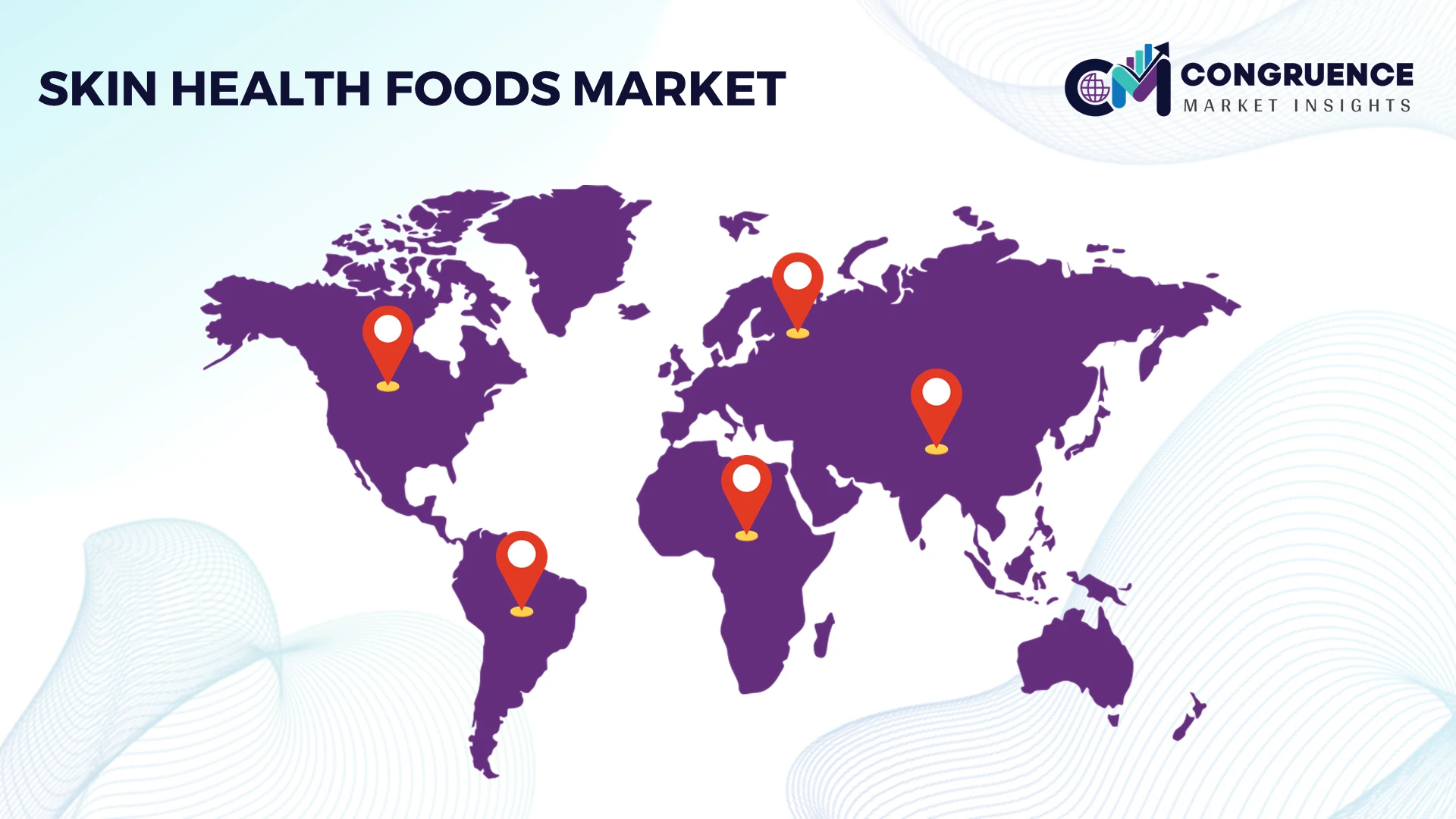
Region Covered | North America, Europe, Asia-Pacific, South America, Middle East, Africa |
Key Players Analyzed | Amway, Nestlé Health Science, Herbalife, Meiji Holdings, Shiseido, FANCL Corporation, Suntory Wellness, Blackmores Limited, GNC Holdings, Nature's Bounty, Nu Skin Enterprises, USANA Health Sciences, Jamieson Wellness, Oriflame Cosmetics |
Customization & Pricing | Available on Request (10% Customization is Free) |




