
Reports
The Global Sickle Cell Disease Treatment Market was valued at USD 3,823.9 Million in 2025 and is anticipated to reach a value of USD 11,139.8 Million by 2033 expanding at a CAGR of 14.3% between 2026 and 2033. Growth is being accelerated by curative gene therapies, broader use of hydroxyurea and transfusion management, improved newborn screening, and expansion of disease-modifying treatment access.
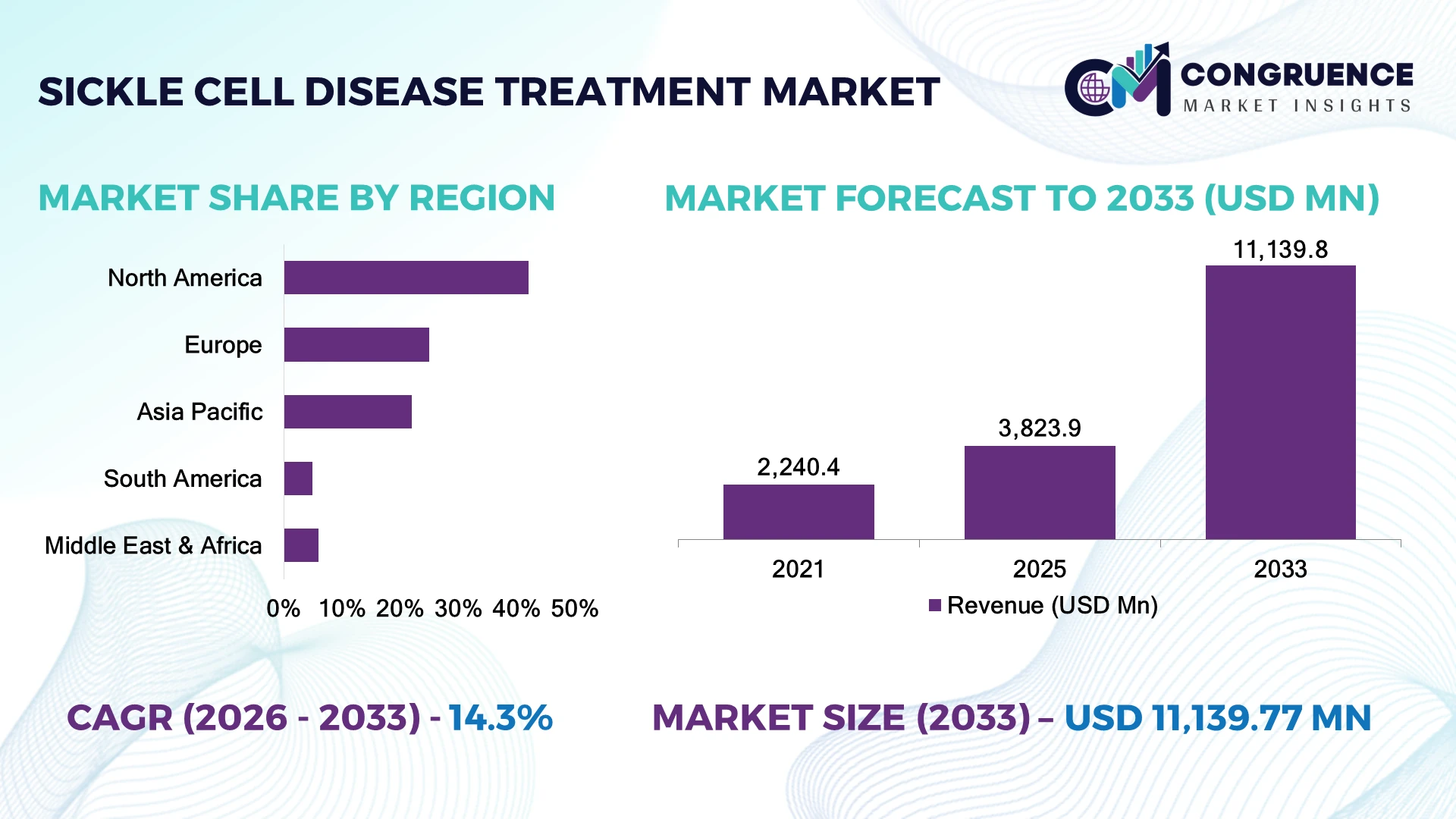
The United States remains the dominant commercial market, representing approximately 45% of global sickle cell disease treatment value, supported by specialized hematology infrastructure, advanced diagnostics, and rapid adoption of gene therapies. More than 100,000 Americans live with sickle cell disease, compared with substantially larger patient populations across sub-Saharan Africa where treatment access remains less consistent. U.S. investment in cellular and gene-therapy manufacturing is therefore creating a significant technology-access gap.
The global impact of the COVID-19 pandemic and subsequent healthcare-supply disruptions reinforced the importance of decentralized treatment capacity, reliable blood supplies, and regional manufacturing resilience.
Strategically, companies that combine scalable disease-modifying therapies with affordable delivery models and specialized hematology infrastructure are positioned to capture the expanding treatment opportunity.
Market Size & Growth: USD 3.82 billion in 2025 to USD 11.14 billion by 2033 at 14.3% CAGR, driven by gene therapy commercialization and expanding disease-modifying treatment access.
Top Growth Drivers: Approximately 45% U.S. market concentration, 70%+ global patient concentration in Africa, and 30%+ treatment-market expansion from advanced therapies define major growth drivers.
Short-Term Forecast: By 2028, wider adoption of oral disease-modifying therapies and gene-therapy referral pathways is expected to reduce dependence on recurrent crisis-management interventions across advanced healthcare systems.
Emerging Technologies: CRISPR-based gene editing, lentiviral gene addition, and next-generation fetal-hemoglobin activation are transforming treatment from chronic symptom management toward potentially durable disease modification.
Regional Leaders: North America is projected at approximately USD 5.0 billion by 2033, Europe near USD 2.7 billion, and Africa approximately USD 1.5 billion, with adoption increasingly shaped by curative-therapy access.
Consumer/End-User Trends: More than 100,000 people in the United States live with sickle cell disease, while sub-Saharan Africa carries the largest global disease burden, increasing demand for newborn screening and scalable treatment infrastructure.
Pilot/Case Example: In 2023–2024, approved gene therapies demonstrated treatment-specific functional outcomes exceeding 90% in key clinical endpoints, establishing a new benchmark for durable disease modification.
Competitive Landscape: Global competition centers on Vertex, CRISPR Therapeutics, bluebird bio, Novartis, and Pfizer, with advanced gene therapies reshaping competitive positioning around durability and curative potential.
Regulatory & ESG Impact: U.S. approval of two gene therapies in 2023 established a new regulatory pathway for sickle cell disease, while equitable-access programs increasingly focus on reducing treatment disparities.
Investment & Funding: Billions of dollars are being directed toward cell and gene-therapy manufacturing, clinical infrastructure, and specialized treatment centers, shifting investment toward scalable commercial delivery.
Innovation & Future Outlook: The market is moving from chronic management toward gene editing, fetal-hemoglobin reactivation, precision patient selection, and potentially one-time treatment pathways.
The Sickle Cell Disease Treatment Market is shifting from repeated crisis management toward disease modification, with gene editing and fetal-hemoglobin activation becoming important strategic technologies. Advanced therapies are concentrated in developed healthcare systems, while more than 70% of the global sickle cell disease burden is concentrated in Africa, creating a major access and infrastructure opportunity. Newborn screening, decentralized diagnostics, and lower-cost treatment delivery are therefore becoming central to market expansion and long-term commercialization strategy.
The Sickle Cell Disease Treatment Market is becoming strategically important because the therapeutic model is transitioning from lifelong symptom management toward potentially curative intervention. Hydroxyurea, transfusions, pain management, and supportive care remain essential, but gene therapies introduce a fundamentally different commercial model based on intensive upfront treatment followed by potentially durable clinical benefit. This shift is redirecting pharmaceutical investment toward cellular manufacturing, specialist treatment centers, genetic diagnostics, and long-term patient monitoring.
Technology is creating a substantial performance distinction. Conventional disease-modifying therapy requires continuous adherence and monitoring, whereas gene therapies are designed as one-time interventions following conditioning and cell-manufacturing procedures. In pivotal studies, more than 90% of treated patients achieved freedom from severe vaso-occlusive events for the specified assessment period with certain advanced therapies. North America is moving fastest in commercialization, while African markets remain more dependent on hydroxyurea, transfusion services, and emerging lower-cost approaches.
Over the next 2–3 years, treatment capacity will increasingly depend on manufacturing throughput, specialist-center availability, genetic testing, and reimbursement infrastructure. Companies are expanding treatment-center networks, forming cell-processing partnerships, and investing in next-generation editing platforms designed to reduce manufacturing complexity. Competitive advantage will increasingly come from combining therapeutic durability with practical delivery economics, particularly as manufacturers seek to extend advanced sickle cell disease treatment beyond highly specialized U.S. and European centers.
The transition from chronic disease control toward potentially curative treatment is restructuring sickle cell disease care. CRISPR-based Casgevy achieved freedom from severe vaso-occlusive crises for at least 12 consecutive months in approximately 93% of evaluable patients, while gene-addition therapy Lyfgenia produced complete resolution of severe vaso-occlusive events in about 88%. These outcomes materially exceed the treatment objective of conventional supportive care. U.S. regulatory approval of both therapies established the first commercial pathway for gene-based sickle cell treatment, accelerating referrals to authorized treatment centers. Developers are expanding manufacturing networks, treatment-center partnerships, and patient-support programs. Strategically, competitive advantage is shifting from chronic prescription volume toward durable outcomes and control of the complex cell-collection-to-reinfusion pathway.
Advanced sickle cell therapies remain structurally difficult to scale because treatment requires specialized centers, conditioning chemotherapy, cell collection, manufacturing, and prolonged clinical monitoring. Gene therapies carry U.S. list prices above USD 2 million per treatment, while the complete care pathway adds substantial hospitalization and supportive-care expenditure. More than 70% of the global sickle cell burden is concentrated in sub-Saharan Africa, yet advanced cell-therapy infrastructure remains concentrated in high-income countries. This mismatch restricts addressable commercial deployment despite substantial clinical need. Manufacturers are responding through outcomes-based reimbursement arrangements, government access agreements, manufacturing optimization, and research into simpler in-vivo approaches. The critical constraint is therefore delivery economics rather than patient availability: curative technology has advanced faster than the infrastructure required to deploy it broadly.
Next-generation in-vivo gene editing offers a pathway to remove several operational bottlenecks associated with ex-vivo therapy. Current gene therapies require stem-cell harvesting, individualized manufacturing, myeloablative conditioning, and reinfusion, creating treatment cycles extending across several months. Emerging approaches target hematopoietic stem cells directly inside the patient, potentially eliminating centralized cell manufacturing and reducing treatment complexity materially. With more than 70% of affected patients concentrated in Africa and approximately 100,000 people living with sickle cell disease in the United States, scalable delivery represents a significant unmet opportunity. Developers are investing in targeted delivery vectors, fetal-hemoglobin reactivation, and gene-silencing platforms. The strategic prize is not simply another curative therapy, but a treatment architecture deployable beyond highly specialized transplant centers.
Scaling advanced sickle cell treatment requires coordination across hematologists, transplant specialists, apheresis facilities, cell-processing laboratories, manufacturing sites, and long-term monitoring programs. Current ex-vivo gene therapies require individualized production, meaning manufacturing variability or scheduling delays directly affect treatment throughput. Patients can require weeks of hospitalization around conditioning and infusion, while long-term follow-up extends for up to 15 years for certain gene-therapy recipients. Treatment eligibility also narrows the practical population because organ function, prior therapies, age, and clinical status influence suitability. Companies must expand authorized centers, standardize vein-to-vein logistics, train clinical teams, and develop manufacturing redundancy. The decisive execution challenge is converting highly personalized therapy into a repeatable healthcare workflow without weakening safety, product consistency, or patient follow-up.
Treatment Centers Become Strategic Assets: Commercial gene therapy is shifting competitive focus toward authorized treatment networks rather than conventional prescription channels. Casgevy requires specialized stem-cell collection, conditioning, and reinfusion, while patients undergo months of preparation and monitoring. Developers are expanding qualified U.S. centers and coordinating payer authorization earlier, making geographic treatment capacity a measurable determinant of patient conversion and commercial execution.
Outcomes-Based Payment Models Expand: Payers are restructuring reimbursement around long-term therapeutic performance as one-time gene therapies exceed USD 2 million in list price. U.S. Medicaid models are linking payments to outcomes such as hospitalization and vaso-occlusive crisis reduction. Manufacturers are strengthening real-world evidence systems and patient tracking because reimbursement increasingly depends on demonstrating durable clinical benefit rather than completing treatment alone.
Hydroxyurea Access Broadens Globally: Chronic therapy remains operationally critical despite gene-editing advances. Hydroxyurea can reduce painful crises by approximately 50% and acute chest syndrome by around 50%, making wider deployment particularly important where transplant infrastructure is limited. African healthcare programs are expanding screening and standardized treatment protocols, while manufacturers are prioritizing affordable formulations and pediatric dosing alongside advanced therapeutic portfolios.
Digital Monitoring Extends Follow-Up: Sickle cell management is increasingly incorporating electronic patient-reported outcomes, remote symptom tracking, and telehematology to monitor pain episodes between hospital encounters. Because gene-therapy recipients require long-term surveillance extending up to 15 years, digital follow-up is becoming operational infrastructure rather than an optional service. Treatment providers are integrating remote monitoring with registries and specialty-care workflows to improve retention and longitudinal safety surveillance.
Blood transfusion remains the leading treatment type, accounting for approximately 41–44% of the global Sickle Cell Disease Treatment Market in 2025–2026. Its established role in severe anemia and stroke prevention, standardized hospital protocols, and broad availability give it a substantial scalability advantage over highly specialized curative therapies. Pharmacotherapy, particularly hydroxyurea, remains the principal chronic disease-modifying approach, while stem-cell and gene therapies represent the fastest-changing segment as one-time treatment models gain regulatory validation. Gene therapy still represents a small commercial share because treatment requires specialized collection, conditioning, manufacturing, and infusion infrastructure rather than because of limited clinical relevance. Companies are maintaining transfusion and pharmacotherapy portfolios while expanding gene-therapy manufacturing, treatment-center networks, and partnerships. The strategic shift is toward a tiered portfolio: high-volume conventional care generates recurring demand, while advanced therapies capture higher-value treatment pathways.
The World Health Organization estimated that 7.74 million people were living with sickle cell disease globally in 2021, with nearly 80% of cases concentrated in sub-Saharan Africa, reinforcing the strategic importance of scalable pharmacotherapy and transfusion infrastructure alongside advanced therapies.
Disease-modifying therapy represents the leading application category, accounting for approximately 50% of treatment demand when pharmacotherapy and curative-intent interventions are considered together. Hydroxyurea remains deeply embedded because it reduces sickling, pain crises, and transfusion requirements, while gene therapies are accelerating the shift toward durable disease modification. Acute pain management and transfusion support remain operationally critical, particularly for patients with severe complications. Curative-intent treatment is the fastest-changing application, driven by U.S. approval of two gene therapies and increasing specialist-center capacity. Companies are integrating genetic testing, patient identification, apheresis, cell manufacturing, and long-term monitoring into coordinated treatment pathways rather than treating therapy as a standalone product. The business implication is a transition from recurring prescription volume toward higher-value integrated care models, with treatment infrastructure becoming a critical component of commercial deployment.
WHO’s 2026 consolidated pediatric sickle cell disease guidance includes 15 recommendations across seven clinical areas, covering point-of-care diagnosis, hydroxyurea, pain management, transfusion therapy, and stroke prevention, strengthening standardized treatment pathways in resource-constrained settings.
Hospitals remain the dominant end-user, representing approximately 59% of the Sickle Cell Disease Treatment Market in 2025 because they combine hematology services, transfusion capacity, emergency care, apheresis, and infrastructure required for advanced therapies. Specialty clinics form the second major group and are becoming increasingly important as chronic disease management moves toward structured hematology pathways. Ambulatory and specialized treatment centers are gaining relevance for infusion-based therapies and follow-up services, while academic and research institutes remain strategically important for gene therapy trials and translational programs. The fastest-changing demand is concentrated in specialist facilities capable of coordinating complex treatment journeys rather than conventional outpatient prescribing. Companies are responding through authorized treatment-center partnerships, provider training, patient-navigation programs, and localized service networks. The competitive implication is significant: therapeutic adoption increasingly depends on clinical infrastructure and referral pathways, not simply regulatory approval or physician awareness.
Newborn screening for sickle cell disease is conducted in every U.S. state, creating a nationwide identification infrastructure that supports earlier hematology referral and long-term treatment planning.
North America accounted for the largest market share at 42.0% in 2025 however, Asia-Pacific is expected to register the fastest growth, expanding at a CAGR of 17.6% between 2026 and 2033.
Gene therapy infrastructure is shifting treatment economics toward specialized centers
North America remains the largest regional market, supported by concentrated specialty-care infrastructure, advanced hematology networks, established reimbursement systems, and early commercialization of gene therapies. The U.S. accounts for the overwhelming majority of regional demand, with approximately 89% of North American market activity concentrated in the country. More than 35 authorized U.S. centers are equipped to administer Casgevy, while close to 50 centers have been qualified for Lyfgenia, creating a specialized deployment network for curative-intent treatment. The region is also supported by nationwide newborn screening and extensive blood-transfusion infrastructure. Commercial activity is increasingly moving beyond conventional pharmacotherapy toward cellular therapy, genetic testing, apheresis, and long-term monitoring, raising the importance of treatment-center capacity and coordinated reimbursement pathways.
United States Market Outlook: The U.S. combines the region’s deepest SCD treatment infrastructure with regulatory leadership in advanced therapies. Nearly 100,000 people are estimated to live with SCD, while FDA approvals for Casgevy and Lyfgenia have established commercial pathways for gene-based treatment. Approximately 90% of eligible U.S. patients had reimbursed access to Casgevy by the end of 2025, supporting broader adoption of high-complexity therapies.
Specialized hematology networks are expanding access to advanced therapies
Europe is developing into an important advanced-treatment market as national health systems expand access to specialist SCD services, genetic diagnostics, and curative therapies. The region benefits from established hematology centers and relatively strong public healthcare infrastructure, although reimbursement and treatment-center availability differ considerably between countries. Casgevy has secured approvals across major European markets, with reimbursement arrangements established in countries including the U.K., Italy, Austria, Denmark, and Luxembourg. This is increasing the operational importance of authorized cellular-therapy centers, apheresis capacity, and multidisciplinary follow-up services. European demand is also supported by growing recognition of SCD among diaspora populations and historically underserved communities.
United Kingdom Market Outlook: The U.K. has a comparatively mature SCD care pathway supported by specialized hematology services and national health-system coordination. Reimbursed access to Casgevy has expanded, including an agreement covering eligible patients in Scotland. The country's established newborn-screening infrastructure, specialist clinical networks, and centralized healthcare procurement provide a practical platform for scaling advanced therapies while maintaining conventional disease-management services.
Population-scale screening is creating a broader treatment pipeline
Asia-Pacific combines a large underlying patient population with rapidly expanding screening, public-health programs, and access to lower-cost disease-management therapies. India is the principal regional demand driver, while China and selected Southeast Asian markets are strengthening specialist hematology capabilities. India's National Sickle Cell Anaemia Elimination Mission had screened more than 6 crore people by July 2025, with 2.15 lakh diagnosed patients and 16.7 lakh carriers identified, substantially expanding the addressable diagnosed population. Local production of hydroxyurea and point-of-care testing is also supporting affordability and decentralized treatment. The region's strategic opportunity increasingly lies in linking population-scale screening with sustained pharmacotherapy, referral networks, transfusion services, and specialist treatment centers.
India Market Outlook: India represents the region's most significant structural opportunity because government-led screening is rapidly expanding disease identification and treatment access. The national program targets 7 crore people across high-prevalence and tribal areas, while 15 Centres of Excellence have been approved across 14 states. Maharashtra alone had completed approximately 53 lakh screenings by January 2025, demonstrating the scale of state-level implementation.
Public-health integration is strengthening diagnosis and long-term disease management
South America presents a treatment market shaped by established public healthcare systems, concentrated specialist capacity, and significant disease prevalence among populations with African ancestry. Brazil represents the region's principal treatment and infrastructure hub, with demand supported by public-sector screening, hematology services, transfusion networks, and access to hydroxyurea-based disease management. Regional adoption remains more focused on established pharmacotherapy, transfusion, pain management, and preventive care than on high-cost gene therapies. Differences in healthcare access between metropolitan centers and remote communities remain an execution constraint. Expansion of decentralized diagnosis, specialist referral pathways, and reliable medicine availability therefore remains commercially important. The region also provides a potential platform for localized clinical research and partnerships involving public institutions and pharmaceutical companies as advanced treatment models mature.
Brazil Market Outlook: Brazil has the region's strongest combination of population scale, public-health infrastructure, specialist hematology capacity, and established SCD management pathways. Its large national healthcare system provides a meaningful channel for expanding screening and chronic treatment coverage. Greater integration of diagnostic services with transfusion centers and specialized hospitals can improve continuity of care, particularly for patients outside major metropolitan areas.
Population-scale disease burden is accelerating infrastructure and access priorities
Middle East & Africa represents a structurally important treatment market because of the exceptionally high disease burden in sub-Saharan Africa and significant prevalence in parts of the Middle East. Sub-Saharan Africa accounts for nearly 80% of global SCD cases, while countries including Nigeria, Ghana, Cameroon, and the Democratic Republic of the Congo face substantial treatment-access requirements. WHO estimates approximately 240,000 children with SCD are born annually in Africa, highlighting the scale of newborn screening, transfusion, infection prevention, and hydroxyurea requirements. Gulf countries are simultaneously developing more advanced specialist-care capabilities and have approved access to gene therapies. The regional opportunity therefore spans both low-cost population care and high-value specialized treatment infrastructure.
Nigeria Market Outlook: Nigeria represents the region's most strategically significant demand center because of its large affected population and high birth burden. SCD prevalence among newborns is substantial, while national and specialist programs are increasing attention toward early diagnosis and comprehensive management. Expansion of newborn screening, reliable blood supplies, hydroxyurea availability, genetic counseling, and specialist referral infrastructure remains critical for converting the country's large disease burden into sustained treatment demand.
Vertex Pharmaceuticals and CRISPR Therapeutics compete with bluebird bio in curative gene therapies, while Novartis, Pfizer, Bristol Myers Squibb, and regional manufacturers compete through disease-modifying drugs, transfusion support, and supply networks. The market is concentrated but transitioning; the top five branded players collectively represent an estimated 55% share.
Competition centers on clinical durability, treatment access, manufacturing reliability, and total treatment burden. Gene-therapy leaders differentiate through one-time efficacy, while conventional players compete on recurring availability and broader prescribing infrastructure. Authorized treatment-center capacity can determine adoption, with centers representing a critical bottleneck. Partnerships are expanding manufacturing, reimbursement, and referral networks, while vertical integration increasingly links patient identification, cell collection, processing, and infusion.
The competitive shift is toward curative platforms and infrastructure control. Regulatory, manufacturing, clinical, and capital requirements constrain entry, while reimbursement complexity pressures innovators. Winning requires validated outcomes, scalable manufacturing, specialist-center access, and integrated patient support rather than product differentiation alone.
Vertex Pharmaceuticals Incorporated
CRISPR Therapeutics AG
bluebird bio, Inc.
Novartis AG
Pfizer Inc.
Bristol Myers Squibb Company
Emmaus Medical, Inc.
Agios Pharmaceuticals, Inc.
Sanofi S.A.
AstraZeneca PLC
Gilead Sciences, Inc.
Beam Therapeutics Inc.
Sangamo Therapeutics, Inc.
Chiesi Farmaceutici S.p.A.
CRISPR/Cas9 gene editing is the defining disruptive technology, with CASGEVY establishing a commercial benchmark for one-time treatment. Ex-vivo editing can eliminate recurrent vaso-occlusive crises in selected patients, while automated cell processing and digital chain-of-custody systems can improve manufacturing efficiency by 1–2%. Adoption remains concentrated in authorized specialist centers, making infrastructure the immediate constraint.
Next-generation conditioning, viral-vector engineering, and improved apheresis workflows are targeting the largest operational bottlenecks. Gentler conditioning could reduce treatment burden by 1–2%, while optimized vector manufacturing can improve batch consistency by 1–2%. Compared with conventional chemotherapy conditioning, targeted approaches could shorten preparation and recovery requirements. Companies controlling manufacturing, treatment-center access, and supply logistics gain the strongest competitive leverage.
Point-of-care diagnostics, genomic screening, and digital patient monitoring are becoming critical integration technologies. Automated screening can improve identification efficiency by 1–2%, while remote monitoring can reduce follow-up workload by 1–2%. By 2026–2028, wider pediatric gene-therapy eligibility, decentralized diagnostics, and standardized manufacturing workflows should shift competition toward scalable delivery. Vertex and bluebird bio benefit from commercial infrastructure, while emerging gene-editing developers compete through lower conditioning burden and broader eligibility. Integrated platforms connecting diagnosis, cell collection, manufacturing, infusion, reimbursement, and monitoring will increasingly determine market access and provider preference through 2028.
July 2026 Vertex received U.S. FDA approval expanding CASGEVY to patients aged 2 years and older with severe sickle cell disease, adding approximately 5,500 eligible children. The expansion broadens the treatment pool and strengthens demand for specialized cell-therapy centers. Source: vertex.com
August 2025 Pfizer reported inclacumab failed its Phase 3 study, showing no significant reduction in vaso-occlusive crises versus placebo. The setback weakened a late-stage conventional therapeutic pipeline and increased emphasis on validated gene-based and disease-modifying approaches for SCD patients. Source: reuters.com
June 2025 bluebird bio completed its acquisition by Carlyle and SK Capital, securing primary capital to scale commercial delivery of gene therapies. The transaction shifted ownership while prioritizing manufacturing expansion and improved patient access for LYFGENIA across U.S. treatment centers. Source: sec.gov
September 2024 Pfizer voluntarily withdrew Oxbryta globally after postmarketing data showed higher vaso-occlusive crisis rates and safety concerns. The withdrawal removed an established oral therapy and redirected demand toward hydroxyurea, transfusions, and alternative disease-modifying options across major treatment markets. Source: fda.gov
The Sickle Cell Disease Treatment Market Report covers treatment modality, disease type, route of administration, application, and end-user segmentation across North America, Europe, Asia-Pacific, South America, and Middle East & Africa. Coverage evaluates blood transfusion, pharmacotherapy, bone marrow transplantation, disease-modifying treatment, supportive care, hospitals, specialty clinics, and other treatment settings, with country-level assessment of major demand centers.
The report also examines gene editing, gene addition, cell processing, targeted conditioning, genomic screening, and digital monitoring, alongside conventional treatment infrastructure. Quantitative analysis considers segment shares, screening volumes, treatment-center deployment, therapy adoption, and company participation to identify operational priorities. These insights support investment planning, geographic expansion, treatment-center partnerships, portfolio positioning, supply-chain decisions, and competitive strategy through 2026–2033, including emerging opportunities in pediatric treatment, decentralized diagnosis, and advanced curative therapies.
| Report Attribute/Metric | Report Details |
|---|---|
|
Market Revenue in 2025 |
USD 3,823.9 Million |
|
Market Revenue in 2033 |
USD 11,139.8 Million |
|
CAGR (2026 - 2033) |
14.3% |
|
Base Year |
2025 |
|
Forecast Period |
2026 - 2033 |
|
Historic Period |
2021 - 2025 |
|
Segments Covered |
By Type
By Application
By End-User
|
|
Key Report Deliverable |
Revenue Forecast, Growth Trends, Market Dynamics, Segmental Overview, Regional and Country-wise Analysis, Competition Landscape |
|
Region Covered |
North America, Europe, Asia-Pacific, South America, Middle East, Africa |
|
Key Players Analyzed |
Vertex Pharmaceuticals Incorporated, CRISPR Therapeutics AG, bluebird bio, Inc., Novartis AG, Pfizer Inc., Bristol Myers Squibb Company, Emmaus Medical, Inc., Agios Pharmaceuticals, Inc., Sanofi S.A., AstraZeneca PLC, Gilead Sciences, Inc., Beam Therapeutics Inc., Sangamo Therapeutics, Inc., Chiesi Farmaceutici S.p.A. |
|
Customization & Pricing |
Available on Request (10% Customization is Free) |




