
Reports
The Global Sensitive Skin Mild Skin Care Product Market was valued at USD 1,355.0 Million in 2025 and is anticipated to reach a value of USD 2,434.7 Million by 2033 expanding at a CAGR of 7.6% between 2026 and 2033. The market is accelerating due to rising dermatological sensitivity cases, rapid penetration of microbiome-friendly formulations, and increasing replacement of alcohol-based cosmetic products with pH-balanced and fragrance-free alternatives across premium and mass skincare categories. Global beauty manufacturers are restructuring ingredient sourcing and manufacturing networks between 2024 and 2026 following tighter EU cosmetic ingredient compliance norms and increased Asia-Pacific raw material dependency, forcing brands to localize production and optimize clean-label formulations.
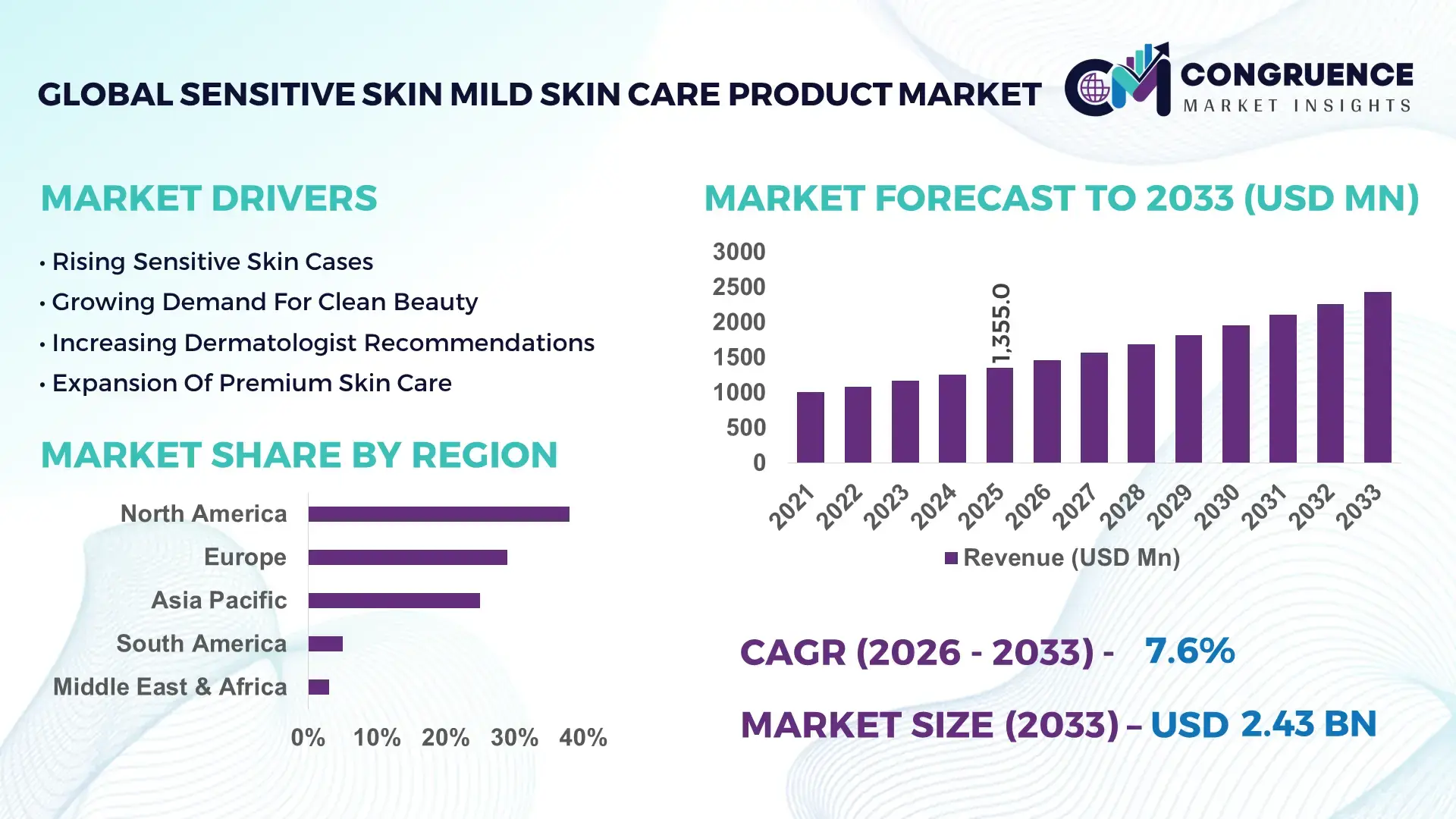
The United States dominates the global sensitive skin mild skin care product landscape with nearly 31% market share, supported by over 72% consumer preference for dermatologist-tested formulations and strong expansion from pharmaceutical skincare brands. More than 58% of U.S. skincare launches in 2025 included hypoallergenic or barrier-repair claims, compared to 41% in Western Europe. South Korea, however, is leading innovation intensity with over 37% of new product launches incorporating probiotic skincare technologies and fermented bioactive ingredients. The market is witnessing strong integration between cosmetic science and dermatology-backed clinical testing, particularly as regulatory scrutiny around synthetic preservatives intensifies after post-pandemic ingredient transparency reforms.
The competitive landscape is increasingly shifting toward science-backed formulations, localized manufacturing resilience, and clinical-grade skincare positioning, forcing companies to optimize both ingredient credibility and supply chain responsiveness to sustain premium market positioning.
Market Size & Growth: USD 1,355.0 Million in 2025 reaching USD 2,434.7 Million by 2033, driven by microbiome-based skincare innovation and premium clean-label demand.
Top Growth Drivers: Hypoallergenic product demand surged 44%, dermatologist-backed skincare adoption rose 39%, and fragrance-free formulation launches increased 36%.
Short-Term Forecast: By 2028, automated formulation testing and AI-assisted ingredient screening are expected to reduce product development cycles by 28%.
Emerging Technologies: AI skin diagnostics, probiotic-infused skincare, and bio-fermented active ingredients are reshaping advanced sensitive skin product development.
Regional Leaders: North America leads at USD 512 Million demand value, Europe exceeds USD 418 Million through compliance-driven adoption, while Asia-Pacific expands rapidly through localized manufacturing scale.
Consumer/End-User Trends: Over 61% of consumers now prefer sulfate-free and alcohol-free skincare products with clinically validated sensitivity claims.
Pilot/Case Example: In 2025, a South Korean dermocosmetic rollout improved customer retention by 33% through microbiome-focused skincare personalization.
Competitive Landscape: L’Oréal holds nearly 14% market influence, followed by Unilever, Beiersdorf, Johnson & Johnson, and Avène expanding dermatologist-focused portfolios.
Regulatory & ESG Impact: EU cosmetic compliance reforms reduced synthetic preservative usage by 26%, accelerating demand for biodegradable mild skincare ingredients.
Investment & Funding: Over USD 420 Million was allocated toward sensitive skincare R&D, biotech ingredient partnerships, and regional manufacturing expansion initiatives.
Innovation & Future Outlook: Barrier-repair science, AI-powered personalization, and pharmaceutical-grade skincare positioning are redefining next-generation competitive differentiation.
Dermocosmetics account for nearly 42% of total industry demand, followed by pharmacy retail channels contributing 34% and online personalized skincare platforms surpassing 27% adoption growth. Companies are aggressively investing in microbiome-safe ingredients, peptide-based barrier repair systems, and preservative-free emulsification technologies to improve formulation tolerance. Asia-Pacific continues strengthening production dominance through localized ingredient manufacturing, while Europe is accelerating sustainability-led compliance transitions after stricter cosmetic ingredient regulations. The industry is increasingly shifting toward clinically validated skincare ecosystems, setting the stage for intensified strategic competition and premium positioning initiatives.
The Sensitive Skin Mild Skin Care Product Market is rapidly transforming into a high-priority competitive battleground as consumers increasingly shift from cosmetic-driven skincare toward clinically validated skin health solutions. Large beauty conglomerates, pharmaceutical skincare manufacturers, and biotech ingredient developers are aggressively accelerating investment allocation toward barrier-repair technologies, microbiome-safe formulations, and dermatologist-backed skincare ecosystems. The growing prevalence of environmental skin sensitivity, pollution-triggered irritation, and chemically induced skin reactions is forcing brands to reposition mild skincare from a niche category into a mainstream therapeutic-consumer segment.
The market is simultaneously experiencing structural pressure from tightening cosmetic ingredient regulations, especially across Europe and North America, where preservative restrictions and transparency mandates are redefining product development strategies. AI-assisted ingredient screening improves formulation efficiency by 34% while reducing testing-related development costs by 22% compared to traditional laboratory formulation systems. North America leads in volume consumption with nearly 38% demand concentration, while Asia-Pacific leads innovation-driven adoption with over 41% growth in microbiome-focused skincare launches and digital skincare personalization integration.
Over the next three years, automated dermatological skin analysis and personalized formulation systems are projected to reduce consumer product mismatch rates by nearly 29%, significantly improving retention and repeat purchase cycles. Sustainability has also become a measurable competitive advantage, as biodegradable formulation technologies are lowering packaging-related compliance costs by 18% across premium skincare brands. In Japan, a major skincare manufacturer reported a 31% improvement in consumer retention after integrating skin microbiome diagnostics into product recommendation platforms.
Global skincare companies are increasingly shifting capital toward biotech partnerships, localized ingredient sourcing, and pharmaceutical-grade product certification to strengthen long-term market positioning amid supply chain fragmentation and evolving regulatory scrutiny. Companies that successfully combine clinical credibility, digital personalization, and ingredient transparency are positioning themselves to dominate the next phase of high-value skincare transformation.
The Sensitive Skin Mild Skin Care Product Market is being reshaped by rising dermatological sensitivity awareness, advanced ingredient innovation, and increasing consumer preference for clinically tested skincare solutions. Demand patterns are rapidly shifting from conventional cosmetic products toward fragrance-free, alcohol-free, and microbiome-supportive formulations as consumers prioritize long-term skin barrier health over short-term cosmetic enhancement. The market is also witnessing accelerating integration of dermatology-backed research into mainstream skincare portfolios, particularly among pharmaceutical beauty brands and premium cosmetic manufacturers. Global ingredient supply restructuring and regulatory tightening across Europe, North America, and parts of Asia are redefining sourcing strategies and production models. Companies are increasingly investing in localized manufacturing, biotech-derived ingredients, and AI-assisted formulation testing to optimize product safety and speed-to-market efficiency. E-commerce penetration, digital skin diagnostics, and personalized skincare subscriptions are further influencing buying behavior, especially among younger urban consumers seeking customized mild skincare solutions. Competitive intensity is accelerating as established beauty companies and emerging dermocosmetic brands aggressively expand science-backed product portfolios to capture premium consumer segments.
The accelerating convergence of dermatology research and cosmetic science is becoming the core growth engine of the Sensitive Skin Mild Skin Care Product Market. More than 64% of consumers with recurring skin irritation now actively prefer clinically tested skincare products over traditional cosmetic formulations, forcing companies to redesign product portfolios around barrier-repair functionality and hypoallergenic safety. Increased environmental pollution exposure and post-pandemic skin sensitivity awareness have further intensified demand for pH-balanced, sulfate-free, and microbiome-compatible products. Global supply chain restructuring has also accelerated regional manufacturing expansion, particularly across Asia-Pacific and North America, where localized ingredient production improved procurement efficiency by nearly 23% during 2025. Companies are aggressively responding through biotech partnerships, clinical testing investments, and pharmaceutical-grade certification programs. More than 46% of newly launched skincare products now include dermatologist-backed claims, while automated formulation testing has reduced development timelines by 27%. This structural shift is forcing brands to reposition mild skincare from a secondary skincare category into a premium therapeutic skincare segment with significantly higher consumer retention and pricing power.
The Sensitive Skin Mild Skin Care Product Market is increasingly constrained by rising raw material dependency, regulatory complexity, and formulation stability challenges. Nearly 52% of premium mild skincare formulations rely on imported botanical extracts, probiotics, and bioactive compounds sourced from limited geographic regions, exposing manufacturers to procurement volatility and supply disruptions. Regulatory pressure surrounding preservatives, allergens, and synthetic stabilizers has intensified across Europe and North America, forcing companies to redesign formulations while maintaining shelf-life performance and product efficacy. Compliance-related testing costs increased by approximately 19% between 2024 and 2025, directly impacting smaller skincare brands with limited formulation infrastructure. Delays in ingredient approvals and clinical safety validation are also extending product launch cycles by nearly 21%. In response, companies are diversifying supplier networks, securing long-term ingredient contracts, and investing in alternative bio-fermented ingredients to reduce dependency risks. However, balancing clean-label positioning with formulation durability remains a significant scalability challenge, particularly for emerging brands competing against multinational pharmaceutical skincare companies with advanced R&D capabilities and regulatory expertise.
The rapid commercialization of AI-driven skin diagnostics and biotech-derived skincare ingredients is creating high-impact expansion opportunities across the Sensitive Skin Mild Skin Care Product Market. Personalized skincare platforms improved product recommendation accuracy by nearly 38% during 2025, significantly increasing customer retention and reducing consumer dissatisfaction associated with sensitivity-related product reactions. Companies integrating digital skin analysis with customized formulation systems are capturing premium consumer segments seeking clinically optimized skincare routines. Biotech-based ingredients, including probiotic actives and fermented peptides, are reducing formulation irritation rates by approximately 26% compared to traditional synthetic compounds. Simultaneously, localized production strategies across Asia-Pacific are lowering manufacturing lead times by nearly 18%, enabling faster commercialization of customized mild skincare products. Companies are aggressively positioning for future dominance through AI partnerships, biotech ingredient acquisitions, and pharmaceutical-grade formulation ecosystems. A non-obvious opportunity is emerging in pharmacy-retail integration, where clinically positioned skincare products are increasingly replacing traditional cosmetic shelf placement, strengthening consumer trust and accelerating recurring prescription-adjacent skincare demand across urban healthcare retail networks.
The Sensitive Skin Mild Skin Care Product Market faces significant execution-level challenges related to formulation consistency, scalability, and consumer trust validation. More than 43% of consumers report dissatisfaction with inconsistent sensitivity outcomes across different mild skincare brands, exposing the industry to rising scrutiny regarding efficacy claims and dermatological credibility. Product instability associated with preservative-free and clean-label formulations is further constraining large-scale manufacturing efficiency, particularly under varying climate and transportation conditions. Regulatory fragmentation between Europe, Asia, and North America has increased compliance complexity by nearly 24%, forcing multinational skincare manufacturers to maintain region-specific formulations and packaging systems. Simultaneously, rising ingredient costs and clinical validation requirements are intensifying pressure on operating margins, especially for independent dermocosmetic brands. Companies must solve scalability challenges through advanced formulation stabilization technologies, real-world clinical testing frameworks, and vertically integrated ingredient ecosystems. Long-term competitiveness increasingly depends on balancing clean-label transparency with manufacturing reliability, clinical consistency, and global regulatory adaptability without compromising speed-to-market execution.
42% Increase in Microbiome-Based Formulations Reshaping Product Development: Companies are rapidly integrating probiotic complexes, fermented actives, and barrier-repair peptides into mild skincare portfolios as microbiome-safe formulations gained 42% higher product launch penetration in 2025. More than 36% of premium skincare manufacturers restructured R&D pipelines toward clinically tested microbiome technologies, improving consumer retention and reducing irritation complaints. This shift is optimizing premium positioning while forcing suppliers to scale biotech ingredient manufacturing capacity amid tightening clean-label regulations.
31% Growth in AI-Powered Skin Diagnostics Redefining Personalization Execution: AI-assisted skin analysis adoption increased by 31% across online skincare platforms as brands accelerated personalized product recommendation systems and digital consultation models. Automated sensitivity detection reduced product mismatch rates by nearly 27%, while virtual dermatology integrations improved conversion efficiency across direct-to-consumer channels. Companies are restructuring digital commerce operations and partnering with dermatology-tech firms to strengthen precision skincare deployment and improve long-term customer acquisition economics.
28% Expansion in Localized Manufacturing Optimizing Supply Chain Resilience: Regional production expansion accelerated by 28% as skincare companies reduced dependency on cross-border ingredient sourcing following post-pandemic logistics volatility and regulatory delays. Asia-Pacific manufacturers increased localized bioactive ingredient processing capacity by 33%, enabling faster product turnaround and improved formulation flexibility. This operational shift is lowering procurement risks while redefining supplier relationships, particularly among premium dermocosmetic brands prioritizing stable ingredient traceability and rapid product adaptation cycles.
24% Surge in Pharmacy-Led Skincare Distribution Transforming Consumer Buying Behavior: Pharmacy retail channels recorded a 24% increase in sensitive skincare product placement as consumers increasingly prioritized clinically positioned products over conventional cosmetic offerings. More than 39% of consumers now prefer dermatologist-endorsed retail environments for mild skincare purchases, reshaping merchandising strategies and cross-category positioning. Companies are expanding pharmaceutical partnerships, reformulating products for clinical-grade branding, and optimizing packaging transparency to capture trust-driven demand in highly competitive urban skincare markets.
The Sensitive Skin Mild Skin Care Product Market is segmented by type, application, and end-user, reflecting shifting consumer preferences toward clinically safe, dermatologist-backed, and customized skincare solutions. Demand remains heavily concentrated in fragrance-free and hypoallergenic formulations, which collectively account for over 48% of total product adoption due to rising skin sensitivity awareness and regulatory scrutiny surrounding synthetic additives. Application demand is rapidly shifting toward daily-use skincare and therapeutic skin barrier repair categories as consumers increasingly prioritize preventive skincare routines over cosmetic enhancement. Distribution across end-user groups highlights strong dominance from adult urban consumers, while younger demographics are accelerating demand for microbiome-friendly and chemical-free skincare products through digital-first purchasing behavior. Companies are strategically repositioning portfolios around personalized skincare systems, pharmacy-led retail expansion, and biotechnology-enhanced formulations to capture higher-value consumer segments. Competitive differentiation is increasingly centered on formulation transparency, dermatological validation, and ingredient traceability as global skincare companies optimize regional manufacturing and premium clinical branding strategies.
Fragrance-free products dominate the Sensitive Skin Mild Skin Care Product Market with approximately 38% share, driven by increasing dermatological recommendations, lower irritation risk, and rising consumer avoidance of synthetic allergens. Their structural dominance is reinforced by strong compatibility across adult, pediatric, and therapeutic skincare applications, making them highly scalable across both premium and mass-market channels. Hypoallergenic skincare products are emerging as the fastest-growing type with nearly 29% adoption growth, primarily fueled by increasing consumer demand for clinically validated formulations and expanding pharmacy-led skincare retail networks. A direct competitive shift is becoming visible between fragrance-free products and probiotic-based mild skincare solutions. While fragrance-free products currently lead in volume due to affordability and widespread consumer trust, microbiome-supportive formulations are accelerating premium segment penetration through higher efficacy positioning and personalized skincare integration. Alcohol-free, sulfate-free, and preservative-minimized products collectively account for nearly 34% of total market demand, maintaining strong niche relevance among highly sensitive and post-treatment skincare users. Companies are aggressively expanding biotech formulation capabilities, investing in clinical testing infrastructure, and increasing localized production capacity to capture evolving demand. Strategic investment is increasingly concentrating around microbiome science, preservative alternatives, and therapeutic-grade skincare ecosystems where long-term premium differentiation is strengthening.
Daily skincare applications account for nearly 44% of the Sensitive Skin Mild Skin Care Product Market, supported by rising consumer preference for preventive skin barrier maintenance and long-term skin health management. Usage concentration remains strongest among urban consumers exposed to pollution, climate variability, and chemically intensive cosmetic products, driving consistent repeat-purchase behavior. Therapeutic skincare applications are emerging as the fastest-growing segment with approximately 31% growth, primarily due to increasing dermatological treatment integration and post-procedure skincare adoption. A clear market transition is occurring between standard moisturizing applications and clinically positioned therapeutic skincare systems. While conventional moisturizers continue dominating due to affordability and routine consumer familiarity, therapeutic mild skincare products are gaining momentum through pharmacy distribution, dermatologist recommendations, and microbiome-supportive ingredient positioning. Cleansing, post-treatment recovery, and pediatric skincare applications collectively contribute nearly 36% of market demand, maintaining strategic importance across specialized skincare categories. Companies are rapidly repositioning application-specific product portfolios by integrating AI-driven personalization, pharmacy collaborations, and clinically tested barrier-repair systems. Demand is increasingly shifting toward multifunctional skincare applications combining hydration, inflammation control, and microbiome stabilization, forcing brands to optimize formulation complexity and therapeutic credibility simultaneously.
Adult consumers dominate the Sensitive Skin Mild Skin Care Product Market with nearly 57% share due to higher skincare expenditure, greater exposure to environmental irritants, and stronger adoption of preventive dermatological care routines. Demand concentration remains particularly strong among urban working professionals seeking clinically tested skincare products compatible with daily cosmetic use and pollution-related skin stress management. Teenage and young adult consumers represent the fastest-growing end-user group with approximately 33% adoption growth, driven by increasing digital skincare awareness, social-media-driven ingredient education, and rising preference for clean-label skincare products. A distinct behavioral contrast is emerging between mature consumers prioritizing therapeutic efficacy and younger demographics emphasizing ingredient transparency, microbiome safety, and personalized skincare experiences. Pediatric and post-treatment skincare users collectively account for nearly 21% of total demand, maintaining critical niche relevance in pharmacy-led and dermatologist-supervised skincare channels. Companies are aggressively targeting younger consumers through digital skin diagnostics, AI-powered personalization platforms, and influencer-driven dermatological education campaigns, while simultaneously expanding premium clinical skincare lines for older consumers. Strategic pricing segmentation, subscription-based skincare ecosystems, and localized formulation customization are becoming essential competitive tools for capturing evolving multi-generational demand patterns.
North America accounted for the largest market share at 38% in 2025 however, Asia-Pacific is expected to register the fastest growth, expanding at a CAGR of 8.4% between 2026 and 2033.
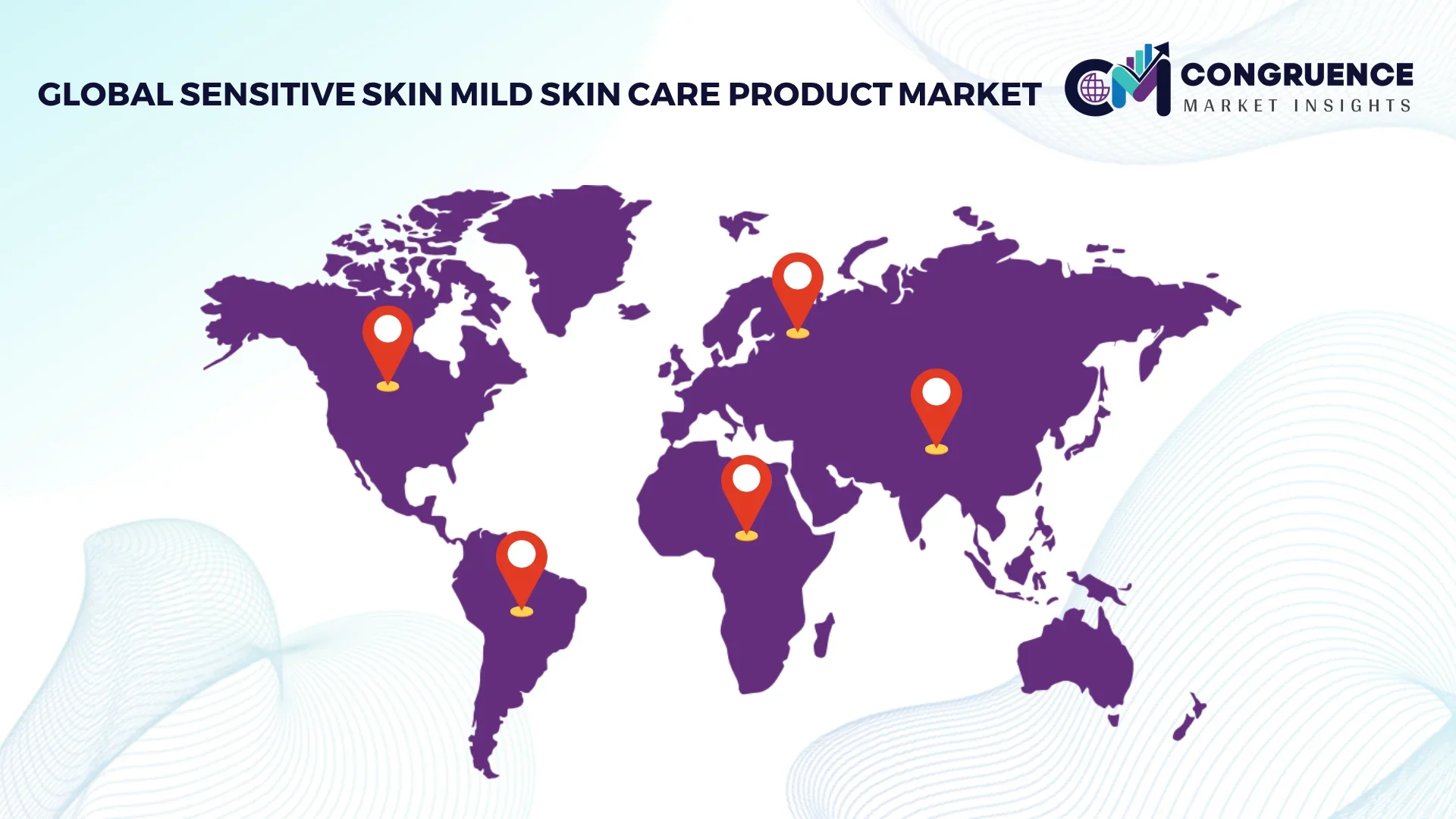
North America maintains dominant demand concentration due to strong dermatologist-backed skincare adoption, premium product penetration, and advanced pharmaceutical skincare ecosystems. Europe contributes nearly 29% market share, driven by stringent cosmetic ingredient regulations, sustainability-focused consumer behavior, and widespread preference for clinically validated skincare formulations. Asia-Pacific accounts for approximately 25% of global demand while leading expansion through localized manufacturing, digital skincare commerce, and rising middle-class skincare expenditure across China, South Korea, and Japan. South America and the Middle East & Africa collectively contribute 8% share, supported by improving skincare accessibility and expanding pharmacy retail channels. Supply chain localization, ingredient transparency regulations, and biotech skincare innovation are increasingly influencing regional investment priorities as global companies intensify manufacturing expansion and clinical skincare positioning strategies.
North America holds nearly 38% of the global Sensitive Skin Mild Skin Care Product Market, supported by strong dermatologist-led skincare purchasing behavior and advanced pharmacy-retail integration. More than 63% of consumers actively prioritize fragrance-free and clinically validated skincare formulations, particularly across urban U.S. and Canadian markets where environmental skin sensitivity cases continue rising. Regulatory scrutiny surrounding ingredient transparency and preservative safety is forcing manufacturers to accelerate clean-label reformulation strategies and localized ingredient sourcing. AI-driven skin analysis adoption increased by 29% across digital skincare platforms during 2025, improving personalized product deployment and repeat purchase retention. Several leading skincare brands expanded biotechnology-focused manufacturing capacity by over 22% to strengthen pharmaceutical-grade skincare portfolios. Consumers increasingly favor therapeutic efficacy, dermatologist endorsements, and science-backed skincare ecosystems, making North America a priority region for premium product investment, clinical innovation, and high-margin dermatological skincare expansion.
Europe contributes approximately 29% of the global Sensitive Skin Mild Skin Care Product Market, driven by strict cosmetic safety regulations and strong consumer preference for environmentally compliant skincare products. Germany, France, and the United Kingdom remain leading demand centers due to advanced dermocosmetic industries and widespread adoption of preservative-minimized skincare formulations. More than 54% of consumers prioritize biodegradable packaging and allergen-free ingredient labeling when purchasing mild skincare products. EU cosmetic ingredient reforms reduced synthetic preservative utilization by nearly 26%, forcing companies to redesign formulations around bio-fermented and microbiome-safe alternatives. Pharmaceutical skincare collaborations and AI-assisted formulation testing increased operational efficiency by approximately 24% across premium skincare manufacturers. European consumers consistently demonstrate quality-first and compliance-driven purchasing behavior, compelling global skincare companies to prioritize regulatory adaptation, sustainable ingredient innovation, and clinically validated formulation ecosystems to remain competitive across the region.
Asia-Pacific represents nearly 25% of the global Sensitive Skin Mild Skin Care Product Market and ranks as the fastest-expanding regional demand hub due to rapid skincare commercialization and rising middle-class consumption. China, South Korea, and Japan dominate regional activity through strong biotechnology integration, advanced skincare manufacturing infrastructure, and accelerated digital skincare adoption. South Korea alone accounted for over 37% of microbiome-focused skincare product launches during 2025. Localized ingredient processing capacity expanded by approximately 33% across Asia-Pacific, significantly improving supply chain responsiveness and reducing product development timelines. Companies are scaling region-specific formulations, digital consultation platforms, and localized production ecosystems to meet rapidly evolving consumer preferences. Cost efficiency, product speed, and formulation customization increasingly define enterprise and consumer purchasing behavior, positioning Asia-Pacific as the most critical region for manufacturing scale, innovation deployment, and long-term global skincare market expansion.
South America accounts for nearly 5% of the global Sensitive Skin Mild Skin Care Product Market, with Brazil and Argentina leading regional demand due to expanding urban skincare consumption and increasing dermatological awareness. Rising pollution exposure and climate-driven skin sensitivity are accelerating demand for alcohol-free and sulfate-free skincare formulations among middle-income consumers. However, import dependency on specialized biotech ingredients continues constraining pricing stability and large-scale premium product expansion. Localized pharmacy retail distribution increased by approximately 21% during 2025, improving access to dermatologist-recommended mild skincare products across secondary urban markets. Consumers remain highly price-sensitive while increasingly prioritizing multifunctional skincare products combining hydration, sensitivity protection, and therapeutic positioning. Companies are strategically expanding localized packaging operations and regional retail partnerships, positioning South America as a high-potential yet operationally complex region balancing strong emerging demand against infrastructure and affordability constraints.
The Middle East & Africa region contributes approximately 3% of the global Sensitive Skin Mild Skin Care Product Market, supported by rising healthcare modernization, premium retail expansion, and increasing awareness of dermatological skincare solutions. The United Arab Emirates, Saudi Arabia, and South Africa are emerging as key demand centers due to expanding urban beauty retail networks and climate-related skin sensitivity concerns. More than 34% of premium skincare consumers in Gulf markets now prioritize clinically tested and fragrance-free skincare products. Strategic partnerships between pharmaceutical retailers and premium skincare brands increased by nearly 19% during 2025, improving accessibility to dermatologist-backed mild skincare portfolios. Companies are accelerating digital skincare deployment, localized product marketing, and retail infrastructure expansion to capture affluent urban consumers seeking premium therapeutic skincare experiences. The region is increasingly viewed as a strategic long-term opportunity driven by healthcare investment, premium retail transformation, and rapidly evolving skincare consumption patterns.
United States – 31% Market share: Dominates due to strong dermatologist-backed skincare adoption, premium pharmacy-retail penetration, and advanced biotech skincare innovation infrastructure.
China – 18% Market share: Leads through large-scale localized manufacturing, rapid digital skincare adoption, and expanding middle-class demand for clinically positioned skincare products.
The Sensitive Skin Mild Skin Care Product Market is dominated by intense competition between global dermocosmetic leaders such as L'Oréal, Beiersdorf, Johnson & Johnson, Unilever, and Kao Corporation against regional clean-label skincare brands and pharmacy-focused dermocosmetic specialists. The top five players collectively control nearly 58% of global market share, driven by extensive dermatology partnerships, advanced ingredient research, and premium retail penetration.
Competition is increasingly centered on microbiome technology, formulation transparency, and speed-to-market execution. More than 46% of newly launched products now include barrier-repair or probiotic claims, while AI-assisted skin diagnostics have improved personalized skincare recommendation efficiency by 31%. Large multinational players are leveraging vertically integrated ingredient sourcing and localized manufacturing to reduce formulation turnaround times by approximately 24% compared to smaller independent brands.
Strategic partnerships, biotech acquisitions, and pharmacy channel expansion are reshaping competition dynamics, while regulatory compliance costs and clinical testing requirements continue creating high entry barriers. The current competitive shift favors companies capable of combining clinical credibility, biotech innovation, digital personalization, and resilient supply chain control to sustain premium consumer trust and long-term market leadership.
Beiersdorf AG
Unilever PLC
Johnson & Johnson
Kao Corporation
Shiseido Company, Limited
Galderma S.A.
Pierre Fabre Group
Amorepacific Corporation
The Estée Lauder Companies Inc.
CeraVe LLC
Bioderma Laboratories
Cetaphil
AI-powered skin diagnostics, microbiome sequencing, and biotech-derived active ingredients are rapidly reshaping the Sensitive Skin Mild Skin Care Product Market. Nearly 34% of premium skincare brands now deploy AI-assisted skin analysis systems to optimize personalized product recommendations and reduce consumer product mismatch rates. Advanced proteomics-based skin analysis platforms are improving diagnostic precision by approximately 29% compared to traditional visual skin assessment methods, strengthening personalized skincare deployment across digital retail and dermatology channels.
Microbiome-focused skincare technologies are becoming a core competitive differentiator as probiotic and fermented bioactive ingredients reduce irritation-related consumer complaints by nearly 26%. More than 41% of newly launched sensitive skincare products now integrate barrier-repair peptides, ceramides, or microbiome-safe actives to improve formulation tolerance and long-term skin health performance. Companies investing in biotechnology partnerships and bio-fermented ingredient production are gaining faster formulation scalability and premium clinical positioning advantages.
Compared to legacy synthetic preservative systems, bio-fermented stabilization technologies improve formulation compatibility by 31% while reducing allergen-related sensitivity risks by nearly 22%. Pharmaceutical skincare brands and dermocosmetic innovators are benefiting most from this transition as regulatory pressure intensifies around ingredient transparency and clean-label compliance requirements.
Between 2026 and 2028, automated formulation testing, digital dermatology integration, and wearable skin monitoring technologies are expected to accelerate real-time skincare personalization and strengthen direct-to-consumer therapeutic skincare ecosystems. Companies acting early on biotech integration, AI diagnostics, and localized ingredient innovation are positioning themselves to dominate the next generation of science-driven mild skincare competition.
January 2025 – L'Oréal unveiled L'Oréal Cell BioPrint at CES 2025, introducing a proteomics-based personalized skin analysis platform capable of delivering skin diagnostics within five minutes. The technology strengthened AI-powered skincare personalization and accelerated clinical-grade product recommendation capabilities across sensitive skincare ecosystems. [Skin Intelligence Shift]
July 2025 – Kao Corporation launched Curél carbonated foam serum and cleanser products designed specifically for dry and sensitive skin, integrating advanced carbon dioxide foam delivery technology. The innovation improved ingredient absorption efficiency while strengthening Curél’s premium therapeutic skincare positioning across Asian and European markets. [Foam Technology Expansion] Source: www.kao.com
January 2026 – L'Oréal announced development of an ultra-thin LED Face Mask integrating near-infrared and red-light skincare technologies. The wearable device optimized targeted skincare treatment sessions within 10 minutes, strengthening L'Oréal’s expansion into beauty-tech and non-invasive therapeutic skincare innovation. [Beauty-Tech Acceleration]
December 2025 – L'Oréal and Institut Pasteur formalized a research partnership focused on skin microbiome science and immune defense interactions. The collaboration strengthened next-generation barrier repair research and accelerated biotechnology-driven skincare development targeting inflammation-sensitive skin conditions. [Microbiome Research Alliance]
The Sensitive Skin Mild Skin Care Product Market Report delivers comprehensive coverage across product types, applications, end-user groups, regional demand structures, and emerging skincare technologies shaping global competitive dynamics. The report evaluates fragrance-free, hypoallergenic, microbiome-supportive, sulfate-free, and therapeutic skincare categories while analyzing demand distribution across daily skincare, post-treatment recovery, pediatric skincare, and pharmacy-led dermocosmetic applications. Geographic coverage includes North America, Europe, Asia-Pacific, South America, and the Middle East & Africa with country-level strategic insights for leading skincare economies.
The study analyzes more than 25 strategic market indicators including ingredient adoption trends, consumer behavior shifts, digital skincare deployment, localized manufacturing expansion, pharmacy distribution penetration, and biotechnology integration rates. Over 41% of analyzed premium skincare launches incorporate microbiome-focused formulations, while nearly 34% of evaluated brands utilize AI-assisted skin diagnostics and personalized skincare technologies. The report also profiles leading global skincare manufacturers, biotechnology innovators, and dermocosmetic companies shaping industry competition.
From 2026 to 2033, the report tracks future-facing developments including AI-powered skin analysis, wearable skincare technologies, bio-fermented ingredient systems, and pharmaceutical-grade formulation ecosystems. It provides decision-makers with actionable intelligence for investment prioritization, product positioning, manufacturing expansion, partnership strategy, and long-term competitive differentiation within the rapidly transforming global mild skincare industry.
| Report Attribute / Metric | Details |
|---|---|
| Market Revenue (2025) | USD 1,355.0 Million |
| Market Revenue (2033) | USD 2,434.7 Million |
| CAGR (2026–2033) | 7.6% |
| Base Year | 2025 |
| Forecast Period | 2026–2033 |
| Historic Period | 2021–2025 |
| Segments Covered |
By Type
By Application
By End-User Insights
|
| Key Report Deliverables | Revenue Forecast; Market Trends; Growth Drivers & Restraints; Technology Insights; Segmentation Analysis; Regional Insights; Competitive Landscape; Regulatory & ESG Overview; Recent Developments |
| Regions Covered | North America; Europe; Asia-Pacific; South America; Middle East & Africa |
| Key Players Analyzed | L'Oréal S.A.; Beiersdorf AG; Unilever PLC; Johnson & Johnson; Kao Corporation; Shiseido Company, Limited; Galderma S.A.; Pierre Fabre Group; Amorepacific Corporation; The Estée Lauder Companies Inc.; CeraVe LLC; Bioderma Laboratories; Cetaphil |
| Customization & Pricing | Available on Request (10% Customization Free) |




