
Reports
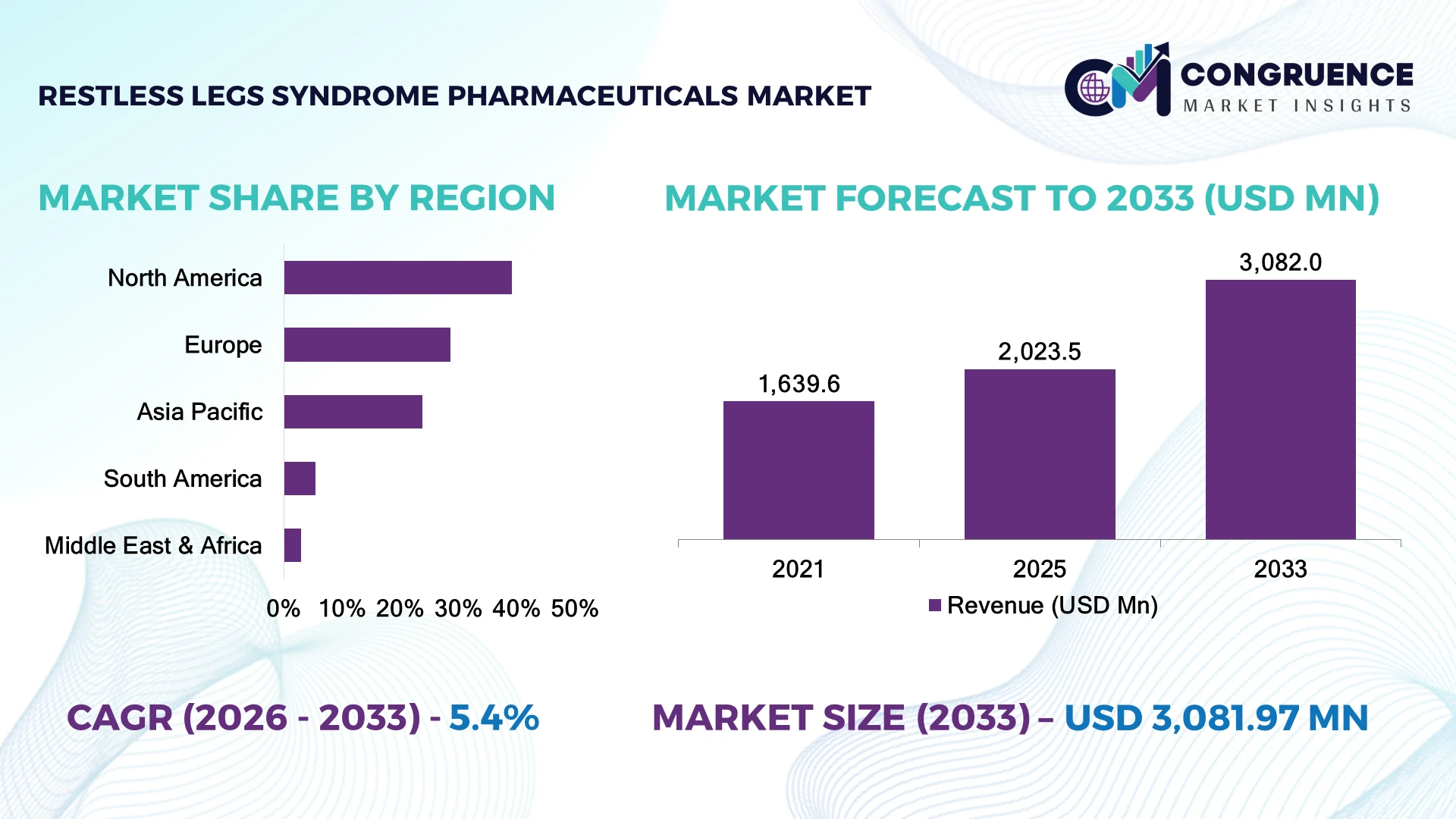
The Global Restless Legs Syndrome Pharmaceuticals Market was valued at USD 2,023.5 Million in 2025 and is anticipated to reach a value of USD 3,082.0 Million by 2033 expanding at a CAGR of 5.4% between 2026 and 2033. Growth is driven by expanding diagnosis rates, wider adoption of non-ergot dopamine agonists, and increasing development of precision neurological therapies with improved long-term safety profiles.
The United States represents approximately 38% of global pharmaceutical demand for Restless Legs Syndrome, supported by advanced neurology care networks, specialty pharmaceutical investments, and broad reimbursement coverage. More than 72% of diagnosed moderate-to-severe patients receive prescription pharmacotherapy, compared with approximately 46% in Japan, where aging demographics continue expanding treatment demand. Ongoing supply-chain diversification following global pharmaceutical manufacturing realignments has strengthened medicine availability while accelerating adoption of innovative neurological treatments.
Companies strengthening specialty neurology portfolios and expanding differentiated therapies are securing long-term competitive positioning in this evolving pharmaceutical market.
Market Size & Growth: USD 2,023.5 Million in 2025, reaching USD 3,082.0 Million by 2033 at 5.4% CAGR, supported by expanding neurological diagnosis and improved treatment access.
Top Growth Drivers: Diagnosis expansion 27%, aging population impact 24%, prescription adherence improvement 18%.
Short-Term Forecast: By 2028, digital patient monitoring improves medication adherence by 21% and follow-up efficiency by 17%.
Emerging Technologies: AI-assisted diagnosis, digital therapeutics, pharmacogenomic-guided prescribing strengthen personalized neurological care.
Regional Leaders: North America exceeds USD 1.1 Billion, Europe approaches USD 860 Million, Asia-Pacific surpasses USD 720 Million with expanding specialist care.
Consumer/End-User Trends: Nearly 61% of treated patients prefer once-daily therapies to improve long-term compliance.
Pilot/Case Example: A 2026 neurology care program improved treatment persistence by 19% through remote symptom monitoring.
Competitive Landscape: Leading manufacturers hold approximately 48% market share, led by GSK, UCB, Pfizer, Viatris, and AbbVie.
Regulatory & ESG Impact: Improved generic availability reduced average treatment costs by approximately 14% across several healthcare systems.
Investment & Funding: More than USD 1.3 Billion supports neuroscience drug development, licensing, and specialty pharmaceutical expansion.
Innovation & Future Outlook: Long-acting formulations and precision neurology strategies are redefining competitive differentiation.
Restless Legs Syndrome pharmaceuticals are experiencing stronger demand across neurology clinics, sleep disorder centers, and hospital networks as earlier diagnosis and personalized treatment strategies become standard clinical practice. Digital symptom tracking improves treatment optimization by approximately 23%, while broader neurological screening supports earlier intervention. Continued expansion of specialty pharmaceutical manufacturing and resilient medicine supply chains is strengthening market accessibility, setting the stage for deeper strategic transformation.
The Restless Legs Syndrome Pharmaceuticals Market is becoming increasingly strategic as healthcare systems prioritize neurological disease management, chronic patient outcomes, and specialty pharmaceutical innovation. Earlier diagnosis, digital health integration, and broader reimbursement policies are reshaping competitive dynamics, while pharmaceutical manufacturers are strengthening supply-chain resilience through regional production expansion and diversified active pharmaceutical ingredient sourcing.
Modern digital patient monitoring platforms improve treatment adherence by approximately 20% compared with conventional follow-up models, while AI-assisted clinical decision support reduces medication adjustment time by nearly 16%. The United States continues leading clinical adoption through established specialty neurology infrastructure, whereas Japan is accelerating prescription volumes through demographic expansion and integrated elderly care programs. Over the next two to three years, approximately 60% of specialist neurology centers are expected to integrate digital symptom assessment into routine therapeutic management.
Manufacturers are expanding licensing partnerships, strengthening neuroscience research pipelines, and investing in differentiated long-acting formulations that improve patient persistence. Practical deployment increasingly combines pharmaceutical therapy with remote patient monitoring to optimize clinical outcomes and reduce repeat consultations. Companies capable of delivering evidence-based therapies, dependable medicine supply, and patient-centric treatment platforms will secure stronger competitive positioning as neurological care continues shifting toward precision-based disease management.
Broader recognition of sleep disorders and neurological conditions is increasing prescription demand for Restless Legs Syndrome pharmaceuticals. Approximately 34% of newly diagnosed patients are identified through integrated sleep medicine and neurology pathways, while standardized clinical screening improves treatment initiation by nearly 22%. In the United States, expanded tele-neurology services and updated clinical management practices have accelerated access to specialist evaluation, increasing therapy uptake among underserved populations. Pharmaceutical companies are responding by expanding neurology portfolios, investing in patient support programs, and strengthening commercial partnerships with specialty healthcare providers. A key operational advantage now lies in combining earlier diagnosis with differentiated treatment pathways that improve long-term patient persistence rather than focusing solely on expanding prescription volume.
Concerns regarding augmentation, impulse-control disorders, and long-term tolerability continue restricting broader use of dopamine agonists in chronic disease management. Approximately 28% of long-term patients require therapy modification, while adverse event monitoring increases treatment management costs by nearly 17%. Japan and several European healthcare systems have strengthened pharmacovigilance requirements, creating greater documentation and post-prescription monitoring responsibilities for healthcare providers. These structural limitations affect prescribing confidence and delay treatment optimization for complex patients. Pharmaceutical manufacturers are reducing risk through expanded real-world evidence generation, diversified product portfolios, and development of alternative non-dopaminergic therapies that improve long-term safety profiles while maintaining clinical effectiveness.
Advances in pharmacogenomics, digital patient monitoring, and biomarker-guided treatment selection are opening new commercial opportunities beyond conventional symptom management. AI-assisted patient stratification improves treatment selection accuracy by approximately 24%, while remote symptom monitoring enhances medication adherence by nearly 20%. India is expanding specialty neurology infrastructure, creating additional opportunities for differentiated pharmaceutical products and digital disease management platforms. Companies are increasing investment in long-acting formulations, combination therapies, and collaborative research with neuroscience institutions. An emerging strategic opportunity lies in integrating pharmaceutical treatment with digital clinical monitoring, enabling value-based care models that strengthen patient outcomes and support premium therapeutic positioning.
Substantial variation in symptom severity, disease progression, and comorbid neurological conditions continues complicating standardized treatment pathways. Approximately 41% of patients present with multiple sleep-related disorders, while individualized dose adjustments increase clinical management complexity by nearly 19%. Expanding digital healthcare systems also require secure interoperability between remote monitoring platforms and hospital information systems, adding operational pressure for pharmaceutical ecosystem partners. These execution challenges influence treatment consistency and long-term patient retention rather than medicine availability. Companies must strengthen clinical data integration, physician education, digital health partnerships, and post-marketing evidence programs to improve therapeutic consistency while supporting personalized neurological care across diverse healthcare settings.
Non-Dopaminergic Therapies Expand: Healthcare providers are increasing adoption of alternative treatment pathways, with non-dopaminergic prescriptions rising by approximately 27% and long-term therapy persistence improving by nearly 18%. Updated clinical practice recommendations are encouraging pharmaceutical companies to strengthen research pipelines focused on safer chronic disease management.
Digital Patient Monitoring Accelerates: Remote symptom tracking platforms now support approximately 36% of specialist neurology practices, improving medication adherence by nearly 21% while reducing unnecessary follow-up visits by 16%. Healthcare providers are integrating digital health technologies into routine disease management through partnerships with specialized digital care providers.
Long-Acting Formulations Gain Preference: Once-daily and extended-release pharmaceutical formulations account for approximately 44% of new prescriptions, reducing dosing variability by nearly 17% and improving patient compliance. Manufacturers are expanding production capacity and lifecycle management strategies to differentiate products within increasingly competitive neurological therapy portfolios.
Real-World Evidence Strengthens: Real-world clinical evidence programs have expanded by approximately 31% since 2025, supporting improved treatment optimization and payer confidence. Increasing reimbursement scrutiny and value-based healthcare models are encouraging pharmaceutical companies to invest in long-term outcomes research, integrated patient registries, and collaborative clinical partnerships that strengthen market access and therapeutic differentiation.
Dopamine agonists account for approximately 49% of the Restless Legs Syndrome Pharmaceuticals market due to their established clinical efficacy, broad physician familiarity, and availability across major healthcare systems. Their widespread integration into treatment guidelines and cost-effective generic availability continue supporting prescription volumes for moderate disease management. Alpha-2-delta calcium channel ligands, including gabapentinoid-based therapies, remain a significant segment for patients requiring alternatives because of long-term tolerability considerations, while opioids and iron replacement therapies maintain strategic importance for carefully selected refractory or iron-deficient patient populations.
Alpha-2-delta calcium channel ligands represent the fastest-growing therapeutic category as clinicians increasingly prioritize long-term safety and lower augmentation risk. Prescription adoption has expanded by approximately 28%, while treatment persistence has improved by nearly 19% compared with traditional first-line regimens. Around 57% of newly diagnosed moderate-to-severe patients now undergo individualized therapy selection based on symptom profile and comorbidities. Pharmaceutical companies are strengthening neuroscience portfolios, investing in differentiated formulations, and expanding partnerships supporting precision neurological care, reflecting a strategic shift toward personalized disease management.
A 2026 international neurology practice survey reported increasing physician preference for individualized pharmacological selection over uniform dopamine agonist prescribing, reflecting evolving long-term treatment strategies.
Chronic Restless Legs Syndrome represents approximately 67% of pharmaceutical demand because patients require sustained symptom control, continuous physician follow-up, and long-term medication management. Higher diagnosis rates among aging populations and individuals with sleep disorders continue reinforcing prescription concentration within this segment. Secondary Restless Legs Syndrome associated with pregnancy, chronic kidney disease, and iron deficiency remains an important therapeutic area, while intermittent disease management increasingly relies on individualized treatment decisions rather than continuous medication.
Secondary Restless Legs Syndrome is the fastest-growing application as broader screening for chronic kidney disease, iron deficiency, and neurological disorders improves diagnosis rates. Clinical intervention has increased by approximately 24%, while integrated diagnostic pathways reduce treatment delays by nearly 18%. Around 46% of nephrology centers now incorporate routine Restless Legs Syndrome assessment into chronic kidney disease management. Pharmaceutical manufacturers are expanding collaboration with specialist care providers, supporting targeted treatment protocols, and developing differentiated therapies aligned with underlying disease characteristics, strengthening future demand across specialty clinical settings.
According to a 2025 clinical practice assessment conducted by a leading sleep medicine organization, multidisciplinary screening significantly increased treatment initiation among patients with secondary Restless Legs Syndrome.
Hospitals account for approximately 45% of pharmaceutical utilization due to integrated neurology services, comprehensive diagnostic capabilities, and access to multidisciplinary care for complex Restless Legs Syndrome patients. Specialist neurology clinics continue representing a major prescribing channel through focused disease management and long-term patient monitoring. Retail pharmacies maintain strong dispensing volumes for stable patients, while online pharmacies are steadily strengthening their position through convenient prescription refills and chronic therapy support.
Online pharmacies represent the fastest-growing end-user segment as digital prescribing and home medicine delivery become increasingly integrated into chronic neurological care. Prescription fulfillment through digital pharmacy platforms has expanded by approximately 31%, while automated refill programs improve long-term medication adherence by nearly 22%. Approximately 52% of repeat prescriptions in selected developed healthcare markets now incorporate digital pharmacy services. Pharmaceutical companies are strengthening omnichannel distribution, expanding patient support programs, and partnering with digital healthcare providers to improve treatment continuity and competitive differentiation.
A 2026 enterprise healthcare survey found that digital prescription fulfillment and remote patient engagement significantly improved medication continuity for chronic neurological disorders, including Restless Legs Syndrome.
North America accounted for the largest market share at 39.2% in 2025 however, Asia-Pacific is expected to register the fastest growth, expanding at a CAGR of 6.6% between 2026 and 2033.
Advanced Neurology Care Strengthens Prescription Adoption
North America leads the Restless Legs Syndrome Pharmaceuticals market through mature neurology infrastructure, high disease awareness, favorable reimbursement frameworks, and widespread access to specialist sleep medicine services. The region contributes approximately 39.2% of global pharmaceutical demand, supported by early diagnosis programs and established chronic disease management pathways. Nearly 69% of moderate-to-severe patients receive prescription therapy through integrated neurology and sleep disorder clinics. Digital prescribing platforms and remote patient monitoring continue improving treatment continuity, while pharmaceutical companies are expanding commercial partnerships with healthcare providers to improve patient engagement and long-term medication adherence across specialty care networks.
United States Market Outlook: The United States remains the region's largest market due to its extensive neurology workforce, advanced pharmaceutical commercialization capabilities, and comprehensive reimbursement ecosystem. Specialty pharmacies, integrated healthcare systems, and digital patient support platforms continue improving treatment accessibility. Approximately 74% of diagnosed patients requiring pharmacological intervention receive prescription therapy through specialist-led care pathways, reinforcing the country's leadership in clinical adoption and pharmaceutical innovation.
Evidence-Based Treatment Expands Clinical Adoption
Europe maintains a strong position through standardized clinical guidelines, universal healthcare access, and increasing emphasis on neurological disease management. The region represents approximately 28.6% of global demand, supported by established sleep medicine centers and improved physician recognition of Restless Legs Syndrome. Around 58% of specialist neurological practices now integrate structured symptom assessment into routine patient evaluations. Pharmaceutical manufacturers continue strengthening regional distribution networks and expanding lifecycle management strategies for established therapies while introducing differentiated treatment options.
Germany Market Outlook: Germany leads the European market through its advanced neurological care infrastructure, extensive pharmaceutical manufacturing capabilities, and strong clinical research environment. Hospitals and specialist neurology centers continue adopting evidence-based treatment protocols supported by broad reimbursement coverage. Approximately 61% of diagnosed moderate-to-severe patients receive guideline-directed pharmacological therapy, strengthening Germany's position as a key market for specialty neurology products.
Healthcare Modernization Accelerates Market Expansion
Asia-Pacific is strengthening its market position through expanding neurological healthcare infrastructure, rising diagnosis rates, and increasing pharmaceutical accessibility across aging populations. The region accounts for approximately 23.8% of global demand, while specialist neurology services continue expanding in major healthcare systems. Nearly 27% of tertiary hospitals have introduced dedicated sleep disorder assessment programs over recent years, improving identification of chronic neurological conditions. Pharmaceutical companies are expanding regional manufacturing, local partnerships, and physician education initiatives to improve treatment availability and support long-term disease management.
Japan Market Outlook: Japan remains the region's most influential market because of its aging population, sophisticated healthcare system, and high utilization of neurological services. Continuous improvements in specialist diagnosis and chronic disease management are strengthening pharmaceutical demand. Approximately 63% of treated patients receive long-term medication management through integrated hospital and outpatient neurology networks, supporting sustained adoption of advanced therapeutic approaches.
Expanding Specialist Care Supports Treatment Access
South America is gradually improving pharmaceutical access through expanding neurology services, broader health insurance coverage, and increased physician awareness of sleep-related neurological disorders. The region contributes approximately 5.4% of global demand, with treatment availability improving across major metropolitan healthcare systems. Around 34% of tertiary hospitals have strengthened neurological diagnostic capabilities, supporting earlier clinical intervention. Although reimbursement variability and uneven healthcare infrastructure continue limiting widespread access, pharmaceutical companies are expanding regional distribution partnerships and medical education initiatives to improve disease recognition and prescribing confidence.
Brazil Market Outlook: Brazil represents the region's largest pharmaceutical market through its broad healthcare network, expanding specialty medical services, and established pharmaceutical distribution infrastructure. Public and private healthcare providers continue strengthening neurological diagnosis capabilities, while specialty pharmacies improve medicine availability. Approximately 47% of specialist neurological prescriptions for chronic sleep movement disorders are concentrated within Brazil's major urban healthcare centers, reinforcing the country's strategic importance.
Healthcare Investment Improves Neurological Access
The Middle East & Africa market is steadily advancing through healthcare modernization, specialist workforce expansion, and increasing investment in chronic neurological disease management. The region accounts for approximately 3.0% of global demand, while tertiary hospitals continue expanding neurology and sleep medicine services. Approximately 29% of newly developed specialty care facilities now include integrated neurological diagnostic capabilities. Pharmaceutical manufacturers are strengthening regional partnerships, improving supply-chain resilience, and expanding patient access initiatives to support broader adoption of neurological therapies.
Saudi Arabia Market Outlook: Saudi Arabia leads regional development through sustained healthcare investment, expanding specialist hospital infrastructure, and national programs supporting advanced neurological services. Increasing adoption of digital health platforms and specialist outpatient care is improving diagnosis and treatment continuity. Approximately 41% of advanced neurology service expansion projects within the Gulf region are concentrated in Saudi Arabia, positioning the country as the leading pharmaceutical growth market for neurological disorders.
Global branded pharmaceutical companies including GSK, AbbVie, UCB, Pfizer, and Viatris compete with generic manufacturers, while specialty neurology developers challenge established therapies through differentiated safety profiles rather than price alone. The top five participants collectively account for approximately 48% of the market. Competition centers on clinical efficacy, augmentation risk reduction, patient adherence, and market access, with once-daily formulations improving treatment persistence by nearly 18%, digital patient support increasing adherence by approximately 21%, and generic pricing lowering therapy costs by around 14%. Companies strengthen positions through lifecycle management, licensing agreements, real-world evidence generation, regional manufacturing expansion, and partnerships with specialty neurology networks. Competitive momentum is shifting from dopamine agonist dependence toward non-dopaminergic therapies supported by updated clinical practice trends. Demonstrating long-term safety, securing reimbursement, and generating robust clinical evidence remain major entry barriers. Sustainable leadership requires differentiated outcomes, reliable supply, physician confidence, and patient-centered therapeutic innovation.
GSK plc
AbbVie Inc.
Pfizer Inc.
UCB S.A.
Viatris Inc.
Azurity Pharmaceuticals, Inc.
Teva Pharmaceutical Industries Ltd.
Eisai Co., Ltd.
Otsuka Pharmaceutical Co., Ltd.
Sumitomo Pharma Co., Ltd.
Dr. Reddy's Laboratories Ltd.
Sun Pharmaceutical Industries Ltd.
Aurobindo Pharma Ltd.
Precision neurology, extended-release formulations, digital patient monitoring, and AI-assisted clinical decision support are transforming Restless Legs Syndrome treatment. Extended-release therapies improve medication adherence by approximately 19%, while digital symptom monitoring reduces treatment adjustment time by nearly 17%. Around 57% of specialist neurology centers now incorporate electronic symptom assessment into chronic disease management. These technologies enable earlier intervention, improve long-term persistence, and strengthen treatment personalization across outpatient neurological care.
Emerging technologies include pharmacogenomic profiling, wearable sleep monitoring, remote therapeutic management, and AI-supported treatment optimization. Compared with conventional symptom-based prescribing, data-driven personalized treatment pathways improve therapy selection accuracy by approximately 24% while reducing unnecessary medication changes by nearly 18%. Specialty pharmaceutical companies with integrated digital care capabilities benefit most by strengthening physician engagement, supporting reimbursement discussions, and improving long-term patient outcomes through evidence-based care models.
Between 2026 and 2028, biomarker-supported treatment selection, real-world evidence platforms, and integrated digital therapeutics will increasingly influence pharmaceutical competitiveness. Adoption of remote neurological monitoring is expected to exceed 65% among specialist sleep medicine networks. Companies investing in precision medicine, digital health partnerships, decentralized clinical research, and long-acting neurological therapies will strengthen differentiation while improving treatment continuity, patient retention, and value-based healthcare integration.
April 2025 Azurity Pharmaceuticals updated the U.S. prescribing information for HORIZANT (gabapentin enacarbil extended-release), including revised safety information for adults with moderate-to-severe primary Restless Legs Syndrome, strengthening long-term pharmacovigilance and prescribing confidence. Source: DailyMed
September 2025 The U.S. FDA issued new draft guidance promoting development of non-opioid therapies for chronic pain, reinforcing broader investment in safer neurological treatment pathways that may benefit future Restless Legs Syndrome drug development programs. Source: U.S. Food and Drug Administration
June 2025 GSK announced FDA acceptance of a New Drug Application for linerixibat in another neurological symptom-related therapeutic area, reflecting continued investment in specialty medicine development and lifecycle expansion across neuroscience and related portfolios. Source: GSK
April 2025 Azurity Pharmaceuticals continued commercial support for HORIZANT through updated regulatory documentation covering prescribing guidance and safety information, reinforcing supply continuity and physician confidence for approved Restless Legs Syndrome treatment. Source: DailyMed
The Restless Legs Syndrome Pharmaceuticals Market Report provides comprehensive analysis across dopamine agonists, alpha-2-delta calcium channel ligands, opioids, iron replacement therapies, and emerging neurological treatment approaches. The study evaluates applications spanning chronic and secondary Restless Legs Syndrome alongside demand across hospitals, specialist neurology clinics, retail pharmacies, and online pharmacies. Regional assessment covers North America, Europe, Asia-Pacific, South America, and the Middle East & Africa while examining evolving prescribing practices, patient adherence patterns, and therapeutic adoption. Approximately 57% of specialist neurological care now incorporates individualized treatment selection supported by structured clinical assessment.
The report further analyzes precision neurology, digital patient monitoring, pharmacogenomic advances, real-world evidence generation, and long-acting pharmaceutical formulations shaping competitive differentiation between 2026 and 2033. Strategic insights evaluate pipeline development, reimbursement dynamics, regulatory evolution, distribution expansion, and lifecycle management strategies across leading pharmaceutical manufacturers. The analysis supports portfolio planning, market entry, investment prioritization, competitive benchmarking, and long-term growth strategies within the global neurological therapeutics landscape.
| Report Attribute/Metric | Report Details |
|---|---|
|
Market Revenue in 2025 |
USD 2,023.5 Million |
|
Market Revenue in 2033 |
USD 3,082.0 Million |
|
CAGR (2026 - 2033) |
5.4% |
|
Base Year |
2025 |
|
Forecast Period |
2026 - 2033 |
|
Historic Period |
2021 - 2025 |
|
Segments Covered |
By Type
By Application
By End-User
|
|
Key Report Deliverable |
Revenue Forecast, Growth Trends, Market Dynamics, Segmental Overview, Regional and Country-wise Analysis, Competition Landscape |
|
Region Covered |
North America, Europe, Asia-Pacific, South America, Middle East, Africa |
|
Key Players Analyzed |
GSK plc, AbbVie Inc., Pfizer Inc., UCB S.A., Viatris Inc., Azurity Pharmaceuticals, Inc., Teva Pharmaceutical Industries Ltd., Eisai Co., Ltd., Otsuka Pharmaceutical Co., Ltd., Sumitomo Pharma Co., Ltd., Dr. Reddy's Laboratories Ltd., Sun Pharmaceutical Industries Ltd., Aurobindo Pharma Ltd. |
|
Customization & Pricing |
Available on Request (10% Customization is Free) |




