
Reports
The Global Refrigerated Road Transport Market was valued at USD 2,156.0 Million in 2025 and is anticipated to reach a value of USD 3,536.1 Million by 2033 expanding at a CAGR of 6.38% between 2026 and 2033. Growth is driven by IoT-enabled reefer monitoring, stricter cold-chain compliance for pharmaceuticals, and expansion of automated temperature-controlled logistics networks.
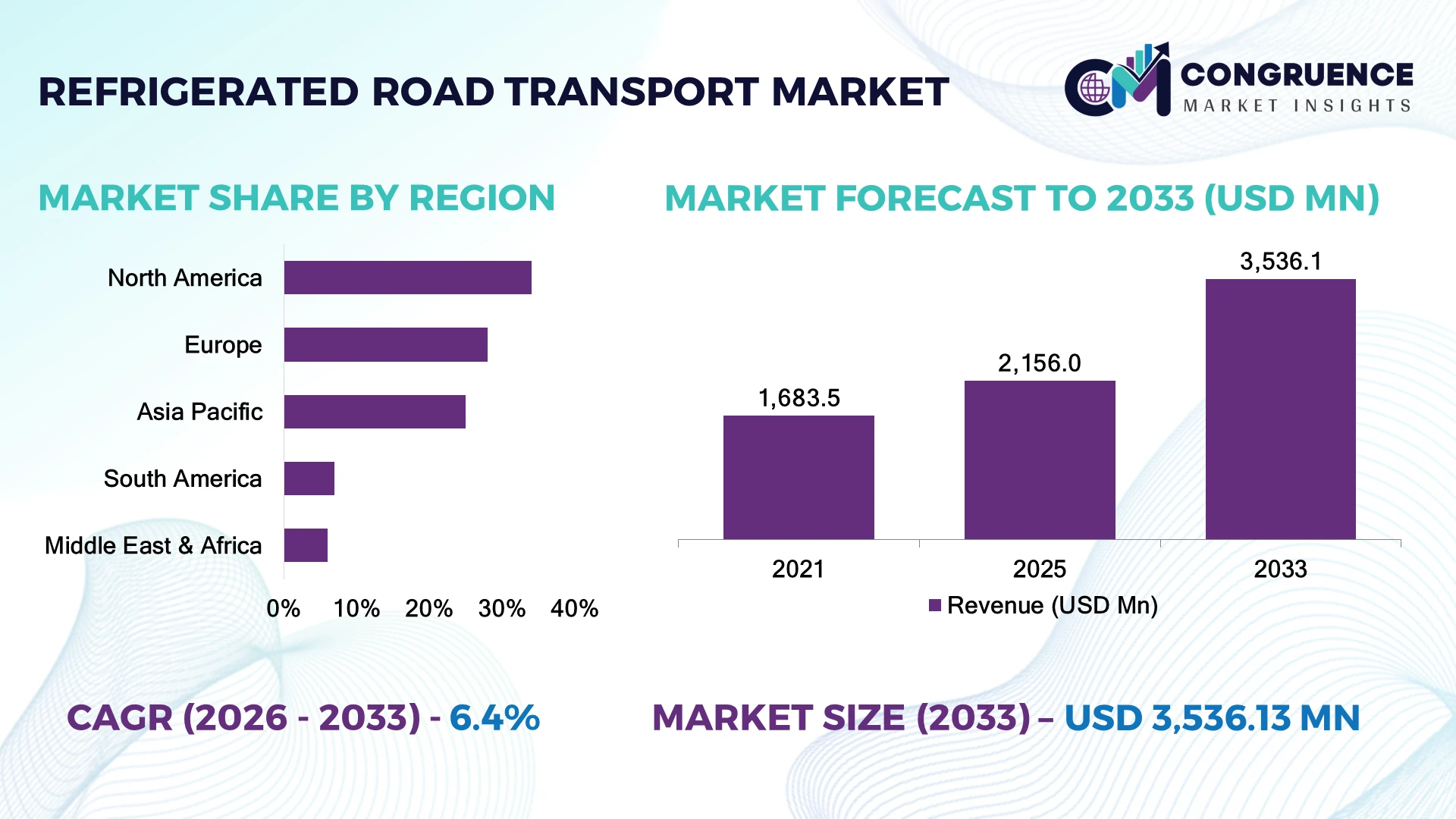
The United States dominates the refrigerated road transport landscape, accounting for approximately 32% of global refrigerated truck capacity, supported by pharmaceutical distribution, frozen food logistics, and large-scale grocery networks. China follows with nearly 25% share and has increased cold-chain infrastructure investment under national food security programs. The U.S. deploys more than 500,000 refrigerated vehicles, while China’s cold-chain logistics upgrades are expanding rapidly through smart warehousing and digital tracking systems. These developments position advanced fleet modernization and connected refrigeration solutions as critical competitive priorities.
Strategic implication Companies investing in intelligent fleet management, energy-efficient refrigeration, and integrated cold-chain platforms are better positioned to capture high-value logistics demand.
Market Size & Growth: USD 2,156.0 Million in 2025 to USD 3,536.1 Million by 2033 at 6.38% CAGR, driven by digital cold-chain monitoring and pharmaceutical logistics expansion.
Top Growth Drivers: Pharmaceutical shipments +28%, frozen food logistics +22%, e-commerce grocery adoption +35%.
Short-Term Forecast: By 2028, AI-based route optimization reduces fuel costs by 15% and improves fleet efficiency by 20%.
Emerging Technologies: AI fleet analytics, IoT temperature sensors, automated refrigeration controls, and electric reefer systems are reshaping operations.
Regional Leaders: North America reaches USD 1,120 Million with smart fleet adoption; Asia-Pacific reaches USD 980 Million with cold-chain expansion; Europe reaches USD 760 Million through sustainable transport initiatives.
Consumer/End-User Trends: Over 40% of food distributors are adopting real-time temperature tracking to improve quality compliance.
Pilot/Case Example: In 2024, Walmart’s connected cold-chain initiatives improved shipment visibility by 30% and reduced temperature-related losses.
Competitive Landscape: Thermo King leads with approximately 18% market share, alongside Carrier Transicold, Daikin, Mitsubishi Heavy Industries, and Denso.
Regulatory & ESG Impact: Refrigerant transition policies reduce high-emission cooling systems by nearly 20% across developed logistics markets.
Investment & Funding: More than USD 5 Billion invested globally in cold-chain infrastructure, automation, and fleet electrification partnerships.
Innovation & Future Outlook: Next-generation refrigerated transport focuses on autonomous logistics, low-emission cooling technologies, and integrated supply-chain ecosystems.
The Refrigerated Road Transport Market is experiencing stronger adoption across food, healthcare, and biotechnology supply chains as companies prioritize temperature accuracy, traceability, and operational resilience. Advanced reefer units with predictive maintenance capabilities are improving fleet utilization by approximately 25%, while regulatory focus on food safety and emissions reduction is accelerating investments in modern cold-chain networks. The shift toward connected logistics platforms is creating new opportunities for scalable refrigerated transportation solutions.
The Refrigerated Road Transport Market is becoming strategically important as global supply chains shift toward higher-value, temperature-sensitive products requiring reliable distribution networks. Food safety regulations, pharmaceutical expansion, and modernization of logistics infrastructure are forcing companies to upgrade conventional transport systems into digitally managed cold-chain platforms. The adoption of real-time monitoring and predictive analytics is transforming operational decision-making across logistics networks.
Advanced refrigerated vehicles using AI-based fleet optimization and IoT sensors deliver measurable improvements compared with traditional systems, reducing temperature deviations by nearly 30% and improving route efficiency by approximately 20%. Germany and the United States are leading technology-driven deployment, while India and Southeast Asian markets are expanding capacity through new cold-storage corridors and logistics investments.
Companies are increasingly deploying electric refrigeration units, automated tracking platforms, and strategic partnerships to improve efficiency and sustainability. For example, major food retailers are integrating connected reefer fleets with warehouse management systems to reduce spoilage and improve delivery accuracy. Over the next few years, competitive advantage will depend on digital integration, energy-efficient operations, and the ability to deliver consistent temperature-controlled logistics across complex global supply chains.
The primary growth driver is the rapid adoption of connected refrigeration technologies across food, pharmaceutical, and biotechnology logistics. IoT-enabled monitoring systems improve temperature visibility by more than 35%, while AI route optimization reduces fuel consumption by approximately 15%. The expansion of pharmaceutical distribution networks in the United States and Europe is increasing demand for precision-controlled transport. Companies such as Thermo King and Carrier Transicold are investing in smart reefer platforms, predictive maintenance tools, and energy-efficient cooling systems. The strategic shift toward data-driven logistics is helping operators reduce product losses, improve compliance, and strengthen supply-chain reliability.
High equipment costs, energy expenses, and infrastructure limitations remain key barriers for refrigerated transport expansion. Refrigerated vehicles typically require 20–30% higher maintenance spending than standard trucks due to cooling system complexity. Emerging markets such as India face challenges with limited cold-chain connectivity, where post-harvest losses remain above 10% for several food categories. Rising refrigerant regulations and fuel volatility are increasing operational pressure on fleet owners. Companies are responding through localized manufacturing, long-term supplier contracts, alternative cooling technologies, and fleet optimization strategies to control expenses while maintaining service quality.
The strongest opportunity lies in intelligent refrigerated fleets, automation, and emerging cold-chain business models. AI-driven logistics platforms can improve delivery efficiency by 20–25%, while advanced sensors enable continuous temperature tracking across transportation routes. China and India are expanding cold-chain infrastructure through food security programs and logistics modernization initiatives. Companies are developing electric reefer solutions, cloud-based monitoring systems, and integrated logistics ecosystems to capture emerging demand. The adoption of predictive analytics represents a non-obvious opportunity by shifting refrigerated transport from reactive maintenance models toward proactive asset management and higher fleet utilization.
Long-term market execution faces challenges from uneven infrastructure development, technology integration issues, and skilled workforce shortages. Approximately 40% of small logistics operators still rely on fragmented tracking systems, creating visibility gaps across supply chains. Cybersecurity risks are increasing as connected refrigeration platforms become more widespread. Countries including Brazil and India continue to address infrastructure limitations through logistics corridor investments and digital initiatives. Companies must strengthen cybersecurity frameworks, expand technical training programs, and develop interoperable platforms to maintain reliable refrigerated transport operations and achieve sustainable competitiveness.
Connected Reefer Monitoring Growth: IoT-enabled temperature tracking is expanding across logistics fleets, with adoption increasing by nearly 35% among large cold-chain operators and reducing temperature deviation incidents by around 25%. Food retailers and pharmaceutical distributors are integrating cloud-based monitoring platforms to improve compliance, visibility, and shipment accuracy. Companies are scaling partnerships with technology providers to strengthen real-time fleet intelligence.
Electric Cooling Transition: Low-emission refrigeration systems are gaining traction as sustainability regulations tighten, with electric reefer adoption rising by approximately 20% in advanced logistics markets. Fleet operators in Germany and the United States are deploying battery-powered cooling units to reduce fuel dependency by nearly 15%. Manufacturers are restructuring product portfolios toward energy-efficient refrigeration technologies.
Automated Logistics Integration: Warehouse-to-transport automation is changing refrigerated distribution workflows, with automated scheduling and AI routing improving fleet utilization by 18–22%. Labor shortages in logistics operations are accelerating investment in autonomous planning tools and digital dispatch systems. Companies are integrating transport management platforms to reduce delays and improve delivery consistency.
Pharmaceutical Cold Chain Expansion: Healthcare logistics is increasing demand for precision refrigerated transport, with biologics shipments requiring temperature-controlled handling rising by over 30% in key markets. Regulatory pressure on vaccine and specialty medicine distribution is driving stricter monitoring processes. Companies are expanding specialized fleets and forming logistics partnerships to meet pharmaceutical-grade cold-chain standards.
Refrigerated trucks represent the leading type segment, accounting for approximately 55% of the market due to their flexibility, scalability, and suitability for short- and medium-distance temperature-controlled deliveries. Their dominance is supported by extensive deployment across food distribution, grocery retail, and pharmaceutical logistics networks. Insulated containers and refrigerated trailers maintain strong relevance, particularly for long-haul transportation where capacity efficiency is critical. Companies are improving reefer truck performance through IoT integration, lightweight materials, and energy-efficient cooling systems.
Electric refrigerated vehicles are the fastest-growing type segment, expanding as fleet operators prioritize lower emissions and reduced operating costs. Adoption is increasing by nearly 20–25% in urban logistics applications, driven by environmental regulations and city-level restrictions on diesel vehicles. Traditional diesel-powered systems still account for significant fleet capacity, but investment priorities are shifting toward hybrid and electric refrigeration solutions. Manufacturers are responding through battery technology partnerships and next-generation cooling innovations.
Food and beverage transportation is the leading application segment, representing nearly 60% market share due to extensive use across frozen foods, dairy products, meat, seafood, and fresh produce distribution. The segment benefits from expanding grocery delivery networks and stricter food safety requirements. Pharmaceutical transportation is the fastest-growing application, supported by increasing distribution of vaccines, biologics, and temperature-sensitive medicines. Adoption in healthcare logistics is rising by more than 30% as companies invest in specialized monitoring and validated transport processes. Industrial goods and other temperature-sensitive applications continue to develop through customized refrigerated solutions, especially for chemicals, specialty materials, and agricultural products. Food logistics operators are increasingly integrating AI scheduling and automated route planning, improving delivery efficiency by approximately 20%. Pharmaceutical companies are forming strategic partnerships with cold-chain providers to enhance global distribution capabilities. The growing complexity of temperature-sensitive supply chains is shifting investment toward specialized transport platforms rather than conventional freight systems.
Food retailers and distributors represent the leading end-user segment with approximately 45% market share, driven by large-scale refrigerated distribution requirements for supermarkets, grocery chains, and online food platforms. Their dominance comes from high shipment frequency, extensive delivery networks, and strict product quality standards. Pharmaceutical companies are the fastest-growing end-user group, with adoption accelerating due to biologics, specialty drugs, and vaccine distribution requirements. Healthcare logistics demand is increasing by nearly 30% as companies expand validated cold-chain infrastructure. Restaurants, catering companies, and other commercial users continue adopting refrigerated transport solutions to support fresh-food delivery models and inventory control. Retail enterprises are investing in connected fleet platforms, while pharmaceutical companies are prioritizing specialized vehicles and compliance-focused partnerships. Smaller operators are increasingly adopting shared cold-chain services to reduce capital requirements and improve operational flexibility. Future demand is shifting toward integrated logistics ecosystems combining transport, warehousing, and digital monitoring capabilities.
North America accounted for the largest market share at 34% in 2025 however, Asia-Pacific is expected to register the fastest growth, expanding at a CAGR of 7.2% between 2026 and 2033.
North America leads the refrigerated road transport market due to its advanced logistics infrastructure, large-scale food distribution networks, and strong pharmaceutical supply chains. The region contributes approximately 34% of global market activity, supported by extensive refrigerated truck deployment across the United States and Canada. More than 500,000 refrigerated vehicles operate across the U.S. market, with increasing integration of IoT monitoring and predictive maintenance technologies. Major retailers and logistics providers are investing in connected fleets to reduce spoilage, improve route efficiency, and strengthen regulatory compliance. The expansion of temperature-sensitive healthcare distribution is further accelerating specialized transport adoption across the region.
United States Market Outlook: The United States remains the dominant country due to its large refrigerated fleet ecosystem, advanced logistics operators, and strong cold-chain infrastructure. The country accounts for nearly 30% of global refrigerated vehicle capacity and continues to expand digital fleet management adoption. Food retailers, pharmaceutical companies, and third-party logistics providers are increasing investments in automated tracking systems and energy-efficient refrigeration solutions to improve operational control.
Europe maintains a strong position in refrigerated road transport through strict food safety regulations, advanced logistics networks, and aggressive decarbonization initiatives. The region represents nearly 28% of global market activity, with countries such as Germany, France, and the Netherlands supporting high-density cold-chain operations. Regulatory pressure on emissions and refrigerant usage is accelerating adoption of low-emission refrigeration systems, with electric and hybrid reefer technologies increasing deployment by more than 20% in urban logistics. European logistics companies are investing in smart monitoring platforms and renewable-powered cold-chain infrastructure to meet sustainability targets. Cross-border freight modernization is also improving temperature-controlled supply reliability.
Germany Market Outlook: Germany leads European refrigerated transport adoption through its advanced manufacturing base, logistics infrastructure, and technology-driven freight ecosystem. The country operates one of Europe’s largest commercial vehicle networks, with increasing deployment of automated temperature monitoring systems across food and pharmaceutical logistics. Investments in low-emission transport corridors and efficient refrigeration technologies are strengthening Germany’s competitive position in sustainable cold-chain operations.
Asia-Pacific is emerging as the fastest-expanding refrigerated transport market due to rising food consumption, pharmaceutical manufacturing growth, and large-scale logistics infrastructure development. The region contributes approximately 25% of global market activity and benefits from expanding cold-storage networks in China, India, Japan, and Southeast Asia. China’s food distribution modernization programs and India’s logistics corridor investments are increasing refrigerated vehicle deployment, with adoption of digital tracking solutions growing by more than 30%. E-commerce grocery expansion and pharmaceutical exports are reshaping transportation requirements, encouraging companies to invest in automated fleet systems and integrated cold-chain platforms.
China Market Outlook: China represents the largest refrigerated transport market in Asia-Pacific due to its extensive food processing industry, pharmaceutical manufacturing capacity, and logistics modernization programs. The country has expanded cold-chain infrastructure through national food security initiatives, with thousands of logistics facilities adopting smart temperature management systems. Manufacturers and logistics operators are increasing investment in energy-efficient refrigeration and connected fleet technologies.
South America is gaining importance in refrigerated road transport due to agricultural exports, meat production, seafood distribution, and expanding food processing industries. The region accounts for nearly 7% of global market activity, with Brazil and Argentina representing major deployment centers. Export-oriented supply chains are increasing demand for reliable refrigerated transportation, particularly for beef, poultry, fruits, and frozen products. Brazil’s logistics sector is adopting digital tracking technologies, improving shipment visibility by approximately 20% among advanced operators. However, infrastructure limitations and long-distance transportation challenges continue to influence fleet efficiency. Companies are responding through regional partnerships, fleet upgrades, and investments in temperature-controlled logistics hubs.
Brazil Market Outlook: Brazil dominates South America’s refrigerated transport landscape due to its agricultural export capacity and large domestic food distribution network. The country’s meat and produce industries require extensive temperature-controlled transportation, supporting continuous fleet expansion. More than 40% of regional refrigerated logistics activity is concentrated around Brazil, where operators are adopting advanced monitoring solutions and improving cold-chain reliability.
The Middle East & Africa market is expanding through food security programs, pharmaceutical logistics investments, and modernization of distribution infrastructure. The region represents approximately 6% of global market activity, with the Gulf countries leading adoption through advanced logistics projects. Investments in smart warehouses, temperature-controlled storage, and integrated transport networks are increasing refrigerated vehicle deployment. Countries such as Saudi Arabia and the United Arab Emirates are prioritizing food supply resilience, with cold-chain infrastructure upgrades improving logistics efficiency by nearly 20%. Companies are forming partnerships with international logistics providers to introduce advanced refrigeration technologies and strengthen regional supply networks.
Saudi Arabia Market Outlook: Saudi Arabia is emerging as a strategic refrigerated transport market due to food security initiatives, expanding retail infrastructure, and pharmaceutical distribution growth. The country is investing heavily in logistics modernization programs, including temperature-controlled transportation networks and smart storage facilities. More than 30% of Gulf-region cold-chain investments are linked to Saudi Arabia and the UAE, supporting adoption of advanced refrigerated logistics solutions.
The refrigerated road transport market features competition between global OEM leaders such as Thermo King, Carrier Transicold, and Daikin against regional fleet operators, refrigeration suppliers, and technology-focused cold-chain providers. The top five players collectively account for approximately 45% of market presence, creating a moderately consolidated structure. Competition is based on refrigeration efficiency, digital monitoring, service networks, customization, and lifecycle costs, with advanced systems improving energy efficiency by 15–25%. Global manufacturers are expanding through strategic partnerships, electric reefer innovations, and integrated fleet solutions, while regional players compete through pricing flexibility and localized service capabilities. The competitive shift is moving toward connected refrigeration, predictive maintenance, and sustainable cooling technologies as regulatory pressure increases. High capital requirements, technical expertise, and established distribution networks create entry barriers. Winning requires combining reliable equipment performance, digital intelligence, operational scale, and customer-specific cold-chain solutions.
Carrier Transicold
Daikin Industries Ltd.
Mitsubishi Heavy Industries Thermal Systems Ltd.
Denso Corporation
Panasonic Corporation
Webasto Group
Liebherr Transportation Systems
Guchen Industry Co., Ltd.
Utility Trailer Manufacturing Company
Schmitz Cargobull AG
Krone Commercial Vehicle Group
Great Dane LLC
Frigoblock (Trane Technologies)
Refrigerated road transport is shifting from conventional mechanical cooling toward connected refrigeration ecosystems using IoT sensors, AI analytics, and cloud-based fleet platforms. Smart monitoring systems improve temperature visibility by more than 30% and reduce product loss risks by nearly 20%. Large logistics operators are integrating predictive maintenance tools to improve vehicle uptime and optimize service scheduling.
Electric and hybrid refrigeration technologies are emerging as alternatives to diesel-powered cooling units, delivering approximately 15–25% lower energy consumption in urban operations. Compared with older systems, advanced electric refrigeration platforms provide better emission control, quieter operation, and improved compliance with sustainability regulations. Fleet operators in Europe and North America are increasing deployment of battery-powered cooling solutions as cities introduce stricter emission standards.
From 2026 to 2028, autonomous logistics platforms, AI route optimization, and digital twin technologies will reshape refrigerated fleet management. Companies investing early in connected systems gain advantages through lower operating costs, improved delivery accuracy, and stronger regulatory readiness. Technology leaders and large logistics providers are expected to benefit most as cold-chain operations become increasingly data-driven and automated.
March 2025 Thermo King showcased all-electric and hybrid-electric transport refrigeration solutions at TMC 2025, including TracKing Smart Trailer telematics for improved fleet visibility. The technology supports refrigerated fleets with better cargo monitoring and operational control, strengthening sustainable cold-chain adoption. Source: www.thermoking.com
September 2025 Carrier Transicold launched its Reefer Enhancement and Next-Life Program to improve fleet efficiency and sustainability. The initiative focuses on extending equipment lifecycle performance, reducing replacement pressure, and supporting operators transitioning toward lower-impact refrigerated transport operations. Source: www.carrier.com
November 2025 Daikin Industries began development of a new manufacturing facility in Jeddah, Saudi Arabia, strengthening regional cooling production capabilities. The expansion supports localized manufacturing capacity and aligns with Saudi Arabia’s Vision 2030 industrial development strategy for advanced cooling solutions. Source: www.daikin.com
October 2025 Carrier Transicold secured a 1,000-unit order from Great White Fleet for OptimaLINE refrigeration systems with EverFRESH technology. The deployment strengthens refrigerated cargo capabilities and improves operational reliability for temperature-sensitive logistics networks.
The Refrigerated Road Transport Market Report covers detailed analysis across vehicle types, applications, and end-user segments, including refrigerated trucks, trailers, food logistics, pharmaceutical transportation, retailers, distributors, and healthcare organizations. The report evaluates major geographic markets including North America, Europe, Asia-Pacific, South America, and the Middle East & Africa, highlighting deployment patterns, infrastructure development, and adoption trends.
The study examines key technologies such as IoT monitoring, AI-based fleet optimization, electric refrigeration systems, and automated cold-chain platforms. It provides strategic insights into competitive positioning, investment priorities, expansion opportunities, and operational transformation from 2026 to 2033. Coverage includes established markets, emerging logistics hubs, and niche applications where temperature-controlled transportation adoption is accelerating. The analysis supports businesses in identifying growth opportunities, improving supply-chain strategies, and strengthening long-term market competitiveness.
| Report Attribute / Metric | Details |
|---|---|
| Market Revenue (2025) | USD 2,156.0 Million |
| Market Revenue (2033) | USD 3,536.1 Million |
| CAGR (2026–2033) | 6.38% |
| Base Year | 2025 |
| Forecast Period | 2026–2033 |
| Historic Period | 2021–2025 |
| Segments Covered |
By Type
By Application
By End-User
|
| Key Deliverables | Revenue Forecast; Market Trends; Growth Drivers & Restraints; Technology Insights; Segmentation Analysis; Regional Insights; Competitive Landscape; Regulatory & ESG Overview; Recent Developments |
| Regions Covered | North America; Europe; Asia-Pacific; South America; Middle East & Africa |
| Companies Profiled | Thermo King; Carrier Transicold; Daikin Industries Ltd.; Mitsubishi Heavy Industries Thermal Systems Ltd.; Denso Corporation; Panasonic Corporation; Webasto Group; Liebherr Transportation Systems; Guchen Industry Co., Ltd.; Utility Trailer Manufacturing Company; Schmitz Cargobull AG; Krone Commercial Vehicle Group; Great Dane LLC; Frigoblock (Trane Technologies) |
| Customization & Pricing | Available on Request (10% Customization Free) |




