
Reports
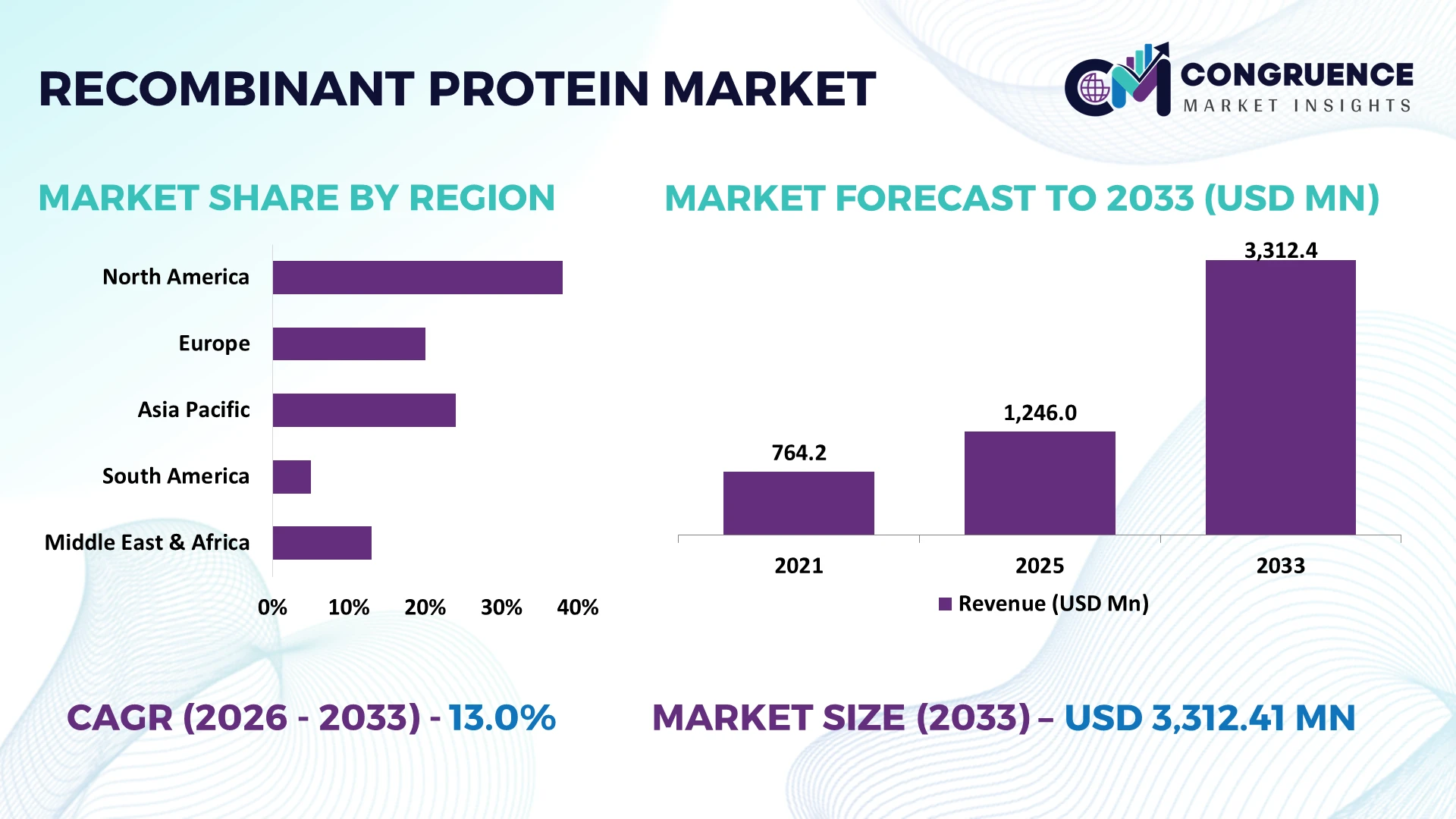
The Global Recombinant Protein Market was valued at USD 1245.99 Million in 2025 and is anticipated to reach a value of USD 3312.41 Million by 2033 expanding at a CAGR of 13% between 2026 and 2033. Growth is being accelerated by expanding biologics manufacturing, increasing recombinant protein use in cell and gene therapy workflows, and AI-assisted protein engineering that shortens development timelines while improving production consistency.
The United States leads the global recombinant protein market with approximately 38% share, supported by extensive biopharmaceutical manufacturing, over USD 70 billion in annual biotechnology research investment, and widespread adoption of automated expression platforms exceeding 65% across large facilities. China continues to strengthen production capacity through strategic biotechnology expansion, while the U.S. maintains stronger innovation intensity and advanced therapeutic commercialization despite evolving global supply-chain diversification and technology security priorities.
Organizations prioritizing high-capacity production, diversified sourcing, and advanced protein engineering platforms will secure stronger competitive positioning across high-value therapeutic and research applications.
Market Size & Growth: USD 1245.99 Million (2025) to USD 3312.41 Million (2033) at 13% CAGR, driven by advanced biologics manufacturing and precision protein engineering.
Top Growth Drivers: Biologics production expands 18%, cell and gene therapy demand rises 16%, and bioprocess automation adoption reaches 21%.
Short-Term Forecast: By 2028, manufacturing efficiency improves 19% while recombinant protein purification costs decline approximately 14%.
Emerging Technologies: AI-guided protein design, continuous bioprocessing, and high-throughput expression systems reduce development cycles by nearly 25%.
Regional Leaders: North America exceeds USD 1.2 Billion, Europe approaches USD 820 Million, and Asia-Pacific surpasses USD 900 Million, supported by expanding biomanufacturing investments and regional production capacity.
Consumer/End-User Trends: More than 68% of biopharmaceutical developers integrate recombinant proteins into therapeutic discovery and advanced biologics pipelines.
Pilot/Case Example: In 2026, automated protein expression implementation improved batch productivity by approximately 22% while reducing process variability across commercial production.
Competitive Landscape: Leading manufacturers collectively account for roughly 45% market share, with Thermo Fisher Scientific, Merck, Bio-Techne, GenScript, and Sartorius maintaining strong global positions.
Regulatory & ESG Impact: Sustainable manufacturing initiatives lower process waste by nearly 15% while stricter quality compliance strengthens commercial approval readiness.
Investment & Funding: More than USD 3 Billion supports facility expansion, strategic partnerships, and next-generation recombinant protein manufacturing amid global supply-chain diversification.
Innovation & Future Outlook: Advanced expression platforms, synthetic biology, and digital bioprocess optimization improve production performance by over 20%, strengthening long-term competitive differentiation.
Recombinant Protein Market demand is expanding across monoclonal antibody development, vaccine manufacturing, regenerative medicine, and advanced cell culture applications. Continuous expression technologies and AI-enabled protein optimization improve production efficiency by approximately 20%, while regional manufacturing localization strengthens supply resilience under evolving regulatory and operational requirements. These developments establish a stronger foundation for the strategic market analysis that follows.
The recombinant protein market has become strategically important as biologics manufacturing, precision medicine, and advanced research platforms reshape pharmaceutical competition. Companies are restructuring supply chains by expanding localized production and dual-sourcing critical raw materials to improve resilience against geopolitical trade uncertainties. Automated upstream bioprocessing and digital quality monitoring are reducing production variability while enabling faster commercialization, making manufacturing agility a defining competitive advantage for contract manufacturers and integrated biopharmaceutical companies.
Modern continuous expression platforms deliver approximately 24% higher production efficiency than conventional batch-based systems while lowering process waste by nearly 16%, strengthening operational economics without compromising product quality. The United States maintains leadership through advanced innovation ecosystems and large-scale commercial manufacturing, whereas China continues accelerating deployment through rapid bioprocess infrastructure expansion and domestic technology investment. Over the next two to three years, digital manufacturing adoption is expected to exceed 60% among large biologics facilities, improving production consistency and accelerating technology transfer across global manufacturing networks.
Commercial deployment of automated recombinant protein production lines for therapeutic antibody manufacturing demonstrates how integrated analytics reduce batch release timelines and improve process control. Companies are increasing investments in high-yield expression systems, strategic partnerships, and regional manufacturing facilities to strengthen capacity and regulatory readiness. Organizations that combine advanced production technologies with resilient supply strategies will achieve stronger competitive positioning, higher operational flexibility, and sustainable long-term market relevance.
Biopharmaceutical manufacturers are expanding recombinant protein production to support monoclonal antibodies, vaccines, and next-generation therapeutics. More than 68% of commercial biologics pipelines rely on recombinant proteins, while automated bioprocessing improves manufacturing productivity by approximately 20% and reduces batch deviations by nearly 15%. The United States continues investing in advanced biologics facilities as pharmaceutical companies strengthen domestic manufacturing following global supply-chain restructuring. These investments are driving facility expansion, technology partnerships, and high-yield expression platform adoption. A notable strategic outcome is the growing integration of digital process analytics, enabling faster scale-up while improving quality consistency across commercial manufacturing operations.
Recombinant protein manufacturing remains constrained by expensive expression systems, specialized purification technologies, and dependence on high-quality biological raw materials. Downstream purification represents nearly 50% of total production effort, while quality validation activities increase operational expenditure by approximately 18%. Supply concentration for critical culture media and specialized reagents continues affecting manufacturing flexibility, particularly for producers dependent on imported materials. Companies are responding by localizing procurement, negotiating long-term supplier agreements, and qualifying alternative raw-material sources. Strengthening supplier diversity has become a strategic priority to maintain production continuity while reducing exposure to international logistics disruptions.
Artificial intelligence, synthetic biology, and automated protein engineering are creating new opportunities to improve recombinant protein discovery and commercial manufacturing. AI-assisted sequence optimization shortens candidate development cycles by nearly 30%, while high-cell-density expression platforms increase protein yield by approximately 25%. India is strengthening its biotechnology ecosystem through expanded research infrastructure and industry collaboration, creating attractive opportunities for contract development and manufacturing organizations. Companies are investing in integrated R&D platforms, technology licensing, and strategic partnerships to accelerate innovation. A distinctive competitive advantage is emerging from combining digital design with scalable manufacturing, enabling faster product differentiation and improved operational efficiency.
Commercial-scale recombinant protein production requires consistent quality, skilled technical expertise, and harmonized manufacturing standards across multiple facilities. Process transfer between development and commercial sites can reduce production efficiency by nearly 12%, while advanced bioprocess engineering roles remain unfilled at rates approaching 20% in several biotechnology hubs. Increasing regulatory expectations for analytical validation and digital manufacturing documentation add operational complexity during global expansion. Companies must strengthen workforce development, invest in automated quality systems, and standardize manufacturing platforms through collaborative technology partnerships. Successfully integrating digital production, workforce capability, and infrastructure modernization will determine long-term competitiveness and deployment consistency.
AI-Driven Protein Engineering Artificial intelligence is transforming recombinant protein discovery by reducing protein candidate optimization time by nearly 30% while improving expression success rates by approximately 18%. Pharmaceutical developers in the United States are integrating machine learning with automated screening platforms to accelerate biologics pipelines. Companies are expanding technology partnerships and digital laboratories to improve development speed, responding to rising pressure for faster therapeutic commercialization and more efficient R&D resource allocation.
Localized Manufacturing Expansion Biopharmaceutical manufacturers are restructuring production networks as supply-chain resilience becomes a strategic priority. Domestic manufacturing capacity investments have increased by nearly 22%, while dual-sourcing strategies now support approximately 45% of large-scale production facilities. China and India continue expanding recombinant protein manufacturing infrastructure, encouraging companies to establish regional production hubs, strengthen supplier ecosystems, and reduce dependence on long international logistics networks.
Continuous Bioprocessing Adoption Continuous manufacturing technologies improve production efficiency by approximately 24% and reduce processing waste by nearly 15% compared with traditional batch systems. Automated monitoring platforms enable real-time quality control, minimizing production interruptions. Companies are modernizing manufacturing facilities through automation and advanced process analytics, improving operational consistency while addressing increasingly stringent quality expectations for therapeutic protein manufacturing.
Sustainability Through Process Optimization Environmental performance is becoming an operational differentiator as manufacturers reduce water consumption by approximately 14% and energy usage by nearly 12% through optimized purification workflows. Digital resource management and high-efficiency chromatography systems support lower operating costs alongside improved manufacturing sustainability. Companies are integrating environmentally efficient production technologies into expansion strategies, strengthening regulatory readiness while improving long-term operational competitiveness.
Antibodies remain the leading recombinant protein type with an estimated 36% market share due to extensive deployment in therapeutic biologics, diagnostics, and translational research. Their commercial dominance reflects proven scalability, established regulatory pathways, and high manufacturing standardization. Enzymes and growth factors continue supporting industrial bioprocessing and regenerative medicine, while cytokines maintain strategic importance for immunology research. Hormones remain essential for endocrine therapeutics, although demand growth is comparatively stable. Companies continue expanding antibody portfolios through production optimization and strategic licensing agreements to strengthen commercial differentiation.
Growth factors represent the fastest-growing segment as advanced cell therapy and regenerative medicine programs expand globally. High-yield expression technologies improve manufacturing productivity by approximately 21%, while automated purification reduces process variability by nearly 15%. Companies are increasing investments in specialized recombinant growth factor platforms, strategic collaborations, and customized product portfolios to address expanding research and therapeutic applications. Investment priorities are progressively shifting toward high-value proteins supporting precision medicine and advanced biologics manufacturing.
Drug development accounts for approximately 44% of recombinant protein utilization, supported by sustained biologics innovation, therapeutic antibody discovery, and precision medicine programs. Pharmaceutical developers increasingly integrate recombinant proteins into preclinical screening and biologics optimization workflows because they improve target validation and manufacturing consistency. Diagnostics and research applications remain operationally important, while cell culture continues strengthening its position as advanced biologics manufacturing expands across commercial facilities.
Cell culture is the fastest-growing application as regenerative medicine, vaccine production, and advanced therapeutic manufacturing accelerate deployment. Automated bioprocess platforms improve culture productivity by nearly 23%, while optimized recombinant media components enhance protein expression efficiency by approximately 18%. Companies are expanding manufacturing capabilities, integrating digital laboratory automation, and strengthening contract development partnerships to support growing production requirements. Demand is increasingly shifting toward scalable, high-performance recombinant proteins that improve manufacturing reliability and research productivity.
Pharmaceutical companies represent the largest end-user group with approximately 48% market share, driven by extensive biologics manufacturing, therapeutic development, and commercial production infrastructure. Large manufacturers require reliable recombinant proteins across discovery, clinical development, and commercial-scale operations. Biotechnology companies continue expanding demand through specialized therapeutic innovation, while research institutes and diagnostic laboratories maintain consistent procurement for translational research and clinical testing.
Biotechnology companies constitute the fastest-growing end-user segment as investment in precision medicine, gene therapy, and novel biologics expands. Automated manufacturing technologies improve production efficiency by approximately 20%, while collaborative development models reduce product development timelines by nearly 16%. Suppliers are responding through customized product portfolios, flexible pricing strategies, co-development partnerships, and regional technical support networks. Competitive positioning increasingly depends on delivering specialized recombinant proteins aligned with emerging therapeutic platforms rather than standardized catalog offerings.
North America accounted for the largest market share at 41% in 2025 however, Asia-Pacific is expected to register the fastest growth, expanding at a 15.2% between 2026 and 2033.

Strategic Leadership Through Advanced Biomanufacturing
North America maintains the strongest position in the recombinant protein market through advanced biologics manufacturing, mature biotechnology infrastructure, and extensive therapeutic development activities. The region contributes approximately 41% of global demand, supported by high adoption of automated protein expression systems and commercial-scale biologics facilities. More than 65% of large manufacturers have integrated digital bioprocess monitoring to improve batch consistency and regulatory compliance. Expansion of contract development and manufacturing organizations (CDMOs), combined with continued investment in next-generation protein engineering, is strengthening operational flexibility. Enterprise collaboration between biotechnology innovators and pharmaceutical manufacturers continues accelerating commercialization while reinforcing regional leadership in high-value recombinant protein production.
United States Market Outlook: The United States serves as the primary innovation and manufacturing hub, supported by world-class biotechnology clusters, commercial biologics facilities, and advanced research institutions. More than 70% of large-scale biologics developers utilize automated recombinant protein production platforms, improving manufacturing consistency and accelerating therapeutic development. Companies continue expanding production capacity, strengthening CDMO partnerships, and investing in AI-assisted protein engineering to reinforce long-term industrial competitiveness.
Quality-Driven Manufacturing and Regulatory Excellence
Europe remains a highly competitive recombinant protein market, accounting for approximately 28% of global activity through strong pharmaceutical manufacturing capabilities and harmonized quality standards. Advanced process validation, continuous manufacturing technologies, and sustainable production practices are becoming defining operational priorities. More than 55% of commercial biologics manufacturers have implemented digital quality management systems to improve manufacturing traceability and process reliability. Strategic collaborations between biotechnology enterprises and academic research centers continue accelerating innovation while supporting specialized therapeutic protein development. Regulatory consistency further strengthens confidence in commercial manufacturing and international technology partnerships.
Germany Market Outlook: Germany leads the European market through advanced pharmaceutical manufacturing, precision bioprocess engineering, and extensive biotechnology infrastructure. Automated production technologies are deployed across more than 60% of large biologics facilities, supporting efficient recombinant protein manufacturing. Companies continue expanding research partnerships and high-value manufacturing capabilities while integrating digital production management to strengthen quality performance and export competitiveness.
Manufacturing Scale and Innovation Acceleration
Asia-Pacific is rapidly strengthening its position through expanding biotechnology infrastructure, competitive manufacturing costs, and increasing investment in advanced biologics production. The region represents approximately 24% of current market activity while recording the fastest operational expansion. Manufacturing capacity additions have increased by nearly 25% over recent years as pharmaceutical companies diversify production networks. Enterprise investment in automated expression technologies, specialized CDMOs, and integrated research facilities continues improving manufacturing quality and export capability. Regional governments are also supporting biotechnology innovation through industrial modernization initiatives that strengthen commercial protein production ecosystems.
China Market Outlook: China is the largest recombinant protein manufacturing center in Asia-Pacific, supported by rapidly expanding biotechnology parks, commercial biologics production, and domestic technology development. High-capacity manufacturing facilities have increased by approximately 20%, enabling stronger domestic supply and export capability. Companies continue investing in advanced expression platforms, localized supply chains, and strategic partnerships to improve manufacturing competitiveness and accelerate commercialization of recombinant protein products.
Healthcare Expansion Supporting Biologics Adoption
South America is steadily expanding recombinant protein deployment through improving pharmaceutical manufacturing capabilities, biotechnology research investment, and healthcare modernization initiatives. The region contributes approximately 5% of global market activity, with demand increasing across therapeutic manufacturing and research applications. Expansion of biotechnology infrastructure and localized production partnerships is improving operational resilience while reducing dependence on imported biological materials. Although specialized manufacturing capacity remains comparatively limited, increasing investment in laboratory modernization and technology transfer agreements continues strengthening long-term industrial capability.
Brazil Market Outlook: Brazil leads the regional market through its established pharmaceutical industry, expanding biotechnology research programs, and government-supported healthcare manufacturing initiatives. Approximately 55% of regional biologics production is concentrated within Brazil, encouraging investment in recombinant protein manufacturing and collaborative research. Companies are strengthening domestic production capabilities, expanding technology partnerships, and improving manufacturing quality systems to reduce import dependence and support regional supply stability.
Strategic Investment in Biotechnology Infrastructure
The Middle East & Africa market is advancing through targeted biotechnology investment, healthcare infrastructure modernization, and increased participation in pharmaceutical manufacturing. The region contributes approximately 2% of global demand but is steadily expanding laboratory capabilities and biologics production infrastructure. More than 18% of new biotechnology investment projects are directed toward advanced laboratory development and specialized manufacturing facilities. Governments and private enterprises are encouraging strategic collaborations to strengthen local capabilities while reducing reliance on imported recombinant protein products. Operational modernization remains the primary catalyst for sustained industrial development.
Saudi Arabia Market Outlook: Saudi Arabia is emerging as the region's most significant biotechnology investment destination through healthcare transformation programs, pharmaceutical localization strategies, and expanding life science infrastructure. Biotechnology investments continue supporting specialized laboratory construction and advanced manufacturing deployment, with biologics-related capacity increasing by approximately 16%. Companies are establishing research collaborations, regional production partnerships, and technology transfer initiatives to strengthen domestic recombinant protein capabilities and long-term healthcare resilience.
The recombinant protein market is led by Thermo Fisher Scientific, Merck, Bio-Techne, GenScript, and Sartorius, competing against specialized biotechnology suppliers and regional recombinant protein manufacturers. The top five players collectively control approximately 47% of the market through broad product portfolios, global manufacturing networks, and advanced protein engineering capabilities. Competition centers on expression efficiency, protein purity, customization, and delivery speed rather than price alone. Advanced production platforms improve manufacturing productivity by nearly 20%, while automated purification reduces processing time by approximately 15%, creating meaningful operational advantages. Companies increasingly strengthen their positions through capacity expansion, strategic research collaborations, CDMO partnerships, and vertical integration across development and manufacturing. Competitive intensity is shifting toward proprietary expression technologies and integrated digital manufacturing rather than standardized catalog products. High regulatory requirements, technical expertise, and validation complexity remain major entry barriers. Sustainable success depends on combining scalable manufacturing, innovation speed, quality consistency, and resilient global supply capabilities.
Thermo Fisher Scientific
Merck
Bio-Techne
GenScript Biotech Corporation
Sartorius
Lonza Group
FUJIFILM Irvine Scientific
Proteintech Group
Sino Biological
Abcam
ACROBiosystems
Miltenyi Biotec
Kaneka Corporation
ProSpec-Tany Technogene Ltd.
Recombinant protein manufacturing is rapidly shifting toward high-yield mammalian expression systems, automated bioreactors, and continuous bioprocessing platforms that improve production consistency and scalability. Continuous manufacturing increases production efficiency by approximately 24% while reducing process waste by nearly 15% compared with conventional batch processing. More than 60% of large biopharmaceutical manufacturers have deployed automated upstream monitoring with real-time analytics, enabling faster process optimization and stronger regulatory compliance. These technologies reduce manufacturing variability, shorten release timelines, and provide competitive advantages for contract manufacturers serving advanced biologics and cell therapy developers.
Emerging technologies include AI-assisted protein engineering, synthetic biology, and digital twin process modeling integrated with cloud-based manufacturing execution systems. AI-guided sequence optimization shortens protein candidate development by nearly 30%, while high-cell-density expression platforms improve protein yield by approximately 22%. Compared with legacy expression workflows, integrated digital platforms deliver roughly 18% higher operational efficiency through predictive process control and automated quality monitoring. Companies investing in these capabilities gain faster development cycles, lower production costs, and stronger differentiation in therapeutic protein manufacturing.
Disruptive innovation between 2026 and 2028 will focus on cell-free protein synthesis, precision genome editing, and modular single-use manufacturing platforms. Adoption of flexible manufacturing systems is projected to exceed 45% across new biologics facilities, supporting faster scale-up and localized production. Organizations integrating advanced automation with resilient supply networks will secure stronger operational flexibility, accelerate commercialization, and strengthen competitive positioning in high-value recombinant protein applications.
January 2024 Abcam launched its AbPep recombinant protein portfolio with more than 1,500 recombinant proteins, expanding research-grade protein availability for biotechnology and pharmaceutical applications while strengthening product breadth and accelerating discovery workflows.
March 2024 Merck KGaA announced a strategic collaboration with Insilico Biotechnology to apply AI for recombinant protein development, improving computational design efficiency and accelerating biologics discovery through advanced digital workflows. Source: https://www.merckgroup.com
September 2024 Bio-Techne and ScaleReady introduced G-Rex Optimized ProPak GMP Cytokines for closed-system cell therapy manufacturing, enhancing cytokine performance and supporting more efficient GMP production for advanced therapeutic developers.
May 2026 GenScript introduced its TurboCHO Platform to accelerate recombinant protein and antibody expression workflows, enabling faster development cycles and improving production efficiency for biopharmaceutical manufacturing and research applications. Source: https://www.genscript.com
This report provides comprehensive coverage of the recombinant protein market across product types including growth factors, cytokines, hormones, antibodies, and enzymes, together with applications spanning drug development, cell culture, diagnostics, and research. It evaluates pharmaceutical companies, biotechnology firms, research institutes, and diagnostic laboratories while assessing adoption patterns, deployment intensity, and technology utilization across North America, Europe, Asia-Pacific, South America, and the Middle East & Africa.
The analysis examines manufacturing technologies, AI-assisted protein engineering, continuous bioprocessing, advanced expression platforms, and automated purification systems alongside competitive benchmarking of leading industry participants. It highlights segment share trends, regional deployment differences, production expansion strategies, and evolving investment priorities between 2026 and 2033. The report supports strategic decision-making by identifying operational opportunities, competitive positioning, expansion priorities, technology adoption pathways, and emerging application areas shaping the future recombinant protein industry.
| Report Attribute/Metric | Report Details |
|---|---|
Market Revenue in 2025 | USD 1245.99 Million |
Market Revenue in 2033 | USD 3312.41 Million |
CAGR (2026 - 2033) | 13% |
Base Year | 2025 |
Forecast Period | 2026 - 2033 |
Historic Period | 2021 - 2025 |
Segments Covered | By Type
By Application
By End-User
|
Key Report Deliverable | Revenue Forecast, Growth Trends, Market Dynamics, Segmental Overview, Regional and Country-wise Analysis, Competition Landscape |
Region Covered | North America, Europe, Asia-Pacific, South America, Middle East, Africa |
Key Players Analyzed | Thermo Fisher Scientific, Merck, Bio-Techne, GenScript Biotech Corporation, Sartorius, Lonza Group, FUJIFILM Irvine Scientific, Proteintech Group, Sino Biological, Abcam, ACROBiosystems, Miltenyi Biotec, Kaneka Corporation, ProSpec-Tany Technogene Ltd. |
Customization & Pricing | Available on Request (10% Customization is Free) |




