
Reports
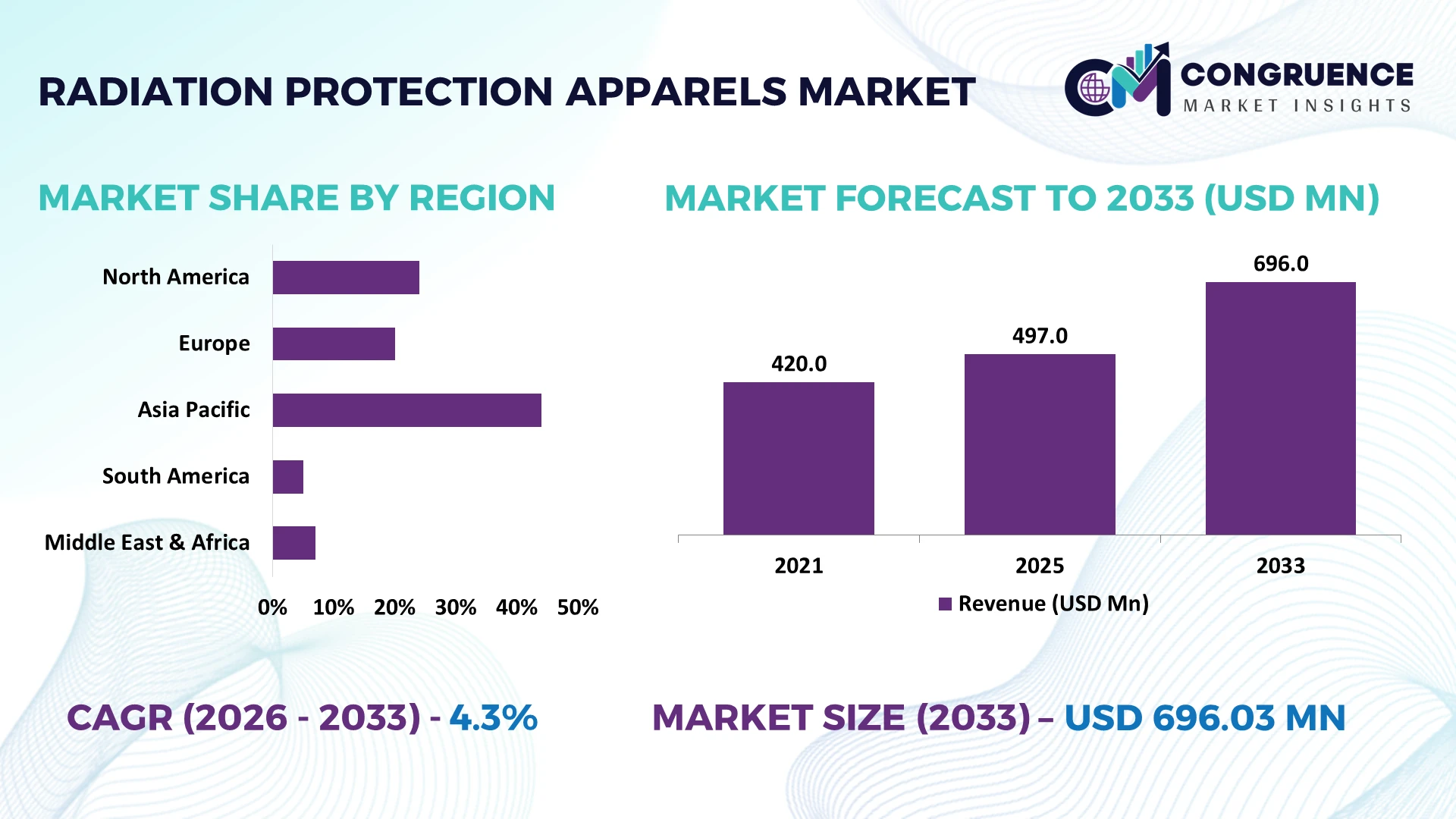
The Global Radiation Protection Apparels Market was valued at USD 497 Million in 2025 and is anticipated to reach a value of USD 696.03 Million by 2033 expanding at a CAGR of 4.3% between 2026 and 2033. Growth is driven by rising image-guided procedures, expanding interventional radiology capacity, stricter occupational dose-control protocols, and the shift from conventional lead garments toward lightweight lead-composite and lead-free protective materials.
The United States remains the dominant country, accounting for approximately 34% of global demand, supported by more than 6,000 hospitals, extensive fluoroscopy and catheterization infrastructure, and rapid replacement of aging protective apparel. Hospital systems are increasing investment in lighter composite aprons and dose-monitoring programs, while approximately 60% of advanced interventional departments use multi-layer protection protocols across radiology, cardiology, and surgical workflows. Germany represents roughly 8% of global demand versus approximately 6% for Japan, reflecting stronger procedure density and occupational radiation-safety enforcement across European hospitals. The post-pandemic expansion of minimally invasive interventions and continuing geopolitical pressure on lead and specialty-material supply chains are accelerating supplier diversification and localized sourcing.
Manufacturers prioritizing lightweight materials, ergonomic designs, verified attenuation performance, and hospital-level replacement programs are positioned to capture the strongest procurement opportunities.
Market Size & Growth: USD 497 million in 2025 advances toward USD 696.03 million by 2033 at 4.3% CAGR, supported by expanding fluoroscopy, interventional cardiology, radiology, and minimally invasive surgical procedure volumes.
Top Growth Drivers: Interventional procedure expansion contributes approximately 35% of incremental demand, replacement of aging aprons around 30%, and stricter occupational radiation-protection compliance nearly 20%, strengthening recurring institutional procurement.
Short-Term Forecast: By 2028, advanced lightweight composite garments are positioned to reduce protective-apparel weight by approximately 20–30% compared with conventional lead-heavy designs, improving clinician mobility during lengthy image-guided procedures.
Emerging Technologies: Lead-free composites, multilayer attenuation materials, RFID-enabled garment tracking, and digital dose-monitoring integration are reshaping product design; advanced composite configurations deliver approximately 15–25% weight reductions while maintaining targeted X-ray attenuation.
Regional Leaders: North America approaches USD 240 million, Europe approximately USD 190 million, and Asia-Pacific nearly USD 175 million by 2033, supported respectively by replacement procurement, tighter safety protocols, and rapid diagnostic infrastructure expansion.
Consumer/End-User Trends: Hospitals represent approximately 65% of radiation protection apparel utilization, with cardiology, radiology, orthopedics, dentistry, and operating-room teams increasingly prioritizing lighter aprons, thyroid shields, eyewear, and ergonomic protection.
Pilot/Case Example: In 2025, hospital transitions toward lightweight composite protective garments demonstrated approximately 20% lower wearable load versus traditional equivalents, addressing fatigue among clinicians performing prolonged fluoroscopy-guided interventions.
Competitive Landscape: The leading supplier group commands an estimated 35–40% combined share, with Infab, Burlington Medical, MAVIG, AliMed, and Trivitron Healthcare competing through attenuation performance, customization, ergonomics, and institutional distribution reach.
Regulatory & ESG Impact: IEC-aligned testing and occupational dose-control requirements reinforce verified attenuation procurement, while lead-free alternatives can reduce hazardous lead content by up to 100%, strengthening hospital sustainability and disposal strategies.
Investment & Funding: More than USD 100 million in estimated industry-wide manufacturing, product-development, distribution, and capacity initiatives supports lightweight materials, customization, and regional production as healthcare supply chains prioritize sourcing resilience.
Innovation & Future Outlook: By 2030, next-generation lead-free composites, smart garment identification, personalized sizing, and connected dose management are expected to push advanced-material penetration beyond 40% of premium hospital procurement.
Radiation protection apparels are becoming increasingly specialized across interventional radiology, cardiology, nuclear medicine, dentistry, and image-guided surgery. Lightweight lead-free composites, ergonomic apron systems, RFID tracking, and personalized protective configurations are accelerating product replacement, with advanced materials reducing garment weight by roughly 20–30%. Tightening occupational exposure controls and hospital supply-chain localization are shifting procurement toward verified, durable protection platforms, establishing the strategic priorities discussed next.
Radiation protection apparel is becoming strategically important as hospitals prioritize occupational dose reduction, clinician ergonomics, and lifecycle management across fluoroscopy-intensive procedures. Interventional cardiology, vascular surgery, orthopedics, and radiology are shifting procurement from basic lead aprons toward lightweight composite systems, while digital garment tracking is modernizing inspection and replacement programs. Institutional buyers increasingly evaluate attenuation consistency, weight, durability, and disposal requirements together.
Advanced lead-free and lead-composite garments can reduce wearable weight by approximately 20–30% versus conventional lead-heavy equivalents while maintaining clinically required shielding performance. The United States leads premium adoption through its large catheterization and interventional imaging base, while China and India combine faster hospital infrastructure expansion with greater price sensitivity. Through 2028, advanced composite penetration should exceed 35% of premium institutional procurement as hospitals standardize ergonomic protection.
Operationally, RFID-tagged aprons allow hospitals to identify inspection status, utilization, and replacement cycles without manual inventory records. Suppliers are therefore investing in composite formulations, customized fitting, digital tracking, local distribution, and hospital partnerships. Competitive advantage will increasingly belong to companies combining verified attenuation, lower garment burden, traceable lifecycle management, and dependable institutional supply.
Increasing fluoroscopy-dependent cardiology, vascular, orthopedic, and interventional radiology procedures is directly expanding occupational shielding requirements. Hospitals account for approximately 65% of radiation protection apparel utilization, while interventional procedure expansion contributes an estimated 35% of incremental product demand. Lightweight composite designs can lower garment weight by 20–30%, reducing physical burden during procedures lasting several hours. In the United States, continued expansion of catheterization laboratories and minimally invasive interventions is pushing hospitals toward standardized apron, thyroid-collar, eyewear, and skirt-vest protection protocols. Occupational dose-management requirements further accelerate scheduled inspection and replacement. Manufacturers are responding with ergonomic sizing, multilayer composites, antimicrobial coverings, and institutional fitting programs. The strategic advantage lies in securing recurring hospital replacement contracts rather than depending primarily on one-time equipment purchases.
Advanced lead-free and multilayer composite apparel remains materially more expensive to manufacture than conventional lead-based protection because bismuth, tungsten, antimony, specialized polymers, and attenuation testing increase input complexity. Premium lightweight garments can carry approximately 15–30% higher acquisition costs, while hospitals frequently replace damaged apparel within 3–5 years depending on utilization and inspection results. In India, Brazil, and other cost-sensitive healthcare systems, centralized procurement frequently favors upfront price over ergonomic lifecycle benefits, slowing premium conversion. Specialty-metal price volatility and internationally distributed material supply also complicate production planning. Manufacturers are countering these constraints through blended composite formulations, longer-term material contracts, modular product portfolios, and localized assembly. Suppliers that demonstrate lower total ownership cost can protect margins without competing solely through procurement discounts.
Digitally traceable and lead-free radiation protection creates an opportunity extending beyond conventional shielding performance. RFID and barcode-enabled garments can reduce manual inventory and inspection administration by approximately 20–30%, while advanced composites deliver 20–30% weight reductions compared with traditional lead-heavy designs. Germany's stringent occupational protection environment provides a strong commercialization base for lifecycle-managed apparel, while India's expanding interventional infrastructure creates opportunities for locally manufactured mid-priced composite products. Through 2028, advanced materials are positioned to exceed 35% of premium institutional procurement as ergonomic specifications become more influential. Suppliers are investing in RFID integration, recyclable coverings, customized fitting platforms, and bismuth- or tungsten-containing formulations. A particularly attractive opportunity is apparel-as-a-service, combining garments, annual inspection, tracking, replacement scheduling, and compliance documentation under recurring hospital contracts.
Scaling advanced radiation protection apparel requires manufacturers to maintain attenuation performance across different X-ray energies while controlling weight, flexibility, seam integrity, and repeated-use durability. Protective garments commonly remain in service for 3–5 years, yet folding, improper storage, intensive cleaning, and mechanical stress can create internal shielding defects before visible exterior damage appears. Inspection programs can identify defect rates exceeding 10% in heavily utilized institutional inventories, creating inconsistent protection if lifecycle controls are weak. U.S. hospitals increasingly expect documented inspection histories and standardized attenuation specifications across multi-site networks, raising supplier qualification requirements. Companies must strengthen material testing, serialized product traceability, repair services, user training, and digital inspection records. Long-term competitiveness therefore depends not simply on producing lighter garments, but on proving consistent protection throughout the complete operational lifecycle.
Lightweight Composites Replace Heavy Lead: Hospitals are accelerating migration toward lead-composite and lead-free garments as clinician ergonomics becomes a procurement metric. Advanced multilayer designs reduce garment weight by approximately 20–30%, while 85% of interventional specialists still use lead-based shielding. Manufacturers are reformulating aprons with bismuth, antimony, and tungsten composites while expanding customized vest-skirt configurations to reduce occupational musculoskeletal burden.
Personalized PPE Gains Procurement Priority: Institutional purchasing is moving from shared inventories toward individually fitted radiation apparel. In clinical practice, approximately 68% of professionals have designated aprons and 55% designated protective eyewear, while customized garments reach about 53% in some interventional settings. Suppliers are expanding body-specific sizing, prescription eyewear, adjustable closures, and digital fitting workflows, creating higher-value replacement cycles and stronger hospital account retention.
Eye Protection Gap Drives Diversification: Protection beyond aprons is becoming a distinct procurement focus. Recent clinical evidence shows thyroid protection usage reaching 97%, protective eyewear 71%, but head-cover adoption only 16% among surveyed interventional professionals. Hospitals are strengthening procedure-room PPE protocols, while manufacturers broaden portfolios into lead glasses, thyroid collars, caps, and complementary shielding accessories, increasing cross-selling opportunities beyond traditional apron contracts.
Digital Tracking Reshapes Apparel Management: Hospitals are shifting radiation PPE management toward serialized identification, RFID tracking, and structured inspection records. With approximately 25% of surveyed professionals unaware of their radiation exposure and 14% reporting exposure above departmental limits, traceability is becoming operationally relevant. Suppliers are integrating garment identification, inspection scheduling, and lifecycle documentation, helping multi-site hospital systems reduce misplaced inventory and standardize replacement decisions.
Lead Aprons account for approximately 55–60% of Radiation Protection Apparels Market demand because they provide whole-torso shielding across diagnostic imaging, fluoroscopy, surgery, and interventional procedures. Their standardized 0.25–0.50 mm lead-equivalent configurations, established hospital procurement cycles, and broad clinical applicability preserve segment dominance. However, purchasing is shifting toward vest-skirt and lightweight composite designs as prolonged wear makes ergonomics increasingly important. Suppliers are therefore concentrating material innovation and customized fitting investments around this high-volume category.
Protective Eyewear is the fastest-growing type as occupational lens-dose awareness converts an historically underpenetrated category into a dedicated purchasing requirement. Thyroid Shields remain the second major protection layer, benefiting from routine fluoroscopic use, while Radiation Gloves address specialized procedures involving hands near scatter fields. Lead Caps remain comparatively niche because routine adoption is limited, although high-exposure interventional specialists represent a targeted premium segment. This widening protection mix favors manufacturers capable of supplying integrated PPE portfolios rather than single-product apron lines.
Diagnostic Imaging represents approximately 40–45% of market demand, reflecting the scale of X-ray, fluoroscopy, CT-assisted procedures, and routine radiographic workflows requiring occupational protection. High equipment utilization and large radiographer and clinician workforces sustain recurring demand for Lead Aprons, Thyroid Shields, and Protective Eyewear. Established imaging departments increasingly standardize PPE inventories by procedure room and staff category, encouraging suppliers to provide coordinated apparel packages and scheduled inspection programs rather than isolated products.
Interventional Radiology is the fastest-growing application because longer fluoroscopy exposure, complex vascular procedures, and closer operator proximity to scatter radiation intensify protection requirements. Recent practice data show chest protection above 93%, thyroid protection near 97%, and protective eyewear around 71% among surveyed interventional professionals. Nuclear Medicine requires specialized shielding for radionuclide handling, while Radiation Therapy maintains targeted occupational applications around treatment preparation. Dental Imaging remains a high-volume but lower-intensity use case. Suppliers are consequently prioritizing lightweight interventional apparel while maintaining standardized products for routine diagnostic environments.
Hospitals account for approximately 60–65% of Radiation Protection Apparels Market demand because they combine diagnostic imaging, operating rooms, catheterization laboratories, interventional radiology, nuclear medicine, and radiation therapy within high-utilization environments. Multiple exposed employee groups and recurring inspection requirements create substantially larger apparel inventories than other end-users. Large U.S. and European hospital networks are increasingly centralizing purchasing around standardized attenuation specifications, personalized sizing, and lifecycle documentation, encouraging manufacturers to compete through institutional contracts and complete protective portfolios.
Diagnostic Centers represent the fastest-growing end-user group as outpatient imaging and image-guided procedures expand beyond traditional hospital settings. Dental Clinics maintain steady demand for compact aprons and thyroid protection, while Research Laboratories require specialized apparel for controlled radiation experiments. Nuclear Facilities form a smaller but technically demanding segment where worker protection, contamination controls, and strict safety procedures support premium specifications. Suppliers are targeting these differentiated buyers through tiered pricing, customized protection levels, distributor partnerships, and application-specific product configurations, shifting competition from standardized apparel toward occupational-risk-based solutions.
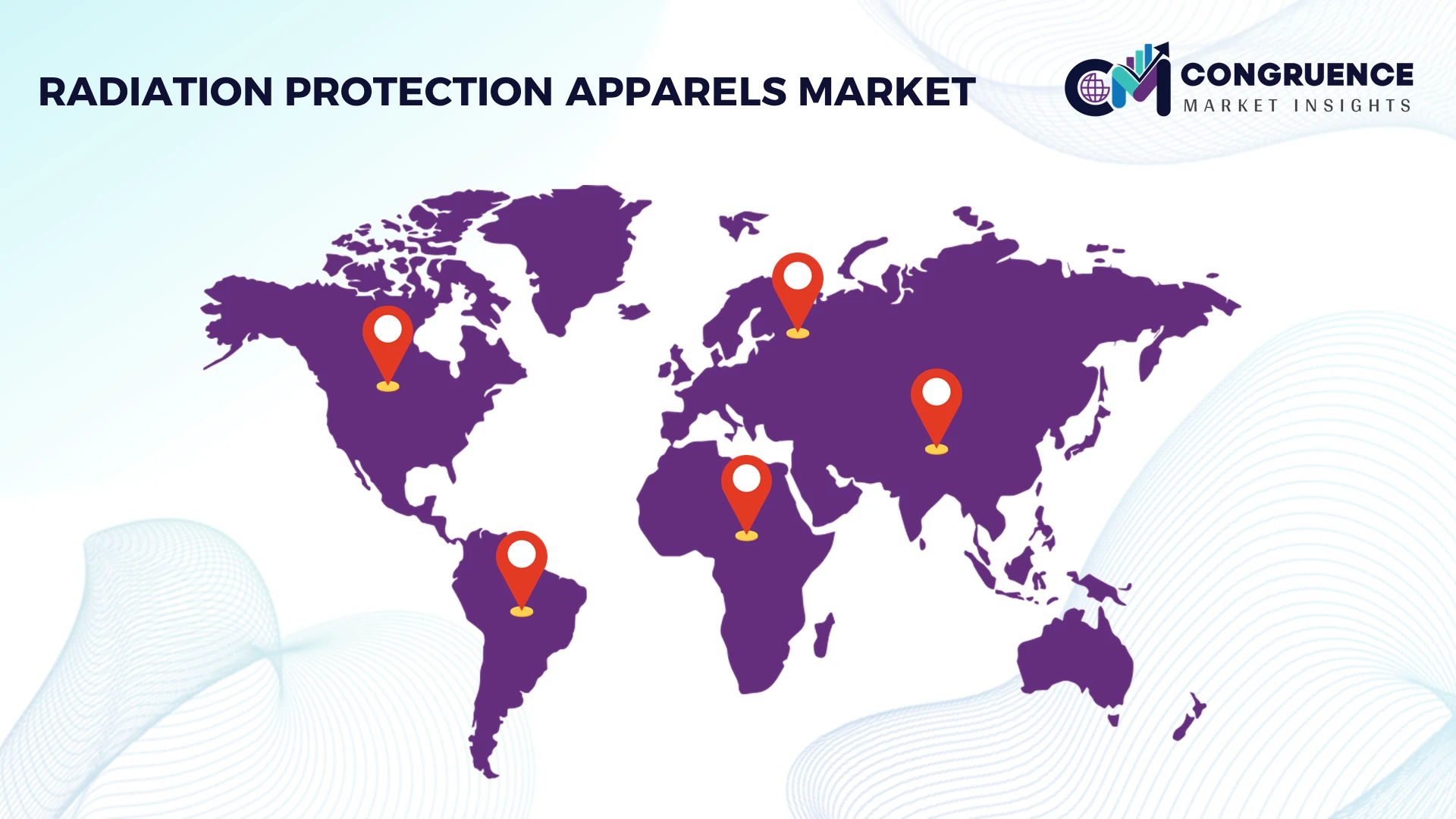
North America accounted for the largest market share at 38% in 2025 however, Asia-Pacific is expected to register the fastest growth, expanding at a CAGR of 5.6% between 2026 and 2033.
Hospital Networks Accelerate Premium PPE Standardization
North America held approximately 38% of global demand in 2025, supported by dense interventional cardiology, diagnostic imaging, oncology, and image-guided surgical infrastructure. U.S. hospital networks increasingly standardize 0.35–0.50 mm Pb-equivalent aprons, thyroid collars, eyewear, and two-piece systems across multi-site operations. Procurement is moving toward lightweight composites that reduce wearable load by approximately 20–30%, particularly for clinicians performing prolonged fluoroscopy. Digital inventory systems are also improving annual inspection, garment allocation, and replacement traceability. Canada adds demand through publicly funded imaging modernization and occupational radiation-safety programs. The key operational shift is from fragmented PPE purchasing toward lifecycle-managed institutional contracts combining customized fitting, attenuation verification, inspection tracking, and replacement services, favoring suppliers with nationwide distribution and responsive after-sales capabilities.
United States Market Outlook: The United States represents approximately 85% of North American market demand, supported by more than 6,000 hospitals and extensive catheterization, surgical imaging, and interventional radiology infrastructure. Large healthcare systems increasingly prioritize ergonomic vest-skirt configurations and individually assigned apparel, creating opportunities for domestic suppliers offering customization, rapid replacement, RFID-enabled tracking, and centralized procurement support.
Regulation Strengthens Full-Body Protection Protocols
Europe accounted for approximately 28% of global demand in 2025, with Germany, France, the United Kingdom, and Italy forming the principal procurement centers. Occupational radiation requirements and mature fluoroscopy infrastructure support systematic deployment of aprons, thyroid shields, protective eyewear, and complementary barriers. Procurement specifications increasingly emphasize certified attenuation, ergonomic construction, product traceability, and reduced hazardous-material content. Recent interventional practice assessments indicate thyroid-shield usage approaching 97% and protective-eyewear utilization above 70% in advanced clinical settings, demonstrating movement beyond apron-only protection. European suppliers are responding with lead-free composite formulations, customized sizing, and lifecycle inspection services. Sustainability considerations additionally strengthen interest in non-lead alternatives because disposal of conventional lead-containing garments requires controlled waste handling, creating a measurable lifecycle advantage for recyclable or lower-toxicity shielding materials.
Germany Market Outlook: Germany combines extensive hospital infrastructure with strong radiation-protection governance and established medical-device manufacturing capabilities. More than 1,800 hospitals support a substantial addressable institutional base, while high utilization of interventional cardiology and diagnostic imaging reinforces replacement demand. German buyers emphasize documented attenuation, CE-compliant products, ergonomic engineering, and dependable servicing, supporting premium rather than purely price-driven competition.
Imaging Infrastructure Expands Deployment Scale
Asia-Pacific represented approximately 23% of global demand in 2025 and is gaining strategic importance as China, India, Japan, and South Korea expand diagnostic and interventional capacity. China combines large hospital volumes with domestic medical-device manufacturing, while India is adding imaging capacity across private hospital chains, diagnostic networks, and tier-2 cities. Japan maintains higher penetration of premium ergonomic protection within technologically advanced clinical environments. The region's key shift is localization: manufacturers are developing lower-weight composite garments at price points suited to high-volume procurement while reducing dependence on imported finished products. Hospital expansion and increasing catheterization-laboratory deployment are broadening requirements beyond aprons toward thyroid collars and eyewear. Suppliers combining localized production, distributor networks, standardized attenuation testing, and application-specific product tiers can address both premium and cost-sensitive institutional purchasing.
China Market Outlook: China provides the region's strongest scale advantage through more than 38,000 hospitals and extensive domestic medical-equipment production. Expansion of interventional cardiology, oncology, and digital imaging strengthens occupational shielding requirements across provincial healthcare systems. Domestic suppliers can leverage localized materials, manufacturing scale, and shorter delivery cycles, while international brands remain positioned around premium composites, ergonomics, and validated attenuation performance.
Private Imaging Networks Drive Replacement Demand
South America accounted for approximately 6% of global demand in 2025, with Brazil representing the largest operational base, followed by Argentina and Colombia. Demand is concentrated in metropolitan hospitals, diagnostic centers, dental networks, and interventional facilities where fluoroscopy and digital radiography utilization is highest. Brazil's large private healthcare system supports recurring replacement of aprons and thyroid protection, while public-sector procurement remains more price sensitive and tender dependent. Imported premium garments face currency volatility, customs costs, and longer replenishment cycles, encouraging distributors to hold localized inventories and develop regional servicing capabilities. Lightweight composite adoption remains below mature-market levels, creating room for mid-priced alternatives that balance attenuation performance and durability. Suppliers are responding through distributor partnerships, localized customization, and broader product portfolios designed for institutional tenders.
Brazil Market Outlook: Brazil concentrates roughly 55–60% of South American demand, supported by more than 7,000 hospital establishments and extensive private diagnostic infrastructure. São Paulo and other major healthcare hubs provide the strongest market for premium apparel. Competitive positioning increasingly depends on local inventory, Portuguese-language technical support, regulatory familiarity, and faster fulfillment rather than reliance on imported standardized products alone.
Healthcare Megaprojects Upgrade Radiation Safety
Middle East & Africa represented approximately 5% of global demand in 2025, with procurement concentrated in Saudi Arabia, the UAE, South Africa, and major private healthcare centers. Gulf healthcare modernization is increasing deployment of advanced imaging, oncology, interventional cardiology, and surgical systems, simultaneously raising requirements for occupational radiation protection. Saudi Arabia's hospital expansion under Vision 2030 is particularly important because new specialist facilities increasingly specify modern radiation-safety infrastructure during initial equipment procurement rather than through subsequent retrofits. African demand remains fragmented by imaging-equipment availability, budget constraints, and reliance on imported protective products. Suppliers are addressing these differences through Gulf distributor partnerships, institutional tenders, training support, and tiered apparel portfolios. Integrated procurement alongside imaging installations offers a particularly effective route to secure protection-apparel demand before hospitals become operational.
Saudi Arabia Market Outlook: Saudi Arabia represents approximately 35–40% of Middle East & Africa demand, supported by large hospital modernization programs and expanding specialist-care infrastructure. More than 500 hospitals provide an established procurement base, while new oncology, radiology, and cardiac facilities strengthen demand for premium protection. Suppliers securing local distribution, regulatory capabilities, and hospital-project partnerships gain an important tender-access advantage.
Global specialists Burlington Medical, Infab, MAVIG, and Barrier Technologies compete with diversified medical suppliers such as AliMed and regional cost-focused manufacturers across hospital and imaging-center procurement. The top five players collectively account for approximately 35–40% of market demand, indicating moderate fragmentation despite strong institutional brand recognition. Competition increasingly centers on lightweight attenuation performance, customization, delivery reliability, and lifecycle services rather than apron pricing alone. Advanced composite garments deliver roughly 20–30% weight reduction, while customized configurations can command 10–20% premiums over standardized alternatives. Suppliers are expanding direct hospital relationships, digital fitting, RFID-based inventory management, distributor partnerships, and lead-free material portfolios. Competition is shifting toward integrated radiation-safety platforms combining apparel, inspection, tracking, and replacement support. Certified attenuation testing, medical-device compliance, specialist materials expertise, and established hospital procurement relationships remain substantial entry barriers. Winning suppliers require verified protection performance, ergonomic differentiation, dependable supply, rapid customization, and scalable lifecycle service capabilities across institutional accounts.
Burlington Medical
Infab Corporation
MAVIG GmbH
Barrier Technologies
AliMed, Inc.
Trivitron Healthcare
Lite Tech, Inc.
Scanflex Medical AB
Kemper Medical
BLOXR Solutions
AADCO Medical, Inc.
Rothband
MXR Imaging
Protech Medical
Current radiation protection apparel technology is shifting toward lightweight multilayer composites, lead-free attenuation cores, ergonomic vest-skirt systems, and digital garment tracking. Modern bismuth-, tungsten-, and antimony-based materials can reduce garment weight by 20–30% versus conventional lead-heavy designs while maintaining required shielding. RFID and cloud-based inspection tools can cut manual inventory administration by roughly 20%, improving replacement accuracy, compliance documentation, and utilization visibility across hospital networks.
Emerging systems integrate personal protection with source-control shielding, real-time dosimetry, and workflow analytics. EtherealShield-type 0.125 mm aprons paired with source-blocking systems can deliver up to 90% attenuation while materially reducing musculoskeletal burden compared with traditional 0.5 mm aprons. Adoption remains concentrated in interventional cardiology and radiology, where premium lightweight configurations are gaining deployment. Suppliers combining apparel, digital tracking, fitting, and lifecycle services gain stronger institutional retention than vendors selling standardized aprons alone.
Disruptive development through 2026–2028 will center on smart wearables, advanced polymer composites, adaptive thermal fabrics, and integrated dose-management ecosystems. Temperature-regulating liners can improve wearer comfort during prolonged procedures, while serialized apparel supports predictive inspection and replacement. Premium composite penetration should exceed 35% of advanced hospital procurement by 2028, rewarding manufacturers that commercialize validated, lighter, traceable protection now across increasingly standardized multi-site clinical operations.
March 2024 AliMed launched its proprietary radiation protection garment line, bringing manufacturing in-house with two apron styles, lead and lead-free cores, body-specific sizing, and AliTrack cloud tracking, strengthening supply reliability and customization across institutional hospital procurement programs nationwide. Source: alimed.com
September 2025 MAVIG and Outlast Technologies integrated temperature-regulating fabric into radiation-protection headwear and vests; the phase-change textile absorbs, stores, and releases excess body heat, improving comfort during prolonged imaging procedures and differentiating premium ergonomic apparel during long procedures. Source: indiantextilemagazine.in
April 2026 Burlington Medical faced an FDA Class II recall affecting 41,962 thyroid shields using Xenolite 800 material because attenuation could degrade over time, intensifying lifecycle-testing requirements and hospital scrutiny of protective-garment durability across worldwide healthcare inventories affected. Source: fda.gov
June 2026 INFAB launched its Ray-Ban radiation protection eyewear collection, fitting genuine frames with 0.75 mm Pb-equivalent lenses tested to ASTM attenuation standards, broadening premium clinician eyewear choices and strengthening differentiation beyond conventional apron portfolios in cath labs. Source: linkedin.com
The Radiation Protection Apparels Market Report evaluates Lead Aprons, Thyroid Shields, Radiation Gloves, Protective Eyewear, and Lead Caps across Diagnostic Imaging, Interventional Radiology, Nuclear Medicine, Radiation Therapy, and Dental Imaging. It assesses Hospitals, Diagnostic Centers, Dental Clinics, Research Laboratories, and Nuclear Facilities, with hospitals representing approximately 60–65% of institutional demand and Lead Aprons accounting for roughly 55–60% of type-level deployment.
Regional coverage spans North America, Europe, Asia-Pacific, South America, and Middle East & Africa, including country-level procurement, infrastructure, regulation, and adoption dynamics. Technology assessment covers lead-free composites, lightweight multilayer materials, RFID garment tracking, thermal-management fabrics, ergonomic vest-skirt systems, and integrated dose-management solutions. The analysis supports 2026–2033 investment planning, geographic expansion, product-development prioritization, partnership strategy, supply-chain positioning, and competitive benchmarking, while identifying emerging opportunities in personalized PPE, digital lifecycle management, accessory penetration, and advanced interventional-radiology protection.
| Report Attribute/Metric | Report Details |
|---|---|
Market Revenue in 2025 | USD 497 Million |
Market Revenue in 2033 | USD 696.03 Million |
CAGR (2026 - 2033) | 4.3% |
Base Year | 2025 |
Forecast Period | 2026 - 2033 |
Historic Period | 2021 - 2025 |
Segments Covered | By Type
By Application
By End-User
|
Key Report Deliverable | Revenue Forecast, Growth Trends, Market Dynamics, Segmental Overview, Regional and Country-wise Analysis, Competition Landscape |
Region Covered | North America, Europe, Asia-Pacific, South America, Middle East, Africa |
Key Players Analyzed | Burlington Medical, Infab Corporation, MAVIG GmbH, Barrier Technologies, AliMed, Inc., Trivitron Healthcare, Lite Tech, Inc., Scanflex Medical AB, Kemper Medical, BLOXR Solutions, AADCO Medical, Inc., Rothband, MXR Imaging, Protech Medical |
Customization & Pricing | Available on Request (10% Customization is Free) |




