
Reports
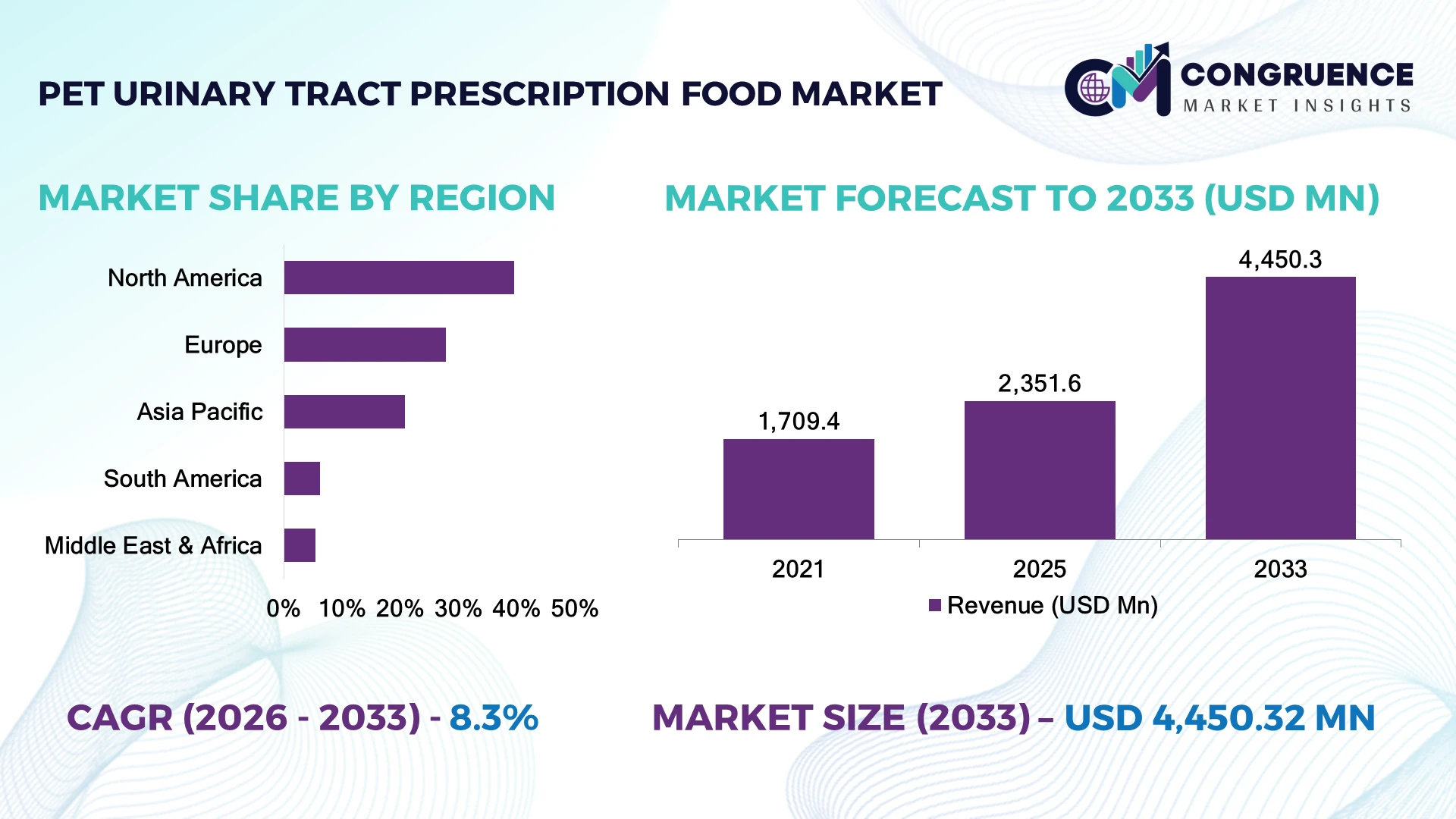
The Global Pet Urinary Tract Prescription Food Market was valued at USD 2,351.6 Million in 2025 and is anticipated to reach a value of USD 4,450.3 Million by 2033 expanding at a CAGR of 8.3% between 2026 and 2033. Growth is driven by increasing veterinary diagnosis of urinary disorders, wider prescription nutrition adoption, premium therapeutic pet food innovation, and expanding companion animal healthcare expenditure.
The United States accounts for approximately 38% of global prescription urinary pet food consumption, supported by advanced veterinary networks, high pet insurance penetration, and strong therapeutic nutrition adoption. More than 71% of specialty veterinary hospitals recommend prescription urinary diets as first-line nutritional management, compared with approximately 46% in Japan. Ongoing supply-chain diversification following global ingredient sourcing adjustments has encouraged greater regional manufacturing and formulation resilience across premium pet nutrition.
Manufacturers investing in veterinary partnerships, clinically validated formulations, and resilient ingredient sourcing are strengthening long-term competitive positioning in therapeutic pet nutrition.
Market Size & Growth: USD 2,351.6 million in 2025 to USD 4,450.3 million by 2033 at 8.3% CAGR, driven by veterinary nutrition and premium therapeutic diets.
Top Growth Drivers: Companion animal ownership +24%, veterinary diagnosis +29%, prescription diet adoption +21%.
Short-Term Forecast: By 2028, treatment compliance improves approximately 18% through personalised nutritional management.
Emerging Technologies: AI nutrition planning, microbiome research, precision ingredient formulation accelerate product innovation.
Regional Leaders: North America (~USD 1.75 billion), Europe (~USD 1.05 billion), Asia-Pacific (~USD 950 million), supported by expanding veterinary care.
Consumer/End-User Trends: Around 64% of pet owners follow veterinarian-recommended therapeutic nutrition programmes.
Pilot/Case Example: 2026 veterinary nutrition programme reduced urinary recurrence by approximately 16% among monitored pets.
Competitive Landscape: Leading manufacturer holds nearly 24% share alongside Mars, Nestlé Purina, Virbac, and Dechra.
Regulatory & ESG Impact: Sustainable ingredient sourcing improves procurement efficiency by approximately 13%.
Investment & Funding: More than USD 1.8 billion directed toward premium pet nutrition expansion and manufacturing.
Innovation & Future Outlook: Functional nutrition, urinary biomarkers, and personalised diets are reshaping therapeutic pet care.
The Pet Urinary Tract Prescription Food Market is increasingly supported by veterinary clinics, specialty pet hospitals, and premium pet retailers seeking evidence-based nutritional management for urinary disorders. Approximately 42% of newly introduced therapeutic formulations now incorporate microbiome-supporting ingredients and targeted mineral balancing, while stricter ingredient quality requirements are encouraging manufacturers to strengthen regional sourcing and clinical validation, providing the foundation for the strategic discussion below.
Prescription urinary nutrition has become a strategic growth area as veterinary healthcare shifts from reactive treatment toward long-term disease management through clinically formulated diets. Competition is increasingly centred on scientific validation, veterinary endorsement, and premium nutritional efficacy rather than conventional pet food positioning. Digital veterinary platforms and stronger prescription distribution networks are also reshaping how therapeutic nutrition reaches pet owners, while manufacturers continue restructuring ingredient sourcing to improve product consistency and supply resilience.
Advanced therapeutic formulations containing controlled mineral profiles, urinary pH management, and microbiome-supporting ingredients improve nutritional compliance by approximately 22% compared with conventional maintenance diets while reducing recurrent urinary episodes by nearly 17% in monitored clinical settings. North America leads commercial adoption through extensive veterinary infrastructure, whereas Japan emphasises precision nutritional formulations supported by specialist veterinary practices. Over the next two to three years, approximately 55% of newly launched prescription urinary diets are expected to incorporate functional ingredients targeting broader urinary and digestive health.
Manufacturers are expanding collaborations with veterinary hospital networks, investing in clinical feeding studies, and increasing regional production capacity to shorten supply cycles. Subscription-based prescription nutrition programmes and digital pet health monitoring are improving customer retention and treatment continuity. Companies combining scientific evidence, veterinary engagement, premium ingredient quality, and efficient distribution networks will establish stronger competitive positioning as therapeutic nutrition becomes a core component of companion animal healthcare.
Veterinary diagnosis and evidence-based nutritional intervention have become the primary catalysts for prescription urinary diet adoption. Approximately 67% of companion animals diagnosed with lower urinary tract disorders are now prescribed therapeutic nutrition alongside clinical treatment, while recurrence rates decline by nearly 19% when dietary compliance is maintained. Digital veterinary practice management systems in the United States are improving prescription tracking and follow-up consultations, increasing long-term treatment adherence. This shift is strengthening demand for clinically validated formulations with controlled mineral content and urinary pH management. Manufacturers are expanding veterinary education programmes, investing in clinical research, and strengthening partnerships with animal hospitals to reinforce prescription confidence and secure premium positioning within specialised companion animal nutrition.
Therapeutic pet food manufacturers continue facing cost pressure from specialised protein ingredients, functional additives, and pharmaceutical-grade quality standards. Premium raw materials account for approximately 49% of production costs, while clinically validated ingredient procurement expenses have increased by nearly 14% across recent sourcing cycles. Canada has experienced periodic supply constraints for selected specialty animal nutrition ingredients due to tighter import controls and evolving ingredient traceability requirements. These structural pressures reduce pricing flexibility and compress manufacturer margins, particularly in price-sensitive retail channels. Companies are mitigating exposure through regional ingredient sourcing, long-term procurement agreements, formulation optimisation, and expanded domestic manufacturing capacity to maintain product availability without compromising therapeutic efficacy.
Precision nutrition supported by microbiome science and digital pet health monitoring is creating high-value opportunities beyond conventional prescription diets. Approximately 38% of veterinary clinics are integrating personalised nutritional recommendations into chronic urinary disease management, while AI-assisted dietary planning improves treatment compliance by nearly 16%. Japan is accelerating adoption of preventive companion animal healthcare, encouraging manufacturers to develop condition-specific nutritional formulations supported by clinical evidence. Companies are investing in microbiome research, biomarker-based product development, and collaborations with veterinary technology providers. A significant strategic opportunity lies in combining urinary health management with digestive and immune support, enabling differentiated premium product portfolios and stronger customer retention.
Maintaining consistent treatment outcomes depends on sustained owner compliance, veterinary monitoring, and effective prescription management rather than product availability alone. Approximately 34% of prescribed therapeutic diets are discontinued before recommended treatment duration, while inconsistent feeding practices reduce nutritional effectiveness by nearly 21%. Germany's growing use of digital veterinary platforms highlights the need for integrated prescription tracking, automated refill systems, and remote nutritional monitoring. Manufacturers must strengthen digital engagement, veterinary training, and subscription-based fulfilment models while expanding clinical support services. Companies that successfully integrate therapeutic nutrition with connected veterinary care ecosystems will achieve stronger long-term competitiveness and improved patient adherence.
Microbiome Nutrition Gains Momentum: Approximately 46% of newly introduced urinary prescription diets now incorporate microbiome-supporting ingredients alongside mineral-balancing formulations. Clinical nutrition programmes report nearly 18% higher dietary adherence, encouraging manufacturers to expand research partnerships and optimise ingredient sourcing as regulatory scrutiny over functional health claims continues to increase.
Veterinary Digital Prescriptions Expand: Around 41% of companion animal hospitals have integrated digital prescription platforms, reducing prescription processing time by approximately 22% and improving refill continuity by nearly 17%. Pet food manufacturers are aligning distribution networks with veterinary software providers to streamline therapeutic diet fulfilment and strengthen customer retention.
Localised Ingredient Sourcing Accelerates: Following continued supply-chain restructuring, approximately 32% of premium therapeutic pet food manufacturers have increased regional ingredient procurement, shortening lead times by nearly 15%. Companies are expanding local manufacturing partnerships and strengthening supplier qualification programmes to improve formulation consistency and operational resilience without compromising clinical quality.
Functional Formulations Become Multifaceted: Nearly 39% of advanced urinary prescription products now combine urinary health support with digestive, immune, or weight-management benefits, reducing product switching and improving treatment continuity. Manufacturers are accelerating portfolio consolidation, investing in multifunctional nutrition research, and expanding veterinary education programmes to strengthen differentiation in premium therapeutic pet nutrition.
Dry Pet Urinary Tract Prescription Food accounts for approximately 63% of the global market owing to its extended shelf life, cost efficiency, convenient storage, and compatibility with long-term therapeutic feeding programmes. Veterinary clinics and pet owners continue favouring dry formulations for routine urinary health management because they offer consistent nutrient delivery and simplified feeding schedules. Wet Prescription Diets represent the fastest-growing segment as veterinarians increasingly recommend higher-moisture nutrition to improve hydration and reduce urinary crystal formation, particularly in cats. Semi-Moist Prescription Diets and therapeutic treats remain niche offerings that support treatment adherence and dietary variety but account for comparatively smaller volumes.
Wet prescription diets have expanded adoption by nearly 24% across specialist veterinary practices, while premium dry formulations continue achieving approximately 58% repeat purchase rates through established prescription programmes. Manufacturers are investing in palatability enhancement, functional ingredient innovation, and veterinary-exclusive product portfolios while expanding production capacity for moisture-rich therapeutic diets. Investment priorities are steadily shifting toward clinically differentiated formulations that combine urinary health management with broader wellness benefits.
According to findings presented by the World Small Animal Veterinary Association during 2026 clinical nutrition discussions, hydration-focused nutritional management is increasingly incorporated into urinary disease treatment protocols, particularly for companion cats with recurrent lower urinary tract conditions.
Feline Urinary Tract Disease management represents approximately 61% of prescription urinary nutrition demand, reflecting the higher incidence of feline lower urinary tract disorders and the widespread use of therapeutic diets as part of veterinary treatment protocols. Clinically formulated diets designed to regulate urinary pH, mineral balance, and hydration remain central to long-term disease management. Canine Urinary Tract Disease is the fastest-growing application as improved veterinary screening and rising awareness of bladder stone prevention encourage earlier dietary intervention. Preventive urinary health nutrition is also gaining momentum among ageing companion animals with recurring urinary conditions.
Prescription nutrition programmes for dogs have expanded by approximately 22%, while integrated urinary and digestive health formulations have increased by nearly 18% within veterinary product launches. Manufacturers are strengthening collaboration with veterinary hospitals, expanding prescription product ranges, and incorporating digital treatment support into clinical nutrition programmes. Demand is becoming increasingly concentrated in evidence-based therapeutic applications that improve treatment compliance and reduce recurrence risks.
A 2025 veterinary practice survey released through the American Animal Hospital Association highlighted prescription nutritional therapy as one of the most frequently recommended long-term management strategies for companion animals diagnosed with urinary tract disorders.
Veterinary Hospitals and Clinics account for approximately 57% of global prescription urinary food purchases due to direct diagnosis, prescription authority, and continuous patient monitoring. These facilities remain the primary distribution channel for clinically formulated diets because veterinarians integrate nutritional therapy into comprehensive treatment plans. Veterinary Pharmacies are the fastest-growing end-user segment as prescription dispensing becomes increasingly digitised and integrated with online refill systems. Pet Specialty Retailers continue supporting follow-up purchases under veterinary guidance, while authorised e-commerce platforms are strengthening treatment continuity through subscription-based fulfilment models.
Veterinary pharmacies have increased prescription diet dispensing by nearly 21%, while digital refill programmes improve treatment adherence by approximately 17%. Manufacturers are expanding professional education initiatives, strengthening clinic partnerships, and developing exclusive prescription portfolios while introducing customised loyalty programmes for veterinary networks. Competitive positioning is increasingly shaped by clinical engagement, digital prescription integration, and efficient distribution ecosystems rather than conventional retail presence.
A 2026 companion animal healthcare assessment by the World Organisation for Animal Health indicated that veterinary-supervised nutritional management continues expanding as an integral component of chronic disease treatment across developed companion animal healthcare systems.
North America accounted for the largest market share at 39.6% in 2025 however, Asia-Pacific is expected to register the fastest growth, expanding at a CAGR of 9.4% between 2026 and 2033.

Veterinary Nutrition Networks Strengthen Market Leadership
North America contributes approximately 39.6% of the global Pet Urinary Tract Prescription Food market, supported by advanced veterinary infrastructure, high pet insurance coverage, and strong acceptance of therapeutic nutrition. Prescription diets are increasingly integrated into long-term disease management protocols through veterinary hospitals and digital pet health platforms. Around 68% of companion animal clinics routinely recommend prescription urinary nutrition following diagnosis of urinary tract disorders. Manufacturers continue expanding veterinary-exclusive product portfolios, strengthening regional manufacturing capacity, and integrating digital prescription fulfilment with veterinary practice software to improve treatment continuity and customer retention while reducing supply lead times.
United States Market Outlook: The United States dominates regional demand through its extensive companion animal healthcare ecosystem, advanced veterinary hospital networks, and mature prescription pet food distribution channels. More than 72% of specialty veterinary hospitals incorporate nutritional therapy into urinary disease treatment plans, while subscription-based prescription food delivery continues expanding. Companies are investing in domestic manufacturing, veterinary education, and clinically validated formulation research to strengthen premium therapeutic nutrition offerings and reinforce long-term customer loyalty.
Clinical Nutrition Standards Drive Premium Adoption
Europe accounts for approximately 27.8% of the global market, supported by stringent pet nutrition quality standards, high veterinary engagement, and increasing focus on preventive companion animal healthcare. Veterinary professionals are expanding nutritional management programmes for chronic urinary disorders, encouraging wider adoption of clinically formulated diets. Approximately 51% of prescription urinary diets sold in specialist channels now feature multifunctional formulations supporting both urinary and digestive health. Manufacturers continue investing in premium ingredient traceability, sustainable packaging, and specialised veterinary partnerships to strengthen competitive differentiation.
Germany Market Outlook: Germany remains the leading European market due to its established veterinary care infrastructure, premium pet food manufacturing capabilities, and strong regulatory framework governing companion animal nutrition. Nearly 44% of veterinary clinics utilise digital prescription management systems for therapeutic diets, improving patient monitoring and refill compliance. Domestic manufacturers continue expanding research into clinically supported nutritional formulations while strengthening regional production capacity.
Companion Animal Healthcare Expands Rapidly
Asia-Pacific is emerging as the fastest-growing regional market through rising pet ownership, expanding veterinary infrastructure, and increasing consumer spending on specialised companion animal healthcare. Japan, China, South Korea, and Australia are strengthening veterinary nutrition services while premium therapeutic pet food gains wider acceptance. Approximately 36% of newly established companion animal hospitals now include dedicated nutritional consultation services, encouraging prescription diet adoption. Manufacturers are expanding regional production facilities, investing in veterinary partnerships, and strengthening local distribution networks to improve product accessibility and reduce import dependency.
Japan Market Outlook: Japan leads the regional prescription urinary nutrition market through advanced veterinary clinical practices, ageing companion animal demographics, and strong consumer acceptance of premium therapeutic nutrition. Around 58% of specialist veterinary clinics recommend prescription urinary diets as part of chronic urinary disease management. Manufacturers continue investing in highly palatable formulations, precision nutrition research, and local production capabilities to meet sophisticated clinical and consumer requirements.
Premium Pet Healthcare Gains Momentum
South America is witnessing increasing adoption of prescription urinary nutrition as veterinary services expand and companion animal healthcare spending rises. Brazil and Argentina are driving demand through improving veterinary access and growing awareness of nutritional disease management. Approximately 29% of premium pet food distributors have expanded therapeutic nutrition portfolios during recent product cycles. Manufacturers are strengthening partnerships with veterinary clinics, improving regional logistics, and expanding local packaging operations while addressing affordability challenges across developing pet care markets.
Brazil Market Outlook: Brazil represents the largest regional market because of its sizeable companion animal population, expanding veterinary services, and well-developed pet food manufacturing industry. Nearly 34% of veterinary hospitals have broadened prescription nutrition programmes for chronic urinary disease management. Companies continue increasing local manufacturing, veterinary training initiatives, and distributor partnerships to improve nationwide availability of therapeutic nutrition products.
Veterinary Infrastructure Supports Market Development
The Middle East & Africa market is expanding through investment in veterinary healthcare infrastructure, premium pet retail networks, and specialised companion animal services. Gulf countries are experiencing increasing demand for veterinary-prescribed therapeutic nutrition as pet ownership continues rising in urban centres. Approximately 31% of premium veterinary clinics have expanded prescription nutrition offerings during the past two years. Manufacturers are strengthening regional distribution partnerships, investing in cold-chain logistics where required, and improving product availability through authorised veterinary channels.
United Arab Emirates Market Outlook: The United Arab Emirates leads regional development owing to its advanced veterinary clinics, premium pet care ecosystem, and high consumer expenditure on companion animal health. Approximately 42% of specialist veterinary facilities provide structured nutritional counselling for chronic urinary conditions alongside prescription diet recommendations. International manufacturers continue expanding distribution agreements, veterinary education programmes, and premium product availability to support the country's evolving companion animal healthcare market.
Hill's Pet Nutrition, Royal Canin, Nestlé Purina PetCare, Virbac, and Dechra compete aggressively for veterinary prescription channels, while regional premium nutrition brands challenge through pricing and local distribution. The top five companies collectively command approximately 68% of global market share. Competition is centred on clinical evidence, veterinary endorsement, formulation innovation, and supply-chain resilience rather than retail pricing alone. Scientifically validated diets improve treatment adherence by approximately 18%, while regional manufacturing reduces replenishment times by nearly 16%. Companies are expanding veterinary partnerships, investing in clinical feeding studies, strengthening direct-to-clinic distribution, and vertically integrating ingredient sourcing to ensure formulation consistency. The competitive landscape is shifting toward multifunctional therapeutic nutrition combining urinary, digestive, and immune health within single prescription products. Regulatory approval requirements, long-term clinical validation, and veterinary trust remain significant entry barriers. Winning requires clinically proven nutrition, strong veterinary engagement, resilient manufacturing, premium ingredient quality, and seamless prescription fulfilment across digital and physical healthcare channels.
Hill's Pet Nutrition
Royal Canin
Nestlé Purina PetCare
Virbac
Dechra Pharmaceuticals
Farmina Pet Foods
Affinity Petcare
Diamond Pet Foods
Wellness Pet Company
ADM Pet Nutrition
Alltech
VetIQ
TROVET Pet Foods
Husse
Clinical nutrition technology is evolving through precision mineral balancing, urinary pH modulation, microbiome-supporting prebiotics, and advanced ingredient bioavailability. Approximately 64% of newly introduced prescription urinary diets now incorporate functional microbiome ingredients, improving digestive support while reducing urinary recurrence risk by nearly 17%. Digital veterinary prescription platforms and nutritional monitoring applications are increasingly integrated with therapeutic feeding programmes, strengthening long-term treatment compliance and patient follow-up across companion animal healthcare networks.
Compared with conventional urinary formulations, advanced prescription diets containing targeted prebiotic blends and controlled mineral profiles improve dietary acceptance by approximately 21% while enhancing hydration-related urinary management by nearly 18%. Around 46% of specialist veterinary clinics now recommend multifunctional therapeutic diets addressing urinary and secondary health conditions simultaneously. Leading manufacturers benefit through greater product differentiation, stronger veterinary confidence, and higher repeat prescription rates, creating a durable competitive advantage over conventional premium pet food suppliers.
Between 2026 and 2028, biomarker-guided nutrition, AI-assisted dietary planning, and precision companion animal health platforms will accelerate therapeutic nutrition adoption. Approximately 58% of new prescription diet development programmes are expected to integrate personalised nutritional profiling and digital veterinary support. Companies investing now in clinical validation, microbiome science, precision formulation technologies, and connected veterinary ecosystems will strengthen competitive positioning as evidence-based nutrition becomes the preferred standard for long-term urinary disease management.
January 2024 Hill's Pet Nutrition introduced new Prescription Diet innovations, including c/d Multicare Low Fat Canine supporting urinary health alongside fat sensitivities, expanding its therapeutic nutrition portfolio and strengthening veterinary treatment options through clinically targeted formulations. Source: Hill's Pet Nutrition
September 2024 Nestlé Purina PetCare announced a five-year collaboration with the University of California, Davis, committing up to US$200,000 annually for urinary stone research, expanding scientific understanding of companion animal urinary health and accelerating future therapeutic nutrition innovation. Source: Weill School of Veterinary Medicine
June 2026 Hill's Pet Nutrition launched new Prescription Diet k/d + Derm Complete and k/d + z/d Hydrolyzed formulas featuring ActivBiome+ Kidney Defense technology, extending science-led therapeutic nutrition for pets requiring kidney support alongside additional clinical conditions. Source: Hill's Pet Nutrition
May 2026 Hill's Pet Nutrition and Bond Pet Foods received a U.S. FDA Center for Veterinary Medicine Letter of No Objection for precision-fermented lamb protein, advancing sustainable therapeutic pet nutrition ingredient development and future prescription diet innovation. Source: Hill's Pet Nutrition press release.
The report provides comprehensive assessment of the Pet Urinary Tract Prescription Food market across product types, clinical applications, end-user channels, and major geographic regions. It evaluates dry, wet, semi-moist, and specialised therapeutic formulations used for feline and canine urinary disease management through veterinary hospitals, pharmacies, specialty retailers, and authorised digital platforms. Regional analysis spans North America, Europe, Asia-Pacific, South America, and the Middle East & Africa while examining adoption patterns, prescription distribution models, and evolving veterinary nutrition practices. More than 60% of the assessment focuses on clinically supervised therapeutic nutrition where veterinary recommendation and treatment adherence remain key purchasing drivers.
The study further evaluates microbiome science, precision nutrition, urinary pH management technologies, digital prescription ecosystems, and ingredient innovation shaping competitive differentiation. It benchmarks leading manufacturers, product positioning, veterinary engagement strategies, and distribution expansion while highlighting opportunities across premium companion animal healthcare. Strategic insights support investment planning, product portfolio optimisation, regional expansion, competitive benchmarking, and long-term business decision-making between 2026 and 2033.
| Report Attribute/Metric | Report Details |
|---|---|
|
Market Revenue in 2025 |
USD 2,351.6 Million |
|
Market Revenue in 2033 |
USD 4,450.3 Million |
|
CAGR (2026 - 2033) |
8.3% |
|
Base Year |
2025 |
|
Forecast Period |
2026 - 2033 |
|
Historic Period |
2021 - 2025 |
|
Segments Covered |
By Type
By Application
By End-User
|
|
Key Report Deliverable |
Revenue Forecast, Growth Trends, Market Dynamics, Segmental Overview, Regional and Country-wise Analysis, Competition Landscape |
|
Region Covered |
North America, Europe, Asia-Pacific, South America, Middle East, Africa |
|
Key Players Analyzed |
Hill's Pet Nutrition, Royal Canin, Nestlé Purina PetCare, Virbac, Dechra Pharmaceuticals, Farmina Pet Foods, Affinity Petcare, Diamond Pet Foods, Wellness Pet Company, ADM Pet Nutrition, Alltech, VetIQ, TROVET Pet Foods, Husse |
|
Customization & Pricing |
Available on Request (10% Customization is Free) |




