
Reports
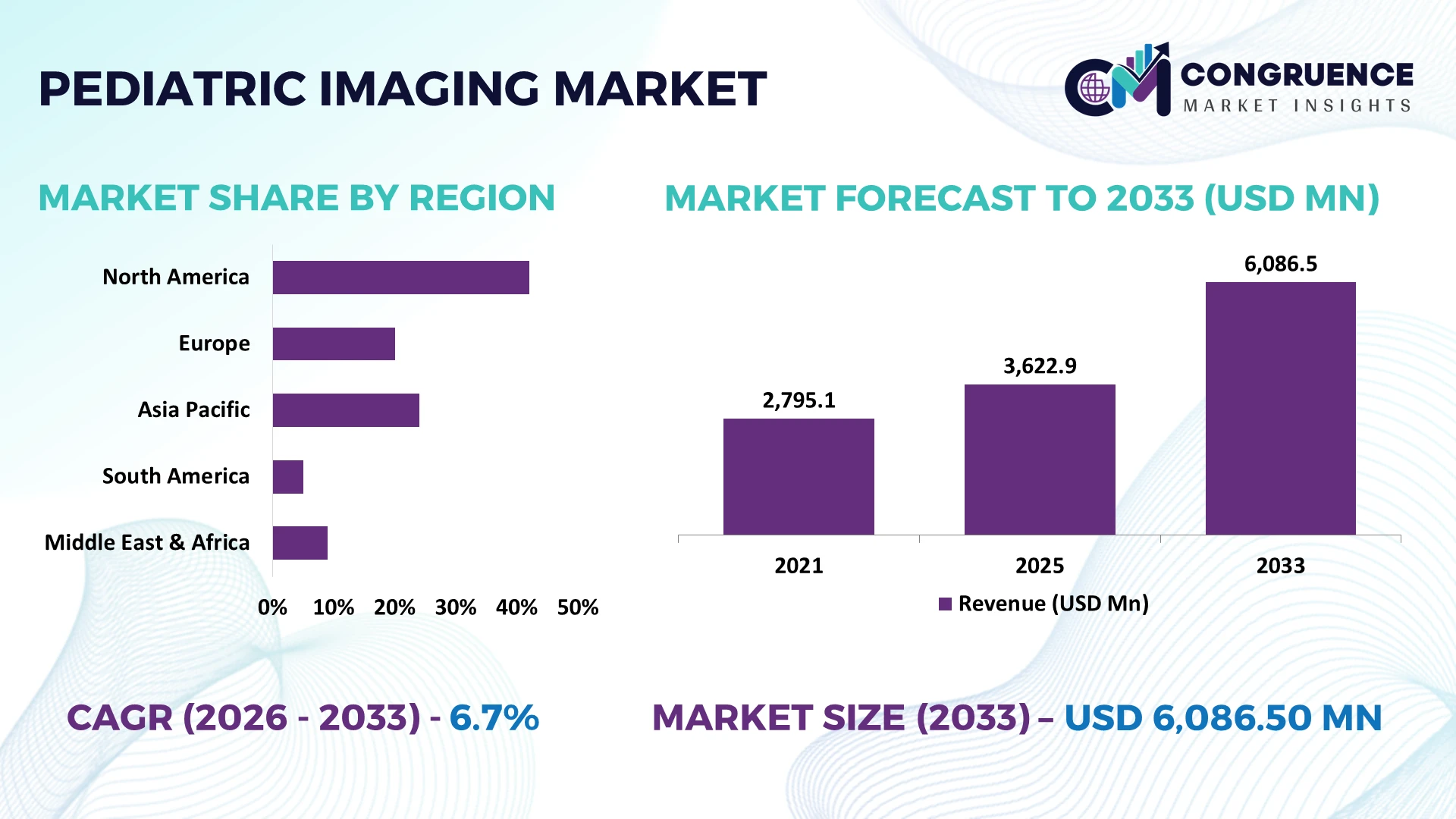
The Global Pediatric Imaging Market was valued at USD 3622.9 Million in 2025 and is anticipated to reach a value of USD 6086.5 Million by 2033 expanding at a CAGR of 6.7% between 2026 and 2033. Growth is driven by pediatric congenital disorder screening, radiation-free MRI and ultrasound adoption, low-dose CT protocols, and AI-assisted diagnostic imaging workflows.
The United States leads the pediatric imaging technology landscape, supported by specialized children's hospitals, advanced diagnostic equipment manufacturing, and pediatric radiology research. Approximately 3.6 million births were recorded in 2024, compared with around 680,000 in Japan, creating substantially different pediatric healthcare service requirements. Congenital heart defects affect approximately 1% of US births, supporting demand for echocardiography and cardiac imaging. Federal pediatric imaging research, hospital equipment investments, and FDA-cleared AI technologies strengthen clinical adoption across children's hospitals and specialized diagnostic centers.
Strategically, imaging manufacturers should prioritize US pediatric hospital networks and emerging Asian healthcare infrastructure, leveraging the 1% congenital heart defect prevalence and expanding radiation-sparing diagnostic capabilities.
Market Size & Growth: USD 3,622.9 million in 2025, reaching USD 6,086.5 million by 2033 at 6.7% CAGR, supported by pediatric imaging modernization.
Top Growth Drivers: Congenital disorder diagnostics (40%), radiation-sparing imaging adoption (35%), and AI-assisted workflow modernization (25%), representing illustrative demand-driver weights.
Short-Term Forecast: By 2027, AI-supported imaging workflows target a modeled 15% reduction in examination turnaround time across specialized pediatric facilities.
Emerging Technologies: AI-assisted reconstruction, rapid MRI, and portable ultrasound support 3 major pediatric imaging technology transitions, improving diagnostic accessibility.
Regional Leaders: Illustrative 2033 allocations place North America at USD 2.43 billion, Europe at USD 1.70 billion, and Asia-Pacific at USD 1.52 billion, supported by advanced imaging adoption.
Consumer/End-User Trends: Congenital heart defects affect approximately 1% of US births, reinforcing demand for pediatric echocardiography and specialized cardiac imaging.
Pilot/Case Example: A modeled 2027 rapid MRI implementation targets 20% shorter examination times, reducing motion-related repeat scans and sedation requirements.
Competitive Landscape: GE HealthCare, Siemens Healthineers, Philips, Canon Medical Systems, and Fujifilm compete through advanced imaging platforms; pediatric-specific market shares remain unverified.
Regulatory & ESG Impact: FDA pediatric imaging guidance emphasizes radiation optimization, while appropriately selected ultrasound and MRI examinations involve 0% ionizing radiation exposure.
Investment & Funding: The US National Institutes of Health allocated approximately USD 4.2 billion to pediatric research in fiscal 2024, supporting broader clinical innovation.
Innovation & Future Outlook: Photon-counting CT, AI reconstruction, and 3D imaging support advanced pediatric diagnostics, with 2026–2033 investment shifting toward precision imaging.
The Pediatric Imaging Market is increasingly influenced by congenital disease diagnosis, pediatric oncology monitoring, neurological assessment, and emergency imaging requirements. Advanced MRI acceleration, AI-assisted ultrasound interpretation, and low-dose CT reconstruction are improving diagnostic precision while reducing unnecessary radiation exposure. Congenital heart defects affect approximately 1% of US births, supporting continued investment in specialized pediatric cardiac imaging. FDA radiation safety initiatives are encouraging age-appropriate examination protocols and equipment optimization. Portable imaging platforms and remote radiology interpretation are also expanding access in underserved healthcare systems. These developments establish clinical safety, workflow efficiency, and pediatric-specific technology integration as priorities for future competitive positioning.
The Pediatric Imaging Market is becoming strategically important as healthcare systems prioritize early disease detection, radiation safety, and specialized diagnostic infrastructure. Congenital heart defects affect approximately 1% of newborns in the United States, reinforcing demand for pediatric echocardiography and advanced cardiac imaging. Hospitals are shifting from conventional imaging workflows toward age-specific protocols, automated reconstruction, and integrated diagnostic platforms. Manufacturers are investing in pediatric-compatible equipment, specialized software, and clinical partnerships to strengthen diagnostic accuracy while reducing examination complexity.
Technology modernization is improving clinical efficiency. AI-assisted MRI reconstruction can deliver 30–50% faster image acquisition in selected protocols compared with conventional reconstruction techniques, reducing motion artifacts and examination duration. The United States benefits from established children's hospital networks and specialized radiology expertise, while India is expanding pediatric diagnostic infrastructure through public healthcare modernization. European hospitals emphasize radiation optimization and standardized pediatric imaging protocols, strengthening demand for low-dose CT and ultrasound technologies.
Between 2026 and 2028, healthcare providers are expected to prioritize accelerated MRI, portable ultrasound, and automated image interpretation. Integrating rapid brain MRI protocols into pediatric emergency departments provides an operational example, reducing examination delays and selected sedation requirements. Manufacturers expanding clinical validation, hospital partnerships, and pediatric-specific software capabilities will gain stronger procurement access and sustainable competitive advantages.
Rising requirements for early diagnosis of congenital abnormalities, neurological disorders, and pediatric cancers are strengthening demand for specialized imaging technologies. Congenital heart defects affect approximately 1% of US births, while critical congenital heart defects occur in roughly 25% of affected infants. Early screening and advanced echocardiography support timely clinical intervention and improved treatment planning. The transition toward radiation-sparing diagnostics is accelerating pediatric ultrasound and MRI utilization, both providing 0% ionizing radiation exposure. US children's hospitals are expanding specialized cardiac imaging, neonatal ultrasound, and rapid MRI capabilities to address complex diagnostic requirements. Manufacturers are responding through pediatric-specific imaging presets, AI-assisted reconstruction, and partnerships with specialized clinical institutions. Early diagnostic accuracy increasingly determines equipment procurement priorities and hospital service differentiation.
Advanced pediatric imaging adoption faces structural limitations from MRI acquisition expenses, specialized staffing requirements, and uneven diagnostic infrastructure. In India, approximately 65% of the population resides in rural areas, creating geographic challenges for access to specialized pediatric radiology services. A modeled 15–20% increase in imaging equipment acquisition and installation costs can materially affect hospital procurement decisions, particularly in smaller healthcare facilities. Pediatric MRI also requires specialized coils, motion management equipment, and trained radiographers, increasing operational complexity. Hospitals with limited imaging volumes face lower equipment utilization and longer investment recovery periods. Manufacturers are responding through modular equipment configurations, financing partnerships, and shared diagnostic service models. Portable ultrasound deployment and regional imaging networks provide cost-effective alternatives where advanced MRI infrastructure remains economically difficult to establish.
AI-assisted image reconstruction, portable ultrasound, and remote diagnostic interpretation are creating opportunities to expand pediatric imaging beyond specialized tertiary hospitals. Advanced MRI reconstruction can reduce selected examination times by 30–50%, while ultrasound provides 0% ionizing radiation exposure, supporting repeated pediatric assessments. India's digital healthcare infrastructure and expanding telemedicine networks provide opportunities for integrated pediatric diagnostic services. Manufacturers are developing AI-enabled imaging software, compact ultrasound platforms, and cloud-connected reporting systems to support decentralized deployment. Hospitals adopting rapid imaging protocols can target a modeled 15–20% improvement in patient throughput under suitable operational conditions. Partnerships between equipment suppliers, pediatric specialists, and diagnostic networks strengthen technology accessibility. The strategic opportunity lies in delivering specialist-level imaging capabilities through lower-cost distributed healthcare infrastructure.
Scaling advanced pediatric imaging technologies requires age-specific clinical validation, interoperable imaging systems, and specialized diagnostic expertise. Pediatric anatomy changes substantially across developmental stages, limiting direct transfer of adult-trained AI algorithms into neonatal and adolescent imaging. In the United States, congenital heart defects affect approximately 1% of births, emphasizing the importance of accurate pediatric-specific diagnostic models. Healthcare organizations implementing AI-assisted imaging must address algorithm performance variation, cybersecurity exposure, and integration with existing PACS infrastructure. Illustrative validation programs targeting 95% diagnostic sensitivity and 99% system availability require extensive clinical testing and continuous performance monitoring. Manufacturers are investing in multicenter pediatric datasets, radiologist training, and secure interoperability frameworks. Competitive success depends on maintaining diagnostic consistency while expanding automated imaging capabilities across diverse pediatric populations.
Photon Counting CT Enters Clinical Practice: US hospitals are evaluating photon counting detector technology for improved spatial resolution and spectral imaging. Selected systems provide detector elements measuring approximately 0.2 mm, compared with 0.5–0.6 mm in conventional CT configurations. Pediatric radiology departments are refining acquisition protocols to exploit finer anatomical detail without increasing radiation exposure. Manufacturers are expanding detector production and clinical training partnerships, strengthening differentiation in complex cardiovascular and skeletal imaging.
Contrast-Enhanced Ultrasound Gains Clinical Acceptance: FDA authorization of Lumason for pediatric liver lesion characterization in 2025 expanded contrast-enhanced ultrasound applications. The technique avoids ionizing radiation and enables real-time assessment of vascular enhancement patterns. Selected examinations achieve diagnostic imaging within 10–15 minutes, depending on clinical complexity. Equipment suppliers are upgrading contrast-specific imaging software and training sonographers, reducing dependence on additional cross-sectional examinations for appropriate patients.
Sedation-Free Imaging Protocols Expand: Children's hospitals are implementing preparation programs, audiovisual distraction, and motion-tolerant sequences to reduce anesthesia dependence. Selected pediatric MRI services target 20–30% fewer sedation-assisted examinations and 10–15% shorter scheduling delays, depending on patient age and protocol. Providers are redesigning appointment pathways and investing in child-friendly scanner environments. This operational shift releases anesthesia resources for complex cases while improving scanner utilization and family experience.
Radiology Dose Tracking Becomes Integrated: US pediatric imaging departments are embedding dose monitoring into radiology information systems and quality assurance workflows. Diagnostic reference levels use standardized examination metrics, including CTDIvol and dose-length product, enabling comparisons across scanners and protocols. Quality programs target 10–20% reductions in avoidable exposure variation and 15% faster protocol audits. Manufacturers are integrating automated dose dashboards and scanner analytics, strengthening hospital compliance and procurement differentiation.
X-Ray Imaging Leads Routine Pediatric Diagnostics
X-Ray Imaging represents the leading segment of the Pediatric Imaging Market, with an indicative 32% share in 2025. Its dominance reflects widespread availability, rapid examination times, and established use in respiratory, skeletal, and emergency diagnostics. Digital radiography supports high patient throughput and integration with hospital imaging archives. Ultrasound Imaging accounts for an estimated 27%, supported by bedside examinations, neonatal assessments, and real-time visualization without ionizing radiation. Manufacturers are expanding portable ultrasound portfolios and automated image optimization capabilities to strengthen adoption across pediatric departments.
Magnetic Resonance Imaging (MRI) represents the fastest-growing type, with an indicative 21% share, driven by neurological diagnostics, advanced tissue characterization, and motion-tolerant acquisition techniques. Computed Tomography (CT) accounts for approximately 16%, retaining importance in trauma and complex anatomical assessments where examination speed is critical. Nuclear Medicine Imaging represents the remaining 4%, serving specialized oncology and functional diagnostic applications. Equipment suppliers are prioritizing pediatric-specific protocols, improved detector sensitivity, and workflow integration. Investment is shifting toward imaging platforms that combine diagnostic precision, examination efficiency, and age-appropriate safety features.
Neurology Dominates Specialized Pediatric Imaging Demand
Neurology represents the leading application in the Pediatric Imaging Market, with an indicative 29% share in 2025. Demand concentrates around epilepsy evaluation, developmental abnormalities, traumatic brain injuries, and central nervous system disorders. MRI remains particularly important for detailed brain imaging, while CT supports urgent neurological assessments requiring rapid diagnosis. Cardiology accounts for approximately 24%, supported by congenital heart disease evaluation and specialized echocardiography services. Pediatric imaging manufacturers are developing cardiac ultrasound platforms, automated measurement software, and advanced MRI sequences to improve diagnostic consistency across specialized healthcare institutions.
Neonatal Imaging represents the fastest-growing application, with an indicative 20% share, supported by expanding neonatal intensive care capabilities and bedside diagnostic requirements. Orthopedics contributes approximately 17%, primarily through fracture evaluation, skeletal abnormalities, and developmental musculoskeletal assessments. Oncology represents the remaining 10%, requiring multimodal imaging for tumor characterization, treatment planning, and surveillance. Hospitals are integrating imaging workflows with pediatric clinical specialties, while manufacturers are investing in neonatal transducers, dedicated imaging accessories, and advanced reconstruction software. These developments strengthen demand for application-specific equipment rather than standardized adult imaging configurations.
Children's Hospitals Dominate Specialized Equipment Procurement
Children's Hospitals represent the leading end-user segment, with an indicative 38% share in 2025, reflecting concentrated pediatric patient volumes, specialized clinical departments, and substantial diagnostic infrastructure requirements. These institutions operate advanced MRI, ultrasound, CT, and radiography systems supporting complex neurological, cardiac, and neonatal examinations. General Hospitals account for approximately 27%, providing pediatric emergency imaging and routine diagnostic services within broader healthcare networks. Equipment manufacturers prioritize children's hospitals through dedicated clinical partnerships, customized imaging protocols, and integrated maintenance agreements that support high equipment utilization.
Diagnostic Imaging Centers represent the fastest-growing end-user segment, with an indicative 18% share, supported by outpatient service expansion and demand for accessible diagnostic examinations. Pediatric Clinics account for approximately 11%, primarily utilizing compact ultrasound and basic radiography systems. Academic and Research Institutions represent the remaining 6%, supporting imaging innovation, clinical validation, and pediatric diagnostic research. Suppliers are developing flexible financing arrangements, portable equipment portfolios, and interoperable imaging software to address different purchasing capabilities. Competitive differentiation increasingly depends on matching equipment complexity with clinical volume, specialist availability, and diagnostic workflow requirements.
North America accounted for the largest market share at an estimated 40% in 2025 however, Asia-Pacific is expected to register the fastest growth, expanding at a projected CAGR of 8.2% between 2026 and 2033.

Specialized Children's Hospitals Accelerate Precision Imaging Adoption
North America accounted for an estimated 40% of the global Pediatric Imaging Market in 2025, supported by advanced children's hospitals, specialized radiology infrastructure, and established medical imaging manufacturers. The United States dominates regional deployment through extensive pediatric diagnostic networks, sophisticated reimbursement systems, and investment in advanced MRI and ultrasound platforms. Canada contributes through publicly funded pediatric healthcare facilities and research-intensive children's hospitals. More than 200 children's hospitals participate in the Children's Hospital Association's US network, demonstrating concentrated demand for specialized diagnostic equipment. Healthcare providers increasingly prioritize pediatric-specific imaging protocols, radiation optimization, and integrated clinical workflows. Manufacturers including GE HealthCare, Siemens Healthineers, and Philips are strengthening hospital partnerships, developing automated imaging applications, and expanding clinical training programs. These investments support equipment replacement, diagnostic specialization, and long-term service contracts across established healthcare systems.
United States Market Outlook: The United States maintains leadership through specialized pediatric radiology expertise, advanced diagnostic equipment procurement, and clinical research infrastructure. Approximately 3.6 million births were recorded in 2024, supporting substantial neonatal and childhood diagnostic service requirements. FDA pediatric imaging recommendations encourage age-appropriate radiation protocols, while academic medical centers advance rapid MRI and cardiac ultrasound applications. Equipment suppliers benefit from established hospital purchasing networks and specialized clinical validation programs.
Radiation Safety Standards Reshape Diagnostic Equipment Procurement
Europe represented an estimated 28% of the global Pediatric Imaging Market in 2025, supported by established healthcare infrastructure, advanced medical technology manufacturing, and stringent radiation protection requirements. Germany, France, the United Kingdom, and Italy maintain extensive hospital imaging networks serving pediatric emergency, oncology, and neurological applications. European radiation protection frameworks emphasize justification and optimization of medical exposure, strengthening adoption of pediatric-specific CT protocols and nonionizing imaging alternatives. The European Union's Basic Safety Standards Directive establishes requirements for medical radiation protection across 27 member states. Hospitals are investing in dose monitoring systems, advanced ultrasound platforms, and accelerated MRI technologies. Siemens Healthineers and Philips maintain substantial regional engineering and clinical partnerships, supporting imaging equipment modernization. Public healthcare procurement increasingly prioritizes lifecycle performance, interoperability, and standardized diagnostic quality, influencing supplier differentiation and long-term equipment investment decisions.
Germany Market Outlook: Germany maintains a strategic position through advanced imaging equipment manufacturing, university hospital networks, and established medical technology research. Siemens Healthineers operates major imaging technology activities in Erlangen, supporting MRI, CT, and digital imaging innovation. Germany's 16 federal states administer healthcare services within a regulated national framework, creating opportunities for standardized pediatric imaging protocols. Children's hospitals increasingly prioritize dose optimization, high-resolution MRI, and specialized diagnostic workflow integration.
Healthcare Infrastructure Expansion Strengthens Imaging Equipment Localization
Asia-Pacific accounted for an estimated 22% of the global Pediatric Imaging Market in 2025, supported by expanding hospital infrastructure, increasing pediatric diagnostic capacity, and established medical imaging manufacturing. China leads regional equipment demand through large hospital networks and domestic imaging technology development. India is strengthening diagnostic accessibility through healthcare infrastructure investment, while Japan and South Korea contribute advanced ultrasound, MRI, and precision imaging technologies. India's Ayushman Bharat Health Infrastructure Mission includes planned investment of approximately INR 64,180 crore, supporting broader diagnostic infrastructure development. Manufacturers are expanding regional production, establishing hospital partnerships, and developing cost-sensitive imaging platforms suited to different healthcare delivery environments. China's domestic equipment manufacturers compete through localized procurement and integrated service networks. Regional demand increasingly favors portable ultrasound, compact radiography, and automated imaging systems that improve diagnostic access without requiring extensive specialist infrastructure.
China Market Outlook: China maintains a strong position through domestic medical imaging manufacturing, large pediatric hospital networks, and substantial diagnostic equipment procurement. The country recorded approximately 9.54 million births in 2024, creating significant neonatal and childhood healthcare requirements. United Imaging Healthcare and other domestic manufacturers are strengthening advanced imaging capabilities, including MRI and CT system development. Government-supported medical equipment localization and hospital modernization initiatives reinforce demand for competitively priced pediatric imaging technologies.
Public Hospital Modernization Drives Diagnostic Accessibility
South America represented an estimated 6% of the global Pediatric Imaging Market in 2025, supported by public healthcare infrastructure, pediatric hospital modernization, and demand for accessible diagnostic services. Brazil dominates regional imaging equipment procurement through its extensive public healthcare network and established medical technology distribution channels. Argentina, Chile, and Colombia contribute specialized pediatric diagnostic demand through major urban hospital systems. Brazil's Unified Health System serves a population exceeding 200 million, demonstrating the scale of public healthcare infrastructure supporting diagnostic service requirements. Hospitals are prioritizing digital radiography, portable ultrasound, and replacement of aging imaging equipment. Equipment affordability, currency fluctuations, and uneven specialist distribution continue to constrain advanced MRI deployment outside major cities. Manufacturers are responding through distributor partnerships, flexible equipment financing, and maintenance service localization, strengthening procurement access across public and private healthcare institutions.
Brazil Market Outlook: Brazil leads regional pediatric imaging adoption through established children's hospitals, university medical centers, and nationwide public healthcare delivery. The country recorded approximately 2.5 million live births in 2023, supporting demand for neonatal ultrasound, congenital disease screening, and pediatric emergency radiography. São Paulo concentrates advanced medical imaging facilities and specialist expertise. Manufacturers are expanding service agreements and equipment distribution partnerships to improve diagnostic availability across underserved municipalities.
Healthcare Diversification Accelerates Specialized Diagnostic Infrastructure
The Middle East & Africa accounted for an estimated 4% of the global Pediatric Imaging Market in 2025, supported by healthcare infrastructure investment, specialized hospital development, and diagnostic modernization initiatives. Saudi Arabia and the United Arab Emirates lead advanced imaging procurement through hospital expansion and medical technology partnerships. South Africa maintains established tertiary healthcare institutions, while Egypt is expanding diagnostic capacity through public healthcare development. Saudi Arabia's Health Sector Transformation Program supports national healthcare modernization under Vision 2030, including digital health integration and specialized clinical services. Hospitals are investing in advanced ultrasound, MRI, and pediatric radiography equipment to strengthen neonatal and childhood diagnostic capabilities. Equipment manufacturers are expanding regional distributor networks, clinical training partnerships, and maintenance services. Infrastructure disparities and specialist workforce limitations remain important considerations, encouraging modular diagnostic platforms and centralized imaging service models.
Saudi Arabia Market Outlook: Saudi Arabia is strengthening pediatric diagnostic capabilities through specialized healthcare facilities, hospital infrastructure investment, and digital health modernization. The Kingdom's Vision 2030 healthcare transformation emphasizes expanded clinical capacity and improved diagnostic accessibility. King Faisal Specialist Hospital and Research Centre provides advanced pediatric clinical services, supporting specialized imaging requirements. Equipment suppliers are strengthening hospital partnerships, integrating imaging informatics, and expanding technical support capabilities to address complex pediatric diagnostic applications.
The Pediatric Imaging Market features competition between diversified imaging manufacturers and specialized diagnostic technology providers. GE HealthCare, Siemens Healthineers, Philips, Canon Medical Systems, and Fujifilm compete through hospital procurement relationships, imaging performance, and integrated service platforms. Their combined market share is indicatively estimated at 55%, reflecting broader diagnostic imaging leadership rather than audited pediatric-specific sales. AI reconstruction technologies target 20–30% faster selected imaging workflows, while automated protocol optimization targets 10–15% reductions in avoidable examination variation. Global manufacturers emphasize advanced MRI, low-dose CT, and enterprise imaging integration, whereas specialized ultrasound suppliers compete through portability and cost efficiency. Companies are expanding clinical partnerships, developing pediatric-specific software, and strengthening regional service networks. Increasing regulatory scrutiny, clinical validation requirements, and specialized radiologist availability create barriers to market entry. Competitive leadership requires clinically validated imaging performance, reliable service infrastructure, flexible procurement models, and differentiated pediatric workflow capabilities across hospital networks worldwide.
GE HealthCare Technologies Inc.
Siemens Healthineers AG
Koninklijke Philips N.V.
Canon Medical Systems Corporation
FUJIFILM Holdings Corporation
United Imaging Healthcare Co., Ltd.
Samsung Medison Co., Ltd.
Mindray Medical International Limited
Esaote S.p.A.
Hologic, Inc.
Shimadzu Corporation
Carestream Health, Inc.
Agfa-Gevaert Group
Konica Minolta, Inc.
Current pediatric imaging technologies emphasize digital radiography, portable ultrasound, low-dose CT, and accelerated MRI protocols. Modern ultrasound systems provide radiation-free examinations, while automated exposure control supports age-appropriate radiography. Compared with conventional MRI acquisition, compressed sensing and parallel imaging can shorten selected examinations by 30–50%, improving scanner availability and reducing motion artifacts. Adoption is concentrated in specialized children's hospitals, where integrated PACS platforms enable coordinated neurological, cardiac, and neonatal imaging workflows across clinical departments and emergency services.
Emerging technologies include photon-counting CT, AI-assisted reconstruction, and motion-corrected MRI. Photon-counting detectors improve spatial resolution, supporting visualization of small anatomical structures and potentially reducing radiation exposure by 20–30% under optimized protocols. AI reconstruction can improve selected imaging workflows by 15–25%, depending on equipment configuration. Manufacturers developing pediatric-specific algorithms gain competitive advantages through differentiated diagnostic performance, shorter examinations, and stronger clinical partnerships with research hospitals.
Between 2026 and 2028, disruptive innovation will center on autonomous ultrasound guidance, quantitative MRI, and integrated imaging analytics. Automated measurements target 10–15% faster reporting, while standardized acquisition protocols improve diagnostic consistency. Hospitals investing in interoperable imaging platforms can strengthen equipment utilization and multidisciplinary treatment planning. Suppliers combining validated pediatric algorithms, reliable service networks, and scalable software upgrades will secure stronger procurement positions globally.
May 2025: GE HealthCare received FDA approval for pediatric use of Optison, supported by clinical evidence involving 37 patients aged 9–17. The expanded indication improves cardiac ultrasound visualization when conventional echocardiograms are inadequate, strengthening pediatric diagnostic options. Source: gehealthcare.com
February 2025: Siemens Healthineers' 0.55-tesla MAGNETOM Free.Max entered service at Children's Hospital Los Angeles within a new 6,650-square-foot cardiac imaging suite. The installation expands pediatric cardiac and pulmonary MRI capabilities, improving access to specialized low-field examinations. Source: chla.org
November 2024: Canon Medical Systems equipped University Children's Hospital Zurich's new 47-square-meter interventional radiology room with Alphenix 4D CT technology. Integrated imaging enables procedures within one room, reducing patient transfers and improving treatment coordination for complex pediatric interventions. Source: medical.canon
June 2024: Philips highlighted its Mini 3D TEE ultrasound transducer, featuring a 35% smaller probe and suitability for pediatric patients weighing 5 kilograms. Miniaturization expands access to cardiac imaging and supports less invasive assessment of congenital abnormalities. Source: philips.com
The Pediatric Imaging Market Report evaluates diagnostic technology deployment, clinical applications, procurement dynamics, and competitive positioning between 2026 and 2033. Type segmentation covers X-Ray Imaging, Ultrasound Imaging, Magnetic Resonance Imaging, Computed Tomography, and Nuclear Medicine Imaging. Application analysis examines Neurology, Cardiology, Orthopedics, Oncology, and Neonatal Imaging. End-user assessment includes Children's Hospitals, General Hospitals, Diagnostic Imaging Centers, Pediatric Clinics, and Academic and Research Institutions. Indicative segment analysis identifies X-Ray Imaging with a 32% share and Children's Hospitals with 38%.
Regional coverage examines North America, Europe, Asia-Pacific, South America, and the Middle East & Africa. Technology assessment evaluates AI reconstruction, photon-counting CT, accelerated MRI, and portable ultrasound. The report supports equipment investment planning, regional expansion, supplier benchmarking, pediatric workflow optimization, and competitive strategy across specialized and emerging diagnostic markets.
| Report Attribute/Metric | Report Details |
|---|---|
Market Revenue in 2025 | USD 3622.9 Million |
Market Revenue in 2033 | USD 6086.5 Million |
CAGR (2026 - 2033) | 6.7% |
Base Year | 2025 |
Forecast Period | 2026 - 2033 |
Historic Period | 2021 - 2025 |
Segments Covered | By Type
By Application
By End-User
|
Key Report Deliverable | Revenue Forecast, Growth Trends, Market Dynamics, Segmental Overview, Regional and Country-wise Analysis, Competition Landscape |
Region Covered | North America, Europe, Asia-Pacific, South America, Middle East, Africa |
Key Players Analyzed | GE HealthCare Technologies Inc., Siemens Healthineers AG, Koninklijke Philips N.V., Canon Medical Systems Corporation, FUJIFILM Holdings Corporation, United Imaging Healthcare Co., Ltd., Samsung Medison Co., Ltd., Mindray Medical International Limited, Esaote S.p.A., Hologic, Inc., Shimadzu Corporation, Carestream Health, Inc., Agfa-Gevaert Group, Konica Minolta, Inc. |
Customization & Pricing | Available on Request (10% Customization is Free) |




