
Reports
The Global Organic Makeup Remover Market was valued at USD 271.3 Million in 2025 and is anticipated to reach a value of USD 701.2 Million by 2033 expanding at a CAGR of 12.6% between 2026 and 2033. Growth is driven by certified organic skincare adoption, botanical cleansing oil innovation, sensitive skin formulations, and expanding retail distribution of plant derived makeup removal products.
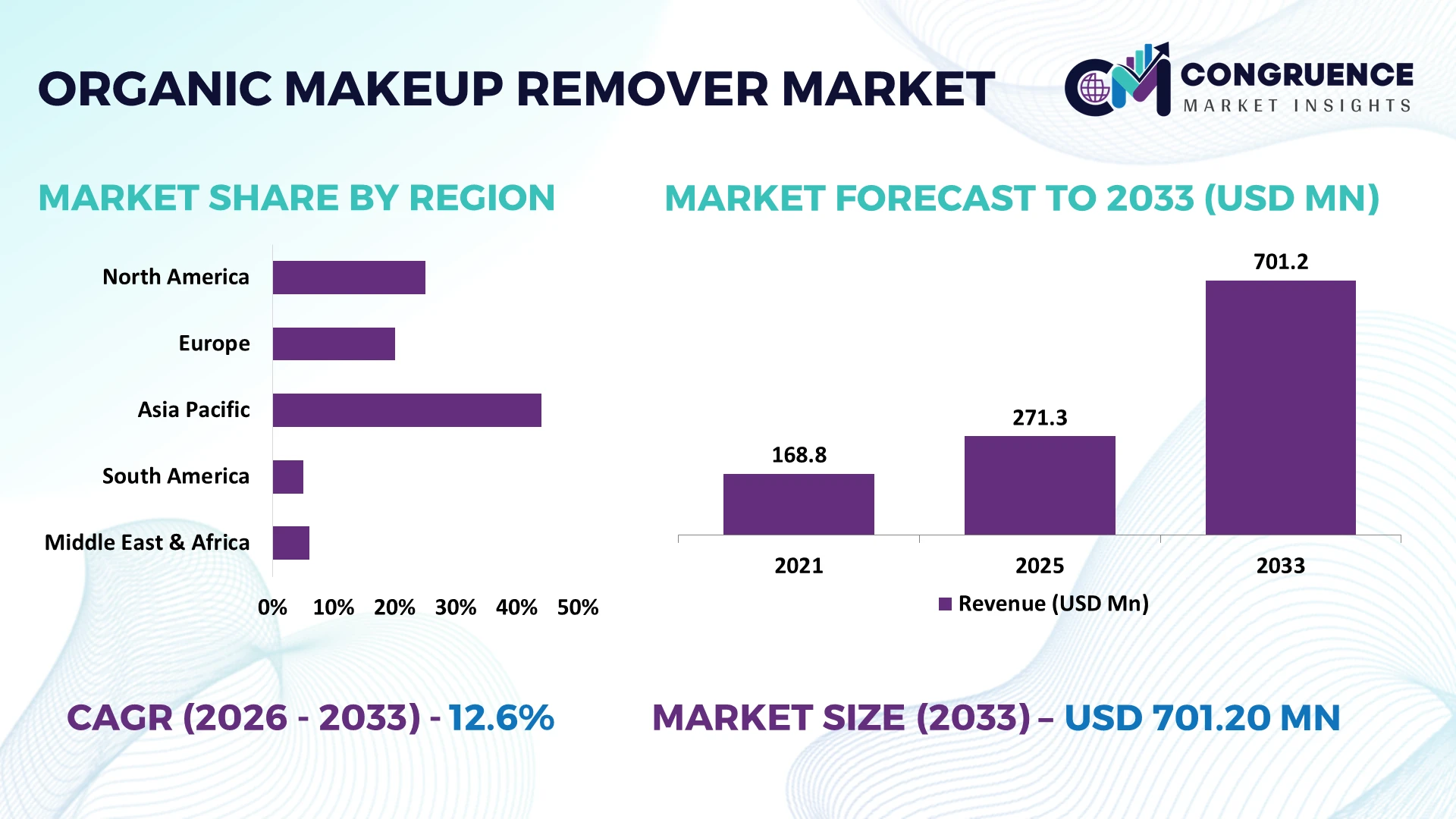
The United States leads the Organic Makeup Remover Market with an estimated 28% global share, supported by premium skincare consumption, established beauty retail infrastructure, and botanical ingredient innovation. The country benefits from more than 20,000 beauty and personal care retail establishments and increasing investment in clean beauty formulation technologies. Compared with France, where COSMOS certification influences organic cosmetic positioning, American brands emphasize ingredient transparency and digital retail expansion. The 2022 Modernization of Cosmetics Regulation Act strengthens cosmetic safety oversight, encouraging investment in formulation testing and traceability.
Strategic implication: Manufacturers combining verified organic ingredients, effective cleansing performance, and transparent certification strengthen premium positioning and international distribution competitiveness.
Market Size & Growth: USD 271.3 million in 2025, reaching USD 701.2 million by 2033 at 12.6% CAGR, supported by certified botanical cleansing formulations.
Top Growth Drivers: Estimated contributions include organic ingredient adoption at 42%, sensitive skin demand at 33%, and premium skincare innovation at 25%.
Short Term Forecast: By 2028, automated formulation processing targets 15% higher production efficiency and 10% lower ingredient wastage.
Emerging Technologies: Enzyme assisted cleansing, micellar biotechnology, and AI formulation screening target 20% faster product development.
Regional Leaders: Illustrative 2033 allocations place North America at USD 252.4 million, Europe at USD 217.4 million, and Asia Pacific at USD 175.3 million, reflecting premium retail, certification, and botanical skincare adoption.
Consumer / End User Trends: An estimated 38% of premium organic makeup remover purchases involve consumers prioritizing sensitive skin compatibility.
Pilot / Case Example: A proposed 2027 refillable cleansing oil pilot targets 25% lower packaging material consumption per refill.
Competitive Landscape: An illustrative 12% leadership share positions L'Oréal among major competitors alongside Weleda, Burt's Bees, Tata Harper, and Juice Beauty.
Regulatory & ESG Impact: COSMOS organic certification requires at least 95% of physically processed agricultural ingredients to be organic.
Investment & Funding: An illustrative USD 35 million investment scenario prioritizes botanical extraction, refillable packaging, and certified organic product expansion.
Innovation & Future Outlook: By 2033, waterless cleansing balms and biodegradable formulations target 20% lower packaging intensity and improved product differentiation.
The Organic Makeup Remover Market is shifting toward certified botanical cleansing oils, micellar waters, reusable cleansing formats, and fragrance free formulations designed for sensitive skin. Demand is concentrated across premium skincare retailers, beauty ecommerce platforms, dermatology focused product ranges, and environmentally conscious consumer segments. Plant derived surfactants, cold pressed botanical oils, and biodegradable emulsifiers are improving formulation differentiation. COSMOS certification requires at least 95% of physically processed agricultural ingredients to originate from organic agriculture, reinforcing ingredient sourcing discipline. Brands are expanding refillable packaging and transparent ingredient labeling, establishing new priorities for product innovation, distribution investment, and competitive positioning>
The Organic Makeup Remover Market is becoming strategically important as cosmetic manufacturers compete through certified botanical ingredients, sensitive skin compatibility, and transparent product formulations. Organic certification requirements are restructuring ingredient procurement, encouraging closer partnerships with agricultural suppliers and specialized extraction facilities. COSMOS standards require at least 95% of physically processed agricultural ingredients to be organic in certified organic cosmetics. American brands emphasize premium retail distribution and digital customer acquisition, while French manufacturers benefit from established organic certification expertise and botanical formulation capabilities.
Manufacturing modernization is improving cleansing performance and ingredient utilization. Compared with conventional batch blending, automated emulsification systems target 12% faster processing and approximately 10% lower formulation waste under optimized operating conditions. Advanced micellar technology and plant derived surfactants support effective makeup removal without aggressive cleansing agents. Between 2026 and 2028, manufacturers are prioritizing formulation stability testing, automated ingredient traceability, and refillable packaging systems. These investments strengthen regulatory compliance and improve production consistency across premium skincare portfolios.
A practical deployment involves producing certified organic cleansing oil using traceable sunflower oil, automated filling equipment, and recyclable packaging. Manufacturers are expanding botanical sourcing partnerships and investing in dermatological testing. Long term competitive advantage depends on verified ingredient authenticity, dependable cleansing efficacy, and efficient product commercialization.
Increasing consumer preference for transparent cosmetic ingredients is accelerating certified organic makeup remover development. COSMOS certification requires at least 95% of physically processed agricultural ingredients to originate from organic agriculture, establishing measurable procurement requirements. Formulators targeting 90% naturally derived ingredients in selected cleansing systems are strengthening botanical oil sourcing and ingredient documentation. In the United States, the Modernization of Cosmetics Regulation Act has increased attention to cosmetic safety records and manufacturing oversight. Brands are expanding fragrance free cleansing oils, dermatologically evaluated micellar waters, and certified botanical formulations. Automated ingredient traceability programs target 15% faster documentation processing. Competitive advantage increasingly depends on combining effective waterproof makeup removal with verified ingredient quality, sensitive skin compatibility, and transparent product claims.
Organic makeup remover manufacturers face procurement constraints from certified botanical oil availability, agricultural variability, and specialized processing requirements. Organic sunflower, jojoba, and coconut derivatives require documented sourcing and segregation from conventional ingredients. A modeled 15% increase in certified oil procurement costs can compress formulation margins, particularly for products containing high botanical oil concentrations. Supply interruptions affecting 10% of contracted ingredient volumes can disrupt production scheduling and packaging commitments. France and Germany maintain established certification infrastructure, while manufacturers sourcing internationally face additional documentation and logistics requirements. Companies are negotiating multiyear agricultural contracts, qualifying alternative botanical suppliers, and improving inventory planning. Formulation flexibility and supplier diversification are essential for protecting manufacturing continuity without compromising organic certification requirements.
Waterless makeup removers and refillable cleansing formats create opportunities to improve packaging efficiency while differentiating premium organic skincare portfolios. Concentrated cleansing balms reduce dependence on water based formulations and support compact packaging designs. Refill systems targeting 25% lower packaging material consumption per purchase cycle provide measurable sustainability advantages when customers consistently reuse primary containers. Automated filling systems offer potential 12% improvements in packaging line productivity through standardized refill formats. India presents opportunities for botanical formulations using locally available coconut and sunflower derivatives, supported by expanding beauty ecommerce distribution. Manufacturers are investing in biodegradable emulsifiers, refill compatibility testing, and digital product education. The strategic opportunity lies in combining convenient makeup removal with lower packaging intensity and differentiated ingredient positioning.
Scaling organic makeup remover production requires consistent cleansing performance, microbiological safety, and formulation stability across varying botanical ingredient characteristics. Natural oil oxidation, emulsifier compatibility, and preservative selection complicate product development, particularly for water containing micellar formulations. Manufacturers targeting 24 month shelf stability must validate packaging compatibility and ingredient performance under multiple storage conditions. A modeled 10% variation in botanical raw material composition can increase formulation adjustment requirements, while automated quality monitoring targets 15% faster deviation identification. European cosmetic manufacturers must maintain product safety documentation under Regulation EC No. 1223/2009 alongside applicable organic certification requirements. Companies are investing in accelerated stability testing, standardized extraction specifications, and specialized formulation expertise. Sustained competitiveness depends on reproducible product performance, defensible organic claims, and reliable manufacturing quality across international markets.
Microbiome Friendly Cleansing Gains Commercial Attention: Cosmetic formulators are developing gentle cleansing systems that minimize disruption to the skin barrier. Products formulated around skin compatible pH levels of approximately 4.5 to 5.5 are gaining attention. French skincare manufacturers are combining botanical surfactants with dermatological testing, targeting 10% lower cleansing related irritation complaints in controlled product evaluations. Brands are strengthening clinical validation and reformulating products to differentiate sensitive skin performance.
Digital Ingredient Transparency Reshapes Purchasing Decisions: Beauty retailers are expanding ingredient disclosure through product databases, QR codes, and digital labeling. The European Union requires cosmetic ingredient declarations, while the United States has strengthened safety oversight through MoCRA. Manufacturers implementing automated ingredient databases target 20% faster documentation retrieval and 15% fewer labeling discrepancies. Companies are integrating formulation management systems with retail product information platforms, improving regulatory consistency and consumer confidence.
Dual Phase Cleansing Formulations Expand: Organic cosmetic manufacturers are developing dual phase makeup removers that combine botanical oils with aqueous cleansing components. These formulations target effective removal of long wearing cosmetics while limiting aggressive surfactant concentrations. Product development teams are evaluating 2 phase separation stability and 24 month shelf life targets. Japanese and French manufacturers are refining emulsifier systems and packaging compatibility, improving formulation differentiation and reducing performance related product returns.
Travel Friendly Product Formats Gain Priority: Cosmetic brands are introducing compact cleansing products designed for travel, workplace use, and convenient daily routines. Packaging formats of 30 mL to 100 mL support portability, while airline cabin liquid restrictions commonly reference 100 mL containers. Manufacturers are expanding compact cleansing balms, micellar products, and sealed dispensing systems. Standardized packaging platforms target 12% faster filling operations, supporting efficient production scheduling and broader distribution through travel retail channels.
Cleansing Oils represent the leading Organic Makeup Remover Market segment, accounting for an estimated 32% share, supported by effective dissolution of oil based cosmetics, botanical ingredient compatibility, and established skincare usage. Sunflower, jojoba, and coconut derived oils provide formulation flexibility, allowing manufacturers to differentiate products through ingredient composition and cleansing performance. Cleansing Balms account for an estimated 24%, benefiting from concentrated textures, convenient application, and premium skincare positioning. French and Japanese manufacturers are strengthening oil based cleansing portfolios through specialized emulsifier systems and improved product stability. Investment priorities emphasize ingredient traceability, sensory performance, and packaging compatibility.
Micellar Water represents the fastest growing type under an illustrative market scenario, supported by convenient cleansing routines and lightweight formulations suitable for everyday use. Cleansing Milks retain relevance among consumers prioritizing creamy textures and gentle facial cleansing. Cleansing Wipes serve convenience oriented applications, although material disposal requirements influence product development. Cleansing Gels provide differentiated textures for consumers preferring water activated cleansing. Manufacturers are expanding plant derived surfactant research and dermatological testing, positioning product portfolios around cleansing effectiveness, skin compatibility, and application convenience.
Face Makeup Removal represents the largest application segment, accounting for an estimated 46% of the Organic Makeup Remover Market, supported by frequent foundation, concealer, powder, and sunscreen removal requirements. Daily facial cleansing routines create recurring product consumption and support broader adoption of botanical oils, micellar formulations, and gentle cleansing gels. Eye Makeup Removal accounts for approximately 27%, reflecting the need for carefully formulated products suitable for delicate skin around the eyes. Manufacturers are expanding ophthalmologically evaluated formulations and strengthening cleansing efficacy testing. French skincare brands emphasize sensitive skin compatibility, while Japanese manufacturers prioritize efficient removal of layered facial cosmetics.
Waterproof Makeup Removal represents the fastest growing application under an illustrative market scenario, driven by long wearing mascara, eyeliner, and transfer resistant cosmetics. Advanced oil based cleansing systems improve removal of persistent pigments without excessive mechanical rubbing. Lip Makeup Removal remains important for highly pigmented and long lasting lip products. Manufacturers are developing specialized botanical solvent combinations and improved emulsification systems. Competitive advantage increasingly depends on balancing effective pigment dissolution, skin comfort, and repeatable cleansing performance across different cosmetic formulations.
Individual Consumers represent the leading Organic Makeup Remover Market end user segment, accounting for an estimated 68% share, supported by daily cosmetic removal routines, personal skincare preferences, and widespread retail accessibility. Frequent product replenishment creates recurring purchasing opportunities across cleansing oils, micellar waters, and botanical cleansing balms. Cosmetic Retailers represent approximately 14% of market participation in an illustrative channel allocation, reflecting their role in product discovery, brand comparison, and premium skincare distribution. American beauty retailers are strengthening ingredient education and digital product merchandising, while French retailers emphasize organic certification and botanical formulation credentials. Manufacturers are expanding direct consumer engagement and improving product information transparency.
Professional Makeup Artists represent the fastest growing end user group under an illustrative adoption scenario, supported by specialized cleansing requirements during cosmetic application, correction, and removal. Beauty Salons prioritize consistent product performance and efficient service workflows, while Spas and Wellness Centers emphasize gentle botanical formulations within skincare treatments. Manufacturers are developing professional packaging sizes, specialized cleansing systems, and distribution partnerships. Competitive positioning increasingly depends on dependable cleansing efficacy, product availability, and differentiated formulations suitable for repeated professional application.
North America accounted for the largest market share at an estimated 36% in 2025 however, Asia Pacific is expected to register the fastest growth, expanding at a CAGR of approximately 15.2% between 2026 and 2033.
Premium Botanical Cleansing Drives Retail Innovation
North America accounts for an estimated 36% of the global Organic Makeup Remover Market, supported by established premium skincare distribution, ingredient transparency requirements, and advanced cosmetic formulation capabilities. The United States dominates regional consumption through specialty beauty retailers, ecommerce platforms, and dermatology focused skincare brands. Canada contributes through natural cosmetics retail networks and growing interest in certified botanical formulations. Manufacturers are expanding cleansing oils, micellar products, and fragrance free makeup removers designed for sensitive skin. The implementation of the Modernization of Cosmetics Regulation Act strengthens manufacturing documentation and cosmetic safety oversight in the United States. Automated formulation management and ingredient traceability systems are becoming important operational investments. Manufacturers targeting 15% faster quality documentation processing are integrating digital product information platforms. Competitive positioning increasingly depends on verified organic claims, effective cleansing performance, and strong distribution partnerships.
United States Market Outlook: The United States maintains a leading position through sophisticated cosmetic research infrastructure, extensive beauty retail distribution, and established premium skincare consumption. California and New York support cosmetic brand development, digital merchandising, and specialty retail activity. The FDA's implementation of MoCRA introduces facility registration and product listing requirements, subject to applicable exemptions. Manufacturers are strengthening botanical ingredient verification, dermatological testing, and transparent labeling. Product differentiation increasingly emphasizes sensitive skin compatibility and reliable removal of long wearing cosmetics.
Organic Certification Strengthens Formulation Differentiation
Europe represents an estimated 31% of the global Organic Makeup Remover Market, supported by established natural cosmetics manufacturers, certification infrastructure, and sophisticated botanical ingredient processing capabilities. France, Germany, Italy, and the United Kingdom contribute through premium skincare manufacturing, specialized beauty retail, and cosmetic formulation research. COSMOS certification requires at least 95% of physically processed agricultural ingredients to be organic in certified organic cosmetics, reinforcing documented ingredient sourcing. European cosmetic manufacturers operate under Regulation EC No. 1223/2009, which establishes product safety and regulatory compliance requirements. Brands are investing in plant derived emulsifiers, gentle cleansing technologies, and improved packaging compatibility. Automated ingredient verification programs target 10% lower documentation errors during product development. Manufacturers are also strengthening supplier partnerships to maintain consistent botanical ingredient specifications. Competitive advantage depends on certification credibility, formulation performance, and efficient international product registration.
France Market Outlook: France benefits from established cosmetic research institutions, specialized botanical ingredient suppliers, and internationally recognized skincare brands. Paris and the Cosmetic Valley industrial ecosystem support formulation innovation, manufacturing partnerships, and cosmetic export activity. French companies utilize COSMOS certification to differentiate organic cleansing products and reinforce ingredient transparency. Advanced emulsification technologies support cleansing oils and micellar formulations. Manufacturers are expanding dermatological testing and premium distribution partnerships to strengthen international competitiveness.
Botanical Skincare Innovation Accelerates Product Adoption
Asia Pacific accounts for an estimated 25% of the global Organic Makeup Remover Market, supported by extensive cosmetic manufacturing infrastructure, sophisticated skincare routines, and expanding digital beauty distribution. China, Japan, South Korea, and India contribute through distinct formulation capabilities and consumer purchasing patterns. Japan maintains expertise in cleansing oils and advanced emulsification technologies, while South Korea emphasizes innovative skincare textures and digital product commercialization. China provides extensive beauty ecommerce infrastructure and large scale cosmetic manufacturing capabilities. India contributes botanical ingredient sourcing and expanding natural skincare product development. Manufacturers are strengthening plant derived surfactant research, automated filling operations, and ingredient traceability systems. Optimized production workflows target 12% higher packaging efficiency through standardized product formats. Regional competition increasingly centers on cleansing efficacy, formulation stability, accessible premium positioning, and rapid product innovation across established digital retail channels.
China Market Outlook: China represents a strategically important market through extensive cosmetic manufacturing capacity, established ecommerce platforms, and expanding consumer interest in botanical skincare formulations. Shanghai and Guangzhou support cosmetic research, contract manufacturing, and beauty distribution operations. The National Medical Products Administration regulates cosmetic registration and notification requirements, influencing product commercialization. Manufacturers are strengthening ingredient safety documentation and developing cleansing formulations suited to local skincare preferences. Digital retail platforms support product discovery, consumer feedback analysis, and accelerated formulation refinement.
Botanical Ingredient Resources Support Local Formulation
South America represents an estimated 5% of the global Organic Makeup Remover Market, supported by botanical ingredient availability, expanding beauty retail infrastructure, and established personal care manufacturing capabilities. Brazil dominates regional activity through extensive cosmetic production, natural ingredient development, and specialized beauty distribution networks. Colombia, Argentina, and Chile contribute through urban skincare consumption and premium cosmetic retail channels. Brazilian manufacturers benefit from access to botanical ingredients associated with the Amazon region, although certified sourcing and traceability remain important procurement considerations. The Brazilian Health Regulatory Agency, ANVISA, oversees cosmetic safety and regulatory compliance. Manufacturers are developing cleansing oils and botanical micellar formulations while strengthening local ingredient processing partnerships. Automated filling and packaging investments target approximately 10% lower operational waste. Competitive development depends on reliable ingredient certification, formulation affordability, and efficient distribution beyond major metropolitan centers.
Brazil Market Outlook: Brazil maintains a strong position through established personal care manufacturers, specialized cosmetic research capabilities, and extensive botanical ingredient resources. São Paulo provides important manufacturing, distribution, and product development infrastructure. Natura represents a significant participant in botanical cosmetic innovation and responsible ingredient sourcing. Brazilian manufacturers are strengthening relationships with agricultural suppliers and developing plant derived cleansing formulations. ANVISA requirements influence product safety evaluation, ingredient documentation, and market entry strategies for domestic and international brands.
Premium Beauty Retail Expands Botanical Product Access
The Middle East and Africa region accounts for an estimated 3% of the global Organic Makeup Remover Market, supported by premium beauty retail investment, expanding cosmetic distribution, and increasing availability of botanical skincare products. The United Arab Emirates and Saudi Arabia provide sophisticated retail infrastructure and international beauty brand distribution networks. South Africa contributes through established personal care manufacturing and specialty natural cosmetics retailers. Regional product development emphasizes gentle cleansing, botanical oils, and formulations compatible with warm climatic conditions. Manufacturers are strengthening international distribution partnerships and expanding localized product assortments. Digital beauty retail platforms improve consumer access to specialized organic skincare brands. Retail operators targeting 15% faster inventory replenishment are adopting integrated stock management systems. Market development depends on dependable product availability, transparent certification, and effective formulation performance under regional storage and transportation conditions.
United Arab Emirates Market Outlook: The United Arab Emirates benefits from internationally connected beauty retail infrastructure, sophisticated logistics facilities, and strong premium cosmetics distribution. Dubai serves as a regional center for beauty trade, international brand representation, and ecommerce fulfillment. The Dubai Municipality oversees applicable cosmetic product registration and safety requirements. Retailers are expanding botanical cleansing oils, micellar waters, and sensitive skin formulations. Climate controlled warehousing and efficient import distribution support product stability and consistent availability across premium retail channels.
The global Organic Makeup Remover Market features competition between L'Oréal, Weleda, Burt's Bees, Tata Harper, and Juice Beauty, alongside specialized botanical skincare manufacturers. These leading brands collectively represent an illustrative 38% market share, reflecting fragmented premium organic cleansing competition. L'Oréal competes through extensive formulation research and global distribution, while Weleda emphasizes certified natural ingredients and established European manufacturing. Burt's Bees targets accessible botanical skincare, whereas Tata Harper and Juice Beauty compete through premium organic positioning. Automated formulation systems target 15% faster processing, while ingredient traceability investments seek 10% fewer documentation errors. Manufacturers are strengthening agricultural sourcing partnerships, expanding digital retail distribution, and developing differentiated cleansing technologies. Certification requirements, botanical ingredient variability, and formulation stability create substantial entry barriers. Competitive success requires verified organic credentials, effective makeup removal, dependable supply networks, and disciplined product innovation that converts ingredient transparency into measurable consumer trust and repeat purchasing behavior across international skincare markets.
L'Oréal S.A.
Weleda AG
The Clorox Company (Burt's Bees)
Tata Harper Skincare
Juice Beauty, Inc.
Natura &Co
Dr. Hauschka (WALA Heilmittel GmbH)
Caudalie
KORRES
Melvita
Pai Skincare
Neal's Yard Remedies
Sukin
Eminence Organic Skin Care
Advanced micellar systems, botanical oil emulsification, and automated formulation controls are transforming organic makeup remover manufacturing. Plant derived surfactants improve cleansing compatibility while maintaining gentle skin contact. Compared with conventional batch mixing, automated emulsification targets 15% faster processing and 10% lower formulation waste under optimized production conditions. Deployment is concentrated among established European and Japanese cosmetic manufacturers using controlled mixing, ingredient traceability, and standardized stability testing. These technologies strengthen product consistency, reduce manufacturing variability, and support differentiated cleansing performance across premium skincare portfolios.
Emerging technologies include enzyme assisted cleansing, artificial intelligence formulation screening, and biodegradable emulsifier development. AI screening workflows target 20% faster formulation evaluation, while automated quality inspection offers potential defect reductions of 12%. Adoption is expanding through specialized cosmetic laboratories and contract manufacturing partnerships. French manufacturers benefit from established botanical research capabilities, whereas smaller brands increasingly rely on external formulation specialists. Integrated laboratory information systems connect ingredient specifications with stability results, accelerating product validation and regulatory documentation.
Between 2026 and 2028, precision dispensing, digital ingredient passports, and advanced packaging compatibility testing will reshape product commercialization. Manufacturers targeting 15% faster documentation workflows will prioritize interoperable formulation databases and automated batch records. Competitive advantage will favor brands combining certified ingredient authenticity, measurable cleansing efficacy, and consistent production quality.
September 2024: Weleda announced its Makeup Removing Cleansing Oil within a three product facial cleanser expansion, scheduled for October distribution. The plant based launch strengthened waterproof makeup removal capabilities and extended the brand's natural skincare assortment across retail channels. Source: prnewswire.com.
September 2024: Fiore introduced Celestial Oil Cleansing Gel in India, combining botanical oils with a three stage gel, oil, and milk transformation. The launch differentiated makeup removal through texture innovation and expanded locally developed cleansing options in India. Source: infashionbusiness.com.
March 2025: Ixage introduced a Cleansing Makeup Remover Balm in France, documented by Mintel as a new skincare product priced at €24.90. The launch strengthened specialized botanical cleansing competition and demonstrated independent brands' access to direct online distribution. Source: sisterna.com.
April 2026: Sacred Rituel launched Cosmic Cleansing Oil after two years of development, featuring 22 certified organic ingredients. Designed for changing skin needs around menopause, the product expanded targeted botanical makeup removal and strengthened specialized formulation positioning among consumers. Source: streetinsider.com.
The Organic Makeup Remover Market Report evaluates industry developments between 2026 and 2033 across Cleansing Oils, Cleansing Balms, Micellar Water, Cleansing Milks, Cleansing Wipes, and Cleansing Gels. Application analysis covers Eye Makeup Removal, Face Makeup Removal, Lip Makeup Removal, and Waterproof Makeup Removal. End user coverage includes Individual Consumers, Beauty Salons, Spas and Wellness Centers, Cosmetic Retailers, and Professional Makeup Artists, with Individual Consumers representing an estimated 68% market share.
Regional analysis examines North America, Europe, Asia Pacific, South America, and the Middle East and Africa. Technology coverage includes botanical emulsification, micellar systems, automated formulation screening, ingredient traceability, and packaging innovation. Competitive assessments evaluate organic certification, manufacturing efficiency, product differentiation, and distribution partnerships, supporting investment planning, international expansion, and strategic positioning across emerging skincare applications.
| Report Attribute/Metric | Report Details |
|---|---|
Market Revenue in 2025 | USD 271.3 Million |
Market Revenue in 2033 | USD 701.2 Million |
CAGR (2026 - 2033) | 12.6% |
Base Year | 2025 |
Forecast Period | 2026 - 2033 |
Historic Period | 2021 - 2025 |
Segments Covered | By Type
By Application
By End-User
|
Key Report Deliverable | Revenue Forecast, Growth Trends, Market Dynamics, Segmental Overview, Regional and Country-wise Analysis, Competition Landscape |
Region Covered | North America, Europe, Asia-Pacific, South America, Middle East, Africa |
Key Players Analyzed | L'Oréal S.A., Weleda AG, The Clorox Company (Burt's Bees), Tata Harper Skincare, Juice Beauty, Inc., Natura &Co, Dr. Hauschka (WALA Heilmittel GmbH), Caudalie, KORRES, Melvita, Pai Skincare, Neal's Yard Remedies, Sukin, Eminence Organic Skin Care |
Customization & Pricing | Available on Request (10% Customization is Free) |




