
Reports
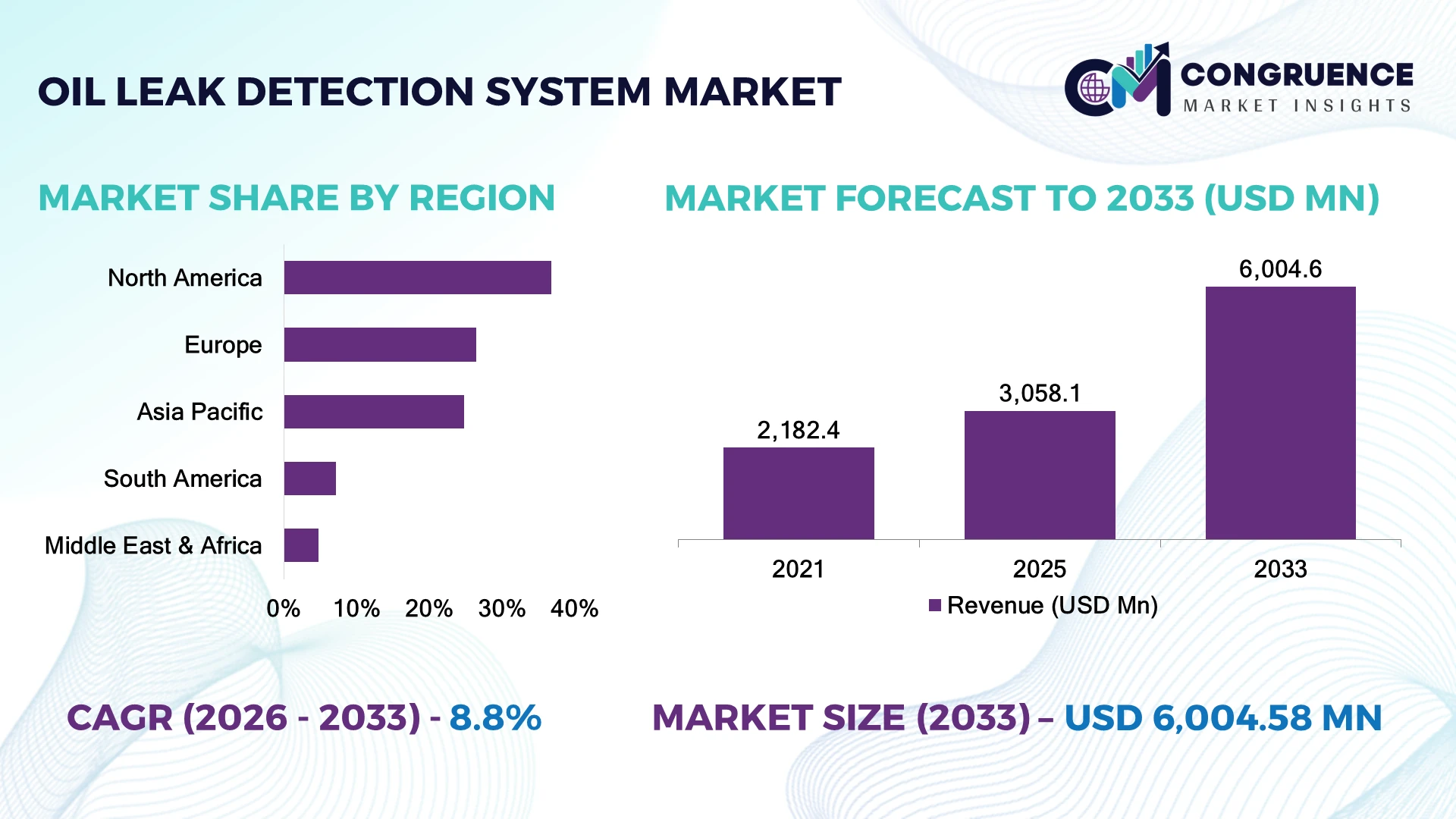
The Global Oil Leak Detection System Market was valued at USD 3,058.1 Million in 2025 and is anticipated to reach a value of USD 6,004.6 Million by 2033 expanding at a CAGR of 8.8% between 2026 and 2033. Growth is driven by stricter pipeline integrity regulations, expansion of cross-border oil transport infrastructure, and rapid deployment of AI-enabled real-time leak monitoring technologies.
The United States leads the market with approximately 28% of global installed oil pipeline monitoring infrastructure, supported by extensive pipeline networks, digital modernization programs, and advanced SCADA integration across upstream and midstream operations. Compared with Canada's nearly 11% share of monitored pipeline assets, the United States deploys over 72% of new intelligent leak detection systems on critical transmission pipelines. Continued energy security initiatives and geopolitical supply-chain realignment have accelerated investment in predictive monitoring and automated asset management.
Companies prioritizing integrated leak detection platforms with real-time analytics and predictive diagnostics are securing stronger regulatory compliance, operational resilience, and long-term infrastructure competitiveness.
Market Size & Growth: USD 3,058.1 million in 2025 to USD 6,004.6 million by 2033 at 8.8% CAGR, driven by pipeline digitalization and stricter safety compliance.
Top Growth Drivers: Pipeline modernization +26%, AI monitoring adoption +22%, regulatory compliance investments +19%.
Short-Term Forecast: By 2028, false alarm rates decline 18% through advanced analytics.
Emerging Technologies: AI, fiber-optic sensing, IoT edge monitoring improve detection accuracy by 25%.
Regional Leaders: North America leads, Middle East expands pipeline infrastructure, Asia-Pacific accelerates digital monitoring deployment.
Consumer/End-User Trends: More than 67% of major pipeline operators prioritize continuous monitoring systems.
Pilot/Case Example: 2025 smart monitoring deployment reduced leak response time by 31%.
Competitive Landscape: Leading suppliers collectively account for nearly 55% of global installations.
Regulatory & ESG Impact: Automated leak detection reduces environmental incident risk by approximately 30%.
Investment & Funding: More than USD 3.4 billion targets pipeline modernization and intelligent monitoring systems.
Innovation & Future Outlook: Predictive analytics and autonomous monitoring redefine pipeline asset management.
The Oil Leak Detection System Market is expanding across crude oil pipelines, refineries, storage terminals, and offshore production assets as operators adopt AI-powered diagnostics, fiber-optic sensing, and cloud-connected monitoring platforms. More than 60% of newly commissioned long-distance pipeline projects integrate intelligent leak detection from the design stage, while increasing regulatory oversight continues accelerating technology upgrades, creating the foundation for broader strategic transformation.
The Oil Leak Detection System Market has become strategically significant as pipeline operators balance operational reliability, environmental compliance, and asset protection. Aging pipeline infrastructure, expansion of cross-border energy corridors, and stricter environmental regulations are accelerating deployment of intelligent monitoring technologies capable of identifying leaks before operational disruptions escalate. Digital infrastructure modernization has shifted leak detection from reactive maintenance toward predictive asset management.
Modern fiber-optic sensing integrated with AI-driven analytics improves leak localization accuracy by approximately 28% compared with conventional pressure-based monitoring while reducing investigation time by nearly 35%. North America leads deployment through extensive pipeline modernization, whereas the Middle East continues expanding intelligent monitoring across newly constructed transmission infrastructure. Over the next two to three years, adoption of cloud-based monitoring platforms and predictive diagnostics is expected to exceed 65% among large pipeline operators managing critical oil transportation networks.
A practical example is the integration of distributed acoustic sensing with centralized SCADA platforms, enabling continuous monitoring across hundreds of kilometers through automated anomaly detection. Companies are expanding digital infrastructure investments, partnering with industrial automation providers, and strengthening remote monitoring capabilities to improve operational resilience, minimize environmental exposure, and secure long-term competitive advantage in energy infrastructure management.
Mandatory pipeline integrity programs and digital asset management are accelerating deployment of advanced oil leak detection systems across transmission and distribution infrastructure. More than 68% of newly commissioned long-distance pipelines now incorporate continuous leak monitoring, while AI-assisted analytics improve leak identification accuracy by nearly 30% and reduce emergency response time by approximately 35%. The United States continues expanding smart pipeline modernization under stricter federal safety oversight, encouraging operators to replace legacy monitoring assets. This operational shift lowers environmental liabilities and unplanned shutdowns while improving network reliability. Companies are responding through investments in distributed sensing technologies, partnerships with industrial automation providers, and integrated cloud-based monitoring platforms that combine predictive diagnostics with real-time asset surveillance.
A significant portion of installed pipeline infrastructure was designed without digital communication architecture, making advanced leak detection integration technically complex and capital intensive. Nearly 45% of mature pipeline networks require substantial control-system upgrades before intelligent monitoring can be deployed effectively, while retrofit costs can exceed greenfield installation expenses by 20%. Canada's remote transmission corridors further increase installation complexity through difficult terrain and communication limitations. These factors delay modernization schedules, reduce project scalability, and pressure maintenance budgets. Companies are mitigating risks through phased deployment strategies, localization of sensor manufacturing, long-term technology supply agreements, and hybrid monitoring architectures that combine conventional pressure analysis with modern fiber-optic sensing to improve operational continuity.
Predictive analytics integrated with digital twins is creating high-value opportunities beyond conventional leak detection by enabling condition-based maintenance and infrastructure optimization. Intelligent monitoring platforms can reduce unnecessary field inspections by approximately 25% while improving maintenance planning efficiency by nearly 30%. Japan and South Korea are expanding industrial AI deployment across critical energy infrastructure, encouraging wider adoption of automated diagnostic ecosystems. Companies are investing in edge computing, satellite-enabled monitoring, and autonomous inspection technologies that extend coverage across remote pipeline corridors. A particularly valuable opportunity lies in combining leak detection with predictive corrosion modeling, allowing operators to address infrastructure deterioration before failures disrupt production or regulatory compliance.
As oil leak detection systems become increasingly connected through cloud platforms and industrial IoT networks, cybersecurity has become a major execution challenge. Approximately 62% of critical pipeline operators now manage interconnected operational technology environments, increasing exposure to cyber threats targeting monitoring infrastructure. Maintaining uninterrupted data integrity across geographically dispersed assets requires secure communication protocols, redundant architectures, and continuous software validation. Australia and the United States are strengthening cybersecurity expectations for critical energy infrastructure, raising compliance complexity for operators. Companies must invest in encrypted communications, resilient edge computing, workforce cybersecurity training, and strategic partnerships with industrial cybersecurity specialists to maintain reliable monitoring performance while protecting operational continuity.
AI Detection Accuracy Improves Artificial intelligence is replacing rule-based monitoring by increasing anomaly detection accuracy by nearly 30% while reducing false alarms by approximately 22%. Pipeline operators integrate machine learning with SCADA workflows to prioritize high-risk events, and technology suppliers continue expanding analytics partnerships to accelerate predictive maintenance capabilities.
Fiber Optics Gain Momentum Distributed fiber-optic sensing now supports more than 40% of new long-distance pipeline monitoring projects because it provides continuous coverage and faster leak localization. Expansion of cross-border energy infrastructure and stricter environmental oversight encourage operators to replace isolated sensors with integrated linear monitoring networks that improve operational visibility.
Cloud Monitoring Becomes Standard Cloud-enabled asset management platforms process over 50% more operational data than conventional standalone systems, enabling centralized monitoring across geographically dispersed facilities. Energy companies automate reporting, integrate predictive diagnostics, and standardize digital workflows to reduce maintenance costs while improving incident response coordination.
Multi-Sensor Platform Integration Operators increasingly combine acoustic sensing, pressure monitoring, thermal imaging, and satellite surveillance into unified detection platforms, improving verification accuracy by nearly 27%. Industrial automation providers respond by developing interoperable architectures that simplify deployment, strengthen infrastructure resilience, and support expanding regulatory compliance across critical oil transportation networks.
Fiber optic leak detection systems accounted for approximately 39% of the market in 2025, making them the leading segment due to continuous real-time monitoring, long-distance coverage, and exceptional detection accuracy across transmission pipelines. Their resistance to electromagnetic interference, low maintenance requirements, and seamless integration with digital control platforms provide significant operational advantages over conventional technologies. Pressure-based systems continue serving established infrastructure because of lower installation costs, while acoustic systems remain valuable for localized industrial monitoring. Mass balance systems retain strategic relevance where operators require network-wide monitoring without extensive hardware replacement.
Distributed fiber optic systems are also the fastest-growing segment as pipeline modernization accelerates and predictive maintenance becomes operationally essential. Adoption across newly commissioned transmission projects has increased by nearly 24%, while AI-assisted fiber analytics have improved leak localization accuracy by approximately 28%. Companies are expanding optical sensing portfolios, strengthening industrial automation partnerships, and integrating cloud-based monitoring platforms to enhance lifecycle performance. Investment priorities increasingly favor intelligent sensing technologies capable of supporting future digital infrastructure.
According to the International Electrotechnical Commission (IEC) in 2025, distributed fiber-optic sensing is increasingly specified for critical linear infrastructure because it delivers continuous monitoring with high spatial resolution and rapid leak localization.
Pipeline monitoring represented approximately 52% of total market demand in 2025, supported by extensive deployment across crude oil, refined product, and natural gas transportation networks. Continuous monitoring minimizes product losses, improves environmental compliance, and strengthens operational reliability over long-distance assets. Storage tank monitoring remains an established application for terminal operators, while refinery process monitoring continues expanding through integration with predictive maintenance platforms. Offshore production facilities maintain strategic importance where immediate leak detection significantly reduces operational risk.
Pipeline monitoring is also the fastest-growing application as operators accelerate digital infrastructure modernization. Intelligent monitoring deployment has expanded by nearly 26% across newly upgraded transmission corridors, while integrated monitoring platforms have reduced manual inspection activity by approximately 23%. Companies are scaling automated monitoring networks, integrating leak detection with centralized asset management systems, and expanding remote operational capabilities. Competitive investment is increasingly concentrated in applications where continuous visibility, rapid incident response, and regulatory compliance deliver measurable operational advantages.
A 2026 enterprise assessment published by the American Petroleum Institute reported increasing integration of continuous monitoring technologies into pipeline integrity management programs to strengthen operational safety and environmental performance.
Oil and gas companies accounted for approximately 61% of market demand in 2025 because extensive upstream, midstream, and downstream infrastructure requires continuous leak surveillance across pipelines, terminals, and processing facilities. Their large-scale operations, strict environmental compliance requirements, and high asset values support sustained investment in intelligent monitoring technologies. Chemical and petrochemical companies remain significant adopters for hazardous fluid management, while power generation and water utilities increasingly deploy leak detection to protect critical infrastructure and improve operational efficiency.
Energy utilities represent the fastest-growing end-user segment as modernization of transmission assets and digital infrastructure accelerates. Smart monitoring deployments have increased by approximately 21%, while integrated asset management platforms have improved maintenance planning efficiency by nearly 25%. Solution providers are responding through industry-specific software customization, long-term service partnerships, flexible deployment models, and integrated cybersecurity capabilities. Competitive positioning increasingly depends on delivering scalable monitoring ecosystems tailored to each infrastructure operator's operational requirements.
A 2025 enterprise survey released through the International Association of Oil & Gas Producers (IOGP) indicated that continuous infrastructure monitoring is becoming a standard component of integrity management programs across major pipeline operators, reflecting wider adoption of digital asset surveillance technologies.
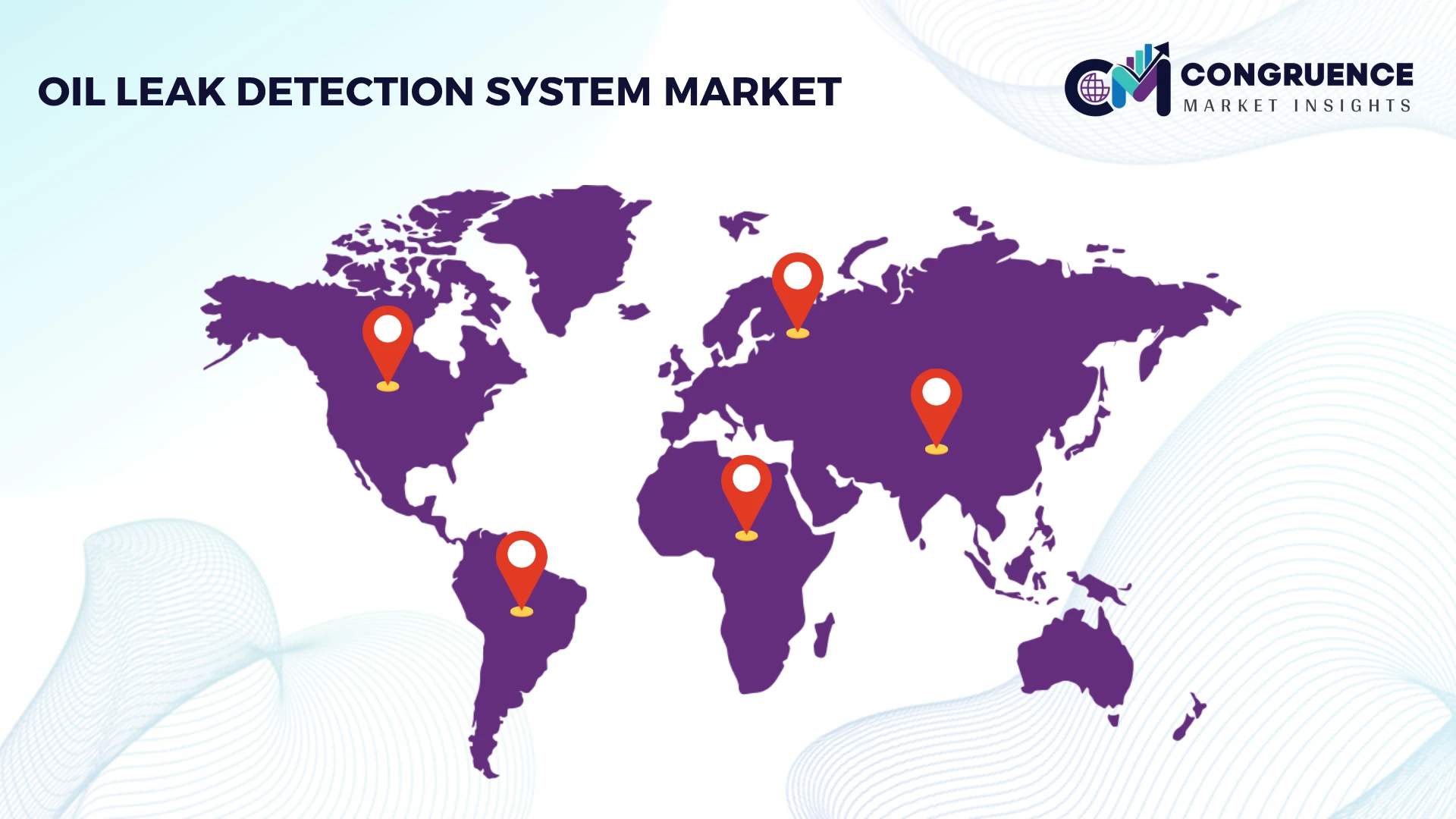
North America accounted for the largest market share at 36.8% in 2025 however, Asia-Pacific is expected to register the fastest growth, expanding at a CAGR of 9.7% between 2026 and 2033.
Smart Pipeline Modernization Strengthens Operational Resilience
North America remains the largest regional market owing to its extensive pipeline network, stringent environmental compliance requirements, and rapid deployment of digital monitoring technologies. Pipeline operators are increasingly integrating fiber-optic sensing, AI-powered analytics, and cloud-based supervisory platforms into both transmission and distribution assets. Nearly 58% of newly modernized interstate pipeline projects now incorporate continuous leak detection capabilities, while large-scale integrity management programs are accelerating replacement of legacy monitoring infrastructure. Industrial automation suppliers continue expanding partnerships with energy companies to deliver integrated monitoring ecosystems that improve operational visibility, reduce emergency response time, and strengthen regulatory compliance across critical oil transportation networks.
United States Market Outlook: The United States leads regional demand through its extensive crude oil and refined products pipeline infrastructure, advanced industrial automation ecosystem, and continuous investment in digital asset management. More than 3 million kilometers of pipeline infrastructure require continuous monitoring, encouraging rapid deployment of AI-enabled leak detection and fiber-optic sensing technologies. Federal pipeline safety modernization initiatives and expanding industrial IoT adoption continue supporting long-term technology upgrades, positioning the country as the primary innovation hub for intelligent leak detection solutions.
Regulatory Compliance Accelerates Digital Monitoring
Europe is strengthening leak detection deployment through strict environmental legislation, infrastructure modernization, and increasing investment in automated industrial monitoring. Cross-border energy transportation and aging pipeline assets are encouraging operators to adopt predictive monitoring technologies that improve operational safety while reducing environmental risk. More than 48% of recently upgraded transmission assets now integrate continuous monitoring capabilities, with industrial software vendors expanding digital inspection and analytics platforms to support infrastructure operators. Companies increasingly prioritize interoperable monitoring systems that simplify compliance reporting while improving maintenance planning and operational efficiency.
Germany Market Outlook: Germany serves as the regional technology leader through its advanced industrial automation sector, extensive chemical processing industry, and engineering expertise. Intelligent leak detection systems are increasingly deployed across refinery, petrochemical, and pipeline infrastructure, supported by Industry 4.0 initiatives. Automated monitoring integration across industrial facilities has expanded significantly, helping operators optimize maintenance schedules while strengthening environmental performance and operational reliability.
Infrastructure Expansion Drives Intelligent Deployment
Asia-Pacific is witnessing the fastest expansion as governments invest heavily in energy transportation infrastructure, refinery modernization, and industrial automation. Large-scale pipeline construction, expanding LNG facilities, and growing cross-border energy networks are increasing demand for advanced leak detection systems. More than 31% of recently commissioned energy infrastructure projects incorporate intelligent monitoring technologies from initial deployment, while domestic manufacturers continue increasing production of industrial sensing equipment. Technology suppliers are strengthening regional partnerships to support expanding digital energy infrastructure and localized manufacturing capabilities.
China Market Outlook: China dominates regional demand through extensive pipeline expansion, refinery investments, and rapid deployment of industrial digitalization technologies. Continuous investment in national energy infrastructure and smart pipeline management has accelerated adoption of distributed sensing and centralized monitoring platforms. Domestic technology providers continue expanding manufacturing capacity while collaborating with energy enterprises to improve operational safety, infrastructure reliability, and predictive maintenance capabilities.
Energy Infrastructure Investments Support Market Expansion
South America continues expanding adoption as pipeline modernization, offshore energy development, and environmental oversight receive greater investment. Oil-producing countries increasingly deploy automated monitoring systems to reduce operational losses and improve infrastructure reliability across aging transmission assets. Nearly 22% of recent pipeline rehabilitation projects include intelligent leak detection technologies, although remote terrain and communication infrastructure continue affecting deployment speed. Companies are responding through modular monitoring platforms, localized engineering services, and strategic partnerships supporting long-distance pipeline operations.
Brazil Market Outlook: Brazil represents the largest national market because of its offshore production activities, extensive pipeline infrastructure, and integrated refining sector. Continued investment in offshore transportation systems and onshore transmission assets supports increasing adoption of advanced monitoring technologies. Industrial operators are strengthening predictive maintenance capabilities through digital monitoring integration, improving operational efficiency while reducing environmental and operational risks across critical energy infrastructure.
Energy Security Investments Modernize Monitoring Networks
The Middle East & Africa market is expanding through investments in pipeline modernization, refinery expansion, and digital infrastructure supporting large-scale hydrocarbon production. National energy companies increasingly integrate intelligent leak detection with centralized control systems to improve operational continuity and environmental protection. More than 27% of newly commissioned pipeline infrastructure incorporates continuous monitoring technologies, while regional investment in automation platforms continues accelerating digital transformation across strategic energy assets. Companies emphasize scalable monitoring architectures capable of supporting large cross-country pipeline networks under demanding operating conditions.
Saudi Arabia Market Outlook: Saudi Arabia leads regional adoption through extensive crude oil production, integrated refining operations, and continuous investment in digital energy infrastructure. National modernization initiatives encourage deployment of AI-assisted monitoring, fiber-optic sensing, and centralized asset management platforms across strategic pipeline networks. Expansion of industrial automation capabilities and smart energy infrastructure strengthens operational resilience while supporting long-term infrastructure optimization and environmental compliance.
Global automation leaders including Honeywell, Siemens, Schneider Electric, Yokogawa Electric, and Emerson compete directly with specialist pipeline monitoring companies such as Atmos International, KROHNE, and OptaSense, while regional system integrators compete through lower deployment costs and localized engineering services. The top five players collectively account for approximately 49% of market activity. Competition increasingly revolves around detection accuracy, false-alarm reduction, and response speed, with advanced platforms improving leak localization accuracy by nearly 35% and reducing false alarms by over 40%. Global technology providers emphasize AI analytics, fiber-optic sensing, and digital twins, whereas regional firms differentiate through rapid commissioning and customized integration. Strategic partnerships between sensor manufacturers, SCADA providers, and pipeline operators are replacing standalone hardware offerings. Strict certification requirements, extensive field validation, and interoperability with legacy infrastructure remain major entry barriers. Winning requires combining predictive analytics, proven operational reliability, integrated software ecosystems, and scalable lifecycle support across complex pipeline networks.
Honeywell International Inc.
Siemens AG
Schneider Electric SE
Emerson Electric Co.
Yokogawa Electric Corporation
Atmos International Ltd.
KROHNE Group
OptaSense Ltd.
TTK Leak Detection Systems
ClampOn AS
Synodon Inc.
Pentair plc
Fiber-optic distributed acoustic sensing, Extended Real-Time Transient Model (E-RTTM) analytics, and AI-assisted pattern recognition now define advanced oil leak detection platforms. Approximately 54% of newly commissioned long-distance pipeline monitoring projects incorporate real-time analytics, while intelligent sensor fusion improves leak identification accuracy by nearly 30%. Integration with SCADA, edge computing, and cloud dashboards enables continuous monitoring, automated diagnostics, and faster operational decisions across geographically dispersed assets.
Compared with conventional pressure-balance systems, AI-enabled fiber-optic monitoring detects small leaks up to 45% faster while reducing false alarms by approximately 40%. Around 47% of major pipeline operators are deploying predictive monitoring instead of reactive inspection schedules. Technology leaders including Atmos International, KROHNE, Honeywell, and OptaSense benefit from this transition through integrated software, sensing hardware, and lifecycle service offerings, strengthening long-term customer retention and operational differentiation.
Between 2026 and 2028, digital twins, autonomous inspection drones, satellite-assisted monitoring, and machine learning-based anomaly prediction will become standard components of pipeline integrity management. Automated decision support is expected to improve maintenance planning efficiency by approximately 25%, while edge AI will shorten response times by nearly 35%. Companies investing now in interoperable digital architectures and advanced analytics will secure competitive advantages as regulatory expectations and infrastructure modernization accelerate.
May 2025 Honeywell introduced its Hydrogen Leak Detector sensing platform for industrial energy systems, enabling precise real-time detection of microscopic leaks and supporting safer hydrogen infrastructure deployment. The solution targets high-accuracy sensing across multiple applications, strengthening industrial safety portfolios. Source: Honeywell (Honeywell)
June 2025 Atmos International upgraded its Atmos Eclipse and Atmos 4G Sentinel platforms with enhanced pressure analytics, improving leak detection sensitivity while reducing false alarms across critical pipeline infrastructure through advanced monitoring software enhancements.
August 2024 Honeywell expanded its offshore Emissions Management Suite with hazardous-location certification and solar-powered Signal Scout hardware, extending detector operating life by more than eight years while improving continuous emissions and leak monitoring capabilities. Source: Honeywell Automation (Honeywell Automation)
July 2025 Atmos International reported completion of 11 site acceptance tests, detection of six pipeline leaks, and multiple customer software upgrades during quarterly operations, demonstrating growing deployment momentum and stronger lifecycle support across international pipeline monitoring projects. Source: (Atmosi)
This report delivers comprehensive analysis of the global oil leak detection system market across technology types, deployment environments, applications, and end-user industries. It evaluates fiber-optic systems, pressure-based monitoring, acoustic sensing, vapor detection, thermal imaging, and hybrid solutions while assessing adoption trends across upstream, midstream, downstream, petrochemical, and storage infrastructure. Regional assessment covers North America, Europe, Asia-Pacific, South America, and the Middle East & Africa, supported by analysis of industrial modernization, digital monitoring deployment, and evolving regulatory priorities.
The study examines competitive positioning, technology innovation, digital pipeline integrity management, AI-enabled monitoring, edge analytics, and integrated SCADA connectivity. It highlights operational adoption patterns, segment leadership, enterprise deployment priorities, and emerging opportunities between 2026 and 2033. Strategic insights enable decision-makers to evaluate investment priorities, expansion opportunities, technology selection, supply-chain resilience, partnership strategies, and long-term competitive positioning across increasingly automated energy transportation infrastructure.
| Report Attribute/Metric | Report Details |
|---|---|
|
Market Revenue in 2025 |
USD 3,058.1 Million |
|
Market Revenue in 2033 |
USD 6,004.6 Million |
|
CAGR (2026 - 2033) |
8.8% |
|
Base Year |
2025 |
|
Forecast Period |
2026 - 2033 |
|
Historic Period |
2021 - 2025 |
|
Segments Covered |
By Type
By Application
By End-User
|
|
Key Report Deliverable |
Revenue Forecast, Growth Trends, Market Dynamics, Segmental Overview, Regional and Country-wise Analysis, Competition Landscape |
|
Region Covered |
North America, Europe, Asia-Pacific, South America, Middle East, Africa |
|
Key Players Analyzed |
Honeywell International Inc., Siemens AG, Schneider Electric SE, Emerson Electric Co., Yokogawa Electric Corporation, Atmos International Ltd., KROHNE Group, OptaSense Ltd., TTK Leak Detection Systems, ClampOn AS, Synodon Inc., Pentair plc |
|
Customization & Pricing |
Available on Request (10% Customization is Free) |




