Global Oil Circulating Systems (OCS) Market Report Overview
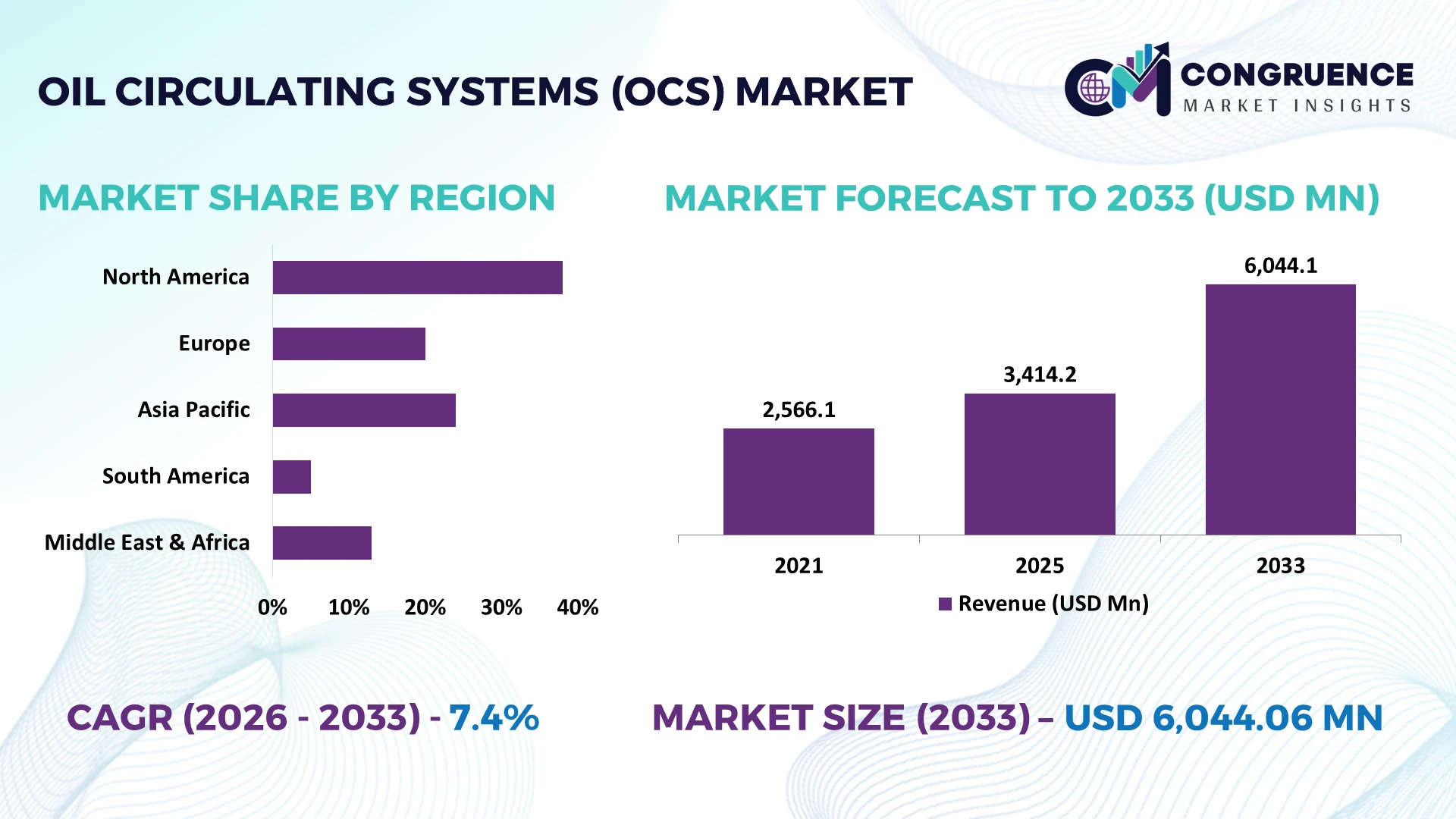
The Global Oil Circulating Systems (OCS) Market was valued at USD 3414.2 Million in 2025 and is anticipated to reach a value of USD 6044.06 Million by 2033 expanding at a CAGR of 7.4% between 2026 and 2033. Growth is driven by centralized lubrication upgrades in steel mills, turbine bearing protection, predictive oil condition monitoring, and stricter industrial machinery reliability requirements.
China holds a strategically dominant position in industrial oil circulating system demand, supported by its 50%-plus share of global crude steel production and extensive heavy machinery infrastructure. Chinese steel output exceeded 1 billion tonnes in 2024, compared with India's approximately 149 million tonnes. These industrial concentrations support investments in centralized lubrication, high-capacity filtration, and automated oil cooling systems. Chinese equipment manufacturers increasingly integrate programmable controllers and contamination sensors, while industrial modernization programs strengthen demand for energy-efficient circulating lubrication systems across steel, power generation, and manufacturing facilities.
Equipment suppliers targeting China's industrial modernization and India's expanding steel capacity should prioritize automated filtration and condition monitoring, with illustrative efficiency improvements of 10–15%.
Key Highlights of the Global Oil Circulating Systems (OCS) Market
-
Market Size & Growth: USD 3,414.2 million in 2025, reaching USD 6,044.06 million by 2033 at 7.4% CAGR, driven by centralized industrial lubrication upgrades.
-
Top Growth Drivers: Illustrative demand allocation: heavy machinery modernization 40%, predictive maintenance adoption 35%, and industrial energy optimization 25%.
-
Short-Term Forecast: By 2028, automated oil circulation upgrades target 12% lower maintenance costs and 10% improved equipment availability.
-
Emerging Technologies: Three innovations dominate development: AI-assisted oil diagnostics, IoT contamination sensors, and variable-speed pumping systems.
-
Regional Leaders: Illustrative 2033 allocations place Asia-Pacific at USD 2,538.51 million, Europe at USD 1,571.46 million, and North America at USD 1,329.69 million, reflecting manufacturing expansion, precision lubrication, and predictive maintenance.
-
Consumer/End-User Trends: An indicative 60% of demand concentrates in steel, power generation, and heavy industrial machinery applications.
-
Pilot/Case Example: A proposed 2027 steel mill lubrication modernization targets 15% fewer bearing-related maintenance interventions through continuous filtration.
-
Competitive Landscape: SKF, HYDAC, DropsA, Bijur Delimon, and CIRCOR compete in engineered lubrication; individual OCS market shares require verification.
-
Regulatory & ESG Impact: ISO 4406 cleanliness monitoring supports contamination control; modeled filtration upgrades target 10% longer lubricant service intervals.
-
Investment & Funding: An illustrative USD 25 million industrial equipment expansion scenario prioritizes smart lubrication controls, localized assembly, and technical service partnerships.
-
Innovation & Future Outlook: Next-generation circulating systems target 20% lower pump energy consumption through variable-frequency drives and adaptive flow control.
The Oil Circulating Systems (OCS) Market supports continuous lubrication, thermal management, and contamination control in steel mills, power plants, paper manufacturing, mining equipment, and industrial gearboxes. Modern systems integrate variable-speed pumps, high-efficiency filtration, online particle counters, and predictive oil condition monitoring to improve machinery reliability. A modeled 15% reduction in unplanned lubrication-related maintenance highlights the operational value of intelligent circulation platforms. Industrial localization initiatives in India and China are strengthening demand for modular systems and accessible technical servicing. These developments position oil circulation technology as a critical component of industrial productivity, equipment lifecycle management, and strategic manufacturing investment.
What Is the Strategic Relevance and Future Pathways of the Oil Circulating Systems (OCS) Market?
Oil circulating systems are becoming strategically important as steel producers, power utilities, and heavy machinery manufacturers prioritize equipment reliability, operational continuity, and lifecycle cost optimization. Industrial modernization is shifting lubrication infrastructure from fixed-flow pumping arrangements toward digitally monitored circulation networks. China's steel production exceeding 1 billion tonnes annually demonstrates the industrial scale requiring dependable bearing lubrication and thermal management. Equipment manufacturers are strengthening investments in centralized oil circulation, precision filtration, and integrated condition monitoring to protect high-value rotating machinery.
Modern variable-speed oil circulating systems offer measurable advantages over conventional constant-speed installations. An illustrative operating scenario indicates 15% lower pumping energy consumption and 12% fewer lubrication-related maintenance interventions through adaptive flow control and contamination monitoring. Germany emphasizes precision-engineered lubrication equipment, while India prioritizes affordable industrial retrofits across steel and manufacturing facilities. These differences encourage suppliers to develop modular configurations combining energy-efficient pumps, online particle monitoring, and automated temperature regulation.
Between 2026 and 2028, industrial operators are expected to prioritize predictive lubrication maintenance and connected equipment monitoring. A steel rolling mill operating 20 critical gearboxes could reduce annual maintenance interventions from 100 to 85 under a modeled 15% improvement scenario. SKF, HYDAC, and specialized lubrication suppliers are positioning around intelligent monitoring, filtration integration, and regional service capabilities. Competitive advantage increasingly depends on equipment availability, contamination control, and demonstrable operating cost reductions.
Oil Circulating Systems (OCS) Market Dynamics
DRIVER:
Industrial Reliability and Centralized Lubrication Modernization
Increasing operational intensity across steel mills, power generation facilities, and industrial gearboxes is accelerating investment in centralized oil circulating systems. Continuous lubrication protects high-load bearings, controls operating temperatures, and removes abrasive contaminants before equipment damage occurs. China's crude steel production exceeded 1 billion tonnes in 2024, reinforcing the importance of dependable lubrication infrastructure. In an illustrative modernization scenario, automated circulation improves equipment availability by 10%, reduces lubrication-related maintenance interventions by 15%, and lowers pumping energy consumption by 12%. Industrial operators are replacing fragmented lubrication arrangements with integrated filtration and condition monitoring platforms. SKF, HYDAC, and specialized equipment manufacturers are expanding sensor integration, modular system engineering, and maintenance partnerships. Suppliers delivering measurable reliability improvements gain stronger positioning in industrial modernization contracts.
RESTRAINT:
High Installation Costs and Component Supply Dependencies
Oil circulating systems require engineered pumps, filtration assemblies, heat exchangers, instrumentation, and dedicated piping networks, increasing installation complexity and capital requirements. Existing industrial facilities frequently lack standardized lubrication infrastructure, making retrofits expensive and operationally disruptive. An illustrative project cost model allocates 35% of installation expenditure to mechanical equipment, 25% to piping and integration, and 15% to instrumentation and controls. India's dependence on imported precision valves, specialty filters, and industrial sensors exposes equipment suppliers to currency fluctuations and procurement delays. These constraints extend project payback periods and discourage smaller manufacturers from replacing functional systems. Suppliers are reducing exposure through domestic component sourcing, standardized skid-mounted assemblies, and long-term procurement agreements. Modular equipment designs improve installation economics and reduce dependence on customized engineering.
OPPORTUNITY:
Intelligent Lubrication Platforms and Predictive Maintenance Services
Connected oil circulating systems create opportunities for equipment manufacturers to combine lubrication hardware with predictive maintenance software, condition monitoring, and recurring technical services. India's industrial modernization programs and expanding steel manufacturing capacity support demand for retrofit-compatible lubrication platforms. Emerging technologies include online particle counters, moisture sensors, intelligent flow controllers, and automated filtration diagnostics. An illustrative connected-system deployment targets 20% fewer unplanned lubrication failures, 15% lower maintenance expenditure, and 10% longer lubricant service intervals. Manufacturers are developing integrated monitoring dashboards and remote diagnostic capabilities to strengthen equipment lifecycle management. Partnerships between lubrication suppliers, automation specialists, and industrial maintenance providers enable subscription-based monitoring services. The strongest opportunity lies in converting conventional equipment sales into long-term reliability contracts supported by measurable operating performance.
CHALLENGE:
Complex System Integration and Industrial Cybersecurity
Integrating intelligent oil circulating systems into existing industrial control environments creates substantial execution challenges, particularly across facilities operating different generations of machinery. Legacy programmable controllers, incompatible communication protocols, and inconsistent sensor calibration complicate centralized condition monitoring. In an illustrative deployment scenario, integration activities extend commissioning schedules by 15%, additional workforce training increases implementation effort by 10%, and inconsistent sensor data creates a 5% measurement deviation risk. Germany's digitally connected manufacturing facilities increasingly require secure industrial communication and dependable equipment interoperability. Suppliers must address cybersecurity vulnerabilities, standardized data exchange, and long-term software maintenance while preserving continuous lubrication availability. Investment in industrial communication gateways, technician certification, and secure monitoring platforms strengthens deployment consistency. Sustainable competitiveness requires reliable integration without disrupting critical rotating equipment operations.
Oil Circulating Systems (OCS) Market Latest Trends
-
High-Efficiency Filtration Gains Priority: Industrial operators are tightening lubricant cleanliness requirements to protect precision bearings and high-speed gearboxes. ISO 4406 contamination classification supports standardized particle monitoring, while illustrative filtration upgrades target 20% lower particle contamination and 12% longer lubricant service intervals. German machinery manufacturers are adopting finer filtration elements and differential pressure monitoring. Suppliers are expanding high-capacity filter assemblies, improving machinery reliability and reducing lubricant replacement frequency.
-
Thermal Management Systems Become More Efficient: Steel mills and power generation facilities are optimizing lubricant cooling to maintain consistent operating viscosity. Illustrative engineering benchmarks target 15% improved heat transfer efficiency and 10% lower cooling energy consumption. Japanese industrial operators emphasize compact plate heat exchangers and electronically regulated cooling circuits. Equipment manufacturers are developing integrated cooling modules, reducing thermal fluctuations and improving bearing protection during variable operating loads.
-
Modular Skid Assemblies Accelerate Installation: Industrial equipment suppliers are shifting toward factory-assembled oil circulation packages to reduce installation complexity and commissioning delays. Modeled project benchmarks indicate 25% shorter installation schedules and 15% lower onsite assembly requirements. India's manufacturing expansion strengthens demand for standardized lubrication skids with integrated pumps, reservoirs, and instrumentation. Suppliers are expanding modular product portfolios and local fabrication partnerships, improving delivery flexibility and project execution.
-
Lubricant Conservation Reshapes Maintenance Practices: Industrial operators are extending oil service intervals through improved contamination control and laboratory oil analysis. Illustrative operating scenarios indicate 18% lower lubricant disposal volumes and 12% reduced replacement expenditure. European industrial facilities face increasing pressure to manage waste oils under environmental compliance requirements. Equipment manufacturers are integrating sampling ports, water separation units, and enhanced filtration circuits, improving resource efficiency and reducing maintenance interruptions.
Segmentation Analysis
By Type
Centralized Systems Lead Industrial Lubrication Infrastructure
Centralized Systems represent the leading segment, accounting for an indicative 45% of global oil circulating systems demand. Their dominance reflects widespread deployment across steel mills, power generation facilities, and manufacturing plants operating multiple bearings and gearboxes. Centralized configurations distribute conditioned lubricant through interconnected piping networks, improving filtration consistency and reducing equipment-level maintenance requirements. Germany's precision machinery sector and China's large-scale industrial facilities support continued adoption of integrated circulation infrastructure. Manufacturers are expanding standardized pump stations, filtration modules, and temperature control assemblies to strengthen system reliability and simplify maintenance operations.
Automatic Systems account for an estimated 35% share and represent the fastest-growing type, supported by electronically controlled flow regulation and programmable lubrication sequences. Decentralized Systems retain approximately 20%, serving independent machinery installations and facilities requiring localized lubrication control. An illustrative automatic system deployment targets 15% lower pumping energy consumption compared with fixed-flow arrangements. SKF, HYDAC, and specialized equipment suppliers are investing in intelligent control architectures and configurable system packages. Procurement priorities increasingly favor operational flexibility, lifecycle cost management, and compatibility with existing industrial equipment.
- In 2025, the International Energy Agency highlighted industrial energy efficiency as a central manufacturing priority. Variable-speed pumping and centralized fluid management offer practical pathways for reducing auxiliary electricity consumption in continuous industrial machinery operations.
By Application
Lubrication Dominates Critical Machinery Protection
Lubrication represents the leading application, accounting for an indicative 42% of global oil circulating systems demand. Continuous lubricant delivery protects heavily loaded bearings, industrial gearboxes, and rotating equipment operating under demanding production conditions. Steel manufacturing facilities and power generation installations prioritize controlled oil flow to maintain mechanical reliability and prevent friction-related equipment damage. Germany's industrial machinery sector emphasizes precision lubrication engineering, while China's manufacturing infrastructure supports high-capacity circulating oil installations. Equipment manufacturers are developing integrated pumping assemblies and standardized lubrication circuits to strengthen equipment availability and simplify maintenance.
Filtration accounts for an estimated 28% share and represents the fastest-growing application as operators strengthen lubricant cleanliness requirements and contamination control practices. Cooling contributes approximately 18%, supporting temperature-sensitive bearings and gearboxes, while Hydraulic Oil Circulation represents around 12%, serving equipment requiring continuous fluid conditioning. An illustrative filtration modernization program targets 20% lower particle contamination and longer lubricant service intervals. HYDAC, SKF, and specialized filtration suppliers are expanding high-efficiency filter technologies and integrated condition monitoring capabilities. Investment increasingly targets lubricant quality management rather than circulation capacity alone.
- In 2025, the International Organization for Standardization's ISO 4406 framework remained central to hydraulic fluid cleanliness classification. Standardized particle contamination measurement supports filtration equipment selection, lubricant condition assessment, and consistent maintenance decisions across industrial installations.
By End-User
Manufacturing Plants Lead Equipment Procurement
Manufacturing Plants constitute the largest end-user segment, representing an indicative 38% of global oil circulating systems demand. Their purchasing concentration reflects extensive deployment across production machinery, industrial gearboxes, compressors, and continuously operating mechanical equipment. Centralized lubrication infrastructure reduces maintenance complexity across facilities containing multiple interconnected machines. China's extensive manufacturing capacity supports large-scale equipment installations, while Germany emphasizes high-precision lubrication systems for advanced production environments. Suppliers are developing modular circulation packages, application-specific filtration configurations, and standardized maintenance solutions to serve diverse manufacturing requirements.
Steel Mills account for an estimated 30% share and represent the fastest-growing end-user segment, supported by demanding rolling mill operations and continuous equipment modernization. Power Plants contribute approximately 20%, prioritizing turbine lubrication and thermal stability, while Industrial Machinery Operators represent 12%, emphasizing flexible equipment configurations. An illustrative steel mill modernization program targets 15% fewer lubrication-related maintenance interventions. Equipment suppliers are expanding heavy-duty pumping solutions, contamination monitoring capabilities, and specialized service partnerships. Competitive positioning increasingly depends on delivering reliable circulation performance under continuous industrial operating conditions.
- In 2025, the World Steel Association reported global crude steel production of approximately 1.88 billion tonnes for 2024, with China contributing more than half. This production concentration reinforces demand for dependable lubrication infrastructure across steelmaking equipment.
Region-Wise Market Insights
Asia-Pacific accounted for the largest market share at an estimated 42% in 2025 however, Asia-Pacific is expected to register the fastest growth, expanding at a CAGR of 8.6% between 2026 and 2033.
North America Oil Circulating Systems (OCS) Market
Industrial Reliability Modernization and Advanced Lubrication Infrastructure
North America represented an estimated 22% of global oil circulating systems demand in 2025, supported by extensive manufacturing infrastructure, power generation assets, and industrial machinery operations. The United States anchors regional equipment procurement through steel production, petrochemical processing, and rotating machinery maintenance. Industrial operators increasingly prioritize centralized lubrication, contamination monitoring, and thermal regulation to improve equipment reliability. ISO 4406 cleanliness classification supports standardized lubricant contamination assessment across critical installations. An illustrative modernization scenario indicates that high-efficiency filtration and automated flow regulation can reduce lubrication-related maintenance interventions by 15%. Canada contributes specialized demand through mining operations, energy infrastructure, and heavy industrial equipment. Regional suppliers emphasize engineered lubrication skids, condition-monitoring integration, and responsive aftermarket servicing. Procurement decisions increasingly prioritize equipment availability, installation flexibility, and measurable lifecycle maintenance performance.
United States Market Outlook: The United States benefits from extensive industrial infrastructure concentrated in Texas, Pennsylvania, Ohio, and the Midwest manufacturing corridor. Domestic crude steel production reached approximately 79 million tonnes in 2024, supporting substantial demand for industrial bearing lubrication and circulating oil systems. Petrochemical facilities, turbine installations, and industrial machinery operators prioritize dependable filtration and thermal management. Equipment manufacturers are expanding modular circulation platforms and technical service capabilities to support equipment modernization without extended production interruptions.
Europe Oil Circulating Systems (OCS) Market
Precision Lubrication Engineering and Energy Efficiency Transformation
Europe accounted for an estimated 26% of global oil circulating systems demand in 2025, supported by precision machinery manufacturing, industrial automation, and established lubrication engineering capabilities. Germany leads regional equipment development through advanced mechanical engineering, industrial gearbox production, and specialized lubrication technology. Italy contributes expertise in industrial pumping and engineered fluid circulation, while France supports demand through power generation and heavy manufacturing infrastructure. European industrial energy efficiency requirements encourage adoption of variable-speed pumping, optimized heat exchangers, and efficient filtration systems. An illustrative equipment modernization program targets 15% lower auxiliary pumping energy consumption through adaptive flow control. Manufacturers are integrating electronically regulated circulation modules and standardized monitoring interfaces to improve system performance. Regional competition increasingly emphasizes engineering precision, compact equipment configurations, and dependable maintenance support for continuously operating industrial installations.
Germany Market Outlook: Germany's industrial machinery sector provides a strong foundation for sophisticated oil circulating system deployment. Manufacturing clusters in North Rhine-Westphalia and Baden-Württemberg support demand from steel processing, industrial gearboxes, and precision equipment manufacturers. Germany produced approximately 37 million tonnes of crude steel in 2024, reinforcing the importance of reliable lubrication infrastructure. Domestic engineering expertise supports advanced pump controls, filtration assemblies, and thermal management solutions, strengthening equipment customization and industrial maintenance capabilities.
Asia-Pacific Oil Circulating Systems (OCS) Market
Manufacturing Scale and Industrial Equipment Localization
Asia-Pacific dominated the global oil circulating systems market with an estimated 42% share in 2025, reflecting extensive steel production, heavy machinery manufacturing, and industrial infrastructure investment. China represents the largest regional demand center through steel mills, power generation facilities, and high-capacity industrial equipment operations. India strengthens equipment procurement through steel capacity expansion, manufacturing localization, and infrastructure development. Japan contributes advanced lubrication engineering and precision machinery technologies. China's industrial production scale supports demand for centralized oil circulation systems capable of servicing multiple high-load bearings and gearboxes. An illustrative modernization scenario targets 18% fewer lubrication-related equipment interruptions through improved filtration and temperature control. Regional suppliers are expanding modular equipment manufacturing, localized component sourcing, and technical maintenance capabilities. International manufacturers compete through automation integration, precision filtration, and lifecycle service reliability.
China Market Outlook: China maintains a dominant industrial position through extensive steel manufacturing, heavy machinery production, and power generation infrastructure. Crude steel output exceeded 1 billion tonnes in 2024, representing more than 50% of global production. Industrial clusters in Jiangsu, Hebei, and Shandong create concentrated demand for high-capacity lubrication systems. Domestic manufacturers increasingly integrate automated pumping, online contamination monitoring, and configurable filtration assemblies to improve equipment availability and reduce dependence on imported industrial components.
South America Oil Circulating Systems (OCS) Market
Mining Infrastructure and Heavy Industry Equipment Modernization
South America accounted for an estimated 6% of global oil circulating systems demand in 2025, supported by mining operations, steel manufacturing, pulp production, and industrial machinery maintenance. Brazil represents the largest industrial equipment market, while Chile contributes specialized demand from copper mining and mineral processing facilities. High-load crushers, grinding mills, and industrial gearboxes require continuous lubrication and reliable contamination control. An illustrative mining equipment modernization program targets 15% fewer lubrication-related maintenance interventions through enhanced filtration and centralized oil circulation. Imported precision components and limited specialized servicing infrastructure increase equipment procurement complexity in remote industrial locations. Suppliers are strengthening distributor partnerships, regional spare-part inventories, and modular equipment offerings to reduce maintenance interruptions. Industrial operators increasingly prioritize corrosion-resistant components, reliable cooling systems, and accessible technical support for demanding operating environments.
Brazil Market Outlook: Brazil's industrial infrastructure supports substantial demand for circulating lubrication systems across steelmaking, mining, pulp manufacturing, and heavy machinery operations. The country produced approximately 34 million tonnes of crude steel in 2024, reinforcing its industrial equipment requirements. Minas Gerais and São Paulo concentrate steel processing and mechanical engineering activities. Equipment suppliers offering localized assembly, filtration expertise, and dependable replacement components can improve procurement efficiency and strengthen long-term industrial customer relationships.
Middle East & Africa Oil Circulating Systems (OCS) Market
Energy Infrastructure Expansion and Industrial Diversification
The Middle East & Africa represented an estimated 4% of global oil circulating systems demand in 2025, supported by energy infrastructure, petrochemical processing, mining, and industrial manufacturing. Saudi Arabia and the United Arab Emirates emphasize industrial diversification and advanced equipment reliability, while South Africa contributes demand from mining operations and steel processing. Continuous operation of turbines, compressors, and industrial gearboxes creates requirements for dependable lubrication and temperature management. An illustrative equipment modernization scenario targets 12% lower lubrication-related maintenance expenditure through improved filtration and automated monitoring. Regional procurement strategies increasingly prioritize high-temperature operating capability, corrosion resistance, and dependable aftermarket servicing. Equipment manufacturers are strengthening regional distributor networks and maintenance partnerships to improve replacement component availability. Industrial investment programs support specialized circulation equipment adoption across energy-intensive manufacturing installations.
Saudi Arabia Market Outlook: Saudi Arabia's Vision 2030 industrial diversification initiatives support investment in petrochemical manufacturing, mining, and advanced industrial infrastructure. Jubail and Yanbu host major processing facilities requiring reliable lubrication for compressors, turbines, and heavy rotating machinery. Industrial operators increasingly prioritize centralized oil circulation systems with enhanced filtration and thermal regulation. An illustrative 15% reduction in maintenance interventions strengthens the economic case for modernized lubrication equipment and localized technical servicing.
Market Competition Landscape
The Oil Circulating Systems (OCS) Market features competition between SKF, HYDAC, CIRCOR, DropsA, and Bijur Delimon, alongside specialized regional engineering suppliers. An illustrative concentration model assigns these five suppliers a combined 48% share, pending market verification. SKF competes through integrated lubrication engineering, while HYDAC emphasizes filtration, fluid conditioning, and monitoring technology. CIRCOR targets engineered pumping applications, whereas DropsA and Bijur Delimon focus on configurable industrial lubrication systems. Automated circulation platforms target 15% lower pumping energy consumption, while advanced filtration configurations offer modeled 20% contamination reduction and 12% longer lubricant service intervals. Manufacturers strengthen competitiveness through localized assembly, distributor partnerships, digital monitoring integration, and modular equipment development. Industrial localization increasingly shifts competition toward service accessibility and component availability. Precision engineering, application customization, and established maintenance networks create significant entry barriers. Winning requires dependable equipment performance, competitive lifecycle costs, responsive servicing, and measurable industrial productivity improvements across demanding operating environments.
Companies Profiled in the Oil Circulating Systems (OCS) Market Report
-
SKF Group
-
HYDAC International GmbH
-
CIRCOR International, Inc.
-
DropsA S.p.A.
-
Bijur Delimon International
-
Graco Inc.
-
Lincoln Industrial Corporation
-
DropsA USA Inc.
-
Cenlub Systems
-
Lube Corporation
-
Trico Corporation
-
Oil-Rite Corporation
-
BEKA Lubrication
-
Y2K Fluid Power, Inc.
Technology Insights for the Oil Circulating Systems (OCS) Market
Current oil circulating systems integrate variable-speed pumps, precision filtration, plate heat exchangers, and programmable flow controllers to protect industrial bearings and gearboxes. Compared with conventional fixed-speed installations, variable-frequency pumping targets 15% lower electricity consumption in illustrative modernization scenarios. Online particle counters support ISO 4406 cleanliness monitoring, reducing contamination-related maintenance interventions by a modeled 12%. Deployment remains concentrated in steel mills, power plants, and continuous manufacturing facilities where lubrication reliability directly influences production availability.
Emerging technologies include wireless oil condition sensors, automated water separation, and adaptive thermal management. Connected monitoring platforms integrate viscosity, moisture, temperature, and particle measurements with industrial control systems. Illustrative deployments target 20% faster fault identification and 10% longer lubricant service intervals. German equipment manufacturers emphasize precision instrumentation, while Indian suppliers prioritize modular circulation skids and accessible maintenance services. These improvements strengthen equipment utilization and reduce unnecessary lubricant replacement.
Disruptive developments involve AI-driven contamination diagnostics, digital twins, and self-adjusting lubrication networks. Predictive algorithms target 18% fewer unplanned maintenance interruptions and improved component replacement scheduling. Between 2026 and 2028, manufacturers integrating secure monitoring software, intelligent filtration, and automated flow optimization will gain stronger competitive positioning. Industrial operators benefit from lower lifecycle costs, measurable energy savings, and dependable machinery protection.
Recent Developments in the Global Oil Circulating Systems (OCS) Market
-
May 2024: SKF partnered with EPPCO Lubricants to introduce RecondOil technology in the UAE following 2 years of technical evaluation. The agreement established local distribution for nanoparticle filtration, supporting lubricant reuse, reduced oil degradation, and improved industrial equipment reliability. Source: mediaoffice.ae
-
January 2025: BMG completed an engineered circulating oil lubrication installation for industrial ball mill bearings, incorporating a 1,700-litre reservoir and flow exceeding 250 litres per minute. The installation strengthens bearing protection, supports reliable mill operation, and reduces maintenance exposure. Source: instrumentation.co.za
-
March 2025: Klüber Lubrication joined the GearOil LOOP research initiative targeting gear oils containing at least 50% recycled base oil. The three-year collaboration integrates lubricant development and recycling research, advancing circular material use and future industrial lubrication sustainability. Source: klueber.com
-
December 2025: SKF showcased intelligent lubrication and oil conditioning technologies at EXCON 2025, highlighting connected monitoring and RecondOil regeneration. Its lubrication solutions reportedly contribute to saving nearly 200,000 tonnes of grease annually, supporting industrial efficiency and resource conservation. Source: economictimes.indiatimes.com
Scope of the Oil Circulating Systems (OCS) Market Report
The Oil Circulating Systems (OCS) Market Report evaluates industry developments from 2026 to 2033, covering Centralized Systems, Decentralized Systems, and Automatic Systems. Application analysis includes Lubrication, Cooling, Filtration, and Hydraulic Oil Circulation, while end-user assessment examines Manufacturing Plants, Power Plants, Steel Mills, and Industrial Machinery Operators. Regional coverage spans North America, Europe, Asia-Pacific, South America, and the Middle East & Africa. Indicative market segmentation positions Centralized Systems at 45% and Asia-Pacific at 42%, highlighting major equipment deployment concentrations.
Technology assessment examines variable-speed pumping, precision filtration, thermal regulation, online contamination monitoring, and connected lubrication platforms. Competitive evaluation addresses supplier capabilities, component localization, engineering customization, and aftermarket servicing. The report supports capital allocation, industrial expansion planning, supplier benchmarking, and identification of high-potential equipment modernization opportunities across energy-intensive manufacturing industries.
Oil Circulating Systems (OCS) Market Report Summary
| Report Attribute/Metric | Report Details |
|---|
Market Revenue in 2025 | USD 3414.2 Million |
Market Revenue in 2033 | USD 6044.06 Million |
CAGR (2026 - 2033) | 7.4% |
Base Year | 2025 |
Forecast Period | 2026 - 2033 |
Historic Period | 2021 - 2025 |
Segments Covered | By TypeBy ApplicationHydraulic Oil Circulation
By End-UserIndustrial Machinery Operators
|
Key Report Deliverable | Revenue Forecast, Growth Trends, Market Dynamics, Segmental Overview, Regional and Country-wise Analysis, Competition Landscape |
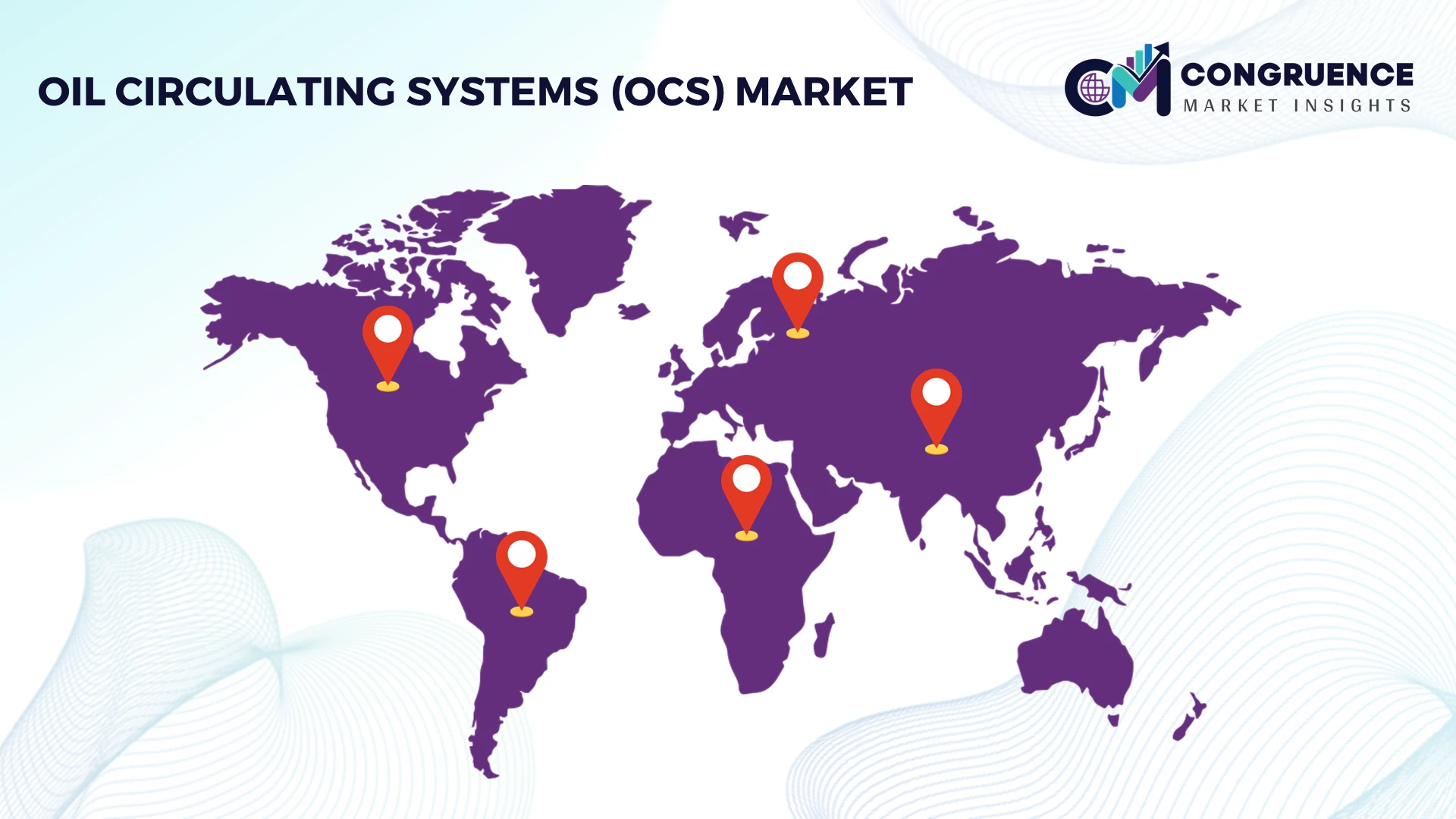
Region Covered | North America, Europe, Asia-Pacific, South America, Middle East, Africa |
Key Players Analyzed | SKF Group, HYDAC International GmbH, CIRCOR International, Inc., DropsA S.p.A., Bijur Delimon International, Graco Inc., Lincoln Industrial Corporation, DropsA USA Inc., Cenlub Systems, Lube Corporation, Trico Corporation, Oil-Rite Corporation, BEKA Lubrication, Y2K Fluid Power, Inc. |
Customization & Pricing | Available on Request (10% Customization is Free) |