Global Octreotide Market Report Overview
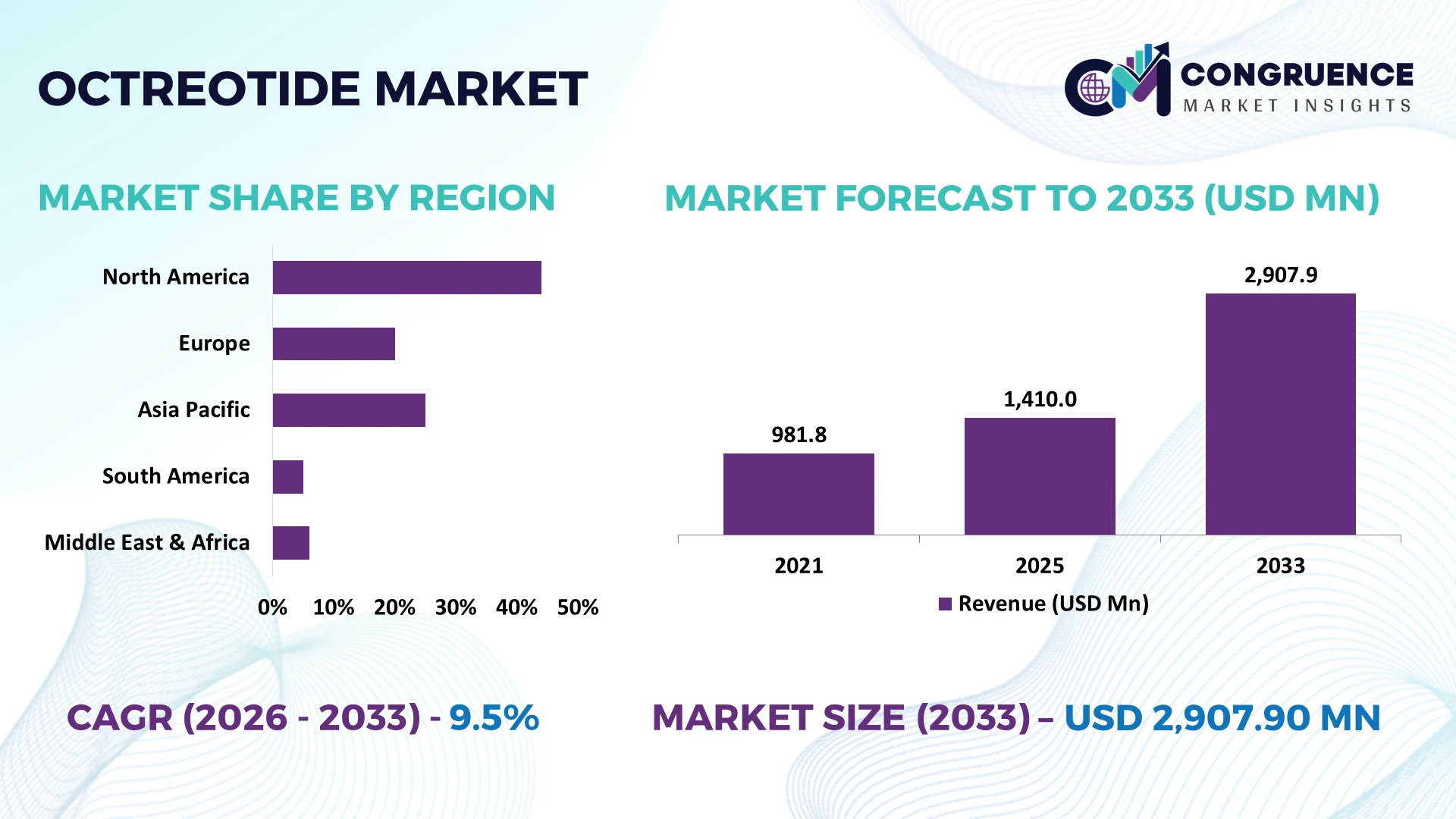
The Global Octreotide Market was valued at USD 1410 Million in 2025 and is anticipated to reach a value of USD 2907.9 Million by 2033 expanding at a CAGR of 9.47% between 2026 and 2033. Growth is driven by increasing treatment of acromegaly and gastroenteropancreatic neuroendocrine tumors, expanding use of long-acting injectable formulations, and commercialization of oral octreotide therapies.
The United States dominates the advanced octreotide treatment landscape, supported by specialty endocrinology services, oncology infrastructure, and FDA-approved peptide therapeutics. Acromegaly affects approximately 40–125 individuals per million, while somatostatin analogues achieve biochemical control in approximately 40–60% of treated patients, depending on treatment selection. Compared with India, the United States benefits from broader specialty reimbursement and established long-acting injection delivery networks. FDA approvals of MYCAPSSA in 2020 and OGSIVEO alternatives are not interchangeable; oral octreotide commercialization instead centers on MYCAPSSA and PALSOMY.
Strategically, manufacturers should prioritize long-acting formulation differentiation, oral treatment accessibility, and specialty distribution partnerships to capture demand across chronic endocrine and neuroendocrine disease management.
Key Highlights of the Global Octreotide Market
-
Market Size & Growth: USD 1,410 million in 2025, reaching USD 2,907.9 million by 2033 at 9.47% CAGR, supported by long-acting formulations and generic expansion.
-
Top Growth Drivers: Acromegaly biochemical control rates of 40–60%, treatment continuation needs, and 100% elimination of scheduled injections with oral maintenance therapy.
-
Short-Term Forecast: By 2028, generic penetration will reshape procurement; modeled scenarios target 10–15% lower acquisition costs in competitive hospital contracts.
-
Emerging Technologies: Three innovations include oral peptide delivery, biodegradable microsphere depots, and automated sterile injectable manufacturing with improved batch consistency.
-
Regional Leaders: Indicative 2033 allocations place North America at USD 1,221.3 million, Europe at USD 872.4 million, and Asia-Pacific at USD 581.6 million, emphasizing oral therapy, generics, and specialty distribution.
-
Consumer/End-User Trends: MYCAPSSA replaces monthly injections with twice-daily oral dosing, eliminating 100% of scheduled depot injection visits for eligible patients.
-
Pilot/Case Example: The 2020 CHIASMA OPTIMAL trial demonstrated 58.2% biochemical response with oral octreotide versus 19.4% with placebo.
-
Competitive Landscape: Novartis leads the established branded depot segment; Viatris, Teva, Chiesi, and Sun Pharma strengthen formulation and generic competition.
-
Regulatory & ESG Impact: FDA approval of Viatris' generic octreotide depot in 3 strengths during 2025 expanded alternatives for US pharmaceutical procurement.
-
Investment & Funding: Viatris' generic commercialization covers 3 depot strengths; disclosed octreotide-specific capital investment totals remain unquantified.
-
Innovation & Future Outlook: Between 2026 and 2033, oral formulations and advanced depots will compete on treatment convenience, with 28-day injectable schedules remaining established.
The octreotide market is transitioning toward differentiated drug delivery, competitive generic manufacturing, and specialist endocrine treatment pathways. Demand centers on acromegaly management, carcinoid syndrome symptom control, and vasoactive intestinal peptide-secreting tumors. Advanced oral peptide absorption technologies are expanding alternatives to injectable maintenance therapy, while depot microspheres sustain approximately four-week dosing intervals. The 2026 introduction of additional generic long-acting octreotide products in the United States is reshaping pharmaceutical procurement and supplier diversification. Manufacturers are consequently prioritizing formulation reliability, patient adherence, and specialty distribution capabilities, establishing the strategic foundation for future competitive positioning.
What Is the Strategic Relevance and Future Pathways of the Octreotide Market?
The octreotide market is becoming strategically important as pharmaceutical manufacturers compete through differentiated peptide delivery, generic substitution, and specialized endocrine treatment access. Long acting somatostatin analogues remain central to acromegaly and neuroendocrine tumor management, with biochemical control achieved in approximately 40–60% of appropriately selected acromegaly patients. Regulatory approval of generic depot formulations is reshaping pharmaceutical procurement, increasing pressure on established branded manufacturers to demonstrate formulation reliability, clinical differentiation, and treatment convenience. Companies are expanding sterile manufacturing capabilities and strengthening specialty distribution partnerships.
Technology adoption is changing treatment economics and patient management. Oral octreotide replaces approximately 13 scheduled annual depot injections with twice daily administration, eliminating 100% of routine injection appointments for eligible patients. The United States leads oral peptide commercialization, while European healthcare systems emphasize cost effective depot procurement and biosimilar alternatives where available. India's pharmaceutical manufacturing ecosystem supports generic peptide development and international supply diversification.
During 2026–2028, competitive priorities will center on oral treatment uptake, depot formulation consistency, and expanded specialty pharmacy integration. Chiesi's commercialization of MYCAPSSA illustrates how manufacturers combine innovative delivery technologies with endocrinology networks. Companies investing in patient support programs and reliable manufacturing infrastructure will strengthen treatment continuity, reduce administration burdens, and establish sustainable competitive advantages.
Octreotide Market Dynamics
DRIVER:
Expanding Somatostatin Analogue Treatment Utilization
Increasing use of somatostatin analogues in acromegaly and neuroendocrine tumor management is strengthening octreotide demand. Long acting octreotide achieves biochemical control in approximately 40–60% of selected acromegaly patients, while the PROMID trial demonstrated a 66% reduction in the hazard of tumor progression among patients receiving octreotide LAR compared with placebo. The 2020 FDA approval of oral octreotide introduced an additional maintenance treatment pathway for eligible acromegaly patients. Pharmaceutical manufacturers are responding through extended release formulation development, specialty pharmacy partnerships, and expanded endocrinology engagement. These changes increase treatment accessibility while allowing healthcare providers to match delivery methods with disease control requirements, improving patient retention and strengthening differentiated product positioning.
RESTRAINT:
Complex Peptide Manufacturing and Treatment Accessibility
Octreotide manufacturing requires precise peptide synthesis, sterile processing, and controlled release formulation capabilities, creating substantial production and procurement constraints. Long acting formulations require approximately 28 day dosing intervals, while oral octreotide must be administered at least one hour before or two hours after meals. In the OPTIMAL study, 58.2% of patients maintained biochemical response with oral octreotide, demonstrating that treatment convenience does not eliminate individual response variability. United States specialty pharmacy reimbursement requirements and stringent FDA manufacturing standards increase commercialization complexity. Manufacturers are reducing exposure through qualified contract manufacturing partnerships, validated peptide supply chains, and differentiated formulation portfolios. Consistent release kinetics and predictable product availability remain essential for maintaining treatment continuity and institutional purchasing confidence.
OPPORTUNITY:
Oral Peptide Platforms and Personalized Treatment Delivery
Advanced oral peptide delivery platforms create opportunities to expand octreotide treatment beyond injection dependent maintenance pathways. In the OPTIMAL trial, 58.2% of patients receiving oral octreotide maintained biochemical control compared with 19.4% receiving placebo. The CHIASMA TRANSIENT study demonstrated biochemical response maintenance in approximately 80% of patients during oral treatment assessment, supporting further development of patient selection strategies. In the United States, digital adherence monitoring and specialty pharmacy integration offer opportunities to improve dosing consistency and treatment persistence. Pharmaceutical companies are investing in absorption enhancement technologies, patient support platforms, and formulation optimization. The strategic opportunity extends beyond administration convenience: combining treatment monitoring with individualized dosing support strengthens patient engagement and differentiates specialty endocrine care services.
CHALLENGE:
Long-Term Treatment Optimization and Clinical Workflow Integration
Maintaining consistent biochemical control across changing formulations and treatment settings creates significant long-term execution challenges. Approximately 40–60% of selected acromegaly patients achieve biochemical control with first generation somatostatin analogues, leaving a substantial population requiring dose adjustment or alternative treatment. Oral octreotide demonstrated 58.2% response maintenance in the OPTIMAL trial, while placebo recipients achieved 19.4%, highlighting the importance of validated treatment selection. In the United States, transitions between hospital administered injections and specialty pharmacy supplied oral therapy require coordinated endocrinology oversight, laboratory monitoring, and adherence assessment. Manufacturers must strengthen real-world evidence programs, digital patient monitoring, and clinician education. Sustainable differentiation depends on demonstrating durable hormonal control, minimizing treatment interruptions, and integrating therapeutic innovation into established clinical management pathways.
Octreotide Market Latest Trends
-
Generic Depot Competition Reshapes Hospital Procurement: FDA authorization of generic octreotide extended-release formulations is increasing competitive pressure on established branded products. Three standard depot strengths, 10 mg, 20 mg, and 30 mg, support differentiated dosing requirements. Manufacturers are strengthening sterile production capacity and hospital contracting, while procurement teams emphasize supply reliability, therapeutic equivalence, and predictable acquisition costs over brand preference.
-
Specialty Distribution Networks Strengthen Treatment Continuity: Pharmaceutical companies are refining distribution arrangements for chronic somatostatin analogue therapy. Long-acting octreotide typically requires administration every 28 days, representing approximately 13 treatment visits annually. Specialty distributors are improving inventory forecasting and coordinated delivery schedules, reducing missed appointments and supporting uninterrupted treatment for patients managed across endocrinology and oncology practices.
-
Neuroendocrine Treatment Protocols Become More Standardized: Oncology centers increasingly integrate octreotide into multidisciplinary neuroendocrine tumor management. The PROMID trial demonstrated median tumor progression times of 14.3 months with octreotide LAR versus 6.0 months with placebo. Hospitals are aligning treatment selection, imaging surveillance, and hormonal symptom assessment, while pharmaceutical suppliers strengthen clinician education and institutional formulary engagement.
-
Peptide Manufacturing Emphasizes Process Consistency: Injectable octreotide production increasingly prioritizes validated microsphere processing, sterile filling, and controlled-release performance. Depot products commonly provide 28-day drug delivery across three established dosage strengths. Manufacturers are investing in analytical testing, automated quality inspection, and qualified raw material suppliers to minimize batch variability, strengthen regulatory compliance, and improve production reliability.
Segmentation Analysis
By Type
Long-Acting Release Octreotide Leads Formulation Demand
Long-Acting Release (LAR) Octreotide represents the leading formulation category, with an indicative 55% share of global octreotide product demand, supported by established maintenance treatment protocols and predictable administration schedules. Depot formulations typically deliver therapeutic exposure over 28 days, reducing injection frequency compared with multiple daily immediate-release administration. This operational advantage supports treatment continuity in acromegaly and neuroendocrine tumor management. Immediate-Release Octreotide remains essential for initial dose assessment, acute symptom management, and patients requiring flexible titration. Octreotide Acetate Injection supports established subcutaneous and intravenous administration pathways, particularly within hospital environments.
Generic Octreotide Formulations represent the fastest-expanding commercial category as pharmaceutical procurement shifts toward competitive alternatives to established branded products. FDA-authorized depot generics are increasing supplier participation and supporting institutional purchasing flexibility. Manufacturers are investing in microsphere formulation technology, sterile production capacity, and regulatory equivalence programs. The strategic distinction lies between established depot convenience and generic procurement economics, with suppliers competing through consistent release profiles, manufacturing reliability, and differentiated distribution capabilities.
- In 2025, the US Food and Drug Administration authorized additional generic octreotide extended-release injectable products in established 10 mg, 20 mg, and 30 mg strengths, strengthening procurement alternatives and reinforcing investment in complex injectable manufacturing capabilities.
By Application
Acromegaly Maintains Established Treatment Leadership
Acromegaly represents a leading application segment, with an indicative 40% share of octreotide treatment demand, supported by long-term hormonal management requirements and established endocrinology prescribing pathways. Somatostatin analogues achieve biochemical control in approximately 40–60% of appropriately selected patients, reinforcing their position in chronic disease management. Long-acting formulations reduce administration frequency and support consistent growth hormone suppression. Carcinoid Syndrome represents another important application, particularly for controlling flushing and diarrhea associated with hormonally active neuroendocrine tumors. Pharmaceutical companies prioritize differentiated maintenance formulations and specialist prescriber engagement across these established indications.
Neuroendocrine Tumors represent the fastest-expanding application category as multidisciplinary oncology programs increasingly incorporate somatostatin analogue treatment into disease stabilization pathways. The PROMID trial demonstrated a 66% reduction in tumor progression hazard with octreotide LAR compared with placebo. Gastrointestinal Hormone-Secreting Tumors remain a specialized application requiring individualized dosing and hormonal symptom control. Manufacturers are strengthening oncology partnerships, clinical education, and treatment access programs to address evolving prescribing requirements.
- The National Comprehensive Cancer Network's 2025 neuroendocrine tumor guidance recognizes somatostatin analogues within established treatment pathways for selected well-differentiated tumors. This clinical positioning supports continued institutional demand for octreotide formulations and coordinated endocrine-oncology services.
By End-User
Hospitals Dominate Institutional Octreotide Administration
Hospitals represent the leading end-user segment, with an indicative 45% share of octreotide administration and procurement activity, reflecting their role in acute treatment, specialist consultations, and complex endocrine-oncology management. Hospital pharmacies maintain immediate-release and depot formulations to accommodate different clinical requirements. Long-acting octreotide is typically administered every 28 days, supporting predictable medication scheduling and inventory management. Hospitals also coordinate diagnostic assessment, hormonal monitoring, and multidisciplinary treatment decisions. Manufacturers are strengthening institutional contracting, formulary access, and supply assurance programs to maintain reliable product availability.
Specialty Endocrinology Clinics represent the fastest-expanding end-user category as chronic acromegaly management becomes increasingly decentralized. Approximately 40–60% of selected patients achieve biochemical control with first-generation somatostatin analogues, supporting continued specialist monitoring and individualized treatment adjustments. Oncology Centers concentrate neuroendocrine tumor treatment expertise, while Specialty Pharmaceutical Clinics facilitate medication access, patient education, and administration coordination. Companies are developing targeted distribution arrangements, specialist training programs, and differentiated service models to strengthen treatment continuity and competitive positioning.
- The American Association of Clinical Endocrinology's 2025 clinical education activities continued emphasizing individualized acromegaly management and biochemical monitoring. These requirements support specialist clinic participation in long-term octreotide treatment, reinforcing demand for coordinated prescribing and follow-up services.
Region-Wise Market Insights
North America accounted for the largest market share at an estimated 42% in 2025 however, Asia-Pacific is expected to register the fastest growth, expanding at a CAGR of an estimated 11.2% between 2026 and 2033.

North America Octreotide Market
Advanced Drug Delivery and Specialty Pharmaceutical Commercialization
North America holds an estimated 42% of the global octreotide market, supported by established endocrinology networks, specialty oncology infrastructure, and advanced pharmaceutical distribution systems. The United States leads regional commercialization of long-acting depot formulations and oral peptide therapeutics. FDA approval of MYCAPSSA in 2020 established an oral maintenance option for selected acromegaly patients, while subsequent generic depot approvals intensified competition in injectable formulations. Long-acting octreotide products typically require administration every 28 days, supporting predictable hospital procurement and specialty pharmacy distribution. Canadian healthcare institutions emphasize formulary management and centralized pharmaceutical purchasing, creating different commercial requirements from the United States. Manufacturers are strengthening payer engagement, patient assistance programs, and specialized distribution agreements to improve treatment continuity. Regulatory emphasis on manufacturing equivalence and product quality increasingly determines competitive access to institutional procurement contracts.
United States Market Outlook: The United States benefits from established pharmaceutical innovation, FDA regulatory infrastructure, and specialized endocrine treatment networks. The OPTIMAL clinical trial demonstrated biochemical response maintenance in 58.2% of patients receiving oral octreotide compared with 19.4% receiving placebo. Chiesi, Novartis, and generic pharmaceutical manufacturers compete through differentiated formulations, specialty pharmacy access, and clinician engagement, strengthening the country's position in advanced peptide therapy commercialization.
Europe Octreotide Market
Generic Pharmaceutical Competition and Centralized Healthcare Procurement
Europe represents an estimated 30% of global octreotide market activity, characterized by established somatostatin analogue treatment protocols and competitive pharmaceutical procurement systems. Germany, France, Italy, and the United Kingdom maintain specialist endocrine and neuroendocrine tumor treatment networks supporting long-acting injectable utilization. European Medicines Agency regulatory standards emphasize manufacturing consistency, therapeutic equivalence, and pharmacovigilance across peptide formulations. Hospital purchasing organizations increasingly evaluate acquisition costs alongside clinical reliability, strengthening opportunities for competitively priced generic octreotide products. European pharmaceutical manufacturers are advancing complex injectable technologies and improving distribution efficiency through centralized supply arrangements. National reimbursement frameworks influence access to differentiated formulations, particularly for chronic acromegaly treatment. Suppliers are responding through local distribution partnerships, regulatory compliance investment, and institutional contracting strategies that balance affordability with reliable product availability.
Germany Market Outlook: Germany maintains a sophisticated pharmaceutical manufacturing ecosystem and established specialist treatment infrastructure. Its statutory health insurance system covers approximately 90% of the population, supporting broad access to reimbursed endocrine therapies. German hospitals and specialist practices prioritize standardized prescribing, pharmaceutical quality assurance, and coordinated chronic disease monitoring. Domestic manufacturing expertise and established European distribution networks strengthen the country's importance for complex injectable procurement and pharmaceutical market access.
Asia-Pacific Octreotide Market
Generic Manufacturing Expansion and Specialist Healthcare Investment
Asia-Pacific accounts for an estimated 19% of global octreotide market activity, supported by pharmaceutical manufacturing capabilities in India and China and established specialist healthcare systems in Japan and Australia. India contributes significant generic drug development and peptide manufacturing expertise, while China is expanding hospital oncology capacity and domestic pharmaceutical innovation. Japan maintains structured reimbursement pathways for specialty endocrine medicines, supporting continued use of established somatostatin analogue formulations. Regional manufacturers are strengthening sterile injectable production, active pharmaceutical ingredient sourcing, and international regulatory compliance. The availability of octreotide in immediate-release and depot formulations enables differentiated procurement strategies across public and private healthcare institutions. Pharmaceutical companies are expanding distribution partnerships and manufacturing capabilities to address treatment access disparities. Competitive advantage increasingly depends on consistent product quality, cost-efficient manufacturing, and reliable supply to specialist hospitals.
India Market Outlook: India provides a substantial pharmaceutical manufacturing base supported by companies including Sun Pharmaceutical Industries, Cipla, and Dr. Reddy's Laboratories. The country supplies approximately 20% of global generic medicines by volume, reflecting its established manufacturing and export capabilities. Domestic pharmaceutical producers are strengthening complex injectable development and regulatory compliance, creating opportunities to expand octreotide availability through hospital procurement, specialist distribution, and international pharmaceutical partnerships.
South America Octreotide Market
Specialist Treatment Access and Pharmaceutical Distribution Modernization
South America represents an estimated 5% of global octreotide market activity, with Brazil, Argentina, and Chile concentrating specialist endocrinology and oncology services. Long-acting octreotide remains relevant for acromegaly management and neuroendocrine tumor symptom control, particularly within tertiary healthcare institutions. Brazil's public healthcare system supports pharmaceutical access through centralized purchasing and specialized medicine distribution, while private hospitals provide additional treatment capacity. Imported peptide formulations and currency fluctuations influence procurement economics, increasing the importance of predictable supply contracts. Pharmaceutical distributors are strengthening temperature-controlled logistics and hospital inventory management to reduce treatment interruptions. Regional manufacturers and international suppliers are developing localized commercial partnerships to navigate registration requirements and reimbursement structures. Concentrated specialist prescribing creates opportunities for targeted distribution expansion without extensive investment in independent treatment infrastructure.
Brazil Market Outlook: Brazil maintains the region's largest healthcare delivery network, supported by the Unified Health System and established private hospital groups. The country's population exceeds 200 million, creating a substantial patient base for rare endocrine and oncology conditions. ANVISA oversees pharmaceutical registration and quality compliance, while specialist institutions in São Paulo and Rio de Janeiro support complex hormonal disease management and long-acting injectable administration.
Middle East & Africa Octreotide Market
Healthcare Infrastructure Modernization and Specialty Medicine Access
The Middle East & Africa represents an estimated 4% of global octreotide market activity, with pharmaceutical demand concentrated in Saudi Arabia, the United Arab Emirates, Israel, and South Africa. Healthcare modernization programs are expanding tertiary endocrinology services, oncology treatment capacity, and specialized pharmaceutical distribution. Saudi Arabia's Vision 2030 initiatives emphasize healthcare infrastructure development and pharmaceutical supply localization, strengthening opportunities for specialty medicine manufacturers. Long-acting octreotide requires regular administration and coordinated clinical monitoring, making hospital pharmacy infrastructure essential for treatment continuity. Regional healthcare providers are strengthening procurement systems, specialist referral pathways, and medicine storage capabilities. International manufacturers are pursuing distribution agreements and institutional partnerships to address uneven treatment availability. Market access increasingly depends on regulatory registration, reimbursement coverage, and dependable pharmaceutical logistics rather than widespread independent clinic expansion.
Saudi Arabia Market Outlook: Saudi Arabia is strengthening pharmaceutical manufacturing and specialized healthcare infrastructure through its Health Sector Transformation Program. The Saudi Food and Drug Authority regulates pharmaceutical registration and manufacturing quality, while King Faisal Specialist Hospital & Research Centre supports advanced endocrinology and oncology services. Vision 2030 healthcare initiatives prioritize localization, digital health integration, and improved specialist access, creating opportunities for pharmaceutical suppliers offering reliable long-acting formulations and coordinated distribution services.
Market Competition Landscape
The octreotide market features competition between Novartis, Chiesi, Viatris, Teva, and Sun Pharmaceutical Industries across branded depots, oral formulations, and generic injectables. An indicative 65% combined share for these leading suppliers represents a modeled concentration assumption rather than audited market data. Novartis maintains established depot positioning, while Chiesi differentiates through oral peptide delivery and generic manufacturers compete on procurement economics. Oral octreotide eliminates 100% of scheduled depot injections for eligible patients, while long-acting formulations provide approximately 28 days of therapeutic exposure. Clinical studies demonstrate 58.2% biochemical response maintenance with oral octreotide versus 19.4% with placebo, supporting differentiated prescribing strategies. Manufacturers are expanding sterile production, securing specialty distribution agreements, and strengthening regulatory submissions. Complex microsphere manufacturing, peptide stability, and reimbursement negotiations restrict market entry. Competitive leadership requires reliable supply, clinically differentiated formulations, efficient distribution, and sustained specialist physician engagement across established endocrine and oncology treatment networks worldwide.
Companies Profiled in the Octreotide Market Report
-
Novartis AG
-
Chiesi Farmaceutici S.p.A.
-
Viatris Inc.
-
Teva Pharmaceutical Industries Ltd.
-
Sun Pharmaceutical Industries Ltd.
-
Cipla Limited
-
Dr. Reddy's Laboratories Ltd.
-
Sandoz Group AG
-
Fresenius Kabi AG
-
Hikma Pharmaceuticals PLC
-
Accord Healthcare Limited
-
Amneal Pharmaceuticals, Inc.
-
Zydus Lifesciences Limited
-
Intas Pharmaceuticals Limited
Technology Insights for the Octreotide Market
Current octreotide technologies emphasize biodegradable microsphere depots, sterile peptide manufacturing, and controlled-release drug delivery. Long-acting formulations provide approximately 28 days of therapeutic exposure, replacing multiple daily immediate-release injections with scheduled monthly administration. This reduces injection frequency by more than 95% for patients previously receiving three daily doses. Automated sterile filling, particle size characterization, and release testing strengthen manufacturing consistency. Novartis and generic pharmaceutical manufacturers benefit from established hospital administration networks and validated depot production capabilities.
Emerging oral peptide technologies employ intestinal absorption enhancers and protective formulation systems to overcome gastrointestinal degradation. MYCAPSSA demonstrated biochemical response maintenance in 58.2% of patients versus 19.4% receiving placebo in the OPTIMAL trial, representing a 38.8 percentage point improvement. Oral maintenance therapy eliminates scheduled depot injection visits for eligible patients but requires twice-daily administration. Chiesi benefits from differentiated treatment convenience, while specialty pharmacies increasingly coordinate dispensing, adherence education, and laboratory monitoring.
Disruptive innovation focuses on improved peptide permeability, continuous manufacturing, and digitally supported treatment optimization. During 2026–2028, developers will prioritize reproducible depot release kinetics, optimized oral bioavailability, and integrated patient monitoring. Advanced analytical controls strengthen batch comparability, while personalized treatment pathways improve formulation selection. Competitive advantage depends on reliable production, clinical performance, and convenient administration.
Recent Developments in the Global Octreotide Market
-
December 2025: Viatris announced FDA approval of its generic Sandostatin LAR Depot in three strengths: 10 mg, 20 mg, and 30 mg. The approval established its first microsphere-based injectable product, expanding complex generic manufacturing capabilities and pharmaceutical procurement alternatives. Source: viatris.com
-
October 2024: Teva Pharmaceuticals launched the first generic Sandostatin LAR Depot in the United States, targeting acromegaly and carcinoid syndrome. The introduction of a first-to-market alternative challenged branded depot exclusivity, strengthening hospital purchasing flexibility and complex generic competition. Source: tevapharm.com
-
February 2025: Sun Pharmaceutical Industries introduced updated US labeling for BYNFEZIA PEN, documenting two 2.8 mL cartridges per carton and four selectable injection doses. The presentation supports individualized subcutaneous octreotide administration, strengthening device-based differentiation and treatment flexibility. Source: dailymed.nlm.nih.gov
-
February 2025: Amryt Pharmaceuticals requested withdrawal of MYCAPSSA's European marketing authorization, granted in December 2022, for commercial reasons. European regulators confirmed continued named-patient access, highlighting regional commercialization constraints and the importance of sustainable reimbursement strategies for oral octreotide therapies. Source: ema.europa.eu
Scope of the Octreotide Market Report
The Octreotide Market Report evaluates pharmaceutical innovation, manufacturing capabilities, therapeutic applications, and competitive developments between 2026 and 2033. Segmentation covers immediate-release octreotide, octreotide acetate injection, long-acting release formulations, and generic alternatives. Applications include acromegaly, neuroendocrine tumors, carcinoid syndrome, and gastrointestinal hormone-secreting tumors. End-user analysis examines hospitals, specialty endocrinology clinics, oncology centers, and specialty pharmaceutical clinics across North America, Europe, Asia-Pacific, South America, and the Middle East & Africa.
The report assesses biodegradable depot microspheres, oral peptide absorption technologies, sterile injectable manufacturing, and specialty distribution models. With depot administration typically occurring every 28 days, analysis emphasizes treatment convenience, supply reliability, and procurement efficiency. Competitive evaluation supports manufacturing investment, generic portfolio expansion, regulatory planning, and differentiated commercialization strategies across established and emerging pharmaceutical markets.
Octreotide Market Report Summary
| Report Attribute/Metric | Report Details |
|---|
Market Revenue in 2025 | USD 1410 Million |
Market Revenue in 2033 | USD 2907.9 Million |
CAGR (2026 - 2033) | 9.47% |
Base Year | 2025 |
Forecast Period | 2026 - 2033 |
Historic Period | 2021 - 2025 |
Segments Covered | By TypeImmediate-Release Octreotide Octreotide Acetate Injection Long-Acting Release (LAR) Octreotide Generic Octreotide Formulations
By ApplicationGastrointestinal Hormone-Secreting Tumors
By End-UserSpecialty Endocrinology Clinics Specialty Pharmaceutical Clinics
|
Key Report Deliverable | Revenue Forecast, Growth Trends, Market Dynamics, Segmental Overview, Regional and Country-wise Analysis, Competition Landscape |
Region Covered | North America, Europe, Asia-Pacific, South America, Middle East, Africa |
Key Players Analyzed | Novartis AG, Chiesi Farmaceutici S.p.A., Viatris Inc., Teva Pharmaceutical Industries Ltd., Sun Pharmaceutical Industries Ltd., Cipla Limited, Dr. Reddy's Laboratories Ltd., Sandoz Group AG, Fresenius Kabi AG, Hikma Pharmaceuticals PLC, Accord Healthcare Limited, Amneal Pharmaceuticals, Inc., Zydus Lifesciences Limited, Intas Pharmaceuticals Limited |
Customization & Pricing | Available on Request (10% Customization is Free) |





