
Reports
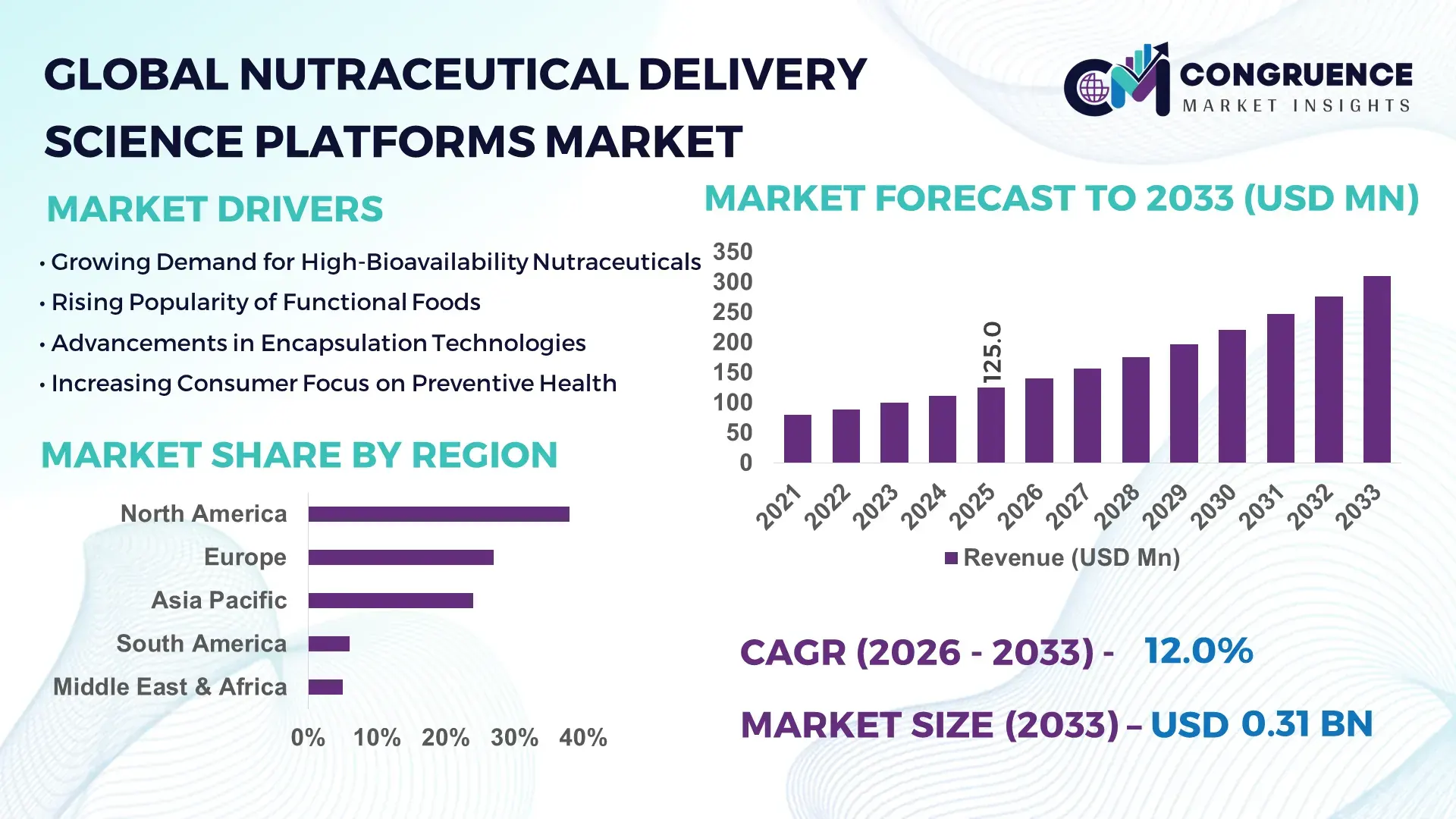
The Global Nutraceutical Delivery Science Platforms Market was valued at USD 125.0 Million in 2025 and is anticipated to reach a value of USD 309.5 Million by 2033 expanding at a CAGR of 12% between 2026 and 2033, according to an analysis by Congruence Market Insights. Growth is primarily driven by rising demand for advanced nutrient bioavailability technologies such as nano-encapsulation, liposomal delivery, and controlled-release systems that enhance the effectiveness of functional ingredients.
The United States represents the most technologically advanced ecosystem for nutraceutical delivery science platforms, supported by strong R&D infrastructure, biotechnology investment, and pharmaceutical-grade manufacturing capabilities. The country hosts more than 1,200 nutraceutical manufacturers and ingredient developers, while the U.S. dietary supplements industry recorded over 77% consumer usage among adults in 2024. Additionally, more than 35% of newly launched functional supplements incorporate advanced delivery mechanisms such as liposomal carriers, nano-emulsions, or microencapsulation technologies. Venture investments exceeding USD 1.5 billion between 2022 and 2025 have accelerated the development of precision delivery systems used in cognitive health, immunity support, and metabolic wellness formulations.
Market Size & Growth: The market is valued at USD 125.0 Million in 2025 and projected to reach USD 309.5 Million by 2033, expanding at a 12% CAGR, driven by increasing demand for high-bioavailability nutraceutical formulations and personalized nutrition products.
Top Growth Drivers: Rising consumer adoption of functional supplements (71% adoption in developed markets), 40% improvement in nutrient absorption through advanced encapsulation, and 32% increase in personalized nutrition product launches.
Short-Term Forecast: By 2028, advanced delivery systems are expected to improve nutrient bioavailability by 35% while reducing formulation waste by 18%.
Emerging Technologies: Nano-encapsulation platforms, liposomal nutrient carriers, AI-enabled formulation modeling, and microencapsulation for controlled nutrient release are gaining strong industry traction.
Regional Leaders: North America projected to exceed USD 110 Million by 2033, Europe nearing USD 82 Million, and Asia-Pacific approaching USD 95 Million, supported by rapid growth in functional foods and dietary supplements.
Consumer/End-User Trends: Over 68% of health-conscious consumers prefer nutraceutical products with enhanced absorption technologies, while 54% of supplement brands prioritize bioavailability-optimized formulations.
Pilot or Case Example: In 2024, a nutraceutical manufacturer deployed liposomal vitamin delivery platforms, achieving 48% higher absorption efficiency and 21% improvement in product stability.
Competitive Landscape: The market leader holds approximately 18% share, followed by key innovators such as ingredient technology firms and biotechnology developers focused on encapsulation and targeted nutrient delivery platforms.
Regulatory & ESG Impact: Regulatory agencies across North America and Europe are encouraging evidence-based nutraceutical delivery technologies while sustainability policies promote 20% reduction in synthetic excipient usage.
Investment & Funding Patterns: More than USD 2.3 billion has been invested globally in nutraceutical biotechnology, delivery technologies, and personalized nutrition platforms over the past five years.
Innovation & Future Outlook: Integration of AI-driven formulation design, targeted nutrient delivery, and microbiome-responsive delivery technologies is expected to transform nutraceutical efficacy and product differentiation.
Advancements in lipid-based carriers, nano-delivery technologies, and bioactive compound stabilization are reshaping the Nutraceutical Delivery Science Platforms Market. Functional foods contribute nearly 38% of platform applications, while dietary supplements account for approximately 44%. Regulatory emphasis on safety validation and sustainability is encouraging adoption of plant-derived encapsulation materials. Asia-Pacific consumption is rising rapidly due to expanding nutraceutical manufacturing hubs and increasing preventive healthcare awareness among consumers.
The Nutraceutical Delivery Science Platforms Market plays a strategic role in enabling the next generation of functional nutrition products that combine biotechnology, pharmaceutical formulation techniques, and food science innovations. As consumers increasingly prioritize preventive healthcare, the ability to enhance nutrient absorption, stability, and targeted delivery has become critical for nutraceutical manufacturers seeking competitive differentiation.
Advanced delivery technologies such as nano-encapsulation and liposomal carriers significantly outperform traditional supplement formats. For instance, liposomal nutrient delivery delivers nearly 40% improvement in absorption efficiency compared to conventional tablet-based supplements, allowing manufacturers to achieve higher efficacy with lower ingredient dosages. Similarly, microencapsulation technology extends nutrient stability by more than 30% during storage, which is particularly valuable for sensitive ingredients such as probiotics, omega-3 fatty acids, and botanical extracts.
From a regional perspective, North America dominates in production volume due to its advanced nutraceutical manufacturing ecosystem, while Asia-Pacific leads in adoption growth with more than 45% of emerging nutraceutical startups integrating advanced delivery technologies into new product formulations. Rapid expansion of functional food markets in countries such as China, Japan, and South Korea is accelerating innovation in delivery systems designed for beverages, gummies, and fortified foods.
Short-term technological transformation is also underway. By 2028, AI-assisted nutraceutical formulation platforms are expected to reduce product development timelines by nearly 25%, enabling companies to test bioavailability profiles and ingredient compatibility faster than conventional laboratory processes.
Sustainability and compliance are becoming central pillars of the industry’s evolution. Many nutraceutical manufacturers are committing to reduce synthetic excipient usage by 20% and increase biodegradable encapsulation materials by 30% by 2030 as part of ESG initiatives.
A practical example illustrates this shift: in 2024, a biotechnology firm in the United States implemented nano-lipid delivery technology for botanical extracts, improving absorption rates by 46% and reducing ingredient wastage by 17% during production.
Looking ahead, the Nutraceutical Delivery Science Platforms Market is positioned as a foundational pillar of innovation in personalized nutrition, pharmaceutical-grade functional foods, and preventive healthcare products, supporting long-term resilience, regulatory compliance, and sustainable growth across the global nutraceutical ecosystem.
The Nutraceutical Delivery Science Platforms Market is evolving rapidly due to increasing demand for scientifically validated supplement formulations that offer improved nutrient absorption and targeted health benefits. Consumers and healthcare professionals are increasingly recognizing the limitations of traditional supplement formats such as tablets and powders, which often exhibit low bioavailability and inconsistent efficacy. As a result, companies are investing heavily in advanced delivery technologies including nano-emulsions, lipid-based carriers, and controlled-release systems.
Another critical factor shaping market dynamics is the growing integration of pharmaceutical formulation techniques into the nutraceutical sector. Technologies originally developed for drug delivery are now being adapted for vitamins, minerals, botanical extracts, and probiotics to enhance stability and therapeutic potential. In addition, expanding interest in personalized nutrition programs is encouraging supplement manufacturers to develop delivery platforms that allow precise nutrient dosing and optimized absorption. The rapid expansion of functional foods and beverages is also influencing demand for delivery science platforms capable of protecting bioactive ingredients during processing and storage. Encapsulation technologies that prevent oxidation, mask unpleasant tastes, and enable controlled release are becoming increasingly essential. Combined with rising R&D investments, regulatory scrutiny, and consumer demand for clinically supported products, these factors collectively define the evolving dynamics of the Nutraceutical Delivery Science Platforms Market.
The increasing focus on preventive healthcare and functional nutrition is significantly driving demand for advanced nutraceutical delivery technologies. Many traditional supplement formats provide limited absorption because nutrients degrade during digestion or interact with other compounds. Research indicates that conventional tablet-based supplements may deliver only 20–40% effective nutrient absorption, whereas advanced liposomal and nano-encapsulation technologies can improve absorption rates by up to 60%. Consumer awareness of these differences has accelerated adoption of bioavailability-enhancing platforms. Surveys indicate that nearly 65% of health-focused consumers actively seek supplements formulated with advanced delivery technologies. In addition, pharmaceutical-grade nutraceuticals designed for immune health, cognitive support, and metabolic wellness are increasingly incorporating microencapsulation and lipid-based delivery systems. The expansion of personalized nutrition programs is also reinforcing demand. More than 30% of new nutraceutical product launches now include targeted delivery technologies designed to improve efficacy for specific health outcomes. As a result, manufacturers are investing in specialized formulation facilities capable of producing nano-emulsions, liposomal carriers, and probiotic protection systems.
Despite strong growth prospects, the Nutraceutical Delivery Science Platforms Market faces significant challenges related to complex formulation processes and manufacturing costs. Developing advanced delivery systems such as nano-encapsulation or liposomal carriers requires specialized equipment, highly controlled production environments, and advanced scientific expertise. For many small and medium-sized nutraceutical manufacturers, these requirements create operational barriers. The production of liposomal formulations, for example, involves precise lipid membrane engineering and stability testing, which can increase formulation development timelines by 20–30% compared with conventional supplements. Additionally, maintaining consistent particle size distribution in nano-delivery systems requires strict quality control procedures that raise operational costs. Regulatory uncertainty also contributes to market restraint. Different countries apply varying regulatory frameworks to nutraceutical delivery technologies, particularly when pharmaceutical-style delivery systems are used. Companies must invest substantial resources in safety testing, ingredient validation, and stability studies before commercialization. Furthermore, specialized ingredients such as phospholipids used in liposomal systems or biodegradable encapsulation materials may cost 40% more than standard excipients, which increases product pricing and can limit adoption in price-sensitive consumer markets.
The expansion of personalized nutrition presents a major opportunity for the Nutraceutical Delivery Science Platforms Market. Advances in health analytics, wearable devices, and genetic testing are enabling nutrition programs tailored to individual metabolic profiles. These programs require nutraceutical formulations capable of delivering nutrients with precise absorption profiles and targeted release mechanisms. Delivery science platforms play a crucial role in this transition by allowing customization of nutrient release timing and bioavailability. For example, microencapsulation technologies can protect probiotics and sensitive vitamins until they reach specific areas of the digestive system, improving effectiveness. Industry data suggests that over 35% of personalized nutrition companies are currently integrating advanced delivery technologies into product development pipelines. In addition, the rise of digital health ecosystems is supporting this opportunity. Personalized supplement subscriptions and health monitoring platforms are increasing demand for high-performance nutraceutical products that provide measurable health outcomes. Functional beverages and ready-to-consume nutraceutical formats also benefit from advanced delivery technologies that maintain ingredient stability during processing. As a result, companies developing delivery science platforms are increasingly collaborating with food manufacturers, pharmaceutical researchers, and biotechnology startups to expand innovation capabilities.
Regulatory complexity remains a significant challenge for companies operating in the Nutraceutical Delivery Science Platforms Market. Because advanced delivery technologies often resemble pharmaceutical drug-delivery mechanisms, regulatory authorities frequently require extensive safety testing and validation before products can be commercialized. This process can involve stability testing, toxicology assessments, and clinical validation of nutrient absorption. For example, encapsulated probiotic formulations may require multiple stability trials to demonstrate that microbial viability remains above required thresholds during product shelf life. These validation procedures can extend product development cycles by 12–18 months, slowing innovation and commercialization. Another challenge involves ingredient classification. Some delivery technologies utilize novel excipients or nano-structured materials that regulators may categorize differently across jurisdictions. This inconsistency complicates global product launches and increases compliance costs. Intellectual property protection also presents difficulties because delivery science technologies often rely on proprietary formulations. Companies must invest heavily in patent filings and legal protection to safeguard innovations. Combined with technical complexity and regulatory scrutiny, these challenges require companies to maintain strong scientific capabilities and compliance expertise to successfully compete in the evolving nutraceutical delivery science ecosystem.
Rapid adoption of nano-encapsulation technologies: Nano-encapsulation is transforming nutrient delivery efficiency across functional supplements and functional foods. Studies indicate that nano-scale delivery systems can improve nutrient absorption by up to 60% compared with conventional powder formulations. Nearly 34% of newly developed nutraceutical products now utilize nano-delivery platforms, particularly for fat-soluble vitamins and botanical extracts. These systems also increase ingredient stability by approximately 28% during storage and transportation, enabling manufacturers to extend product shelf life while maintaining potency.
Growth of liposomal nutrient delivery systems: Liposomal encapsulation is gaining widespread acceptance because it mimics natural cellular membranes, improving bioavailability of nutrients such as vitamin C, glutathione, and curcumin. In the nutraceutical industry, more than 29% of premium supplement brands introduced liposomal products between 2022 and 2025. Liposomal delivery can increase nutrient uptake efficiency by 40–50%, while reducing digestive degradation by around 35%, making it one of the most preferred technologies for high-value nutraceutical formulations.
Expansion of microencapsulation for probiotics and sensitive bioactives: Microencapsulation technologies are increasingly used to protect probiotics, enzymes, and plant-derived compounds from heat, oxygen, and digestive degradation. Research shows that encapsulated probiotics demonstrate up to 70% higher survival rates during gastrointestinal transit compared with non-encapsulated variants. Approximately 31% of functional food manufacturers are integrating encapsulated probiotic systems into beverages, dairy alternatives, and nutritional bars.
Integration of AI-assisted formulation platforms: Artificial intelligence is emerging as a powerful tool in nutraceutical delivery science. AI-based modeling tools can analyze ingredient interactions and optimize particle size or lipid carrier composition, reducing formulation development time by nearly 25%. Around 22% of nutraceutical R&D laboratories globally have implemented AI-driven formulation tools to accelerate innovation and improve delivery platform performance.
The Nutraceutical Delivery Science Platforms Market is segmented based on technology type, application areas, and end-user industries. These segments reflect the evolving demand for advanced nutrient delivery mechanisms capable of enhancing bioavailability, stability, and targeted health benefits. Technology-based segmentation highlights innovations such as nano-encapsulation, liposomal carriers, and microencapsulation systems that enable controlled nutrient release. Application segmentation focuses on areas including dietary supplements, functional foods, and pharmaceutical-grade nutraceutical formulations designed to support preventive healthcare. End-user segmentation emphasizes the diverse stakeholders utilizing these technologies, ranging from nutraceutical manufacturers and biotechnology firms to food and beverage companies integrating advanced delivery systems into consumer products. The segmentation landscape illustrates how different industries adopt delivery science platforms to improve product performance, consumer trust, and clinical validation of nutraceutical formulations.
Nano-encapsulation, liposomal delivery systems, microencapsulation technologies, and solid lipid carriers represent the primary technology categories in the Nutraceutical Delivery Science Platforms Market. Among these, liposomal delivery systems currently lead the segment with approximately 38% adoption share due to their ability to enhance nutrient absorption and protect sensitive compounds during digestion. Liposomes form phospholipid bilayers similar to human cell membranes, allowing efficient transport of nutrients such as vitamin C, glutathione, and coenzyme Q10 into cells. Nano-encapsulation technologies represent the fastest-growing segment with an estimated 14% growth rate, driven by increasing demand for precision nutrient delivery and enhanced bioavailability of plant-derived compounds. Nano-scale carriers enable improved solubility for poorly water-soluble ingredients and are increasingly used in functional beverages and advanced supplement formulations. Microencapsulation platforms account for approximately 24% of technology adoption, particularly in probiotic and enzyme stabilization applications. Meanwhile, solid lipid carriers and polymer-based encapsulation technologies collectively represent around 38% of remaining solutions, offering niche benefits such as sustained nutrient release and extended shelf life.
• In 2025, a research initiative demonstrated that nano-encapsulation of curcumin improved its bioavailability by more than 50%, enabling enhanced anti-inflammatory performance in nutraceutical formulations.
Applications of nutraceutical delivery science platforms are primarily concentrated in dietary supplements, functional foods and beverages, and pharmaceutical-grade nutraceutical formulations. Dietary supplements dominate the application landscape with nearly 44% adoption share, reflecting the high demand for capsules, gummies, and liquid formulations enhanced with bioavailability-improving technologies. Supplement brands increasingly rely on liposomal or nano-delivery platforms to differentiate products in the competitive wellness market. Functional foods and beverages represent the fastest-growing application segment with approximately 13% growth rate, driven by increasing consumer demand for fortified beverages, nutritional bars, and dairy alternatives containing stable bioactive ingredients. Advanced delivery technologies help maintain ingredient stability during processing and storage. Pharmaceutical-grade nutraceuticals and medical nutrition products collectively account for around 33% of applications, particularly in clinical nutrition and therapeutic dietary formulations. In terms of adoption trends, nearly 52% of global supplement manufacturers reported integrating advanced delivery technologies into at least one product line by 2025, reflecting the growing importance of bioavailability optimization.
• In 2024, a large functional beverage manufacturer introduced nano-encapsulated omega-3 oils in ready-to-drink products, improving ingredient stability by more than 30% during shelf storage.
The Nutraceutical Delivery Science Platforms Market serves several end-user groups including nutraceutical manufacturers, food and beverage companies, biotechnology firms, and pharmaceutical companies. Nutraceutical manufacturers represent the leading end-user segment with approximately 46% industry adoption, as they rely heavily on delivery science technologies to differentiate supplement products and improve nutrient absorption efficiency. Food and beverage companies represent the fastest-growing end-user segment with an estimated 13% growth rate, driven by the rapid expansion of functional beverages and fortified food products. Encapsulation technologies enable these companies to incorporate sensitive nutrients without affecting taste, texture, or shelf life. Biotechnology and pharmaceutical companies collectively account for around 37% of the market, particularly in the development of clinical nutrition products and advanced nutraceutical therapies. These organizations often collaborate with research institutions to develop precision nutrient delivery platforms. From an adoption perspective, more than 58% of nutraceutical R&D teams globally are currently experimenting with nano-delivery or liposomal technologies, highlighting the industry's transition toward science-driven formulation approaches.
• In 2025, a biotechnology research consortium developed a lipid-based delivery platform for probiotic strains that increased gastrointestinal survival rates by nearly 65%, significantly improving clinical efficacy of probiotic supplements.
North America accounted for the largest market share at 38% in 2025 however, Asia-Pacific is expected to register the fastest growth, expanding at a CAGR of 14.2% between 2026 and 2033.
The global Nutraceutical Delivery Science Platforms Market demonstrates strong regional diversity driven by variations in healthcare awareness, nutraceutical manufacturing capabilities, and regulatory frameworks. North America dominates with approximately 38% market share, supported by high consumer supplement adoption rates exceeding 75% of the adult population and more than 1,200 nutraceutical manufacturing facilities operating in the region. Europe follows with nearly 27% share, driven by stringent regulatory standards and the presence of more than 900 nutraceutical ingredient producers across Germany, France, and the United Kingdom. Asia-Pacific accounts for about 24% of global demand, with China, Japan, and India collectively hosting over 2,500 nutraceutical and functional food manufacturers. South America contributes roughly 6% market share, primarily led by Brazil and Argentina where dietary supplement usage has grown by more than 28% over the past five years. Meanwhile, the Middle East & Africa region accounts for approximately 5% share, supported by expanding healthcare investments and increasing functional food consumption in countries such as the UAE and South Africa.
North America represents the most technologically advanced regional market, accounting for nearly 38% of global adoption of nutraceutical delivery science platforms. The region’s strong biotechnology ecosystem and high dietary supplement consumption rates drive demand for advanced nutrient delivery technologies. The United States alone hosts more than 1,200 nutraceutical manufacturers and contract development organizations, while over 77% of adults regularly consume dietary supplements. Key industries driving demand include pharmaceutical-grade nutraceutical manufacturing, functional food production, and sports nutrition product development. Regulatory oversight from agencies such as the FDA encourages rigorous product validation and formulation transparency. Technological advancements include large-scale use of liposomal nutrient carriers, nano-emulsions, and AI-driven formulation modeling to enhance absorption efficiency. One notable example is Lonza, which develops advanced encapsulation technologies that improve ingredient stability and bioavailability for nutraceutical brands. Consumer behavior in the region indicates strong preference for science-backed formulations, with over 68% of supplement buyers prioritizing products with clinically supported delivery technologies.
Europe accounts for approximately 27% of the global Nutraceutical Delivery Science Platforms Market, supported by strict regulatory oversight and high consumer demand for scientifically validated nutraceutical products. Major markets include Germany, the United Kingdom, France, Italy, and the Netherlands, where nutraceutical consumption rates exceed 60% among adults. European regulatory frameworks emphasize safety validation and ingredient traceability, encouraging companies to adopt advanced delivery technologies that improve nutrient stability and bioavailability. Sustainability initiatives are also driving innovation in plant-based encapsulation materials and biodegradable carriers. More than 35% of European nutraceutical R&D projects focus on natural delivery technologies derived from plant lipids or marine-based phospholipids. Technological adoption includes nano-emulsions for functional beverages and microencapsulation for probiotic supplements. A regional player, BASF, is actively developing lipid-based nutrient delivery technologies used in dietary supplements and fortified food applications. Consumer behavior reflects strong demand for transparency and scientifically validated formulations, with over 62% of European consumers preferring nutraceutical products supported by clinical evidence.
Asia-Pacific ranks as the fastest expanding regional market and currently accounts for roughly 24% of global demand for nutraceutical delivery science platforms. Major consuming countries include China, Japan, India, South Korea, and Australia, collectively representing more than 2.5 billion potential nutraceutical consumers. The region has more than 2,500 nutraceutical manufacturing companies, supported by expanding functional food industries and rising preventive healthcare awareness. Infrastructure investments in biotechnology and pharmaceutical research are accelerating development of nano-delivery and microencapsulation platforms for dietary supplements and fortified beverages. China alone has more than 600 functional food and nutraceutical manufacturing facilities, while Japan leads in advanced formulation technologies for probiotic and enzyme delivery systems. Regional innovation hubs in Tokyo, Shanghai, and Singapore are advancing nutraceutical biotechnology research. Companies such as Glanbia Nutritionals are expanding operations across Asia-Pacific to supply advanced ingredient delivery systems. Consumer behavior across the region is heavily influenced by e-commerce and digital health platforms, with online supplement sales accounting for nearly 42% of total nutraceutical purchases.
South America accounts for nearly 6% of the global Nutraceutical Delivery Science Platforms Market, with Brazil and Argentina serving as the primary growth engines. Brazil alone represents more than 45% of regional nutraceutical consumption, supported by a growing middle-class population and rising demand for preventive healthcare products. The region hosts over 300 nutraceutical manufacturers, many focusing on botanical extracts, probiotics, and plant-derived health supplements. Government initiatives promoting domestic production of functional foods have stimulated investments in advanced delivery technologies such as microencapsulation and lipid-based nutrient carriers. Brazil’s nutraceutical market has witnessed more than 26% increase in product launches incorporating enhanced bioavailability technologies over the past five years. Regional companies such as Natura &Co are investing in biotechnology research to develop plant-based nutraceutical formulations with improved delivery mechanisms. Consumer behavior in South America highlights increasing preference for immune-support and energy supplements, particularly among younger urban populations, with nearly 48% of consumers aged 25–40 purchasing nutraceutical products online.
The Middle East & Africa region represents around 5% of the global Nutraceutical Delivery Science Platforms Market, with increasing adoption of advanced nutritional products across urban populations. Key markets include the United Arab Emirates, Saudi Arabia, South Africa, and Egypt, where healthcare modernization and rising disposable incomes are expanding demand for dietary supplements and functional foods. Government health initiatives encouraging preventive healthcare have led to increased imports and local production of nutraceutical products. The UAE has witnessed more than 32% growth in nutraceutical product registrations over the past five years, reflecting rising consumer interest in wellness solutions. Technological modernization includes adoption of encapsulation technologies for probiotics, vitamins, and botanical extracts. Companies such as Nestlé Health Science are expanding distribution of advanced nutraceutical formulations across Middle Eastern markets. Consumer behavior in the region indicates strong demand for immune support, energy supplements, and vitamin-based products, particularly among urban professionals and health-conscious populations.
United States – 32% Market Share: driven by high nutraceutical production capacity, strong biotechnology research infrastructure, and widespread consumer adoption of advanced supplement formulations.
Germany – 11% Market Share: supported by strong pharmaceutical research capabilities, advanced ingredient manufacturing, and strict regulatory frameworks encouraging scientifically validated nutraceutical technologies.
The Nutraceutical Delivery Science Platforms Market is characterized by a moderately fragmented competitive structure, with a mix of biotechnology firms, nutraceutical ingredient manufacturers, pharmaceutical technology providers, and functional food companies. Globally, more than 150 active companies are engaged in the development of advanced nutraceutical delivery technologies such as nano-encapsulation systems, liposomal carriers, microencapsulation platforms, and lipid-based nutrient delivery solutions.
The top five companies collectively account for approximately 35–38% of the market, reflecting a competitive environment where innovation and intellectual property play a significant role in differentiation. Companies compete primarily on technology capabilities, formulation expertise, ingredient stability, and the ability to enhance nutrient bioavailability.
Strategic initiatives shaping competition include joint research collaborations with biotechnology laboratories, partnerships with nutraceutical brands, and acquisitions of specialized delivery technology startups. Several companies have increased investments in AI-driven formulation modeling platforms, enabling rapid optimization of particle size, lipid composition, and encapsulation efficiency.
Product innovation remains a critical competitive strategy. Over 40% of newly launched nutraceutical products globally now incorporate advanced delivery technologies such as liposomal encapsulation or nano-emulsions. In addition, companies are focusing on sustainable encapsulation materials derived from plant lipids or biodegradable polymers to align with ESG goals.
Patent filings for nutraceutical delivery technologies have increased by more than 28% over the past five years, highlighting the rapid pace of innovation. As personalized nutrition programs expand and clinical validation of nutraceutical efficacy becomes more important, competition in the Nutraceutical Delivery Science Platforms Market is expected to intensify, particularly among companies specializing in pharmaceutical-grade formulation technologies.
BASF SE
Kerry Group
Glanbia Nutritionals
Catalent Inc.
Capsugel
DSM-Firmenich
Evonik Industries
Balchem Corporation
Ingredion Incorporated
Aker BioMarine
Lycored Ltd.
Givaudan
Sensient Technologies
Technological innovation is the foundation of the Nutraceutical Delivery Science Platforms Market, as companies aim to enhance nutrient bioavailability, stability, and targeted absorption. Among the most widely adopted technologies are liposomal delivery systems, which use phospholipid bilayers to encapsulate vitamins, antioxidants, and botanical extracts. These systems mimic cellular membranes, enabling efficient transport of nutrients into the bloodstream. Studies indicate that liposomal encapsulation can improve nutrient absorption by 40–50% compared with traditional tablet formulations.
Nano-encapsulation technologies are also gaining significant traction. By reducing particle sizes to the nanometer scale, these platforms enhance solubility of poorly water-soluble compounds such as curcumin, coenzyme Q10, and omega-3 fatty acids. In several nutraceutical formulations, nano-delivery systems have demonstrated up to 60% improvement in bioavailability and 30% improvement in ingredient stability during storage.
Another key technological advancement involves microencapsulation systems used for probiotics and enzymes. These platforms utilize polymer or lipid shells to protect sensitive microorganisms from heat, oxygen, and digestive acids. Encapsulated probiotic formulations have shown up to 70% higher survival rates during gastrointestinal transit, significantly improving their therapeutic effectiveness.
Artificial intelligence is also emerging as an important tool for nutraceutical formulation design. AI-based modeling software can analyze ingredient interactions, predict stability profiles, and optimize particle size distribution for delivery systems. Early implementation of AI-assisted formulation platforms has reduced product development timelines by approximately 25%.
Sustainability is shaping the next wave of innovation. Manufacturers are increasingly adopting plant-derived encapsulation materials, biodegradable polymers, and marine phospholipid carriers to reduce environmental impact. More than 35% of nutraceutical R&D programs globally are now focused on eco-friendly delivery technologies, reflecting the industry’s commitment to sustainable health solutions.
• In October 2025, Lonza launched Organicaps™, the first USDA-certified organic, plant-based pullulan capsule manufactured in North America, designed to support organic nutraceutical formulations. The capsule provides a high oxygen barrier and improved polymer stability to protect sensitive ingredients such as vitamins and antioxidants in dietary supplements. Source: www.all4nutra.com
• In December 2024, Lonza expanded its Capsugel® smart capsule development services, introducing customized capsule design and manufacturing capabilities to support targeted oral delivery technologies. The offering leverages bi-layer manufacturing and Enprotect® capsule technology to improve protection and controlled delivery of sensitive active ingredients.
• In December 2024, Lonza Capsules & Health Ingredients expanded capsule manufacturing capacity in India and China, adding new production lines in Rewari and Suzhou to support rising demand for pharmaceutical and nutraceutical capsule delivery systems and improve regional supply chain resilience.
• In March 2025, Lonza Capsules & Health Ingredients announced new concept-to-market nutraceutical innovation services and showcased advanced delivery technologies—including Plantcaps® pullulan capsules and Vcaps® Plus HPMC capsules—at Natural Products Expo West to help brands accelerate supplement development and product differentiation.
The Nutraceutical Delivery Science Platforms Market Report provides a comprehensive analysis of technologies, applications, and industry developments shaping advanced nutrient delivery systems used in dietary supplements, functional foods, and clinical nutrition products. The report evaluates key delivery technologies including liposomal carriers, nano-encapsulation systems, microencapsulation technologies, polymer-based delivery platforms, and solid lipid nanoparticles that enable enhanced bioavailability and targeted nutrient absorption.
The study covers major application areas such as dietary supplements, functional foods and beverages, pharmaceutical-grade nutraceutical formulations, and clinical nutrition products. These applications collectively represent a rapidly evolving ecosystem in which advanced delivery technologies are improving the effectiveness of vitamins, minerals, probiotics, enzymes, and botanical compounds.
Geographically, the report analyzes industry developments across North America, Europe, Asia-Pacific, South America, and the Middle East & Africa, examining variations in consumer adoption, regulatory environments, manufacturing infrastructure, and innovation capabilities. The study also highlights key nutraceutical production hubs including the United States, Germany, China, Japan, India, and Brazil, which collectively represent a significant portion of global nutraceutical manufacturing and technology development.
In addition to regional insights, the report evaluates the competitive environment and technological innovation trends within the market. It reviews more than 100 active nutraceutical delivery technology providers, including ingredient manufacturers, biotechnology companies, and pharmaceutical formulation specialists. Key industry themes examined include AI-driven formulation modeling, sustainable encapsulation materials, precision nutrient delivery platforms, and integration of pharmaceutical drug-delivery technologies into nutraceutical development.
The report further explores emerging opportunities such as personalized nutrition platforms, digital health-driven supplement programs, and advanced functional food applications. By analyzing technological capabilities, end-user demand patterns, regulatory frameworks, and innovation strategies, the Nutraceutical Delivery Science Platforms Market Report provides a strategic resource for industry stakeholders seeking to understand the evolving landscape of advanced nutraceutical formulation technologies.
| Report Attribute / Metric | Details |
|---|---|
| Market Revenue (2025) | USD 125.0 Million |
| Market Revenue (2033) | USD 309.5 Million |
| CAGR (2026–2033) | 12.0% |
| Base Year | 2025 |
| Forecast Period | 2026–2033 |
| Historic Period | 2021–2025 |
| Segments Covered |
By Type
By Application
By End-User Insights
|
| Key Report Deliverables | Revenue Forecast; Market Trends; Growth Drivers & Restraints; Technology Insights; Segmentation Analysis; Regional Insights; Competitive Landscape; Regulatory & ESG Overview; Recent Developments |
| Regions Covered | North America; Europe; Asia-Pacific; South America; Middle East & Africa |
| Key Players Analyzed | Lonza Group; BASF SE; Kerry Group; Glanbia Nutritionals; Catalent Inc.; Capsugel; DSM-Firmenich; Evonik Industries; Balchem Corporation; Ingredion Incorporated; Aker BioMarine; Lycored Ltd.; Givaudan; Sensient Technologies |
| Customization & Pricing | Available on Request (10% Customization Free) |




