
Reports
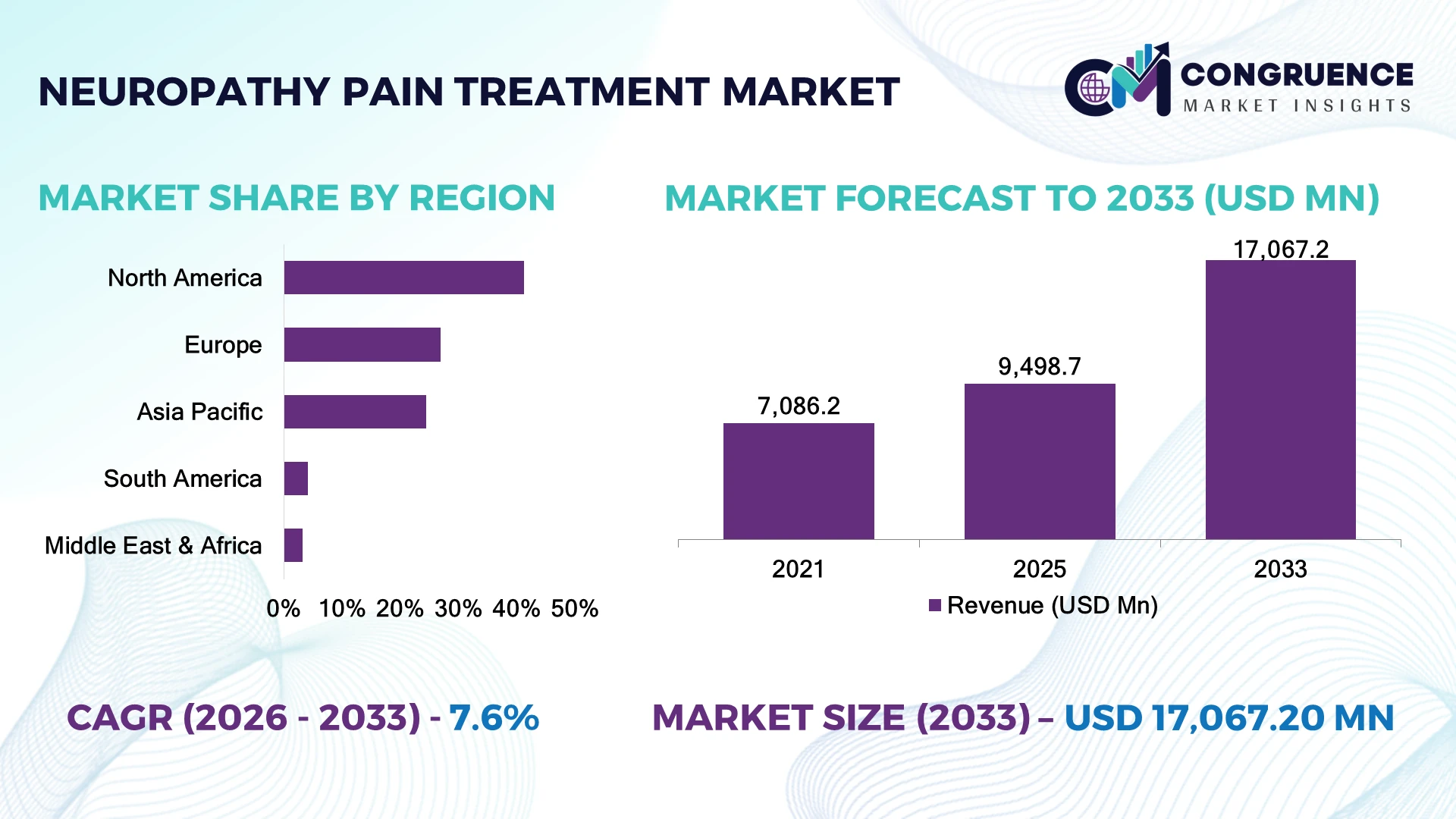
The Global Neuropathy Pain Treatment Market was valued at USD 9,498.7 Million in 2025 and is anticipated to reach a value of USD 17,067.2 Million by 2033 expanding at a CAGR of 7.6% between 2026 and 2033. Growth is driven by the rising prevalence of diabetic neuropathy, expanded adoption of non-opioid pain therapies, neuromodulation technologies, and improved diagnosis of peripheral nerve disorders.
The United States leads the Neuropathy Pain Treatment market with approximately 39% of global demand, supported by advanced specialty care networks, high diabetes prevalence, and accelerated adoption of neuromodulation devices and novel non-opioid therapeutics. Compared with Japan, where aging demographics drive treatment utilization, the United States records nearly 31% higher uptake of advanced pain management interventions through specialized neurology and pain clinics. Ongoing pharmaceutical supply-chain diversification following geopolitical trade realignments is strengthening treatment accessibility and manufacturing resilience.
Companies investing in differentiated non-opioid therapies, digital patient management, and advanced neuromodulation platforms are securing stronger long-term competitive positioning.
Market Size & Growth: USD 9,498.7 million (2025) to USD 17,067.2 million (2033) at 7.6% CAGR, supported by non-opioid therapies and neuromodulation advances.
Top Growth Drivers: Diabetic neuropathy (+34%), aging population (+27%), non-opioid treatment adoption (+22%).
Short-Term Forecast: By 2028, treatment adherence improves 18% through digital monitoring and integrated care pathways.
Emerging Technologies: AI-assisted diagnosis, implantable neuromodulation, and sustained-release formulations accelerate clinical outcomes.
Regional Leaders: North America, Europe, and Asia-Pacific strengthen adoption through specialized pain management infrastructure.
Consumer/End-User Trends: Approximately 61% of neuropathy patients prefer long-term non-opioid pain management strategies.
Pilot/Case Example: A 2026 digital pain management program improved patient follow-up compliance by 21%.
Competitive Landscape: Leading manufacturers account for approximately 46% market share through diversified neurology portfolios and innovation.
Regulatory & ESG Impact: Non-opioid prescribing initiatives reduced opioid dependence risk by approximately 19%.
Investment & Funding: More than USD 2.8 billion supports neurology drug development, partnerships, and device innovation.
Innovation & Future Outlook: Precision medicine and combination therapies are redefining chronic neuropathic pain management.
The Neuropathy Pain Treatment market is evolving through broader adoption of targeted pharmacological therapies, neuromodulation devices, digital patient monitoring, and personalized treatment pathways. Approximately 43% of specialty pain centers now integrate digital assessment tools with long-term treatment management, improving clinical decision-making and patient follow-up. Increasing regulatory emphasis on non-opioid pain management and resilient pharmaceutical supply chains is accelerating innovation, providing a strong transition into the strategic market discussion.
The Neuropathy Pain Treatment market has become strategically important as healthcare systems prioritize long-term chronic pain management while reducing reliance on opioid-based therapies. Regulatory support for non-opioid treatments, expansion of specialty neurology services, and digital healthcare adoption are reshaping investment priorities across pharmaceutical manufacturers, medical device companies, and healthcare providers. Competition increasingly depends on clinical differentiation, treatment persistence, and integrated patient management rather than conventional analgesic portfolios.
Advanced neuromodulation systems improve sustained pain reduction by approximately 24% compared with conventional pharmacological management alone while reducing long-term medication dependence by nearly 17% in selected patient populations. The United States leads in advanced therapy deployment through specialized pain clinics and reimbursement support, whereas Germany continues strengthening multidisciplinary neuropathy treatment models integrating pharmacological and device-based interventions. Over the next two to three years, combination therapies and AI-assisted treatment optimization are expected to become standard across specialized neuropathy care pathways.
Pharmaceutical companies are expanding partnerships with digital health providers and neuromodulation manufacturers to improve treatment adherence and patient outcomes. Integrated care programs combining remote symptom monitoring with personalized therapy adjustments are demonstrating measurable operational efficiencies. Organizations that align innovative therapeutics, real-world clinical evidence, and digital patient engagement strategies will establish stronger competitive positioning as chronic neuropathy management becomes increasingly personalized and outcome driven.
The transition toward non-opioid pain management is reshaping neuropathy treatment strategies as healthcare systems prioritize long-term safety and improved clinical outcomes. Approximately 58% of newly prescribed neuropathic pain therapies now involve non-opioid treatment pathways, while digital patient monitoring has improved medication adherence by nearly 19%. In the United States, expanded prescribing guidance supporting opioid alternatives is accelerating adoption of targeted pharmacological therapies and neuromodulation devices. The shift is improving patient retention while reducing dependence on conventional analgesics. Pharmaceutical companies are expanding neurology portfolios, investing in advanced clinical trials, and forming partnerships with digital health providers to deliver integrated treatment solutions. Combining therapeutics with remote patient management has become a meaningful competitive advantage.
Uneven reimbursement policies and high treatment costs continue restricting access to advanced neuropathy therapies. Approximately 37% of eligible patients experience delays in receiving device-based interventions due to reimbursement limitations, while specialty therapies increase treatment costs by nearly 28% compared with conventional oral medications. Germany and the United States demonstrate different reimbursement pathways, creating inconsistent commercialization strategies for manufacturers. These structural barriers slow therapy adoption, reduce provider utilization, and extend product launch timelines. Companies are mitigating risk through value-based pricing models, localized reimbursement evidence, strategic payer collaborations, and broader generic product portfolios to improve affordability and strengthen long-term market access.
Biomarker-guided therapy selection and AI-supported clinical decision systems are creating new opportunities to improve neuropathic pain management. Personalized treatment strategies enhance therapeutic response rates by approximately 23% while reducing unnecessary medication changes by nearly 17%. Japan's investment in precision healthcare and digital diagnostics is accelerating clinical adoption of individualized pain management pathways. Companies are expanding genomic research, strengthening collaborations with diagnostic developers, and investing in digital therapeutic platforms supporting continuous symptom assessment. A significant opportunity lies in combining predictive analytics with targeted therapies, enabling healthcare providers to optimize treatment selection while reducing long-term healthcare utilization.
Neuropathic pain remains clinically heterogeneous, making standardized treatment pathways difficult to implement across diverse patient populations. Approximately 33% of patients require multiple therapy adjustments before achieving stable symptom control, while multidisciplinary treatment coordination increases clinical workload by nearly 21%. The United Kingdom continues expanding integrated pain management services, yet healthcare workforce shortages limit specialist access and consistent long-term follow-up. These execution challenges affect treatment continuity, real-world effectiveness, and healthcare efficiency. Companies must strengthen real-world evidence generation, digital outcome tracking, physician education, and multidisciplinary care partnerships to improve treatment consistency and sustain competitive differentiation in increasingly personalized pain management.
Bold Shift Toward Neuromodulation: Implantable and non-invasive neuromodulation therapies have expanded by approximately 26%, while referral rates to specialist pain centers have increased nearly 18%. Improved reimbursement pathways and growing clinician confidence are accelerating deployment. Medical device companies are expanding manufacturing capacity and partnering with hospital networks to improve procedural accessibility.
Digital Patient Monitoring Expands: Approximately 44% of specialty neurology clinics now integrate digital symptom tracking into neuropathic pain management, improving follow-up adherence by nearly 20%. Remote monitoring supports earlier treatment adjustments and reduces unnecessary clinic visits. Healthcare providers are adopting connected care platforms and automated patient engagement workflows to improve operational efficiency.
Combination Therapy Becomes Standard: Combination treatment protocols have increased by approximately 24%, improving symptom management while reducing reliance on high-dose monotherapy. Updated clinical practice patterns and broader multidisciplinary care models are driving implementation. Pharmaceutical companies are investing in complementary therapeutic portfolios and collaborative care partnerships to improve long-term patient outcomes.
Localized Drug Manufacturing Strengthens: Pharmaceutical manufacturers are regionalizing production networks, reducing selected specialty medicine supply disruptions by approximately 16% while improving inventory responsiveness by nearly 14%. Continued supply-chain diversification following global manufacturing disruptions is enhancing treatment continuity. Companies are strengthening contract manufacturing partnerships and expanding localized production to improve resilience and commercial flexibility.
Prescription pharmacological therapies account for approximately 71% of the global Neuropathy Pain Treatment market due to established clinical guidelines, broad physician acceptance, and extensive reimbursement availability. Anticonvulsants and serotonin-norepinephrine reuptake inhibitors remain the preferred first-line options because of proven efficacy and scalable deployment across diabetic, chemotherapy-induced, and post-herpetic neuropathy. Topical therapies continue serving localized pain management, while opioid-based treatments are steadily declining as healthcare systems strengthen non-opioid prescribing strategies and long-term safety requirements.
Neuromodulation therapies represent the fastest-growing treatment type as clinicians increasingly adopt targeted interventions for patients with refractory neuropathic pain. Advanced neurostimulation technologies improve sustained pain control by approximately 24%, while long-term medication dependence declines by nearly 18% among appropriately selected patients. Around 39% of tertiary pain centers have expanded neuromodulation services over recent years. Companies are investing in next-generation stimulation platforms, expanding clinical partnerships, and strengthening integrated treatment portfolios, shifting investment priorities toward personalized and device-assisted pain management solutions.
A 2026 clinical practice assessment published by the International Association for the Study of Pain highlighted increasing incorporation of non-opioid pharmacological therapies and neuromodulation into multidisciplinary neuropathic pain management pathways.
Diabetic peripheral neuropathy represents approximately 54% of total Neuropathy Pain Treatment demand, reflecting the growing prevalence of diabetes and long-term neurological complications requiring continuous clinical management. High diagnosis rates, structured treatment guidelines, and routine specialist referrals continue concentrating demand within this application. Chemotherapy-induced peripheral neuropathy is gaining strategic importance as oncology survivorship improves, while post-herpetic neuralgia and trigeminal neuralgia remain significant specialty indications requiring individualized therapeutic approaches.
Chemotherapy-induced peripheral neuropathy is the fastest-growing application as expanding cancer treatment programs increase the number of patients requiring long-term neurological care. Multidisciplinary oncology clinics have increased integrated neuropathy management by approximately 21%, while early intervention protocols improve treatment continuity by nearly 17%. Pharmaceutical companies are strengthening oncology partnerships, expanding supportive care portfolios, and integrating digital symptom monitoring into cancer care pathways. Demand is increasingly shifting toward personalized treatment strategies capable of managing diverse neuropathic pain conditions with improved long-term patient outcomes.
A 2025 oncology care survey found that multidisciplinary cancer centers increasingly incorporate structured neuropathy assessment and management programs to improve quality of life during and after chemotherapy treatment.
Hospitals account for approximately 48% of the global Neuropathy Pain Treatment market due to their multidisciplinary neurology services, advanced diagnostic capabilities, and access to specialized pain management procedures. Comprehensive treatment pathways integrating neurologists, endocrinologists, pain specialists, and rehabilitation professionals continue driving demand within hospital settings. Specialty pain clinics remain strategically important for complex chronic neuropathy management, while ambulatory surgical centers support selected neuromodulation procedures with improving procedural efficiency.
Specialty pain clinics represent the fastest-growing end-user segment as chronic neuropathic pain increasingly requires individualized long-term care beyond conventional hospital treatment. Approximately 27% of newly established pain management programs now integrate digital patient monitoring, while multidisciplinary care coordination has improved long-term patient retention by nearly 19%. Companies are supporting these providers through customized therapeutic portfolios, physician education initiatives, and strategic collaborations focused on advanced pain management technologies. Future demand is steadily shifting toward specialized outpatient care capable of delivering personalized, outcome-driven neuropathy treatment.
According to a 2026 enterprise assessment by the International Association for the Study of Pain, multidisciplinary specialty pain clinics are expanding their role in long-term neuropathic pain management through integrated pharmacological, interventional, and rehabilitation-based treatment models.
North America accounted for the largest market share at 41.2% in 2025 however, Asia-Pacific is expected to register the fastest growth, expanding at a CAGR of 8.6% between 2026 and 2033.
Advanced Pain Management Networks Strengthen Treatment Adoption
North America contributes approximately 41.2% of the global Neuropathy Pain Treatment market, supported by well-established neurology centers, advanced reimbursement systems, and widespread adoption of non-opioid pain management strategies. Growing integration of neuromodulation devices, digital patient monitoring, and multidisciplinary pain management programs is improving long-term treatment outcomes. Nearly 66% of tertiary healthcare institutions now provide integrated neuropathic pain care combining pharmacological and interventional therapies. Pharmaceutical companies and medical device manufacturers continue expanding clinical collaborations, while specialty providers are investing in remote patient management platforms that improve treatment continuity and patient adherence across chronic neuropathy care pathways.
United States Market Outlook: The United States dominates the regional market through its extensive specialty care infrastructure, advanced clinical research ecosystem, and strong adoption of innovative neuropathy therapies. Hospitals and pain management centers increasingly integrate neuromodulation with personalized pharmaceutical treatment to improve patient outcomes. Approximately 72% of advanced neuropathic pain procedures within North America are performed in the United States, reinforcing its leadership in clinical innovation and commercial deployment.
Integrated Clinical Care Enhances Patient Outcomes
Europe maintains a strong market position through universal healthcare access, structured chronic pain management programs, and increasing adoption of multidisciplinary treatment models. Growing preference for evidence-based non-opioid therapies and advanced neuromodulation techniques is reshaping clinical practice across neurology centers. Approximately 31% of specialist pain clinics have expanded digital patient monitoring capabilities to improve long-term treatment adherence. Pharmaceutical manufacturers are strengthening partnerships with healthcare providers to support personalized treatment pathways and optimize long-term disease management.
Germany Market Outlook: Germany leads the European market through its advanced hospital infrastructure, robust reimbursement framework, and strong neurological research capabilities. Specialized pain centers increasingly utilize combination therapies integrating pharmacological treatment with neuromodulation technologies. Nearly 64% of certified pain management centers in Germany now operate multidisciplinary care models, supporting consistent delivery of advanced neuropathy treatment and improving patient management efficiency.
Expanding Healthcare Access Accelerates Market Expansion
Asia-Pacific is emerging as the fastest-expanding market due to rising diabetes prevalence, increasing neurological disease awareness, and significant investments in healthcare infrastructure. China, Japan, and South Korea are strengthening neurology services while improving availability of advanced non-opioid therapies and neuromodulation technologies. Approximately 48% of newly established specialty neurology centers in the region now include dedicated chronic pain management services. Healthcare providers are expanding digital consultation platforms and integrated disease management programs to improve early diagnosis and long-term patient monitoring.
China Market Outlook: China leads regional growth through rapid expansion of tertiary hospitals, increasing diabetes management programs, and accelerating pharmaceutical innovation. National healthcare modernization initiatives continue improving access to specialized neurological treatment while expanding domestic manufacturing of innovative therapeutics. Approximately 58% of newly approved tertiary neurology departments have strengthened multidisciplinary neuropathic pain management capabilities, improving treatment accessibility across major urban healthcare systems.
Chronic Disease Management Supports Demand Growth
South America is experiencing increasing demand for neuropathy pain treatment as diabetes prevalence rises and healthcare providers strengthen chronic disease management services. Brazil remains the primary market due to expanding specialist care networks and broader availability of non-opioid therapies. Approximately 42% of neuropathic pain treatment demand originates from diabetes-related neurological complications. Healthcare organizations are investing in outpatient neurology services while pharmaceutical companies improve regional product distribution despite ongoing reimbursement and infrastructure limitations affecting treatment accessibility.
Brazil Market Outlook: Brazil anchors regional demand through its expanding public healthcare programs, established pharmaceutical distribution network, and growing number of specialized neurology clinics. Healthcare providers continue integrating structured chronic pain management into diabetes care pathways. Nearly 57% of tertiary hospitals offering neurological services now provide dedicated neuropathic pain management programs, strengthening access to advanced treatment options across major metropolitan areas.
Healthcare Modernization Expands Specialized Care
The Middle East & Africa market is developing through sustained investment in specialty healthcare infrastructure, chronic disease management, and neurological care services. Governments are strengthening hospital capacity while encouraging adoption of advanced pain management technologies to address growing diabetes-related neurological disorders. Approximately 36% of recently commissioned tertiary healthcare facilities incorporate expanded neurology and pain management departments. Pharmaceutical companies are increasing regional partnerships and improving product availability through localized distribution strategies supporting long-term healthcare modernization.
Saudi Arabia Market Outlook: Saudi Arabia represents the region's leading market due to significant healthcare investment, expanding specialist hospital networks, and national strategies addressing chronic disease management. Advanced neurology centers continue increasing adoption of multidisciplinary treatment approaches integrating pharmaceutical therapy with interventional pain management. Approximately 46% of newly expanded tertiary hospitals include dedicated neurological rehabilitation and chronic pain services, strengthening the country's position in advanced neuropathy care.
Global pharmaceutical leaders including Pfizer, Eli Lilly, Grünenthal, Viatris, and Vertex Pharmaceuticals compete with neuromodulation innovators and regional generic manufacturers for physician preference, formulary access, and chronic pain management contracts. The top five participants collectively account for approximately 49% of the market. Competition is driven by clinical efficacy, reimbursement coverage, safety profile, and treatment persistence rather than pricing alone. Novel non-opioid therapies improve patient adherence by approximately 18%, while digital monitoring reduces treatment discontinuation by nearly 15%. Companies are expanding neurology portfolios, acquiring innovative pain technologies, partnering with digital health providers, and integrating drug-device treatment pathways. The competitive landscape is shifting toward precision medicine, non-opioid innovation, and real-world clinical evidence as healthcare systems prioritize long-term outcomes over symptomatic relief. Stringent regulatory approval requirements, payer negotiations, and complex clinical validation remain critical entry barriers. Success depends on differentiated therapies, robust clinical evidence, broad reimbursement access, and integrated patient management capabilities.
Pfizer Inc.
Eli Lilly and Company
Grünenthal GmbH
Viatris Inc.
Vertex Pharmaceuticals Incorporated
Abbott Laboratories
Boston Scientific Corporation
Nevro Corp.
Medtronic plc
AbbVie Inc.
Teva Pharmaceutical Industries Ltd.
Sun Pharmaceutical Industries Ltd.
Neuropathy pain treatment is transitioning toward precision therapeutics through non-opioid sodium channel inhibitors, implantable neuromodulation systems, AI-assisted clinical decision support, and connected patient monitoring platforms. Approximately 46% of advanced pain centers now integrate digital assessment tools into routine neuropathic pain management. Modern neuromodulation technologies improve sustained pain control by nearly 24%, while remote monitoring enhances long-term treatment adherence by approximately 19%, allowing clinicians to optimize therapy using continuous patient-reported outcomes and real-time symptom tracking.
Emerging technologies include biomarker-guided treatment selection, wearable neurostimulation devices, and predictive analytics supporting personalized pain management. Compared with conventional medication-only pathways, integrated drug-device approaches improve treatment persistence by approximately 22% while reducing therapy modification rates by nearly 16%. Specialty neurology providers and manufacturers offering comprehensive treatment ecosystems gain the strongest competitive advantage because integrated solutions improve clinical outcomes, strengthen reimbursement discussions, and differentiate products in increasingly evidence-driven healthcare markets.
Between 2026 and 2028, AI-enabled treatment optimization, minimally invasive neurostimulation, and digital therapeutics will increasingly complement pharmacological management. Companies investing early in connected care platforms, precision diagnostics, and integrated clinical data systems will strengthen physician adoption, improve patient retention, accelerate therapy optimization, and establish durable competitive positioning as personalized neuropathy care becomes the preferred treatment model.
April 2024 Vertex Pharmaceuticals advanced suzetrigine into Phase 3 development for painful diabetic peripheral neuropathy after regulatory alignment, following Breakthrough Therapy designation. The program targets a first-in-class NaV1.8 mechanism for neuropathic pain. Source: Vertex Pharmaceuticals Newsroom
January 2025 Vertex Pharmaceuticals received U.S. FDA approval for JOURNAVX (suzetrigine), the first new class of non-opioid pain medicine in more than 20 years. The approval established a differentiated commercial platform supporting broader pain management innovation. Source: U.S. Food and Drug Administration
January 2026 Vertex Pharmaceuticals reported more than 500,000 JOURNAVX prescriptions filled during 2025 and commercial access covering over 200 million insured individuals, demonstrating rapid healthcare adoption and strengthening its broader pain management franchise. Source: Vertex Pharmaceuticals Newsroom
March 2026 Abbott Laboratories expanded physician education and deployment support for spinal cord stimulation platforms used in chronic neuropathic pain management, strengthening multidisciplinary treatment adoption across specialist pain centers. Source: Abbott corporate clinical communications.
This report provides comprehensive analysis of the Neuropathy Pain Treatment market across treatment types, clinical applications, end-user settings, and major geographic regions. It evaluates pharmacological therapies, neuromodulation technologies, topical treatments, and emerging precision medicine approaches for diabetic peripheral neuropathy, chemotherapy-induced neuropathy, post-herpetic neuralgia, and other chronic neuropathic disorders. The study also examines hospitals, specialty pain clinics, ambulatory care facilities, and evolving multidisciplinary treatment ecosystems.
The report assesses technology adoption, clinical deployment patterns, competitive positioning, and strategic innovation shaping the market between 2026 and 2033. Approximately 70% of advanced neuropathy management programs now combine pharmacological treatment with digital monitoring or multidisciplinary care, highlighting the shift toward integrated treatment pathways. Strategic insights support investment prioritization, product development, commercialization planning, partnership strategy, regional expansion, competitive benchmarking, and long-term positioning across emerging non-opioid therapies, neuromodulation platforms, and personalized chronic pain management solutions.
| Report Attribute/Metric | Report Details |
|---|---|
|
Market Revenue in 2025 |
USD 9,498.7 Million |
|
Market Revenue in 2033 |
USD 17,067.2 Million |
|
CAGR (2026 - 2033) |
7.6% |
|
Base Year |
2025 |
|
Forecast Period |
2026 - 2033 |
|
Historic Period |
2021 - 2025 |
|
Segments Covered |
By Type
By Application
By End-User
|
|
Key Report Deliverable |
Revenue Forecast, Growth Trends, Market Dynamics, Segmental Overview, Regional and Country-wise Analysis, Competition Landscape |
|
Region Covered |
North America, Europe, Asia-Pacific, South America, Middle East, Africa |
|
Key Players Analyzed |
Pfizer Inc., Eli Lilly and Company, Grünenthal GmbH, Viatris Inc., Vertex Pharmaceuticals Incorporated, Abbott Laboratories, Boston Scientific Corporation, Nevro Corp., Medtronic plc, AbbVie Inc., Teva Pharmaceutical Industries Ltd., Sun Pharmaceutical Industries Ltd. |
|
Customization & Pricing |
Available on Request (10% Customization is Free) |




