
Reports
The Global Molecular Cancer Therapeutics Market was valued at USD 113,084.1 Million in 2025 and is anticipated to reach a value of USD 266,294.9 Million by 2033 expanding at a CAGR of 11.3% between 2026 and 2033. Growth is being driven by expanding precision oncology programs, accelerated biomarker-guided drug development, increasing companion diagnostics adoption, and wider regulatory approvals for targeted therapies across solid and hematological cancers.
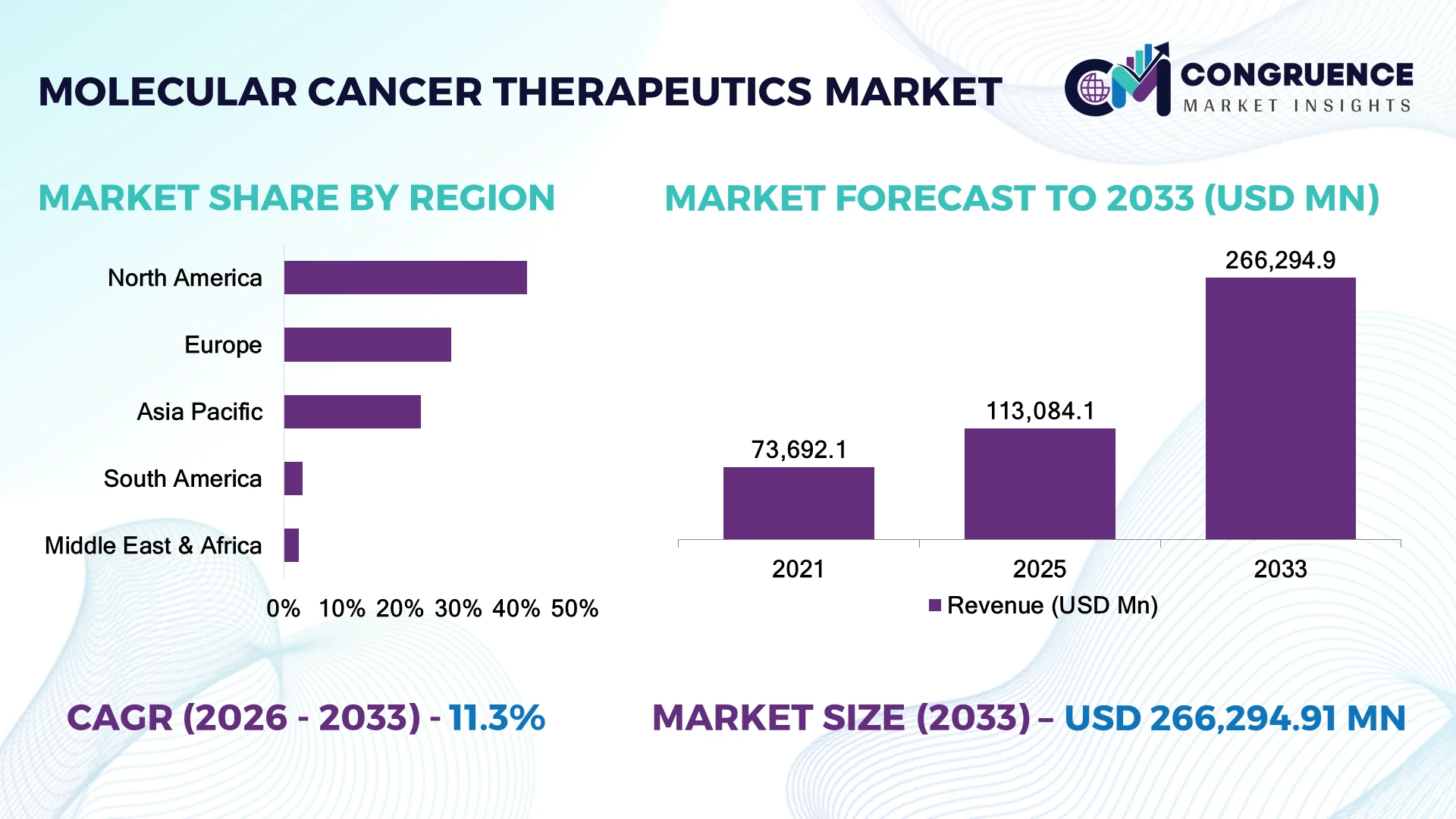
The United States dominates the market with an estimated 42% global share, supported by over 1,900 active oncology clinical trials, advanced genomic sequencing infrastructure, and strong biopharmaceutical innovation. Compared with China, which is rapidly expanding domestic targeted therapy development, the U.S. records nearly 35% higher adoption of comprehensive genomic profiling in oncology care. Continued supply-chain realignment following the U.S.-China biotechnology competition is reinforcing localized manufacturing and R&D investment for high-value molecular therapeutics.
Strategic investments in precision medicine ecosystems and biomarker-driven drug pipelines will determine long-term competitive leadership.
Market Size & Growth: USD 113,084.1 Million in 2025 reaching USD 266,294.9 Million by 2033 at 11.3% CAGR, driven by precision oncology and biomarker-guided therapies.
Top Growth Drivers: Precision medicine (+34%), companion diagnostics (+29%), genomic profiling (+31%) accelerate targeted treatment adoption.
Short-Term Forecast: By 2028, patient stratification efficiency improves 26% while treatment selection time declines 18%.
Emerging Technologies: AI-assisted drug discovery, multi-omics platforms, and next-generation sequencing shorten candidate identification by nearly 30%.
Regional Leaders: North America, Europe, and Asia-Pacific lead deployment, supported by expanding precision oncology infrastructure and clinical trial activity.
Consumer/End-User Trends: Nearly 58% of oncology centers increasingly integrate molecular diagnostics into first-line treatment planning.
Pilot/Case Example: 2026 precision oncology deployment reduced biomarker reporting turnaround by approximately 24% through automated genomic interpretation.
Competitive Landscape: Leading innovators collectively command about 61% market share through targeted therapy portfolios and precision oncology platforms.
Regulatory & ESG Impact: Digital clinical development improves trial efficiency by 20% while reducing protocol amendments.
Investment & Funding: More than USD 18 billion supports oncology R&D, strategic licensing, and biotechnology collaborations.
Innovation & Future Outlook: AI-enabled target discovery and personalized combination therapies redefine competitive differentiation.
The Molecular Cancer Therapeutics Market continues expanding through biomarker-driven treatment selection, antibody-drug conjugates, bispecific therapies, and next-generation targeted inhibitors. More than 55% of oncology pipelines now focus on precision therapeutics, while localized biologics manufacturing strengthens supply resilience amid evolving global biotechnology policies. These advances are reshaping competitive strategies and set the foundation for the following strategic market assessment.
Molecular cancer therapeutics has become a strategic priority because competitive advantage increasingly depends on precision medicine capabilities rather than broad oncology portfolios. Pharmaceutical companies are restructuring research pipelines around biomarker-defined patient populations, while regulatory agencies continue supporting accelerated pathways for targeted oncology products. Digital clinical trial platforms and decentralized patient recruitment are improving development efficiency and expanding access to genetically diverse patient cohorts.
Modern AI-assisted molecular target discovery identifies promising drug candidates approximately 35% faster than conventional screening approaches while reducing early-stage research costs by nearly 22%. North America continues leading translational oncology innovation through integrated genomic medicine programs, whereas Asia-Pacific is expanding manufacturing capacity and clinical development infrastructure at a faster operational pace. Nearly 60% of late-stage oncology trials now incorporate companion diagnostics or genomic biomarkers to improve patient selection and therapeutic outcomes.
Biopharmaceutical companies increasingly deploy real-world evidence platforms alongside molecular diagnostics to optimize treatment decisions and support regulatory submissions. Strategic alliances between pharmaceutical developers, genomic testing providers, and healthcare institutions are accelerating commercialization of personalized therapies. Organizations investing in integrated precision oncology ecosystems, scalable biologics manufacturing, and data-driven clinical development will strengthen long-term competitive positioning as molecular therapeutics become central to global cancer care.
Precision oncology is accelerating molecular cancer therapeutics deployment as genomic sequencing, companion diagnostics, and biomarker-guided treatment become standard clinical practice. Nearly 62% of late-stage oncology drug pipelines now target specific molecular alterations, while biomarker-driven patient enrollment improves trial success rates by approximately 27%. In the United States, expanded regulatory pathways for targeted therapies and companion diagnostics continue shortening commercialization timelines. This shift increases demand for highly selective therapies, improving treatment outcomes while reducing ineffective interventions. Pharmaceutical companies are responding through strategic licensing, oncology-focused acquisitions, expanded genomic research programs, and partnerships with molecular diagnostics providers. A notable operational advantage is the growing integration of real-world genomic databases, enabling faster identification of commercially viable therapeutic targets.
Complex biologic manufacturing, expensive genomic testing, and fragmented reimbursement systems continue restricting wider adoption of molecular cancer therapeutics. Companion diagnostic availability differs by more than 30% between developed and emerging healthcare systems, while advanced biologics manufacturing costs remain approximately 25% higher than conventional oncology medicines. China and several European manufacturers continue facing supply constraints for specialized biologic ingredients and analytical materials, increasing production lead times. These factors pressure profitability, delay product launches, and complicate global commercialization strategies. Companies are mitigating exposure through localized manufacturing, long-term supplier agreements, technology transfer partnerships, and diversified production networks that improve supply resilience while reducing dependence on single-region sourcing.
Artificial intelligence, multi-omics analytics, and digital biomarker discovery are creating new commercial opportunities beyond conventional targeted therapies. AI-assisted molecular screening reduces early discovery timelines by nearly 35%, while integrated genomic platforms improve candidate prioritization efficiency by approximately 28%. Japan and South Korea continue expanding precision medicine infrastructure, encouraging collaborative research between biotechnology firms and academic centers. Pharmaceutical companies are investing in AI-driven discovery platforms, antibody-drug conjugates, bispecific antibodies, and personalized combination therapies to expand addressable patient populations. An emerging opportunity lies in adaptive clinical trial platforms that continuously optimize patient selection, reducing development costs while accelerating regulatory decision-making for precision oncology products.
Successful commercialization increasingly depends on integrating genomic testing, molecular diagnostics, clinical decision support, and real-world evidence into routine oncology practice. More than 40% of healthcare institutions continue reporting interoperability limitations between sequencing platforms and hospital information systems, while specialized molecular pathology workforce shortages exceed 20% in several developed healthcare markets. These operational constraints slow treatment selection, reduce workflow consistency, and limit scalable precision oncology deployment. Companies must strengthen investments in interoperable digital platforms, clinician education, cloud-enabled genomic analytics, and secure healthcare data infrastructure. Strategic collaboration among pharmaceutical companies, diagnostic laboratories, healthcare providers, and software developers will be essential to sustain long-term competitiveness.
AI Accelerates Drug Discovery Artificial intelligence is reducing molecular target identification timelines by nearly 35% while improving lead candidate prioritization by approximately 30%. Pharmaceutical companies increasingly integrate machine learning with multi-omics datasets to optimize discovery workflows. Growing computational infrastructure investment and expanding biotechnology partnerships enable faster therapeutic validation, strengthening competitive positioning while reducing early-stage research inefficiencies.
Combination Therapies Gain Momentum Combination regimens involving targeted therapies, immunotherapies, and antibody-drug conjugates now represent more than 46% of advanced oncology development programs. Precision biomarker selection improves response consistency by nearly 24%, encouraging companies to expand co-development agreements and shared clinical programs. Regulatory acceptance of biomarker-driven treatment pathways further accelerates integrated therapeutic strategies across multiple tumor indications.
Localized Biologics Manufacturing Expands Pharmaceutical manufacturers are strengthening regional production capacity as supply-chain diversification becomes an operational priority. Nearly 32% of recent biologics manufacturing investments support localized production facilities, reducing logistics complexity and improving supply continuity. Companies are restructuring manufacturing networks, expanding contract development partnerships, and deploying advanced process automation to improve resilience against geopolitical and raw material disruptions.
Digital Oncology Workflows Mature Integrated genomic reporting, cloud-based clinical decision support, and automated patient stratification platforms are becoming standard across leading cancer centers. Digital workflow adoption has improved treatment selection efficiency by approximately 22% while reducing diagnostic turnaround time by nearly 18%. Healthcare providers increasingly collaborate with software developers and molecular diagnostics companies to create connected precision oncology ecosystems supporting scalable personalized treatment delivery.
Targeted Therapy Dominates While Cell-Based Therapies Accelerate Clinical Adoption
Targeted therapies accounted for approximately 42% of the molecular cancer therapeutics market in 2025, making them the leading segment due to strong clinical validation, biomarker-guided treatment selection, and broad integration into precision oncology protocols. Small molecule inhibitors continue to dominate mature oncology indications because of established manufacturing capabilities, oral administration advantages, and relatively lower treatment costs. Immunotherapy maintains a substantial position with nearly 29% market share, supported by expanding checkpoint inhibitor combinations, while hormone therapies retain strategic importance across breast and prostate cancer management.
Cell and gene therapies represent the fastest-growing segment as next-generation CAR-T, TCR, and engineered immune cell platforms expand beyond hematological malignancies into solid tumors. More than 34% of late-stage oncology pipelines now incorporate advanced cellular or gene-based approaches, encouraging companies to increase manufacturing investments, licensing agreements, and platform collaborations. Meanwhile, cancer vaccines continue gaining strategic attention for personalized oncology programs, shifting investment priorities toward highly differentiated precision therapeutics with durable clinical outcomes.
According to a 2025 analysis by the American Society of Clinical Oncology (ASCO), biomarker-driven targeted therapies are incorporated into an expanding share of guideline-recommended treatment pathways across multiple advanced solid tumor indications.
Solid Tumor Treatment Remains the Primary Revenue Generator
Solid tumor treatment represented approximately 71% of the market in 2025, reflecting the high incidence of lung, breast, colorectal, and prostate cancers alongside continuous expansion of precision medicine protocols. Broad patient populations, increasing genomic testing, and growing availability of targeted therapies sustain leadership across this segment. Hematological malignancies remain strategically significant due to their strong adoption of CAR-T therapies, monoclonal antibodies, and molecularly targeted medicines that continue redefining treatment standards.
Rare cancers are projected to be the fastest-growing application as orphan drug incentives, molecular diagnostics, and basket-trial approaches accelerate commercialization. Clinical trial activity targeting rare molecular alterations has increased by nearly 28% over recent years, while pediatric oncology programs continue attracting specialized investment through collaborative research initiatives. Companies are strengthening competitive positions by integrating companion diagnostics, expanding multi-indication approvals, and deploying AI-assisted patient identification to improve treatment accessibility and operational efficiency.
A 2026 enterprise assessment published through the National Comprehensive Cancer Network highlighted continued expansion of precision oncology pathways, with molecular profiling increasingly guiding treatment selection across advanced cancer care.
Specialized Cancer Centers Drive Advanced Precision Oncology Adoption
Hospitals and specialized cancer centers accounted for approximately 57% of total demand in 2025, supported by integrated oncology infrastructure, multidisciplinary treatment teams, advanced molecular diagnostics, and access to complex biologics and cellular therapies. Large academic medical centers remain the primary deployment hubs for high-value molecular therapeutics because they possess specialized laboratories, clinical trial networks, and comprehensive patient management capabilities. Specialty oncology clinics continue expanding their role through outpatient infusion services and personalized treatment programs.
Research institutes and clinical trial organizations represent the fastest-growing end-user segment as translational oncology research, biomarker discovery, and next-generation therapeutic validation accelerate globally. More than 31% of newly initiated precision oncology trials involve collaborative research networks, prompting manufacturers to expand strategic partnerships, co-development programs, and companion diagnostic ecosystems. Pharmaceutical companies are increasingly tailoring commercialization strategies through institution-specific support services, value-based agreements, and integrated precision medicine platforms to strengthen long-term market positioning.
A 2025 enterprise survey by the European Society for Medical Oncology (ESMO) reported continued expansion of molecular tumor boards across comprehensive cancer centers, supporting broader adoption of biomarker-guided therapeutic decision-making.
North America accounted for the largest market share at 41.8% in 2025 however, Asia-Pacific is expected to register the fastest growth, expanding at a CAGR of 13.1% between 2026 and 2033.
Precision oncology ecosystems accelerate next-generation therapeutic commercialization
North America maintains market leadership through its mature biopharmaceutical industry, advanced genomic testing infrastructure, and strong integration of molecular diagnostics with targeted therapeutics. The region contributes more than 45% of global precision oncology clinical trials, while comprehensive cancer centers continue expanding biomarker-guided treatment programs. Large-scale investments in antibody-drug conjugates, cell therapies, and AI-supported drug discovery strengthen commercialization pipelines. More than 68% of eligible oncology patients at leading academic institutions undergo molecular profiling before therapy selection, improving treatment precision. Strategic collaborations between biotechnology innovators, pharmaceutical companies, and diagnostic developers continue shortening clinical translation timelines while expanding access to personalized cancer medicines across hospital networks.
United States Market Outlook: The United States dominates regional demand through its extensive oncology research infrastructure, FDA-supported precision medicine framework, and concentration of global biopharmaceutical innovators. More than 2,000 active oncology clinical studies involving molecular therapeutics reinforce continuous product development. Strong venture funding, advanced sequencing capabilities, and integrated companion diagnostics enable rapid commercialization, while academic hospitals and cancer centers continue expanding access to personalized therapies for both common and rare malignancies.
Regulatory harmonization strengthens precision medicine deployment
Europe continues expanding molecular cancer therapeutics through coordinated cancer strategies, genomic medicine initiatives, and growing investment in translational oncology research. Increasing adoption of companion diagnostics and standardized biomarker testing supports wider deployment of targeted therapies across national healthcare systems. Cross-border research partnerships accelerate multi-center clinical studies, while manufacturing investments strengthen regional biologics production. Approximately 61% of newly approved oncology treatment pathways now incorporate molecular diagnostics, reflecting the shift toward precision-guided treatment decisions. Pharmaceutical companies continue localizing manufacturing and expanding collaborative research to improve treatment accessibility and regulatory compliance.
Germany Market Outlook: Germany leads the European market with strong pharmaceutical manufacturing, advanced cancer research institutes, and one of Europe's largest molecular diagnostics networks. National precision medicine initiatives continue integrating genomic sequencing into oncology practice, while domestic manufacturing investments strengthen biologics production capacity. Academic hospitals increasingly combine molecular profiling with multidisciplinary tumor boards, supporting broader deployment of individualized therapeutic strategies across complex oncology cases.
Biopharmaceutical manufacturing expansion fuels precision oncology adoption
Asia-Pacific is emerging as the fastest-growing regional market through rapid biotechnology investment, expanding genomic medicine programs, and increasing domestic biologics manufacturing capacity. Governments continue supporting precision oncology infrastructure, while pharmaceutical companies expand regional clinical trials and localized production. More than 35% of global oncology trial enrollment now originates from Asia-Pacific, strengthening innovation pipelines and accelerating commercialization. Advanced manufacturing facilities and improving reimbursement policies continue expanding patient access to molecular therapies, particularly across high-population healthcare systems.
China Market Outlook: China represents the region's largest opportunity through aggressive biotechnology investment, expanding oncology research capabilities, and large-scale hospital modernization. Domestic innovators continue developing targeted therapies, bispecific antibodies, and cell therapies supported by growing clinical trial capacity. More than 150 specialized cancer hospitals participate in precision oncology programs, while expanding genomic testing infrastructure strengthens personalized treatment adoption across major metropolitan healthcare networks.
Healthcare modernization expands access to targeted oncology care
South America is steadily increasing molecular therapeutic adoption as oncology infrastructure improves and specialized cancer centers expand precision medicine capabilities. Public-private healthcare investments continue strengthening diagnostic laboratories and access to targeted therapies, although reimbursement differences remain an operational constraint. Regional pharmaceutical partnerships are improving product availability while digital pathology platforms enhance diagnostic workflows. Approximately 24% of tertiary oncology hospitals now operate integrated molecular testing services, supporting broader use of biomarker-driven treatment planning across complex cancer cases.
Brazil Market Outlook: Brazil leads regional deployment through its extensive oncology hospital network, growing biotechnology collaborations, and expanding molecular pathology infrastructure. National cancer institutes continue integrating genomic testing into advanced oncology services, while pharmaceutical manufacturers strengthen local distribution and clinical research activities. Increasing investment in specialized cancer centers supports broader adoption of personalized therapeutics despite reimbursement variability across healthcare providers.
Strategic healthcare investment advances precision oncology infrastructure
The Middle East & Africa market is progressing through sustained investment in specialized oncology hospitals, genomic medicine programs, and advanced diagnostic infrastructure. Governments continue prioritizing national cancer strategies while expanding partnerships with international pharmaceutical companies and research institutions. Modern oncology centers increasingly deploy molecular diagnostics alongside targeted therapies, improving treatment selection efficiency. More than 30 major tertiary hospitals across the Gulf region have established dedicated precision oncology capabilities, strengthening regional access to advanced therapeutics and clinical research.
Saudi Arabia Market Outlook: Saudi Arabia is the leading regional market due to ongoing healthcare transformation, investment in genomic medicine, and expansion of specialized oncology centers. National precision medicine initiatives continue supporting advanced molecular diagnostics, while leading hospitals integrate genomic sequencing with personalized treatment planning. Strategic partnerships with international biotechnology companies and continuous infrastructure modernization position the country as a regional hub for advanced oncology care.
Competition is led by Roche, AstraZeneca, Bristol Myers Squibb, Merck & Co., and Novartis, while emerging biotechnology innovators compete through first-in-class molecular targets, cell therapies, and antibody-drug conjugates. Global pharmaceutical leaders compete against agile precision oncology developers on biomarker breadth, clinical evidence, and commercialization speed rather than price alone. The top five companies collectively control approximately 52% of market activity through diversified oncology portfolios and companion diagnostic ecosystems. Clinical success rates improve by nearly 20% when biomarker-selected populations are targeted, while integrated diagnostics reduce patient identification timelines by around 30%. Companies strengthen positions through licensing agreements, AI-enabled drug discovery, strategic acquisitions, and vertically integrated manufacturing for biologics and cell therapies. Competition is shifting toward platform ownership, multi-indication label expansion, and combination regimens that extend treatment durability. High clinical development costs, regulatory complexity, and biomarker validation remain the primary entry barriers. Winning requires differentiated molecular science, scalable manufacturing, robust diagnostic partnerships, and rapid global trial execution.
Roche
AstraZeneca
Merck & Co.
Bristol Myers Squibb
Novartis
Pfizer
Johnson & Johnson
Eli Lilly and Company
Amgen
Gilead Sciences
AbbVie
BeiGene
Daiichi Sankyo
Exelixis
AI-enabled target discovery, next-generation sequencing, and companion diagnostics are redefining molecular cancer therapeutics by improving biomarker identification and patient stratification. AI-assisted discovery platforms reduce early target validation timelines by approximately 25%, while advanced genomic sequencing improves actionable mutation detection by nearly 30%. More than 70% of late-stage precision oncology programs now integrate molecular diagnostics before treatment selection, enabling higher response consistency and more efficient clinical trial enrollment.
Emerging technologies include bispecific antibodies, antibody-drug conjugates, gene editing, and engineered cell therapies supported by digital pathology and multi-omics analytics. New AI-integrated biomarker platforms deliver approximately 35% faster patient matching than conventional molecular screening workflows while reducing unnecessary treatment exposure. Companies with integrated sequencing, diagnostic, and therapeutic platforms gain stronger competitive positioning because they accelerate clinical development and improve regulatory readiness across multiple oncology indications.
Between 2026 and 2028, spatial transcriptomics, liquid biopsy monitoring, and adaptive AI-driven treatment optimization will become increasingly integrated into precision oncology practice. Broader deployment of decentralized genomic testing and cloud-connected clinical decision support will strengthen personalized treatment pathways. Organizations investing early in scalable genomic infrastructure, companion diagnostics, and advanced biologics manufacturing will achieve faster product differentiation, stronger physician adoption, and sustained competitive advantages across increasingly biomarker-driven oncology markets.
October 2024 Bayer entered a global oncology collaboration with MOMA Therapeutics to develop precision small-molecule cancer therapies using the KNOMATIC platform, including milestone-based payments exceeding development stages. The partnership expands Bayer's precision oncology pipeline through novel dynamic protein targets. Source: bayer.com (Bayer)
March 2025 Candel Therapeutics partnered with IDEA Pharma to accelerate commercialization planning for CAN-2409 following Phase 3 prostate cancer results showing a 30% reduction in disease recurrence. The collaboration strengthens market access preparation ahead of regulatory milestones. Source: candeltx.com (Candel Therapeutics, Inc.)
March 2026 Molecular Partners advanced its Radio-DARPin oncology platform by initiating a Phase 1/2a study of MP0712 and expanding isotope development partnerships, while maintaining financial runway through 2028. The milestone strengthens targeted radiopharmaceutical capabilities for precision oncology. Source: sec.gov filing
2025 The American Association for Cancer Research reported FDA approvals of 15 new molecularly targeted anticancer therapeutics within a 12-month period, highlighting continued expansion of precision oncology treatment options and broader companion diagnostic integration across multiple cancer indications. Source: AACR Cancer Progress Report 2025 (Cancer Progress Report)
The report provides comprehensive analysis of molecular cancer therapeutics across targeted therapies, immunotherapies, hormone therapies, cell and gene therapies, and cancer vaccines. It evaluates adoption across solid tumors, hematological malignancies, rare cancers, and specialized oncology applications while assessing demand from hospitals, cancer centers, specialty clinics, research institutes, and pharmaceutical organizations. Coverage extends across North America, Europe, Asia-Pacific, South America, and the Middle East & Africa, highlighting deployment patterns, precision oncology infrastructure, companion diagnostics, and advanced biologics manufacturing.
The study evaluates competitive positioning across leading pharmaceutical companies, biotechnology innovators, and precision medicine developers while examining emerging technologies including AI-enabled drug discovery, genomic sequencing, liquid biopsy, antibody-drug conjugates, and engineered cell therapies. Quantitative assessment includes segment distribution, biomarker adoption trends, enterprise deployment patterns, and evolving clinical development strategies, enabling stakeholders to strengthen investment planning, commercialization priorities, partnership strategies, portfolio expansion, and competitive positioning between 2026 and 2033.
| Report Attribute/Metric | Report Details |
|---|---|
|
Market Revenue in 2025 |
USD 113,084.1 Million |
|
Market Revenue in 2033 |
USD 266,294.9 Million |
|
CAGR (2026 - 2033) |
11.3% |
|
Base Year |
2025 |
|
Forecast Period |
2026 - 2033 |
|
Historic Period |
2021 - 2025 |
|
Segments Covered |
By Type
By Application
By End-User
|
|
Key Report Deliverable |
Revenue Forecast, Growth Trends, Market Dynamics, Segmental Overview, Regional and Country-wise Analysis, Competition Landscape |
|
Region Covered |
North America, Europe, Asia-Pacific, South America, Middle East, Africa |
|
Key Players Analyzed |
Roche, AstraZeneca, Merck & Co., Bristol Myers Squibb, Novartis, Pfizer, Johnson & Johnson, Eli Lilly and Company, Amgen, Gilead Sciences, AbbVie, BeiGene, Daiichi Sankyo, Exelixis |
|
Customization & Pricing |
Available on Request (10% Customization is Free) |




