
Reports
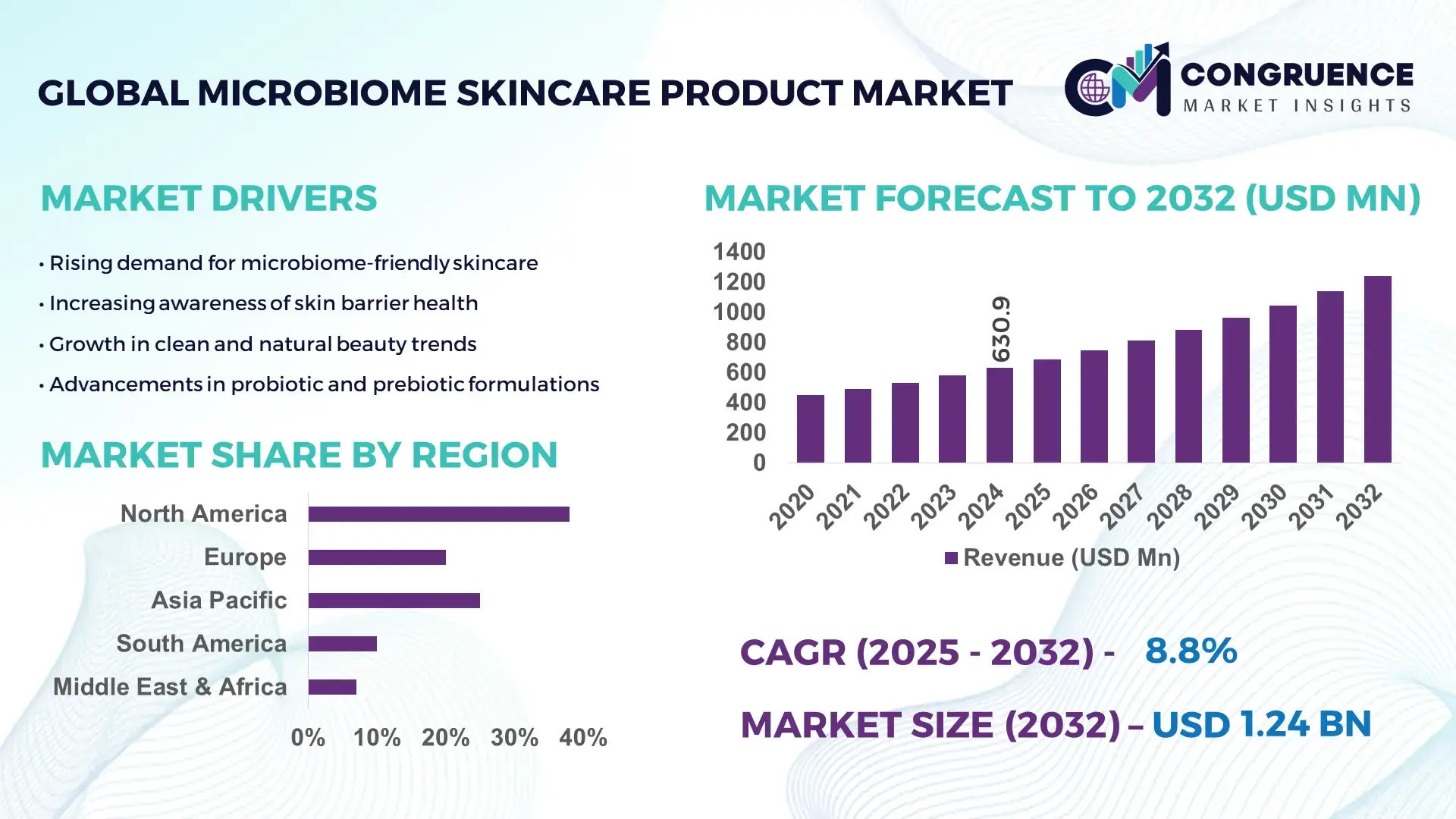
The Global Microbiome Skincare Product Market was valued at USD 630.93 Million in 2024 and is anticipated to reach a value of USD 1238.84 Million by 2032 expanding at a CAGR of 8.8% between 2025 and 2032. This growth is driven by rising consumer demand for clean beauty and skin‑microbiome–friendly formulations.
North America — particularly the United States — remains the dominant region in microbiome skincare. In the U.S., over 450 new microbiome skincare products were launched in 2024, with dermatologists recommending probiotic and barrier‑repair lotions in approximately 53% of clinical skincare consultations and online retail channels contributing nearly 38% of total sales volume. The robust R&D infrastructure, frequent product innovations (e.g., serums, postbiotic creams), and high investment in clean‑beauty startups underscore the region’s leading position in production capacity, advanced formulation technologies, and wide consumer adoption across both premium and everyday skincare segments.
Market Size & Growth: Current market value (2024) ~ USD 631 Million; projected value by 2032 ~ USD 1,239 Million; CAGR ~ 8.8%, supported by rising awareness of skin‑microbiome health and clean‑beauty trends.
Top Growth Drivers: Increasing consumer preference for microbiome‑safe products (~ 62% adoption rate among probiotic skincare users); rising incidence of skin sensitivity and acne (~ 50% of dermatology patients show interest in microbiome care); strong growth of e‑commerce and direct‑to‑consumer distribution (online sales up ~ 38% in leading markets).
Short-Term Forecast (by 2028): Estimated ~ 25–30% reduction in skin irritation reports among sensitive‑skin users adopting microbiome formulations; performance gains in barrier‑repair and hydration efficacy by ~ 20%.
Emerging Technologies: Personalized probiotic/prebiotic/postbiotic blends; genomic‑informed skincare formulations; clean‑label, dermatologically tested microbiome products.
Regional Leaders (by 2032 projected value): North America ~ USD 520 Million — continued premium and dermatologist‑endorsed growth; Europe ~ USD 330 Million — strong regulatory alignment and clean‑beauty adoption; Asia‑Pacific ~ USD 290 Million — rapid uptake fueled by K‑beauty innovation and expanding middle‑class skincare demand.
Consumer/End-User Trends: Primary users include millennials and Gen Z seeking sensitive‑skin, anti‑aging, and barrier‑repair solutions; growing demand for unisex skincare and clean‑beauty formulations.
Pilot or Case Example: In 2023, a U.S. dermatology‑backed probiotic‑cream launch saw a 22% decrease in flare‑ups among eczema patients over 12 weeks of use.
Competitive Landscape: Market leader holds roughly 18–20% share; major competitors include global cosmetics firms and specialized microbiome‑skincare brands.
Regulatory & ESG Impact: Rising regulatory emphasis on ingredient safety, clean‑beauty certification, and microbiome‑friendly labelling boosts consumer trust and adoption; ESG‑driven sustainable ingredient sourcing increasingly valued.
Investment & Funding Patterns: Significant venture funding flowing into biotech‑cosmetic startups; growing investments in clinical‑grade microbiome R&D and manufacturing capacity expansion.
Innovation & Future Outlook: Expect continued growth in personalized microbiome skincare, expansion of probiotic/postbiotic formulations, integration of dermatology research with cosmetic R&D, and broader global adoption—especially in emerging markets and via digital distribution channels.
The microbiome skincare sector is witnessing broad growth across key industry sectors — including face care, body care, anti‑aging, acne treatment, and sensitive‑skin solutions — with creams, serums, cleansers, and moisturizers forming the bulk of product formats. Recent innovations such as live‑active probiotic creams, postbiotic barrier‑repair serums, and microbiome‑safe formulations have significantly enhanced product efficacy and consumer trust. Regulatory pushes toward clean beauty, increasing environmental and skin‑health awareness, and rising disposable incomes in urban regions are driving adoption. Regionally, North America leads in product development and consumer uptake; Europe follows with strong sustainability and clinical‑claim focus; Asia‑Pacific shows dynamic growth propelled by youthful demographics and rising e‑commerce penetration. Emerging trends include personalized microbiome‑based skincare tailored to individual skin flora, collaborations between biotech firms and cosmetic companies, and scaling of sustainable, dermatologically validated product lines.
The strategic relevance of the Microbiome Skincare Product Market lies in its ability to transform conventional skincare into science‑backed, skin‑health centric solutions that address root causes such as skin barrier imbalance, inflammation, and microbial dysbiosis. As more consumers recognise the role of skin flora in conditions like acne, eczema, and sensitivity, companies that invest strategically in microbiome‑safe formulations gain a competitive advantage. For instance, next‑generation postbiotic complexes deliver up to 35% improvement in skin barrier integrity compared to older standard moisturizers. In this evolving landscape, Asia‑Pacific dominates in volume, while North America leads in adoption, with around 55% of skincare enterprises and clinics offering microbiome‑certified products.
By 2027, AI‑driven microbiome profiling tools and personalized skincare systems are expected to improve product efficacy and user satisfaction by 28%, enabling tailored regimens based on individual skin flora. To align with ESG and sustainability goals, many firms are committing to 30% reduction in non‑biodegradable packaging and improved ingredient traceability by 2030, reinforcing eco‑friendly positioning and compliance. In 2024, a leading European firm deploying dual‑chamber synbiotic creams achieved a 42% reduction in user‑reported skin irritation within eight weeks of use.
Looking ahead, the Microbiome Skincare Product Market is positioned to become a pillar of resilience, compliance, and sustainable growth — offering both dermatological efficacy and environmentally conscious innovation.
Growing consumer preference for biologically active, microbiome‑safe skincare fuels demand significantly. Studies show that a majority of new product launches focus on microbiome‑friendly certifications and avoid harsh chemicals — with roughly 42% of new products in developed markets carrying microbiome‑safe labels. Consumers concerned with skin sensitivity, barrier damage and long‑term skin health increasingly choose probiotic, prebiotic or postbiotic formulations over conventional products. Dermatologists recommending microbiome‑compatible formulations have added clinical credibility to the trend. This rising demand for safer, effective skincare solutions directly drives expansion of the Microbiome Skincare Product market globally.
Despite growing interest, regulatory fragmentation and limited global standardization in approving microbiome‑friendly cosmetics create significant hurdles for manufacturers. Only a handful of countries currently define clear criteria for microbiome safety labeling, causing uncertainty for global launches. Maintaining viability of live probiotic strains across shelf‑life and various climate conditions is another challenge: industry data indicates that a substantial portion of probiotic serums lose efficacy before expiration, especially under poor storage conditions. Such stability issues increase production costs and complicate logistics — particularly for brands targeting global distribution. These pressures can slow down product rollouts, limit formulation diversity, and deter smaller players from entering the market.
The intersection of biotech innovation and personalized skincare opens substantial growth avenues. Emerging technologies — such as postbiotic complexes, synbiotic blends, and microbial‑derived actives — offer more stable, scalable alternatives to live probiotics, broadening suitability across skin types and climates. Additionally, AI‑driven microbiome profiling tools enable brands to offer customized regimens tailored to an individual’s skin flora, promising improved efficacy and user loyalty. Given rising skincare concerns worldwide, particularly in Asia‑Pacific and emerging economies, the potential for market expansion into new demographics and price segments is considerable. Partnerships between cosmetic firms and biotech labs, as well as integration with dermatological services and wellness programs, can further drive adoption of advanced microbiome skincare.
Developing effective microbiome skincare demands significant investment in biotechnology research, stability testing, clinical trials, and compliance with hygiene and safety standards. The complexity of formulating stable probiotic or postbiotic products — especially for global distribution — increases production costs and extends time‑to‑market. In addition, lack of standardized efficacy measurement across markets creates inconsistencies: some products may fail to deliver expected skin‑microbiome benefits under varying skin conditions or climates. For emerging brands, these barriers raise the entry threshold and may delay or restrict expansion into multiple regions. Regulatory delays and scarcity of clear labeling standards further complicate efforts to build consumer trust and scale operations.
• Growing Launch Volume & Diversified Formulations: In 2023 alone, over 550 new microbiome‑skincare products were introduced globally, reflecting surging investor and consumer confidence in skin‑microbiome solutions. Roughly 34% of these new products target sensitive skin needs, while about 28% are developed for anti‑aging concerns. Products avoiding parabens, sulfates, and synthetic fragrances now make up nearly 47% of all launches, underscoring a major shift toward clean‑beauty and microbiome‑safe skincare formulations.
• Shift Toward Probiotic, Prebiotic, and Postbiotic Ingredients: The probiotics‑based ingredient segment remains dominant, and recent data shows a marked movement toward more stable, postbiotic or synbiotic complexes. In 2024, more than 35% of new skincare launches incorporated probiotics, prebiotics, or postbiotics. This transition supports improved formulation stability and shelf‑life, enabling skin barrier support, inflammation control, and enhanced hydration — attributes increasingly valued by dermatology‑conscious consumers.
• Rise of Hybrid Skincare Formats and Multi‑Functional Products: Brands are increasingly blending microbiome‑supportive actives with additional skincare benefits: hydration, sun protection, anti‑aging, and barrier repair. In 2024, hybrid products such as probiotic-infused serums, sunscreens, and overnight repair masks saw double-digit growth, especially in markets like North America and Asia‑Pacific, where consumers prefer streamlined, multifunctional skincare routines.
• Expansion of Digital Sales Channels and Personalized Skincare Solutions: E‑commerce penetration remains high: in 2024, about 38% of microbiome‑skincare sales originated through online platforms. Simultaneously, an increasing number of brands are adopting AI‑driven skin‑analysis tools and at‑home microbiome testing kits, enabling personalized skincare recommendations and subscription‑based service models. This digital plus personalization trend is accelerating consumer adoption, improving retention rates, and transforming how skincare products are marketed and consumed.
The market segmentation for microbiome skincare products is organized across product types, applications, and end‑user categories to reflect how diverse consumer needs and distribution channels shape demand patterns. By type, the market includes creams and lotions, serums, cleansers and washes, masks, and specialty treatments. By application, products are used for hydration and barrier repair, acne and sensitivity management, anti‑aging and wrinkle prevention, and daily maintenance routines. End‑users range from individual consumers (by skin type and demographics) to dermatology clinics, wellness spas, and online subscription‑based users. This segmentation allows stakeholders to target product development, marketing, and distribution strategies according to end‑use needs, skin concerns, and channel preferences. Data shows that barrier‑repair creams and serums dominate due to growing sensitivity and barrier dysfunction concerns, while demand for cleansers and masks remains strong in niche markets focused on acne and deep‑clean maintenance. Overall, this segmentation enables precise alignment of formulation innovations, marketing positioning, and channel strategies to evolving consumer and clinical needs.
Creams and lotions remain the leading product type, accounting for approximately 38% share of global microbiome skincare product sales. Their dominance stems from broad consumer acceptance for moisturizing and barrier repair needs, ease of use, and compatibility with daily skincare routines. Serums follow closely with around 27% share, valued for their potency and skin‑absorption efficiency. The fastest‑growing type is masks and specialty treatments — with a reported ~12% CAGR over the next two years — driven by rising consumer interest in intensive skin‑care sessions addressing acne, hydration boosts, and overnight barrier recovery. Cleansers and washes contribute roughly 20% combined share, maintaining relevance among users focusing on daily microbiome‑safe cleansing. Specialty treatments such as probiotic-infused patches or targeted sensitivity repair account for the remaining 15%, serving niche segments such as eczema‑prone or reactive skin users.
Hydration and skin‑barrier repair is the leading application area, representing about 41% share of microbiome‑skincare usage globally. This dominance is supported by widespread skin‑barrier concerns, dryness, and sensitivity among urban consumers and climate‑affected populations. The fastest‑growing application area is acne and sensitivity management, projected with ~14% CAGR, driven by rising prevalence of acne, dermatitis, and reactive skin conditions in younger demographics and increased dermatologist endorsements for microbiome‑safe therapies. Anti‑aging and wrinkle prevention applications hold about 25% share, catering to aging populations seeking microbiome‑friendly anti‑aging solutions. Daily maintenance routines — such as preventive barrier protection and mild cleansing — capture the remaining 19% share, serving regular skincare users regardless of skin condition.
Individual consumers seeking sensitive‑skin, anti‑aging, or barrier‑repair solutions constitute the leading end‑user segment, representing approximately 52% share of the microbiome skincare market. Their dominance results from rising awareness of skin‑microbiome health among millennials and Gen Z, and increasing preference for at-home skincare routines. The fastest‑growing end‑user segment is wellness spas and dermatology clinics, with usage projected to grow at ~11% CAGR over the next two years, fueled by expanding demand for clinical-grade treatments and recommendation‑backed microbiome skincare services. Online subscription‑based users and direct‑to‑consumer buyers account for around 26% share, enjoying convenience and personalized product access. The remaining 22% share comes from pharmacies, specialty retailers, and traditional cosmetics outlets catering to walk-in customers seeking microbiome‑safe replacements for regular skincare.
North America accounted for the largest market share at 38% in 2024 however, Asia‑Pacific is expected to register the fastest growth, expanding rapidly between 2025 and 2032.
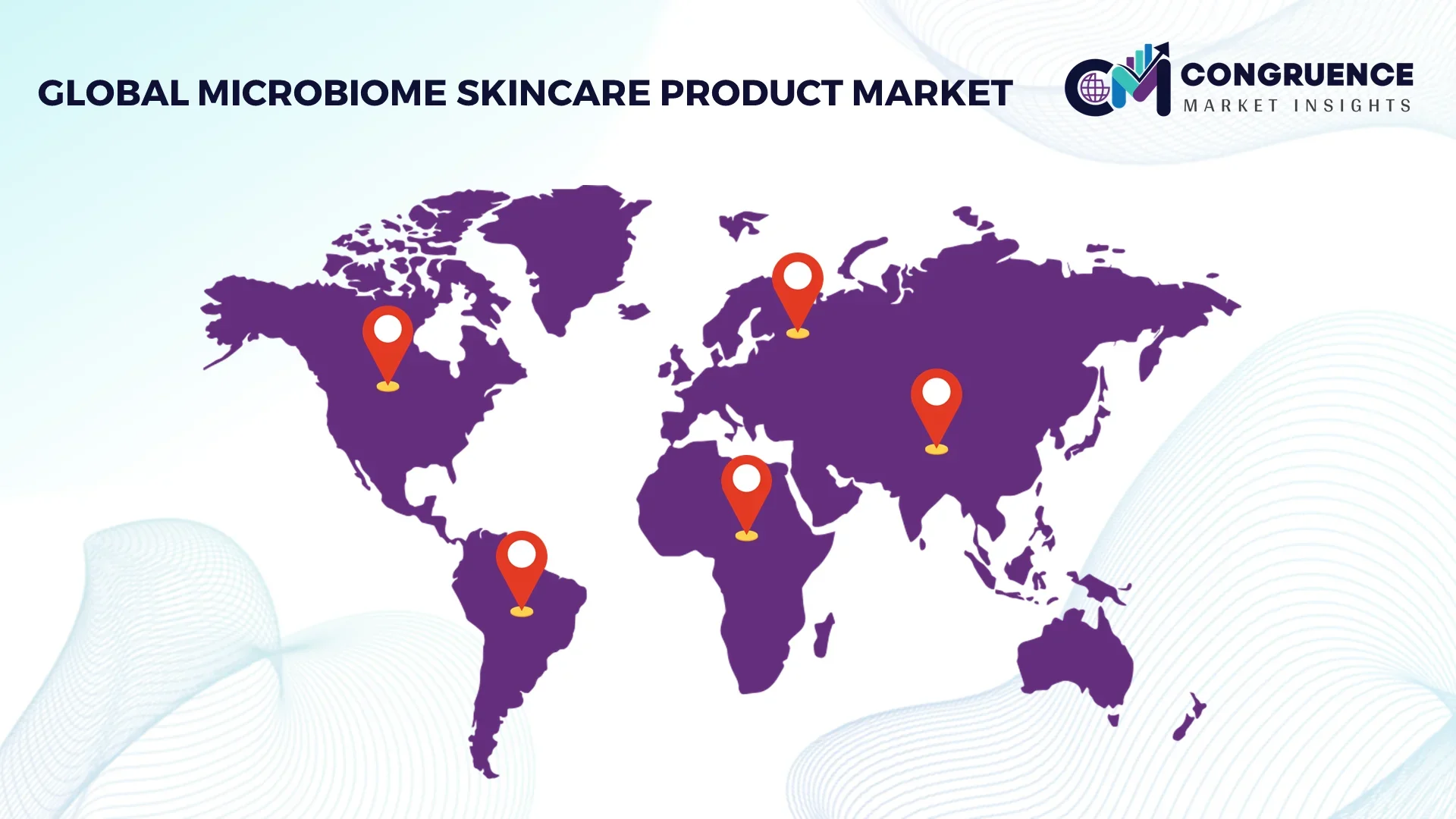
In 2024 North America held a strong position thanks to high consumer awareness, regulatory support, and robust retail and e‑commerce penetration. Meanwhile, Asia‑Pacific — with rising disposable incomes, urban growth and increasing beauty consciousness in countries like South Korea, China, Japan, and India — is set to witness surging demand and rapid volume expansion through 2032. This regional dichotomy underscores a mature, stable lead in North America and a dynamic growth frontier in Asia‑Pacific driven by changing demographics and evolving consumer behavior.
What drives premium adoption and regulatory‑backed skincare standards?
North America holds approximately 38–40% share of the global microbiome skincare product market in 2024, reflecting strong demand from consumers seeking clinically validated, high‑quality skincare solutions. Key industries driving demand include dermatological clinics, wellness spas, premium cosmetic retail, and direct-to-consumer e‑commerce platforms. Regulatory frameworks and safety‑certification norms support the entry of microbiome‑safe and dermatologist‑endorsed formulations. Technological advancements such as stable postbiotic creams, dermatologist‑tested barrier‑repair serums, and online skin‑analysis tools are increasingly adopted. Local players and skincare brands in the U.S. have launched probiotic and barrier‑repair product lines, often combining digital skin‑health diagnostics with subscription-based microbiome skincare kits. Consumer behavior in North America trends toward preventive skincare — with many early adopters using microbiome‑safe products for sensitive skin, anti‑aging, and long-term skin health maintenance rather than occasional treatment.
How are sustainability norms and clean‑beauty regulations shaping consumer uptake?
Europe accounts for roughly 26–32% of the global microbiome skincare product market in 2024, with major contributions from countries such as Germany, France, and the UK. European demand is driven by strong regulatory oversight, clean‑beauty standards, and consumer preference for natural, certified, and dermatologically-tested formulations. Regulatory bodies and labeling standards have encouraged brands to invest in sustainable and transparent microbiome‑safe products. Adoption of emerging technologies — like postbiotic formulations and microbiome‑tested certifications — is rising across Western European markets. Several European skincare companies are expanding their microbiome‑friendly product offerings, particularly in anti‑aging and sensitive‑skin segments, supported by stringent ingredient regulations and high consumer trust. European consumers often prioritize eco-conscious, minimal-ingredient products with verified microbiome safety — a behavior influenced by regulatory pressure and growing interest in sustainable skincare.
Why is demand surging across East Asia and beyond?
Asia‑Pacific currently represents a significant portion of global microbiome skincare volume and stands out as the fastest‑growing regional market. Countries such as South Korea, Japan, China, and India are major contributors, led by urban consumers with growing disposable incomes and rising beauty awareness. Manufacturing infrastructure and local innovation hubs — particularly in South Korea and Japan — are driving new product formulations, while e‑commerce and mobile retail platforms fuel rapid distribution. Regional tech trends include AI-driven skin‑analysis apps, mobile‑based beauty diagnosis, and integration of microbiome‑friendly skincare with local consumer preferences. Local players in South Korea and Japan have rolled out microbiome‑targeted creams, serums, and barrier‑repair products tailored to regional skin concerns like sensitivity, pollution exposure, and anti‑aging. Consumer behavior in Asia‑Pacific is heavily influenced by digital retail, peer reviews, and trends in clean beauty and preventive skincare, leading to significant expansion of microbiome skincare adoption.
How is emerging demand shaping early‑stage adoption in Latin markets?
In South America, key countries like Brazil and Argentina are gradually embracing microbiome skincare, though market share remains modest compared with leading regions. Growth is influenced by increasing urban middle‑class spending on beauty and wellness, media influence, and rising interest in skin‑health products adapted to local climates and skin concerns. Regional infrastructure for import‑driven cosmetic distribution and evolving trade policies support gradual expansion. Local brands and importers are beginning to stock probiotic and microbiome‑friendly creams, especially targeting sensitive‑skin and anti‑aging segments. Consumer behavior in South America shows increasing responsiveness to media and localized marketing — with demand often tied to regional language campaigns and culturally relevant beauty narratives.
What factors are shaping niche‑market growth in emerging economies?
Middle East–Africa remains a smaller but emerging region in the microbiome skincare landscape. Major growth countries include the UAE and South Africa, where rising urbanization, increasing interest in wellness, and growing disposable incomes drive demand for premium, microbiome‑safe skincare. Technological modernization and expanding trade partnerships support gradual availability of imported microbiome products. Local stores and online retailers are beginning to offer barrier‑repair creams and postbiotic lotions catering to sensitive skin concerns, often targeting expatriate and urban consumer segments. Consumer behavior varies: there is growing interest in clean‑beauty and dermatologist‑endorsed formulas, though overall adoption remains constrained by price sensitivity and limited awareness outside major urban centers.
United States — ~ 36–38% share, owing to high production capacity, advanced dermatological R&D, and strong consumer demand for clean microbiome‑safe skincare.
Germany — ~ 12–15% share, driven by robust regulatory frameworks, high consumer trust in certified cosmetics, and strong penetration of microbiome skincare in sensitive‑skin and anti‑aging segments.
The global microbiome skincare product market is characterized by a moderately fragmented competitive environment, with over 60 active competitors — ranging from large multinational consumer‑goods conglomerates to niche biotech‑skincare startups. The top 5 companies combined control approximately 45–50% of total global market share, indicating significant concentration at the top, but also leaving considerable room for smaller and emerging players.
Major incumbents pursue strategic initiatives such as new product launches, partnerships with biotech labs, ingredient innovation (postbiotics, prebiotics, stabilized probiotics), and expansion of distribution via e‑commerce and dermatology‑endorsed channels. For instance, several global brands recently expanded microbiome‑centric lines integrating clinically tested barrier‑repair creams and probiotic-infused serums, responding to rising demand for skin‑microbiome safety and clean‑beauty compliance. Emerging biotech‑skincare firms invest heavily in R&D, proprietary bacterial strain development, and AI-based skin‑microbiome profiling tools to differentiate their offerings.
Innovation trends shaping competition include development of stabilized postbiotic complexes, synbiotic blends, microbiome‑certified labeling, AI-driven personalization, and dermatologically validated formulations. This dynamic landscape means competition is not just about brand recognition — it increasingly revolves around science-backed efficacy, regulatory compliance, formulation expertise, and supply‑chain transparency. Because new entrants continue emerging alongside established players, the market remains competitive and open to disruptors who combine biotech innovation with effective commercialization — making it a strategically attractive, yet challenging, domain for investors and companies.
L'Oréal Paris
Amorepacific
Johnson & Johnson (Aveeno)
Mother Dirt
Gallinée
TULA Life, Inc.
Esse Skincare
Glowbiotics LLC
The microbiome skincare product market is increasingly influenced by advancements in biotechnology, formulation science, and digital personalization tools. Stabilized probiotic, prebiotic, and postbiotic complexes have become central to product innovation, enabling longer shelf-life and more consistent efficacy. In 2024, over 40% of newly launched microbiome skincare products incorporated stabilized postbiotic formulations, reflecting rising consumer preference for scientifically validated and barrier-friendly solutions. Encapsulation technologies now allow live probiotic strains to remain viable during transport and storage, reducing degradation by up to 35% compared to earlier formulations. AI-driven skin microbiome analysis is gaining traction, with digital diagnostic platforms being adopted by dermatology clinics and direct-to-consumer brands. Approximately 28% of dermatology-centered product lines in North America now integrate AI-guided recommendations, enabling personalized regimen development that aligns with individual skin flora profiles. Mobile apps linked to AI diagnostics help track hydration, barrier function, and microbial balance, improving user adherence and product satisfaction.
In addition, emerging technologies such as microencapsulation of postbiotics, biofermentation of targeted bacterial strains, and synbiotic formulations are driving differentiation in anti-aging, sensitive-skin, and acne treatment segments. Smart packaging with real-time stability indicators is also being tested in 2024 to ensure product integrity. Manufacturing automation and high-precision blending systems have enhanced production capacity by roughly 25% in top facilities, improving quality control and scalability. Overall, the integration of biotech innovation, AI personalization, and advanced formulation technologies is reshaping the competitive landscape, allowing companies to deliver scientifically-backed, consumer-centric, and scalable microbiome skincare solutions, while meeting regulatory and sustainability standards.
In December 2023, L'Oréal completed the acquisition of Lactobio — a Copenhagen‑based probiotic and microbiome research firm — enabling L’Oréal to leverage Lactobio’s precision‑probiotic platform and IP portfolio for development of live‑bacteria topical and skincare innovations. (L'Oréal)
In September 2024, POND’S Skin Institute piloted a novel Microbiome Analyzer in partnership with retail chain Watsons in the Philippines — delivering a full skin‑microbiome profile and tailored skincare regimen in just 60 minutes, marking a shift toward personalised, data‑driven skincare adoption. (Unilever)
In 2024, several brands intensified formulation innovation: the introduction of dual-action synbiotic creams and stabilized postbiotic complexes broadened product efficacy for barrier repair and skin microbiome balance, reflecting a major move toward science‑backed, stable microbiome formulations.
In 2024, product launch activity emphasized clean‑beauty compliance and microbiome‑safe certification: more than 550 new microbiome‑skincare SKUs worldwide incorporated probiotic, prebiotic or postbiotic actives without sulfates, parabens or synthetic fragrances — underscoring a sector‑wide shift toward sustainable, consumer‑safe skincare standards.
The Microbiome Skincare Product Market Report covers a comprehensive range of product types — including creams, lotions, serums, cleansers, masks, and specialized treatments — as well as formulations based on probiotics, prebiotics, postbiotics, and synbiotic blends. It evaluates application categories such as skin‑barrier repair, hydration, acne and sensitivity management, anti‑aging and wrinkle prevention, and daily maintenance skincare routines. End‑user segments in scope include individual consumers, dermatology clinics, wellness spas, online subscription customers, pharmacies, and specialty retailers across global regions. Geographically, the report spans all major regions — North America, Europe, Asia‑Pacific, South America, Middle East & Africa — providing region‑wise market share, volume-based demand patterns, regulatory and sustainability context, and growth potential based on demographic, economic, and cultural dynamics. It includes analysis of emerging and high‑growth regions, with attention to infrastructure readiness, manufacturing trends, e‑commerce penetration, and consumer behavior differences across markets.
Technological and innovation aspects form a core part of the scope. The report delves into advanced biotech and formulation technologies — such as live‑bacteria encapsulation, stabilized postbiotic complexes, synbiotic delivery systems, AI‑driven skin‑microbiome diagnostics, personalized skincare, and smart packaging. It assesses how these technologies are shaping product efficacy, stability, supply‑chain scalability, and regulatory compliance. From an industry‑focus perspective, the report examines strategic initiatives by leading cosmetic conglomerates and biotech‑skincare firms: R&D investment, biotech acquisitions, clinical‑grade testing, clean‑beauty certifications, and distribution expansion via e‑commerce, dermatology‑backed channels, and retail networks. Unique or niche market segments — such as microbiome‑certified makeup, synbiotic cleansers, and personalized microbiome regimens — are also included to reflect evolving consumer demand and innovation trajectories.
Overall, the report offers decision‑makers and industry professionals a full spectrum view of product segmentation, regional dynamics, technological disruption, end‑user segmentation, regulatory and sustainability context, and competitive landscape — equipping stakeholders with actionable insights for strategic planning, investment decisions, product development, and market expansion.
| Report Attribute/Metric | Report Details |
|---|---|
|
Market Revenue in 2024 |
USD 630.93 Million |
|
Market Revenue in 2032 |
USD 1238.84 Million |
|
CAGR (2025 - 2032) |
8.8% |
|
Base Year |
2024 |
|
Forecast Period |
2025 - 2032 |
|
Historic Period |
2020 - 2024 |
|
Segments Covered |
By Types
By Application
By End-User
|
|
Key Report Deliverable |
Revenue Forecast, Growth Trends, Market Dynamics, Segmental Overview, Regional and Country-wise Analysis, Competition Landscape |
|
Region Covered |
North America, Europe, Asia-Pacific, South America, Middle East, Africa |
|
Key Players Analyzed |
L'Oréal Paris, Amorepacific, Johnson & Johnson (Aveeno), Mother Dirt, Gallinée, TULA Life, Inc., Esse Skincare, Glowbiotics LLC |
|
Customization & Pricing |
Available on Request (10% Customization is Free) |




