
Reports
The Global Machine Learning in Drug Discovery and Development Market was valued at USD 3,450.0 Million in 2025 and is anticipated to reach a value of USD 23,643.7 Million by 2033 expanding at a CAGR of 27.2% between 2026 and 2033. Market growth is driven by AI-enabled molecular screening, predictive toxicity modeling, automated target identification, and pharmaceutical investment in reducing drug development timelines and clinical attrition.
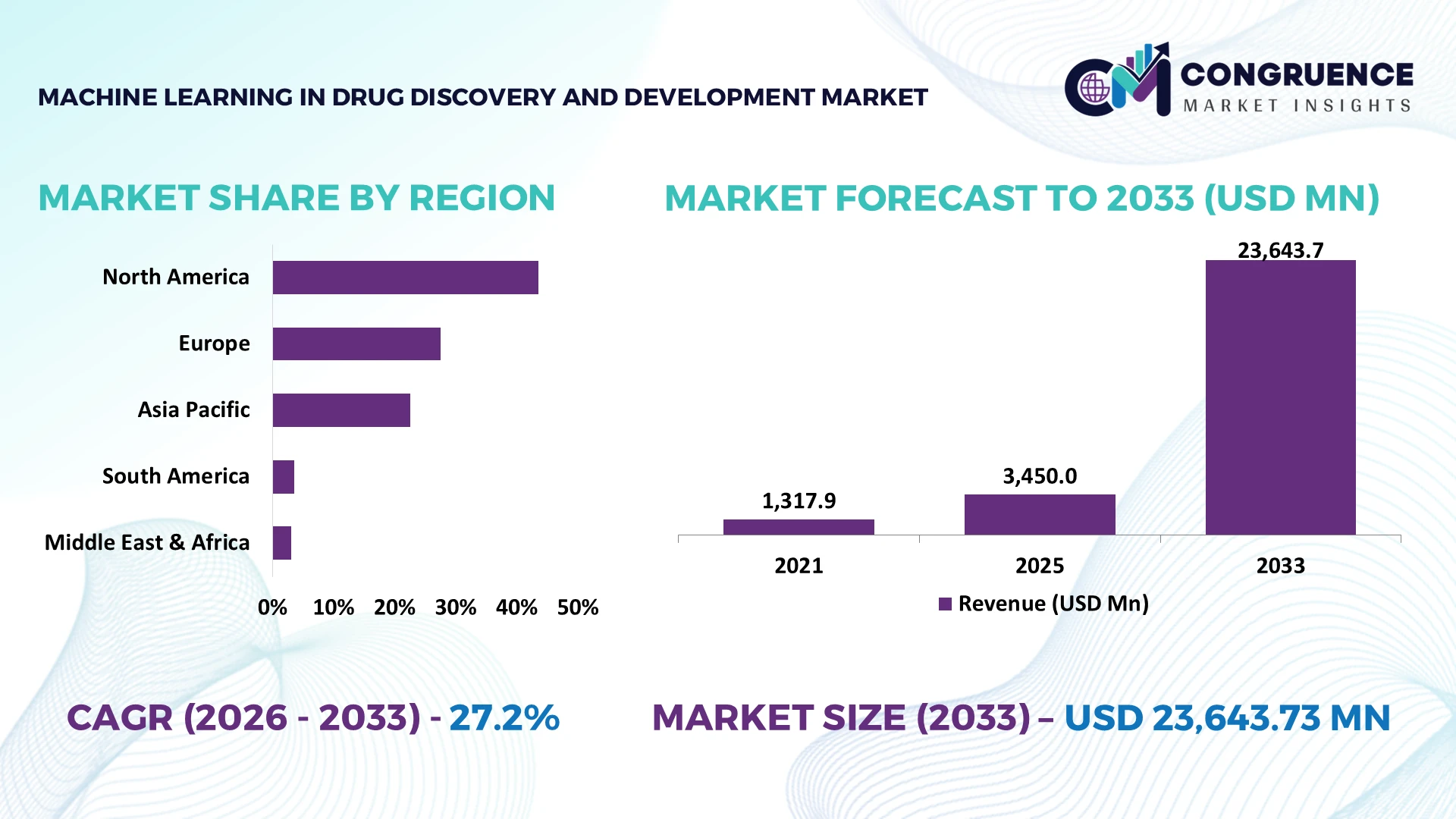
The United States dominates the market, accounting for an estimated 38.5% of global demand, supported by pharmaceutical R&D investments exceeding USD 100 billion annually and established biotechnology clusters in Boston and California. Compared with China, the U.S. maintains stronger commercialization infrastructure and pharmaceutical AI partnerships, while the FDA's 2025 draft guidance on AI-generated evidence strengthens the framework for regulatory adoption.
Pharmaceutical companies prioritizing proprietary biological datasets, validated predictive models, and integrated discovery platforms will strengthen pipeline productivity and long-term competitive positioning.
Market Size & Growth: USD 3,450.0 million in 2025, reaching USD 23,643.7 million by 2033 at 27.2% CAGR, driven by computational drug discovery.
Top Growth Drivers: Discovery efficiency (35%), development cost optimization (30%), and predictive clinical analytics (20%), based on indicative driver weightings.
Short-Term Forecast: By 2028, integrated machine learning workflows target 20–30% reductions in early-stage screening timelines.
Emerging Technologies: Generative AI, graph neural networks, and protein language models accelerate three critical molecular discovery workflows.
Regional Leaders: Estimated 2033 values: North America USD 10,166.8 million, Europe USD 6,147.4 million, and Asia Pacific USD 5,674.5 million, supported by pharmaceutical AI integration.
Consumer/End-User Trends: Approximately 60% adoption is projected among major pharmaceutical enterprises by 2028, emphasizing predictive discovery applications.
Pilot/Case Example: In 2020, DSP-1181 entered clinical development following approximately 75% faster discovery than conventional timelines.
Competitive Landscape: Schrödinger holds an indicative 10–12% share, competing with Recursion, Insilico Medicine, IBM, and NVIDIA.
Regulatory & ESG Impact: FDA experience with over 500 AI-containing drug submissions since 2016 reinforces model validation requirements.
Investment & Funding: Recursion's USD 688 million announced Exscientia acquisition in 2024 accelerated computational discovery consolidation.
Innovation & Future Outlook: Multimodal foundation models target 20–30% screening productivity improvements, shifting investment toward integrated experimental platforms.
The Machine Learning in Drug Discovery and Development Market is expanding across target identification, lead optimization, biomarker discovery, and clinical trial design. Advanced protein structure prediction and generative molecular modeling are transforming pharmaceutical research, with selected workflows targeting screening time reductions of 30%. Increasing regulatory scrutiny of algorithm-generated evidence is accelerating investment in explainable AI, validated datasets, and integrated computational research infrastructure.
Machine learning is becoming a strategic determinant of pharmaceutical competitiveness by transforming drug discovery from sequential experimental screening into predictive, data-intensive research. Pharmaceutical manufacturers are restructuring R&D investments around computational platforms, proprietary biological datasets, and automated laboratories. With approximately 90% of drug candidates entering clinical development failing to secure approval, earlier identification of ineffective compounds offers substantial portfolio optimization advantages.
Compared with conventional high-throughput screening, machine learning-enabled virtual screening targets 30–50% reductions in selected experimental workloads by prioritizing compounds with favorable molecular properties. The United States leads pharmaceutical AI commercialization through established biotechnology ecosystems, while China is expanding computational chemistry capabilities and automated discovery infrastructure. Between 2026 and 2029, integrated discovery platforms are expected to target 20–30% improvements in lead identification efficiency.
Insilico Medicine's advancement of AI-discovered rentosertib into Phase II clinical evaluation demonstrates the practical integration of algorithmic target identification and molecular design. Pharmaceutical companies are expanding partnerships with AI specialists, cloud computing providers, and contract research organizations to establish continuous experimental feedback systems. Competitive advantage increasingly depends on converting predictive accuracy into reproducible biological outcomes, shortening development cycles, and improving capital allocation across therapeutic pipelines.
Pharmaceutical companies are integrating machine learning into discovery pipelines to address persistent development inefficiencies and escalating experimental costs. Approximately 90% of clinical-stage drug candidates fail to achieve regulatory approval, while insufficient efficacy accounts for roughly 40–50% of clinical development failures. Machine learning-enabled target validation and predictive pharmacokinetic modeling target 20–30% improvements in selected early-stage research workflows. In the United States, the FDA's growing engagement with AI-generated pharmaceutical evidence is encouraging structured computational research adoption. Companies including Schrödinger, Recursion, and Insilico Medicine are expanding pharmaceutical partnerships and automated discovery capabilities. Earlier elimination of unsuitable molecular candidates enables manufacturers to redirect experimental resources toward compounds with stronger therapeutic potential.
Fragmented biological datasets, inconsistent experimental protocols, and restricted access to proprietary pharmaceutical information constrain machine learning deployment. Missing data rates of 10–30% represent a material risk in heterogeneous research datasets, while data preparation can consume approximately 50–80% of data science project time. These limitations reduce predictive reliability across molecular classes, therapeutic indications, and laboratory environments. European pharmaceutical companies face additional data governance requirements under GDPR when integrating patient-derived information into computational platforms. Technology providers are responding through federated learning, standardized molecular databases, and secure pharmaceutical data-sharing agreements. Restricted dataset portability increases platform customization costs, limiting scalability and weakening the economic advantages of deploying standardized discovery algorithms across multiple research organizations.
Generative molecular design, multimodal foundation models, and AI-enabled biomarker identification are creating opportunities across underserved therapeutic indications. Rare diseases collectively affect approximately 3.5–5.9% of the global population, while around 95% of rare diseases lack approved treatments. Advanced computational platforms target 20–40% reductions in selected lead optimization workloads through simultaneous evaluation of molecular activity, toxicity, and synthesizability. China's expanding biotechnology ecosystem and the United Kingdom's genomics infrastructure provide opportunities for integrating population-scale biological information into precision drug discovery. Companies including Isomorphic Labs and Insilico Medicine are developing pharmaceutical partnerships and specialized generative platforms. Reusable disease-specific models offer opportunities to commercialize discovery capabilities across multiple indications without proportionately increasing experimental infrastructure expenditure.
Translating computational predictions into reproducible clinical outcomes remains a critical execution challenge for machine learning-driven pharmaceutical development. Historical Phase II success rates of approximately 25–35% and Phase III success rates of around 50–60% demonstrate the difficulty of converting promising experimental results into clinically effective therapies. Furthermore, AI models optimized against retrospective datasets face performance deterioration when applied to unfamiliar biological environments. The FDA's 2025 draft guidance emphasizes risk-based credibility assessments for AI-generated evidence, increasing validation requirements. Pharmaceutical developers must invest in prospective experimental testing, continuous model monitoring, and multidisciplinary research teams. Integrating automated laboratories with clinical feedback mechanisms is essential to prevent computational productivity improvements from being offset by downstream development failures.
Expansion of Automated Laboratory Workflows: Pharmaceutical companies are connecting machine learning platforms with robotic liquid handling, automated microscopy, and high-throughput experimentation. Integrated workflows target 20–35% reductions in manual processing and 15–25% improvements in experimental throughput. Recursion and other computational biotechnology companies are scaling automated laboratories to establish continuous feedback between experimental results and algorithmic predictions.
Shift Toward Integrated Research Platforms: Pharmaceutical enterprises are consolidating standalone computational tools into unified discovery environments connecting chemical, genomic, and clinical datasets. Platform integration targets 20–30% reductions in data transfer workloads and 15–25% faster research coordination. Schrödinger and Dassault Systèmes are strengthening integrated software ecosystems, reducing operational fragmentation and improving collaboration across geographically distributed research teams.
Increasing Adoption of Cloud Infrastructure: Computational drug discovery is shifting toward scalable cloud environments supporting molecular simulations and large biological datasets. Elastic computing configurations target 20–30% infrastructure cost optimization and substantially faster parallel processing. NVIDIA and cloud service providers are expanding pharmaceutical computing partnerships, enabling biotechnology companies to access advanced computational resources without extensive infrastructure ownership.
Consolidation of Computational Biotechnology Platforms: Pharmaceutical AI companies are restructuring operations around complementary datasets, therapeutic pipelines, and experimental capabilities. Recursion's 2024 combination with Exscientia targeted annual operating synergies exceeding USD 100 million and brought together two complementary discovery platforms. Consolidation is increasingly enabling companies to reduce duplicated research infrastructure while strengthening pharmaceutical licensing and collaboration capabilities.
Supervised Learning dominates the Machine Learning in Drug Discovery and Development Market, accounting for an estimated 40.5% share in 2025. Its leadership reflects widespread application in molecular activity prediction, quantitative structure–activity relationship modeling, toxicity assessment, and compound classification. Pharmaceutical companies favor supervised algorithms because existing experimental datasets support comparatively straightforward model training and validation. Implementation within established discovery workflows targets 20–30% reductions in experimental screening requirements, strengthening resource allocation across medicinal chemistry programs. Unsupervised Learning supports molecular clustering, disease classification, and biomarker identification, particularly where labeled biological datasets remain insufficient.
Deep Learning represents the fastest-growing segment, supported by expanding deployment of neural networks for protein structure prediction, molecular representation, and complex biological interaction modeling. Reinforcement Learning is gaining traction in sequential molecular optimization, targeting 15–25% improvements in selected compound design workflows. Companies including NVIDIA, Schrödinger, and Insilico Medicine are expanding specialized computational architectures and integrated algorithm libraries. Investment priorities are shifting toward hybrid learning systems that combine established predictive accuracy with advanced molecular exploration capabilities.
Drug Discovery represents the leading application, accounting for an estimated 48.5% market share in 2025, supported by extensive utilization across target identification, virtual screening, molecular docking, and lead optimization. Pharmaceutical developers are incorporating machine learning into early-stage research to prioritize compounds before laboratory synthesis, targeting 25–40% reductions in selected experimental screening workloads. Established computational discovery applications benefit from mature chemical databases and established medicinal chemistry workflows. Preclinical Development is gaining importance through predictive toxicology, pharmacokinetic modeling, and absorption, distribution, metabolism, excretion, and toxicity assessments.
Clinical Development represents the fastest-growing application as pharmaceutical companies integrate predictive analytics into patient recruitment, protocol optimization, and clinical outcome assessment. These deployments target 15–25% improvements in selected trial planning activities. Other Applications, including drug repurposing and pharmacovigilance, are gaining relevance through systematic analysis of existing therapeutic and safety datasets. Technology providers are expanding interoperable platforms connecting discovery-stage predictions with downstream development evidence. Demand is increasingly shifting toward applications that improve development-stage decision-making rather than isolated computational screening performance.
Pharmaceutical and Biotechnology Companies dominate the end-user segment, representing an estimated 62.5% market share in 2025. Their leadership reflects extensive therapeutic pipelines, proprietary experimental datasets, established computational infrastructure, and continuous investment in pharmaceutical research productivity. Large pharmaceutical enterprises are embedding machine learning across multiple discovery and development programs, targeting 20–30% improvements in selected research activities. Biotechnology companies increasingly favor specialized computational platforms that reduce experimental infrastructure requirements and support faster candidate nomination, enabling smaller research teams to manage increasingly complex therapeutic portfolios.
Contract Research Organizations (CROs) represent the fastest-growing end-user segment as pharmaceutical manufacturers outsource specialized computational chemistry, predictive toxicology, and clinical analytics requirements. AI-integrated research services target 15–25% reductions in selected project execution timelines. Academic and Research Institutes contribute through algorithm development, open-access biological databases, and translational research partnerships. Technology vendors are targeting these customer groups through flexible licensing, customized analytical platforms, and collaborative research agreements. Future demand is shifting toward outcome-oriented computational services that combine algorithmic expertise, experimental validation, and pharmaceutical development capabilities.
North America accounted for the largest market share at 43.5% in 2025 however, Asia-Pacific is expected to register the fastest growth, expanding at a CAGR of 30.8% between 2026 and 2033.
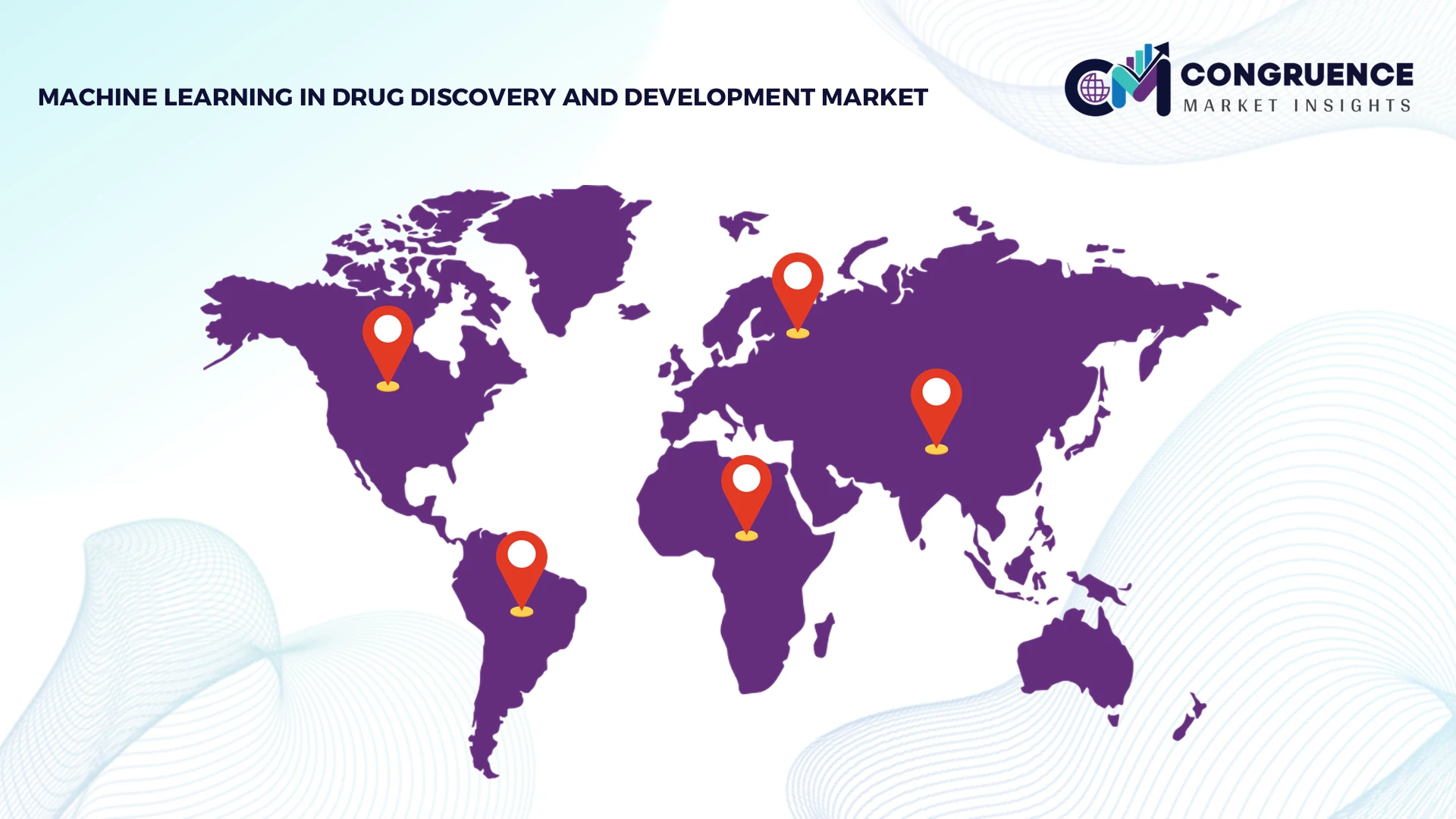
North America accounted for 43.5% of the global Machine Learning in Drug Discovery and Development Market in 2025, supported by established pharmaceutical research infrastructure, advanced computational capabilities, and extensive biotechnology investment. Pharmaceutical enterprises across the United States and Canada are integrating predictive molecular modeling, automated screening, and clinical analytics into established development pipelines. Biotechnology clusters in Boston, San Francisco, and Toronto facilitate collaboration between pharmaceutical manufacturers, technology developers, and academic institutions. In 2025, NVIDIA and IQVIA announced a collaboration to develop advanced AI solutions for clinical research and healthcare applications. Established pharmaceutical companies are increasingly consolidating computational research platforms to improve interoperability between discovery and clinical development functions. Regional competitiveness is reinforced by access to proprietary biological datasets, specialized research personnel, and scalable computing infrastructure, enabling commercially viable machine learning deployment.
U.S. Market Outlook: The United States leads regional demand through pharmaceutical R&D expenditure exceeding USD 100 billion annually, established biotechnology clusters, and extensive computational research capabilities. The FDA's 2025 draft guidance addressing AI-generated evidence in drug regulatory submissions strengthens the framework for model credibility assessment. Pharmaceutical developers are prioritizing explainable algorithms, standardized validation protocols, and traceable computational evidence to support regulatory decision-making.
Europe accounted for 27.5% of the global Machine Learning in Drug Discovery and Development Market in 2025, supported by established pharmaceutical manufacturers, advanced academic research networks, and expanding digital healthcare infrastructure. Germany, Switzerland, France, and the United Kingdom are integrating computational chemistry, predictive toxicology, and machine learning-enabled biomarker identification into pharmaceutical development programs. The European Health Data Space regulation, which entered into force in March 2025, establishes a framework for secondary healthcare data utilization, supporting future pharmaceutical research applications. Pharmaceutical companies are strengthening secure data-sharing arrangements and federated learning capabilities to address privacy requirements and fragmented research datasets. Regional investment increasingly favors interoperable computational platforms that connect pharmaceutical research institutions with technology providers. Europe's competitive advantage lies in combining established drug development expertise with structured data governance and multidisciplinary scientific collaboration.
United Kingdom Market Outlook: The United Kingdom maintains a strong position through its established genomics infrastructure, computational biology expertise, and pharmaceutical innovation ecosystem. In 2025, Isomorphic Labs secured USD 600 million in external funding to advance AI-enabled drug design and therapeutic development. The country's integration of academic research, biotechnology enterprises, and pharmaceutical partnerships supports commercialization of advanced molecular prediction technologies across complex therapeutic indications.
Asia-Pacific accounted for 22.5% of the global Machine Learning in Drug Discovery and Development Market in 2025, supported by expanding pharmaceutical research capabilities, competitive development costs, and accelerating digital infrastructure investment. China, Japan, South Korea, and India are strengthening computational drug discovery through automated laboratories, specialized biotechnology platforms, and pharmaceutical technology partnerships. Japan's RIKEN and Fujitsu are advancing next-generation computational infrastructure, including the FugakuNEXT supercomputer project targeting deployment around 2030. Indian contract research organizations are integrating machine learning into molecular screening, predictive pharmacology, and clinical data management services. Regional pharmaceutical companies are increasingly transitioning from conventional contract manufacturing toward research-intensive development models. Competitive research costs and expanding technical talent pools are attracting international pharmaceutical collaborations, positioning Asia-Pacific as a strategically important destination for computational discovery outsourcing and innovative therapeutic development.
China Market Outlook: China is strengthening its position through integrated biotechnology research facilities, automated molecular discovery platforms, and expanding pharmaceutical innovation capabilities. In 2025, clinical research involving Insilico Medicine's AI-discovered rentosertib demonstrated a mean forced vital capacity improvement of 98.4 mL at the highest evaluated dose. Chinese biotechnology enterprises are leveraging computational research infrastructure and international licensing partnerships to advance proprietary therapeutic candidates.
South America accounted for 3.5% of the global Machine Learning in Drug Discovery and Development Market in 2025, supported by pharmaceutical research modernization, expanding clinical trial capabilities, and increasing adoption of cloud-based analytical platforms. Brazil and Argentina represent important research centers, with universities and pharmaceutical organizations integrating computational biology, molecular modeling, and predictive analytics into therapeutic development programs. Brazil's 2024–2028 Artificial Intelligence Plan outlines approximately BRL 23 billion in proposed investment across computing infrastructure, innovation, and technology development. Pharmaceutical enterprises are leveraging cloud-based machine learning solutions to reduce dependence on expensive proprietary computing infrastructure. However, limited access to standardized biological datasets and specialized computational research personnel constrains large-scale deployment. Regional technology providers are strengthening academic partnerships and flexible service models, enabling smaller pharmaceutical developers to access advanced analytical capabilities without substantial infrastructure expenditure.
Brazil Market Outlook: Brazil leads regional pharmaceutical research activity through established institutions, domestic pharmaceutical manufacturing capabilities, and extensive public healthcare infrastructure. The country's Unified Health System serves a population exceeding 200 million, creating substantial potential for population-level healthcare analytics. Research organizations including Fiocruz are advancing bioinformatics and computational research capabilities, supporting machine learning applications in infectious disease research, therapeutic development, and public health innovation.
Middle East & Africa accounted for 3.0% of the global Machine Learning in Drug Discovery and Development Market in 2025, supported by government-led digital transformation, expanding biotechnology investment, and modernization of pharmaceutical research infrastructure. Saudi Arabia, the United Arab Emirates, and South Africa are developing computational research capabilities through international technology partnerships and specialized academic programs. In 2024, Microsoft announced a USD 1.5 billion investment in UAE-based G42, strengthening the broader regional AI and cloud computing ecosystem. Pharmaceutical research organizations are adopting scalable computational platforms for molecular analysis, genomic research, and predictive clinical applications. Limited specialized research infrastructure and dependence on international technology providers remain operational constraints across several markets. Regional investment priorities increasingly emphasize domestic scientific capabilities, secure healthcare data infrastructure, and collaborative pharmaceutical research to reduce dependence on externally developed technologies.
Saudi Arabia Market Outlook: Saudi Arabia is advancing pharmaceutical research capabilities through its National Biotechnology Strategy, which targets regional biotechnology leadership by 2030 and global leadership by 2040. Investments in genomic research, healthcare digitalization, and specialized scientific infrastructure are strengthening opportunities for machine learning-enabled therapeutic development. Domestic research institutions and international pharmaceutical partners are increasingly aligning computational research initiatives with national healthcare localization objectives.
Schrödinger, Recursion, Insilico Medicine, Isomorphic Labs, and NVIDIA compete through differentiated computational platforms, proprietary biological datasets, and pharmaceutical research partnerships. The market exhibits moderate concentration, with leading participants collectively accounting for an estimated 42.5% share. Schrödinger competes through physics-based molecular simulation, while Recursion and Insilico Medicine differentiate through integrated experimental automation and generative molecular design. Competitive differentiation increasingly centers on targeted screening workload reductions of 25–40% and lead optimization efficiency improvements of 20–30%. NVIDIA strengthens its positioning through accelerated computing infrastructure, while Isomorphic Labs advances protein modeling capabilities through pharmaceutical collaborations. Companies are expanding proprietary datasets, integrating automated laboratories, and establishing licensing agreements to secure recurring commercial opportunities. Competition is shifting from standalone predictive algorithms toward integrated discovery ecosystems. Restricted access to validated biological datasets and specialized computational expertise creates substantial entry barriers. Winning requires demonstrable clinical translation, scalable infrastructure, reproducible predictions, and commercially differentiated pharmaceutical partnerships across multiple therapeutic indications.
Schrödinger, Inc.
Recursion Pharmaceuticals, Inc.
Insilico Medicine
Isomorphic Labs
NVIDIA Corporation
IBM Corporation
BenevolentAI
Atomwise, Inc.
Iktos
XtalPi Holdings Limited
Evotec SE
Certara, Inc.
Dassault Systèmes SE
Owkin, Inc.
Supervised learning, deep neural networks, and physics-informed machine learning underpin contemporary computational drug discovery. Supervised algorithms support molecular activity prediction and toxicity classification, targeting 20–30% reductions in experimental screening workloads. Graph neural networks improve molecular representation by capturing structural relationships, targeting 15–25% improvements in selected predictive tasks. Pharmaceutical enterprises are integrating these technologies across target identification, compound screening, and pharmacokinetic assessment workflows.
Generative AI, protein language models, and reinforcement learning are transforming molecular design through simultaneous optimization of therapeutic activity, synthesizability, and safety characteristics. Compared with conventional sequential screening, generative molecular platforms target 30–50% reductions in selected compound exploration workloads. Automated laboratories increasingly connect experimental results with algorithmic retraining, enabling continuous optimization. Integrated discovery platforms provide biotechnology companies with operational advantages by reducing dependence on extensive physical compound libraries.
Between 2026 and 2028, multimodal foundation models, federated learning, and cloud-based computational infrastructure will strengthen pharmaceutical research integration. Federated architectures target 15–25% reductions in duplicated data preparation activities while supporting confidential research collaboration. Adoption will expand through enterprise licensing, pharmaceutical partnerships, and specialized computational services. Companies controlling validated biological datasets and experimental feedback infrastructure will benefit disproportionately, as competitive differentiation shifts toward reproducible predictions, regulatory credibility, and successful translation of computational discoveries into clinical development.
The Machine Learning in Drug Discovery and Development Market Report provides comprehensive analysis across four technology types: Supervised Learning, Unsupervised Learning, Deep Learning, and Reinforcement Learning. Application coverage includes Drug Discovery, Preclinical Development, Clinical Development, and Other Applications, while end-user analysis encompasses Pharmaceutical and Biotechnology Companies, Contract Research Organizations, and Academic and Research Institutes. The report evaluates generative molecular design, predictive toxicology, protein structure prediction, automated screening, and emerging computational research platforms.
Geographical coverage spans North America, Europe, Asia-Pacific, South America, and Middle East & Africa, examining regional adoption patterns, pharmaceutical research infrastructure, investment priorities, and regulatory developments. Competitive analysis profiles 14 major industry participants, assessing technological differentiation, strategic partnerships, platform expansion, and commercialization capabilities. The report supports investment planning, market entry, operational modernization, and competitive positioning by identifying emerging business opportunities and strategic market developments between 2026 and 2033.
| Report Attribute / Metric | Details |
|---|---|
| Market Revenue (2025) | USD 3,450.0 Million |
| Market Revenue (2033) | USD 23,643.7 Million |
| CAGR (2026–2033) | 27.2% |
| Base Year | 2025 |
| Forecast Period | 2026–2033 |
| Historic Period | 2021–2025 |
| Segments Covered | By Type
|
| Key Report Deliverables | Revenue Forecast; Market Trends; Growth Drivers & Restraints; Technology Insights; Segmentation Analysis; Regional Insights; Competitive Landscape; Regulatory & ESG Overview; Recent Developments |
| Regions Covered | North America; Europe; Asia-Pacific; South America; Middle East & Africa |
| Key Players Analyzed | Schrödinger, Inc.; Recursion Pharmaceuticals, Inc.; Insilico Medicine; Isomorphic Labs; NVIDIA Corporation; IBM Corporation; BenevolentAI; Atomwise, Inc.; Iktos; XtalPi Holdings Limited; Evotec SE; Certara, Inc.; Dassault Systèmes SE; Owkin, Inc. |
| Customization & Pricing | Available on Request (10% Customization Free) |




