
Reports
The Global Lutetium-177 Market was valued at USD 2375 Million in 2025 and is anticipated to reach a value of USD 8629.12 Million by 2033 expanding at a CAGR of 17.5% between 2026 and 2033. Growth is primarily driven by expanded PSMA-targeted radioligand therapy indications, rising clinical adoption of non-carrier-added Lu-177, and investments in high-purity isotope production and enriched ytterbium-176 recovery technologies.
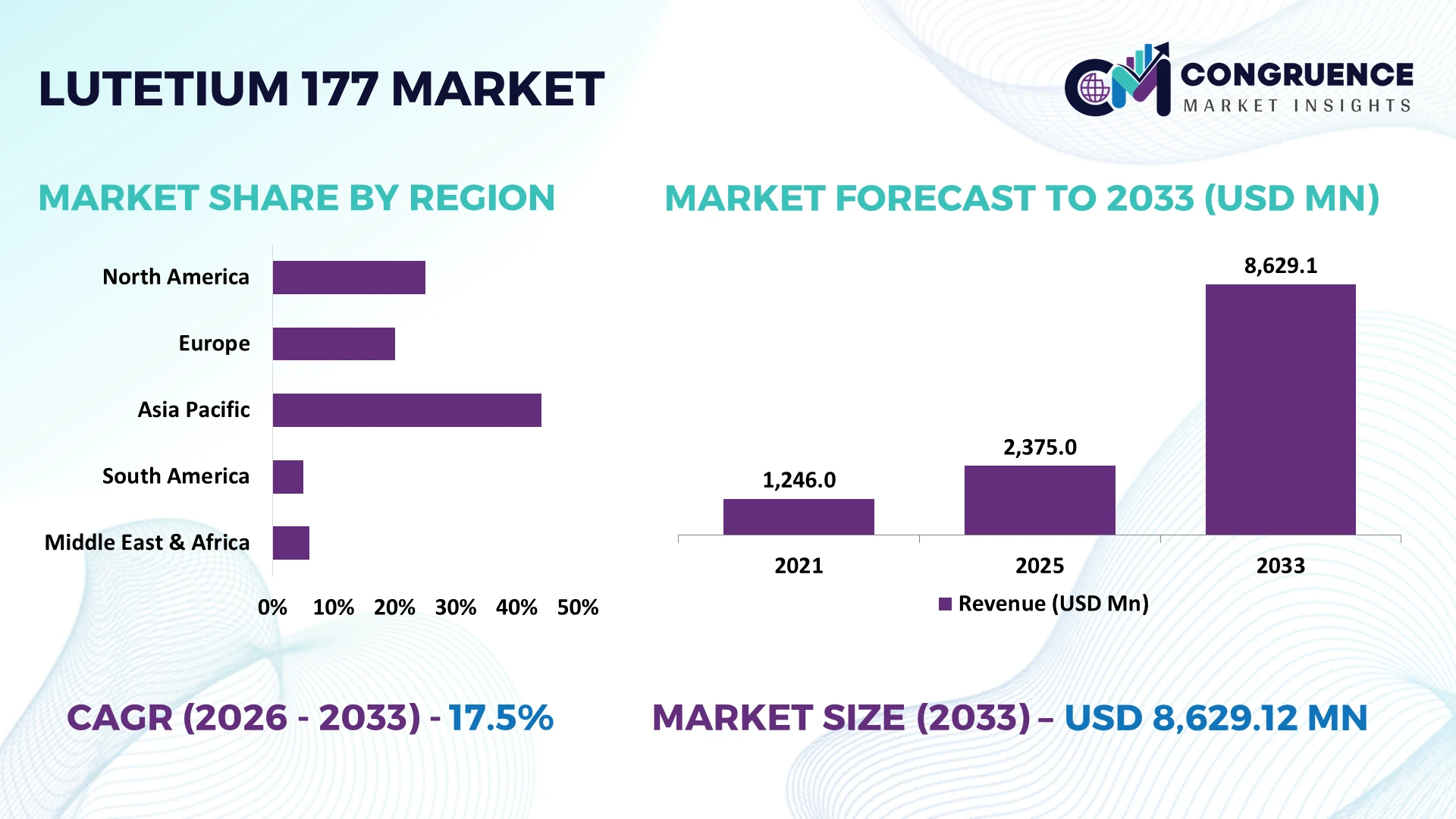
The United States maintains a leading position in the global Lutetium-177 ecosystem, supported by North America's approximately 80.95% market share in 2025 and expanding commercial radiopharmaceutical infrastructure. SHINE Technologies' Wisconsin facility is designed to produce approximately 100,000 doses annually, with ytterbium recovery exceeding 95%. Germany strengthens Europe's competitive position through ITM's large-scale GMP-grade isotope manufacturing capabilities and a €188 million investment supporting radiopharmaceutical development and production expansion. Meanwhile, Asia-Pacific is gaining strategic importance through nuclear medicine infrastructure development, particularly in China, Japan and India. The United States leads in commercial treatment infrastructure, while European manufacturers maintain significant influence over isotope production and supply.
Strategic implication: Manufacturers should prioritize US distribution capacity, European production partnerships and diversified ytterbium-176 procurement to secure long-term commercial competitiveness.
Market Size & Growth: The global Lutetium-177 Market reaches USD 2,375 million in 2025 and targets USD 8,629.12 million by 2033, at a 17.5% CAGR, supported by expanding radioligand therapy applications.
Top Growth Drivers: Earlier treatment eligibility (+200%), progression-risk reduction (59%) and ytterbium recovery exceeding 95% strengthen clinical adoption and production economics.
Short-Term Forecast: By 2027, commercial production infrastructure targets approximately 100,000 annual doses per major dedicated facility, strengthening supply availability.
Emerging Technologies: AI-assisted treatment planning, automated radiochemical processing and high-specific-activity non-carrier-added Lu-177 improve manufacturing precision and therapeutic delivery.
Regional Leaders: North America is projected at USD 2.73 billion, Europe at USD 450 million and Asia-Pacific at USD 170 million in 2026, reflecting expanding radioligand treatment infrastructure.
Consumer/End-User Trends: The 2025 FDA expansion of Pluvicto eligibility approximately triples the addressable patient population, accelerating hospital adoption of PSMA-targeted therapies.
Pilot/Case Example: In 2025, SHINE's Wisconsin production facility demonstrated commercial-scale Lu-177 manufacturing capabilities, targeting 100,000 doses annually and recovering over 95% of ytterbium.
Competitive Landscape: ITM commands an estimated 55.9% share of the commercial Lu-177 supply segment, with Novartis, SHINE Technologies, Eckert & Ziegler and Curium strengthening competition.
Regulatory & ESG Impact: GMP compliance, radionuclidic purity standards and greater than 95% ytterbium recovery reinforce manufacturing quality, material efficiency and regulatory readiness.
Investment & Funding: Approximately USD 20 million in reported SHINE capital expenditure and ITM's €188 million financing demonstrate investment in isotope manufacturing, production expansion and radiopharmaceutical development.
Innovation & Future Outlook: Next-generation radioligands, automated isotope separation and diversified Yb-176 sourcing are shifting competition toward integrated manufacturing, reliable distribution and advanced therapeutic applications.
The Lutetium-177 Market is increasingly shaped by prostate cancer and gastroenteropancreatic neuroendocrine tumor treatments, with hospitals and specialized nuclear medicine centers representing major consumption channels. Product innovation is concentrating on high-specific-activity non-carrier-added Lu-177, improved radiochemical purification and advanced PSMA-targeted radioligands. The 2025 US regulatory expansion of Pluvicto increased the eligible patient population approximately threefold, strengthening commercial treatment opportunities. An emerging trend is the localization of isotope manufacturing to reduce dependence on concentrated ytterbium-176 supply chains, particularly amid geopolitical trade uncertainties involving Russia. These developments position manufacturing resilience, clinical infrastructure and integrated radiopharmaceutical capabilities as decisive competitive priorities.
The Lutetium-177 Market is becoming strategically important as competition shifts from isotope manufacturing alone toward integrated radiopharmaceutical capabilities encompassing precursor processing, clinical-grade synthesis, treatment planning and patient delivery. This transformation is changing investment priorities, with manufacturers increasingly competing on production reliability, therapeutic quality and access to specialized nuclear medicine infrastructure. Supply-chain diversification and the development of commercially scalable radiolabeling processes are particularly important as healthcare providers seek predictable treatment schedules and consistent product quality.
A significant technological distinction exists between direct and indirect Lu-177 production. Indirect production using ytterbium-176 achieves specific activity exceeding 3,800 GBq/mg, compared with approximately 740–1,110 GBq/mg for direct lutetium irradiation, supporting higher-performance therapeutic formulations. Regional deployment also differs: France records approximately three-week diagnosis-to-treatment intervals, compared with nearly eight weeks in Germany and Spain, highlighting infrastructure and referral-efficiency gaps.
Over the next 2–3 years, investment priorities will center on automated synthesis, standardized dosimetry and expanded treatment capacity. A validated manufacturing protocol has demonstrated 98% average activity yield across more than 1,000 patient treatment cycles, establishing a practical model for scalable production. Companies are increasingly prioritizing technology licensing, clinical partnerships and regional manufacturing capabilities. Competitive advantage will increasingly depend on translating isotope production expertise into reliable, clinically integrated treatment platforms.
The integration of molecular imaging with targeted radionuclide treatment is strengthening the clinical foundation of the Lutetium-177 Market. An international survey of 95 theranostic centers found that 77% used Ga-68 PSMA-11 for treatment eligibility assessment, while 65% applied standardized response assessment criteria. This growing reliance on diagnostic precision improves patient selection and supports more consistent treatment pathways. In Germany and France, specialized imaging and nuclear medicine providers are strengthening collaborations with oncology departments to streamline referrals. Radiopharmaceutical companies are responding through diagnostic-tracer partnerships, clinical workflow integration and expanded manufacturing agreements. The non-obvious advantage lies in improving patient throughput through better diagnostic coordination rather than simply increasing isotope output.
Production scalability remains constrained by dependence on specialized irradiation infrastructure and limited access to enriched target materials. Research indicates that major irradiation reactors operate approximately 26–45 weeks annually, equivalent to roughly 50–87% of calendar availability, depending on maintenance and production scheduling. Indirect production also requires separation and recovery processes capable of handling approximately 20–40 Ci of Lu-177 per gram of irradiated ytterbium target. These operational requirements create scheduling bottlenecks, increase inventory-management complexity and expose manufacturers to production interruptions. European producers face additional pressure from dependence on imported enrichment services. Companies are addressing these constraints through multiyear precursor contracts, alternative irradiation partnerships and geographically diversified processing facilities. Securing predictable reactor access is increasingly as important as owning radiochemical production equipment.
Advanced radiolabeling technologies are creating opportunities to improve manufacturing economics and clinical flexibility. Validated synthesis protocols have demonstrated approximately 98% activity yield, while maintaining product stability for up to eight hours after production. Separately, emerging two-time-point imaging approaches have reduced dosimetry uncertainty to approximately 14%, strengthening opportunities for individualized treatment planning. Japan and South Korea offer attractive development environments for specialized radiochemistry, automated quality-control systems and integrated theranostic platforms. Companies can capture additional value by developing modular synthesis facilities that accommodate multiple Lu-177-based therapeutic molecules rather than relying on single-product manufacturing. Strategic R&D partnerships with hospitals and imaging technology providers will accelerate the commercialization of precision-dosing solutions and improve utilization of existing radiopharmacy infrastructure.
Long-term commercialization faces execution barriers associated with inconsistent dosimetry practices, workforce shortages and differences in clinical operating protocols. A recent UK assessment found that 75% of surveyed treatment centers did not routinely perform dosimetry imaging, primarily because of staffing and imaging-time limitations. Separately, a 2026 assessment found that only 52% of participating specialist centers reported confidence in their capacity to accommodate future treatment volumes without additional operational constraints. These gaps threaten treatment consistency, facility utilization and the scalability of personalized radioligand therapy. Manufacturers must invest in application-specific training, interoperable dosimetry software and standardized clinical operating procedures. Building integrated partnerships between radiopharmacies, nuclear medicine departments and oncology teams will be essential to maintaining dependable treatment delivery and sustainable market competitiveness.
Earlier-Line Treatment Expansion: The July 2025 FDA approval of Pluvicto for PSMA-positive metastatic castration-resistant prostate cancer before chemotherapy expanded its treatment positioning. This regulatory development is shifting clinical adoption toward earlier intervention, prompting manufacturers to strengthen commercial supply agreements, diagnostic coordination and hospital distribution networks.
Automated Radiopharmacy Operations: Radiopharmacies are increasingly adopting automated dispensing, dose calibration and quality-control systems to manage radioactive material with greater precision. Automation reduces manual handling requirements and improves batch traceability, encouraging manufacturers to integrate digital production records and automated synthesis modules into new facilities.
Treatment Protocol Standardization: Nuclear medicine providers are strengthening standardized patient preparation, radiation-safety monitoring and post-administration imaging procedures. Consistent protocols improve treatment scheduling and reduce operational variation between institutions. Manufacturers are responding through clinical training partnerships, standardized administration documentation and application-specific technical support.
Domestic Isotope Production Expansion: Supply-chain diversification is accelerating investments in localized isotope manufacturing and enriched precursor processing. India's expanding nuclear medicine infrastructure and China's radiopharmaceutical manufacturing investments are creating opportunities for domestic production partnerships. Companies are prioritizing regional processing capabilities, long-term precursor procurement and distribution arrangements to reduce dependence on international supply routes.
No-Carrier-Added Lutetium-177 Gains Technical Preference
No-Carrier-Added Lutetium-177 is gaining commercial preference because its higher specific activity supports advanced radiopharmaceutical formulations with minimal stable lutetium contamination. This characteristic makes it particularly suitable for precision-targeted therapies requiring consistent radiochemical performance. Carrier-Added Lutetium-177 retains relevance in established production processes, offering manufacturers an alternative where formulation requirements and processing economics favor conventional methods. The distinction influences purchasing decisions, production technology selection and investment in isotope-processing infrastructure.
Adoption of No-Carrier-Added Lutetium-177 is strengthening as manufacturers invest in enriched ytterbium-176 processing, advanced isotope separation and purification technologies. However, higher precursor-processing requirements create additional capital and operational considerations. Carrier-Added production remains strategically relevant for diversified manufacturing portfolios and customers with established formulation specifications. Producers are increasingly aligning technology investments with specific activity requirements, precursor availability and batch economics, creating opportunities for specialized isotope processors and technology licensing partnerships.
Prostate Cancer Anchors Therapeutic Utilization
Prostate Cancer remains the principal application for Lutetium-177, supported by established PSMA-targeted radioligand therapies and molecular imaging-based patient selection. Its commercial importance reflects validated treatment protocols and integration into advanced oncology pathways. Neuroendocrine Tumors represent another established application through somatostatin-receptor-targeted therapies, particularly Lu-177 DOTATATE. Other Solid Tumors constitute an emerging category, with clinical research investigating additional molecular targets that enable selective radionuclide delivery. These differences create distinct commercialization requirements across established and investigational therapeutic indications.
Neuroendocrine Tumors offer attractive opportunities through improvements in peptide-receptor targeting, treatment personalization and clinical protocol standardization. Meanwhile, research into other solid malignancies is encouraging pharmaceutical developers to expand radioligand pipelines beyond conventional prostate and neuroendocrine indications. Companies are prioritizing clinical collaborations, target-specific molecule development and manufacturing flexibility to accommodate different therapeutic compounds. The strategic opportunity lies in leveraging established isotope-production platforms across multiple validated indications, reducing dependence on a single oncology treatment category.
Specialty Cancer Centers Strengthen Institutional Demand
Specialty Cancer Centers represent an important end-user category because they combine oncology expertise, molecular imaging access and dedicated radionuclide treatment capabilities. Their purchasing requirements are closely associated with treatment volumes, multidisciplinary clinical coordination and reliable radiopharmaceutical scheduling. Hospitals remain essential institutional buyers because they integrate nuclear medicine with broader oncology services, inpatient care and diagnostic infrastructure. Nuclear Medicine Centers specialize in isotope handling, radiopharmacy operations and therapeutic administration, while Diagnostic and Research Institutes support tracer development, clinical validation and experimental radiopharmaceutical applications.
Nuclear Medicine Centers offer an important expansion opportunity as healthcare providers establish dedicated theranostic services and upgrade radiopharmacy infrastructure. Their purchasing priorities increasingly include automated dose preparation, radiation monitoring and specialized equipment compatibility. Diagnostic and Research Institutes also create demand for research-grade isotopes and customized radiolabeling capabilities, although their procurement patterns differ from routine clinical consumption. Manufacturers are responding through institution-specific supply agreements, technical training, customized packaging and collaborations with healthcare networks. Competitive positioning increasingly depends on supporting the complete institutional workflow, from isotope preparation and quality assurance to treatment delivery.
North America accounted for the largest market share at approximately 49.4% in 2025; however, Asia-Pacific is expected to register the fastest growth between 2026 and 2033.
Commercial radioligand leadership shifts toward integrated isotope supply and treatment delivery
North America maintains the strongest commercial position through established radiopharmaceutical distribution, advanced oncology networks and extensive reimbursement infrastructure. The United States anchors regional demand through commercial adoption of PSMA-targeted therapies, specialized nuclear pharmacies and established relationships between pharmaceutical manufacturers and healthcare providers. Canada contributes through nuclear research infrastructure and isotope-production capabilities, particularly in Ontario. The region's competitive advantage increasingly depends on coordinating isotope availability with radiopharmacy processing, regulatory compliance and treatment-center scheduling. SHINE Technologies' Wisconsin manufacturing project, designed for approximately 100,000 patient doses annually, illustrates the scale of industrial investment supporting supply resilience. Manufacturers are prioritizing production qualification, distribution agreements and additional processing capacity to strengthen commercial reliability.
United States Market Outlook: The United States remains the principal commercial and technological center, supported by FDA-regulated radiopharmaceutical development, advanced nuclear medicine facilities and established pharmaceutical distribution networks. Investments in domestic isotope production and radioligand manufacturing strengthen supply-chain control. Companies are also expanding clinical partnerships to improve treatment accessibility and coordinate diagnostic imaging with therapeutic administration.
Production modernization and cross-border isotope partnerships reshape European supply
Europe holds an estimated 31.83% share of the global Lutetium-177 Market in 2025, supported by established radiopharmaceutical manufacturing, specialist reactor infrastructure and cross-border isotope distribution. Germany, the Netherlands, Belgium and France form important industrial centers for isotope processing and pharmaceutical-grade supply. A notable structural development is the expansion of Curium's production operations at Petten, where dedicated manufacturing lines began operating in 2024. The Netherlands' High Flux Reactor partnership network and Belgium's irradiation infrastructure strengthen production continuity. European manufacturers are also prioritizing GMP compliance, precursor recovery and additional irradiation agreements. The commercial advantage increasingly comes from coordinated production across multiple facilities, allowing suppliers to diversify operational exposure and serve pharmaceutical customers across national borders.
Germany Market Outlook: Germany maintains a strong position through ITM's specialized isotope manufacturing capabilities, pharmaceutical research infrastructure and established radiopharmaceutical development ecosystem. ITM's proposed combination with Telix, announced in September 2026, represents a significant strategic shift toward vertical integration across isotope production, therapeutic development and global distribution. The transaction carries an upfront consideration of USD 1.65 billion, subject to shareholder and regulatory approvals, demonstrating the strategic value attached to manufacturing control.
Domestic isotope manufacturing accelerates regional supply independence
Asia-Pacific accounted for approximately 14.82% of the global Lutetium-177 Market in 2025 and represents an important emerging manufacturing and deployment center. China is strengthening commercial production through reactor-based isotope irradiation, while India is expanding domestic radiopharmaceutical supply through government-supported nuclear infrastructure. Australia contributes specialized production capabilities through ANSTO's OPAL reactor, supporting international isotope supply. China's China Isotope & Radiation Corporation completed a carrier-free Lu-177 production line with annual capacity of approximately 10,000 curies, strengthening its domestic manufacturing position. India's production expansion and China's reactor modernization are encouraging pharmaceutical suppliers to establish localized procurement and distribution arrangements. The regional competitive advantage increasingly depends on combining nuclear infrastructure, precursor processing and growing hospital adoption rather than relying exclusively on imported therapeutic isotopes.
China Market Outlook: China is emerging as a strategically important production center through CNNC's commercial reactor irradiation capabilities and domestic isotope-processing investments. Its dedicated carrier-free manufacturing infrastructure provides a foundation for supplying pharmaceutical developers and nuclear medicine institutions. Continued investment in production qualification, radiochemical purification and distribution capabilities will strengthen China's position in the international isotope supply chain.
Domestic production initiatives target import dependence
South America remains an emerging Lutetium-177 market, with Brazil representing its most significant institutional and manufacturing center. Market development is shaped by public nuclear research infrastructure, oncology treatment accessibility and dependence on international radiopharmaceutical suppliers. Brazil's IPEN-CNEN has restarted continuous operation of its IEA-R1 research reactor through a partnership with the Brazilian Navy, creating a domestic production pathway for Lu-177. The development is particularly important because the country imported approximately USD 50 million of medical radioisotopes, including Lu-177, Mo-99 and I-131, during 2023–2024. Argentina also maintains relevant nuclear research infrastructure through CNEA. However, production scale, specialized personnel and commercial distribution remain important constraints. Suppliers are increasingly positioned to benefit from technology transfer, public-sector partnerships and localized radiopharmacy capabilities.
Brazil Market Outlook: Brazil offers the strongest near-term manufacturing opportunity through IPEN-CNEN's collaboration with the Navy. Continuous IEA-R1 reactor operations and successful initial PSMA radiolabeling provide a foundation for domestic therapeutic isotope production. The initiative also supports workforce development and reduces exposure to international procurement disruptions, creating opportunities for equipment suppliers and radiopharmaceutical technology partners.
Specialized nuclear infrastructure drives localized therapeutic access
The Middle East & Africa market remains comparatively fragmented, with South Africa providing an established radiopharmaceutical production base and Egypt developing additional isotope-manufacturing capabilities. NTP Radioisotopes operates integrated irradiation, radiochemical processing and radiopharmaceutical facilities at Pelindaba, supplying products including Lu-177 DOTATATE and PSMA. Its SAFARI-1 research reactor operates for more than 300 days annually, supporting a substantial industrial operating platform. Egypt is also strengthening technical capabilities through research into direct and indirect Lu-177 production using its ETRR-2 reactor. These developments are creating opportunities for localized manufacturing, research partnerships and regional distribution. However, uneven nuclear medicine infrastructure and limited specialist workforce availability continue to restrict broader commercial deployment. Companies are prioritizing institutional partnerships and technology transfer to strengthen market access.
South Africa Market Outlook: South Africa maintains a strategic advantage through NTP's integrated isotope-production and radiopharmaceutical distribution infrastructure. Its established reactor operations, radiochemical processing facilities and specialized logistics capabilities support both domestic treatment programs and international supply relationships. Expansion of Lu-177 therapeutic production and technical collaboration with healthcare institutions will strengthen its position as a regional manufacturing and distribution hub.
Competition is divided between therapy owners, isotope manufacturers and regional radiopharmacy suppliers. Novartis competes with emerging radioligand developers such as Telix, while ITM, Curium, Eckert & Ziegler, SHINE and Isotopia compete on GMP-grade isotope availability, specific activity and delivery reliability. CNNC, ANSTO and NTP strengthen national and regional supply positions. The structure remains difficult to quantify: public disclosures do not provide an audited top-five share, and modeled estimates place ITM near 55.9% and Eckert & Ziegler near 12.6%, but these are not directly verified shipment shares. Competition therefore centers on secure precursor access, reactor irradiation, purification yield and distribution speed. ITM's proposed combination with Telix illustrates vertical integration across isotope production and therapeutic pipelines. Suppliers also compete through multi-year offtake agreements, regional facilities and customized GMP services. Entry barriers include reactor access, enriched ytterbium procurement, hot-cell infrastructure and regulatory qualification. Winners will combine dependable supply, validated quality and clinical-market access.
Novartis AG
Telix Pharmaceuticals Limited
ITM Isotope Technologies Munich SE
Curium
Eckert & Ziegler SE
SHINE Technologies
Isotopia Molecular Imaging Ltd.
China Isotope & Radiation Corporation
ANSTO
NTP Radioisotopes SOC Ltd.
BWXT Medical Ltd.
Nusano Inc.
The technology frontier is moving from conventional carrier-added production toward non-carrier-added Lu-177, where high specific activity supports radioligand formulations with tighter control of stable lutetium content. ITM's access to half of the Institut Laue-Langevin's available high-flux irradiation capacity illustrates how reactor partnerships and ytterbium-176 recovery are being integrated to secure precursor efficiency. This benefits isotope specialists with qualified irradiation and separation assets, not firms with downstream brands.
Automated cassette-based synthesis is advancing. In a comparative study of more than 300 preparations, manual Lu-177 labelling recorded a 98.3% mean radiochemical yield versus 83.1% for automated synthesis, while measured hand exposure was 0.02 versus 0.01 mSv/GBq. Automation therefore offers process containment and repeatability, but does not automatically improve yield; companies must optimize cassette chemistry and validation before scaling. Digital dosimetry and imaging-linked treatment planning connect isotope supply to clinical workflow.
Adoption is visible: Novartis reported five US radioligand manufacturing sites operational or under construction in 2026 and delivery to US treatment sites within five days. India's Lu-177 output reached 976 Ci in 2025–26. During 2026–2028, competitive advantage will come from validated automation, reliable n.c.a. supply, integrated diagnostics and qualified regional distribution. Manufacturers should invest now in process validation and redundant precursor access.
July 2026: Novartis secured FDA approval for Pluvicto with androgen-receptor pathway inhibition in metastatic hormone-sensitive prostate cancer; the trial showed a 33% lower progression-or-death risk, broadening treatment access and reinforcing investment in radioligand capacity for eligible patients. Source: novartis.com
June 2025: ITM and Institut Laue-Langevin renewed their production collaboration, securing ITM priority access to 50% of available High-Flux Reactor neutron-irradiation capacity for non-carrier-added Lu-177 and strengthening long-term precursor-efficient supply for clinical and commercial production planning globally. Source: ill.eu
February 2026: Affibody signed a letter of intent naming SHINE Technologies an additional non-carrier-added Lu-177 supplier for ABY-271, its Phase 1 HER2-targeted program, diversifying clinical isotope sourcing ahead of potential pipeline expansion and commercial supply planning needs. Source: affibody.se
May 2026: SHINE Technologies received centralized European marketing authorization for Ilumira, its non-carrier-added Lu-177 produced in Wisconsin; the single EU-wide clearance opens commercial access across member states and now advances its integrated isotope platform beyond US supply. Source: prnewswire.com
The Lutetium-177 Market Report evaluates the industry across Carrier-Added and No-Carrier-Added Lutetium-177, covering production routes, precursor requirements, radiochemical processing and supply-chain dependencies. Application analysis examines Prostate Cancer, Neuroendocrine Tumors and Other Solid Tumors, while end-user coverage includes Hospitals, Specialty Cancer Centers, Nuclear Medicine Centers, and Diagnostic and Research Institutes. The report assesses how clinical adoption, manufacturing qualification and treatment infrastructure influence purchasing patterns and positioning.
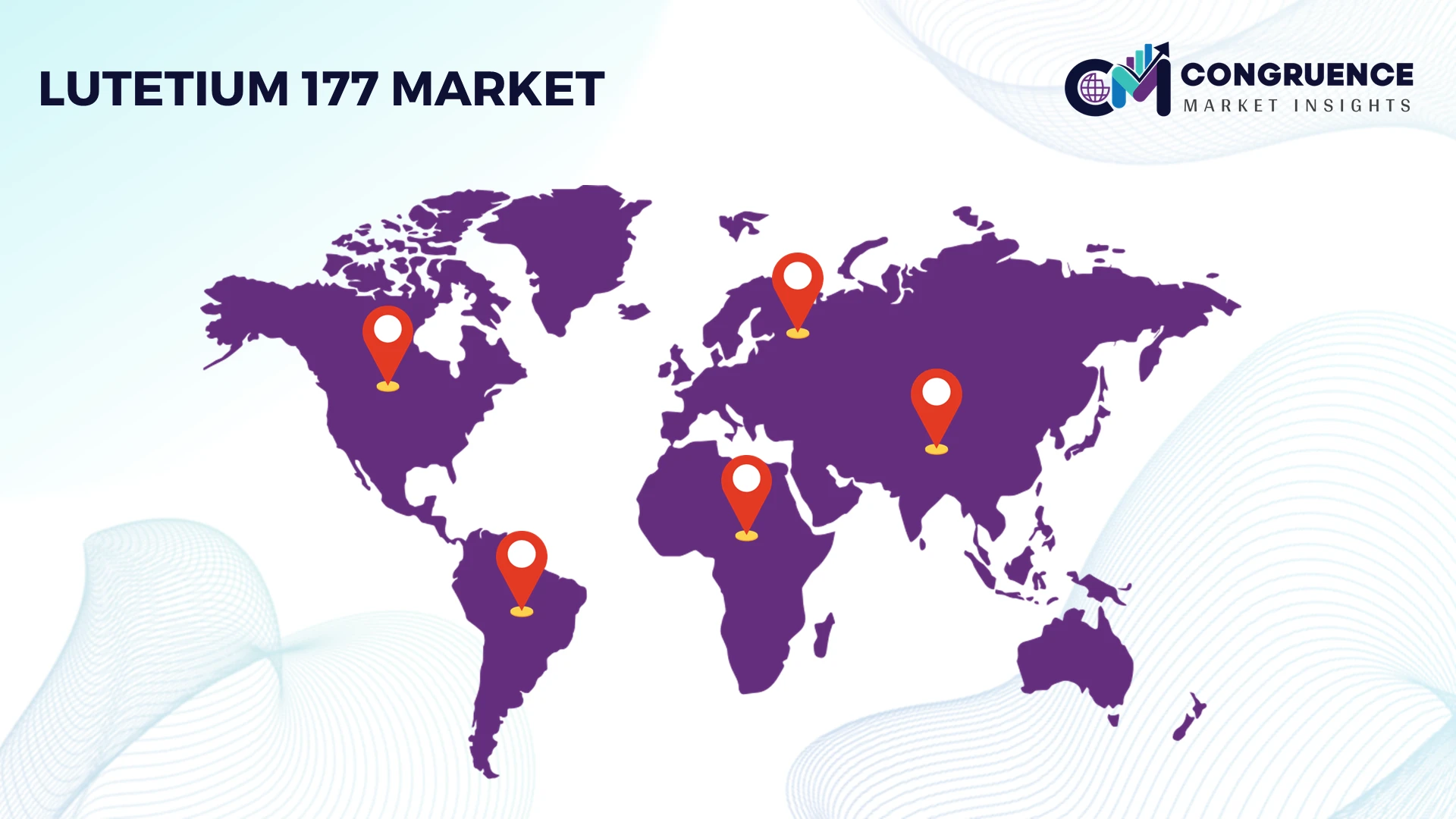
Geographic coverage spans North America, Europe, Asia-Pacific, South America, and the Middle East & Africa, with country-level analysis of production capacity, deployment and regulatory conditions. Technology coverage includes high-specific-activity isotope production, ytterbium recovery, automated synthesis, quality control and theranostic integration. Competitive analysis evaluates suppliers, partnerships, capacity expansion and market-entry barriers. These findings support investment screening, manufacturing localization, partnership selection, expansion planning and competitive positioning, while identifying priorities shaping the market through 2033.
| Report Attribute/Metric | Report Details |
|---|---|
Market Revenue in 2025 | USD 2375 Million |
Market Revenue in 2033 | USD 8629.12 Million |
CAGR (2026 - 2033) | 17.5% |
Base Year | 2025 |
Forecast Period | 2026 - 2033 |
Historic Period | 2021 - 2025 |
Segments Covered | By Type
By Application
By End-User
|
Key Report Deliverable | Revenue Forecast, Growth Trends, Market Dynamics, Segmental Overview, Regional and Country-wise Analysis, Competition Landscape |
Region Covered | North America, Europe, Asia-Pacific, South America, Middle East, Africa |
Key Players Analyzed | Novartis AG, Telix Pharmaceuticals Limited, ITM Isotope Technologies Munich SE, Curium, Eckert & Ziegler SE, SHINE Technologies, Isotopia Molecular Imaging Ltd., China Isotope & Radiation Corporation, ANSTO, NTP Radioisotopes SOC Ltd., BWXT Medical Ltd., Nusano Inc. |
Customization & Pricing | Available on Request (10% Customization is Free) |




