
Reports
The Global Liposome Drug Delivery Market was valued at USD 5,804.2 Million in 2025 and is anticipated to reach a value of USD 9,898.4 Million by 2033 expanding at a CAGR of 6.9% between 2026 and 2033. Growth is driven by oncology-focused liposomal reformulations, increasing use of long-circulating PEGylated systems, and expansion of complex injectable manufacturing as pharmaceutical developers seek improved drug exposure with lower systemic toxicity.
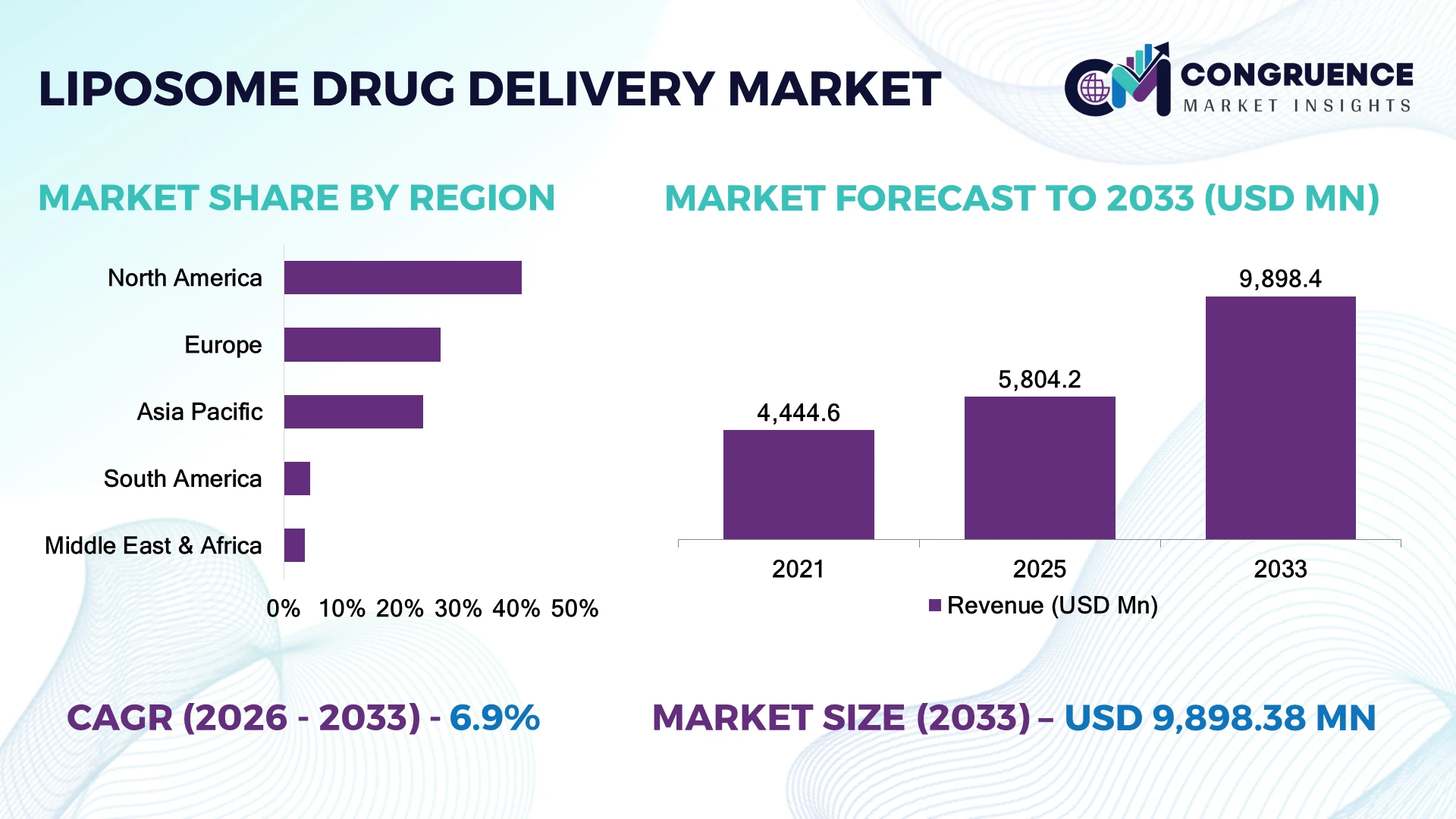
North America held approximately 40.8% of global liposome drug delivery demand in 2025, led by U.S. oncology development, established hospital procurement, and advanced formulation infrastructure. The U.S. remains materially ahead of Asia-Pacific on commercialization maturity, while Asia-Pacific is expanding manufacturing capacity across China and India. PEGylated stealth technology represented about 60.7% of demand, demonstrating the commercial importance of prolonged circulation and formulation stability.
The strategic priority is to invest in scalable liposomal manufacturing, complex-product development, and differentiated formulations rather than compete solely through conventional generic production.
Market Size & Growth: USD 5.80 billion in 2025 to USD 9.90 billion by 2033 at 6.9% CAGR, supported by oncology reformulation and advanced injectable platforms.
Top Growth Drivers: Oncology applications 46.0%; PEGylated technology 60.7%; intravenous delivery 74.6%.
Short-Term Forecast: By 2028, automated formulation and process controls are positioned to reduce batch variability by 5–8% and improve manufacturing consistency.
Emerging Technologies: AI-assisted formulation optimization, PEGylated stealth liposomes, continuous processing, and advanced lipid architectures are reshaping development workflows.
Regional Leaders: North America is projected near USD 4.1 billion; Europe around USD 2.5 billion; Asia-Pacific approximately USD 2.0 billion, with Asia-Pacific showing the strongest manufacturing expansion.
Consumer/End-User Trends: Hospitals represented approximately 62% of end-user demand, reflecting the concentration of intravenous oncology and anti-infective liposomal therapies.
Pilot/Case Example: In 2026, a phase 1b/2 pancreatic-cancer study enrolled 31 treated patients using a liposomal KRAS-G12D inhibitor, demonstrating continued clinical expansion beyond established formulations.
Competitive Landscape: Liposomal doxorubicin led with approximately 35.9% share, competing with liposomal paclitaxel, amphotericin B, irinotecan, and combination formulations.
Regulatory & ESG Impact: More than 10 liposome drug products have received U.S. approvals, while complex-product controls increasingly favor standardized, lower-waste manufacturing processes.
Investment & Funding: Pharmaceutical investment is shifting toward complex generics, oncology nanomedicines, and platform partnerships, with manufacturing localization becoming a strategic supply-chain priority.
Innovation & Future Outlook: Next-generation liposomes, immunoliposomes, combination payloads, and non-oncology applications are shifting competition toward targeted delivery performance, formulation reproducibility, and scalable commercialization.
The Liposome Drug Delivery Market is concentrated in oncology, anti-infective therapy, pain management, and emerging vaccine applications. Liposomal doxorubicin alone represented approximately 35.9% of 2025 product demand, while PEGylated systems accounted for about 60.7%. In 2026, clinical programs are extending liposomal platforms into targeted molecular therapies, while manufacturers prioritize reproducible sterile processing and localized supply chains.
Liposome drug delivery has become strategically important because it converts established active pharmaceutical ingredients into differentiated products with improved pharmacokinetics, controlled exposure, and potentially lower toxicity. The commercial base is already validated: U.S. regulators list multiple approved liposomal products spanning oncology, infectious disease, pain management, and other indications. This established regulatory history reduces technology risk while increasing competition around formulation quality and manufacturing execution.
The key industry shift is toward more reproducible, scalable complex-product manufacturing. PEGylated stealth systems represented about 60.7% of the market in 2025, demonstrating the commercial maturity of long-circulating architectures, while cubosome-based and other advanced lipid systems are moving toward higher-value applications. Compared with conventional formulation approaches, automated process control and continuous manufacturing can reduce batch variability by roughly 5–8% and improve production consistency. North America leads commercialization, whereas China and India increasingly strengthen cost-efficient formulation and manufacturing capacity.
Over the next 2–3 years, companies will prioritize platform technologies that shorten formulation development, improve encapsulation consistency, and support multi-product manufacturing. A practical example is the expansion of liposomal oncology pipelines into molecularly targeted therapies, including a 2026 clinical study of a liposomal KRAS-G12D inhibitor. Companies that combine formulation IP, GMP manufacturing, regulatory expertise, and strategic pharmaceutical partnerships will hold the strongest competitive position.
Oncology remains the principal demand engine, with cancer therapies representing approximately 46% of liposome drug delivery applications and intravenous administration accounting for nearly 75% of use. PEGylated formulations represent about 61% of technology demand, reflecting preference for prolonged circulation and controlled drug exposure. U.S. pharmaceutical developers are increasingly extending established APIs into liposomal formulations to improve therapeutic differentiation and lifecycle value. This shift increases demand for sterile, scalable encapsulation and high-containment manufacturing. Companies are responding through formulation platforms, CDMO partnerships, and investment in specialized fill-finish infrastructure. The non-obvious advantage is lifecycle management: liposomal reformulation can create differentiated products without requiring discovery of an entirely new active molecule.
Liposomal products require tighter control of particle size, encapsulation efficiency, lipid composition, sterility, and release characteristics than conventional injectable formulations. Manufacturing variability of even 5–10% in critical attributes can trigger additional analytical investigation or batch-release complexity. Lipid excipients and specialized processing equipment also create supply dependencies, while sterile manufacturing capacity remains concentrated among qualified facilities. China and India offer cost advantages, but multinational developers still require extensive process validation before transferring complex formulations. Companies are mitigating exposure through dual sourcing, longer procurement contracts, localized lipid inventories, and CDMO relationships. The key constraint is not lipid availability alone; it is maintaining equivalent critical-quality attributes after scale-up or site transfer.
Next-generation liposomes are opening higher-value opportunities in targeted oncology, nucleic-acid delivery, vaccines, and difficult-to-formulate therapeutics. PEGylated architectures already represent roughly 61% of technology demand, while targeted and ligand-functionalized systems remain a smaller but strategically important segment. AI-assisted formulation screening can reduce experimental iterations by approximately 10–15% by prioritizing lipid ratios and process parameters before laboratory validation. U.S. and European developers are increasingly combining liposome platforms with molecular targeting and combination payloads. Companies are investing in proprietary lipid libraries, university partnerships, and specialized CDMO capacity. A particularly attractive opportunity is platform reuse: one validated manufacturing architecture can support multiple molecules, improving development economics beyond individual-product commercialization.
The central execution challenge is transferring laboratory-scale liposome formulations into reproducible commercial batches while preserving particle-size distribution, encapsulation efficiency, surface characteristics, and sterility. Scale changes can produce approximately 5–8% variation in critical process parameters unless mixing, temperature, flow, and lipid hydration are tightly controlled. Automated process monitoring can reduce batch variability by roughly 5–8%, but requires specialized equipment and experienced formulation teams. India and China are expanding manufacturing capabilities, yet multinational customers continue to prioritize validated quality systems and regulatory comparability. Companies must therefore invest in process analytical technology, digital batch monitoring, workforce specialization, and redundant manufacturing sites. Long-term competitiveness will depend on reproducibility across facilities, not simply laboratory formulation performance.
Stealth Formulations Remain Dominant: PEGylated liposomes account for approximately 61% of technology demand, reflecting sustained preference for longer circulation and controlled exposure. Manufacturers are refining lipid composition and surface characteristics to improve stability, while oncology developers increasingly use established platforms for differentiated injectable products.
Targeted Delivery Gains Clinical Focus: Targeted and ligand-functionalized systems are moving beyond conventional formulations, with developers pursuing approximately 10–15% improvements in formulation-screening efficiency through computational optimization. U.S. and European companies are pairing targeting ligands with oncology payloads, increasing formulation complexity but creating stronger product differentiation.
Manufacturing Moves Toward Automation: Automated monitoring and process controls are gaining importance as manufacturers seek 5–8% lower batch variability. Digital control of mixing, temperature, pressure, and particle-size parameters is reducing dependence on manual intervention. CDMOs are consequently expanding specialized sterile processing and analytical capabilities.
Platform Reuse Shapes Development Strategy: Pharmaceutical companies increasingly prioritize reusable liposome platforms rather than molecule-specific processes. A validated formulation architecture can support multiple candidates, potentially reducing development iterations by 10–15%. The non-obvious shift is toward platform economics, encouraging partnerships between drug developers, lipid suppliers, and specialized manufacturing organizations.
PEGylated liposomes accounted for approximately 61% of the liposome drug delivery market in 2025, maintaining leadership because their extended circulation, formulation stability, and established clinical validation support scalable oncology commercialization. Conventional liposomes represented roughly 25%, retaining relevance where simpler manufacturing and cost efficiency outweigh the benefits of prolonged circulation. Targeted liposomes held a smaller share but are the fastest-growing type, as ligand-functionalized architectures increasingly support tumor-specific delivery and complex therapeutic payloads. Companies are therefore shifting R&D toward formulations that improve tissue selectivity without compromising manufacturability.
Targeted liposomes can improve cellular uptake or localization by approximately 10–20% in selected experimental systems, while automated formulation optimization can reduce development iterations by around 10–15%. Stimuli-responsive and immunoliposome platforms remain emerging niches, requiring stronger validation but offering higher differentiation. The strategic shift is from broadly distributed drug carriers toward application-specific delivery systems. Pharmaceutical developers are partnering with specialized formulation companies and CDMOs to secure lipid expertise, analytical characterization, and scalable sterile manufacturing.
FDA research in FY2025 advanced characterization methods for lipid-based nanomaterials and supported approvals involving complex liposome products, demonstrating increasing regulatory capability for evaluating critical attributes such as particle characteristics and product performance.
Oncology represented approximately 46% of liposome drug delivery applications in 2025, reflecting established use of liposomal doxorubicin, irinotecan, cytarabine combinations, and other chemotherapy formulations. Anti-infective applications accounted for roughly 18%, supported by liposomal amphotericin B, while pain management and other injectable therapies maintain established but smaller demand pools. Oncology remains dominant because liposomal encapsulation can alter pharmacokinetics and toxicity profiles while extending established drug platforms into differentiated formulations.
Targeted oncology and combination therapy represent the fastest-growing application direction, with developers increasingly pairing liposomal carriers with precision payloads and multi-agent regimens. Clinical development activity is expanding beyond mature products; a Phase III trial initiated in December 2025 is evaluating liposomal irinotecan in a 662-patient metastatic pancreatic-cancer study. This shift is strengthening demand for reproducible encapsulation, release-control systems, and scalable sterile manufacturing. Companies are expanding clinical partnerships and formulation platforms to move from single-product applications toward reusable delivery architectures.
A Phase III clinical study initiated in December 2025 is enrolling an estimated 662 patients to evaluate liposomal irinotecan in first-line metastatic pancreatic cancer, illustrating continued expansion of liposomal technology into earlier treatment settings.
Pharmaceutical and biotechnology companies represented approximately 58% of liposome drug delivery demand in 2025, making them the leading end-user because they control formulation development, clinical pipelines, lifecycle management, and commercialization. Hospitals and specialty treatment centers accounted for approximately 28%, driven by administration of established intravenous liposomal therapies, while research institutions represented the remaining demand through formulation development and translational studies. Pharmaceutical buyers prioritize intellectual property, reproducibility, regulatory readiness, and scalable manufacturing rather than lowest unit cost.
Specialized CDMOs are the fastest-growing end-user group within the commercial ecosystem as developers outsource complex formulation, analytical testing, sterile fill-finish, and process validation. Outsourced activity is increasingly attractive where internal facilities lack specialized liposome capabilities, with external manufacturing potentially reducing infrastructure requirements by approximately 20–30% for individual development programs. Companies are responding through technology-transfer partnerships, dedicated nanomedicine suites, and multi-product manufacturing platforms. The competitive implication is clear: CDMOs with validated analytical methods and scale-up expertise are gaining influence over formulation commercialization decisions.
FDA reported that the first generic bupivacaine liposome injectable was approved in July 2024 after substantial scientific work on physical, chemical, and structural characterization, highlighting the specialized expertise required for complex liposomal products.
North America accounted for the largest market share at approximately 40.8% in 2025 however, Asia-Pacific is expected to register the fastest growth, expanding at a CAGR of approximately 8.0% between 2026 and 2033.
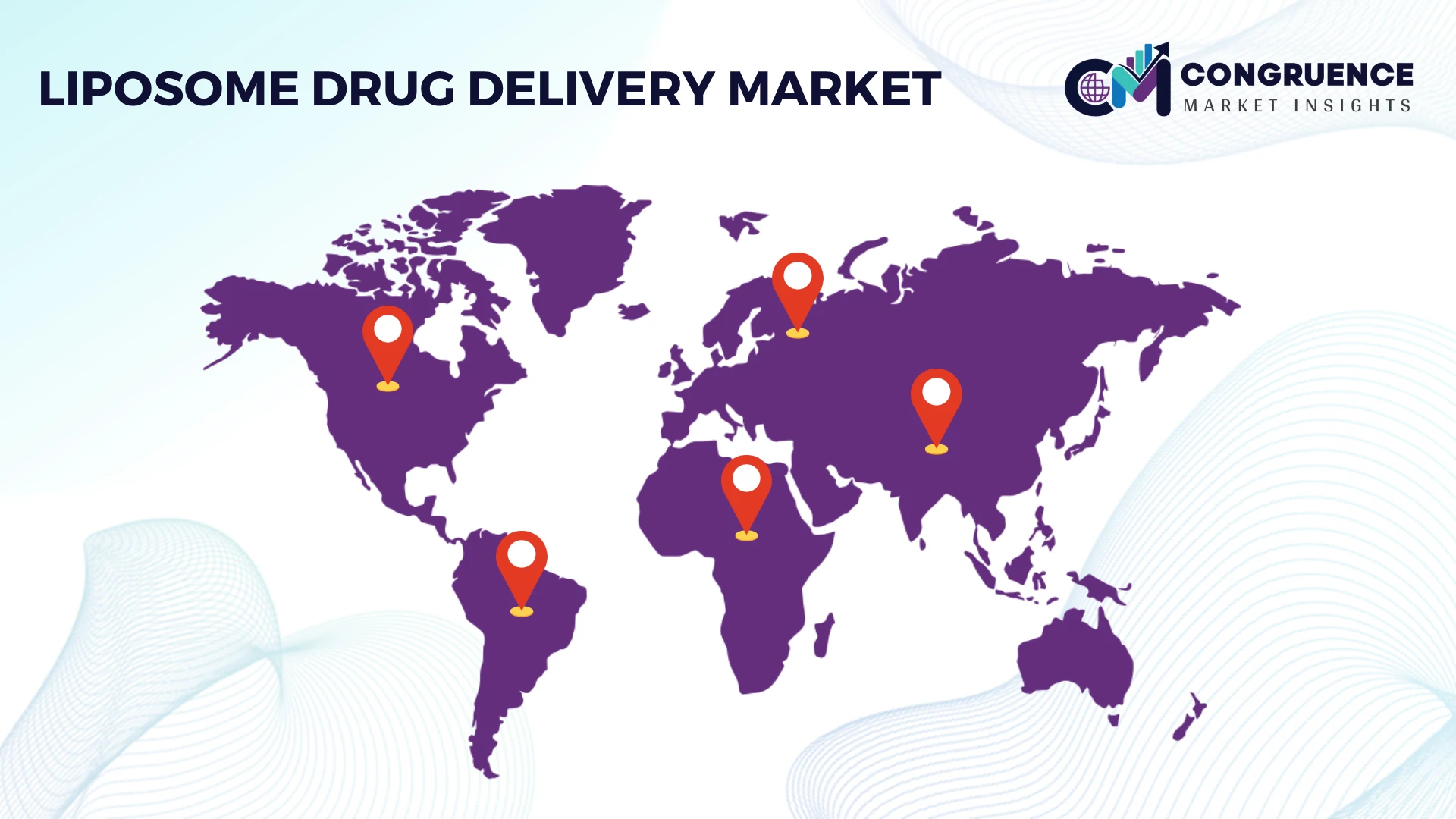
North America represented approximately 40.8% of global liposome drug delivery demand in 2025, supported by established oncology commercialization, complex injectable infrastructure, and concentrated biopharmaceutical R&D. The U.S. accounts for the overwhelming majority of regional activity, with demand centered on liposomal oncology products and increasingly sophisticated targeted-delivery programs. More than 10 liposome-based products have received U.S. regulatory approvals, creating a mature clinical and manufacturing ecosystem. Pharmaceutical companies are investing in specialized analytical characterization, sterile fill-finish, and scalable lipid-processing capabilities. CDMO partnerships are also expanding as developers seek faster access to validated nanomedicine manufacturing without building dedicated facilities. The region's competitive advantage increasingly lies in regulatory experience and commercialization infrastructure rather than formulation discovery alone.
U.S. Market Outlook: The U.S. remains the most strategically important country because of its concentration of biotechnology companies, oncology pipelines, clinical infrastructure, and specialized manufacturing capacity. Liposomal therapies are increasingly being incorporated into complex oncology development programs, while pharmaceutical developers use lifecycle reformulation to differentiate established active ingredients. The country's mature regulatory framework and extensive hospital network support rapid movement from clinical validation to commercial adoption, strengthening demand for high-specification liposomal manufacturing and analytical services.
Europe represented approximately 27% of global liposome drug delivery demand in 2025, with Germany, France, the United Kingdom, Switzerland, and Italy forming important pharmaceutical and clinical development centers. The region benefits from strong oncology research, established biologics manufacturing, and specialized pharmaceutical CDMOs. European developers increasingly emphasize reproducible particle characteristics, sterile processing, and lifecycle sustainability in complex injectable production. Germany and Switzerland provide particularly strong formulation and pharmaceutical manufacturing capabilities, while the United Kingdom remains influential in translational research and clinical development. Companies are strengthening partnerships between drug developers and specialized manufacturing organizations to shorten technology-transfer cycles and reduce infrastructure duplication. This supports demand for advanced liposome characterization and scalable production platforms.
Germany Market Outlook: Germany combines a large pharmaceutical manufacturing base with advanced hospital infrastructure and strong pharmaceutical research capabilities. Its chemical and life-sciences ecosystem supports development of specialized lipid excipients, analytical technologies, and sterile drug manufacturing. Pharmaceutical manufacturers increasingly use automated process controls to improve batch consistency, with digital monitoring capable of reducing selected process variability by approximately 5–8%. This makes Germany particularly attractive for high-value liposomal formulation and process-development activities.
Asia-Pacific is becoming the most important expansion zone for liposome drug delivery as China, Japan, South Korea, and India increase pharmaceutical manufacturing and oncology treatment capacity. China combines large-scale drug production with expanding nanomedicine research, while India provides cost-efficient formulation and generic development capabilities. Japan and South Korea contribute stronger technology-intensive pharmaceutical R&D. The region is increasingly important for both active pharmaceutical development and outsourced manufacturing, with local companies building capabilities in lipid synthesis, encapsulation, analytical characterization, and sterile production. Pharmaceutical developers are also diversifying supply chains away from single-country dependence, creating opportunities for qualified Asian manufacturers. The key shift is from low-cost production toward increasingly sophisticated complex-injectable capabilities.
China Market Outlook: China offers the strongest country-level opportunity because of its extensive pharmaceutical manufacturing base, expanding oncology pipeline, and increasing investment in advanced drug-delivery technologies. Domestic developers are actively pursuing liposomal formulations for oncology and other difficult-to-deliver therapies. China's large patient pool also supports clinical recruitment and commercial scaling, while growing domestic capabilities in lipid materials and nanomedicine manufacturing reduce dependence on imported formulation technologies.
South America remains a smaller but strategically relevant market, with Brazil representing the principal pharmaceutical and healthcare hub. Demand is concentrated in oncology hospitals, specialty treatment centers, and public healthcare procurement, where established liposomal therapies such as liposomal doxorubicin and amphotericin B have practical clinical relevance. Brazil's pharmaceutical manufacturing base provides the strongest platform for local formulation, packaging, and distribution, although specialized lipid inputs and complex manufacturing equipment can remain import-dependent. Healthcare-system budget constraints favor established products with demonstrated clinical utility over experimental delivery platforms. Pharmaceutical suppliers are therefore emphasizing local distribution partnerships, regulatory expertise, and reliable cold-chain and sterile-product logistics rather than aggressive infrastructure expansion.
Brazil Market Outlook: Brazil is the region's most significant market because it combines the largest pharmaceutical sector with extensive oncology treatment infrastructure. The country has more than 300,000 new cancer cases annually across major tumor categories, sustaining demand for hospital-administered specialty medicines. Local pharmaceutical companies are increasingly pursuing complex generics and technology-transfer arrangements, creating opportunities for liposomal formulation partnerships and localized manufacturing.
Middle East & Africa represents a smaller share of global liposome demand, but Saudi Arabia, the United Arab Emirates, Israel, and South Africa provide increasingly capable pharmaceutical and specialty-care environments. Demand is concentrated around oncology centers, tertiary hospitals, and advanced infectious-disease treatment. Gulf healthcare systems are investing heavily in specialized hospitals, pharmaceutical localization, and biotechnology infrastructure, supporting adoption of complex injectable therapies. Saudi Arabia's healthcare transformation agenda is encouraging domestic pharmaceutical production and technology partnerships, while the UAE is developing regional life-sciences and distribution hubs. Companies are responding through distributor alliances, local manufacturing agreements, and specialty-hospital partnerships. The opportunity is therefore concentrated rather than broad-based, favoring suppliers with regulatory and institutional-access capabilities.
Saudi Arabia Market Outlook: Saudi Arabia is the strongest country-level opportunity because its healthcare transformation programs combine pharmaceutical localization, oncology infrastructure development, and substantial investment in advanced medical services. The country has established a national biotechnology strategy targeting more than 40% localization of selected vaccine and biopharmaceutical production by 2040. This policy direction supports future partnerships around complex drug-delivery manufacturing, technology transfer, and specialized pharmaceutical supply chains.
Gilead Sciences, Johnson & Johnson, Pacira BioSciences, Ipsen, and Sun Pharmaceutical compete across oncology, anti-infective, and pain products, while generic manufacturers challenge incumbents on price and supply. The top five players collectively hold about 60% of market revenue, indicating a moderately concentrated structure. Competition centers on proprietary delivery platforms, regulatory execution, manufacturing reliability, and access: differentiated formulations can command 10–20% performance advantages, while generic entrants pursue 15–30% lower acquisition costs. Gilead and Johnson & Johnson defend established franchises through lifecycle management and distribution; Pacira protects multivesicular technology through intellectual property; Ipsen expands Onivyde through new indications; Indian manufacturers scale complex generics. The competitive shift is moving from conventional product replication toward platform reuse, targeted delivery, and cost-efficient manufacturing. Entry remains difficult because liposome characterization, sterile processing, bioequivalence, and regulatory validation require specialized expertise. Winning requires validated manufacturing, differentiated formulations, intellectual property, dependable supply, and rapid commercialization across commercial indications.
Gilead Sciences, Inc.
Johnson & Johnson
Pacira BioSciences, Inc.
Ipsen
Sun Pharmaceutical Industries Ltd.
Luye Pharma Group
Jazz Pharmaceuticals plc
Taiwan Liposome Company, Ltd.
Teva Pharmaceutical Industries Ltd.
Novartis AG
Takeda Pharmaceutical Company Limited
Astellas Pharma Inc.
Shanghai Fudan-Zhangjiang Bio-Pharmaceutical Co., Ltd.
CSPC Pharmaceutical Group Limited
Liposome manufacturing is shifting from batch-heavy hydration and extrusion toward microfluidic mixing, automated process control, and real-time particle characterization. Microfluidic systems can cut selected processing steps by 70–90%, while automated controls can reduce batch variability by 5–8%. Adoption is strongest in specialized development and commercial facilities.
PEGylated stealth liposomes remain the established platform, but ligand-targeted, stimuli-responsive, and hybrid lipid architectures are expanding. Computational formulation screening can reduce experimental iterations by 10–15%, while advanced targeting can improve cellular uptake by roughly 10–20% in selected development programs. These technologies favor developers with strong formulation libraries and translational data.
From 2026–2028, continuous processing and integrated analytical monitoring should increasingly separate advanced manufacturers from conventional producers. Compared with manual batch optimization, automated and data-driven workflows can improve development efficiency by 10–15% and shorten scale-up cycles. Platform owners, specialized CDMOs, and pharmaceutical companies with reusable liposome technologies benefit most. The competitive priority is not simply adopting new equipment; it is integrating formulation intelligence, process control, characterization, and scalable sterile manufacturing into one reproducible development pathway. This integration also strengthens technology transfer, reduces site-to-site variability, and supports consistent commercial batches, making manufacturing capability a decisive differentiator as complex liposomal products move from clinical development into supply.
August 2024 Lupin launched doxorubicin hydrochloride liposome injection in the U.S., offering 20 mg/10 mL and 50 mg/25 mL vials after FDA approval, expanding generic competition and improving oncology supply choice for hospitals nationwide. Source: lupin.com
October 2024 Pacira secured a permanent product-specific J-code for EXPAREL effective January 2025, replacing C9290 with J0666 and standardizing reimbursement across outpatient and office settings, strengthening commercial access for its multivesicular liposome platform nationwide across settings commercially. Source: pacira.com
April 2025 Pacira settled U.S. patent litigation with Fresenius Kabi, Jiangsu Hengrui, and eVenus, limiting generic EXPAREL sales until 2030 under agreed terms, protecting commercialization of its multivesicular liposome franchise and extending near-term market exclusivity materially. Source: pacira.com
May 2025 Ipsen reported NAPOLI 3 follow-up showing 19.5-month median overall survival among 15 long-term survivors receiving first-line NALIRIFOX, reinforcing Onivyde’s clinical positioning and supporting broader physician confidence in liposomal irinotecan for metastatic pancreatic cancer patients. Source: ipsen.com
The report covers liposome technologies by type, including PEGylated, conventional, targeted, and stimuli-responsive systems, alongside applications spanning oncology, anti-infective therapies, pain management, and therapeutic areas. End-user analysis includes pharmaceutical and biotechnology companies, hospitals, specialty centers, and research institutions. Coverage extends across North America, Europe, Asia Pacific, South America, and Middle East & Africa, with country-level outlooks for commercial markets.
The scope evaluates products and emerging delivery architectures, including long-circulating systems, ligand targeting, multivesicular platforms, and process automation. Segment indicators such as oncology’s approximately 46% application share, PEGylated systems’ roughly 61% technology share, and intravenous delivery near 75% frame market priorities. The report supports investment planning, manufacturing expansion, partnership selection, competitive positioning, formulation strategy, and technology prioritization through 2033, helping decision-makers assess where commercialization, capacity, and innovation should be concentrated between 2026 and 2033.
| Report Attribute/Metric | Report Details |
|---|---|
|
Market Revenue in 2025 |
USD 5,804.2 Million |
|
Market Revenue in 2033 |
USD 9,898.4 Million |
|
CAGR (2026 - 2033) |
6.9% |
|
Base Year |
2025 |
|
Forecast Period |
2026 - 2033 |
|
Historic Period |
2021 - 2025 |
|
Segments Covered |
By Type
By Application
By End-User
|
|
Key Report Deliverable |
Revenue Forecast, Growth Trends, Market Dynamics, Segmental Overview, Regional and Country-wise Analysis, Competition Landscape |
|
Region Covered |
North America, Europe, Asia-Pacific, South America, Middle East, Africa |
|
Key Players Analyzed |
Gilead Sciences, Inc., Johnson & Johnson, Pacira BioSciences, Inc., Ipsen, Sun Pharmaceutical Industries Ltd., Luye Pharma Group, Jazz Pharmaceuticals plc, Taiwan Liposome Company, Ltd., Teva Pharmaceutical Industries Ltd., Novartis AG, Takeda Pharmaceutical Company Limited, Astellas Pharma Inc., Shanghai Fudan-Zhangjiang Bio-Pharmaceutical Co., Ltd., CSPC Pharmaceutical Group Limited |
|
Customization & Pricing |
Available on Request (10% Customization is Free) |




